Irreversible Damage

Irreversible Damage: The Transgender Craze Seducing Our Daughters
© 2020 Abigail Shrier
276 pages

To the degree that gender dysphoria existed prior to 2015, it was almost wholly the domain of young boys.  In the last ten years, however, claims of dysphoria have exploded among adolescent girls,  to the degree that they now far outstrip claims made by teenage boys, and institutions from schools to medical authorities have happily added fuel to the fire, urging girls onto the path of transition with skids greased by the financial support of unwitting parents and those ever-reliable  dopes, ordinary taxpayers.  Abigail Shrier argues that the extreme levels of transgender angst among teenage girls owe more to a social media-fed social contagion than reality, and that the unquestioning acceptance of dysphoria, and relentless promotion of ‘transitioning’ as a cure, is not only unhelpful but cruelly irresponsible. Shier draws extensively on interviews with transitioners and their parents to deliver an informed condemnation of  trans-happy recklessness.

American society is sick and growing sicker, a nation filled with mentally and emotionally distressed people.  Small wonder, given how unmoored we are from everything that used to give life meaning, and treated as we are like cattle – herded into consolidated schools, treated like subjects by increasing technocracy, and offered nothing for our future but a lifetime of pills and consumerism.  Sheltered kids grow into emotionally fragile teenagers, and girls are particularly vulnerable  to emotional turbulence,   confused and alarmed by bodies that are changing rapidly.   Instead of helping teenagers work through their feelings, however,   the postmodern practice often urges hasty assignation of some special, immutable status and its immediate treatment. Ritalin for the boys, testosterone for the girls!  

 Shier’s  interviews reveal that a broad spectrum of emotional stressors – social anxiety, isolation, depression, self-loathing –  are attributed to dysphoria, despite how common these stressors have been across the decades, and despite the girls in question having no background with dysphoria whatsoever. This attribution is then amplified exponentially through girls’ social circles:  not only do they discover online communities that feed their interest, but in adopting a ‘trans’ identity they are able to escape association with a reviled majority (90% of trans claims are from whites) and embrace a new status as a socially-popular rebel. Unlike the upbill battle it took for homosexuals to achieve social acceptance, transexuals became overnight sacred cows in the west, with nonstop idolization of public transitioners, and nation-states and their subsidiaries making it illegal to refer to someone by the ‘wrong’ pronoun: recently  big tech has started kicking people off for questioning transorthodoxy, most recently the Babylon Bee. Were this simply a matter of confused young girls going through a phase marked by moodiness, language-policing, and a preference for male clothing,  it wouldn’t warrant a book. But distressed young women are encouraged, not only by their peers but by authorities who one would think would moderate impulse, not  inflame it, to hurdle head-long down a path from which there is no safe escape. Schools and universities increasingly assist students to begin chemical modification of themselves,  even against or without parents’ consent,   and push girls down a path marked by permanent and increasing body alteration. The risks are especially great for young women approaching or in the midst of puberty, which is a one-time flood of hormones that will  fundamentally alter their bodies and minds. To tamper with it is to miss risking the train altogether, to say nothing of the dangers attendant with cross-hormone treatment (guaranteed infertility and increased cancer risks) or  the deliberate damage that surgeries inflict. Despite the promises of plastic surgeons,  humans are not God and replacement breasts cannot be created de novo:  only a crude, functionless simulacrum can be fashioned,  and surgeries involving genitalia are outright hazardous.  Irreversible Damage is replete with stories of young women who, after  encountering so much biological friction or having time to attend to and understand their feelings more deeply, attempted to de-transition — but for those with broken voiceboxes,   five-o’clock shadows, and barren wombs and chests,   there is no real road back.

Irreversible Damage is heartbreaking and infuriating, written with total compassion for the young victims of this social-political mania. Although Shrier’s book is more narrowly focused than Ryan Anderson’s When Harry Became Sally, she writes, like him, with the intention of communicating with those who will disagree with her. There are little-to-no “reactionary” parents in this book: virtually all of the girls come from progressive families, even the first-generation immigrants from India with an American-born daughter, and their opposition to their daughter’s self-harm stems purely from knowing their daughters and realizing they’ve been suckered into a narrative, one that makes them first lie to themselves — inventing histories of mental distress when they evidenced none — and them to those around them. Shrier, too, focuses solely on teenage girls who adopt transgender identity as a way of coping with other mental and emotional stress: she doesn’t attack claims of dysphoria made by adults, or argue with the right of said adults to experiment on themselves as they wish. Children and teenagers, lacking the experience to truly act with discernment, need parents to step up, however that manifests itself — helping a child get counseling for emotional issues, not giving them smartphones until they’re older, or withdrawing them from schools whose teachers betray the very people who fund their paychecks.

It’s tragic and bizarre that a book like this has to be written, and contemptible that amazon attempts to de-list books like it. This is a must-read for parents of young women, but recommends itself more generally to those who have not given the transgender movement and its costs to those carried away by it much thought.

Related: 
“By Any Other Name”, testimonial of a young woman whose story mirror’s Schier’s subjects. Worth reading. She also appeared on a podcast, the General Eclectic, in the episode “Her Name is Helena”. She does not appear in this book, but many like her do.

When Harry Became Sally: Responding to the Transgender Movement, Ryan Anderson

Posted in Reviews, Society and Culture | Tagged , , , | 3 Comments

Top Ten Books on my Spring TBR

I missed last’s week TT theme on spring tbrs, so instead of following the prompt for today (titles with adjectives), I’m going to be sharing some upcoming books! 

Cancer Ward, Aleksandr Solzhenitsyn. An entry for my Classics Club Strikes Back list. Currently reading. 

Resurrection, Leo Tolstoy. Planned for around Easter (the title suggests that timing). Another CCSB entry. 

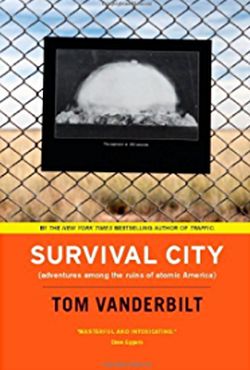
Survival City: Adventures Among the Ruins of Atomic America, Tom Vanderbilt. Bit of an impulse buy inspired by reading about the wildly irresponsible nuclear experimentation of the 1950s. 

Darwin Comes to Town: How the Urban Jungle Drives Evolution, Menno Schilthuzen. A science/TBR double play. It will fill either the Ecology or Wildcard slots in my science survey for 2022.   

Why Balloons Rise and Apples Fall: Physics in Bite-Sized Chunks, Jeff Stewart. Another science/TBR twofer, filling the Physics slot of my science survey.  

A Brief History of Motion, Tom Standage. A pop history of transportation!  

Liza Picard’s “Life of London” series, with titles like Restoration London and Elizabeth’s London. Will feature in April’s “Read of England” theme. 

Lionheart, Ben Kane. A novel of Richard I, another Read of England entry. 

No Apologies: Why Civilization Depends on the Strength of Men, Anthony Esolen. From the author of Defending Boyhood, Ten Ways to Destroy the Imagination of Your Child, and similar works defending human life and culture from noxious postmodernity. A May release..

The Oil Kings: How the US, Iran, and Saudi Arabia Changed the Balance of Power in the Middle East, Andrew Scott Cooper. Started reading this last year and I really need to finish it off. So many meetings… 

Posted in General | Tagged | 15 Comments

Worth Reading: “The Turn”

Liel Leibovitz writes on no longer being able to go with the flow, and more importantly — on realizing the American left is no longer recognizable as a voice for the people.

https://www.tabletmag.com/sections/news/articles/the-turn-liel-leibovitz

Quotes:

“You might be living through The Turn if you ever found yourself feeling like free speech should stay free even if it offended some group or individual but now can’t admit it at dinner with friends because you are afraid of being thought a bigot. You are living through The Turn if you have questions about public health policies—including the effects of lockdowns and school closures on the poor and most vulnerable in our society—but can’t ask them out loud because you know you’ll be labeled an anti-vaxxer. You are living through The Turn if you think that burning down towns and looting stores isn’t the best way to promote social justice, but feel you can’t say so because you know you’ll be called a white supremacist. You are living through The Turn if you seethed watching a terrorist organization attack the world’s only Jewish state, but seethed silently because your colleagues were all on Twitter and Facebook sharing celebrity memes about ending Israeli apartheid while having little interest in American kids dying on the streets because of failed policies. If you’ve felt yourself unable to speak your mind, if you have a queasy feeling that your friends might disown you if you shared your most intimately held concerns, if you are feeling a bit breathless and a bit hopeless and entirely unsure what on earth is going on, I am sorry to inform you that The Turn is upon you.”

“Because, after 225 long and fruitful years of this terminology, ‘right’ and ‘left’ are now empty categories, meaning little more than ‘the blue team’ and ‘the green team’ in your summer camp’s color war. You don’t get to be ‘against the rich’ if the richest people in the country fund your party in order to preserve their government-sponsored monopolies. You are not ‘a supporter of free speech’ if you oppose free speech for people who disagree with you. You are not ‘for the people’ if you pit most of them against each other based on the color of their skin, or force them out of their jobs because of personal choices related to their bodies. You are not ‘serious about economic inequality’ when you happily order from Amazon without caring much for the devastating impact your purchases have on the small businesses that increasingly are either subjugated by Jeff Bezos’ behemoth or crushed by it altogether. You are not ‘for science’ if you refuse to consider hypotheses that don’t conform to your political convictions and then try to ban critical thought and inquiry from the internet. You are not an ‘anti-racist’ if you label—and sort!—people by race. You are not ‘against conformism’ when you scare people out of voicing dissenting opinions.”

Spotted via Crisis magazine’s article, “Leftists Leaving the Left“.

Posted in quotations | Tagged , | 4 Comments

Righteous in their time

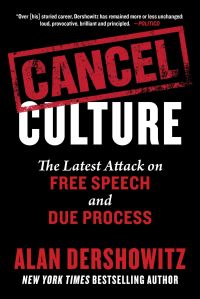
We live in a time when it has become politically correct to destroy statues of such historic figures as Washington, Thomas Jefferson, Christopher Columbus, Andrew Jackson, and others. A lesson about such statue-tory destruction can be learned by comparing the Jewish Bible (sometimes called the Old Testament) with the Christian Bible (New Testament) and Koran. The latter two books present perfect heroes: no one could be better than Jesus, and Muslims believe that Mohammed is beyond criticism. The Jewish Bible, on the other hand, presents all of its heroes as deeply flawed—that is, human. King David sinned mightily by sending Bathsheba’s husband to the front line to be killed so David could marry her. Abraham lied, claiming that his wife was his sister, and came close to slaughtering his son. Joseph framed his brothers by planting a valuable item in their baggage. Moses lost his temper and struck the rock. And on and on. I have always loved the Jewish Bible, precisely because of the imperfections of its heroes. It teaches its readers not to expect or to aspire to perfection, but only to improvement. It also judges people by their times. For example, it describes Noah as a ‘righteous man in his generation.; We should think about that phrase as we watch statues being promiscuously destroyed, Taliban-style, without balancing the good that imperfect humans achieved against the deeds we now correctly judge as evil. Washington and Jefferson were righteous men in their generation—a generation plagued by the unrighteousness of slavery. Although Washington freed his slaves upon his death and Jefferson tried to condemn slavery in his original draft of the Declaration of Independence, both could have done more to end the scourge of enslavement. For this they should be criticized, but their lives should also be viewed holistically, comparatively, and with a generosity of spirit. They did much good that cannot be ignored in any reckoning.

From Cancel Culture.

Posted in quotations, Society and Culture | Leave a comment

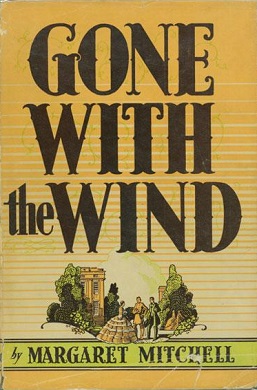
Gone with the Wind

Gone with the Wind
© 1936 Margaret Mitchell
1037 pages

It’s been nearly twenty years since I visited the joined worlds of antebellum Tara and postwar Atlanta, tied together through the life of a ruined plantation belle turned business magnate, Scarlett O’Hara. I loved the movie in high school, being then in the middle of a Civil War obsession; Vivien Leigh’s beauty and acting chops certainly didn’t hurt. Gone with the Wind is much abused these days, as are the people it makes its heart – southerners – for now our ancestors are dismissed as cornpone nazis unworthy of any regard. Well, as Miss O’Hara would say – fiddle dee dee. There’s no arguing with political zealotry, and anyone who can’t see the honor in men like Lee is too partisan to take seriously. I came to Gone with the Wind not as a southern romantic or a modern troll, notebook in hand to list all of the things the naughty things I find herein, but to encounter its story – and I find it all the more improved from high school, because now instead of cooing over Tara I find myself impressed by Mitchell’s gift for description, unforgettable characters, and storied retelling of the war and the ruin it brought.  

I don’t know how known Gone with the Wind is outside the South, but down here everyone knows the basic gist: it’s a romance set during the Civil War. This is altogether too simplistic, however, for while it’s largely driven by romance – by Scarlett’s obsession with Mr. Ashley Wilkes, her cold-blooded habit of marrying men purely to manipulate other beaus or come to material gain, and her long, complicated relationship with Rhett Butler — there’s far more drama here than just one flawed woman’s lovelife. There’s the background drama, of course, the opening of the Civil War and the slow ruin of the South as it progresses: we open on scenes of the plantation gentry enjoying daylong barbeques on the lawn, and halfway through find the same characters – at least, those who have survived — getting by on hominy, their world destroyed by war and their families buried under the lawn instead of striding upon it, taken by war and disease. Reconstruction brings no relief, for taxes begin to consume what death left alone, and anyone with any faint connection to the Confederate government is barred from not only office, but voting — leaving Georgia in the hands of military occupiers, outsiders, and ex-slaves. We see the history happening, but Mitchell also weaves it in directly, especially before Scarlett begins paying attention to the war. There’s also incredibly rich character interplay, as four central characters respond to events in unique ways, sometimes taking similar actions for opposing reasons. Scarlett and her romantic rival turned sister-in-law, the saintly Melanie, bounce off one another, as do Mr. Ashley Wilkes and Rhett Butler: Scarlett is scandalized to realize Ashley and Rhett have similar ideas about the war, but Ashley is a man of duty and Rhett a man of appetite. The complex relations between Scarlett and her three peers dominate the novel.

Scarlett is the central figure of the book, and on her shoulders lays the story’s success. Gone with the Wind is her transformation’s as well as the South’s: we open on a child, an incredibly vain and selfish one who regards her mother as a saint and all other women as the devil, and men are her prey who exist to dote on her and ply her with favors for the pure gift of her company. She’s incredibly unlikable, but – having experienced her growth so many times – I can only laugh at her with Rhett Butler, amused by her vanity and hypocrisy because she’s delightfully real in her flaws. But more important than her flaws is her growth, because instead of being ruined by the war, by the loss of all she loves – -the deaths of her friends and family, the sacking of her home, the loss of her adolescent love — Scarlett rises like a phoenix. The war and reconstruction strip everything from her but her will, her determination not to be destroyed or beaten, and we soon see the spoiled but ruthlessly pragmatic belle working hard to turn ruin into rising fortune. A reader doesn’t have to like Scarlett, but by god he has to admire her.   Still, Gone with the Wind is a tragedy — not because it concerns the fall of the antebellum South, but because Scarlett’s cold determination not to be beaten alienates those around her and destroys her chances for a lasting happiness apart from transient pleasure and passing ambition.

Published in 1936, I can imagine what immediate appeal this had for readers stuck in a seemingly endless depression — a reminder that the South has survived worse. For women particularly, having recently realized the right to vote, Scarlett must have seemed a troubled inspiration from another age: a woman who took life by the horns and twisted it to her will, sometimes to excess. Gone with the Wind succeeds brilliantly at bringing the horrors, stresses, and moral dilemmas of the War and Reconstruction to life: it’s easy to read about the casualties at Gettysburg, and not realize the weight of death, but a novel like this draws the reader into a world of personalities and then makes us feel the losses when people we ‘know’ are destroyed. Although moderns like to scoff at Gone with the Wind as a romantic defense of the Old South, they betray their having not read it: both Rhett and Ashley are skeptics of The Glorious Cause, Rhett and other characters continually past against traditionalist prescriptivism, and when Ashley confronts Scarlett about using convict labor, she in turn challenges his and her family’s past reliance on slavery. The thorniest element of Gone with the Wind is its treatment of Reconstruction, particularly the thread in which male members of Scarlett’s class create a certain clannish committee to defend their women against the criminal actions of the now-empowered white trash and “free issue” blacks. As I understand the history of the Klan, it was marked by violence with far less noble motives, but presumably Mitchell was relying on memories of the period’s chaos, upheaval, and terror that she’d heard growing up. Mitchell employs them here not to celebrate them, a la Birth of a Nation, but to cast condemnation on Scarlett — for it is her recklessness that forces several characters to come to her defense through vigilantism.

Gone with the Wind is not without its flaws, but most have only been acquired through the accident of time — period language having become offensive, for instance. The heart of the book is as strong as ever, and the reader who can’t be swept away by the ensembled drama here, particularly Scarlett’s part, because of politics has done themselves a great disservice.

Posted in historical fiction, Reviews | Tagged , , , , | 8 Comments

Man against the mob

“The problem with going along [with the mob] is that it demoralizes you. It makes you a smaller person, inside. You’ll know you shouldn’t have done that, you’ll think badly of yourself for having done it, you’ll feel cowardly, and it will affect your life in other ways. […] That’s what totalitarian movements across history always knew. If you can grind people down, make them agree to the lies….you can make them do anything.”

“You think you’re doing a little thing, but you’re not. You’re diminishing your soul by [going along with the mob]. Because you know you could be something more than the person that just has to hang what Party Headquarters tells you have to hang this week.”

Posted in General | Leave a comment

Caesar’s Last Breath

Caesar’s Last Breath: Decoding the Secrets of the Air Around Us
© 2017 Sam Kean
384 pages

In The Disappearing Spoon, Sam Kean offered a history of early chemistry, as we began to understand the elements that create our world, and the hidden order in their atoms. Caesar’s Last Breath takes on a more intimate subject – the very air we breathe, and the multitude of stories that have erupted from its study, spanning Julius Caesar, volcanoes, and extraterrestrial colonization. Thoroughly entertaining, this mix of popular science and science history succeeds at bringing both the past and arcane equations to life.

Kean begins with a history of the Earth’s atmosphere – or atmospheres, since the early planet went through several before arriving at one suitable to our kind of life. The last big alteration was the arrival of oxygen, which was noxious to most life at the time and prompted a mass extinction. The atmosphere appears again of special interest later in the book, as Kean discusses the growth of meteorology, and the subsequent creation of chaos theory: despite all of the intervening scientific progress in isolating the components of our atmosphere and understanding the laws governing gaseous behaviors, weather has proven all bets are off. 

Science and history are fused in Caesar’s Breath, which takes readers across the globe and across time. We stand in the Senate with the doomed dictator, visit an eccentric moonshiner and tourist host living in the shadow of Mount St. Helens, witness the eruption of gas warfare in 1915, and the even more explosive use of nuclear arms at the Bikini Atoll. The science is interesting in itself, driven as it is by a cast of characters – confidence men, social lepers, dogged engineers, ambitious businessmen, and a rascal or two – but Kean continually connects the scientific enterprise with its effects on human society, both for good and ill: although Kean includes a lot of war and disaster, here too we see the advent of medical anesthesia, and are presented considerable entertainment, like the man who convinced a host of trial patients that living in the same close quarters with cattle could cure their tuberculous.(“Living with cattle is the most delicious thing imaginable!” he said. The subjects disagreed.) 

This is the second Kean book I’ve read and enjoyed, and I was impressed by the way Kean corralled a wide variety of subjects into one coherent narrative, one that doesn’t just rely on chemistry but connects with geology and meteorology as well. Kean’s other books are on stories connected to genetics, and then high crimes and misdemeanors associated with the pursuit of science itself.

Related:
Napoleon’s Buttons
Stuff Matters: Exploring the Marvelous Materials that Shape Our Man-Made World

Posted in Reviews, science | Tagged , , , | Leave a comment

Ms. Adventure

Ms. Adventure: My Wild Explorations in Science, Lava, and Life
© 2021 Jess Phoenix
272 pages

Some scientists work in nice, safe labs, with bright lights and sanitized equipment, and their greatest fear is that grant funding will fall through next year. Other scientists hike into the calderas of volcanoes, spend weeks on the open sea far from land, and occasionally fall into Peruvian sewers, covering their Intrepid Explorer pants with a not-so-attractive layer of caca de Cuzco. Jess Phoenix is that other kind of scientist, and here she recounts her global adventures in the service of geology — and her own insatiable curiosity. A mix of travel, adventure, and gritty geological labor, Ms. Adventure demonstrates how exciting and dangerous science work can still be in the 21t century. Although the science content sometimes takes a backseat to Phoenix’s memoir, her travel adventures are not without interest, either from the sheer comedy of falling into a sewer, the drama of cartel gunslingers trying to raid the scientists’ camp, or the behind-the-scenes look at Discovery nature documentaries.

I was drawn to this book immediately by the cover, which accurately captures the extreme environments geologists often work in. Phoenix draws on expeditions throughout her academic and professional career, from her student first experience on a survey (camping in Death Valley, and looking for evidence of its long-gone shallow ocean), to later travels in which she was a fully published and vetted geologist, sometimes the only one present on a given project. Phoenix worked multiple sites across Hawaii and South America, and these constitute the bulk of the book, spanning environments from lava fields, the open ocean, and the soaring heights of Peru. Phoenix and her coworkers are often in danger, particularly when operating around volcanoes: some lava fields are not as old and hardened as they appear, and active volcanoes have a startling tendency to throw car-sized blobs of lava at research teams. Not all of the dangers are from the natural world, though: in Peru the scientists are raided by members of a cartel. The science content is largely centered around volcanoes, which is understandable given how spectacular and dangerous they can be — and how long they’ve fascinated the human cultures exposed to them. Phoenix’ descriptions of lava fields and the ominous sounds coming from beneath the Earth were particularly effective at commanding the reader’s imagination. Phoenix offers a general narrative of her travel experiences that goes into the mundane details, and this can sometimes make the book feel a bit padded, but there are other non-science passage that more than make up for that, particularly her recounting of Discovery filming an episode of her and her team: the producer’s frequent attempts to stage accidents and drama frustrated Phoenix’ hope for a depiction of Real Science, and made me (a frequent viewer of science documentaries) wonder how much of what we see is a total fabrication. Phoenix is at her best when writing on the universal human heritage of curiosity, and how it enriches our lives and drives progress.

This mix of science and travel may lean a little heavier on the travel than it should at times, but takes us to breathtaking places with a guide whose passion for scientific enterprise and physical courage is inspiring.

Quotes:

I was standing on rock-solid proof of our planet’s life. Our world is still one of creation in addition to the destructive side we usually witness when geologic forces are in play. Mauna Loa, the world’s largest volcano, is still active. It had erupted last within my lifetime, before the tragic end of the Challenger space shuttle and the world-changing fall of the Berlin Wall had etched themselves on our global consciousness. I was walking on earth younger than I was, and it reminded me of a true marriage of art and science, the famous lines of eighteenth-century geologist James Hutton: “The result, therefore, of our present enquiry is, that we find no vestige of a beginning, -no prospect of an end.”

Here was the planet, pouring out the same elements contained in stardust, reshaping itself right in front of me. I was a voyeur, witnessing an ancient act too raw and powerful for humans to comprehend. Creation and destruction. Two halves of the same whole. The process would repeat again and again until our world’s fiery core cooled and convected no more.

Staying within the known guardrails of a single discipline or subdiscipline seemed artificial and limiting, an affront to the innate drive to question and explore that led me to science. My ability to ask questions would be the fuel that sustained the fire for knowledge I felt burning hot and tight in my chest, driving me to challenge my own perceptions and the world around me, always in search of answers.

Related:
Phoenix appeared as a guest on the generally-fantastic Ologies podcast, a fun science series covering a staggering variety of specialties.
The Last Stargazers, Emily Levesque. More science meets adventure, but with more science. Also features volcanoes in Hawaii.
Lives in Ruins: Archaeologists and the Seductive Allure of Human Rubble, Marilyn Johnson. More science adventures in demanding locales.

Posted in Reviews, science | Tagged , , | 6 Comments

The Devil’s Company

The Devil’s Company
© 2007 David Liss
371 pages

Benjamin Weaver is in trouble. An ex-boxer who now works as a private detective of sorts in 18th century London, he’s made a name for himself as a man who can get things done, and occasionally attracts job offers for the sort of mischief he has no interest in….like breaking into the East India company’s headquarters and stealing papers. Though he refused that offer, there are powerful men in London and abroad who won’t take no for an answer. As The Devil’s Company opens, we find Weaver being tricked and trapped into the service of a mysterious magnate, who has gained financial leverage over not only Weaver but his friends. Though Weaver has no choice but to work for the mysterious puppetmaster, he’s also no man to passively accept his fate – and laboring to discover who the man is and what he really wants with the Company is the start of a labyrinthine mystery set in the ascendancy of Britain’s commercial empire.  

I have read two previous books in this series and was impressed first by the novelty of the series – business/crime thrillers set in old London, quite different from the usual military or romantic adventures that readers of historical fiction usually get. The earlier books were particularly interesting because of the subjects of the plots themselves – the early coffee trade, or the corruption enabled by paper/fiat currency. The Devil’s Company’s focus on the East India Company and the textile’s trade was a bit less interesting to me, but the core of the mystery was still compelling, with no shortage of twists and plenty of intriguing characters, including several ones that I dearly hoped would visit the business end of Weaver’s fists before the novel’s end. The most remarkable aspect of Liss’s style in the early books was his use of 18th century dialogue, giving the book a sharper historical flavor than most; that continues here. There’s also some subtle social commentary here, and readers familiar with Ronald Reagan’s “A Time for Choosing” speech will recognize parts of it being used, line-by-line, in one character’s speech. It’s not particularly nuanced, though: the author is using the abuses of the Company to mock economic liberalism (real liberalism) when the company existed as a creature of the state and advocated for liberalism only when it was profitable to do so. Liss doesn’t explore that hypocrisy: he only uses the company to argue that we need the state to make corporations behave. (Never mind the fact that corporations have always used the state to advance their agendas, employing lobbyists to create regulation around themselves and leveraging the state to destroy their competition and create monopolies.)

Although the subject here wasn’t nearly as compelling as coffee, I enjoyed it nontheless, and am glad to have gotten back into this series after a..er, ten year gap. Liss’ contribution to historical fiction is unique and absolutely worth reading .

Posted in historical fiction, Reviews | Tagged , , , , | 2 Comments

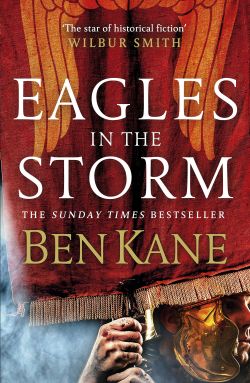
Eagles in the Storm

Eagles in the Storm
© 2017 Ben Kane
352 pages

Six years ago, a German auxiliary named Arminius used his place of respect within the Roman army to lure Governor Vaurs and three legions into a devastating ambush. Rome began to exact her revenge last year, clearing out German villages connected to rebelling tribes and even kidnapping Arminius’ wife, but the work is not yet done. Two of the battle-standards taken by the Germans – imperial eagles — are still in the hands of Rome’s enemies, and Senior Centurion Tullus is determined to recover them, for the honor of his fallen men….and his personal need for revenge. Eagles in the Storm witnesses the culmination of Tullius’ quest for vengeance, in service of his general Germanicus. Although the action isn’t on grand a scale as Eagles at War, it’s a fitting conclusion to this series. 

As with Hunting the Eagles, Kane splits the book primarily between Arminus and Tullus, with an ocassional foray into the Roman ranks. We find Arminus struggling to keep his alliance together: despite the great success six years ago, many tribal leaders regard Arminius warily, disdainful of his claim to be the only one who can lead the tribes to victory against Rome. They increasingly don’t follow the execution of his plans even after they’ve agreed to, and Arminius’ stores of patient diplomacy appear to have been exhausted by all the work he undertook to make the Teutoberg ambush happen. The action in Eagles in the Storm occurs across several armed conflicts, until the summer begins to wane and both Arminus and Tullius make the same desperate move. Although both protagonists were compelling viewpoint characters in Eagles at War, Tullius was far more sympathetic in Hunting the Eagles, and that continues here, and the reader shares his frustration when Arminius evades him again and again.  The lower-ranks characters are particularly useful in the battle scenes, but here they also provide a little comic relief –as when Piso sneaks into an incredibly punchable officer’s tent and decorates it liberally with dog dung. They’re also how Kane keeps the reader emotionally vested in battles: we know Tullius and Arminius both have to survive the minor scrapes to continue their cat and mouse games, but the redshirt characters don’t have plot insurance.

So ends my introduction to Ben Kane, which proved excellent. It compares favorably to Scarrow’s much longer series: this is shorter, but darker and more intense. I’ll be continuing with him in April, with his Richard the Lionheart series, and some different historical fiction will appear here before — the continuation of David Liss’ series of business/crime thrillers set in 18th century London.

Posted in historical fiction, Reviews | Tagged , , | 10 Comments