What do you call a heart that is simultaneously full and breaking? Maybe there’s no word for it, but for some reason, it makes me think of rain falling through sunlight.
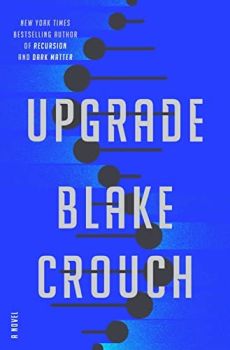
Upgrade, Blake Crouch
“Most people,” [The Old Man] had said, “go through life looking and never see a thing. Anything you see is interesting, from a chinch bug to a barnacle, if you just look at it and wonder about it a little.” Then he would send me to the swamps or out in the boat or off along the beach with a firm command to look and tell him later what I saw. I saw plenty and in detail, whether it was ants working or a mink swimming or a tumblebug endlessly pushing its ball.
The Old Man’s Boy Grows Older, Robert Ruark
“Losing faith in your own willfulness and capacity to act, you eventually lose freedom,” noted an early critic of victim culture. “That was one lesson of totalitarianism, which succeeded by organizing masses of the disaffected, politically inactive, self-centered people who felt helpless and victimized, believed that they didn’t matter and sought ‘self-abandonment’ in the state.”
San Fransicko: Why Progressive Policies Ruin Cities, Michael Shellenberger
Growing up, Logan Ramsey idolized his brilliant mother, a cutting edge bioengineer. Then a tool of her device that worked perfectly in proving trials killed over two hundred thousand people by accidentally inducing a global famine. Logan grew up not to be another geneticist, but a cop who arrested those suspected of violating the new Gene Protection act. It was not a duty he enjoyed, but it felt like atonement of a sort, if not for his mother’s hubris then for his part in her work. Then, a raid on a suspected genetic-modification lab went sideways, and Logan found himself in quarantine – exposed to a viral-dispersal bomb. A bad flu proved to be the least of his concerns when he realized the virus was the dispersal agent for a genetic-modification package rewriting him by the hour. This is an unwilling fall from grace that sees him on the run from the very agency he worked for, isolated from his family and coworkers. Logan struggles to make sense of what has happened – why would terrorists want to improve someone with an explosive, instead of making them patient zero in a new pandemic? – and realizes he’s on the front line of a new war. Upgrade lives up to the increasingly high expectations I have of Blake Crouch’s work, with a far more plausible scenario than some of his prior SF titles, as thrilling and emotionally potent as they were.
I think I’ve been fascinated by the idea of genetically modified superhumans since encountering stories of augments in Star Trek, but I encounter few stories about them and fewer still that handle them well. In Star Trek, augments were always instavillains: superior ability, Kirk informed us in “Space Seed”, bred superior ambition. Crouch puts us in Logan’s skin, though, in a manner that reminded me a bit of Flowers for Algernon, but without the depressing evaporation of Charlie’s mental gifts, and reminds us that Kirk’s admonition is not necessarily the case. What’s happening to Logan is terrifying, threatening him with the loss of his very identity. Pleasure at his increasing skills – physical, mental, emotional – crowds out these reservations, but such pleasure carries the bitterness of isolation. He’s not alone, though: there’s at least one other person who shares his gift, and through her he begins to understand what has been done to him and why. Someone from their shared past is not quite past, and they have a mission to save humanity – by forcing a planet-wide genetic upgrade, virally transmissible. Struggling with his feelings of alienation even as he revels in his new abilities, and fully mindful of what his late mother’s ambitions created before – a graveyard for hundreds of millions – Logan has to wrestle against himself and a plan already set in motion.
Upgrade proved to be just as captivating as Dark Matterand Recursion, but drawing from an entirely different sector of science — one that makes for a more interesting, realistic, and thereby scarier thriller. Those previous books made the most of ‘out there’ technology, and succeeded much in part because of the emotional drama that the main characters were put through. Here, that drama is as strong as ever, given that Logan is isolated from loved ones and at odds with old intimates, but the SF aspect is much closer to home. The star is genetic modification, of course, but Crouch also comments slightly on life within the glass cage of big data and the omnipresent corporate-government surveillance state. Upgrade therefore combines two essential aspects of strong science fiction, commenting on not only what emerging trends in science and technology are capable of, but reflecting on what they might mean for human life — not merely the mass of H. sapiens, but to our individual beings.
Quotes:
We lived in a veritable surveillance state, engaged with screens more than with our loved ones, and the algorithms knew us better than we knew ourselves.
“If she’s not wrong about our impending extinction, what do we have to lose?” I stood and looked down at [her].“Everything it means to be human.”
I suspect that, if we all had perfect memory, we would all grieve the older versions of who we used to be the way we grieve departed friends.
What do you call a heart that is simultaneously full and breaking? Maybe there’s no word for it, but for some reason, it makes me think of rain falling through sunlight.
This is completely irrelevant to anything on the blog, but I stumbled across it and was so impressed by it that I had to share. I’ve mentioned RDR2 here a time or two (usually as an obstacle to my reading, since nearly four years after its release, I still play it to the exclusion of everything else when I’m in a mood to just relax with a game). The video’s creator visits various real-life sites that were incorporated into the world of RDR2, usually in cosplay as the game’s main character, ride horses, and uses firearms that were also in the game. Very high-effort work!
This is not a book I’d expected to read, because as a Southerner who’s been reading different views about the war for twenty years, I figured I knew what its take was already. Crocker’s comic novel about George Custer, though, piqued my interest in more of his works. I found in this politically incorrect guide a double surprise; first, it’s largely biographical, telling the history of the war through the lives of the men who made it happen, with friends meeting each other across the battlefield – and secondly, it’s distinctly Southern but not obnoxiously biased. Crocker’s appraisal of the men on both sides of the conflict makes it possible to find them interesting an admirable even if a reader disagrees with their politics or actions. While it has an odd structure, those who know little about the War and want to learn more about its background and the characters who fought in it will find it entertaining and often provocative.
Crocker begins the book with a history of the sectional disputes that led to the war, as well as the cultural and legal background that the South drew on to inspire, explain, and defend its bid for independence. In short: the States began as separate colonies, created separate Constitutions for themselves prior to the Revolution, and agreed as sovereign states to create a confederation for mutual benefit. Each region of the new country had its own economic and political interests, and increasingly those interests conflicted: the South did not like shouldering 90% of the tariff-funded Federal government’s expenses, especially when those same tariffs made the industrial goods it needed more expensive, and the North resented the wars that Southern expansionism often embroiled the Union in. Slavery was an indelible part of the competition between the sections, as the North wanted to constrain slavery not only to prevent Southern political power from growing, but to squelch competition between free labor and cheaper slave labor. The increasing militancy of northern abolitionists, which threatened to create chaotic slave revolts that could and would claim the lives of innocents (as happened with Nat Turner and John Brown’s attempted revolts – Brown’s claimed the life of at least one free black man), created a poisonous identification with and perverse loyalty between the South and the wretched institution. Faced with the threat of reckless abolitionism instigated by its political proponents, the new Republican party, the Deep South responded to Lincoln’s election by seceding from the Union. They joined it voluntarily; they would leave it voluntarily. Lincoln responded with a call to arms, prompting the Upper South to join its sister States. Few wanted a national divorce, but fewer still would tolerate remaining in an abusive relationship. A union that could only be maintained through jackboots and bayonets was no union at all.
After creating an outline of the war by taking readers quickly through a score of the conflict’s most pivotal battles, Crocker moves to the meat of the book – the biographies of a dozen or so generals from both sides who played their parts in the drama to come. This is the meat of the book not only because it constitutes nearly 2/3rds of the book’s text, but because in getting to know these men readers realize how poorly conventional narratives fit the facts. A narrative survey of a war makes it easy to reduce things to a story that makes sense, but human personalities, human characters, are rarely tidy enough to box up. Crocker’s array of characters includes titans with instant name recognition, like Robert E. Lee, Stonewall Jackson, U.S. Grant, and Sherman – but he deliberately includes men with little name recognition today, like the southern Unionist George Thomas, and the slavery-opposed Confederate A.P. Hill. The review of these notables makes it obvious that while slavery was a central political cause of the war, it had almost no bearing on the reasons why men supported or opposed secession, let alone fought in the war . Many of the Union personalities here were as racist as any stereotype of the Klan, and actively despised abolitionism, while the Southern men who have grown up alongside blacks are more charitable, if paternalistic. Lee and several other Confederates believed in the Union, despaired to see it rent asunder – but their loyalty to their home states, which they considered their nations far more than the abstract entity that was a fifty-year old political agreement, took precedence. One Union general wrote to his Confederate friend before the war began that, as much as he hated to see his compatriot on the Other Side, had he been born a Virginian instead of an Ohioan, he could see himself making the same choice. The biographies deliver full, complicated takes on these men’s lives, making it possible to admire and mourn them at the same time. I found myself interested by most of the men, even the loathsome Sherman, who along with Sheridan brought total war to the American continent, denuding the southern landscape and reducing thousands of civilians to starvation. Crocker engages in some light historical editorializing along the way, commenting (for example) that Longstreet’s doubts about Lee’s plan to attack the Union center at Gettysburg became a self-fulling prophecy: he delayed his advance so long that there was little artillery ammunition left to cover the advance, exposing the his corps to far more abuse during its advance.
Although I found much of interest in this book, as a standalone title it’s a bit limited, being chiefly biographical. I didn’t need anything in the way of background personally because of prior reading in this subject, but readers new to the subject might appreciate more detail. The biographical studies, though, go a long way to helping paint a picture of the actors’ mixed motives and divided loyalties, which are overlooked in the “Civil War as anti-slavery Crusade” narrative that has lodged in the minds of people who are so badly served by the education system that they’re not positive what century the war was in. Unfortunately, as with many books, those who would learn the most from engaging with it are the least likely to try. (One thing I’ve learned about goodreads is how cretinous many readers are — one-starring books they’ve never read and never plan to read. )
Some Interesting Quotes:
“Lincoln may have been right in thinking that he was bound to preserve the Union. But it was not the Union that was preserved. A union implies that two different things are united; and it should have been the Northern and Southern cultures that were united. As a fact, it was the Southern culture that was destroyed. And it was the Northern that ultimately imposed not a unity but merely a uniformity.” – GKC
“I saw in States Rights the only availing check upon the absolutism of the sovereign will, and secession filled me with hope, not as the destruction of but the redemption of Democracy….Therefore I deemed that you were fighting the battles of our liberty, our progress, and our civilization: and I mourn for the stake which was lost at Richmond more deeply than I rejoice over that which was saved at Waterloo.” – Lord Acton
“I wish to live under no other government, and there is no sacrifice I am not ready to make for the preservation of the Union save that of honour. If disruption takes place, I shall go back in sorrow to my people and share the misery of my native state, and save in her defence there will be one soldier less in the world than now. I wish for no other flag than the star-spangled Banner and no other air than ‘Hail Columbia’. I still hope that the wisdom and patriotism of the nation will yet save it.” – General Robert E. Lee
Rick Bragg is one of those authors I gave a shot simply because people around me wouldn’t shut up about him. It’s easy to understand why, after only a page or two; he has a gift for storytelling, one he inadvertently has described himself while reflecting on his ancestors:
I grew up at the knee of front-porch talkers, of people who could tell a story and make you believe you had been there, right there, in the path of the bullet or the train, in the warm arms of the new mother, in the teeth of a mean dog. The men, sometimes dog drunk, sometimes flush with religion but always alight with the power of words, could make you feel the breath of the arching blade as it hisssssssed past their face on the beer joint floor, could make you taste the blood in your mouth from the fist that had smashed into their own, could make you hear the loose change in the deputy’s pocket as he ran, reaching for them, just steps behind. The women in my world could telegraph straight to your brain the beauty of babies you never touched, songs you never heard, loves you never felt. They could make you cry about a funeral you never saw, make you mourn for a man you never met. They could make you give a damn about the world around you.
Somebody Told Me
After The Best Cook in the World gave me my first taste of Bragg, I was hooked but good, and have been reading him steadily since – all I have left to read of his books now, in fact, are two biographies and a tribute to wooden churches. This past week I’ve read two of his collections, My Southern Journey and Somebody Told Me. For those who are familiar with Bragg’s family books or his more recent collections, Somebody is a definite outlier, without the personal intimacy that makes his books as a whole so compelling. It’s a collection of his newspaper articles from the 1980s and 1990s, and tends toward the depressing – particularly the series on the Oklahoma City bombing, in which the peace of a wholly anodyne midwestern town was destroyed by a man whose hatred for an abusive government turned him into the very monster he hated. This is followed by a series of articles about a woman who killed her own children, and a series of pre-Columbine school shootings. There are some articles in here that warm the soul, though, like a tribute to New Orleans’ last ‘voodoo priest’ (gotta love genuine Characters in an age of consumerized homogeneity) , and some amusing pieces on football. The most interesting pieces to me were those on the late George C. Wallace, for whom getting shot was something of a come-to-Jesus moment. Although not as compelling as his family stories, Bragg’s gift for connecting people’s lives to readers’ hearts and minds is no less strong when it’s strangers’ stories he is sharing.
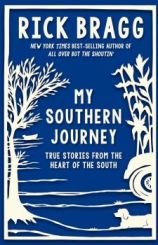
My Southern Journey is more typical Bragg fare, consisting of articles penned by Bragg for Southern Living, Garden & Gun, and (once) GQ, and organized into broad categories like food and sports. The section on food should not, under any circumstances, be read on an empty stomach, or indeed on anything less than a painfully full stomach. Otherwise Bragg will call forth demons of temptation and the reader will find himself wondering if it’s too late to cook up some sausage gravy at eight in the evening. The stories largely draw Bragg’s personal life (comparing a grandfather’s gift with carpentry to his own ability to glue himself to the wall, or regaling readers with the tale of how his mother’s adoption of two cats quickly turned into a menagerie of cats and miniature goats, but this collection’s central subject is the South, not his family. Pieces cover food, football, the joys (and trevails) of old homes, regional talents like storytelling and buck-dancing, and reminiscences of long childhood summers. It is a celebration of a place that, while flawed, sings to Bragg more than any other place he’s been to in his long career as a journalist. I found it utterly enjoyable, enough to knock it out in one long evening sitting.
“My people tell their stories of vast red fields and bitter turnip greens and harsh white whiskey like they are rocking in some invisible chair, smooth and easy even in the terrible parts because the past has already done its worse. The joys of this Southern life, we polish like old silver. We are good at stories. We hoard them, like an old woman in a room full of boxes, but now and then we pull out our best, and spread them like dinner on the ground. We talk of the bad year the cotton didn’t open, and the day my cousin Wanda was Washed in the Blood. We cherish the past. We buff our beloved ancestors till they are smooth of sin, and give our scoundrels a hard shake, though sometimes we cannot remember exactly who is who.”
“People ask me, often, why I love a place so imperfect, where the mosquitos dance between the lukewarm rain and the summer heat turns every stretch of blacktop into a shimmering river of hot tar, where the football-mad fling curses and sometimes punches and forget their raising on call-in radio, and the politicians seem intent on a return to 1954. I merely answer: How do you not love a place where the faded beads of a a parade six years before still hang in the branches of live oak trees.”
“I am an imperfect citizen of an imperfect, odd, beautiful, dysfunctional, delicious place. But at least we ain’t dull.”
“A year later, I spoke at her funeral. I surprised myself, blubbered like an old fool. For the first time in a long time it mattered what came out of my head, but the words crashed together inside my skull and I lost the fine things I wanted to say, and stood stupidly in front of people who loved her.”
“I know my mother was saddened when she recently lost her dog. That is no reason to fill the hole in her hearts with 13 cats.”
“The children start school now in August. They say it has to do with air-conditioning, but I know sadism when I see it. […] People ask all the time, what’s wrong with kids today? I have long held that they have been brain-mushed by too much screen time, but as summer races past me now I think it is something else. I think they do not know how sweet it is to feel the mud mush between their toes.”
(Following a story about his neighbors rallying to help one another after a hurricane) “So I wonder. If a street is made of people, not of oaks and tulip trees, how can this place not be as fine as it ever was? I think the best I heard it put was by Mary Pitts. ‘I always thought we lived on a good street,’ she said. ‘Now I know.”
“In restaurants, I am forced to eat my meatloaf with the television tuned to two mental giants ranting about a topic they manufactured that morning, apparently from mud and straw. At any given moment, on a plane, in a lobby, anywhere, I hear the TV at war with a dozen personal electronic devices. I am certain that, if I were sitting on a rug woven from palm fronds and dead army ants in the middle of the Amazon, I could hear the ubiquitous song of an iPhone. It is enough to wish for a lightning storm. There’s that moment when the lightning flashes and the thunder shakes the house. The power flickers and dies, and a dark stillness falls. And you’re swallowed up by a pure, old-fashioned silence, free of the hum of the refrigerator or the air-conditioner, free from all the man-made background noise that makes you feel less human.”
“I guess the best way to tell the story of how I glued myself to the wall of my house, of how such a thing could even happen, is to tell it chronologically. Otherwise, I might appear stupid. But if I walk you through it, tiny misstep by tiny misstep, you will come to see that such a thing could happen to almost anybody, even a smart person. It began, as all great disasters do, with a plausible theory. It began with the simple thought, I can fix that.”
“I guess the best way to tell the story of how I glued myself to the wall of my house, of how such a thing could even happen, is to tell it chronologically. Otherwise, I might appear stupid. But if I walk you through it, tiny misstep by tiny misstep, you will come to see that such a thing could happen to almost anybody, even a smart person. It began, as all great disasters do, with a plausible theory. It began with the simple thought, I can fix that.”
My Southern Journey, Rick Bragg
Doctors prescribed opioids in 20 percent of all patient visits with pain symptoms in 2010, nearly double that of 2000. Opioids became the most prescribed class of drugs, surpassing blood pressure, cholesterol, and anxiety medications. Americans, who represent less than 5 percent of the world’s population, were consuming 80 percent of the opioids supplied and 99 percent of the supply of hydrocodone, an opioid pain medication also commonly used as a cough suppressant.
San Fransicko: Why Progressive Policies Ruin Cities, Michael Shellenberger
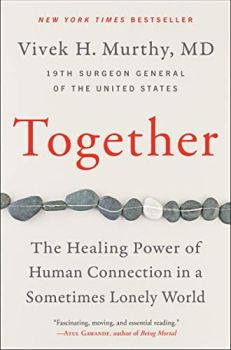
People are generally open about their physical health; indeed, for men of a certain age, it’s their favorite topic of discussion — at least, judging by the chatter I hear nursing a morning coffee at the diner across the street from where I work. Mental health, though, is usually buried away like it’s a shame, evidence of personal failings – and loneliness is no exception. Vivek Murthy’s Together reviews various facets of loneliness, its consequences for our overall health – both for private individuals and for society at large – and then shares ways in which people are restoring connection in their own lives. One of its more interesting lessons, though, is that loneliness is pervasive – torturing its victims with double isolation, for they believe themselves to not only be alone in their lives, but alone in their suffering. But, Murthy notes, the loneliness engendered by the modern world affects nearly everyone, respecting no boundaries of sex, class, religion, or political affiliation. .
Loneliness, Murthy begins, is not a disease. It is instead feedback from our brain – a warning sign, like pain. Mental and emotional trauma are not fictitious simply because they occur in our heads: our brains light up from emotional pain in the same way they light up from physical attack. The pain of loneliness is a warning that we are disconnected from the tribe, weaker by isolation and more exposed to danger. Instincts born of a hundred thousand years of human evolution, of small tribes intensely dependent on their members for mutual survival, do not go quiet simply because we have paved over the world and suffer more from diseases of material prosperity than from poverty and environmental dangers. We are hardwired for social connection, even self-described loners. Ted Kaczynski and Henry David Thoreau may have been hermits living in the woods, but Kaczynski regularly visited the local library to enjoy company, and Thoreau often invited friends to join him for dinner at Walden. We need connection at multiple layers, Murthy suggests: intimate connection, like that of a spouse or close friend who knows our inner being and supports us, as we do them; social connection, of solid core friendships, and collective connection, or a feeling of being tied to the society we live in. It is possible to be fulfilled in some degrees and impoverished in the others, as might happen when newlyweds focus solely on one another and let their friendships wither. The difference between the pain of loneliness and physical pain, though, is that loneliness is not self-correcting: a burned hand drives us away from the hot stove, a cutting wind sends us scurrying for shelter and warm clothing. Loneliness, however, creates a positive feedback loop: feeling isolated, we grow wary and defensive, and withdraw further from the company of people whose presence could give us comfort. It’s crucial that we be aware of this and fight it, going against our protective instincts — because just as communion with one another brings us benefits like increased creativity and optimism, loneliness carries with it increased risks for heart disease, hypertension, dementia, and other diseases. Loneliness puts our brains into chronic low-grade stress, taxing our bodies and interrupting our ability to sleep. Murthy muses that one of the reasons women may outlive men is that women in retirement are far more likely to seek out opportunities to stay socially active, joining clubs and classes, whereas men are more likely to conceal their feelings of newfound loneliness and fall prey to further isolation and feelings of uselessness that foster depression and weaken overall health.
American society has been unraveling for decades now: Robert Putnam first drew attention to it with his Bowling Alone, on the cratering of civic and social participation across the board. One may look for reasons where they may: blame television, suburban sprawl, the establishment of the Individual Consumer as God. Murthy shares thoughts on additional factors, particularly technology — which promises connection but often makes us more self-absorbed and distracted, and is changing so rapidly that we’re unable to create social norms to moderate abuses inherent in experimental phases. The ubiquitous use of technology to make things more efficient has also increasingly removed or marginalization human connections. It is now possible for someone to live their existence completely from within their home, picking up groceries from their patio after a contactless, person-less dropoff. Even if they go into a store, it’s increasingly possible not to to have to talk to clerks at all: in Walmart, for instance, an app can tell people where to find a given item, and most checkouts are self-checkouts. I couldn’t help but think of Kurt Vonnegut’s resistance to this: any time he mailed a letter, he said, he insisted on walking to the drug store to buy An Envelope, then walking to the post office to buy A Stamp. Yes, he wrote, he could buy a box of envelopes and a page of stamps, but he valued his amiable chats with people in shops and on the street more than he valued convenience. There’s also the fact that we are rarely who we pretend to be on social media: our presented selves are curated, and while they may receive validation in the form of likes and shares, it’s only a fleeting hit of a dopamine which is ultimately empty. This has a bearing on political polarization, because when we see content from the other side, we’re getting the public offering — the controversial, the aggressive, the smarmy. We see only Joe Biden doing a bad Palpatine impression, not the grief-crushed and declining father anxious to leave a positive mark on the world.
After reviewing the consequences and some origins of loneliness (more factors are covered in The Lonely American), Murthy switches gears and shares the stories of those who have used their suffering as fuel to effect something good in the world — returning fire against loneliness by creating connection. One of the more inspiring stories in this book is that of Derek Black, the son of the man who created the internet’s chief gathering spot for racists and antisemites. When Black left for college, he encountered people not only different from him, but people he’d explicitly been told to hate — but, bonding over common interests, he fell into friendship and discovered his and ‘the other’s’ humanity. The story is doubling inspiring because one of his friends, an observant Jew, realized who Black was but persisted in the friendship because of his own hope that redemption was possible. From these stories, Murthy focuses on four key lessons: first deliberately spend time with people you love every day. Make the time. Don’t simply wait for a door to open – open the door yourself, or at the very least knock and rattle the doorknob. When you are with people, be with them — put distractions aside. Some activities, like singing or dancing together, are especially conducive to bonding and fulfillment.
This topic has weighed on my mind for over a decade, ever since I left an isolating background, experienced the socially rich world of university, and came home intent on finding or creating ways of experiencing that richness outside of the college experience. I especially appreciated Murthy’s long look at the socially disruptive effects of technology, and am glad that I’ve previously read criticism from writers like Neil Postman and Sherry Turkle that helped me prioritize authentic connection against the often erstaz forms offered by the internet. This is an important book to consider, especially in the coronamania era where we have witnessed not only the eagerness of the state to impose inhuman measures like nationwide lockdowns, but their willful obliviousness to the consequences of sustained “social distancing”, particularly regarding mental health. Murthy, C.S. Lewis, and Jordan Peterson have all observed that we find ourselves in one another. I’m grateful to Murthy for not only writing a book like this that details the problem, but gives people insight into how they can resist atomization in their own lives.
More people are expected to die from accidental drug overdoses in the next five years than have died in the previous fifteen, part of an overall spike in what is sometimes called ‘diseases of despair’, including suicide and alcohol-linked deaths: in 2021, overdose deaths broke records with over a hundred thousand lives cut short – and most of these deaths owed to opioids. The opioid crisis is particularly troublesome because it’s a manufactured one, largely being the direct byproduct of an aggressive marketing campaign for OxyContin by Purdue Pharma in the late 1990s. The promotion of opioids for chronic pain was a seed of despair that found fertile ground in regions of the country increasingly destitute, left behind by globalization. In Dopesick, Beth Macy offers a history of the opioid crisis, an investigation into its roots, and an exposure of the human costs of not only government policy, but the apathetic response of the American public – a response created both by disinterest in the suffering, and by an increasing feeling that the problem is too pervasive to tackle. There is hope, though, and the book ends in Macy’s argument for an approach centered in healthcare rather than punitive measures.
Most drug problems begin in the cities, where there are concentrated markets. The opioid crisis, however, began in rural areas like backwoods Maine and Virginia. These were not places marked by white-collar work: instead, men and women worked long hours in mines and factories, pushing their bodies to the limit and looked for relief from their pain from professional men in white coats who they were supposed to trust. In the mid-1990s, pain was being recast as a ‘fifth vital sign’, something that merited immediate treatment – and as luck would have it, there was suddenly a new effective painkiller on the market, one that a weak study declared was not an addiction risk for those suffering chronic pain. It was aggressively marketed to doctors, who were told over cozy dinners and in offices filled with new OxyContin-branded equipment that it was perfectly safe. The pills were potent enough that physical addiction followed quickly, and those doctors who paid attention and became wary about subscribing them were bypassed by new addicts to figure out ways to game the system – -getting prescriptions from multiple docs, for instance, or faking pain from kidney stones. Less scrupulous doctors embraced their increasingly compulsive repeat customers – and some became addicts themselves, writing fake scrips to increase their access to pills. Increasingly desperate opioid addicts sank to criminality to feed the new monster in their head – stealing and pawning goods, for instance, or becoming dealers in the burgeoning non-pharmaceutical heroin market. (Sam Quinones covered the link between Oxy addicts and the increase of cheaper, more readily available heroin in his bookDreamland, but it’s addressed more broadly here.) Heroin dealers, well aware of the addictive potential of their product, often ‘hot-load’ initial samples by giving newcomers especially potent doses of the drug — enough to hook with one bite.
Although the opioid wave began as an irresponsible remedy to physical pain, Macy notes that it quickly evolved. As coal mines and factories closed, selling pills and later heroin on the side became a viable source of income to people whose other options were relocating (difficult to do with no income) or becoming perpetual ‘draw-ers’, those who lived off of frequently fraudulent disability claims or other forms of state handouts. The growing market embraced its more natural customer base – young people of wealthier classes with plenty of disposable income and a party-prone lifestyle, who had been groomed to be pill poppers by a lifetime of exposure to Ritalin and other stimulating prescriptions. Those, too, were overkill – prescribed by doctors too eager to diagnose bored boys as having an attention disorder, and too sure that neuroactive drugs were the only solution. Wherever opioids went, they left death and sorrow in their wake – -and as Macy’s many extensive interviews showed here, even those most primed to succeed in life could be destroyed by it. Opioid addiction rewires the brain more quickly and more comprehensively than other drugs, and time and again readers witness people in this book going through rehab, valiantly putting their life together, and then – as if they were possessed – succumbing to temptation or crumbling under pressure and finding themselves in the gutter again. The story with which Macy closes the book is especially effective at conveying the awful drama of addiction, recovery, and self-destruction. Despite the misery that saturates this book, her interviews with recovery specialists and those who have made the journey themselves indicates that Medication-Assisted Therapy, which uses opioid-like drugs to help wean addicts off of the real thing, is the most promising path forward. Macy also maintains that more government support (via Medicaid and food assistance) is needed to bouy addicts up so that they don’t resort to using their old contacts and selling drugs just to get by. Being convicted of a felony (exceedingly easy to do in Police State USA) is often the first step into a mire of unhirability and poverty that effectively forces the convicted to become perpetual clients of the welfare state or (for those with imagination or ambition) actors in criminal or black market economies.
Drug overdose had already taken the lives of 300,000 Americans over the past fifteen years, and experts now predicted that 300,000 more would die in only the next five. It is now the leading cause of death for Americans under the age of fifty, killing more people than guns or car accidents, at a rate higher than the HIV epidemic at its peak.
Dopesick, Beth Macy
When we’re on the digital tether, she says, we’re not fully present in either our virtual or our physical life. Also, we’re not fooling anyone. Others can tell when we’re not paying attention, and it makes them less likely to share as much or as deeply. No wonder the constant presence of our phones and other communication technology has been shown to reduce the emotional quality of our conversations. As Andrew Przybylski and Netta Weinstein found in their experiments, the mere sight of phones during conversation negatively impacted “the extent to which individuals felt empathy and understanding from their partners.”
Together: The Healing Power of Human Connection in a Lonely World, Vivek Murthy







 Reading Freely
