Teaser Tuesday: Seeing from outside

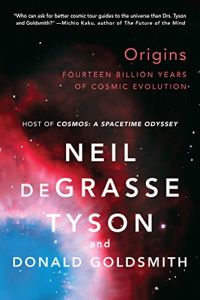
Science is not just about seeing. Science is about measuring — preferably with something that’s not your own eyes, which are inextricably conjoined with the baggage of your brain: preconceived ideas, post-conceived notions, imagination unchecked by reference to other data, and bias.

Origins, Neil deGrasse Tyson and Donald Goddsmith
Posted in General | Tagged , | Leave a comment

Adventures with Ed

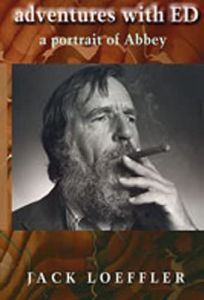
Adventures with Ed: A Portrait of Abbey
© 2003 Jack Loeffler
308 pages

He walked across the desert at least a thousand times,” Tom Russell sang of Abbey in his “Ballad” thereof. Jack Loeffler was with him many of those times, as the two friends drank one another’s beer and amused one another around many a camp fire with both inane chatter and provoking political discussion. In Adventures with Ed, Loeffler offers a remembrance of Abbey’s life that is largely biographical, but is also interwoven with Loeffler’s own commentary on the issues that drove both men — chiefly, the ongoing destruction of the west and the growing unsustainability of industrial society. It reccommends itself easily to any fan of Abbey.

I was astonished when reading Postcards from Ed to see a shot of Abbey in military uniform, as a military policeman no less: both a cop and a soldier? Seemed an unlikely start for a man who was so anti-establishment, but one can’t argue with the draft. (Well, one can. Abbey did in his Brave Cowboy, with one of his characters denouncing it as nothing less than slavery.) Adventures with Ed demonstrates that his lean frame carried many surprises: we all have a history, and it’s usually more interesting than our even our friends give us credit for, let alone our enemies who reduce us to stereotypes. We meet Ed as a young man on a hard-scrabble farm in the Appalachians, fathered by a man who was interesting in his own right, a rural intellectual who favored Eugene Debs and introduced his son to both classical music and rabbit hunting. The familiar story of Abbey emerges here — a young man of adventure, hitchhiking across the United States and then falling in love with the West, there to live the rest of his life. There are the surprising interruptions, though; his being drafted into the Army, and serving in Italy; his frequent moves back and forth between the West and larger cities, usually because he was married at the time; his array of occupations, which astonishingly included welfare agent, both to New York City’s urban poor and to the West’s native Americans. One can easily imagine Cactus Ed in a fire watchtower, or even tending a bar in Taos, living in a commune with other political radicals and artists. It’s a much harder sell to think of him approaching shoddy apartments and adobe houses, clipboard in hand, dutifully generating data and reports. Both fed who he was, though, as he bore witness to what the machine-state did to both the land and to the men who were caught in its clutches — or at least, carried in its wake.

Adventures with Ed offers a myriad of said adventures; Loeffler and Abbey wandered the landscape of the Southwest many times together, camping for days at a time under endless skies. They both saw what was happening to the landscape; the plundering of mines, the creation of roads and railroads at public expense for the benefit of a few corporations. They got into danger more than a few times, either when their outdoors explorations got out of hand, or they ran into corrupt police officers with a side hustle of banditry in Mexico. The latter was particularly harrowing, as they had their wives and children with them — and only one little pistol. The adventures were also intellectual, as the two both read broadly, thought deeply, and argued often. Through Loeffler’s eyes, we see Abbey developing his ideas about anarchism and ‘eco-defense’, in which he defended his frequent destruction or sabotage of private property (billboards, bulldozers, etc) by comparing it to a man defending his home from an invasive brigand. To Abbey, the open lands of the West belonged to everyone — including the coyotes and the rocks, and should not be parceled out by developers to poison Indians with uranium mining or the water table below and skies above. They altered in their opinions as they argued with one another, and over the years: Abbey came to the West idolizing cowboys, but quickly grew to view the ranchers using ‘public lands’ for ranging as the crummiest of parasites, who were destroying Western grasslands directly, and undermining its native population of elk and antelope.

I suppose Abbey appeals to me in part because of his contradictions; his avowed anarchism, yet his desire to see the state check the very corporations that own it; his earthy roots and intense interest in celebrating the working man, yet his appreciation for ‘highbrow’ classical music and for intellectual and philosophical debate; his competing desires to roam the land wild and free, and yet enjoy the fruits of a quiet domestic life — his love for his wives and his reliable tendency to go philandering, at least until he grew older and his libido cooled slightly. He certainly had his flaws and interior contradictions, but he was intensely authentic and never boring. Although I was familiar with Abbey as philosopher and activist, Adventures will be remembered as a favorite for delivering an image of him as a friend, father, and devoted-if-often-distracted husband.

Related:
Postcards from Ed, ed. David Petersen

Posted in Politics and Civic Interest, Reviews | Tagged , , , , , , | 2 Comments

At the dawn of recovery

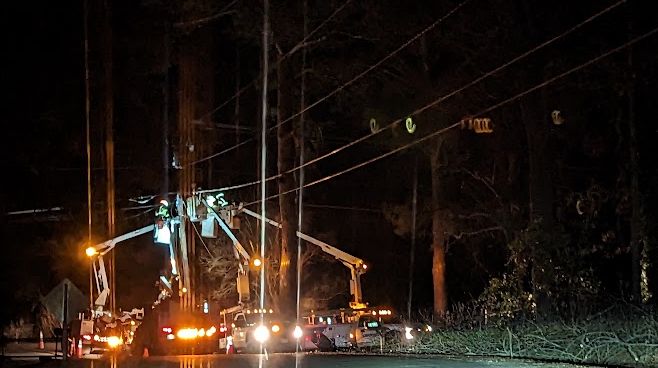
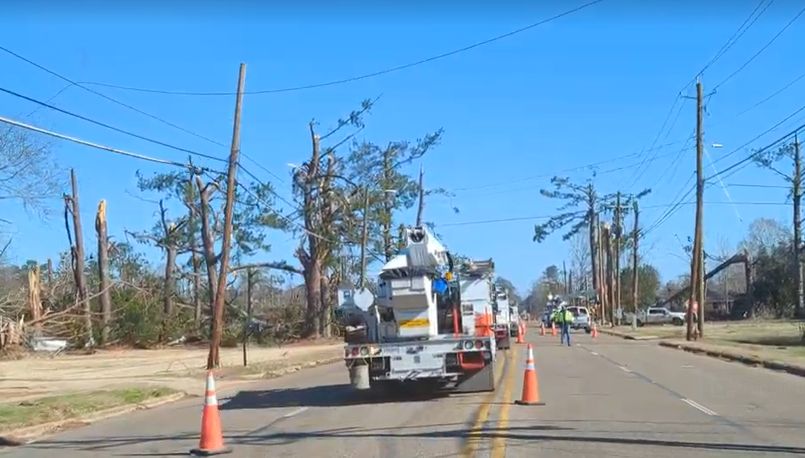
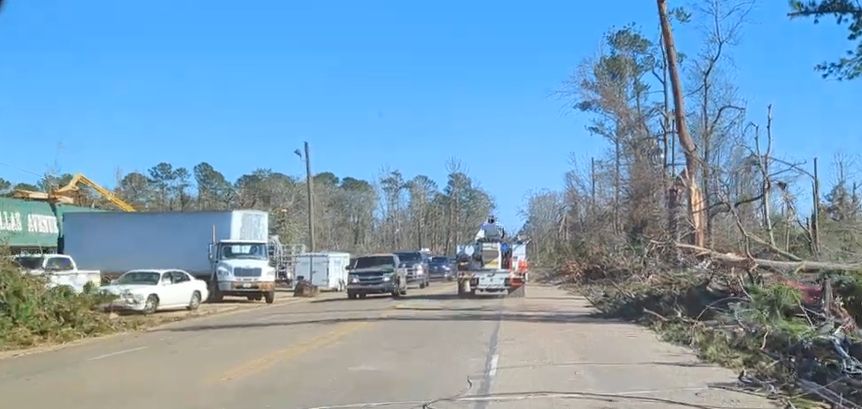
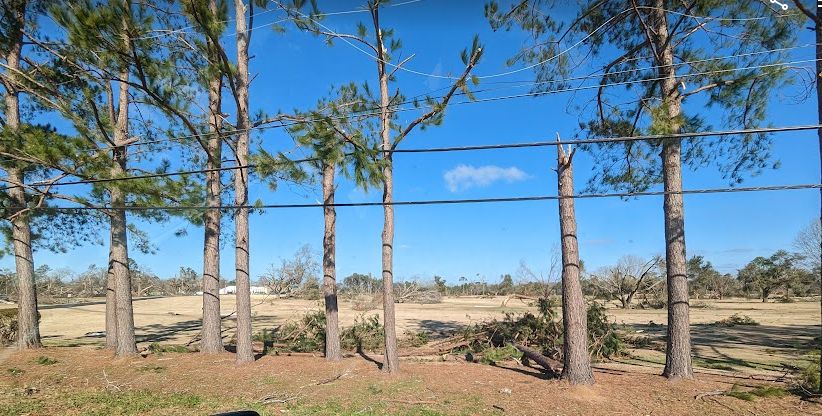
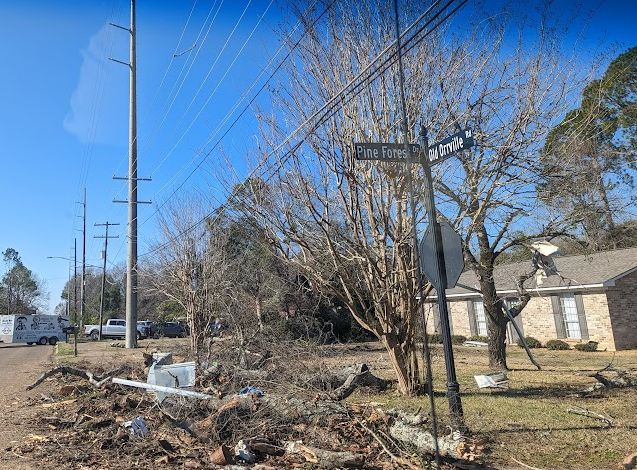
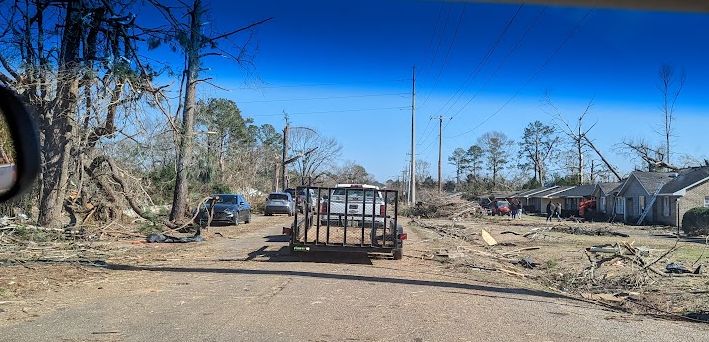
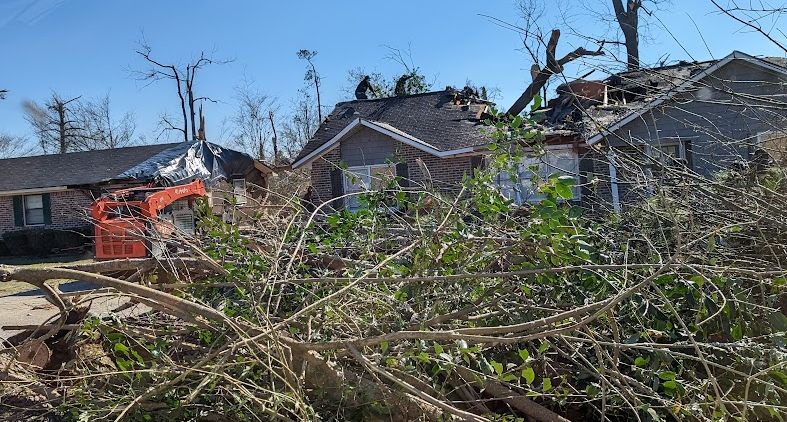
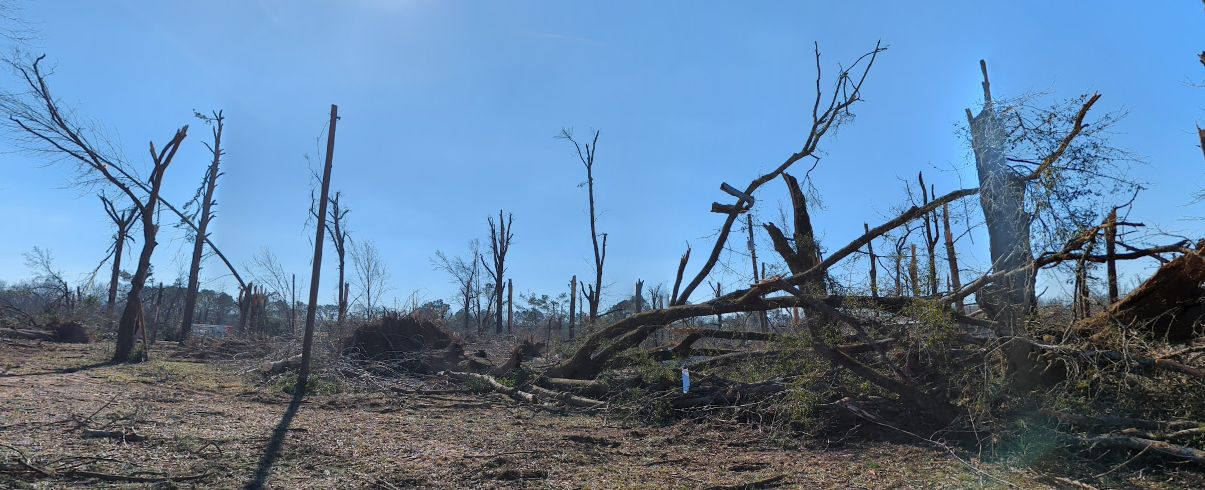
Well. After a weekend of frantic work, now the rain is moving in and we’re pondering all the work that remains. An amazing amount of work has been done in the last few days to clear the road and make recovery possible, despite the traffic issues caused by local and outside lookie-loos. The only time I’ve gone out was Saturday morning, to help a friend evacuate some stuff out of his destroyed cabin before the rain moved in this week. Access was along one of two roads that were ground zero for the tornado, Dallas Ave and Old Orville Road, and they were absolutely destroyed. There must be thousands of trees down in that area alone — 42 in one yard! — and impact is almost universal. It’s worse than any hurricane or tornado in living memory, and arguably the worst thing to hit Selma since the Federal army in 1865. On Saturday, downtown swelled with activity as people took advantage of the break from rain to go to work clearing properties and serving those in need. All of the downtown churches were serving meals, for instance, and (in my church’s case, at least) making deliveries to those who couldn’t make it to us. The same was true on Sunday: there was no shortage of people serving food and administering supplies, from local organizations to outside help. The amount of people coming in to help is frankly, overwhelming: I’ve never seen so many utility trucks in my life, and I imagine two-thirds of Alabama’s state trooper force were in Dallas County this past weekend. There are other areas that have been devestated, too — Jeff Davis/J.L. Chestnut, which I haven’t attempted to try to access. A friend of mine was in one of our historic black churches leading a support group when it collapsed: fortunately, he was in the basement which has a separate exit. Swapping survivor stories and rumors of damage has become the favorite new pasttime, though not all information is accuracy: I don’t know how many times I’ve been told that Winn-Dixie and Morgan Academy were destroyed. (Morgan Academy was untouched, and Winn-Dixie is closed but hard at work repairing itself.) The Library is open today, and we’re doing our best to collect information on resources and communicate that to the people in need. We’ve a long row to hoe, as they used to say.

Reviews forthcoming for Buzz Sting Bite and Adventures with Ed.

If you are interested in giving:


United Way of Selma

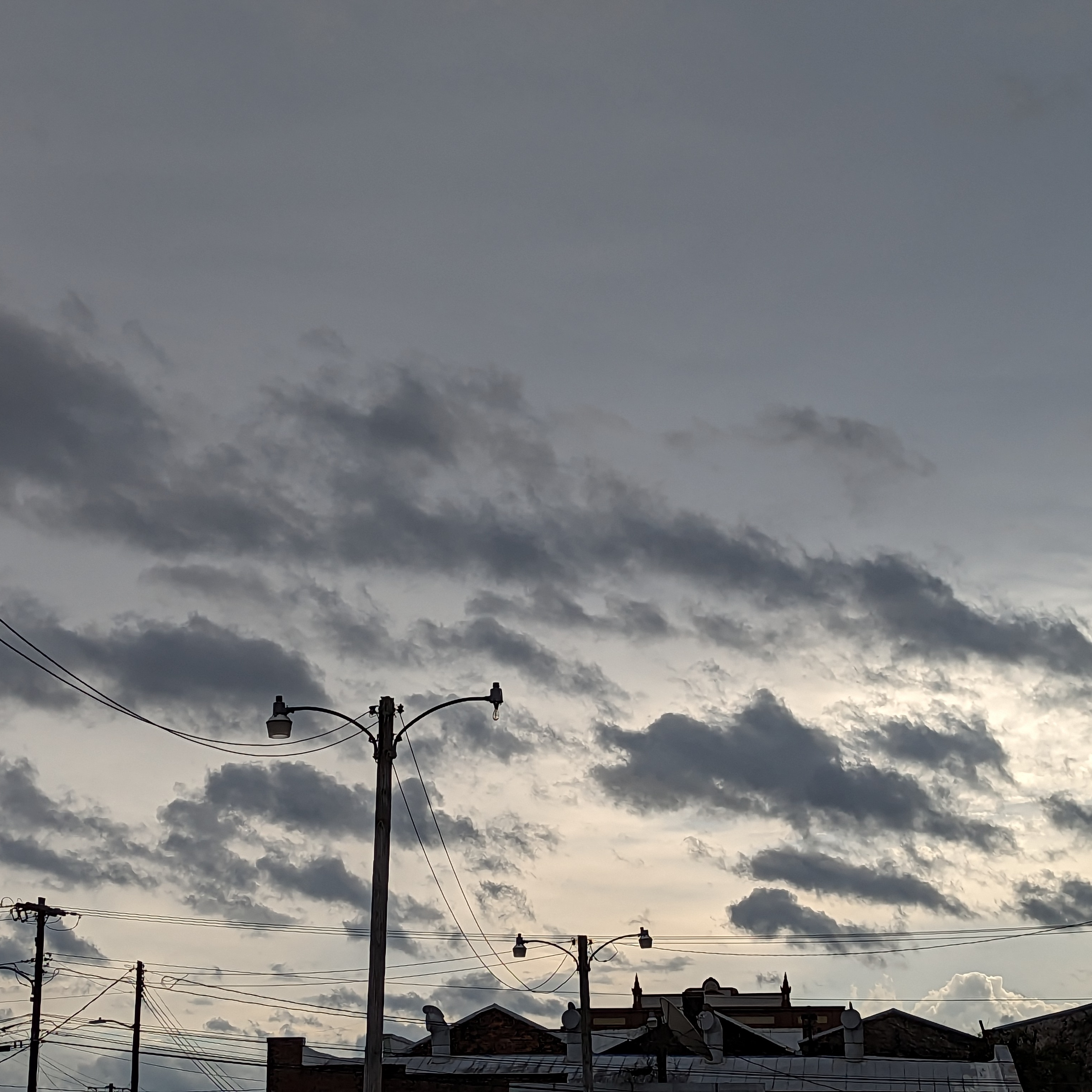
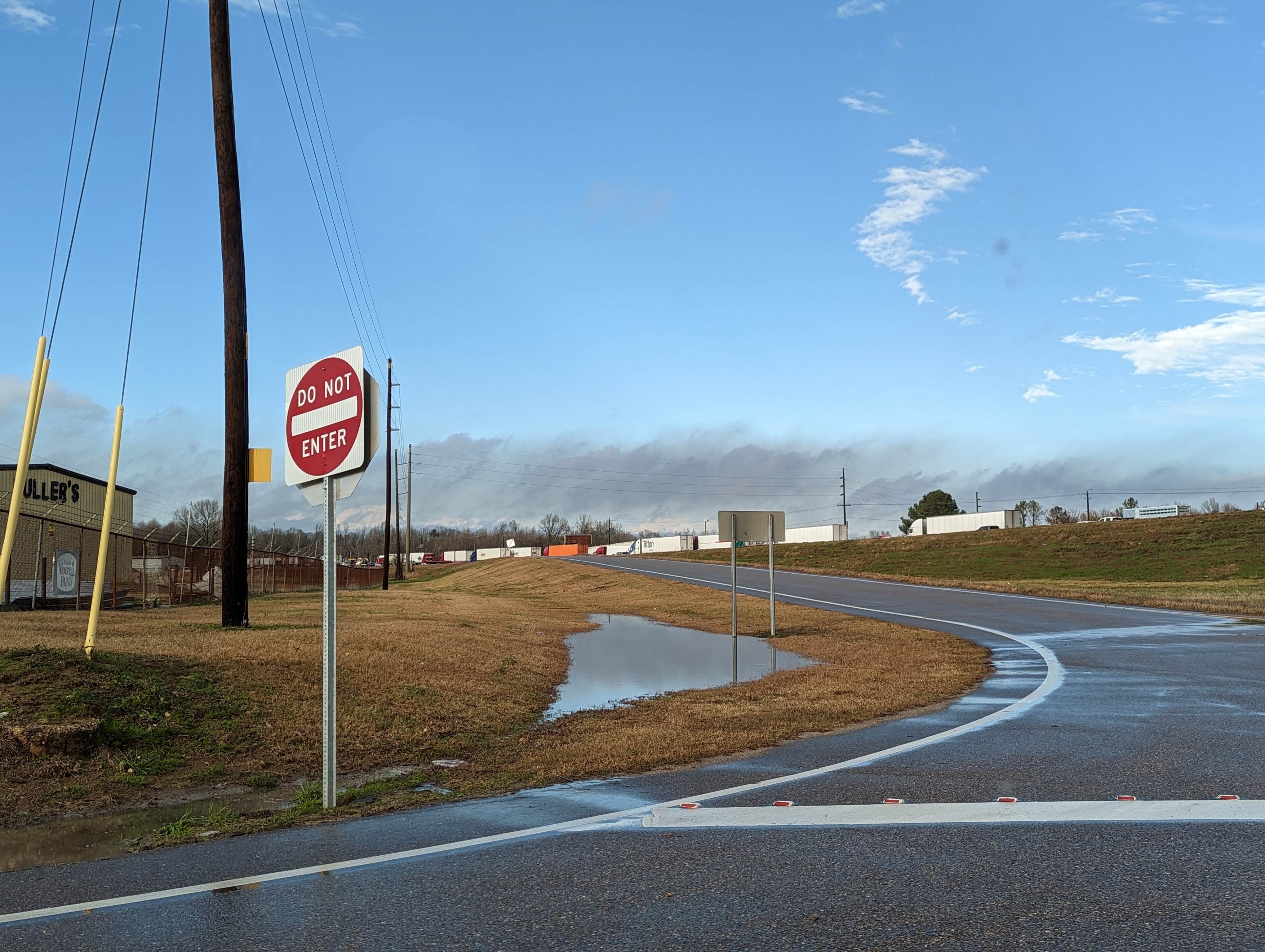
All of these shots were taken trying to navigate to my buddy’s house on Saturday morning. The last shot is taken from the property, which used to be completely forested. His house was completely covered in shade, and now it’s wide open save for the debris.

Posted in General | 2 Comments

A less quick note posted from a borrowed chair in a quiet Walmart aisle

Selma is officially a disaster area, with visits from Governor Meemaw and our senators. My grandmother passed away the night before the tornado hit, so some other displaced relatives and I are rooming at the family place. It has heat and coffee, two essentials since the temps plummeted after the storm.

I had no idea this was coming. We were told to expect a quick round of thunderstorms, some possibly severe. This is Alabama — that’s like a fog advisory in London. I was eating lunch at the Downtowner when sirens went off and I bolted across the street to the library to get inside shelter before things went sideways.

The library, it turns out, is an excellent shelter. We never HEARD the winds that terrified people in the Bayou Rouge Bistro nearby. We were receiving reports on our phones from friends and neighbors announcing that this or that was destroyed, that It was headed this way or that, etc. But inside the auditorium of the library, it felt like any other day except for the lack of electricity.

We emerged to astonishment. Downtown was ravaged, but so were other areas. My roommates and I were all away from home when it struck, and roads were so impassable that I spent two hours trying to find a way to my residence before giving up. The highway east was savaged as well A neighbor assured me that it was fine. I returned to downtown since I couldn’t go anywhere else — roads were filled with people trying to find ways out or home — and checked on friends, spending time helping them clean their yards. Something burned ferociously.

Near dusk I was able to get home. It was fine save for a tree fallen on my bike and garden shed, but the shed itself was still standing. I had lamps and a propane heater and was not terribly put out, but chose to decamp to my grandmother’s house following the funeral on Friday.

As someone who cherishes Selma’s historic architecture, I’m saddened at the devastation but glad we had no fatalities. I am going to try to add some photos to this but am on my phone so it may look odd. I am hoping power will be restored sometime next week. Currently reading Ed Abbey biography.

The above is the bypass completely blocked. Very eerie.

Posted in General | 14 Comments

quick note

Tornado hit Selma badly yesterday. Some areas, including the library and my home, won’t have power for days. Will post it when possible. Now I hav no distractions to keep me from Mout Doom.

Posted in General | 14 Comments

Pests

Pests: How Humans Create Animal Villains
© 2022 Bethany Brookshire
368 pages

Humans believe in and have attempted to create, a very orderly world. There are our cities and homes, where the only animals that belong are those there for our amusement, like pets and songbirds;  there’s the agricultural zones outside of cities, where we expect to find cows and the like, and then there’s The Wilderness, where Wild Animals live.     The problem with this neat and tidy world is that animals…..don’t care.   They ignore “POSTED” signs, stroll across highways, and even go for walks in our neighborhoods to investigate what smells so good.   In Pests, Brittany Brookshire  dips into the messy collision between natural ecosystems and the human environment, delivering information that is entertaining as it is informative,  though sometimes obnoxious in its aspirations to be sociopolitical commentary.

The animal-human relationships covered here are an interesting mix, between with the predictable – mice,  pigeons, and so on – and the larger surprises like elephants and Burmese pythons. (Southern Florida is all agog with them, apparently.)  Brookshire’s subtitle is multilayered, in that humans both ‘make’ animals into pests by our varying categories of them – a squirrel in the woods is cute, a squirrel in our garden is a cursed menace  that we’d like to shoot –  but also in that we facilitate the collision by both destroying or reducing the habitats of many animals in our own expansion, and by creating rather attractive new habitats for industrious critters to explore and exploit.   We also directly make animals pestilential, by  accidentally or purposefully introducing them into new ecosystems where they wreck havoc.   Cane toads might be introduced in the hopes that they destroy beetle grubs, for instance, and then accidentally destroy the local ecosystem when they prove both attractive and fatally toxic to the local predators.   Animals’ ‘pest’ status doesn’t just depend on where they are, though; it varies by what they do. Mrs. Green’s cat is a pet to her, but an ecological menace to the local bird population – and the tourists’   awe-inspiring elephants are  destructive, deadly bullies to the Kenyans who live near them, and who are forbidden from defending themselves on the basis that tourist income is the local state’s livelihood.  A common theme in Pests is the limit to human knowledge and manipulation: while we’d like to exercise dominion over the entire Earth,  nature proves to be rather like economics in that she fights back, and the best-dictated plans of technocrats and colonists result in famine and inflation. 

Pests manages to be utterly interesting,  often entertaining, and sometimes grating.  Brookshire, a science journalist, apparently fancies herself sociopolitical commentator as well – though her level of penetrative insight is on the level of a first-year university student who’s just discovered Marx and Zinn and begins every sentence with a sneer and the word ‘Actually,” .   One would think from reading this that European civilization is the only civilization in the history of humanity that has ever created environmental problems or struggled at interactions between wildlife and the human environment.  Indigenous cultures are treated with the same patronizing noble-savage take one finds in Avatar and similar movies,  ignoring the massive environmental manipulation pre-industrial cultures engaged in. (She does manage to work in a brief mention of the Chinese campaign against the ‘Four Pests‘, without using the massive ecological disruption and human death & misery that followed to moderate her ‘colonial’/European obsession.) There is a kernel of truth underneath the myopia, of course  — the problem is often outsiders coming in without any regard for local knowledge,  reducing the landscape to something to be manipulated at will,   typically removed from the unexpected consequences —  but Wendell Berry has made that point repeatedly and in a more engaging and respectable fashion, not patronizing those who he  praised nor sneering down at those he rebuked. Western colonial authorities are a fine example of the environmental problems caused by hubris, but they’re hardly the only ones, and Brookshire’s pretense (or ignorant belief) that they are sharply reduced my ability to take the non-science parts of the book seriously.  

Related:
Darwin Comes to Town: How the Urban Jungle Drives Evolution. On the ways animals are adapting to live very comfortably in dense human environments.

Highlights:

We can see them in more than one way. We can put poison out for rats and protest their use as laboratory animals. We can shoot deer in the fall and show their adorable offspring to our children in the spring. Vertebrate pests lay bare our internal hypocrisy—how the natural world fills people who live separate from it with both adoration and dismay.

But it could also be that people in the developed, industrialized, walled-off-from-nature Global North have a lot less tolerance for animals that harm them and a lot more tolerance for animals living far away, harming other people, notes Susanne Vogel, a conservation scientist at Aarhus University in Denmark. If elephants lived on the Great Plains of the United States and tried to eat our amber waves of grain? “They’d be shot before they could start,” she says.

When the scientists looked at which types of car were available, they found that of the cars in the park between 2004 and 2005, bears had a major preference: minivans. The bears headed for a minivan four times more often than would be expected by chance. Why are bears into minivans like they just hit thirty-five and had a third kid? Breck and his colleagues weren’t able to find out for certain, but he’s pretty sure the answer is the kids. Minivans are more likely to be driven by families—which means back seats with a fine layer of Cheerio dust and smearings of Go-Gurt. To the sensitive nose of a bear, that smells like jackpot.

For the history of the cane toad saga, there is nowhere better to start than the 1988 documentary Cane Toads: An Unnatural History. I have vivid memories of watching this film at summer camp as a child, and watching again as an adult did not disappoint. It’s got horror music and creepily giggling children cuddling giant toads. A naked man is horrified to find toads spying on him in the shower. A cane toad avenger swerves his van back and forth over the road, appearing to flatten cane toads with disturbing popping noises (don’t worry, the van was actually squishing potatoes, no cane toads were harmed in the making of this film). An old man in thick glasses notes emotionally how much he loves to watch cane toads mate. I can’t recommend it enough, honestly.

Posted in Reviews, science | Tagged , , , | 10 Comments

People Habitat

People Habitat: 25 Ways to Think About Greener, Healthier Cities
© 2014 F. Kaid Benfield
304 pages

The built environment can have an enormous effect on human happiness, facilitating  it or obstructing it; think of the frustration of  taking care of errands amid sprawl that fills the hours with traffic and redlights, or the enormous pleasure one might find while fulfilling those same errands in a walkable place,  with pleasant, casual distractions like coffee shops and parks along the way. The places we live in also have an enormous environmental impact:   those who live in well-built urban areas can accomplish much of their daily business without ever having to crank up a car, for instance, and others may have to structure their day around two-hour commutes .   In Human Habitat, we find essays exploring both of these aspects of the city, as well as the intersection between them.   Although the book’s chapters are separate essays, they were either written to be read together, or smartly edited so that they appear as a whole, and the particular topics topics are often worth considering by themselves, even outside their broader connection.   

Humans are not necessarily urban creatures – we existed for hundreds of thousands of years without them – but it’s impossible to imagine human civilization without them.  They are its economic engines, its creative kindling, its seats of power.  Considering that most of the seven billion people currently alive today live in cities,  it’s important to get the design thereof right.  Suburban sprawl, which consumes land and forces auto-dependence while isolating people from one another and creating manifestly ugly environments,  is not ‘getting it right’. Cities are  crucial for environmental sustainability:  concentrating human activity into a few uber-efficient spots  will limit our impact elsewhere, and allow for better stewardship of our resources. To be truly sustainable, though, cities must be places people want to be.  This is crucial, not only to attract people to them, but because it is people’s love for places that will drive efforts to make them more sustainable, and to protect them from challenges in the future. Baid’s essays touch on different aspects of both human pleasure and environmental friendliness, and are often incisive. His second essay scrutinizes “green architecture”,  which pats itself on the back for using renewable materials but ignores completely the context of the building.  A ‘green building’ in suburbia  that can only be reached or departed by car is as green as coal is clean.  Another memorable essay points to the need for childhood to be a time of exploration, and how cities should be places that encourage that – by  making pedestrian activity safe, for instance ,and creating places kids can be kids instead of having to experience childhood either as little army bots, being shuttled from one regimented activity after another in an Armored Kid Carrier (the modern SUV) or being forced to look for stimulation from an ipad.   Kaid also explores more controversial terrain, like a need for balance in gentrification – allowing people to come in to add value to places, but not so quickly or in ways that existing citizens are forced out , the appropriate role of agriculture in the city, and the vital role bars can play as ‘third places‘.  

I found this a most interesting collection, given the variety of topics within and the author’s priority – not fulfilling metrics of green viability, but in making human life within cities happier and healthier. He touches on areas ignored by many other urban writers – like the important role played by neighborhood churches in cities, for instance, and he does this while not being a believer himself. Although some of the topics would only be of interest to serious urban nuts (the kind who listen to podcasts or watch Youtube channels about urban design, for instance), even the casual reader might find it enjoyable to get a taste of these topics in an essay without diving into a full-scale monograph.

Related:
Happy City, Charles Montgomery
Walkable City: How Downtown Can Save America One Step at a Time, Jeff Speck
The Green Metropolis, David Owens
The Geography of Nowhere, Jim Kunstler
The Design of Childhood: How the Material World Shapes Independent Kids, Alexandra Lange. Not one I’ve read but one I want to.

Posted in Politics and Civic Interest, Reviews | Tagged , , , , | 2 Comments

Teaser Tuesday: Pythons and elephants and humans oh my

From the very interesting and often amusing Pests: How Humans Create Animal Villains.

When one finally does catch a python, there’s the issue of killing it. “They also have this weird ability to regrow their organs,” Hart explains. You can’t design something that will attack the heart or liver. They’ll just grow another. “How can you get around the ability of an animal to regrow organs?” Right now, Kalil and other hunters rely on fully destroying the brain—and sometimes decapitation for good measure. Thus far, pythons are not regrowing heads.

If you see a wild elephant and you’re on foot and undefended? Don’t ever get close enough for a selfie. Run. For those who don’t live with elephants, it’s easy to think that the only human-elephant conflict there could be is the kind that humans perpetrate, the kind that poaches these beautiful creatures for their oversized incisors. But elephants are also living tanks, capable of killing, disemboweling, knocking down houses, and eating a farmer’s entire crop for the season. Human-elephant conflict can go both ways. And in Kenya, India, and other countries, now it’s often humans trying to keep the elephants at bay.

Posted in quotations | Tagged , , | Leave a comment

Note to self, read LeGuin

Posted in General | Tagged , | 15 Comments

An Incomplete Census of the Residents of Mount Doom

In the hopes of vanquishing Mount Doom before its height brings it down upon my head and vanquishes me, I’ve  signed up at The Unread Shelf this year. Our first ‘assignment’ is to list all of the books in our TBR pile. I’m just going to list physical books, because those are the ones whose mountainous presence casts a shadow  over my bedroom and life in general. These are also just the ones I can find right now: there are others I know I have, but they’re hiding — like Cancer Ward.   Brace yourself.   The known count (again, physical books only) is 86. Greatly reducing this list is my number-one goal for 2023. Most will be read, but some may just be cast into Outer Darkness (i.e.Goodwill).

History
Revolutionary Characters, Gordon S. Wood
Merchants and Moneymen: The Commercial Revolution, 1000 – 1500. Frances and Joseph Gies
What the Dormouse Said: How the Sixties Counterculture Shaped the Personal Computer Industry,  John Markoff
Faces Along the Bar: Lore and Order in the Workingman’s Saloon, Madelon Powers
Invasion! They’re Coming!  , Paul Carrell. A German history of D-Day
Empire: How Spain Became a World Power, Henry Kamen
The War of 1812, John K. Mahon
The Life of Johnny Reb,  Bell Irwin Wiley
The Caesars, Vol. I:  Julius Caesar
,  Lars Brownworth
The Confederate Reader: How the South Saw the War,  Richard Barkswell  Harwell
The Mississippi and the Making of a Nation, Stephen Ambrose
The Victorians, A.N. Wilson
British Soldiers, American War: Voices of the American Revolution,  Don Hagist
Log Cabin Pioneers: Stories, Songs, and Sayings. Wayne Erbsen
Inside the Klavern: The Secret History of a Ku Klux Klan of the 1920s,  David Horowitz
Crypto: How the Code Rebels Beat the Government, Steven Levy

Science
Skeleton Keys:  The Secret life of Bone,  Brian Switek
The Moral Animal: Why We Are the Way We Are,  Robert Wright
The Sun in the Church: Cathedrals as Solar Observatories,  J.L. Heilbron
This is Your Brain on Music: The Science of a Human Obsession, Daniel Levitin
Why Balloons Rise and Apples Fall: Physics in Bite-Sized Chunks,  Jeff Stewart
Buzz Sting Bite: Why We Need Insects, Anne Sverdrup-Thygeson
Nine Pints: A Journey through the Mysteries of Blood, Rose George

Politics, Society, and Culture
The End of Power:  Why Being in Charge Isn’t What it Used to Be, Moises Naim
Copenhaganize: The Definitive Guide to Global Bicycle Urbanism,  Mikaeel  Colville-Andersen
The Color of Law: A Forgotten History of How Our Government Segregated America, Richard Rothstein
The Parasitic Mind: How Infectious Ideas are Killing Common Sense, Gad Saad
McMafia: A Journey through the Global Criminal Underworld, Misha Glenny
The Dumbest Generation: How the Digital Age Stupefies Young Americans,  Mark Bauerlein
The 99% Invisible City, Roman Mars
Human Habitat: 25 Ways to Think about Greener, Happier Cities,  F. Kaid Benfield
The President’s Club: Inside the World’s Most Exclusive Fraternity
The Supremacists: The Tyranny of Judges and How to Stop It, Phyllis Schalfly. Found in a Little Free Library
The Excluded Americans: Homelessness and Housing Policy, William Tucker
The War Against Boys, Christina Hoff Summers

Religion & Philosophy
Spark Joy, Marie Kondo (THIS WHOLE PILE DOES NOT SPARK JOY)
Beauteous Truth: Faith, Reason, Literature, and Culture. Joseph Pearce
The Pilgrim’s Regress, C.S. Lewis
Paul among the People: the Apostle Reinterpreted and Reimagined in his Own Time, Sarah Ruden. This was literally a case of me reading an article, the article quoting this book, and near-sleep me thinking “I need this”.
The Joyful Christian: 127 Readings, C.S. Lewis.  Editor is not listed but I would assume Walter Hooper.
The Lost Gospel of Judas Iscariot,  Bart Ehrman.  Someone lent this to me five+ years ago. Don’t lend me books or movies without a deadline.  
The Essential Russell Kirk

Other Nonfiction
Life after Google: The Fall of Big Data and the Rise of the Blockchain Economy, George Gilder
The Outlaw Ocean: Journeys Across the Last Untamed Frontier, Ian Urbina
The Glass Cage: Automation and Us, Nicholas Carr
One Life at a Time, Please; Ed Abbey
Adventures with Ed: A Portrait of Abbey, Jack Loeffler
Heart of Darkness and Selections from The Congo Diary, Joseph Conrad
Teaching as a Subversive Activity, Neil Postman.  Found thrifting, acquired because of Postman.
The Letters of Ayn Rand,  ed. Michael Berliner 

Historical Fiction
The Four Winds, Kristin Hannah
Swimming with Serpents, Sharman Burson Ramsey
Genghis: Birth of an Empire, Conn Iggulden
Tuck, Stephen R. Lawhead
Roads to Liberty, F. Van Wyck Mason. A collection of 4 novellas set in Revolutionary America
Blood of Honour, James Holland
Darkest Hour, James Holland
North Star Over my Shoulder, Bob Buck.  WW2 flying novel or something. Found in library bookstore. I see planes, I buy things. It’s sad.
Tucket’s Travels:  Francis Tucket’s Adventures in the West, Gary Paulsen
The Day of Atonement,  David Liss
The Sunne in Splendour, Sharon Kay Penman 

Classics Club Reading List
Ida Elizabeth, Sigrid Undset
Dune, Frank Herbert
My Name is Asher Lev,  Chaim Potok
On the Nature of Things  | De rerum natura, Lucretius. Trans Anthony Esolen
A Tree Grows in Brooklyn, Betty Smith
Paradise Lost, Milton
My Antonia, Willa Cather
All the King’s Men, Robert Penn Warren
Purgatorio, Dante. Trans. Anthony Esolen
Paradiso, Dante. Trans. Anthony Esolen

Other Fiction
The Secret Chord, Geraldine Brooks
The Acts of King Arthur and his Noble Knights, John Steinbeck. (Yes, this exists.)
Serenity: Better Days. Graphic novel. 
First Shift Legacy: A Silo Story.  I don’t know what this is. It’s just in my pile. 
Isaac Asimov’s Inferno, Roger MacBride Allen
Isaac Asimov’s Utopia, Roger MacBride Allen
The Wayward Bus, John Steinbeck
Metatropolis, ed. John Scalzi
The Boys from Biloxi, John Grisham.
The Book Thief, Markus Zusak
Island of the Sequined Love Nun, Christopher Moore.  A Little Free Library pick, one that won me over on the basis of Moore.
Cemetery Road, Greg Iles. Bought for a Christmas gift, but then it got damaged by the struggles of life on Mount Doom.
The Island of Dr. Moreau, H.G. Wells
The Food of the Gods, H.G. Wells

Posted in General | Tagged | 14 Comments