
While I’ve been excellent this year at keeping my number of un-reviewed books to practically zero (one exception being Bruce Thornton’s Greek Ways), in the last couple of weeks several have piled up. Thus, I wave my magic wand: the short rounds post! Be ye warned: I have just returned from several days spent in the deep woods, communing with Ents and dead presidents. I have two Big Ol Biographies to write reviews for, and a smaller work of fiction. Fiction! Fiction, you say? Yes. But I’m afraid this will be a Very Presidential Week with the one relief thrown in.
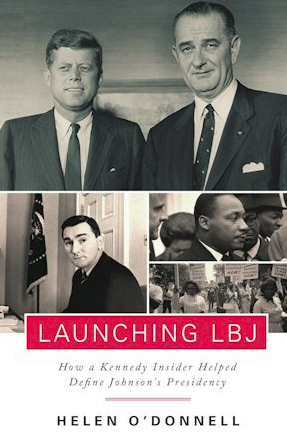
Launching LBJ, Helen O’Donnell. Launching is rather a presumptuous title, but the memoir itself is interesting. Ken O’Donnell was JFK’s chief of staff, and one of the few New Frontier boys who was not hostile toward the Old Guardsman LBJ. Accordingly, he became a bridge between the JFK and Johnson administrations, and his daughter here claims credit for her dad in helping Johnson find his footing and then forge ahead in his own name after ‘64. Considering that Johnson was a political titan before JFK asked him to join his administration, the idea that O’Donnell “launched” the Texan is ridiculous. Still, for my presidents project seeing Johnson in this in-between spot was interesting. There was an interesting LBJ/RFK anecdote in here which maintains that the animosity began when RFK, working on the rackets committee, arranged to have a hearing conducted in a room that Everyone Knows that the Senate Majority Leader controls. It’s not an official thing, but Everyone Knows it. LBJ, on finding out that some little staffer was using His Room, kicked them out. Did he have anything planned? Nope. It was the principle of the thing: no one uses LBJ’s Room without The Leader’s say. The more common version of their enmity, however, is that LBJ liked to tell a story of hanging out with FDR and hearing him talk to Joseph Kennedy in the friendliest of tones, then hang up with a grin and say, “I’m going to fire that bastard when he gets home”. RFK heard this story mocking his father many times, and while Bobby and Joe Sr did not exactly get on, Joe viewed RFK as a hater after his own heart and Bobby certainly loathed Lyndon.
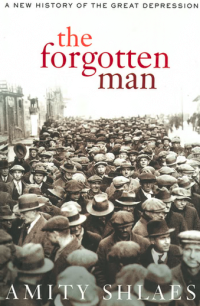
The Forgotten Man, Amity Shlaes. A political history of the Great Depression addressing both Hoover and FDR in turn, and highlighting some loud personalities of the period like “Father Divine”. A recurring theme in the book is that while many Hoover and Roosevelt policies were well-intentioned, they nevertheless undermined recovery by undermining incentives toward investment. Roosevelt also catches flak for his ‘bold experimentation’ being gross excesses of power, and often arbitrary exercises; at one point Roosevelt declared that gold should be revalued by $0.21 because twenty-one was “a lucky number”. The book abruptly ends with the 1940 election, which I found odd. I was amazed by how invasive a lot of New Deal legislation was, particularly the National Recovery Admin which had ‘codes’ for different businesses and forbade so much as planting crops without state permission — small wonder it was attacked and destroyed in court.
Over the weekend I finished two large biographies and a small novel. I would tell you when to expect them (“tomorrow, when the bell tolls one!”) Marley style, but I’m rather tired after reading ~2000 pages the last few days. I’m also close to finishing a radio adaptation of The Two Towers and hope to finish Return of the King before the week’s end.
The White House is small. But if you’re not at the center, it seems enormous.
Quotations
“Frankfurter could influence young Roosevelt and others because, even in Babbitt times, he was able to transmit a wonderful sense of possibility to those around him. Student after student after student came to him and stayed, sometimes simply for the pleasure of going mind against mind. One of those students was Adolf Berle, who, like Frankfurter, was not accustomed to coming in second. Berle attended Frankfurter’s course two years in a row. ‘What, back again?’ Frankfurter had asked. ‘I wanted to see if you’d learned anything,’ Berle replied.”
Father Divine’s power was impressive. By now, a letter addressed simply “God, Harlem, USA” would reach him.
Under Wagner Act rules, a union, once in place at a company, might keep out workers who did not join—the so-called closed shop. The same union need not ever again be subject to election by ratification but could represent the workers more or less in perpetuity. The effect was the most coercive of any law passed in the New Deal.
Even those who did not like the new projects and new buildings often supported them. As the country told itself, there could always be something worse: if not Huey Long, then Father Coughlin, or the communists. That year Hitler was staging Germany’s first war games since its defeat in World War I and calling up its first draftees.
The New Deal was causing the country to forgo prosperity, if not recovery. The wealthy, after all, were in a position to take risks with new ventures precisely because they were wealthy—they could invest in several projects at once. Under the new 1935 law, a very wealthy man would see more than three-quarters of any profits from new ventures taken by income tax. Any loss, however, would be the same man’s to bear. This man would try to hoard his capital and wait—thus coming to fit the very stereotype of the idle rich man the New Dealers were hoping to propagate.
Divine’s eclectic platform included an end to installment purchases for consumers, and a ban on tariffs. He also sought a ban on the salutation “Hello”; this should be replaced by “Peace,” and the phone company should be forced to comply.
Father Divine was an angler, just like Huey Long and Coughlin, and he had legitimate additional goals: an end to lynching, for example. He, unlike Norman Rockwell, feared that government help might make citizens more dependent. In 1936 he would write directly to Harold Ickes about a government law that required people to apply for relief before they could be hired for public works positions. Divine argued that the law damaged self-esteem and the will to work, and thus “lowers the standard of a person for the present, and for his future generation.”
Willkie also loved helping his subordinates. One of them, an executive at the Georgia Power Company named John Marsh, was married to a Smith College dropout. The wife had written a 1,037-page romance novel about the Civil War. Willkie liked the book and the author so much he sent out a memo to Commonwealth and Southern employees, plugging it. Her name was Margaret Mitchell, and her book, Gone with the Wind, would go on to sell four million copies. Willkie believed such success created an unhealthy gap between man and wife. To make Marsh feel manly, Willkie promoted him at the power company.
Willkie’s publishing and his time with Irita were about more than history. In discovering the old British Whigs, he discovered their liberalism —a liberalism that antedated Wilson and focused on the individual. It resembled the liberalism of Europe that he had heard about in childhood. Revisiting that old liberalism, he could see that while Roosevelt might call himself a liberal, the inexorable New Deal emphasis on the group over the individual was not liberal in the classic sense. Liberalism had historically included liberal economics, and Roosevelt had turned away from that. Willkie was finding the intellectual ammunition for his battles, and Irita was helping him do it
What the Depression had been to the Roosevelt candidacy in 1932, the war was to the Roosevelt candidacy of 1940: the single best argument to reelect Roosevelt and give him special powers. Even Time of the Luce empire, the very empire that had advanced Willkie, understood. That year Time’s editors had written, “Whether Mr. Roosevelt is Moses or Lucifer, he is a leader.”


