September 2026….a heck of a month, beginning with Wendell Berry’s death, punctuated by a funeral and a strong storm system rolling through my alma mater in Montevallo and threatening but not taking down my Reading Tree, and then dominated by presidents. On the bright side, after three weeks of August heat, someone upstairs finally remembered there was a temperature setting on the ol’ sky thing and we’ve been experiencing a little bit of fall, at least for one weekend.
Not sure of photo credit: this was shared by celeb meterologist James Spann and appears to be looking at the Main Quad via Napier Hall (my former residence). My reading tree on the left, looking bedraggled but unlighteninged. MANY books were read 2007-2009 under that tree.
September certainly had a theme: I read 11 books, 10 of which were presidential. Early in the year when I made my Hail to the Chief reading page public (I’d created it over a decade ago when I read biographies for Washington, Adams, Jefferson, and Madison), I said that I would not be trying to finish it this year, because that would be “like, thirty dudes”, and account for entirely too much of my annual reading. At some point, however, this minor thread in my greater America @ 250 project became the means of the project itself, as my reading around the presidents led to me hoovering up a substantial amount of American history. The biographies and adjacent reading account for half of my reading this year. September has been that in concentrate, as I decided to knock out a series of presidents who would just get the small 200-page volumes from the American Presidents series in order to give more complex individuals like LBJ more time to properly digest.
Three-quarters of the way into the year, Classics Club is struggling, and the Science Survey is..erm, still hibernating. Bible in a Year is still going well, though my plan to read one Bible-related book a month to augment the actual texts has largely fallen by the wayside. While 2026 may be developing in a very different way than I intended, by the end of it I expect to be able to say I’ve read a biography for every single dead president. and like reading War and Peace there’s not many that can say that. Retreating into history was a way of getting away from the August-like weather and several funerals, though at least the Red Sox managed to wander into the postseason, however improbably. As of this writing, it’s the top of the fifth and they’re one game from being removed….by the Yankees. Fiddle-dee-dee! They were so dismal back in April I just focused on University of Alabama softball and baseball instead.
My reading tree — bloodied, but unbowed. My reading spot is now fully sun exposed, but hopefully the ol’ girl will bounce back.
The tree in happier times (May 2010)
2026 Goals: Checkpoint Inquisition
What were my goals for 2026?
Finish Classics Club II. Hahahahah no.
“Do Proper Justice to America @ 250”. I’m pretty sure that’s a “yes” provided we’re allowing for the hostile takeover of America @ 250 by Andy Jackson and company. (And it doesn’t matter if we’re allowing for it, because Andy Jackson has made it so.)
Bible in a Year. Remarkably, I have not fallen off this horse despite how much of the Hebrew scriptures are lists of people (and their pastures).
Continue to Avoid Reddit. I’d forgotten that I quit reddit cold turkey in the beginning of the year: I eventually drifted back by April, I think, but I’m going to claim a huge win: not only do I spend a lot less time engaging in reddit/facebook group discussions, when I do it’s very casual and I don’t get invested whatsoever. This is important to me not simply because they can be a timesink, but because I’ve found that I don’t like who internet arguments urge me to be — sarcastic, dismissive, and combative.
More writing. Manalive, yes. Granted, I haven’t been churning out history articles the way I wanted to, I have been doing a lot of fiction writing, working on a collection of small-town southern short stories, and I received an email inviting me to submit articles to a news magazine if I could think of pieces that would apply to their general theme.
“Expand my role as a local historian by attending history society meetings in other counties”…I’ve done a little of this but not nearly as much as I ought. Yesterday, I skipped driving to the Autauga County Historical Society’s meeting in favor of napping in the sun on a covered porch. Beastly of me. I’m going to be a galley-reader for a work of local history, though, so…progress.
Reading Johnny Clegg biography….not yet. Purposeful tech training….eh, not enough to write home about. I’ve been looking more at cataloging stuff rather than IT. Re-reading….again, not enough to brag on.
Star Trek @ 60
I watched a fair bit of Star Trek, hitting TOS, DS9, VOY, ENT, SNW, and making an effort to watch DSC. Started replaying Star Trek Elite Force but wound up spending my evenings listening to lectures, instead. I did play through my favorite segment, though, an exploration of a 1960s Mirror, Mirror starship. It didn’t help that I have played Elite Force so many times that I’d just race through levels on muscle memory alone and then think “Where am I going? Why did I run up here?”.
New Acquisitions
Biographies of McKinley, Richard Henry Lee, and John C. Calhoun that were on sale. . If RF years were Friends episodes, this one would be “The One With All the Biographies”. Rumble Fish, Parliament of Whores, Southern Honor, and C.S. Lewis in the Shadowlands were picked up at an indie bookstore (Recollected Books), and last night I bought a few titles for November’s SF focus, in addition to Ghosting the News on the collapse of local newspapers. I’m diversifying!
Love is the yearning for eternity. It explains a lot of things. You ever see a schoolboy carve a heart into a tree, “John + Jane Forever”? It’s easy enough to see how John and Jane got there, but you always wonder about forever, and why that should occur to a schoolboy, and every schoolboy?
My father died when I was only 31 years old. We did a lot of things together, my father and I, when I was a boy, but I never got the chance to stand beside him and kill our enemies in battle.
The Cyclopeses don’t ever get together in assembly, and every family ignores its neighbors. In other words, the Cyclopes is modern America. Everything is controlled from very far away, and we almost never get together in direct, personal, human ways to secure the common good. It’s been taken out of our heads, perhaps, and everyone lives for themselves — we even make up our own identities now — this is all ‘Idiotic’ in the Greek sense of the word.
The real storehouse of different cultures, cultures that are not ours, is the past. Right now everything is more homogenized before — where are you going to go to learn about completely different ways to live a human life if you don’t go to the past?
There is a kind of stupidity that you don’t get by Nature. You can only achieve it by hard work.
“If the Will of the People has an executive, his name is not president. It is Caesar.”
“Tolkien on Fairy Stories“, Dr. Brad Birzer. The Tolkien Seminar. A discussion of Tolkien’s lecture at St. Andrews, which warned students that there there are more things in heaven and Earth than are written in their philosophy.
“The Truth About the Biggest Act of Domestic Terrorism in American History“. Tucker Carlson interview with Kathy Sanders, who lost two grandchildren in the OKC bombing; in the interview she discusses how she became convinced early on that there was more to the story (specifically, she believes McVeigh was part of a larger conspiracy that the FBI ignored, content in having gotten its guy) and then switches to how she’s lived with the OKC bombing since. While I came to listen skeptically to the conspiracy theory, I was honestly moved by Sanders’ account of being shaken by her husband’s death: he was filled with rage and enmity toward McVeigh and the government, and died before McVeigh did. Sanders became convinced, she said, that her own hatred would destroy her, and began praying for McVeigh and Nichols; she subsequently met Nichols’ mother, and his son, and befriended both. Her quote?
“I made the decision to forgive, and I think it changed the ending of my story.”
“Introduction to Jacksonian America“, Dr. Brad Birzer. Jacksonian American series. I like how when other colleges are assigning students excerpts rather than books Dr. B is like “Nope, you’re reading The Last of the Mohicans, Democracy in America, Union and Liberty, annnnnnnnnnnnnnnnnnnd a thousand page history.”
“One reason I love this class is that everyone we meet is so strange“
“John C. Calhoun is an person I will argue with — I don’t like him — but he’s the most powerful and original thinker of [The Jacksonian Era]. You need to know him, or you’ll miss the period.”
“Charles Carroll of Carrollton gives his last testimony before he dies: always love Jesus, and always love Cicero.”
“The Roman Civil War, Pt. 3: Sulla Marches on Rome”, the Rest is History podcast.
“So Marius is dead, but — he was in power, he was drunk, and he was killing people. It’s exactly what he would have wanted.”
“Reconsidering Calhoun“, the Brion McClanahan Show. Dr. Brion McClanahan. He reviews a few elements of Calhounian thought, particularly an emphatic rejection of Rousseau and Hobbes’ “state of nature”, emphasizing the importance of political order, and the inevitable breakdown of constitutions. More of a podcast than a lecture, though McClanahan talks about Calhoun a LOT.
Speaking..of… “The Roman Civil War, Pt 4: Sulla, Master of Rome”, the Rest is History podcast. Enter Pompey the Great, who was given that title when he was all of 24.
“Calhoun“, Dr. Brad Birzer, Jacksonian American series. (Brion and Brad have VERY different approaches to Calhoun, but I encountered both via Tom Woods’ Liberty Classroom.) Brad emphasized Calhoun’s ideas of a Republic which drew from both Rome and Scottish Presbyterianism, and reviewed five points of Calhounian political thought. (A state of nature doesn’t exist, you need political order, God doesn’t have a political preference but republics are best, your political order will eventually disintegrate, and those who desire liberty should deserve it by fighting for it) This was just an intro to the subject, but he pointed out that Calhoun embodied in miniature a perversity that swept the South from 1820 to 1850: a shift from viewing slavery as an evil that was perhaps necessary for a time, to a positive good. Brad speculates that racial distortions of evolution played a part, but I think economic complicity (slavery has become more profitable, we are more invested in it, therefore we are more invested in justifying it) was far more potent — especially considering that the Origin of Species was not released until 1859. Granted, Darwin’s boon was identifying the operating mechanism of evolution (natural selection), not inventing the concept of evolution ex nihilo, but surely the general idea hadn’t percolated THAT much in the general public without Origin? I think that the ‘lights of a perverted science’ (as Churchill may have put it) were being lit well before poor Darwin ever stuck his head onto the chopping block.
We remember Disunion’s Southern equivalent, Secession, but they’re equivalent terms. We associate this term of breaking the Union apart with the South, but Disunion is proposed long before Secession is proposed — at the Hartford Convention in 1814.
Listening to Calhoun while Marius and Sulla began the erosion of Rome’s constitution — Sulla doing it in the NAME of the Republic and its constitution — was an accident but a gloriously illustrative one.
“Scripture and Liturgy“, the Rev. Amy George. I’m quoting my rector in the Commonplace entries this month and googled her to see what came up, just in case one of you google her. When I began attending St. Paul’s in 2011, I was flabbergasted by how much I LOVED liturgy. Lex orandi, lex credendi!
“Soft Despotism and Missouri Compromise“, Dr. Brad Birzer. Jacksonian Democracy. Reviewing Tocqueville’s warning about how easily democracy can slip into tyranny. the explosive matter of Missouri, and a quick intro to John Calhoun.
“All democracies end in imperialism.”
“Tolkien and Baptizing the Pagan“, Dr. Brad Birzer. Tolkien Seminar. On how Tolkien’s creation of a ‘fundamentally Catholic’ work, the Lord of the Rings (quoting Tolkien there, not Birzer) that wove in myths and impulses from Northern Europe. We learn that one of Dr. B’s favorite historians sought him out to tell him he was wrong for believing that Tolkien was a poor soldier, and that said historian (Martin Gilbert) was inspired to write a book in response to Birzer’s Tolkien book to reveal how brave a soldier Tolkien was.
“Tolkien is a romantic. He doesn’t have a cynical bone in his body. No cynic could have written Sam, or Eowyn.They are the products of deep romanticism.”
“I probably need to go Confession for this, but at the beginning of every semester, I teach Genesis — well, my first class is always Socrates, but I also get to teach Genesis — and I cannot read Genesis without thinking of Tolkien.”
“Tolkien, Faerie, Logos, and Mythos“, Dr. Brad Birzer. Tolkien Seminar. Evidently the introduction to this series in which we learn that Dr. B’s son is in class, and that Dr. B is an historian invading the English department to teach this seminar. (Is it bad that when he began reviewing his expectations for a final papers, part of my brain is going ‘Mmm, I bet a paper comparing Lewis and Tolkien’s relationship with Mary would be appropriate for this class’).
When we read about Frodo, we’re not reading about a make-believe character. We’re reading about a broken man who is carrying the weight of the world on his shoulders, and he does not know if he can live up to his Task. Everyone of us in this room is Frodo. We carry pain, we carry burdens, we don’t know if we’re going to make it. We want so badly to be in The Story.
“Jacksonian Culture, Pt I: James Fenimore Cooper“, Dr. Brad Birzer. Jacksonian America series. I know…nothing about Cooper; I read Last of the Mohicans back in 2014 as part of a project to read classic American literature, but I found it bewildering. According to Dr. B, Cooper wrote the Leatherstockings tales as a response to a challenge from his wife after he rolled his eyes at Austen; evidently Cooper’s stories made an impression in Europe. Birzer recalls two Austrians dressing up as characters from the Tales when he was a student at Innsbruck!
[Jackson] is a fascinating figure — and a creepy figure, in a lot of ways. Remember he pickled Pakenham and sent him to his wife. I’m not suggesting we imitate Andrew Jackson, but we need to know him.
You guys, just think about Dante: what happens whenever you meet a sinner in Hell? The first thing they always do is justify their sin. But what happens when you meet them in Purgatory? They say they shouldn’t have done that, that was terrible. They take it away from themselves. Selfishness is terrible.
Mythology, when it is done well, makes what’s commonplace absolutely brilliant.
“Andrew Jackson, Part I“, Dr. Brad Birzer. Last year’s Jacksonian America series. Mostly on New Orleans. “Andrew Jackson, Part II“, Dr. Brad. Birzer. Last year’s Jacksonian American series focusing on the Jackson presidency.
“Andrew Jackson is utterly honest in every day. He may shoot you — there’s no question about that — but he will tell you he’s going to shoot you.”
“St. Augustine and the City of God“, Dr. Darren Staloff. Staloff appears to have been a colleague of Dr. Michael Sugrue: they took turns in one lecture series on western philosophy, and Staloff’s videos are hosted on Dr. Sugrue’s channel. (Dr. Sugrue has since left us to travel through the Asphodel meadows to Elysium.) Interestingly, Staloff and Sugrue have a kindred pedagogic ‘voice’: you’d never confuse one man’s voice for the other, but if they traded places and gave the other’s lecture, the pacing and tone would be so similar that even someone who’s drunk deeply of Sugrue’s offerings would not sense a difference. This lecture was arguably more about Job than St. Augustine, let alone the City of God — I don’t think Gus’s book or the circumstances that created it (Rome being sacked by the Visigoths and people freaking out because Rome being sacked is like the universe dividing by zero) — was even mentioned.
“St. Augustine and the Christian Self“, Dr. Michael Sugrue. Largely about St. Augustine and the Logos, though we also get some background on Manicheanism and Pelagianism.
Religious faith demands not less than everything we can put up. It wasn’t until St. Augustine was willing to stake it all that he was able to receive God’s grace.
Nonbook Commonplace Entries
“I often see mothers — some evidently struggling, others well-dressed professionals — with children in tow. The eyes of the small children are alive with interest, and a bus ride that includes strangers, dogs, and a change of scenery is fascinating to a tiny mind. The child attracts the mother’s interest, and the response differs sharply and indisputably. Some mothers talk to their children, or (still quite often) hoik them on their laps to look through a favorite book, brought along for the purpose of distraction. Most, however, show their child their phone, or just hand it over. The child’s eyes dull; they grow quiet; and when their bus stop approaches, they become angry and querulous. If we are going to allow literacy to be taken away from the majority of people, we are going to have to get used to a world which is worse even than the one we currently live in. You will not want to ride on the same bus as the adults those people become.” – “Closed books: Who are we without reading?” Philip Hensher, Spectator (print).
“Optimization is terrific if you want to get somewhere else in the future. But it’s terrible for being where you actually are right now. When goals overtake experience, you lose the freedom to encounter your life as it happens. And when you lose that ability, are no longer living in full. We used to optimize work so we could do everything else. Now we optimize life as though living were another job. – “The Missing Ingredient of Modern Life: Why We Need Wonder”, Ian Bogost. ATLANTIC magazine (Print).
Teaching a class is easy; listening to people and giving them our time is far more difficult. And I’m going to be honest with you, I rarely ever feel like staying late on Sundays; but nobody ever said being a Christian is about what I feel like doing. – “So You’re Orthodox. Now What?”, Kenneth B.
“Some people, we only know for a little while — but that little while MATTERS.” The Reverend Amy George, St. Paul’s Episcopal. Funeral for a thirty-year old BrodieMoore
Christian Humanism was not yet another ideology, but an anti-ideology, something that transcended the simple and ridiculous left-right horizontal spectrum, and, instead, viewed life vertically. One was either God or anti-God, Christ or anti-Christ, man or anti-man. A Christian humanist embraced not only the ethics and morality of Socrates and Christ, but he also loved the liberal arts and liberal education as a means to distance oneself from the immediacy and materialism of this world. As a Christian humanist, one sought the eternal within time. – “Ave, Patrick Deneen: Christian Humanism“, Brad Birzer
Boomers grew up in a high-trust, religious and family-centric culture cultivated by their parents and grandparents. Progressive members of this generation also got to enjoy the rejection of all that once the 1960s swung into gear. They benefited from the old culture and from its destruction. This is a trick that can only be pulled once. – Louise Perry, “Boomer Christianity is Dying Fast“
“[…] when I first became a Christian, a Catholic in my mid-twenties, I used to sneer inwardly at older priests for being squishes about sin. […] I didn’t need that priest to give me permission to sin; I needed him to give me the strength to be faithful, through the difficulties. I still believe I was right in that case. Still, much later in life, I realized why older priests strike firebrand young converts as too soft. They hear so much suffering in the confessional, and see human weakness in a thousand different ways. They learn to love the poor sinners who come to them, seeking God’s pardon. They learn what Jesus meant when he said that he desires mercy, not sacrifice. – Rod Dreher, “Stoner: AQuiet American Masterpiece“
Last week, I posted something about this new far-right Zoomer bookAmerican History Z, which attempts to explain and justify the anti-democratic radicalization of white males in their twenties. The book concludes by calling for a Caesar. This line on the book’s opening page — “All we have is feeling. But the feeling is all we need” — is absolutely key. They too have surrendered to politics as emotivist pathocracy. See, this is what the philosopher Max Picard meant when he said Germans in the Weimar period made themselves vulnerable to Nazism because they had lost the logos. By that he meant a principle of underlying order that gave people living within German society a sense of connectedness, not only to each other, but to their past, and to transcendent meaning. Without shared belief in logos, reason becomes impossible. Control in a post-logos society goes to whoever shouts the loudest, and provokes and harnesses the greatest feeling. This is where we are headed.Rod Dreher, “Aristotle vs White American Women“
“Social media elicits calumny, backbiting, and rash judgement the way pornography elicits lust. The two aren’t the same — social media isn’t intrinsically evil and pornography is — but the fact of the matter is that it draws poison out of you.” – Matt Fradd, Pints with Aquinas. This reminded me STRONGLY of Freya India’s “What’s Become of Us“, an essay on how social mediamagnifies the human character’s most rotten parts.
Coming up in October…
I Need. To Read. Science. 2027 will mark 10 years of the Science Survey (and 20 years of Reading Freely, hey-yo!), and I cannot go into that with such a pathetic showing for 2026. I have the books, I just need to stop being dragged into the Oval Office! Otherwise, October is generally when I read something scary, or something about German history, or both. I’ve already read 1932, which brimmed over with psychotic-sounding Nasties, so I may just try to work on science and presidents and Andrew Jackson and whatever else the ol’ monkey mind decides to screech and run after. ALSO: Sherry Turkle’s Artificial Intimacy: Who We Become When We Talk to Machines just released, so I’m going to be tempted by that but I need to read Freya India’s GIRLS first.
Good luck with dragging yourself away from the Presidents! I have one US related book in my review pile and another on the near horizon though neither are *directly* Presidential.
I’ll be visiting my local(ish) Indie bookshop in November & I’ll see if they have any President or Prime Minister biographies. I don’t usually bother with that section (and I normally have a backpack full of books by then) so it might throw up something interesting.
Well, with the lectures I just kept a running list and my thoughts throughout the month, so it builds. I like the idea of keeping a record of what I’m listening to, because articles and lectures can be very formative and then sometimes I can’t put my finger on where a quote or an impression came from.
Today I read intros for two different Reagan biographies and made a decision on which one to pursue. It’s a big boy, though, so it may be a slow cruise while I focus on other stuff. We shall see..

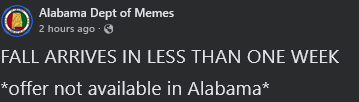







Are you SURE social media isn’t evil?
I think it’s a medium that’s *definitely* tilted toward the opposite of human flourishing!
That’s a LONG post! [lol]
Good luck with dragging yourself away from the Presidents! I have one US related book in my review pile and another on the near horizon though neither are *directly* Presidential.
I’ll be visiting my local(ish) Indie bookshop in November & I’ll see if they have any President or Prime Minister biographies. I don’t usually bother with that section (and I normally have a backpack full of books by then) so it might throw up something interesting.
Well, with the lectures I just kept a running list and my thoughts throughout the month, so it builds. I like the idea of keeping a record of what I’m listening to, because articles and lectures can be very formative and then sometimes I can’t put my finger on where a quote or an impression came from.
Today I read intros for two different Reagan biographies and made a decision on which one to pursue. It’s a big boy, though, so it may be a slow cruise while I focus on other stuff. We shall see..
wow, you listen to a lot of lectures! so that takes time off books. so well done for combining both.
https://wordsandpeace.com/2026/10/01/2026-september-wrap-up/
Not always, but Dr. Birzer is uploading two classes this semester and I am happily following. 😀