
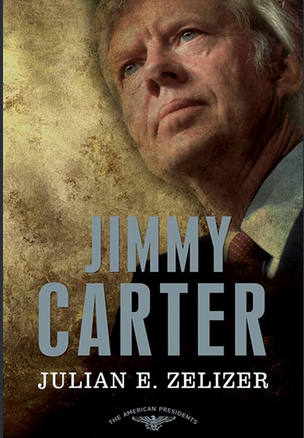
What do I know about Jimmy Carter? Carter is, interestingly, the first president who ever appeared on Reading Freely. I read his Peace Not Apartheid and Our Endangered Values in the very early months of the blog, possibly following up on my having read Gerald Ford’s A Time to Heal only a year or so before, pre-blog. I regard Carter, along with Ford, as a good, ordinary man who took high office and perhaps was not quite up to the task. I listened to his “Crisis of Confidence” speech many times when I first began obsessing over presidential rhetoric , and I still appreciate his earnestness and humility — his simple actions like wearing sweaters and trying to make the White House less of an energy hog — despite adult me realizing that people respond more readily to ‘vigah’, or at least the image thereof. As someone who slaloms between libertarianism and paleoconservatism, I appreciate Carter’s deregulation of the airline and telecom industries: getting soft-handed and softer-minded bureaucrats out of the way of doers and inventors is generally good policy. Does Carter deserve more than one little 200 page book? Very possibly, but this will be my first consideration of the man; let us sit down with Jimmy and see what he has to say.
Well….to be honest, I still don’t know what to say. Zelizer’s book didn’t substantially change my reading of Carter, though it made me realize he was a little grittier than his Mr. Rogers myth indicates — he said he’d “whip [Ted Kennedy’s ass]” if Kennedy ran, and he had to be a serious operator to unseat the prevailing Georgian establishment. The biography also makes it clear that Carter really was something of an outsider: that was an asset when he was running against Ford, who was still marked by the Nixon pardon and a struggling economy, but Carter’s desire to be his own man — sometimes relying more on Republicans in Congress than Democrats! — meant that he never built a secure seat of power among national Democrats. He enjoyed strong approval ratings early on, but continuing economic issues sapped that. Then, the fall of the Shah and the rise of the Grumpy Big-Beards happened, after which student followers seized the American embassy and kept 66 Americans hostage for 444 days. While Carter did plan a rescue mission, weather and happenstance made it turn SNAFU, and the Big Beards spitefully refused to release the hostages until Carter was out of office. I’d had some vauge impression that they were responding to an overt or implied Reagan threat that he’d get western on them if they didn’t release the hostages, but evidently it was Carter who made the deal, releasing some Iranian money back to them in exchange.
I definitely don’t feel satisfied with this as a Carter read; it was interesting, but I think Carter’s reputation as a maverick needs more plumbing. Will return to Jimmy via The Outlier once I’ve made more progress with Hail to the Chief as a whole. My plan for September has been to knock out some smaller fry (Taft, Carter, the Harrisons, etc) so I can give LBJ a good working-over in the last quarter of the year. He’s basically the Final Boss of presidential biographies.


I know very little about Jimmy Carter, but I was impressed to read a few years ago that he helped to (almost completely) end Guinea Worm Disease. As in, there are only about 15 cases a year now. I’m sure you already know that, though.
I…did not! Ive never heard of Guinea Worm Disease. Guess I can thank him for that!