
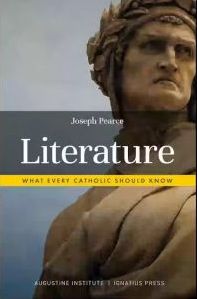
Years ago I stumbled upon a podcast called “Great Works in Western Literature” by a man named Joseph Pearce, and immediately a became fan of it. Pearce’s love of literature was infectious, especially seeing I was just beginning to read Chesterton for the first time and Pearce happened to be the author of a GKC biography. I was even more fascinated to learn that Pearce had essentially been saved by literature, great books serving as a conduit for grace. Over the years I’ve read numerous of Pearce’s works, including biographies of men like GKC and Solzhenitsyn, histories of the Catholic literary revival in early 20th century England, and his commentary on Narnia: reading this little introduction to the classics was inevitable. As the title indicates, Pearce is writing to Catholics from a Catholic perspective, but the works covered are not themselves all Catholic, or even Christian: he begins with the ancient classics and moves swiftly forward, (very swiftly — this is only 200 pages) to modernity, sharing books that reflect the good, the true, and the beautiful. As an added challenge, he also incorporates some discussion of poetry, particularly the Romantics. As one would expect from a Catholic author, there are works mentioned here that might not make a collection penned by someone else, because they have an especial interest to Catholics. This is the case for Robert Hugh Benson — an Anglican bishop’s son who converted to Catholicism and wrote several novels thereafter, including Lord of the World (an early dystopia) and Come Rack! Come Rope!, a novel about Catholic priests being persecuted under Elizabeth. English literature boxes out of its weight as well, Pearce being a man of London and Suffolk, but he does touch on the French decadents and the like as well as un-missables like Dante. There are some authors who Pearce is especially fond of, like Tolkien and Austen — the latter he ranks among the greatest of greats, in the same company as Shakespeare — and some he doesn’t too much like, but regards as significant to the point that people need to know about their works. He discusses the heterodox theology of Milton, for instance, and admits that C.S. Lewis (another favorite) admired the author of Paradise Lost regardless. Personally, I knew most of these authors and works already, but I always enjoy little visits with old friends, and it was a useful tool (along with Poems Every Catholic Should Know) for prepping for leading a Christian literature class this past Palm Sunday.
Related:
The Authority, Pearce’s current podcast looking at various authors (Austen, Eliot, Solzhenitsyn, etc) in turn.
St. Austin Review, Pearce’s literary journal.

 Reading Freely
I think I would like to read through this book.
It’s very accessible! Pearce has done a couple of works that are more complex (Beauteous Truth & Literary Converts), but this is aimed toward general readers so it’s quite easy.