What I Read in 2025

Books in bold are superior favorites. I’ve been trying to whip one of my drafts of Provoked into shape fit for posting but am still not happy yet. It will happen, though. I’m close.

January
(1) Strange Weather in Tokyo, Hiromi Kawakami. Trans. Allison Powell
(2) My Holiday in North Korea: The Funniest/Worst Place on Earth, Wendy Simmons
(3) Biking and Brotherhood: My Journey, Dave Spurgeon
(4) Sword Brethen, Jon Byrne
(5) Primate Made: How the World We Made is Changing Us, Vybarr Cregan-Reid
(6) Before We Forget Kindness, Toshikazu Kawaguchi, trans. Geoffrey Trousselot.
(7) If You Lived Here, You’d Be Home Already, Chris Ingraham
(8) Trump: The Art of the Comeback, Donald Trump
(9) The Unsettling of America, Wendell Berry. Audio read by Nick Offerman
(10) Strong Towns: A Bottom-Up Revolution, Chuck Marohn. Read by Matthew Boston
(11) Goodbye, Darkness: A Memoir of the Pacific War, William Manchester
(12) Nerve: Adventures in the Science of Fear, Eve Holland
(13) The Light Eaters: The Unseen World of Plant Intelligence, Zoe Schlanger

February

(14) 1984 (reread), George Orwell
(15) Conversations with Carl Sagan, ed. Tom Head
(16) Bloodlands: Europe Between Hitler and Stalin, Timothy Snyder
(17) Ends of the Earth, Neil Shubin
(18) Sidetracks: 40 True Stories of Hunting and Fishing, Gary Oberg & Trina Holt
(19) Red Dead’s History, Tore C. Olsson
(20) Savage Gods, Paul Kingsnorth
(21) One No, Many Yeses, Paul Kingsnorth
(22) Return of the Great Powers, Jim Sciutto
(23) Lisbon: War in the Shadows, Neill Lochery
(24) The Mature Flâneur, Tim Ward
(25) The Half-Blood Heir, Andrew Wareham

March
(26) Camino Ghosts, John Grisham
(27) The Brass Verdict, Michael Connelly
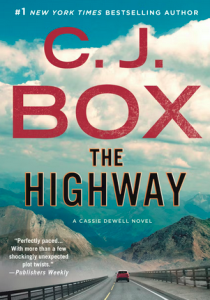
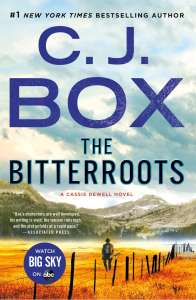
(28) Open Season, C.J. Box
(29) Savage Run, C.J. Box
(30) The Late Show, Michael Connelly
(31) Winterkill CJ Box
(32) Trophy Hunt, CJ Box
(33) Out of Range, CJ Box
(34) In Plain Sight, CJ Box
(35) Free Fire, CJ Box
(35) Blood Trail, CJ Box
(37) Below Zero, CJ Box
(38) Nowhere to Run, CJ Box
(39) Images of America: Fenway Park, various authors
(40) The Innovators, Walter Isaacson
(41) Cold Wind, CJ Box
(42) Bringing Back the Beaver, Derek Gow

April
(43) Force of Nature, CJ Box
(44) The Last Man in Europe, Dennis Glover
(45) Real England: Battle against the Bland, Paul Kingsnorth
(46) Birds, Beasts, and Bedlam, Derek Gow
(47) Breaking Point, CJ Box
(48) Stone Cold, CJ Box
(49) Endangered, CJ Box
(50) The Professionals, Max Hennessey
(51) Vicious Circle, CJ Box
(52) The Disappeared, CJ Box
(53) Wolf Pack, CJ Box
(54) Long Range, CJ Box
(55) Shots Fired: Stories from Joe Pickett Country, CJ Box
(56) Dark Sky, CJ Box
(57) Shadow Reel, CJ Box
(58) Storm Watch, CJ Box
(59) Three Inch Teeth, CJ Box
(60) Battle Mountain, CJ Box
(61) The Poacher’s Son, Paul Doiron
(62) Massacre Pond, Paul Doiron
(63) Selma’s Mayor: Lessons Learned from the Queen City’s Native Son, Jenney Egertson & George Evans
(64) Trespasser, Paul Doiron
(65) South and West: From a Notebook, Joan Didion

May
(66) The Precipice, Paul Doiron
(67) Stay Hidden, Paul Doiron
(68) Bad Little Falls, Paul Doiron
(69) Trail Mix: Volume 1, Louis L’Amour. Read by Willie Nelson, Johnny Cash, and Kris Kristofferson.
(70) Ty Cobb: A Terrible Beauty, Charles Leehrsen
(71) Baseball When the Grass was Real, Donald Honig
(72) For the Love of Country, Tulsi Gabbard
(73) Dead Man’s Wake, Paul Doiron
(74) Baseball Between the Lines, Donald Honig
(75) Fenway 1912, Glenn Stout
(76) Red Metal, Mark Greaney and Rip Rawlings
(77) Assault by Fire, Rip Rawlings
(78) Memories from the Microphone, Curt Smith
(79) Coming to Palestine, Sheldon Richman
(80) Original Sin, Jake Tapper & Alex Thompson

June
(81) The Nixon Conspiracy, Geoff Shepard
(82) The Adventures of Alice in Wonderland, Lewis Carroll. Read by Scarlett Johansson.
(83) Provoked: How Washington Created the New Cold War, Scott Horton
(84) The Presidents and the Pastime, Curt Smith
(85) Star Trek Strange New Worlds: Asylum, Una McCormack
(86) Black Badge: Ace in the Hole, Rhett C. Bruno & Jaime Castle
(87) SHELLI: Murder Mind,Doug Brode
(88) Mr. Penumbra’s 24 Hour Bookstore, Robin Sloan
(89) War, Bob Woodward
(90) Content, Cory Doctorow
(91) Context, Cory Doctrow
(92) Grease: The Phenomenon, Gustavo Jimenez
(93) The House Divided: The Story of the First Congressional Baseball Game, J.B. Manheim
(94) Chernobyl’s Wild Kingdom, Rebecca Johnson
(95) Uncharted, Chris Whipple

July
(96) Harry Potter and the Philosopher’s Stone, JK Rowling. Read by Stephen Fry
(97) King Arthur and the Knights of the Round Table, Benedict Flynn. Read by Sean Bean.
(98) Twelve Angry Men. Original teleplay by Reginald Rose, read by ensemble cast.
(99) Friends Divided, Gordon S. Wood
(100) Thomas Jefferson and the Tripoli Pirates, Brian Kilmeade and Don Yaeger
(101) Overdue: Reckoning with the Public Library, Amanda Oliver
(102) The Magician’s Nephew, C.S. Lewis. Read by Kenneth Branagth
(103)Benjamin Franklin: An American Life, Walter Isaaacson
(104) The Lion, the Witch, and the Wardrobe, C.S. Lewis.Read by Michael York
(105) Crunchy Cons, Rod Dreher
(106) Declaration, William Hogeland
(107) Fawlty Towers: The Complete Collection. John Cleese, Connie Booth, Andrew Sachs, et. al.
(108) For Race and Nation: George Lincoln Rockwell and the American Nazi Party, William Schmaltz
(109)The Fighting Little Judge: The Life and Times of George C. Wallace, Jeffrey K. Smith
(110) Bittersweet, Nevada Barr
(111) When the Moon Hits Your Eye, John Scalzi

August:
(112) Roswell High: The Outsider, Melinda Metz
(113) Roswell High: The Wild One, Melinda Metz
(114) Roswell High: The Seeker, Melinda Metz
(115) Roswell High: The Watcher, Melinda Metz
(116) Roswell High: The Intruder, Melinda Metz
(117) Roswell High: The Stowaway, Melinda Metz
(118) In the Forests of the Night, Amelia Atwater-Rhodes
(119) Roswell High: The Vanished, Melinda Metz
(120) Roswell High: The Rebel, Melinda Metz
(121) Roswell High: The Dark One, Melinda Metz
(122) Roswell High: The Salvation, Melinda Metz
(123) Waking Giant: America in the Age of Jackson, David S. Reynolds
(123) Cancelled: The Shape of Things to Come, Danny King
(124) The Henchmen’s Book Club, Danny King
(125) Husk, Nathaniel Eliason
(126) Gandolfini: Jim, Tony, and the Life of a Legend, Jason Bailey
(127) Havana Nocturne: How the Mob Owned Cuba and Lost it to Revolution, T.J. English
(128) Operation Underworld: How the Mafia and the US Government Teamed up to Win WW2, Matthew Black
(129) Acts of War, James Young

— September —
(130) Stars and Stripes Forever, Harry Harrison
(131) The Great Deluge, James Brinkley
(132) The Most Spectacular Restaurant in the World, Tom Roston
(133) From the Inside Out: Narrow Escapes from the Twin Towers, Erik Ronnigen
(134) Escape from the World Trade Center, Leslie Haskin
(135) SPQR, Mary Beard
(136) Fall and Rise: The Story of 9/11, Mitchell Zuckoff
(137) The Storm of the Century, Al Roker
(138) Dominus, Steve Saylor
(139) Riding with Evil, Ken Croke & Dave Wedge
(140) Backcountry Lawman: True Stories from a Florida Game Warden, Bob H. Lee
(141) Knife Creek, Paul Doiron
(142) I Gave You All I Had, M. Humaidh
(143) The Day of Battle, Rick Atkinson

— October
(144) Merlin’s Tour of the Universe, Neil deGrasse Tyson
(145) American Orthodox, Robert John Hammond
(146) The Iron Dream, Norman Spinrad
(147) Dynasty, Tom Holland
(148) In Distant Lands: A Short History of the Crusades, Lars Brownsworth
(149) The Normans: From Raiders to Kings, Lars Brownsworth
(150) The Accidental Nazi, Ward Wegher
(151) The Improbable Nazi, Ward Wegher
(152) The Impossible Nazi, Ward Wegher
(153) 13 Alabama Ghosts and Jeffrey, Kathryn Tucker Windham
(154) Against the Machine, Paul Kingsnorth

November
(155) Time Traveler’s Passport collection. John Sclazi, etc.
(156) All Systems Red, Martha Wells
(157) Star Trek: The Entropy Effect, Vonda McIntyre
(158) The Adventures of Reverend Samuel Entwhistle, Thomas V. Barrett
(160)The Nazi Seizure of Power, William Sheridan Allen
(161) The Politically Incorrect Guide to Science Fiction, D.J. Butler
(162) The Politically Incorrect Guide to the South, Clint Johnson
(162) Over Yonder, Sean Dietrich
(163) For Cause and Comrade, James M. McPherson
(164) Wildlife Wars, Terry Grosz
(165) “Shadowlands“, William Nicholson
(166) The Life of Billy Yank, Bell Irwin Wiley
(167) The Horse and his Boy, C.S. Lewis. Read by Alex Jennings.
(168) The Plain People of the Confederacy, Bell Irwin Wiley
(169) Prince Caspian, C.S. Lewis. Read by Lynn Redgrave.

December
(170) The Book of Common Prayer: A Biography, Alan Jacobs
(171)A Man of Iron, Troy Senik
(172) The Voyage of the Dawn Treader, C.S. Lewis. Read by Derek Jacobi.
(173) The Battle Cry of Freedom, James McPherson
(174) Confederate Women, Bell Irwin Wiley
(175)Martin van Buren, Ted Widmer
(176) Franklin Pierce, Michael F. Holt
(177) The Expatriation of Franklin Pierce, Gary Boulard
(178) The Silver Chair, C.S. Lewis. Read by Jeremy Northam.
(179) 1858: Abraham Lincoln, Jefferson Davis, Robert E. Lee, Ulysses S. Grant and the War They Failed to See, Bruce Chadwick
(180) James Buchanan, Jean H. Baker
(181) The Last Battle, CS Lewis. Read by Patrick Stewart.
(182) Bosom Friends: The Intimate World of James Buchanan and William Rufus King, Thomas Balcerski
(183) Zachary Taylor, John S.D. Eisenhower
(184) Milliard Fillmore: An Egregious Exercise in Character Assassination by a Self-Styled ‘Biographer’, Paul Finkelman
(185) Marce Catlett: The Power of Story, Wendell Berry
(186) Harry Potter and the Sorcerer’s Stone, JK Rowling. Full cast audio.
(187) Arguing until Doomsday: Stephen Douglas, Jefferson Davis, and the Struggle for American Democracy, Michael E. Woods
(188) Replaceable You, Mary Roach
(189) Just Visiting This Planet, Neil Grasse Tyson
(190)It’s a Gas!,Mio Midownik

Short Stories:
This Long Vigil“, Rhett C. Bruno & Jaime Castle
“Into the Comet”, Arthur C. Clarke
“The Feeling of Power“, Isaac Asimov
The Hammer of God“, Arthur C. Clarke
“Shop of Ghosts”, GK Chesterton

Posted in General | Tagged , | 6 Comments

The Best of 2025 — Annual Year in Review!

Here we are at the end of another year. After the distressing takeover of fiction in 2024,  I was determined to not let that happen again. Then entered CJ Box, whose 26-strong Joe Pickett series lassoed my intentions off their horse and carried them into the wilderness where I was happily lost for several months. Nearly all of April and May’s reading were CJ Box, and I almost got sucked into another game warden series but was saved by the fact that my library doesn’t have as many Doirons as it does Boxes.   In all, it was a strong and I think varied year, with chaotic alt-history, Grease,  and crime mingling with my usual staples. 

I began the year with great aspirations. I was going to tour Europe through history books, learning about the days when Sweden and Poland were major players. I was going to finish my second Classics Club—and I was going to re-read a bunch of books that were formative for me to see how another decade of life had changed my perspective. I read exactly one book in the Grand Tour, forgot the Classics Club list even existed, but did re-read a few titles. Not the main one I’d intended, Death and Life of Great American Cities, but I’ll take the pitches I can get over the plate.

Blogwise,  I’m generally pleased with my activity as a scribbler:  I reviewed virtually everything I read,  I don’t think I missed a single Teaser Tuesday/WWW Wednesday,   and I began experimenting with a feature called Saturday Shorts that last about as long as many other features I’ve played with over the years.  I’m still divided on it: I liked the idea of featuring short stories on occasion, but  it’s also been my habit the last few years to withdraw from the blogging world on weekends to focus on that ‘real life’ thing people still talk about.  Maybe as a monthly feature.

Top 5 Most Highlighted Books:
Against the Machine, Paul Kingsnorth.120 highlights
Provoked: How Washington Started the New Cold War with Russia, Scott Horton.87 highlights.
Man of Iron: The Turbulent Life and Improbable Presidency of Grover Cleveland. 50 highlights
Friends Divided: John Adams and Thomas Jeffferson,36 highlights.
The Light Eaters: The Unseen World of Plant Intelligence, Zoe Schlanger. 32 highlights

Fun With Pie

I began the year with expectations I’d have my usual 60/40 or 70/30 split favoring nonfiction. CJ Box almost made that not happen, but Nonfiction reasserted its dominance by the end, if barely.
My standing goal is to keep the number of purchased books under 10%, so I failed miserably there. However, Kindle Unlimited is definitely paying for itself.
Ebooks overtook physical this year, but they’re fairly back and forth in recent history. Audiobooks are consistent with last year’s 11%.
History is…er, double its amount from last year. Granted, it has a slight boost because I combined it with Biography, given my amount of biographies-read-for-historical interest.

History

History had a strong year, with well over FIFTY titles by itself and closer to seventy if biographies are included. That’s not unusual: history  is typically queen of the stacks, nonfiction or otherwise. An early standout for me was Susan Besser’s Selma: An Architectural Field Guide, which   gave an architectural analysis and history of hundreds of buildings in my city’s historic business and residential districts.  Given that I’m a local history librarian,  this was both a godsend and something I was able to contribute to.  The year’s early history offerings were mostly baseball oriented, a favorite being Memories from the Microphone, a history of baseball broadcasting. I listened to this as an audiobook and highly enjoyed the narrator’s impersonations of Dizzy Dean, a pitcher-turned-sportscaster. I also thoroughly enjoyed Ty Cobb,  Charles Lehrson’s thorough biography of the great ballplayer. After that, it was fairly varied: the Mob in Cuba,  Rome, medieval Europe, etc, and so on until I went on a Civil War binge the last two months of the year. The highlight of that, and a highlight of the year in general, was Battle Cry of Freedom by James McPherson, with The Life of Billy Yank by Bell Irwin Wiley not far behind it. I read several of Wiley’s social histories of the war after Billy. Biographies were a bit thing this year, even before my history binge in November and December: I had fourteen biographies for the year, including two other top-ten favorites, Benjamin Franklin and Gandolfini. The latter wound up guiding my movie-watching for the rest of the year as I began devouring Gandolini’s film presences.

Mysteries and Thrillers

Man alive, was I obsessed with CJ Box’s Joe Pickett series. I have never just married a series the way I did the Pickett stories, nor dedicated a post to raving about it. Joe is such a likeable character,  I loved the storytelling that used the Wyoming landscape to full effect, and the books manage to hit all the emotions throughout the series.    I also read some Paul Doiron, another game warden novelist,   but held myself back to allow nonfiction to catch up. Expect more of him next year, though.  Box got me to reading some game warden nonfiction, too. He’s one of those authors like Asimov or Cornwell who just completely changed my reading life the year I found them. 

Historical Fiction

HF is usually one of my strongest categories, and after a strong start I thought it would be sitting pretty at year’s end.  Then CJ Box happened, I think, and I was trying for the rest of the year to avoid fiction running away again.   The year’s opening book, Sword Brethren, is the beginning of a most promising series – that of an English nobleman who is betrayed and forced to seek fame and fortune in Eastern Europe. That’s an area I know vanishingly little about prior to the 20th century,  I’ll be looking for more by that author.  2025 also marked my returning to Steven Saylor after a long break, in part because I was in a serious Roman mood for a bit that led to me buying an enormous Augustus Caesar biography.   I also returned to an old favorite, Max Hennessey, and read a couple of his aviation novels. Marce Catlett could fall in the area of historical fiction considering that it begins in 1907 and ends (I think) somewhere in the middle of the 20th century. It was another of my top ten favorites, another Port William story.

Science

Science started off with a bang,  with three entries in January alone, followed in February by two more.  And then, mysteriously in the late spring, it dropped off the radar and only a deliberate push in late December allowed me to finish the year with my head up and not hanging.  Some of my ‘science’ titles were also not purely science – Storm of the Century and Bringing Back the  Beaver – but they had  enough science content to pass muster.   Although Primate Made put up a good fight, I think The Light Eaters prevails as my favorite science book of the year.   I am getting closer and closer to finishing Neil deGrasse Tyson’s works: I think the only one I’m lacking now is his entry on science and the military-industrial complex.

Science Fiction

SF was also weak,   unless we count the Roswell High YA series that I re-read, in which case it had a strong year by the numbers.   I listened to a few short stories by Arthur C. Clarke, but the only SF titles I’ll remember from this year are Husk and SHELLI: MurderMind, the latter being a sequel to the SF mystery-thriller I enjoyed so much last year.  I also read Scalzi’s latest, though it was more of a lark than anything else.  I’d expected a big boost in SF in November,  but between a Narnia re-read and the Civil War, that did not happen. Relatedly,   I only read two Star Trek books. I’m not sure how to account for the falloff: certainly the fact that fewer Trek books are being published helps, alongside the literal death of the extended litverse I loved so much from 2004 until the return of Trek to the screen. Now we’re seeing the return of The Aliens of the Week, which honestly makes me feel contemptuous.  We had characters with history,  alien races with histories and developed cultures, and now — now it’s back to Planet of Hats.  

Politics and Civic Interest

This was an interesting category this year.  I began it with Strong Towns: The Book, which I’d anticipated reading for a few years – having follower of the author for sixteen years now.  I read a couple of titles on the Biden administration, neither of them compelling, and enjoyed digging into The Nixon Conspiracy. That almost kicked off a Nixon  binge,  as I have two Nixon titles waiting to be finished and keep eying Being Nixon on the shelves of my local indie bookstore. Midyear I began thinking about  America @ 250 Reading,  and consequently read a few more presidential biographies, my favorite being Man of Iron.   And then there’s Paul Kingsnorth,  whose works partially touch on politics, but more on him later.  The big kahuna in this category,  though, is  Scott Horton’s Provoked,  a history of DC-Russia relations since the ‘end’ of the Cold War.   I listen to Horton’s podcast, so  I thought  I’d be familiar with most of the content….but brother, I didn’t know the half of what mischief DC has perpetuated in Europe. Here I thought it saved  its chaotic energy for destroying the middle east! I have several drafts of a review and am still faintly hoping to   I also took a deep dive into political history at the end of the year, studying the personalities  involved in the sectional strife of the early 19th century that ultimately led to Civil War.  That will continue into the New Year, I think, as I’m deep into a Tyler biography and am anxious to start on Chorus of the Union.

Paul Kingsnorth

“I want to know what’s real. I want to know what’s true. And I also want to know why the world is going mad.” Interview, New York Times.

Yes, he gets his own category, because he’s too singular a writer to be filed anywhere else. Imagine Wendell Berry refracted through Eastern Orthodoxy and the lived experience of a former political activist. After meeting Kingsnorth at a conference last year and hearing him speak about Against the Machine—which he described, without irony, as his life’s work—I went back and read his earlier nonfiction, even knowing he regarded those books as preparatory steps. Kingsnorth resonates deeply with me because he articulates questions I’ve been worrying at for most of my adult life. Like Berry, he writes powerfully about our alienation from creation and the personal, social, and political costs of that severance. Where writers like Neil Postman and Nicholas Carr focus on technology’s effects on attention and cognition, Kingsnorth pushes further, weaving those concerns together with Matthew Crawford’s insistence on our nature as embodied, working creatures and with Berry’s ecological and moral vision. His critique of “the machine” is not merely technological or political, but civilizational—and spiritual. He’s definitely my favorite discovered author of the last few years. His Against the Machine is on my top ten list for the year, but Savage Gods was a precursor that I liked enormously. One No, Many Yeses and Real England were also interesting, but not not a patch on Savage Gods or his ecological memoir from last year.

2025 was a big year for reading, and while I didn’t make progress in my goals, I had a lot of fun and am currently digging ever deeper into a “history hobbit hole”. That will continue into the New Year, especially since it’s part of my America @ 250 project, but the 19th century will lose its monopoly on my reading once the New Year hits. I always like for January to be a nice mix of subjects: on the off chance that anyone views my “What I’ve Read This Year” tab, I like to give them an idea of the chaotic variety here. As far as 2026 goes, I do not have any huge reading plans: America @ 250 will begin in earnest, and I’ll share more details about that in the days to come. It will be joined by my “fifth” year working on my second classics club list, as well as the usual science survey.

Posted in General | Tagged | 7 Comments

WWW Wednesday – 2025’s Last One!

WHAT have you finish reading recently? Marce Catlett: The Force of Story, Wendell Berry.

WHAT are you currently reading? President without a Party, Christopher Leahy. An ….incredibly…..detailed….policy history of the Tyler presidency. Also, Jon Meacham’s biography of Andrew Jackson. I am trying to resist reading more of President without a Party so it can be 2026’s first read, but I really want to move on from the level of exhausting political detail.

WHAT are you reading next? Most likely Chorus of the Union: How Abraham Lincoln and Stephen Douglas Set Aside their Rivalry to Save the Nation, Edward McClelland, but with the New Year coming, who knows? I like January to be a grab-bag of books.

Posted in General | Leave a comment

Marce Catlett and the Force of Story

Marce Catlett  The Force of a Story takes a life we’ve visited with previously and then visits with it for a while, learning how the story of Andy Catlett was really a continuation of a story in which his grandfather Marce and his father Wheeler had been swept up in prior.  This is a theme in Berry’s writings, really:  “there’s always more to tell than can be told.”   Readers who have delved into the Port William series know that no matter how stirring one particular story within it, the story always grows in richness when other Port William stories are read alongside it, for we begin learning the history of these people and their town.    Marce Catlett goes for that effect in a single volume,  as we follow the plight of independent farmers from the turn of the 20th century to the time of Andy Catlett, a man whose life has previously been used to shine a light on the community’s ‘dismemberment’.   We already know that Andy goes to college and begins to learn of ‘modern agriculture’, only to walk away in disgust after realizing its methods are divorced from the land and particular the love of it – bearing more resemblance to industrialism than stewardship and husbandry.  Marce Catlett goes a bit deeper, though, taking us back to a day in 1907 where a man’s entire year of labor, care, and pain disappeared at the auction-house –   prices driven so low by one buyer eating up all the others that the crop appears to have not been worth planting at all. This connects to the later theme of Port William books – the brutalization of farming and of towns like Port William by those whose only motivation is the efficient ‘use’ of land, not its care.   This was like many Port William stories, beautiful, tragic, and humane. Unusually, though, towards the end it slides into what sounds like one of Berry’s many essays, but one lightly illustrated by Andy, Wheeler, and Marce’s lives.

So in their memories the way went: a passage through the dark, undertaken familiarly by men of their kind in their time. So Marce remembered it to Wheeler, who told it to Andy, who in a world radically changed needed a long time and great care to imagine what he heard, but as he has imagined it he has passed it on to his children, for the story has been, as it stil is, a force and light in their place.

“[Hers] was an old mind, as he would come to understand. It was contemporary insofar as it had acquired the knowledge of younger people, but it was also continuous with minds that had come and gone long before hers.

For [Marce], morality began with a mortal fear of the waste of daylight, particularly of the morning light. He believed with the passion of old custom and his own long observance that at four o’clock in the morning, a man should be awake, on his feet, and at athe barn, caring for what needed care, feeding what needed to be fed.

In those days nobody knew he was a boy who belonged to a story. In those days he did not know it himself.

Port William’s fatal mistake was its failure to value itself at the rate of its affection for itself. Gradually it had learned to value itself as outsiders — as the nation — valued it: as a ‘nowhere place’, a place at the end of the wrong direction. So far as Andy has learned, the Old Order Amish, alone in all the country, have had the wisdom – the divine wisdom, it may be — to give to their own communities a value always primary and preserved by themselves.

As people have grown helpless and lonely, they have come to be governed by those most wealthy, who rule by the purchase of nominal representatives, who, having no longer the use of their own minds, do not know and cannot imagine the actual country by the ruin of which they and their constituents actually live.

Posted in Reviews | Tagged , , , | 1 Comment

Top Ten Movie Favorites for 2025

Today’s TTT is our ten most recent acquisitions, but I’m going to be wicked and do my top ten favorite films watched for this year, instead. But first, the Teaseday Tues!

[Tyler] was an Old Republican who pledged fealty to the states’ rights bible of the Virginia and Kentucky Resolutions, but beyond that it was difficult to pin him down. He became a Jacksonian Democrat but consistently opposed President Jackson. He became a Whig but usually opposed the party’s nationalistic agenda. When he did so in the White House, party members banished him, making him a president without a party. Charges of partisan disloyalty never troubled Tyler. In fact, he seemed to enjoy his reputation as a political renegade.” PRESIDENT WITHOUT A PARTY

I have watched well over a hundred movies this year, going on tangents like “John Grisham movies” and “movies with James Gandolfini” in them. Can I manage to pick ten favorites? Rewatches like Gettysburg are disqualified. I will paste in my original notes and supplement them as appropriate.

(1) Wonka, 2023. A Charlie and the Chocolate Factory prequel that surprised me both in terms of general quality and sheer delightedness. I loved the musical numbers.

(2) The Straight Story, 1999. Excellent film about an old retired farmer who, upon learning his brother had a stroke, decides their ten-year silence after a bitter argument needs to be ended. Since he is old and prideful, he decides to visit said brother on….a lawnmower. Phenom acting.


(3) 10 Cloverfield Lane . Horror-suspense film.  A young woman is hit in a car wreck and wakes up chained in a basement, and soon meets her captor, John Goodman, who alleges that the United States has been attacked and that the outside air is now toxic. Although she’s dubious and tries to escape,  she becomes convinced after seeing evidence of an attack outside – but  that doesn’t mean Goodman’s character still isn’t unhinged and and dangerous.  Very effective.

(4) Men in Black III.   I watched the original movie when it came out, of course, and tolerated the second one, but it wasn’t until that I saw Josh Brolin’s Tommy Lee Jones impersonation –  which he does throughout this film – that I thought, holy WOW do I need to see this.  Will Smith is “J” and is thrown back in time to 1969 to help his partner K (Tommy Lee Jones/Josh Bronlin) knock off an alien who wants to destroy Earth.  This involves manhandling Andy Warhol and putting a thingy on the Apollo 11 Saturn-10.  Such a good film, between the acting and the raygun gothic tech. 


(5) Carnage, 2011.   I have only watched Inglorious Basterds one time since its release, but I have rewatched every single Christoph Waltz scene more times than I can remember.  I asked ChatGPT for movies where Waltz was a similarly dominant presence, and it recommended this – a comedy wherein he features alongside JODIE FOSTER!!, Kate Winslet, and that guy from Step-Brothers who isn’t Will Ferrell.  Four parents meet in a room to discuss what to do after their respective children get in a fight that ends with broken teeth. They get into a lot of side discussions and there’s interesting shifting character dynamics: different characters side with one another in different scenes depending on where the conversation is going. (This gets…more interesting after a bottle of 18 year old single-malt Scotch is uncorked.)  This is a difficult movie to summarize, but if you’re into character drama like myself it’s quite a treat, especially with heavyweights like Waltz and Foster aboard. A plausible drinking game could be composed of the times that Waltz and Winslet take on or take off their coats and attempt to leave.  

(6) Zero Day (2003). AColumbine-inspired  found footage documentary, in which we witness two friends with violent fantasies collude and plan a school shooting.  What makes Zero Day so utterly disturbing is the nature of the production itself, the “found footage” approach: the film is presented as a series of clips taken from consumer video recorders,  some purposely filmed by the future shooters as a record for the future, some simply documenting their lives as-lived. We get a sense of the boys as people, with utterly normal social circles and lives, though they do have resentments toward certain parties at school. One such person is “Brad Huff”, a jerk jock whose house they pelt with rotten eggs after arriving at his home to find his SUV nowhere in sight.  The found footage is eerily weird, with expect amounts of outtakes, muffed lines, and “teenagers mugging for the camera” that you’d expect.  It avoids the poor widdle buwwied story completely: we see two teenagers with unhealthy interior lives and an uncanny awareness of how they’d be perceived afterwards ratcheting each other into a course of destruction, where they will escape a world and a school they hate by turning it into a bloody mess.  Zero Day is far more unsettlingthan Elephant for its approach, though I will admit to being partial toward found footage.(See my affection for The Blair Witch Project, which continues to disappoint my film buddies.)

(7) Terminator 2: Judgement Day, 1991.    I watched Terminator some years ago, enough that I’ve forgotten most everything but the basic premise and the haunting percussive soundtrack.  Bottom line: in the future,  sentient machines are waging war on humanity and they want to destroy the leader of the resistance by knocking off his mother.  Terminator 2 reintroduces Arnie as The Terminator, a killing machine, but now his former target (the future human rebellion leader John Connor) has reprogrammed some iteration of him to protect John Connor in the past. This is necessary because the machines waging war on humanity have sent back another terminator, this one a shapeshifter,   I didn’t realize how much of this movie has saturated pop culture: I recognized line after line.  While going in I had some doubts – movies that are just chase scenes and supermen bashing the hell out of each other and destroying property bore me, hence why I watch very few superhero movies – this proved far more compelling than predicted. There was one scene where I thought “WOW!  What a great finale!” and then realized – wait a minute, there’s twenty minutes left in this film. Nice twist.  The special effects are crazy for 1991, and it’s replete with  badass reloads. 

(8) St. Vincent, 2014. Bill Murray is a broke misanthropic ….widower? with a drinking problem.  Then the house next door to him gets a single mom and her kid, Oliver.  Insert Man Called Ove plot, only instead of being a very functional grump, Bill is more of a dysfunctional lush whose bond with Oliver no one understands. I love almost any movie Bill is in, and of course readers know I am an absolute sucker for the “curmudgeon is recalled to life” trope. This one is more gritty than Ove or say, Frank and Red:   Murray’s character is deep in hock to loan sharks and has gambling, prostitution, drinking and cigarette addictions.  However….as the movie progresses, we realize there’s more to Bill’s story than meets the eye: it’s a tough, tear-terking tale that turns out wonderfully sweet.  A very me movie, I will say. 

(9) The Last Castle, 2001. Superb drama with James Gandfolini, Robert Redford, and a young Mark Ruffalo.  A general (Redford)  with a legendary reputation – who was famously tortured in Hanoi but refused early release to remain with his men – is the newest prisoner of a military prison.   Gandolfini, the commandant, is immediately torn with admiration for the man, plus his professional need to treat him like any other prison – including abject humiliation. Redford, though, is something of a Stoic, and I am certain Admiral James Stockdale was the inspiration for him.  Redford, by personal example and admonition, urges the men to be true to the best in themselves, to comport themselves with dignity.  There’s a moving scene where the men gather in formation and sing the USMC fight song in honor of a prisoner who stood on principle and was shot down in cold-blooded murder. Disgusted by Gandfolini’s treatment of the men, Redford moves to take over the prison in an effort have Gandfolini removed from his post as per the Military Code of Justice. (Losing control of your prison =  update your resume, sport.)  I don’t think I’ve seen Redford in anything else, but I believe I will now.  I do have….questions, like HOW DID PRISONERS BUILD A TREBUCHET?     One of ending scenes – of Old Glory rising above fire and ruins – gave me shudders. This came out five weeks after September 11, when similar shots could have been taken at Ground Zero. 

(10) The Lincoln Lawyer, 2011. Matthew McConaughey, Marisa Tomei!, William Macy, and – – BRYAN CRANSTON?   Oh, and Bob Gunton, who played Captain Maxwell in ST TNG’s “The Cardassians”.  Matthew McConaughey plays a ‘street lawyer’ of sorts  –  representing all sorts of genuine criminals who are scattered so widely across greater LA that he spends his days in Lincoln towncar. A potentially lucrative case has an uncanny resemblance of one of his earlier cases, and M.M. begins wondering if he isn’t actually defending a monster.

Posted in General | Tagged , | 20 Comments

End Year Short Rounds: Frankenstein, Merlin, and Stephen Douglas

Although I ostensibly took a break from the blog on Christmas eve to focus on real life and all that, part of my brain is resolutely blog-oriented and insisted I keep reading so that I did not fail the Science Survey. This is, I should note, my self-imposed challenge, meaning nothing will happen if I fail it — only my own disappointment. I have, for the record, muffed one year, and nothing bad came of it: in fact, I was so annoyed with myself I finished the next year’s survey rather early. I read three science books in the last week, satisfying the Survey, and finished off the history book I’ve been nibbling on for a couple of weeks besides. Are they my last reads for this year? Mm…probably, unless I pick up The Widow (a Christmas gift) and knock it out, but there will be another review coming as I finished Wendell Berry’s latest (a gift from the ladyfriend) on Saturday night. I am also working on a biography of President John Tyler, but it’s a hefty boy so I don’t know that I will finish it before the year’s end. At any rate, I’m presently sitting at a nice round number and am content.

Mary Roach’s Replacable You is a dive into how humans have or are trying to cope with the lost of body parts or body functions; we begin with medieval types replacing noses that got lopped off during saber-drawn hijinks and move quickly into the 21st century.  Roach, for those who have not read her, combines science, squickiness, and some level of humor. This is  is heavy on the squick, so reader discretion is advised:    even her Gut didn’t have so many applications of our intestines.  Possibly the most interesting chapter was Roach’s personal experience with using an iron lung — that, or her holding a still-beating heart in her hands.


Neil deGrasse Tyson’s Just Visiting This Planet returns to his “Merlin” character, an ageless and knowledgeable sort from another planet who answers questions from Earthlings via a newspaper column.  As the title implies, the focus of Merlin’s answers here is much closer to Earth: the overwhelming majority of questions are about matters of local astronomy. We learn about how the Earth may be viewed from the moon, for instance, and Merlin explains why we don’t feel the rotating earth.

Mark Miodownik’s It’s a Gas! was the most disappointing of this group. It promises to explore several different gases and their role in our lives, but it’s not like some of the several books I’ve read on the elements. Almost none of the gases here are discrete elements, in fact; with the exception of oxygen, Miodownik deals largely with compounds like nitrous oxide and the air itself. Although there’s plenty of science here, there’s a lot of digression as well, from history to politics. Fun fact: Samuel Colt raised funds for the production of his famous revolver by dressing up as a doctor and giving nitrous oxide demonstrations.

Lastly, and a departure from science, I’ve been reading Arguing Until Doomsday these last few weeks. This is a joint look at the lives of Jefferson Davis and Stephen E. Douglas, and through their political histories, an examination of how the Democratic party fractured through the 1850s and led the way for a purely sectional candidate — Abraham Lincoln — to win the election with only 39% of the popular vote. The book largely focuses on Douglas, which makes sense given how much more of a challenge he had. Jefferson Davis was essentially the heir of John Calhoun in representing southern (or at least, plantation) interests: his goal was to make the Democracy a reliable protector of those interests. While previous generations had been content if the government were not directly adversarial to them, the disruption caused by the Kansas-Nebraska act meant that offense could be the one and only defense. If the government did not actively protect slavery and “property”, the South would be corralled in and its ‘pecuilar institution’ actively attacked by a North increasingly assisted by western states. Douglas had a harder row to hoe, trying to be a candidate who could unite the Democracy against rival parties like the nativist Know-Nothings and the rising Republicans. He sought an answer in popular sovereignty, or majoritarianism, in which the people of a territory made the decision of whether or not their state would be slave or free. This led to not only things like Bleeding Kansas, but changed the way discussions on the transcontinental railroad developed. Jefferson Davis presented a far better argument for a southern route than his colleagues could for a northern route, but there were fears that a southern line would disrupt the advantage northerners had in populating the west coast, or at least make it easier for the ‘slave power’ to extend itself across the rails. Ultimately, the South — seeing abolitionist violence on the rise — would make the decision to break from the Democracy and ultimately, from the Union. This is an extremely detailed account of Davis and Douglas’ grapple for the future of the Democratic party; a little inside baseball at times, but considering my current obsession, it suited my tastes exactly. I am planning on reading Chorus of the Union, Douglas’ postelection attempts to keep the South from leaving the Union, sometime soon.

Posted in history, Reviews, science | Tagged , , , , , , , , , , | Leave a comment

Harry Potter and the Quest to Get Expelled: Full Cast Audio!

Recently I took a chance on the full-cast audio version of Harry Potter and the Sorcerer’s Stone that’s just come out. I say “took a chance” because the preview on Audible does not communicate the nature of the book especially well, focusing entirely on the narrator, whom I liked well enough but did not want to commit to, considering I listened to Stephen Fry narrate this same book earlier in the year. I’m glad I threw my credit at Audible, though, because the full-cast audio is terrific. Its sound design makes it more of an audio drama, and the voice-acting bench is fairly good. As “full cast audio” implies, every character has a different actor, so there’s no dealing with a narrator having to do falsettos to reach out of his range. Interestingly, although this edition carries the American title in Audible, it was recorded with the original text, so the students do “revisions” instead of studying. I’ve read a British version of Philosopher’s Stone and somehow missed that until I heard it being said multiple times here.

An important thing to note about this full-cast audio edition—and a selling point, I’d say—is that the sound design is atmospheric. We don’t simply have actors reading lines one at a time: when one is speaking, we can hear others reacting in the background. There’s originality here as well, in that we hear background reactions that are not written down word-for-word in Rowling’s original text. Spatiality is also incorporated. When the scene is focused on Harry, as it were, and someone speaks from across the room, we hear them as such—at least, if we have stereo speakers. When I was driving through a foggy wood and listening to this, I had the startling experience of having a character yell at “Harry” from my passenger door. Not the sort of Forbidden Forest immersion I’d expected! There are also audio effects: characters speaking from behind a door are muffled, and there’s a kind of rippling intro when characters are reading from a letter or remembering something someone said earlier. The sound design also includes effects like footsteps and crowd noise, along with some music, delicately applied in only a few scenes where it feels especially appropriate. I was very much impressed. The voice-acting bench is strong. So far, the only character whose voice I don’t like is Snape’s—and I swear it’s not just because he doesn’t sound like Alan Rickman. The problem is he sounds like a nasty insurance agent who doesn’t like his job, but who has been doing it too long to do anything else and is many years yet away from retirement. He’s bored and slightly bitter but not….Snapey. Other characters make me suspect that their movie actors slightly inspired their casting — especially Hagrid and Oliver Wood — but on the whole the bench is distinct, yet recognizable.

I can see continuing in this series, but more as a every-once-in-a–while treat. I loved the experience, but it seems silly to spend credits on a book series I’ve already read, and — in the case of the early books — listened to several different versions of. This post’s title comes from my amused observation (while driving) that Harry appears to spend most of the book actively trying to get into trouble, especially after dark.

Posted in Reviews | Tagged , , | 4 Comments

Science Survey, 2025!

Yes, despite entering the month with three items pending, and despite my history obsession and the sloth that comes with the holidays, I knocked out Chemistry/Physics, Biology, and Local Astronomy this past week. Hurrah for the Christmas holidays! ….reviews will follow, probably mostly in short-round form.

HE’S STEALING HOME, THEY DON’T SEE HIM, I DON’T BELIEVE IT, THE PITCH —
HE’S IN THE DIRT, HE’S IN THE DIRT, HE’S —
SAFE! SAFE! SAFE! HE STOLE HOME!

Cosmology and Astrophysics
Merlin’s Tour of the Universe, Neil deGrasse Tyson

Local Astronomy
Just Visiting Myself, Neil deGrasse Tyson

Geology, Oceanography, and Natural History
Ends of the Earth: Journeys to the Polar Regions, Neil Shubin

Chemistry and Physics
It’s a Gas!, Mio Midownik

Cognition, Neurology, and Psychology:
Nerve: Adventures in the Science of Fear, Eve Holland

Biology
Replaceable You: Adventures in Human Anatomy, Mary Roach

Flora and Fauna
The Light Eaters: The Unseen World of Plant Intelligence, Zoe Schlanger

Archaeology and Anthropology
Primate Made: How the World We Made is Changing Us, Vybarr Cregan-Reid

Weather and Climate
Storm of the Century, Al Roker

Ecology
Bringing Back the Beaver, Derek Gow

Thinking Scientifically
Conversations with Carl Sagan, ed. Tom Head

Wildcard: (Science Biography, History of Science, Science and Health, or Science and Society)
Chernobyl’s Wild Kingdom, Rebecca L. Johnson

Posted in General | Tagged , | 2 Comments

And this is why we do not discuss politics at Christmas lunch

(Yes, yes, I know I’m taking a break, but I read this today and it was too funny and too appropriate to leave alone.)

Jefferson Davis vs Henry S Foote

“On December 25, 1847, one day after Cass wrote to Nicholson, [Jefferson] Davis confronted colleague Henry S. Foote at a Christmas party and berated him for defending popular sovereignty. When Foote barked back, Davis dropped his crutches, leaped on Foote, and beat him until onlookers pulled them apart. Davis wanted to settle things with pistols but agreed to dismiss the fracas as a ‘Christmas frolic.'”

Jefferson Davis was obviously inspired by legends of St. Nicholas punching a heretic in the face at the Council of Nicaea. And now, back to Christmastide!

Posted in quotations | Tagged , , , | 6 Comments

WWW Wednesday

WHAT have you finished reading recently? Bosom Friends, a book examining the alliance between James Buchanan and William Rufus King, and Zachary Taylor, a biography of President Zachary Taylor. Also, Millard Fillmore by the aptly named Finkleman. I will not review it save for copy-pasting my Goodreads dismissal.

WHAT are you reading now? Arguing until Doomsday, a study of Stephen Douglas’ and Jefferson Davis’ respective roles in the increasing sectional crisis of the 1840s and ’50s. I am also listening to the new full-cast Harry Potter and the Philosopher’s Stone and enjoying it.

WHAT are you reading next? Possibly biographies of Tyler and Polk. I’d considered The Rise and Fall of the Whig Party, but it’s 1300 pages and I don’t think even I am that interested in the Whigs at this moment, even if there’s probably more useful info on Fillmore than in the biography I just finished and washed my hands of. I can’t say I’d expected that the early 19th century presidents would dominate my Hail to the Chief reading, but that’s the joy and peril of being a mood reader.

I will not be reviewing or even short-rounding Finkelman’s biography of Millard Fillmore, who was so shabbily abused by the book that I’m almost compelled to defend him despite his faults. To quote my goodreads review:

This is not a biography, it is character assassination by an alleged biographer. Finkelman opens the book by declaring his intention is to bury Fillmore in the bottom five of American presidents, and everything he writes is to that end. He finds a way to hang a black hat on Fillmore for everything — from his poor upbringing to the fact that Commodore Perry’s fleet arrived in Japan after Fillmore was out of office. The author’s declared bias made me suspicious of his use of evidence & such, and his declaration that Fillmore had refused to assist in the annexation of Hawaii finalized my judgement: the author’s wording makes one think that he is writing about Grover Cleveland decades later, whereas as far as I can tell from background research Fillmore was trying to throw a wrench in France’s attempts to claim Hawaii as theirs. Finkelman is an untrustworthy author, this book is a stain on this entire series, and Schlesinger should be ashamed for having signed off on it.

It looks like December will be history and…mm, pretty much nothing else. I generally begin the year with a variety kickoff, though, so let not your hearts be troubled. Speaking of — this is scheduled to post at midnight on Christmas Eve, and as I did last year I will probably take a break from reading and posting in the days around Christmas. So, Merry Christmas one and all!

“Come in! Come in and know me better, Man!”

Posted in General, history, Reviews | Tagged , , , , , | Leave a comment