
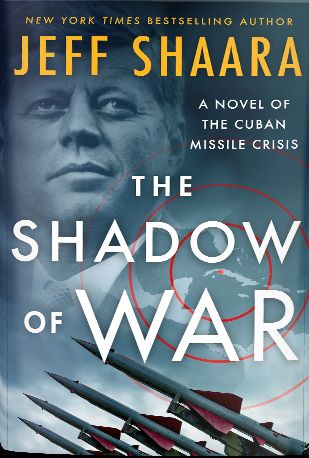
JFK’s presidency is off to a… start. Dismissed as a greenhorn who has no idea what he’s up to, he’s just had to eat crow on the national stage after admitting to the fiasco that was the Bay of Pigs invasion. Sure, it was the CIA who dropped the ball — they were probably distracted by murdering children in the third world somewhere — but it’s JFK who has to take the blame,. When new crises arrive, he’s determined to prove he’s man enough for the challenge. Kruschev, who came to power the dirty way, knows he has to deliver results to maintain his standing in the Party — and that means asserting the Soviet Union’s interests in an aggressive way. Although the Berlin issue put things on edge — American and Russian troops eying one another nervously, any misinterpretation of intentions a possible spark for global war — photographs have just come across his desk that indicate the Russians are building missile bases a stone’s throw from Florida. Kennedy and Kruschev are both staring down one another, but also the firebrands within their ranks who insist that things need to be pushed further — chests to be beaten harder, flags waved with more ferocity. It’s a matter of honor, neveremind that it would lead to the Earth being reduced to a smoking, glowing cinder.
Having not experienced the Cuban missile crisis except through fiction (most memorably, in Mr. Feeny’s lecture on it in Boy Meets World), I don’t know how well Shaara captures the growing tension of those days. Certainly tension is increasingly present in this book, especially when a ship is being confronted by the US Navy with intent to board it, and again when a recon plane is shot down over Cuba just as things are at their most tense. What detracts from this is that 90% of the book is dialogue: JFK and RFK talking to one another and their advisors, Krushev talking (or arguing) with his advisors. I’m fairly certain this book has Shaara’s most high-profile viewpoint characters to date, with only token contributions from non-world leaders. A college professor gives us intermittent civilian takes on the growing crisis, and during the blockade we step aboard the USS Joseph P. Kennedy, facing down an approaching freighter and knowing there’s a Soviet sub on the way. The book has obvious relevance today, amid growing American participation in a war inaugurated by Russia aggressively pushing back against what it perceives as aggression. In Kruschev’s day, that was missiles in Turkey, aimed at it: today it’s a coup-installed regime in Ukraine supported by the NATO powers. I appreciated that Shaara gave the Russians a voice here, and allows Kennedy to realize that yes, missiles in Cuba are a bit like missiles in Turkey, and instead of shoving knives at people’s throats and expecting them to cower, we should back up, have a drink, and look for a solution that doesn’t involve expanding the war.
In short, The Shadow of War was enjoyable if not captivating. The heavy role of conversation (again, 90% of the book) kept it from being as exciting as his more conventional war stories. It opened my eyes to some things I hadn’t appreciated, like the Berlin crisis. Shaara opens and closes with nonfiction brackets that introduce the context and look at the later ramifications, though, which makes it extremely accessible to readers who don’t know much or anything about the crisis.
Related:
The Lunar Missile Crisis, Rhett C. Bruno & Jaime Castle. JFK in space.
Star Trek: Brinkmanship. The Cuban Missile crisis in space.


 Reading Freely