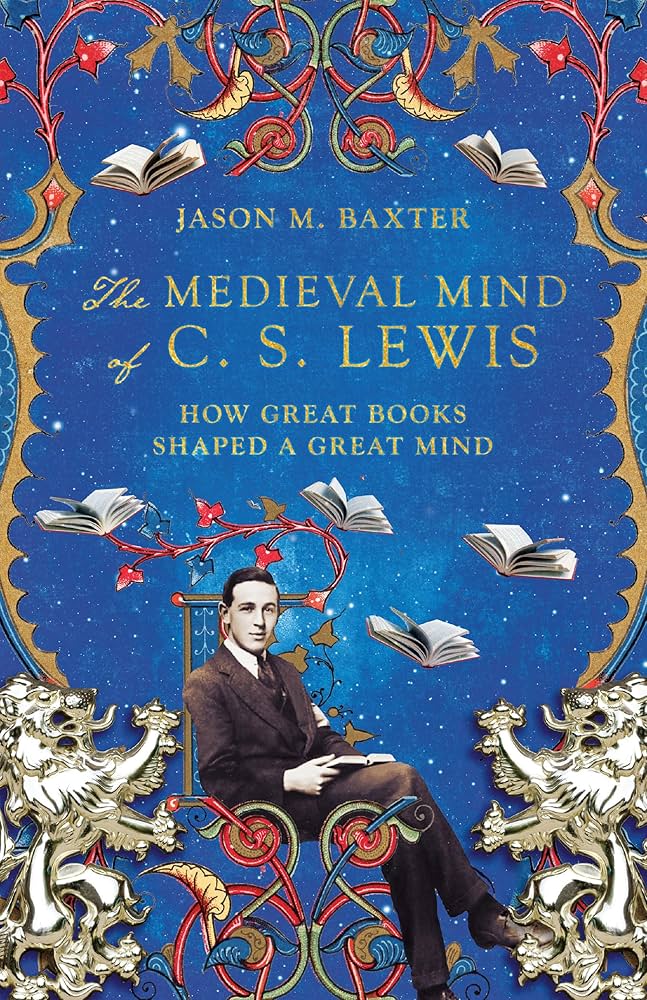
Most people encounter C.S. Lewis as a Christian apologist or an author of stories — either the children’s series of Narnia, or his fascinating “space trilogy”, which combined mythology, medieval cosmology, and character drama to good effect. His occupation, though, was as a don of literature — especially medieval literature, and Baxter here argues that Lewis was more at home in medieval Christendom than in modernity. The Medieval Mind of C.S. Lewis illustrates how medieval culture permeated Lewis’ fictional work, and reflects on his love for Dante and appreciation for the medieval model of Creation. While I was already aware of Lewis’ fondness for the medieval mind — his Disarded Image was a tribute and explanation to it — I found much to appreciate about The Medieval Mind, showcasing as it does a large part of one of my very favorite author’s personality. I was especially interested in the idea that medievalism permeated Narnia — not because of the kings and queens, but that Lewis had written the books with medieval atmosphere in mind: Baxter and evidently other authors believe that each of the Narnia books was written with one element of the medieval cosmology in mind, each element dominating a particular book. The focus is largely on that cosmology — the geography that Dante navigates in the Commedia — and not so much on politics. For a Lewis fan, this should definitely be of interest.
Coming up: I’ll be finishing Living in Wonder this weekend, then reading a Kingsnorth title to finish my goal of reading one book by each author at the Resisting the Machine conference last weekend.
Highlights:
It was this professorial Lewis who in a 1955 letter lamented that modern renderings of old poems made up a “dark conspiracy . . . to convince the modern barbarian that the poetry of the past was, in its own day, just as mean, colloquial, and ugly as our own.”
Music is philosophical therapy, bringing the soul back into tune with the great Conductor’s universe.
Standing in a medieval cathedral gives you a kind of x-ray vision of the world. Meaning is everywhere, full and rich. The material world has been gathered to a saturation point. In a cathedral, then, the spiritual world feels like it is leaking in, and our response is to want to soar up and through and out.
In sum, while the medieval cosmos was alive, a great living being, a world that moved because it experienced desire, for modernity the world is made up of passive lumps of matter, waiting to be acted on by forces, suspended within space.
There doesn’t seem to be a moment in Lewis’s adult life in which Dante was not close at hand and vividly present in his thoughts. The Florentine was a constant interlocutor. Just as when Augustine wanted to talk about love or loss, and would reach into his mind to try to find language adequate to capture the power of the experience, and would inadvertently begin quoting passages from Virgil, Lewis would open his mouth to say something moving and personal and find himself quoting Dante.
Purification must precede illumination; and illumination precedes unity. For the medieval mind, you could not skip to the end: you had to be religious before being spiritual.
“I say my prayers, I read a book of devotion, I prepare for, or receive, the Sacrament. But while I do these things, there is, so to speak, a voice inside me that urges caution. It tells me to be careful, to keep my head, not to go too far, not to burn my boats. I come into the presence of God with a great fear, lest anything should happen to me within that presence which will prove too intolerably inconvenient when I have to come out again into my “ordinary” life. I don’t want to be carried away into any resolution which I shall afterwards regret. . . . This is my endlessly recurrent temptation: to go down to that Sea (I think St. John of the Cross called God a sea) and there neither dive nor swim nor float, but only dabble and splash, careful not to get out of my depth and holding on to the lifeline which connects me with my things temporal.”
I am not a career-oriented person: when I was younger, I didn’t have a driving ambition to Become Something other than a husband & father: a career was simply something I would’ve done to support that vocation. When I was asked as a kid what I wanted to do when I grew up, I’d give various answers — a comic-drawer like Bill Watterson, a radio station DJ, a CIA agent. (The last makes me shudder.) In high school, I did realize an interest in writing and became interested in journalism, but had such poor social skills that I didn’t think it would be possible to pursue that option. This is probably one of the biggest what-ifs of my life — what if I’d pursue that path? Writing is a passion, a hobby, a relentless itch that I have to scratch: this very blog was born in 2007 because of that itch. I rapidly gained social skills in my twenties and would’ve been able to make a go of it, I think — ignoring the collapse of journalism as a profession! Instead, I chose libraries, given my bookish nature, love of history and literature, and desire to help people. In my particular work at the library, though, books almost never enter the picture: it’s more social work meets IT, with the occasional local history question, and frankly it can be draining at times. Because of that, back in 2021 I was actively thinking about a move into IT: I already knew how to build and repair computers, and was studying for the CompTIA A+ exam. Back then I was in a place in life where I felt like getting away from everything (think Jim’s move to Stamford in The Office), and had some idea of going to New Mexico someplace and creating a new life for myself. Instead, in October I nearly died from an undiagnosed autoimmune disorder that had destroyed my kidneys, and in the wake of that drama — the intense support from my community, work, church, family, the toll it and the transplant the next year took on my savings — my dream changed to a commitment to serving the people who had been there for me, now feeling a sense of duty. I’ve continued to pursue IT training — using Coursera and virtual machines to learn things like Active Directory — but more as a backup in case circumstances force me to leave this area. (I also find technical training fun, believe it or not.) Although it would be much easier to find work in that field (especially given that I “do” IT at work now, servicing our computers), it wouldn’t be meaningful like writing or public service are, and I detest the idea of doing something just for money. If I just wanted money, I could drive trucks. Of course, I’ve also been told throughout my life that I’d make a good pastor/monk/priest, including in my college years when I wasn’t even religious! Two of my priests have been second-vocation priests, so one never knows. Perhaps one day I’ll be some Bendictine abbey’s librarian-IT guru, installing Windows 20 while contemplating the Mysteries of the Rosary…
Today’s prompt from Long & Short Reviews is: what do I do when I’m bored? Ehm…. I read, if I can, and if not I think about things or tell stories in my head — sometimes thinking about fiction I’m trying to write, sometimes playing with storylines for The Sims games, sometimes with characters I made up in my head when I was a kid and have continued to mentally ‘play’ with. Sometimes all of these combine: a prominent character in a series of short stories was one who came to life in The Sims 2, but was translated into the real world a few years back when I wrote a story about church drama to amuse some of my friends, and my brain still likes mulling over fictional scenarios and how he might act in them.
WHAT are you reading? I’m most of the way through The Medieval Mind of C.S. Lewis, I’m a third of the way through Living in Wonder, and I just started the Audible version of What If? 2, read by Wil Wheaton.
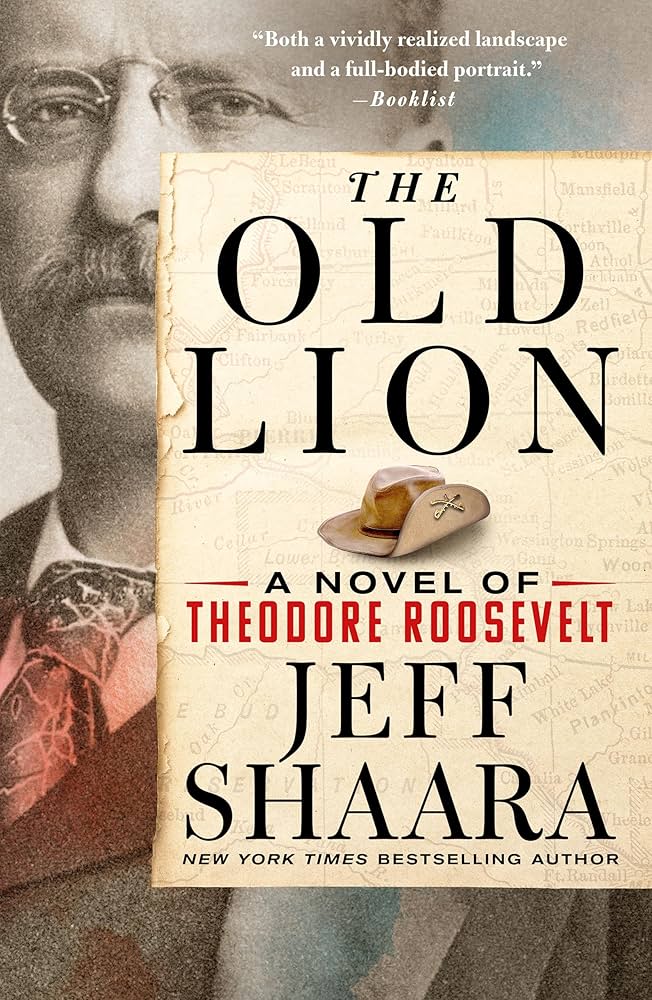
WHAT have you finished reading recently? The Old Lion, Jeff Shaara. A novel about Teddy Roosevelt. Enjoyable well enough, but not memorable.
WHAT are you reading next? Once I finish the aforementioned titles, I’m going to try a Kingsnorth title, Confessions of a Recovering Environmentalist — which, based on what I’ve heard from him, will be about his realizing that we’re on the Titanic after it hit the iceberg. He still has environmentalist values but has lost all faith that the global elite and the machine they control genuinely care about the Earth.
Today’s TTT is how our reading habits have changed over time. First up, though, the ol’ Teddy Tease.
Loeb made a small sound, and Roosevelt waited for more, saw his son Archie running past in pursuit. With a hint of alarm, Loeb said, “Which one was that, sir?” “That was Archie, my second youngest.” “No, sir, the animal.” “Oh. That was Josiah, the badger. I call him Josh.” (The Old Lion: A Novel of Theodore Roosevelt, Jeff Shaara)
The thing is, enchantment that doesn’t compel you to change your life is not enchantment at all. It’s going to be hard to make this journey back to a richer and more vital understanding of our spiritual lives, but what else can we do? As Virgil says to Dante when they first met in the forest clearing, if you stay here, you’re going to die. (Living in Wonder, Rod Dreher)
So! Ways my reading has changed through the years…
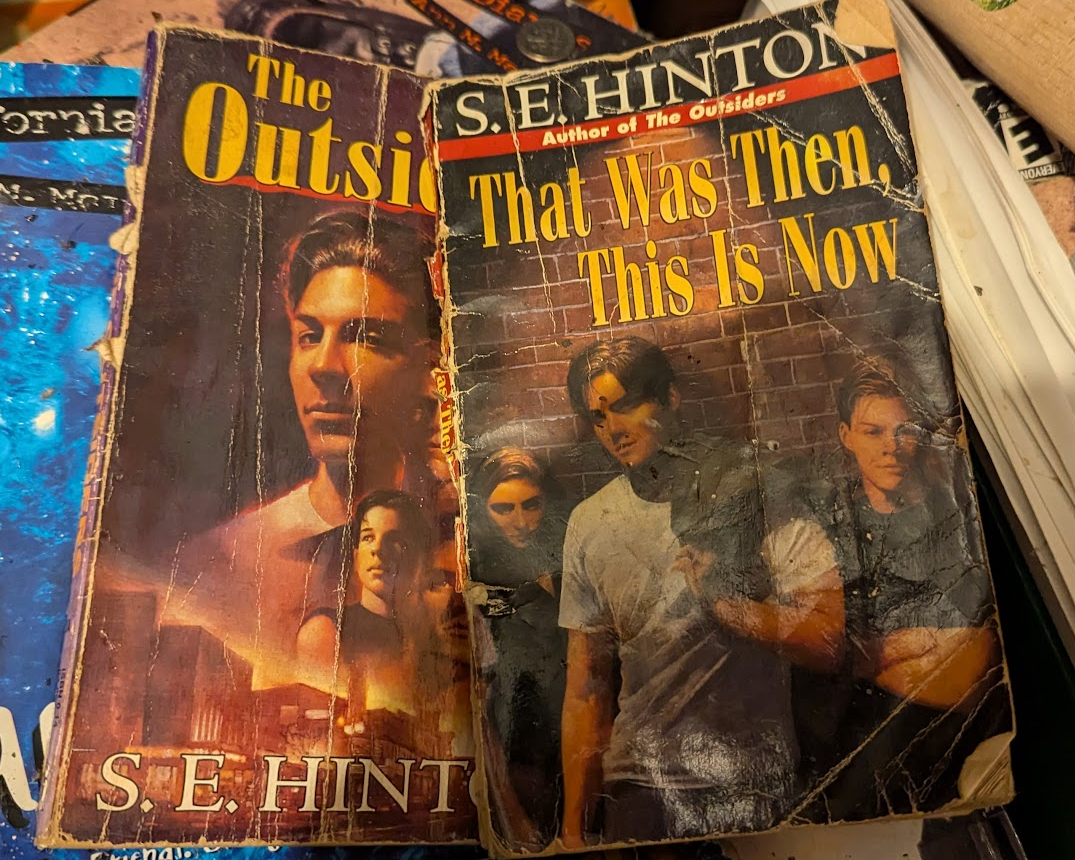
(1) Rereads. Before entering the workforce, I didn’t have the means to buy books very often, so I would constantly re-read the titles I had. My copies of The Rainmaker and The Last Juror, as well as many Star Trek paperbacks and S.E. Hinton paperbacks, are absolutely battered. These days it’s rare that I re-read a book, with some exceptions: Asimov’s Black Widower mysteries are always enjoying little diversions, and occasionally I re-read a book to give it a proper review or to see how my perspective has changed over a course of years.
(2) Reading anything. As a kid, I’d come home from the library with books on anything and everything, but in high school I’d drifted to reading far more narrowly — just history, Star Trek, and thrillers. In 2005/2006 I began questioning my worldview rather drastically and began reading much more nonfiction and from a broader range. It began with my rediscovering the joys of science, but then I began reading philosophy, economics, urban planning, etc.
(3)A shift to e-reading. After I finally bought a smartphone (in 2018 — very much the black mirror skeptic) and could begin reading Kindle titles on my phone, ebooks have grown to account for at least half of my reading in any given year. I still read and love physical books, but the space saving and convenience have counted for a lot, not to mention my library’s ebook collection grows steadily with every year.
(4) The force is not with this one. I used to read Star Wars novels on a regular basis, but after the rat-empire seized Star Was as a property and declared the entirety of the Extended Universe vanquished, in favor of its far inferior cinematic storytelling, I’ve lost interest in the franchise as a whole.
(5) Fiction has had a huge upsurge this year, seizing a lead early and never relinquishing it. I’m still rooting for NF. (“Aren’t you ….in charge of that?”, a reader may ask, the answer is — no, not really. I follow the Muses, or their bookish equivalents.)
(6) Religious reading has changed enormously since I first began writing this blog in 2007 — back then I’d just left Pentecostalism and was mostly reading anti-religious works, but within a couple of years, I’d become inexplicably interested in religion, philosophy, and meaning: religion & philosophy reading hit a high water mark in 2009, and was all over the place. I’d read stuff I knew I wouldn’t like just to be exposed to it, like The Four Agreements and Deepak Chopra. Over the years (beginning with 2011) my religious reading has become more tightly focused to Christianity, and specifically to Catholic & Orthodox theology & practice.
(7) and (8). Science fiction and historical fiction have both grown over the years. Early on, the only Hf I read was Jeff Shaara novels, but then I stumbled onto Steven Saylor and Bernard Cornwell and they led me to others, like Kane and Harris, and soon I was even reading historical fiction that didn’t involve stabbing and shooting. Science fiction, likewise, began as “Star Trek and Isaac Asimov”, but now I’m fairly active reading it and have several favorite contemporary authors: Daniel Suarez comes to mind.
(9) Audiobooks are now a thing. For most of this blog’s history, I almost never read an audiobook except for the occasional one on CD. That changed when I learned that Wil Wheaton was an audible reader, which proved to be my gateway drug into Audible in general.
(10) This is less about reading and more about reviewing, but if you go back to 2007/2008 you’ll find my reviews are painfully formal, whereas now I’m perfectly happy to post something like Kinfolk, half of which was written in a southern vernacular inspired by both Sean Dietrich’s folksiness. I think my reviews have gotten progressively more ‘personable’ over the years. I don’t go back to my early reviews unless I want to find out about a book, whereas I’ll read my reviews from later years simply to amuse myself with my own writing. (Or facepalm, because how in the hell have I let that sentence fragment live long enough to get a driving license?)
“Write what people want to hear, especially about me. Reality can be ugly.”
Imagine if someone wrote a fictional biography of Chuck Norris, but they used the internet legend version of Norris as their inspiration rather than the actor himself. That’s what impression The Old Lion gives me, frankly, a worshipful depiction of Teddy Roosevelt in which his only fault is loving his first wife too much and not being able to be there for her namesake daughter in her youth. Teddy is always, always, morally admirable. Born a weak child? By God, he shall lift weights and make himself better! He has absolutely no 19th century prejudices at all, he is a friend of all mankind — and to women, too, who only don’t have the vote because other men are afraid of them. Teddy isn’t, though, because he’s a lion — a hero, a legend. He has all the right opinions and he hates all the right people and he is not believable for one minute.
As a novel, this has its interests. There’s a lot of focus on Teddy in the West, and whereas I’d assumed Teddy had a rather passive role there, playing cowboy using his money while other men did the work, Shaara has Teddy playing the lead role in a 1950s western, complete with hauling dangerous criminals across the landscape all night so they can be given a fair trial instead of simply being hanged for being low-down no-good horse thieves. (Even the thieves asked him why he’s bothering to go through all this work, at which point he harrumphs about the importance of law and order in bringing civilization to the west.) We also see Teddyboy running around in the Spanish-American War (where he’s absolutely skeptical about the Maine but nontheless gung-ho about going to war to provide ‘leadership’ and inspire the other people of the Americas against European mischief). One segment of the Spanish war is especially interesting, as he has the idea of repurposing a giant kettle on a sugar plantation as cover against Gatlin guns. I didn’t realized how varied the man’s life was — he doesn’t get on a political train and follow it to the presidency, but goes back and forth between being a politician, cattleman, soldier, and so on. This offers constant change for the reader, but the more I progressed the less I cared about the story, simply because history was not being taken seriously: Roosevelt dismisses William Jennings Bryant as if he were Vermin Supreme rather than a man who became Secretary of State — and better yet, scoffs at Bryant’s reforms as ambitious nonsense when it was Teddyboy who had the megalomaniacal idea for using the government to force people in spelling English in some truncated manner that had caught his fancy. Things like this made me feel that Shaara was simply not invested in the zeitgeist he was writing about, because ignoring the draw of Bryant’s populism makes as much sense as ignoring say, the labor movement in that same time period.
Despite enjoying parts of this, its version of Teddy struck as too simplistic and worshipful, not plausible given the times he lived and worked in. Admittedly, I’ve never read a full biography of Roosevelt, but it strikes me as improbable a 19th century aristocrat would have the same views on native Americans, blacks, women, etc as a 1990s politician would. Shaara does season in some reality later in the book, when Roosevelt invites Booker T. Washington to the White House and Washington quotes some of the real TR’s racial remarks at him — remarks which seem disconnected from the race-blind Teddy of the early novel — only for Roosevelt to declare that men change. There are other details that show Shaara’s research — Teddy’s referring to Alice Jr consistently as “Baby Lee”, since her mother’s death traumatized him, and some of his verbal tics. As it happens, I more or less like Teddy, despite the fact that if I mention him on this blog it tend to be a critical observation: despite his influence on creating the imperial presidency, his own passion for expanding the empire of DC far beyond what the poor benighted Republic could bear, I find him generally admirable as a man. Spirited, disciplined, pugnacious, driven: even when he was shot he turned it into an opportunity to campaign, declaring that “You can’t stop a bull moose!”. He’s just too ‘lionized’ in this novel for my comfort.
Bottom line: it’s an enjoyable novel, just don’t take it too seriously.
Highlights:
“But I admit, I’m drawn to the notion of a life in politics. To perform a service that benefits the entire people…” The word seemed to surprise his mother. “Politics? Your father did great good for an enormous number of people with charity work, advancing the culture in less dreadful ways. He considered the professional politician to be a man with no other opportunities in his life except to defraud and scandalize the people who could be persuaded to give him their vote. They are scoundrels, all of them.”
“[…] a few of us thought he had a chance of winning the nomination, and maybe even the presidency. I’m still convinced he’d be a lot more effective leader than Blaine. But the convention had already been decided, long before we got there, long before anybody had a real chance to be heard. It’s like when you wade out into the edge of the ocean and try to stay upright against a big wave. Not likely. The wave broke over us.”
“If politics is to be my lifeblood, I must do it on my own terms, and I will find a way to survive. If it is not in my future, well, I have my cattle. And a clear conscience.”
“You want to lead the dance, you have to step on some toes.”‘
“I rather thrive on chaos, especially when I can push it onto someone else. Politics lends itself quite well to chaos. If everybody agreed on everything, if everybody trusted everyone else, nothing would get done. Makes no sense, I bet, eh? But it’s chaos that forces deals to be made, agreements to be forged, usually in some sweaty, smoky back room. You want to prevail in politics, you stay just a bit outside the chaos, let them come to you.”
“I could fix this. I know damn well I could.” “Sir, you can’t. It’s a private matter. Government can’t become involved.” “I didn’t say government. I said me.”
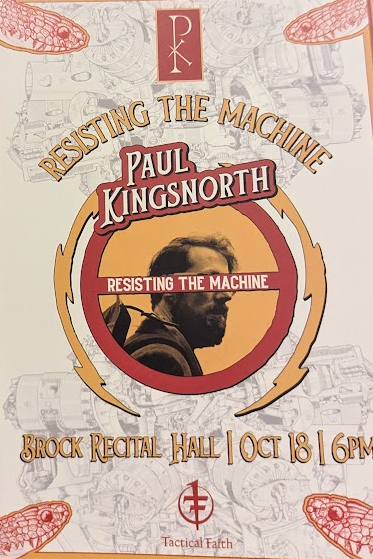
This past weekend I had a rare opportunity to meet not two, but three authors, two of whom I’d read previously and one of whom I consider my favorites. Some months ago Rod Dreher, author of The Little Way of Ruthie Leming,How Dante Can Save your Life, and Live not by Lies, announced that he would be speaking in Birmingham along with Paul Kingsnorth as part of a multi-day event (“Resisting the Machine”) that would culminate in the booklaunch of Dreher’s Living in Wonder, on the human need for enchantment and the sometimes dangerous ways people are pursuing it in the current day. Kingsnorth is not an author I’ve read a lot of: I encountered him first via his editing of Wendell Berry’s essays, The World-Ending Fire, and then began reading his blog, an eco-Orthodox attack on the “nexus of power, wealth, and technology”.
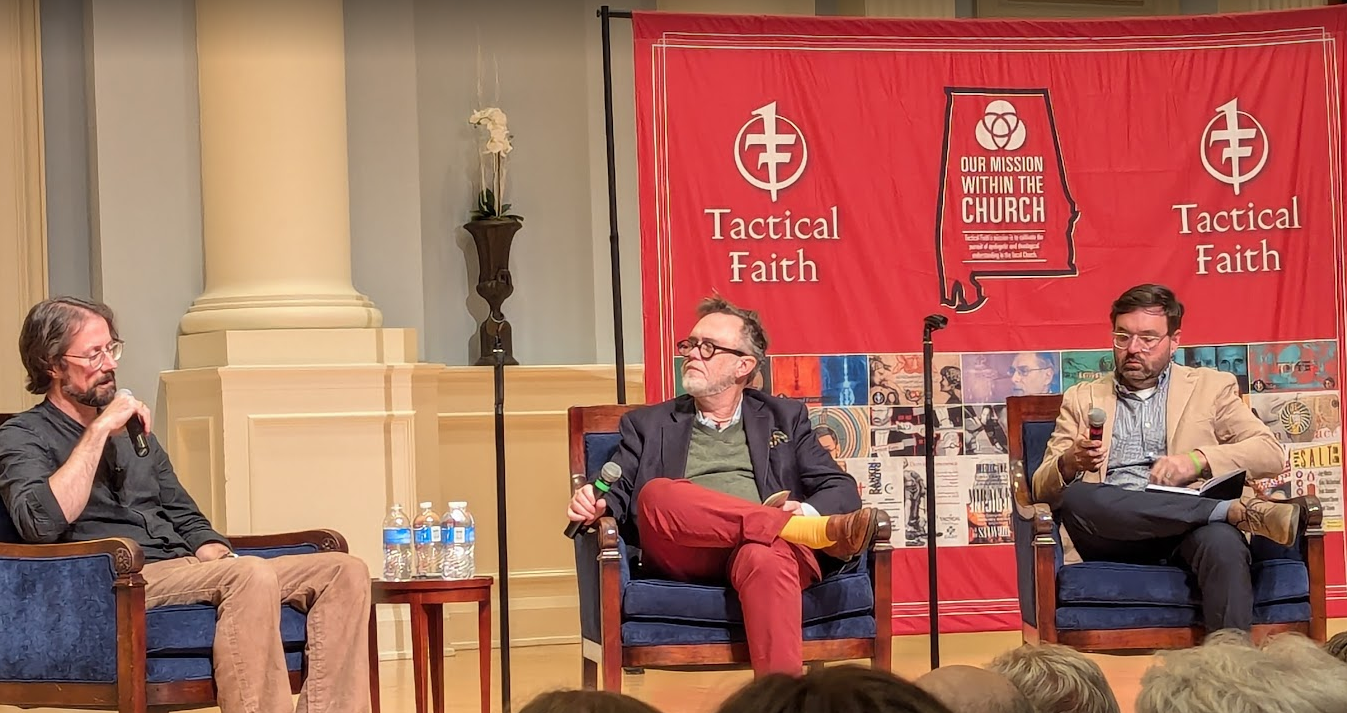
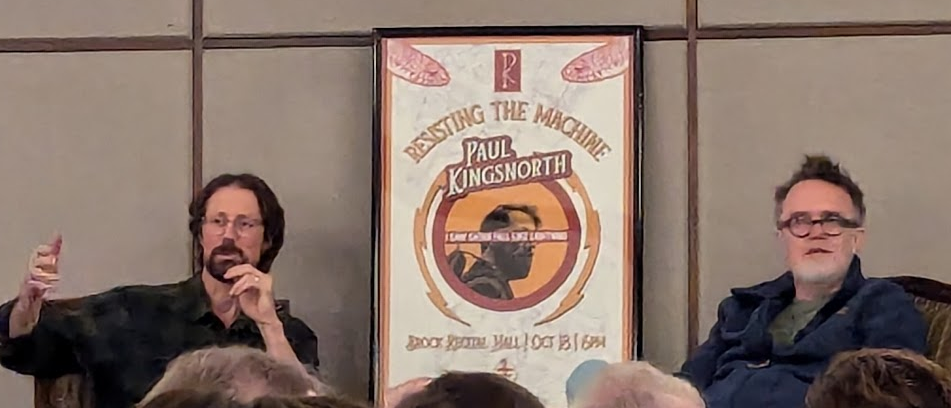
Paul Kingsnorth, Orthodox tech critic and mystic; Rod Dreher, journalist and author; Jason Baxter, classicist & CS Lewis scholar
Friday, October 18th
The evening kicked off with a talk from Paul Kingsnorth, whose substack writing is an interesting mix of environmentalism, Christian humanism, and sharp criticism of industrial technology and its effects on human civilization. Paul outstrips even me in his hatred for cell-phones, volunteering to smash anyone’s smartphone if they’d like. (Rod held his close and gasped: “My preccious!”) The talk was principally about Kingsnorth’s conception of The Machine, but then shifted from this very broad view (of the Machine now being an international beast) to how smartphones and social media deform us at the microlevel. He urged those of us in the audience to ‘repent’ — to literally begin turning away from these devices and the compulsive, consumerist, vicious behaviors they inculcate in us. After Paul’s talk, he was then joined on stage by Rod and Baxter: Rod essentially interviewed Paul, with Baxter piping up a time or two: here, Paul’s view of the Machine was connected to Dreher’s own soon-to-be-released title, as living in meaning & wonder are the opposite of living as machine-creatures, self-absorbed and forever running on the hamsterwheel of modernity. The third fellow, Baxter, is author of The Medieval Mind of C.S. Lewis, a book I’ve thought about buying frequently: I wound buying it after the talk. When Rod does a write-up on the interview I’ll link to it here, and if it’s paywalled just let me know if you’re interested and I’ll send a few choice excerpts your way.
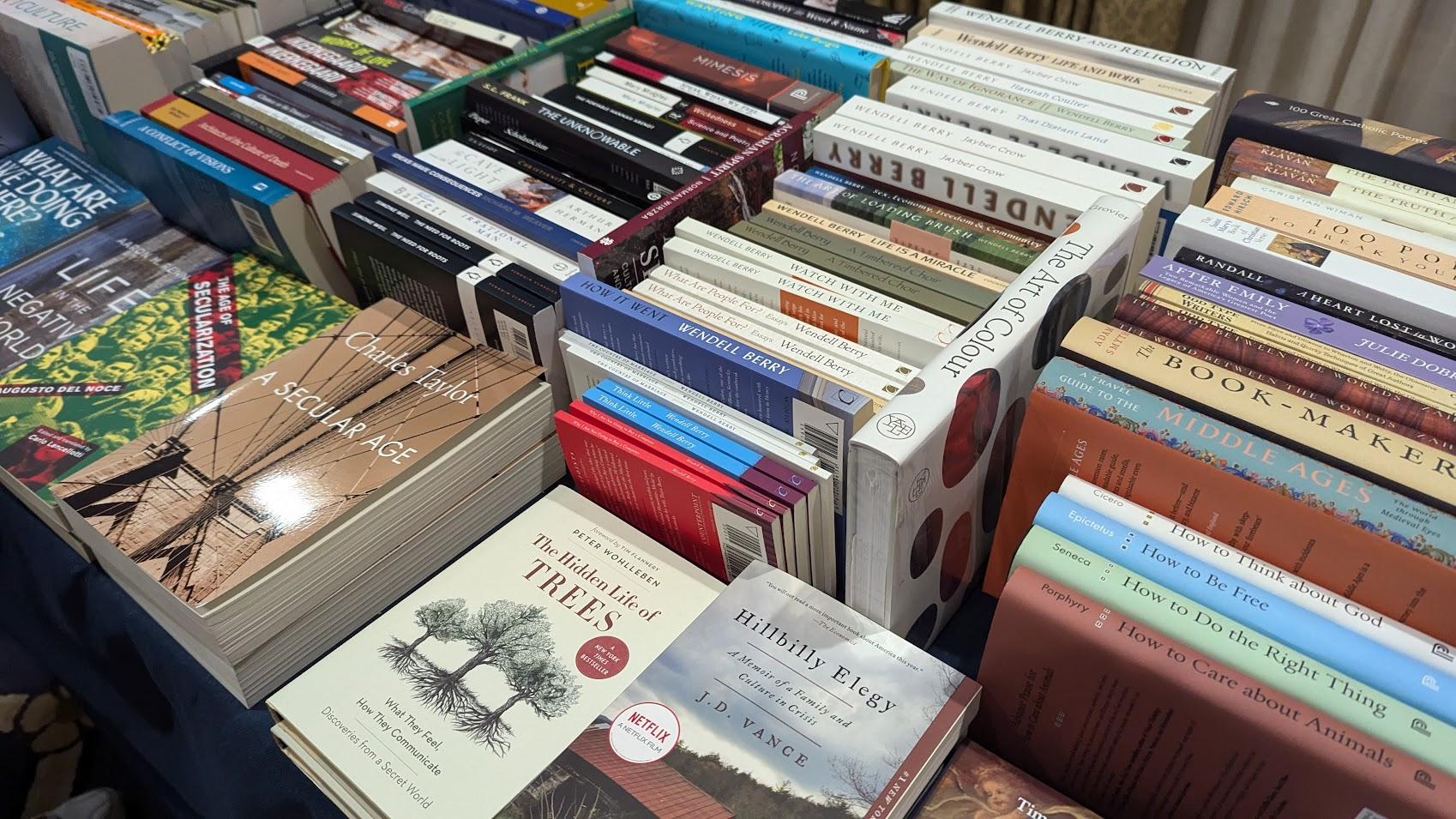
Books! Books! Books!
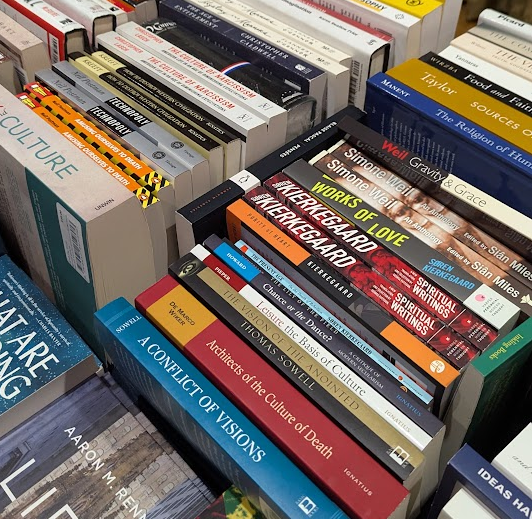
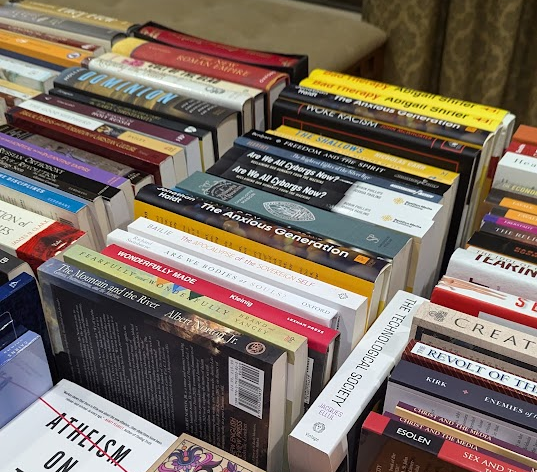
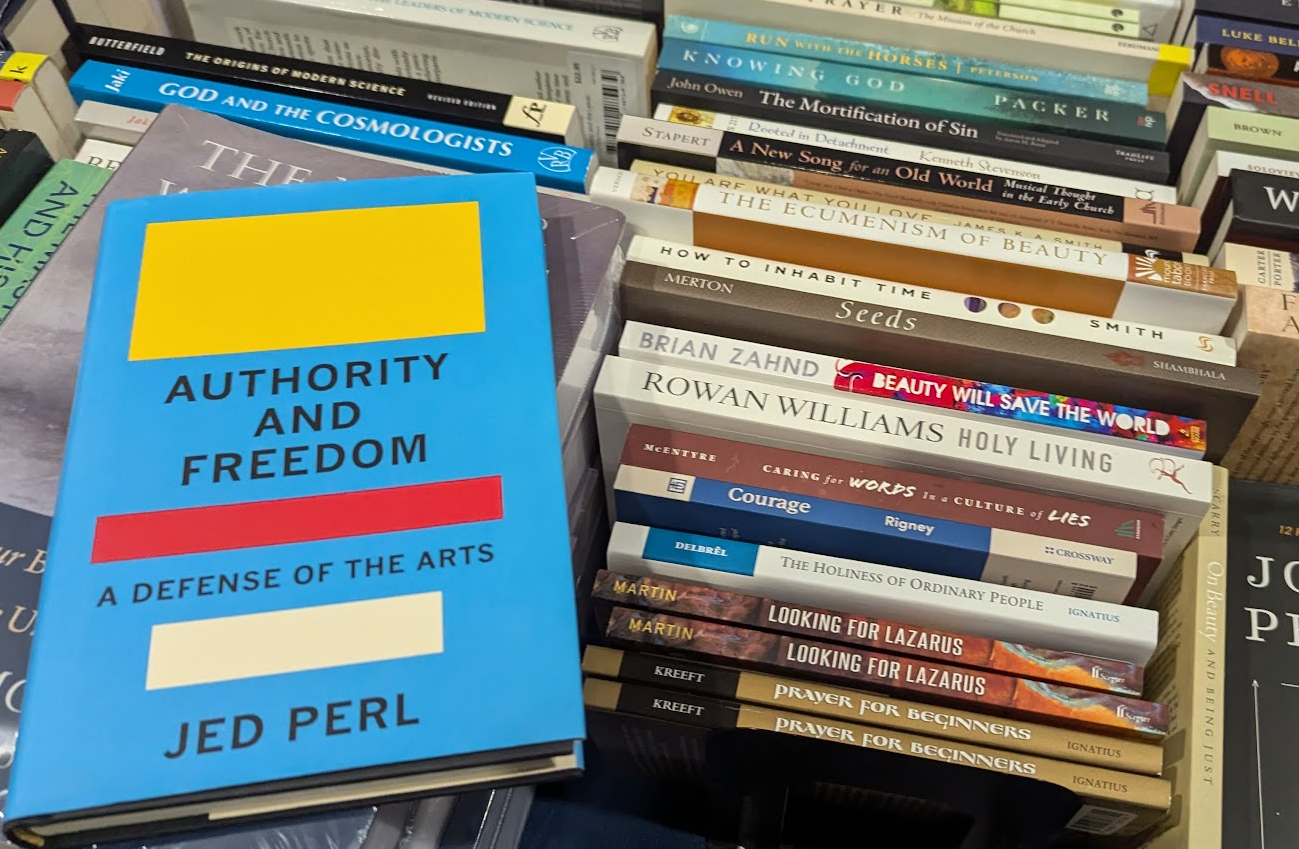
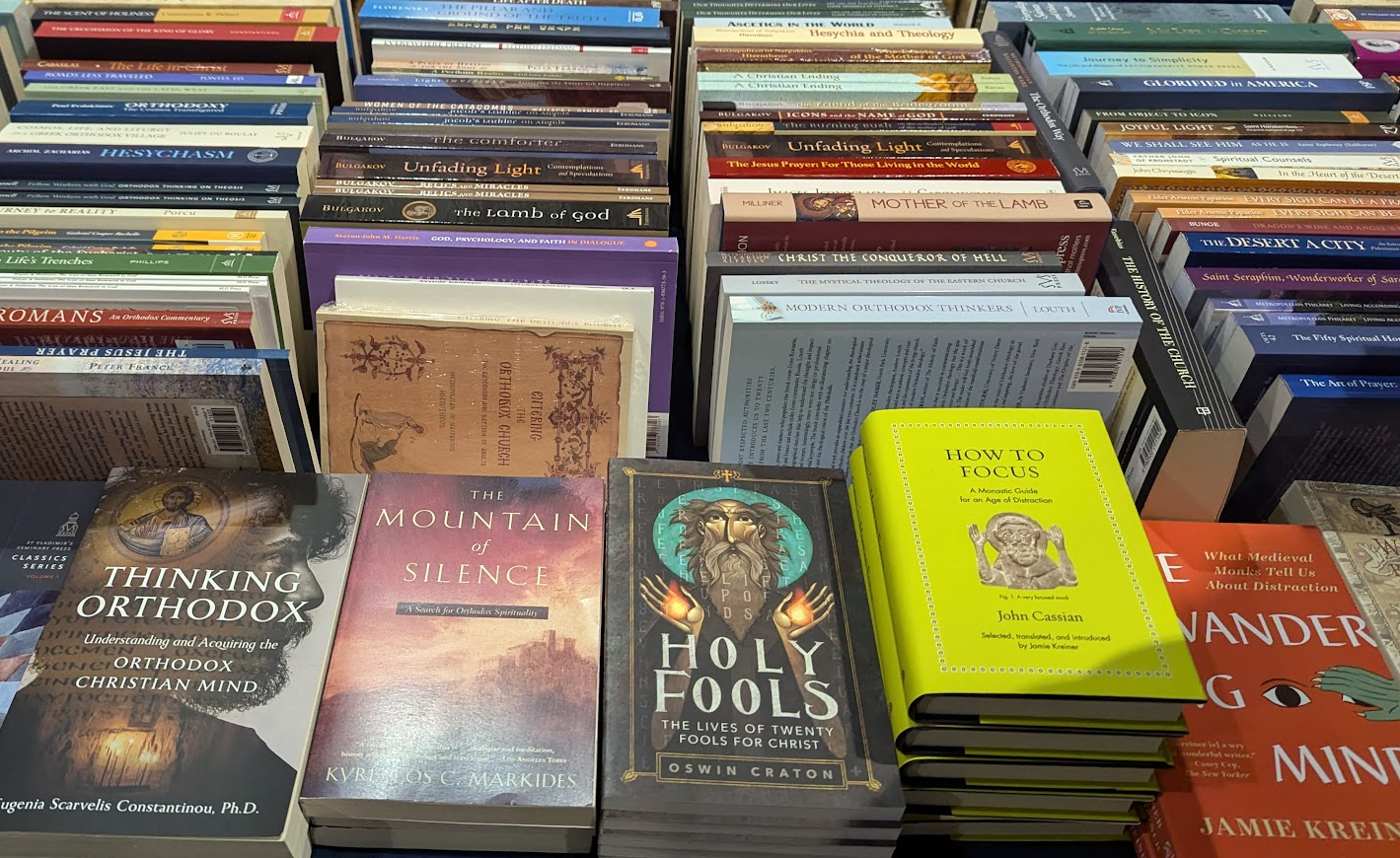
Check out some of these books! When I saw Ed Abbey, Wendell Berry, and Neil Postman mixed in with a gob-smacking variety of Christian culture books, I knew I was among my people.Eighth Day Books is the vendor if you’d like to check them out.
Note to self: really need to finish Anxious Generation and re-read Bad Therapy. And look, Nicholas Carr! He and Neil Postman are the founding fathers of my own tech-wariness.
After the discussion, I mingled in the hallway where all the books were. Rod passed behind the table, and I impulsively said “Hey, Rod!” like we knew each other. I do, in a sense: I’ve read his thoughts and reflections for years now, and for me it was surreal seeing That Man/Voice from the Internet suddenly a baseball’s throw away from me, with the same wild hair and black eyeglasses as his photo. Although I’ve already preordered the Kindle version of Living in Wonder, I grabbed a physical copy so I could get it autographed and have a chance to talk to Rod. He and I have very similar backgrounds, in that we’re both boys from the deep south who were really bad at being rednecks, much preferring books, writing, and classical music to Budweiser, football, and spending winter weekends in dark woods freezing while waiting for a shot at a deer. I’ve always felt a strong resonance with his writing, then, especially in his difficulties relating to his family — and despite my conflicted response to Crunchy Cons, he’s grown to be one of my very favorite authors. HisHow Dante Can Save Your Lifelanded a key time for me, and inspired me to finish the Commedia. The only other author I’ve traveled to see was Tom Woods, in 2015 at the Young Americans for Liberty conference. In addition to a print copy of Living in Wonder, I also bought the CS Lewis book — though I waited until I was back in my air bnb room (oddly enough, owned by a member of Holy Cross, Holy Trinity) to buy it as a Kindle title. (I plan on re-reading Crunch Cons: as with many books I read in 2013, I imagine my perspective would be very different now, as back then I still associated conservatism ONLY with neo-cons. I was also mixed about Russell Kirk that year, and yet Dreher and Kirk have remained constant presences in my mind ever since.)
Two crazy southern boys
Saturday, October 19th
The next morning, I attended a 7 am “Akathist to Jesus, Light to Those in Darkness” service at Holy Cross, Holy Trinity Orthodox in downtown Birmingham. They were the hosts of the next part of the event, a breakfast followed by another Kingsnorth-Dreher discussion which would be followed by a question and answer period.
(Taken after the event.) Although I’m faintly familiar with Orthodoxy through reading authors like Frederica Mathews-Green and Timothy Ware, as as Rod’s own writing (he converted from Roman Catholicism in the 2000s), this service was ..otherworldly. The first half-hour was essentially silent prayer, as a priest fussed around in the sanctuary. I have no idea what he was doing, because this wasn’t Divine Liturgy: once the service started, we were standing and meditating on the chants three men were doing, which took us through passages of the Gospels in which people called to Jesus for help in their despair/illness/sorrow, etc. I was very much moved by this for personal reasons I won’t go into, but suffice to say between the chanting and the incense I can definitely see being enraptured by Orthodox worship. I was mildly surprised not to see Paul or Rod in the audience, though I figured they wanted to avoid turning a religious service into a “meet the author” event. Lo and behold, though, when I turned around at the dismissal, I got a jump scare because they were right behind me, against the back wall. It’s a standing service, so I suppose they didn’t need a pew. If you look at that picture above, it’s fascinating because the presentation of the sanctuary is three-dimensional: there’s the Theotokos in the far back, of course, but she’s surrounded by an entirely different artwork depicting the Apostles (I’m assuming), and they’re all looking down on a Crucifix. All of these works are separate and distinct — and yet, conjoined in a powerful way.
“One especially promising book is —- “WE CAN’T HEAR YOU!” “What? Oh. The Mountain of Silence. The machine is fighting back.”
After this, we proceeded to the “Banquet Hall”, where we had breakfast, followed by another discussion between the authors. This one was more tightly focused on the difference between “precept” and “concept”, and specifically the way western Christianity has focused on latter over the former: to reference Pogle’s The Church Impotent, essentially western Christianity became fixated on “mental” aspects — apologetics — it drifted away from experiential aspects of Christianity, aside from some some mystics. If Christian faith is to triumph against the machine, it must incorporate body, mind, and spirit — not be dominated simply by syllogisms. I can testify to this to some degree, as it wasn’t until I had my own touching-a-live-wire experience that I began to open to becoming a Christian — and C.S. Lewis, too, had to wait until he’d been ‘surprised by joy’, this bolt he could not account for, before Tolkien and others could frame his experience with argument and convinced him to begin practicing as a Christian. Dreher’s entire religious experience has been punctuated with such moments, beginning with his being overwhelmed by Chartres, and more recently in later years, a series of events related to the life of St. Golgano, which I’m familiar with through his substack but which he related during one of the discussions. After this, I met with a dear friend for lunch at a restaurant Rod recommended, then sallied forth home.
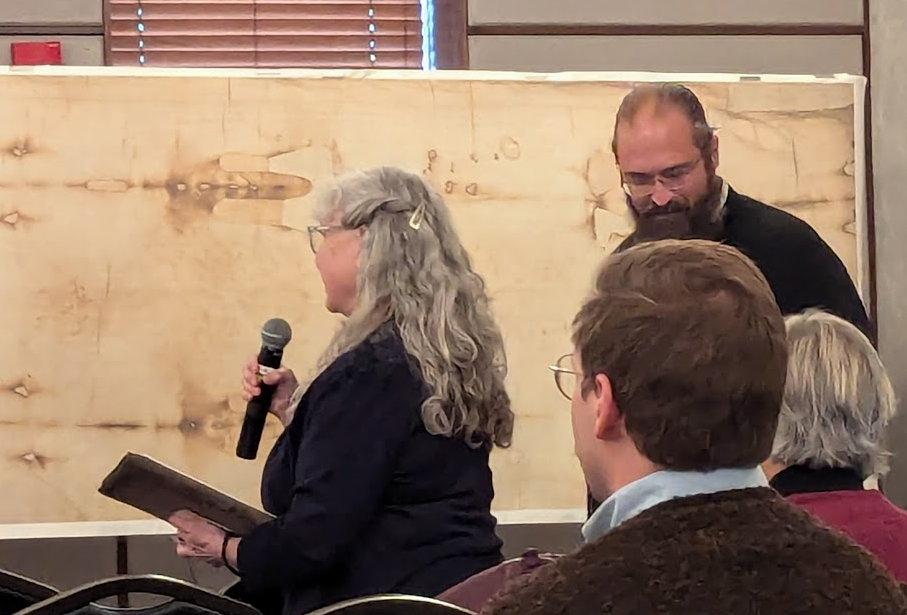
It’s Frederica Mathews-Green! (…she’s written books on Eastern Orthodoxy, a few of which I’ve read.) And a replica of the Shroud of Turin. Unexpected.
It was quite the weekend. I greatly enjoyed being among likeminded people — not Christians, per se, but people who are deeply concerned about the way technology, industrialism, modernity, etc are warping humanity and taking us away from meaning and authenticity. This was something I was interested in long before I ever opened myself up to the Christian way, but Christianity — and particularly, the social doctrine of the Catholic church I discovered through Schumacher’s small is beautiful(available through Eighth Day Books!) — helped me understand the problem of modernity and the machine better. I imagine this next week will be marked by reading inspired by this weekend’s reflections and conversations.
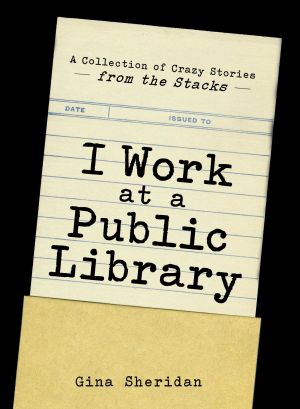
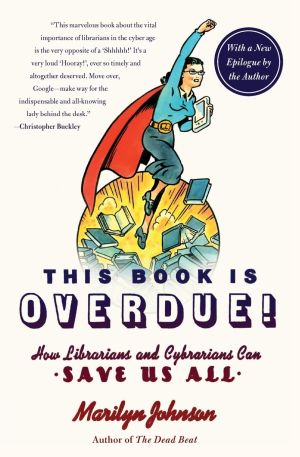
As promised, I read This Book is Overdue! How Librarians and Cybrarians Will Save us All, by Marilyn Johnson. Before getting into it, though, I found a very quick work on KU that amused me, so I’m sharing it here as well: I Work in a Public Library.
If you’ve ever worked at a public library for any length of time, you’ve no doubt encountered some strangers and even stranger incidences: my two favorites are the time traveler and the man who wandered inside wearing no pants or shoes but holding a belt. I assumed this would be along those lines, and I was correct — complete with some recurring characters, like “Cuckoo Cathy”. The book is a collection of funny quotes from patrons (the sort of thing you’d find at Overheard Everywhere Else, but library-focused) as well as amusing & bizaare anecdotes. Sheridan closes with more heart-warming stories, like of a man who returned to the library with gifts to thank libarians for helping him find a job, that sort of thing.
Quotes:
MAN: The volume. It keeps quacking instead of ringing. It’s really embarrassing. I think my grandkids got hold of it. ME: I think I can fix that. [I take the phone, quickly go through the settings, and make a few changes. Then I show him the switch to quickly turn on and off the ringer.] MAN: You are a miracle worker! If only you could fix my grandkids. They could use an on/off switch. Or a kick.
FIVE-YEAR-OLD: You got books on Al Capone? He led a crime cinnamon. MOTHER: Syndicate.
And now, the real subject of this post: This Book is Overdue! As a librarian who doubles as an IT dude, I was immediately drawn to this title. Written in 2007 or so, it’s a general tribute to librarians but especially those who were taking advantage of the computer & networking revolution to radically rethink approaches to library work. We start off slow, Johnson documenting the trials and tribulations of a library system changing its patron & collection management software, visit librarians who were playing with then-new software tools like chatboxes, and eventually find ourselves in “Second Life”, where librarians were creating digital libraries that offered the texts of materials that members of Second Life were looking for but couldn’t find in their own systems — or, for reasons of privacy or security, were afraid to ask for in person. The setting in the early terror war period also gives librarians a chance to shine as frustrators of the goonie-boys: one section here features three anonymous librarians refusing to comply with orders from the fibs to hand over patron records. In more fun sections, Johnson dives into the digital world that librarians were creating — invading the bloggosphere and creating a community of blogs commenting on serious issues, venting steam about patrons and city councils, or just goofing off. Unfortunately, most of the blogs mentioned are long since dead, though it’s possible to use the Wayback Machine to gain some limited access. One blog that is still extant is “Tales from the Liberry“, though it’s dormant. My guess is that the social energy of the library-blogging sphere shifted into things like facebook groups, as I’m a member of so many library-focused groups that my feed is sometimes nothing but library programming ideas, book displays, baseball news, and photos of trains. This was a fun look back at how libraries began embracing the digital revolution, with a lot of laughs.
Another post consisted entirely of “signs we never thought we’d need to make,” each of which told its own condensed story: While waiting for your ride home, do not set fire to your homework to keep warm. You may not take the Sports Illustrated Swimsuit Issue into the washroom. Iguanas are not allowed in the building. If you are out of diapers, do not open the soiled diaper, scoop out the turd, leave the turd on a shelf, and then ask the librarian to tape the newly cleaned diaper closed again….
I was spending my life trying to focus on what was new in librarianship: new attitudes, new targets for outreach, the new issues and possibilities that computers in libraries represented. I didn’t want to be sitting in a sticky chair thinking about poop. Children, the homeless, smuggled-in soda bottles that spill all over the stacks, poop—these were all problems, as the academics would say, beyond the scope of my inquiry. And yet, here was poop.
Writers seldom just stop writing. We’re like serial killers in that way. You have to stop us, because we cannot stop ourselves.
During the height of the debate about the Patriot Act, some librarians posted signs that were “technically legal,” slyly warning patrons that their privacy might be compromised: THE FBI HAS NOT BEEN HERE (watch very closely for the removal of this sign).
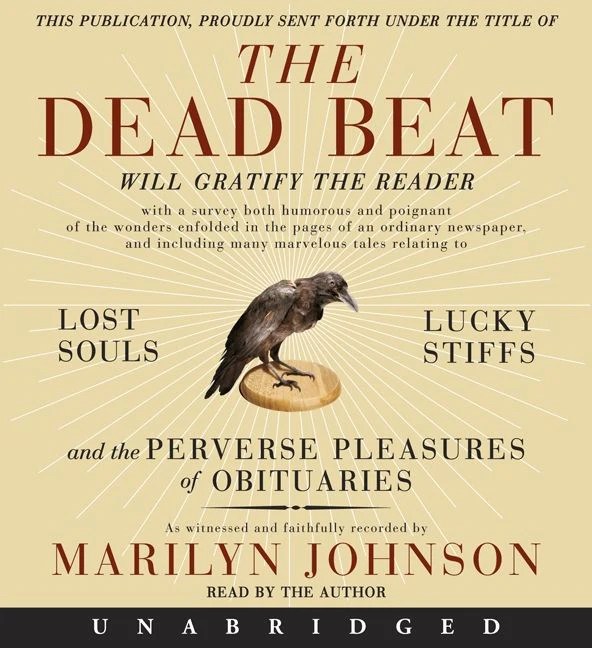
Searching for obituaries is the most frequent kind of local history request I field at the library, and I like to joke when I’m disappearing into the archives room that I’m off hunting for dead people. I’ve noticed over the years that obituaries often rise to the quality of literature, and so I was immediately interested in this title. Written in the very early 2000s, it delivers both its intentional interest — obituaries and those that write them — as well as unintentional interest, in looking back to when the internet hadn’t ravaged papers big and small, and when the internet itself was a different experience: there’s an entire chapter here on the Usenet for obituary enthusiasts. Johnson examines obituaries in both the United States and Britain, and interviews notable obit-writers whose skill at capturing the life of the recently deceased had brought them some slim measure of fame. There is an art to the obituary in finding the appropriate facts & stories to create a sense of the person who perished, not merely reprise a staid series of facts about a funeral home entry. Although we read of celebrity deaths here, there’s a good focus on ordinary lives as well, especially in the section on 9/11 and the way the New York Times began honoring the lives of those murdered that day. Johnson also visits England’s principal papers, incuding The Economist, to see how their approaches vary. I enjoyed this title, but I suspect its audience is limited.
Coming up: another title by Johnson, this one on the messy tango between librarians and computers.
In these mercenary days, others might lower the high ideals of the brave old days and become worshipers of Ba’al, but not he. In the country of his youth and young manhood, Honor was king and kindness, courtest, truth, and courage were his ministers. What wonder, then, that these ruled his whole life and made him noted throughout the Black Belt of Alabama. To offer him an insult was to take a Numidian lion by the beard: and he has been known as one that would uphold his principles on the field of honor. And now the brave and generous heart is stilled forever. We shall not soon forget him, for he was a rare man and one whose like we shall not soon see again. May he sleep restfully under the magnolias until that final day when each shall receive his just reward.
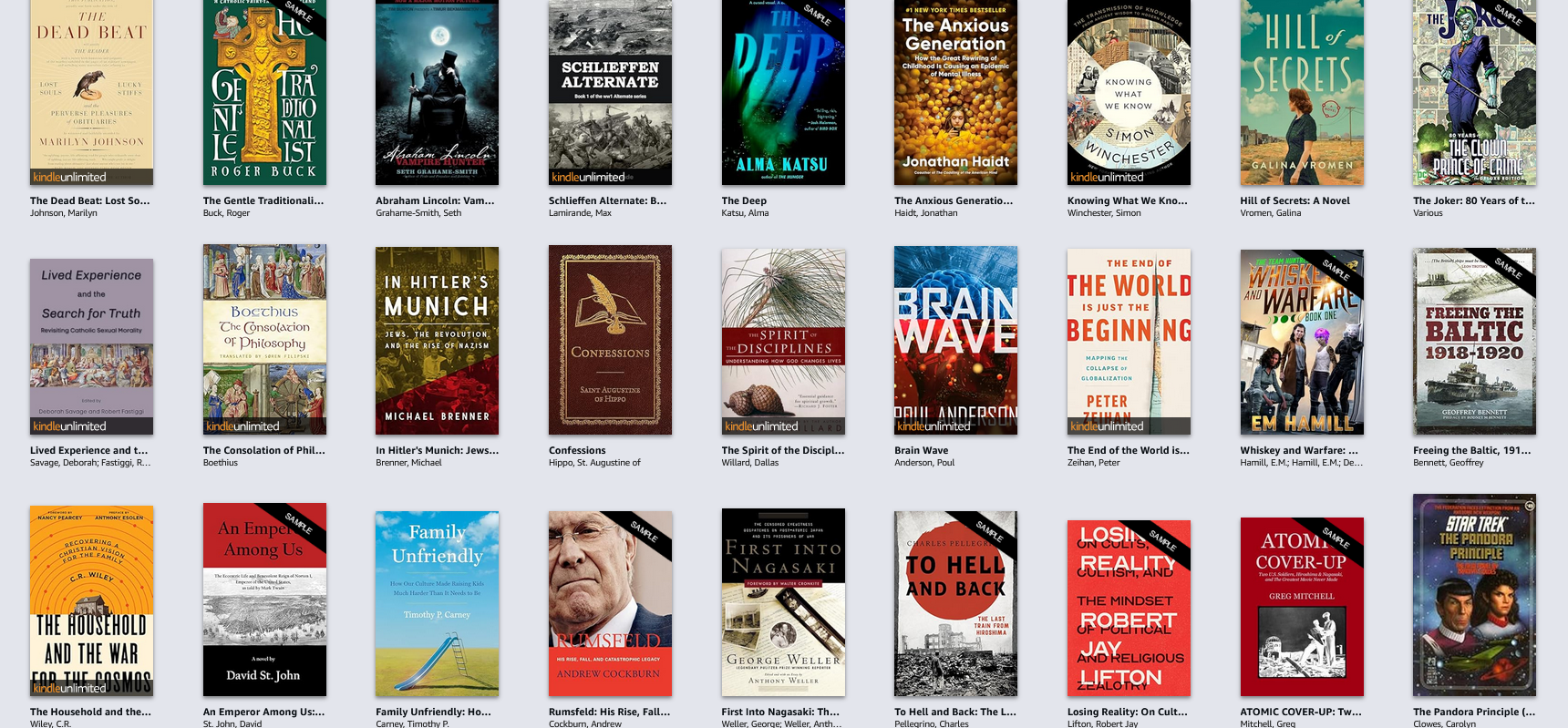
WHAT are you reading? Um. I just finished a book and haven’t gotten into anything just yet. Well, I’m still technically reading The Anxious Generation but I’m overwhelmed with schoolwork at the moment and can’t take anything too serious. This is the absolute randomness that is my Kindle bookshelf at the moment:
WHAT have you finished recently? The Dead Beat, a tribute to obituaries and obituary writers.
WHAT are you reading next? Really should be All Power to the Councils! or Germany 1923, for my planned Germany Between the Wars series of reviews, but as mentioned I’m crazy busy with school and reading about Communists and Nazis hijacking Germany’s first democracy is not an ideal counterpoint to all of the articles I’m having to read and digest and turn into a paper.
Today’s prompt from Long and Short Reviews is: What has improved since you were a kid? and I can only answer: MY ACCESS TO MUSIC. Before the internet, my music experience consisted of listening to terrestrial radio with a cassette tape at the ready so I could hit record when I heard a song I liked, and buying $10 cassette tapes and $15 CDs at Walmart. (My first cassette: Best of Beethoven. First CD….Charttoppers of the 1950s.) Once the internet became a thing, not only was it a lot easier to explore new music — like hypothetically typing in an artist’s name into Limewire and then listening to different tracks, not that I ever did such a thing. Someone who did might realize that a lot of people are quite stupid and will label a track as being by Frank Sinatra or Perry Como when they’re actually by Tony Bennett. I don’t speak from direct experience, of course. Then Pandora came along and could create playlists based on songs you liked, using their ‘musical genome’, and then Youtube and Spotify and all that came into being as well. Youtube has become the main way I find new music via the ‘related’ section.
And here are five artists I found via YouTube.
Merle Haggard said heaven was a drink of wine, but I’d settle with watching Rachael Price sing.
I was born on this mountain, this mountain’s my home She holds me and keeps me from worry and woe Well, they took everything that she gave, now they’re gone But I’ll die on this mountain, this mountain’s my home
Allison Young is so adorable.
I want you one last time Another hit to ease my mind I don’t want you to be over yet Won’t you be my last cigarette?
If I ever find myself in New Orleans, Chloe will be to blame.
And by “top ten”, I mean “the first ten books that floated up from the depths of memory”. But first, the tease!
The professional whistler” alone would make the obit interesting, but to also have Hitler, Frank Sinatra, and a sex-change operation (in a Cairo clinic!) is outrageous. The business about dying “aged 80” sits in the middle of the sentence, British style. (The Dead Beat: Lucky Stiffs, Lost Souls, and the Perverse Pleasures of Obituaries).
Okay, so — books I read because of school!
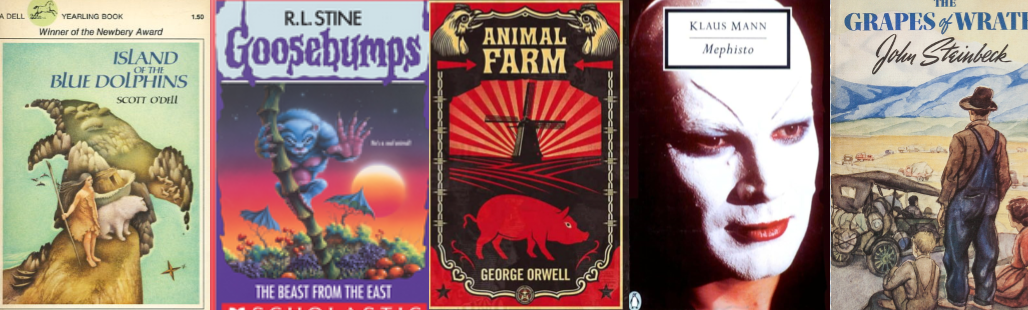
(1) Island of the Blue Dolphins. I remember nothing about this book other than being surprised I liked it.
(2) Bridge to Terabithia. Assigned summer reading. Can’t remember a blessed thing about it.
(3) The Lion, the Witch, and the Wardrobe. Assigned summer reading in between 3rd and 4th grade. My first encounter with C.S. Lewis, though I didn’t read the series in full until much later — when I was beginning my thirties.
(4) Where the Red Fern Grows, Wilson Rawls. My fifth-grade teacher read this to us over the course of a few weeks and it remains one of the most leaky-eyeball books I’ve ever read.
(5) Animal Farm, George Orwell. Read in fifth or sixth grade, and it improved enormously when I re-read it in high school after becoming familiar with the Soviets. This is one I should revisit.
(6) The Grapes of Wrath, John Steinbeck. This book is forever linked to 9/11 for me, because my class discussion of it was interrupted by an aid from the office coming in to tell the teacher the news. Read it again a few years ago and enjoyed it tremendously.
(7) Goosebumps: The Beast from the East. Why my brain remembers that my fifth grade teacher read this specific Goosebumps title to us, I have no idea. (I suspect it has something to do with kid-me having a teacher crush.)
(8) The Tragedy of Julius Caesar. Listening to my teacher bring scenes to life in tenth-grade world literature is the first time I remember being impressed by a teacher’s skills. She really made me aware of how much is happening in the scene in which Caesar is stabbed — people shouting questions and vying for his attention.
(9) Mephisto. Read for a college-level German history course. The chilling story of an artist who sells his soul to the Nazi party for pelf & place. Re-read a few years ago.
(10) A Life of her Own, Emile Carles. The memoir of a French woman from a rural village who became a teacher through two world wars: this book was my introduction to the left, libertarianism, and pacifism. It made me much more critical of the state and far more interested in reading about political philosophy, and it’s one of my few college class books that I’ve retained. One to re-read.





 Reading Freely