What the Buddha Taught

What the Buddha Taught
© 1974 Walpola Rahula

I’m a member of a philosophy group on YahooGroups, and this book came up in discussion. Since my knowledge of Buddhism is quite limited, I decided to indulge in a little literacy-expanding this week. The work was introduced to me as an introduction to Buddhism, which seems appropriate given how little I know. It’s famous enough that it has merited its own Wikipedia entry. Rahula begins by introducing the reader to the beginning of Buddhism and to the Buddhist mind, devoting a chapter to its ideals of tolerance, conditionality, compassion, and so on. An interesting element is that the author holds that doubt must be vanquished from the mind for someone to use a truth. I disagree: I think something can be “true enough” for our purposes.

Having introduced Buddhism, Rahula then deals with the foundational principles of Buddhism, the “Four Noble Truths”. He devotes a chapter to each one. The concepts he deals with did not originate in an English-speaking culture or into a culture that English derives from, so often he has to use Hindi words or make up English approximations. He then examines the Eight-Fold Path (the practical side of the philosophy). The next two chapters are on specific topics in Buddhism, namely the doctrine of no-self/soul and meditation. According to Rahula, human beings in Buddhism are seen as not having an exterior Self, but I don’t understand how that holds true given reincarnation. Rahula tried to explain it in the section of the Four Noble Truths, but so help me I couldn’t really understand. The chapter on Meditation is quite free of mystical terminology. The last chapter addresses Buddhism in the modern world. Interestingly, the revised version of the book supplements the text of the book with selected texts from the Buddhist “canon” (if there is such a thing). I found parts of the text to be quite interesting and other parts not so much.

The book is apparently quite well-received: the people who review it on Amazon are nuts about it and recommend it as the introductory book to Buddhism for beginners and students of comparative religion. Having never read any other introductions to Buddhism, I can’t say the same. It was sometimes thought-provoking and sometimes confusing for me, but in general I enjoyed the read. Here are a few quotations from the book I found interesting enough to write down.
———————-
“There is no unmoving mover behind the movement. It is only movement. It is not correct to say that life is moving, but life is movement itself. Life and movement are not two different things. In other words, there is no thinker behind the thought. Thought itself is the thinker. If you remove the thought, there is no thinker to be found.”

“Two ideas are psychologically deep-rooted in man: self-protection and self-preservation. For self-protection man has created God, on whom he depends for his own protecting safety, and security, just as a child depends on its parent. For self-preservation man has conceived the idea of an immortal Soul or Atman, which will live eternally.”

(From a collection of Siddhartha Gautama’s sayings)
“Better is it truly to conquer oneself than to conquer others. Neither a god, nor an angel, nor Mara, nor Brahma, could turn into defeat the victory of a person such as this who is self-mastered and ever-restrained in conduct.”

“Make haste in doing good; restrain your mind from evil. Whosoever is slow in doing good, his mind delights in evil.”

Posted in Reviews | Tagged , , | 2 Comments

This Week at the Library (23/2)

Books this Update:

  • Mythology, Edith Hamilton
  • The Reluctant Mr. Darwin, Peter Quammen
  • Sailing the Wine-Dark Sea, Thomas Cahill

I began this week with Edith Hamilton’s Mythology, which is concerned chiefly with the Greco-Roman legends. Hamilton is an author I have read before in The Way of the Greeks and The Echo of Greece. Although the book recounts Greek and Roman legends, she tacks on — curiously enough — a little bit about the Norse gods as well. After introducing the reader to a full cast of characters, Hamilton begins to retell the legends of old, organized smartly by theme. The book reads well, and I recommend it to those who are interested.

Next I read (belatedly) The Reluctant Mr. Darwin. I intended to read it for Darwin Week, but alas! My sense of time is not what it once was and I forgot to check the book out early enough to have it read. This is a very readable Darwin biography that concentrates on him and the development of The Origin of Species, beginning with the return of the Beagle to England. The development of the theory takes place over four chapters, while the sixth gives a history of The Origin of Species with comment on its style. The last chapters are of Darwin’s decline and death. It is quite brief, and chiefly of interest to those who are interested in the making of the theory itself and not so much interested in his early life.

I ended the week by continuing in Thomas Cahill’s Hinges of History series, this week reading Sailing the Wine-Dark Sea: Why the Greeks Matter. Re-reading may or may not be more appropriate, as I remember picking this book up five or so years ago. The book is a survey of classical Greek history, beginning in the mists of the past with The Illiad and ending with a Greece that is assimilating into Roman culture. Along the way, Cahill attempts to demonstrate how Greeks ideas have influenced our perceptions of “How to Fight”, “How to Feel”, “How to Party”, “How to Rule”, “How to Think”, and “How to See”. Cahill also manages to make these topics fit into a chronological framework. He also introduces each chapter with a story out of Greek mythology to convey to the reader the sense that we are only glimpsing fragments of who the Greeks were: we cannot understand them in their wholeness. “History must be learned in pieces,” he comments in his very first sentence to the reader.

Pick of the Week: Sailing the Wine-Dark Sea: Why the Greeks Matter, Thomas Cahill

Next Week:

  • The Gifts of the Jews, Thomas Cahill
  • Imperium: A Novel of Ancient Rome, Robert Harris
  • 10 Things Your Minister Wants To Tell You (But Can’t Because He Needs the Job), Oliver Thomas
  • What the Buddha Taught, Walpola Rahula

I accidentally posted this week last week, so most of this list has been seen before. I had to make one replacement, as someone lost or destroyed Selected Writings from Cicero.

Posted in Reviews | Tagged | Leave a comment

Sailing the Wine-Dark Sea

Sailing the Wine-Dark Sea: Why the Greeks Matter
© 2003 Thomas Cahill
303 pages, including index

I believe I picked this book up years ago, but never finished it. Very little seemed familiar as I read through the book this week, so if I did read it I assume I did not make it very far. As you may be able to imagine from the title, this addition to the Hinges of History series focuses on the Greeks, part of the western heritage — arguably the most important part of the western heritage. While the book’s contents span the Mycenaeans to the late Hellenes, much of the content comes from the golden age of Athens (which Edith Hamilton wrote about in The Echo of Greece). Cahill’s chapters weave the story of how the Greeks taught us “How to Fight”, “How to Feel”, “How to Party”, “How to Rule”, “How to Think”, and “How to See”. Cahill also manages to make these topics fit into a chronological framework: “How to Fight and How to Feel” both take as their primary sources Homeric legends, while “How to See” is set after the rise of Christianity and the absorption of Greece into the Roman empire. The transformation of the Greco-Roman world into the medieval world is the subject of his last chapter, and he manages to advertise for his other books as well. Cahill begins each chapter by retelling a story of myth. His motive is to convey to the reader the sense that we are only glimpsing fragments of who the Greeks were: we cannot understand them in their wholeness. “History must be learned in peaces,” he comments in his very first sentence to the reader.

Most of what I have said of Cahill’s previous works must be repeated here: he writes well. His narrative is neither overly wordy nor simplistic. He carries on a conversation with the reader, addressing us personally. Whenever his own biases slip into the narrative, the reader may recognize them as such without mistaking them as commonly held opinions. (He does misrepresent Epicureanism and Stoicism at the end, but commenting on this rather strikes me as nitpicking. It’s not as if there are people out there who would embrace Epicureanism if only they hadn’t been dissuaded by Cahill’s off-hand comment.) The plates he includes are well chosen: Greek art could be quite exquisite, although I confess I don’t see the draw of drinking goblets illustrated with orgies. I think he is successful in his goal of portraying the Greeks as a people who lived — and not simply as the idealized forefathers of western civilization. They are represented here in all of their triumphs and failings. I must recommend the book to those interested in the period.

Posted in history, Reviews | Tagged , , , | Leave a comment

The Reluctant Mr. Darwin

The Reluctant Mr. Darwin: An Intimate Portrait of Charles Darwin and the Making of his Theory of Evolution
© 2006 Peter Quammen
304 pages, including chronology, bibliography, notes, and index.

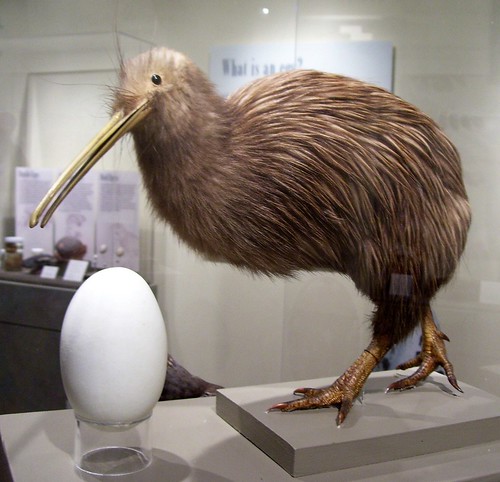
I intended to read this for the week of Charles Darwin’s birthday (12 February), but forgot that I would need to order the book in advance. I’ve read two Darwin biographies in the past, so I was familiar with much of the content here. Quammen’s approach is slightly different: rather than focus on Darwin’s upbringing and trip aboard the Beagle, he begins the book immediately after Darwin steps foot back on Britain: his first chapter is titled “Home and Dry”. The development of his theory — evolution through means of natural selection — unfolds in four chapters: “The Kiwi’s Egg”, “The Fabric Falls”, “Point of Attachment”, and “A Duck for Darwin”. The titles are quite apt, and “The Kiwis’s Egg” is almost poetic: the author explains that Darwin’s theory burdened him the same way that a kiwi bird’s oversized egg burdens it.

In the sixth chapter, His Abominable Volume, Quammen looks at The Origin of Species itself, examining its contents, style, and changes throughout its various editions. Following this, Quammen tracks evolution’s development through the two hundred years that follow with “The Fittest Idea”. The last chapter focuses on the declining years of Darwin’s life and his death. This, like Darwin, his Daughter, and Human Evolution is a brief but very readable narrative. So far Cyril Agon’s Charles Darwin: the Naturalist Who Started a Scientific Revolution has been the most thorough. This volume is more about Darwin’s development of evolution and less about Darwin proper, though.

Posted in Reviews | Tagged , , | Leave a comment

Mythology

Mythology
© 1942 Edith Hamilton
333 pages

In the past, I have both read books by Edith Hamilton and tried to read books on Greco-Roman mythology. I have never succeeded in finishing a mythology book before my interest in the subject waned, but this week I was able to do so. The book is fairly straightforward: after introducing us to our cast of characters (gods, demigods, Titans, giants, and miscellaneous creatures), Hamilton retells the various stories that constitute the Greek mythology. She organizes them by theme (“Tales of Love”, “The Trojan War”, etc) and tells the reader which sources she is relying on for her narratives. This pleased me. Those who are more familar with the various Greek and Roman authors may read more into her choice of authors. Take, for instance, this comment from a Lawrance Benarbo at Amazon.com: “I appreciate Hamilton’s choice to avoid relying on Ovid, for while the ‘Metamorphoses’ is the most comprehensive ancient text dealing with the classical myths, Ovid is an unbeliever. For Hamilton the writings of Homer, Hesiod and Pindar are more abbreviated in terms of providing details for the myths, but at least they take the tales seriously.”

Curiously, Hamilton also attaches two brief chapters on Norse mythology to the end of the book. I’m really not sure why, other than Norse mythology being somewhat connected to western civilization. She doesn’t explain why, but given that our days of the week reflect the old Norse gods (Tir’s Day, Woden’s Day, Thor’s Day, and Freya’s Day), I take my own explanation as the most likely. It was a pleasant read, taking me back to both childhood and my introduction to western literature class in my freshman year of college.

Posted in Reviews | Tagged , , , , | Leave a comment

This Week at the Library (16/2)

Books this Update:

  • How the Irish Saved Civilization, Thomas Cahill
  • Deer Hunting with Jesus, Joe Bageant
  • Shatterpoint, Matthew Stover
  • A World Waiting to be Born, M. Scott Peck

I began this week by continuing in Thomas Cahill’s entertaining Hinges of History series. In focusing on transition points of history, Cahill now addresses the oft-forgotten contributions of the Irish to preserving the western heritage during a time of turbulence. He introduces us to the waning Roman Empire, and with him we watch Europe’s transformation into early feudalism as uncouth barbarians wander around sacking cities and generally being poor neighbors. After elaborating on what was lost, he takes us to Ireland, to a Christian church that has followed a different path than the Roman church, to monasteries where pagan literature is copied freely, without being subjected to censorship. Cahill’s book covers the growth of Irish Christianity and its influence on the newly stabilizing Europe, but sadly it does not end on a happy note: at the council of Whitby, Irish Christianity is rejected in favor of Roman Catholicism, and the coming of the Vikings will lead to the destruction of the monasteries that kept the western flame alive. Cahill writes well, and the book was a pleasure to read.

Next I indulged in a little science fiction by Matthew Stover titled Shatterpoint. The book is set very soon after the Battle of Geonosis in the Star Wars universe, and tells the story of Mace Windu. Master Windu is forced to join the “My Padawan-who-is-like-family turned to the Dark Side, and only I can save him/her from him/herself” club. Windo journeys to the jungle world of Haruun Kal, where the conflict between the Republic and the Seperatists* is being fought between two bitter guerrilla armies in a science fiction version of the Vietnam Conflict. While the book is primarily a combat novel, the first part of it does give the reader insight into Mace Windu’s character.

Following this, I read Deer Hunting With Jesus, a brief book about the class war in the United States. Author Joe Bageant hails from the poor white working class of America — the one clinging to its guns and bibles — and tries to explain to his liberal friends and associates just who these people are who adore Sarah Palin so. He predicts the current financial crisis while writing on guns, folk religion, violence, healthcare, and the false allure of the Republican party to this industrial base. The book is funny and sad at a times. Since I’m from the same class as Bageant, I was already familar with the content, but those who do not share that background may find it to be quite thought provoking.

I finished the week with A World Waiting to Be Born, a psychiatric analysis and prescribed treatment of American society. Author M. Scott Peck sees the decline of civility as the source of the world’s woes. He defines it as behavior conducive to organizational health, and defines organizations so loosley that marriages, families, and work groups are considered organizations. In the first third of the book, he hammers out a thought-system that involves meditation, deity-centered ethics, and a search for greater empathetic awareness (he calls it “Group Consciousness”, which sounds either New Age or Borg to me) of one’s fellows. I can’t say I agreed with everything he said (subscribing to the humanist ethics he maligns), but it was definitely an interesting read.

Pick of the Week: How the Irish Saved Civilization, Thomas Cahill

Quotation of the Week
: “Outside of [child-rearing], the only other valid reason to marry is for the friction.” – M. Scott Peck, amusing my occasionally sophomoric mind unintentionally.

Next Week:

  • On the Good Life: Selected Writings from Cicero, Cicero
  • The Gifts of the Jews, Thomas Cahill
  • Imperium: A Novel of Ancient Rome, Robert Harris
  • 10 Things Your Minister Wants To Tell You (But Can’t Because He Needs the Job), Oliver Thomas

* Do you suppose if they won, they’d be known as the Rebellion and the republic as the Empire?

Posted in Reviews | Tagged | 1 Comment

A World Waiting to be Born

A World Waiting to be Born: Civility Rediscovered
© 1993 M. Scott Peck
366 pages

“Society is sick”, declares author M. Scott Peck by way of introduction to his book A World Waiting to be Born. Peck is a psychiatrist and author who attempts to take the methods of his craft and apply them to society at large, reminding me of Erich Fromm’s work. Divided into three parts, Peck’s work redefines “civility” and explores its practice in both the home and business. The first third of the book is conceptual, as Peck hammers out the aspects of what is wrong and what needs to be fixed. The remaining two parts of the book see his lessons applied in the home and business. The first part of the book was the most interesting ,at least for me, because Peck addresses a multitude of issues. He attempts to build a thought-system of civility, which he defines as behavior conducive to building and maintaining healthy organizations. His use of organization is so broad that “marriage” counts, as do small work crews. The family and businesses are seen by Peck as the basis for the rest of society, and this is why he concentrates on them. The thought-system he builds involves god-centered ethics, mind-emptying mediation, unconditional love, and “true” consciousness of the real self and of one’s role within groups. His aim is to improve “psychospiritual health”, which is a combination of the obvious factors.

It’s an interesting read for me, without reservation. I did disagree with parts of what he said — for instance, that humanist ethics don’t hold up in hard times. Some of what he wrote, while interesting, is hard to classify. For instance, in the family section he wrote about myths that the family structure brings with it, and he provides anecdotes about families and couples he counseled, using them to examine “civil” behavior. As I do not read much psychiatry, I cannot comment on the validity of his analyses except to say that they didn’t sound too objectionable to me. His interpretations of elements I am familiar with seem wrong to me. Take, for instance, his comment on the opening chapters of Genesis, where he writes that for a book of legend, its first chapter portrays a stunningly accurate account of how the universe came into being, with the sun forming first and then life evolving. The problem with this is — besides being a metaphor that’s gone too far — is that the Sun didn’t come first in the bible. It came after the plants and so on.

It’s a strange book — thought-provoking, sometimes objectionable, and sometimes confused. In general, I enjoyed reading the book. I only lost interest in the chapters on organizational behavior in business.

Posted in Reviews | Tagged , , | Leave a comment

Shatterpoint

Shatterpoint
© 2004 Matthew Stover
406 pages

Set very soon after the conclusion of Attack of the Clones, Shatterpoint is an Extended Universe Star Wars novel centered around the character of Mace Windu and a personal trial of his at the beginning of the Clone War. A former padawan who was almost a daughter to him has vanished under questionable circumstances. She, like many Jedi knights, had been sent to a Seperatist world to stir up trouble for the Confederacy of Independent Systems and allow the Republic time to get on its feet after being thrust into an unexpected war — but there are hints that she has gone over to the Dark Side.

Such is the way of padawans and Jedi masters. I sometimes wonder if there is a Jedi master in the Star Wars universe who has not lost a padawan to the dark side. It’s obviously a good source of drama, but at this point I think it’s overused. The wayward padawan in this novel, Depa, has been sent to the jungle world of Haruun Kal to organize resistance against the Confederacy — and Mace takes it upon himself to rescue her from the darkness she may have fallen into. The beginning of the book is strong, allowing us to see the Republic attempting to transition into a wartime government. The author gives us insight into the character of Windu and his relationship with Chancellor Palpatine. Once the book’s setting shifts to Haruun Kal, Windu has to struggle with questions of morality and ethics in wartime. Stover does a good job of showing the stresses war places on peacekeeping Jedi who have been thrust into the position of being generals. The combat situation on Haruun Kal reminds me of the Vietnam War, and the author paints the political situation well. The last two hundred pages of the book are expressly military.

The beginning of the book was very strong, as said, but after the two-hundred page park my interest began to wane. This book was the first book I began reading this past week, but it was almost the last one I finished, largely because I couldn’t stay interested. Even Windu’s self-conflict became tiresome after a while: it seemed like gilded drama, if that makes any sense. It was overdone. Books have varying appeals, though, and I don’t imagine that my response is a universal one.

Posted in Reviews | Tagged | Leave a comment

Deer Hunting with Jesus

Deer Hunting with Jesus: Dispatches from America’s Class War
©
Joe Bageant 2007
267 pages + acknowledgments

One of the benefits of living in a university setting is that I’m constantly surrounded by people who are reading idea-centered books. One such book came up in my sociological theory class last week while we discussed Marxism. By Marxism, I’m referring to Marx’s historical, sociological, and economic analyses — not Communist or Bolshevist governments. While discussing class consciousness and class conflict, someone brought up Deer Hunting with Jesus, a book written about the poor white working class of the United States, better known as “rednecks”. Author Joe Bageant is a redneck, albeit one who has become something of an alien to the very culture in which he was raised. He and I are alike in this regard: both of us were raised in this same class, and I am intimately familiar with every aspect of the culture he addresses, and as such the book was particularly relevant to me.

Who are the people of the poor white working class? Why do they vote the way they do? Why is their culture the way it is? Why is their life growing progressively worse, and why are they oblivious to this and even making the matter worse? These are the questions that Bageant faced when he moved back to the town in which he was raised, and those are the questions he tries to answer for the benefit of his fellow progressives who grew up in different settings and who don’t understand this base of the Republican party. It doesn’t come off as patronizing: it’s more of a resigned “What do we do about this?” attitude.

In the book Bageant writes about the Republican party’s appeal to poor whites, gun control, housing problems (in which he predicts our current debacle), religious matters, violence, healthcare, and “the American hologram”. He’s humorous in some ways, saddening in others. In some chapters he only explains the issue: in others, he explains the issues and chides Democrats for their mistakes about the issue at hand. This is particularly the case in “Valley of the Gun: Black Powder and Buckskin in Heartland America”. He tries to explain “this is why your actions are having this effect”. He paints a picture that is sad, tragic, sometimes horrifying, and sometimes. If you want to understand this part of America, I recommend the book to you — but you may find it more disturbing than funny. You can read a sample of Beagant’s portrayal here.


Posted in Reviews | Tagged , , , | Leave a comment

How the Irish Saved Civilization

How the Irish Saved Civilization: the Untold Story of Ireland’s Heroic Role from the Fall of Rome to the Rise of Medieval Europe
© 1995 Thomas Cahill
230 pages plus bibliography, chronology, and index.

Last week I began the “Hinges of History” by Thomas Cahill. Cahill writes that his interest lies in the transition points of history, and indeed what I’ve read of him so far does focus on change-inducing elements of society. This week I read How the Irish Saved Civilization, a book I have passed countless times in my home library but have never read until this week. Be begins by acknowledging the apparent strangeness of associating the Irish with civilization, and asks “How real is history?” He points out that western history has until recently paid no notice to the role of non-Europeans and women: it has been until the last century the story of white men. With that in mind, he asks us to acknowledge that the positive role played by ignored people like the Irish and by scorned people like the Catholic Church might be similarly overlooked.

Well, I’ll grant him that, and easily — although claims of belittlement made by “The Church” are hard to take seriously. Given that his content focuses on Ireland’s role after the fall of Rome, Cahill logically begins with the fall of Rome. Rome and the classical tradition actually merit two chapters, and Cahill writes pretty well. I now understand a little more of how Rome’s economic prosperity began to rot away and consequence, understand how Frankish governments were able to rise. The very beginning is a little slow, as Cahill tries to show the decay of active culture by dissecting a late-Roman poet’s works. He tries to convey to the reader of what Europe is like in those years after the western Empire had receded into Italy before vanishing altogether: dangerous, wrought with petty conflicts and touring barbarians who gleefully put to the torch the Roman libraries. He also examines the role of the Church in attempting to hold society together.

Next he moves to “Unholy Ireland” and establishes a background: who are these people who he’s devoted a book to? Here he makes some leaps in logic I’m not comfortable with. You may have heard of Lindow Man: he is one of the “bog bodies”, or mummies occupying various bogs of the British isles and one of our main sources of information on what the pre-Roman Britons were like. Cahill wrote that Lindow Man and his brethren were willing sacrifices, that their serene composure is proof of this. I am not convinced. Even if the bog bodies do have “serene looks” on their faces, that doesn’t mean they were willing victims: they could’ve been intoxicated or drugged.

Next Cahill tells the story of Ireland’s conversion to Christianity and writes on what the Irish church was like. In his view, the Irish church were more in touch with mysticism and pagan traditions, less concerned with authority and overall more relaxed and less pretentious. This meshes fairly well with what I learned in English History I, although we didn’t really discussion Irish mysticism. (It was, after all, “English History”.) Cahill tells the story of the development of the Irish faith, centered around monasteries and guided by local priests. He actually makes me interested in monastery life. Given that the Irish were not so scornful of all things “pagan”, they willingly copied copies of manuscripts they received — even if they did were heretical texts or pagan philosophies. Then, as Europe begins to find some stability (just in time for the Vikings), Cahill tells of us about the “White Martyrdom”, of Irish monks leaving their pleasant little island for Christ’s sake, to reestablish the classical tradition in Europe.

The book ends with the arrival of the Vikings, who are Chaotic Evil and delight in putting quaint Irish monasteries to the torch. We read of the Irish monks burying manuscripts and metalwork or sending them to save havens inland, only to see Vikings settle in various parts of the British isles (where Irish monasteries had expanded). Here Celtic Britain transitions into Anglo-Saxon Britain, and at the Council of Whitby Irish-style religion is replaced by more Roman-style religion, thus ending the Irish influence on western civilization.

The book is well written and rarely boring. Cahill does concentrate on the Irish role while ignoring whatever classical activity lingered around the Mediterranean through wealthy Italian merchant-families and Islamic scholars. This is understandable for a book that is expressly written about the Irish, but it may lead casual readers to thinking that only the Irish were involved. While he did make some leaps in logic, generally the book matched with what I know, and I would recommend the read to anyone interested in the subject. I will be continuing in the series.

Posted in history, Reviews | Tagged , , , | 2 Comments