The Best of 2014: Annual Year in Review

Previous yearly wrap-ups: 2007 | 2008 | 2009 | 2010 | 2011 | 2012 | 2013

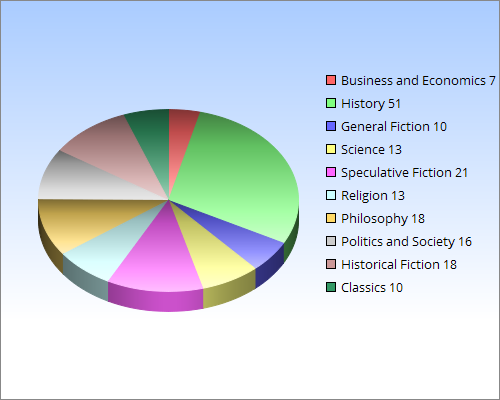
What a year for reading!  As usual, a breakdown of major categories from ChartGo.com.

(Titles in bold constitute this year’s top ten list!) 

Earlier in the year I started a course of reading in American literature, arranged chronologically, and made it to the mid-19th century before I lost steam.  Some classics were a chore, others a genuine pleasure; The Scarlet Letter and Uncle Tom’s Cabin surprised me. I intend on picking back up where I left off, either with Little Women or Moby Dick.

In science fiction, Andy Weir’s The Martian exceeds by leaps and bounds,  comic but intelligent. I also read the classic Starship Troopers, and the whole of Greg Cox’s Rise and Fall of Khan series, of which the finale  (To Reign in Hell, Khan’s exile between “Space Seed” and The Wrath of Khan)  was the best.

My science reading started off strong and then fell away as the year progressed;  The Red Queen, on sexual selection and human behavior,  was the standout.  Also notable: Frans de Waal’s books on primate behavior and moral evolution, particularly The Bonobo and the Atheist.

Historical fiction, another staple, had a decent year; I finished off Bernard Cornwell’s Sharpe series, with Waterloo, but discovered new authors like John Stack and Simon Scarrow. I read Stack’s Roman naval trilogy through in full, beginning with Captain of Rome (set during the first Punic War), and have just started Scarrow’s lengthy series on the Roman invasion of Britain, with Under the Eagle.

My religious reading picked up in the tail end of the year as I dove into one of my favorite subjects, the history of late-temple Judaism and early Christianity; Jesus and the Jewish Roots of the Eucharist was exceptional,  as was Joseph Pearce’s  Race with  the Devil, his story of how literature lead him to the Catholic church and helped him escape vicious racism.

A predominant theme for me in recent years has been that of ‘humane living’, the search for what it means to live an authentic, fulfilling life. This isn’t a self-help quest, because more often than not, I’m trying to figure out what it means for a human community to be healthy. This theme encompasses both fiction and many genres of nonfiction. (Last year I referred to this category as ‘Civics, Society, and Living Humanely‘.)    Some of the best titles in this broad category were:

Business and economics can be a related category: I most enjoyed Ninety Percent of Everything, a look at the commercial sea freight service, Antifragile,  and The Small-Mart Revolution

History, as usual, took the lion’s share of my attention, constituting almost a full third of this year’s reading all by itself.  (Last year it only claimed 16%.)   A Great War reading theme constituted some of that, and while I’ve given it its own recap, The White War: Life and Death on the Italian Front and Gallipoli merit second mentions.   I did a great deal of reading in southern history, as well, including classics like I’ll Take my Stand and more modern works like Away Down South  and Confederates in the Attic.   A few history titles worth noting:

Next year will bring more classic American literature,  some titles in the realm of localism, a few more books on the Great War, and at least a little Southern history. That will do for starters!   
Posted in General | Tagged , | 2 Comments

2014 Cumulative Reading List

Considering I usually struggle to get to 150, I’m somewhat pleased and somewhat terrified by my results this year. The usual year in review will follow this weekend.
Previous years:    201120122013

— January —
1. The Red Queen, Matt Ridley
2. Stonehenge: 2000 B.C., Bernard Cornwell (Historical Fiction)
3. Shop Class as Soulcraft: An Inquiry into the Value of Work, Matthew Crawford
4. Sex, Economy, Freedom, and Community, Wendell Berry
5. It’s the Little Things, Lena Williams
6. Toward a Truly Free Market: Distributist Perspectives on on the Role of Government, Taxes, Health Care, Deficits, and More, John C. Medaille
7. The Liberty Amendments, Mark Levin
8. Starship Troopers, Robert Heinlein (Science Fiction)
9. The First World War, John Keegan
10. Silent Thunder: in the Presence of Elephants, Katy Payne
11. The Bonobo and the Atheist: In Search of Humanism Among the Primates, Frans de Waal
12. Ship of Rome, John Stack  (Historical Fiction)
13. An Officer and a Spy, Robert Harris (Historical Fiction)
14. Poor but ProudAlabama’s Poor Whites, Wayne Flynt
15. When Elephants Weep, Jeffery Masson and Susan McCarthy

— February —
16. The Pagan Lord, Bernard Cornwell (Historical Fiction)
17. The Gift of Good Land, Wendell Berry
18. Food Rules, Michael Pollan
19. And Then There Were Nuns, Jane Christmas
20. Look Homeward, America: In Search of Reactionary Radicals and Front Porch Anarchists, Bill Kauffman
21. Forgotten Voices of the Great War, ed. Max Aurthur
22.  From Chunk to Hunk: Diary of a Fat Man, Fred Anderson
23. The Martian, Andy Weir (Science Fiction)
24. What’s Wrong with the World G.K. Chesterton
25. Look Away! A History of the Confederate States of America,  William C. Davis
26. On Desire, William Irvine 
27. A Place on Earth, Wendell Berry (Fiction)

— March —
28. Voyage, Stephen Baxter (Science Fiction)
29. Floods, Famines, and Emperors: El Niño and the Fate of Civilisations, Brian Fagan
30. dirt: the erosion of civilizations, David R. Montgomery
31. Daily Life in Anglo-Saxon England, Sally Crawford
32. The Age of Empathy, Frans de Waal
33. The Simple Living Guide, Janet Luhrs
34. The Redneck Manifesto, Jim Goad
35. The Call of the Mall, Paco Underhill
36. Sycamore Row, John Grisham (fiction)
37. The Metropolitan Revolution, Bruce Katz and Jennifer Bradley
38. Star Trek Cold Equations: The Body Electric, David Mack (Science Fiction)
39. I’ll Take my Stand: the South and the Agrarian Tradition, various authors
40. The Long Loneliness, Dorothy Day
41. An Ice-Cream War, William Boyd (Fiction)
42. Confederates in the Attic: Dispatches from the Unfinished Civil WarTony Horwitz

–April–
43. Raiders of the Nile, Steven Saylor (Historical Fiction)
44Away Down South: A History of Southern Identity, James L. Cobb
45. The Yellowhammer War: the Civil War and Reconstruction in Alabama, ed. Kenneth Noe
46. Fire on the Waters: A Novel of the Civil War at Sea, David Poyer (Historical Fiction)
47. Why We Buy, Paco Underhill
48. Waterloo, Bernard Cornwell (Historical Fiction)  
49. Human Scale, Kirkpatrick Sale
50. The Age of Revolution, Sir Winston Churchill 
51. Conscience, Louise Walker
52. A Splendid Exchange: How Trade Shaped the World, William Bernstein

–May–
53.  More Work for Mother, Ruth Schwartz Cowan
54. Point of Purchase, Sharon Zukin
55. Ninety Percent of Everything: Inside Shipping,  Rose George
56. The White War: Life and Death on the Italian Front, 1915-1919, Mark Thompson
57. The Last Patriot, Brad Thor (fiction)
58. Who Killed Homer? Victor Davis Hanson
59. Captain of Rome, John Stacks (historical fiction)
60. The Burden of Southern History, C. Vann Woodward
61. Getting it Right, William F. Buckley Jr (Semihistorical Fiction)
62. The World Until Yesterday, Jared Diamond
63. The Penelopiad, Margaret Atwood (Fiction)

— June —
64. The Smoke at Dawn, Jeff Shaara (Historical Fiction)
65. Divergent, Veronica Roth (Spec. Fiction)
66. The Vikings, Rob Ferguson
67. Anthem, Ayn Rand (Fiction)
68. Global Weirdness: [..] the Weather of the Future, Climate Central
69. The Legend of Sleepy Hollow and Rip Van Winkle, Washington Irving (Fiction)
70. That Hideous Strength, C.S. Lewis (Fiction)
71. The Abolition of Man, C.S. Lewis
72. Power, Inc: The Intense Rivalry Between Big Business and Government, David Kothkopf
73. The Great War at Sea, A.A. Hoehling
74. The Partly Cloudy Patriot, Sarah Vowell
75. The Odyssey, Homer
76. American Sphinx: the Character of Thomas Jefferson, Joseph Ellis
77. No Time Like the PastGreg Cox (Fiction)
78The Last of the Mohicans, James Fenmore Cooper (Fiction)
79. Good Natured: the Origins of Right and Wrong in Humans and Other Animals, Frans de Waal
80. The Scarlet Letter, Nathaniel Hawthorne (Historical Fiction)
81. The Narrative of the Life of Frederick Douglass, Frederick Douglass
82The American Tory, ed. Morten Borden 
83. The Adventures of Tom Sawyer, Mark Twain

–July–
84. Everyday Life in Early America, David Freeman Hawke
85. George Washington’s Secret Six, Brian Kilmead and Don Yaeger 
86. Common Sense, Tom Paine  
87. Jefferson: A Novel, Max Byrd   (Historical Fiction)
88. Uncle Tom’s Cabin, Harriet Beecher Stowe
89. An Edible History of Humanity, Tom Standage
90. Last Orders, Harry Turtledove (Fiction)
91. The Small-Mart Revolution, Michael Shuman
92. Insurgent, Veronica Roth (Spec. Fiction)
93. Antifragile, Nassim Nicholas Taleb
94. Allegiant, Veronica Roth (Spec. Fiction)
95. ST Eugenics Wars: The Rise and Fall of Khan Noonien Singh, Greg Cox
96. Fighting Traffic: the Dawn of the Motor Age in the American City, Peter Norton
97. ST Eugenic Wars: The Rise and Fall of Khan Noonien Singh Volume II, Greg Cox
98. Castles of Steel, Robert K. Massie

— August —
99. The Men Who Lost America, Alexander Jackson O’Shaughnessy 
100. Tending the Epicurean Garden, Hiram Crespo
101. The Adventures of Huckleberry Finn, Mark Twain (Fiction)
102. Drink: A Cultural History of Alcohol, Ian Gately
103. Thank You for Smoking, Christopher Buckley (Fiction)
104. ST Eugenics Wars: To Reign in Hell, Greg Cox (Fiction)
105. The Bishop in the West Wing, Andrew Greeley (Fiction)
106. The Age of Steam, Thomas Crump
107. The Maltese Falcon,  Dashell Hammett (Fiction)
108. ST Mirror Universe: Sorrows of Empire, David Mack (Fiction)
109. Drink: A Social History of America,  Andrew Barr
110. The Red Baron, Manfred von Richthofen

— September —
111. Breakfast at Tiffany’s, Truman Capote (Fiction)
112. Wiseguy, Nicholas Pileggi
113. Earth, Richard Fortey
114. Living Downtown: the History of Residential Hotels in the United States, Paul Groth
115. Tobacco: the Story of How Tobacco Seduced the World, Iain Gately
116. The Fellowship of the Ring, J.R.R. Tolkien (Fiction)
117. Collision of Empires, Prit Buttar
118. An Honourable Defeat: A History of German Resistance to Hitler, Anton Gill 
119. The Age of Voltaire, Will Durant
120. One Second After,  William R. Forstchen (Fiction)
121. The Crucified Rabbi: Judaism and the Origins of Catholic Christianity, Taylor R. Marshall
122. A Day with a Perfect Stranger, David Gregory (Fiction)
123. Seeing like a State: How Certain Schemes to Improve the Human Condition have Failed, James  Scott
124. The Sheer Ecstasy of Being a Lunatic Farmer, Joel Salatin

–October–
125.Remembering, Wendell Berry (Fiction)
126. They Thought They Were Free: the Germans, 1933-1945, Milton Mayer 
127. Their Last Ten Miles, Jim Harrell (Historic Fiction)
128. Civisliation: A Personal View, Kenneth Clark
129. The Roots of American Order, Russell Kirk
130. The Belt of Gold, Cecelia Holland
131. Jesus and the Jewish Roots of the Eucharist, Brant Pitre
132. Gone Girl, Gillian Flynn (Sadistic Ficion)
133. The Unknown War, Sir Winston Churchill
134. Player Piano, Kurt Vonnegut
135. Between the Testaments, D.S. Russell

— November —
136. A Short History of Byzantium, John Julius Norwich
137. Master of Rome, John Stack (Historical Fiction)
138. Under the Eagle, Simon Scarrow (Historical Fiction)
139. Life, Death, and Growing Up on the Western Front, Anthony Fletcher
140. No Hill Too High for a Stepper, Mike Mahan
141. Beyond Capitalism and Socialism: A New Statement of an Old Ideal, ed. Tobias Lanz
142. Varieties of Scientific Experience, Carl Sagan
143. Race with the Devil, Joseph Pearce
144. Joan of Arc: A Spiritual Biography, Siobhan Nash-Marshall
145. The Strange Career of Jim Crow, C. Van Woodward
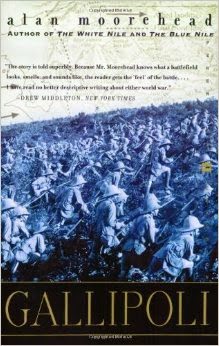
146. Galliopoli, Alan Moorehead
147. The Wild Birds, Wendell Berry (Fiction)
148. Gates of Fire: An Epic Novel of the Battle of Thermopylae, Steven Pressfield (Historical Fiction)
149. ST: Twilight’s End, Jerry Oltion (Fiction)

—  December —
150. A Fatal Advent, Isabelle Holland (Fiction)
151. Where the Red Fern Grows, Wilson Rawls (Fiction)
152. The Forgotten Man of Christmas: Joseph’s Story, Harold Edington
153. The Handmaid and the Carpenter, Elizabeth Berg (Fiction)
154. The Personal Recollections of Joan of Arc, Mark Twain (Fiction)
155. Sailing from Byzantium, Colin Wells
156. Being Consumed: Economics and Christian Desire, William Cavanaugh
157. Hatchet, Gary Paulsen (Fiction)
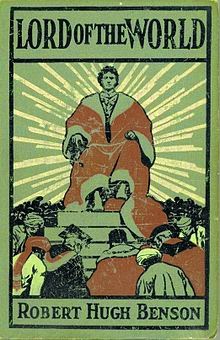
158. Lord of the World, Robert Hugh Benson (Fiction)
159. Brian’s Winter, Gary Paulsen (Fiction)
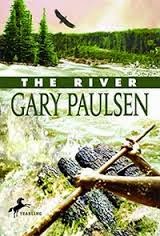
160. The River, Gary Paulsen (Fiction)
161. The Return, Gary Paulsen (Fiction)
162. Why Things Bite Back, Edward Tenner
163. Galileo’s Finger, Peter Atkins
164. Homefront, 1914-1918; I.F.W. Beckett
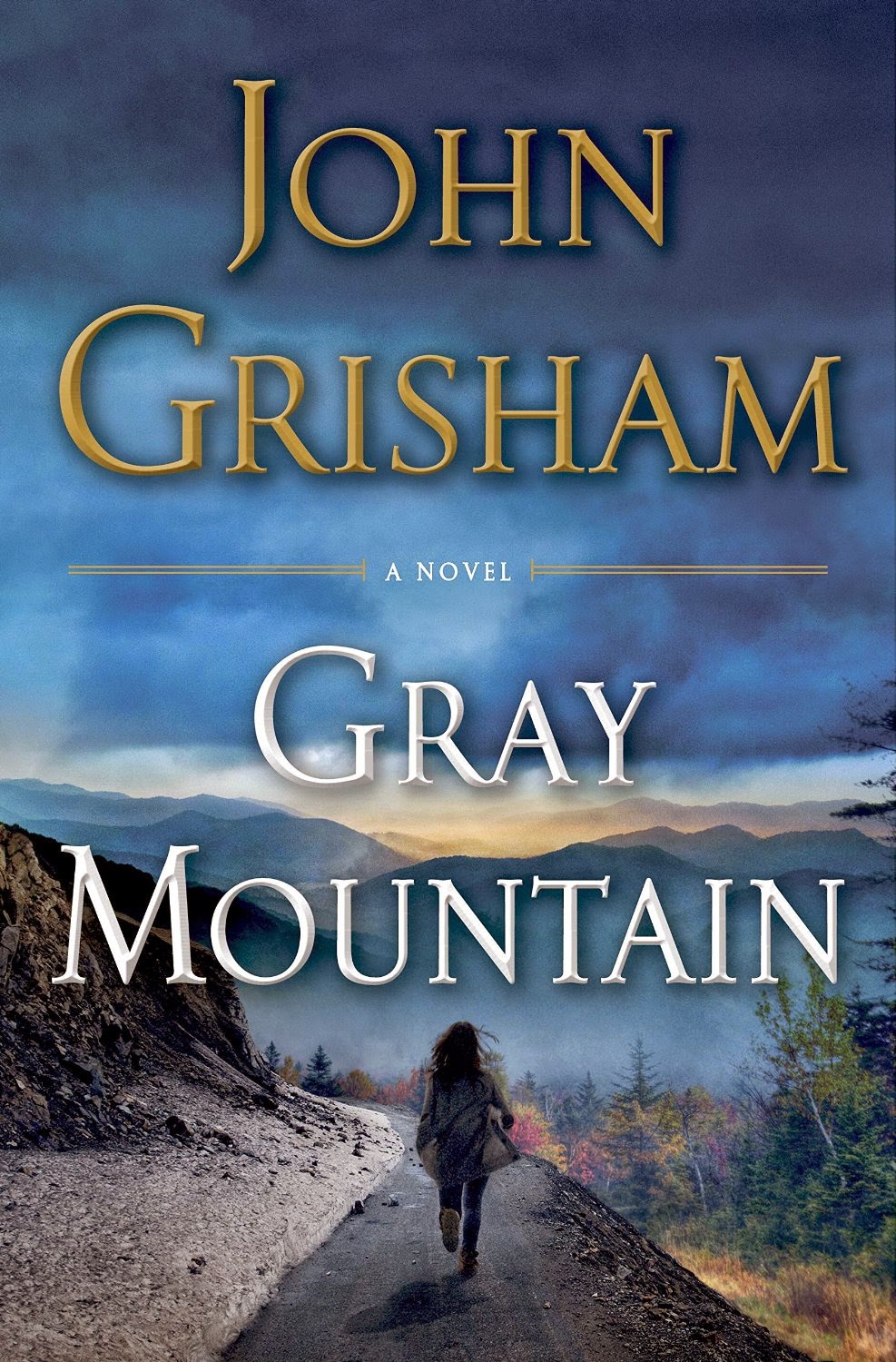
165. Gray Mountain, John Grisham
166. Amazing Grace: William Wilberforce and the Heroic Campaign to End Slavery, Eric Metaxas
+ Anatomy of the State,  Murray Rothbard

Posted in General | Tagged | 3 Comments

This week: wrapping up with history and science

This last week in 2014 I am spending with Lives of the Planets, a natural history of the solar system. It’s proving to be the most enjoyable science book I’ve encountered in months, and will probably take me into the  New Year.  The last few weeks have been varied:

* Amazing Grace,  a history of William Wilberforce and his quest to end the British slave trade,  proved fascinating if disappointing. It’s a chatty, casual kind of history, and refers to various historical personalities as freaks, nuts, and creeps. Mr. Wilberforce is such an engaging character, though, that this story of his and his allies’ campaign against institutionalized evil  succeeds nonetheless.

* Galileo’s Finger reviews the ten most important concepts in science,  moving from the practical to the abstract. I bought this several years ago, and found it considerably more daunting than expected,  more technical and focused on areas of science I don’t have a great deal of interest in, like energy and physics. (There is a reason most of my science reading is in natural history or animal behavior!)

* Why Things Bite Back looks at the many ways that technological solutions to problems cause problems of their own.  It’s not an anti-anything book, but the idea delivered is that life is complicated and there are  no easy fixes.

My last Great War read turned out to be photo-heavy: Homefront, 1914-1918 looks at the lives of British civilians during the war. The author makes the curious claim that the standard of living for British subjects increased during the war, which no one would predict (aside from arms manufacturers)  I’m not sold on that. Most interesting to me was the chapter on labor during the war; I’ve always assumed working conditions declined during the two world wars, given the booming demand and the presentation of both as  dire national crises; who could go on strike when the Future of Civilization is at stake?  Not only did strikes occur throughout the war, but some sectors found success in them.

Posted in history, Reviews, science | Tagged , , , | 1 Comment

Gray Mountain

Gray Mountain
© 2014 John Grisham
384 pages


 In late 2008,  New York’s financial sector and the economy built around it began hemorrhaging jobs. Among the casualties were the junior ranks of  lawyers at Samantha Kofer’s firm,  including herself.  Reduced from six figures to none in a blink of an eye, the only thing Samantha was left with was the promise of health insurance – if she agreed to a year of pro bono work while the economy healed.  Leaving New York behind for a small mining town in Virginia,  Samantha discovers  a different world, one of grinding poverty amid the mesmerizing beauty of the mountains.  Having never stepped inside a courtroom before,   she is introduced to the spectre of ordinary law: helping real people with real problems. Every aspect of Gray Mountain is one Grisham has played with before, in The Street Lawyer, The Rainmaker, and The Pelican Brief;   despite those successes, however, the story never takes off here;   there are pieces of a good story, but no structure. Throughout, Samantha’s attention is taken up with a handful of small cases, while an epic trial builds in the background. The suspense bursts with a plot twist that could have gone places, but instead leaves Samantha leading the reader in circles as she tries to make up her mind — which she never does.  The chief problem is that Sam isn’t especially active in the story; she is passive and ambigious; things happened around her and to her, but she doesn’t know what to do herself, so she just drifts back and forth with the tide until the sun does down and the novel is over, with the great conflict never having been realized.  If the aim of the novel was to depict a young professional adapting to strange new circumstances and developing some measure of self-direction, the execution is lacking.  The only passion here is Grisham’s own: he’s  no stranger to political themes in his work, but Gray Mountain is as subtle as a strip-mine in indicting Big Coal.  If the denizens of town aren’t dying of blacklung, they’re being run over by coal trucks, struck by flying  boulders from the mines,  or being driven into bankruptcy by the coal companies’ lawyers. The economic devastation of the Appalachians — the tragic ruin of its people and the mountains —  is a story that needs to be told but having Snidely Whiplash as a villain won’t invite anyone to consider people’s plight here; it’s a case of preaching to the choir and running off the visitors.  The backdrop and some of the minor threads go a long way to making this of interest, but Gray Mountain remains second-rate. 


Posted in Reviews | Tagged , | 1 Comment

Mission Accomplished

To Be Read Takedown Challenge

Antifragile, Nassim Nicholas Taleb (7/18/14)
The Vikings, Robert Ferguson (6/7/14)
Power, Inc; David Rothkopf (6/14/14)
An Edible History of Humanity, Tom Standage (7/8/14)
Small-Mart Revolution, Michael Shuman (7/12/2014)
The World Until Yesterday, Jared Diamond (5/29/14)
Fighting Traffic: the Dawn of the Motor Age in the American City, Peter Norton (7/21/14)
Earth, Richard Fortey (9/7/14)
Good Natured, Frans de Waal (6/27/14)
Galileo’s Finger, Peter Atkins (12/23/14)

NOW I CAN BUY BOOKS AGAIN!

Posted in Reviews | 5 Comments

The Great War: A Christmas Pause

At the beginning of January, I decided to devote part of the year’s reading to the Great War, in recognition of its 100-year anniversary. I created a list of books that would address some areas of the war I was wholly ignorant of, given that I tend to focus on not only the western front, but aeronautics.   Early this morning I finished Homefront, 1914-1918,  and with it, this year’s Great War reading will be drawing to a close.   2015 will bring plenty of reading in this area — a great many books were published this year and will be next year that I’m excited about — though I don’t know if I’ll be doing as many as one per month.

On the whole, I’m generally pleased with how the year went; I covered some new ground, even if I didn’t read two books I’ve had ‘intentions’ of reading for far too long now, La Feu and The Great War in Modern Memory.  Below are this year’s and possibly next year’s lists:

1. The Great War, John Keegan
    I started off with a survey of the war to set the big picture.

2. Forgotten Voices of the Great War, Max Arthur
Before getting distracted by all of the more detached histories, I wanted to encounter the soldiers speaking for themselves. Forgotten Voices uses the letters and diaries of British, American, and German soldiers and civilians to deliver a chronicle of the war as it unfolded.

3. An Ice Cream War, Max Boyd
The sole fictional entry, this was not an intended read;  I grabbed it just to fill some time. It does have the novelty of being set in southern Africa, on the border of British and German colonies.

4. Conscience, Louisa Thomas
Conscience is the story of a pacifist who resisted the war’s fervor despite having brothers in uniform.

5. The White War, Mark Thompson

It wasn’t until May that I started really learning about different theaters of the  conflict,  beginning with the commendable White War, a history of the Italian front.  Although depressing, considering how truly — astonishingly — purposeless each of the twelve major campaigns between Austria and Italy were, the book threw a lot of light on a dim area for me.

6. The Great War at Sea, A.A. Hoehling
Not the book I’d intended to read on the naval war, but it served well enough.

7. Castles of Steel, Phillip Massie
Another naval war survey, this massive tome focused on the British-German war and included some avitation to boot.

8. The Red Baron, Manfred von Richthofen
Like An Ice Cream War, this was a case of my running out of time and just grabbing a smaller work from my home library.

9. Collision of Empires, Prit Buttar
Collision examines the first few months (ending in December 1914) of the war in the east. Its take on the preparedness of the major powers is quite thorough, but once the conflict starts there are precious few maps and a massive front being considered.

10. The Unknown War, Sir Winston Churchill
A more thorough survey of the Eastern Front,  Unknown War brings a lot of dramatic narrative (and some kid gloves) to the table.

11. Life, Death, and Growing Up on the Western Front,  Anthony Fletcher
A return to the soldiers, this is an intimate history of six men and their families through the war, taken from the letters and journals of the men and boys at the front.

12. Gallipoli, Alan Moorehead

The most narrowly-focused of the books I read, Gallipoli handily delivered a sense of the battle’s potential and horrific waste.

13. Homefront 1914-1918, I.F.W. Beckett
This light pictorial history of the British homefront completes my reading for the year. The use of photos is lavish, the subjects being people, letters, and government notices.

As mentioned,  I will be continuing to read in this theme next year.   Here are some of the books which I have captured my attention…

1. Ring of Steel: Germany and Austria in WW1, Alexander Watson
2. A Box of Sand: the Italo-Ottoman  War 1911-1912, Charles Stephenson
3. The Fall of the Ottomans: The Great War in the Middle East, Eugene Rogan
4. Imperial Apocalypse: The Great War and the Destruction of the Russian Empire,  Joshua Sanborn
5. Pyramids and Fleshpots: The Egyptian, Senussi and Eastern Mediterranean Campaigns, 1914 – 16, Stuart Hadaway
6. The Other First World War: The Blood-soaked Eastern Front, Douglas Boyd
7. The First World War in the Middle East, Kristian Ulrichson
8. Prelude to the First World War: The Balkan Wars, 1912-1913, Edward  Robert Hooton

These are either new releases or will be published next year.

Posted in Reviews | Tagged | 3 Comments

This week: Christmas


With the fourth Sunday of Advent behind us, I suppose it is  liturgically safe to bid one and all a MERRY CHRISTMAS.  I work all of two days this week, the rest of the time being spent feeling somewhat sorry for those in the kitchen.  (I may make a tomato pie, out of solidarity.) With the year’s end closing, I’ve decided to put aside all other reading and focus on Galileo’s Finger, so I can finish off that to-be-read list, that ‘read-what-you’ve-got-before-buying-anything-else’ challenge I imposed on myself back in May, before 2015 starts.   I’m halfway through, presently, and that’s further than I forged ahead the first time before getting distracted. (I’m started a thirty-page chapter on “The Quantification of Beauty”. ) December has been a strange month to end the year with, what with all the devotionals and YA literature, but I was in the mood for outdoorsy stories and those were the ones which came to mind. It’s not over yet, though.  There’s the Finger and at least that little book on the British home front during WW1 to look forward to. 

Happy reading, merry Christmas,  and don’t eat too much!

Posted in Reviews | Tagged | 1 Comment

Brian’s Saga, continued: Winter, River, and Return

Brian’s Winter /  The River / Brian’s Return
© Gary Paulsen 1996, 1991, 1999

            Hatchet told the story of a young teenager named Brian who survived a crash landing in the middle of the Canadian wilderness.  Forced by the pressing urge to avoid death to become student of the landscape and a tinkerer, Brian discovered and invented ways to provide food and shelter for himself for over two months in the wild. The story ended when he triggered an emergency transmitter, and for some readers this felt like a bit of a cheat. What would have happened had Brian not stumbled upon the transmitter in the plane wreckage?  Brian’s Winter is an ‘alternate’ history that picks up after his dive into the lake to rummage through the plane, and sees him continue to mature as a woodsman, as he must to survive the Canadian winter. As with Hatchet, Paulsen takes readers through Brian’s thinking as ideas come to him, and as he struggles to turn them into fact. The River is the first sequel to Hatchet, and begins with a trio of men from the government asking Brian to return to the wilderness, this time with a psychologist in tow. They want to understand the mindset that makes survival possible — how can it be taught, ahead of time?  Their mission goes the way of most well-thought plans: within days, the psychologist is in a coma, and Brian must construct a raft and get his deadweight companion back to some semblance of civilization before he dies.  Brian’s Return is a sequel to both of these,  and depicts Brian’s inability to cope within the zoo that is domesticity after having sucking all of the marrow out of life for months in the wilderness.  After realizing the woods are in his bones, he decides to return — and there the novel ends.

     Although these three books don’t complete Brian’s saga (there is a fifth novel, Brian’s Hunt), I bundled them together here because the last two are so minor. Brian’s Winter is  almost as fascinating as the original novel, forcing Brian to adapt to completely new circumstances.  The larger animals that ignored Brian in Hatchet, like bears,  become far more interested in him as summer gives way to fall and they must prepare for hibernation. In addition to having to learn new skills — weatherproofing his shelter,  creating winter clothing out of rabbit skins, fabricating snowshoes —  Brian takes on larger challenges, like hunting moose and deer. He does this not for sport, but out of necessity:  the Canadian winter storms are so savage that he is safer taking the occasional big kill than risking exposure every day looking for rabbits and grouse.  In River and Return,  river navigation gets some attention but wilderness survival plays second fiddle to the book’s respective little plots.  Far more interesting than the plot of Brian’s Return, I thought, was the author’s note that almost everything that happens to Brian within the novels in the wild happened to him during his twelve years of living in the wilderness, including deer jumping into his canoe and skunks rescuing him from bears.  Brian’s Winter  is a strong sequel to the fascinating Hatchet, but the other two seem more like extras than anything else.

           
Posted in Reviews | Tagged , , | Leave a comment

Lord of the World

Lord of the World
© 1908 Robert Hugh Benson
352 pages

At the turn of the 21st century, war between the states of Europe and the East threatens; at the midnight hour, however, comes an obscure American politician, a senator of no fame, whose cosmopolitan charm allows him to calm the troubled diplomatic waters and prevent a century of peace and prosperity from being overturned by strife.  Hailed as a savior, the rising star becomes a pivotal figure in world affairs – but the epitome of modernity, this senator has a far darker role to play in cosmic history. He is the Antichrist, and his triumph means the end of the world is at hand.

Published in 1908, Lord of the World is a piece of Catholic fiction driven by conflict between Christian tradition and modernity. The prevailing drives of the 19th century seem to have achieved fruition in Lord of the World;democracy has triumphed over monarchy, social programs and psychology over religion, and —   in general – the material over the spiritual. Europeans across the board are irreligious, with the exception of what is left of the Catholic church, concentrated in Ireland and the City of Rome.  There is a religious sentiment alive in the Europeans, a worship of the human soul, a sense of human beings as divine; this ‘humanitarian’ religion achieves deliberate expression when the American becomes President of Europe and institutes, French-revolution like, a Cult of the Supreme Being – a Cult of the Human.  Initially harmless, it quickly becomes the state religion, mandatory and supreme. Catholic resistance is answered by the obliteration of  Rome, and a new pope-in-exile flees to Judea, there to await the end.

Although the depiction of an Antichrist figure and the ‘Endtimes’ may bring to mind thoughts of the Left Behind series. Lord of the World is far better done.  Each viewpoint character struggles with self-doubt; even the man who ends as Pope begins questioning his own faith.  The spirit of Antichrist is patently seductive;  this ‘dystopia’ is a progressive dream-world,almost like Star Trek‘s Earth but without warp drive. But whereas Star Trek’s humans have a ‘more evolved sensibility’*, Lord of the World’s humans are just like us; imperfect.  When a few disturbed individuals mount another failed Guy Fawkes plot against the center of the new cult, Westminister Abbey, the new European president’ response, and that of his followers, is far from humane. Violence fills the streets, and a vicious persecution of all remaining Christians ensues.  Simply ‘believing in themselves’ did nothing to better the people of Earth; it is in fact their perfect faith in themselves that makes them so vicious. Utterly convinced that their cause is righteous,  those who oppose the dream count for nothing, and no action against them is beyond the pale.  Even as the world at large becomes increasingly awestruck by the dear leader’s accomplishments, the most idealistic of the viewpoint characters find their faith in him shaken by his cold-blooded savagery.

A century after its publication, Lord of the World seems in part prophetic. Christianity has waned fast in Europe, and rampant consumerism abounds worldwide.. Moderns chase material hopes instead of spiritual succor, ignoring practical philosophy and religion alike for the distracting allure of stuff. From Benson’s point of view, however, the west today is not as in as dangerous a position as the west of his book; we are in no danger of being fulfilled. Every commercial and every election reveal our constant frustration and dissatisfaction;  Benson’s dread was a drowsy contentedness with the way things are that masks spiritual hunger, something definitely not present in our own lives.  The meat of Lord is not hackneyed attempts to force current events into the poetic prophecies of the Hebrew scriptures, or  action movie thriller antics like the Left Behind novels, but soul-searching. While Benson’s Antichrist allows everyone to reassure themselves of man’s moral perfectibility, his Christian characters understand human nature as frail. When an English priest  arrives in the City of Rome, where many of the trappings of modernity are kept outside the city walls to preserve the interior, he breaths a sigh of relief at the messiness of it:

Yet Percy, even in the glimpses he had had in the streets, as he drove from the volor station outside the People’s Gate, of the old peasant dresses, the blue and red-fringed wine carts, the cabbage-strewn gutters, the wet clothes flapping on strings, the mules and horses — strange though these were, he had found them a refreshment. It had seemed to remind him that man was human, and not divine as the rest of the world proclaimed — human, and therefore careless and individualistic; human, and therefore occupied with interests other than those of speed, cleanliness, and precision.

Rome’s Christianity assures the priest that while he is not perfect, he does not need to be. Human redemption does not stem from machine-perfect order.   Just as The Iron Heel put forth numerous arguments for a democratic-socialist state in the context of a revolution against corporate rule,  Lord’s searching sets two different perspectives about human nature against one another; one, optimistic but unyielding; the other, pessimistic but forgiving.  The moral discussion is the heart of the book, though there are minor points of interest for those interested in comparing ‘futurist’ or alternate histories. Aspects of it are very dated, like the heavy use of zeppelins and telegraphs, and Benson’s belief that total command economies would triumph is not dissimilar to H.G. Wells and Jack London’s futurecasting, though he’s more skeptical about its merits. One peculiarity of this being Catholic fiction is the fusion of the church’s foes — Freemasonry and Marxism have merged here, and Mason lodges have taken over most churches.  I don’t know if anyone takes the freemasons as seriously as the Catholic church does, with the exception of the freemasons themselves.

Lord of the World is an altogether different ‘endtimes’ story, more theologically driven than driven on action.  It is far more humane than 1984 or Brave New World — whereas those and other dystopias invent worlds where the human spirit has been utterly crushed by systems, in Lord things are more promising. Man is far from God, yes, but not abandoned; unlike those thrillers, where man is left alone to fight against a machine beyond his fathoming, the persecuted Christian remnant awaiting salvation in Nazareth have the hope of resurrection;   God is with them throughout the struggle; as St. Paul noted, even if they die it will be to their gain; even if the world perishes, it will be reborn anew.

For me, Lord is provoking, finding as I do some limited appeal in both temperaments.  Believing in one’s self, one’s own power is invigorating, and yet it is all too easy to become self-righteous or fatigued by the challenge.  On the other hand,  there is a certain comfort in accepting that one will never be perfect, and such an attitude can lapse into chronic indulgence and excuse-making. Either way, there’s a lot of food for thought.

* Star Trek: First Contact

Posted in Reviews | Tagged , , , , | 4 Comments

Hatchet

Hatchet
© 1987 Gary Paulsen
195 pages

Hitching a ride on a small plane to meet his father in Alaska,  young Brian is left alone thousands of miles in air when his pilot succumbs to a heart attack.  The thirteen-year old is no pilot, but as he numbly sits taking in his perilous condition, he realizes he has to do something if he doesn’t want to perish once the plane runs out of gas and careens into the thickly wooded Canadian wilderness. Taking his life into his hands, learning through trial and error how to control the plane in the air, when the time comes the young boy will guide the plane’s failure with some measure of intelligence, sending it into a lake where he may scramble out into the water and swim for life.  Still alone, he must somehow  survive in the wild until help can reach him — armed only with native brightness,  vague ideas about nature gleaned from various movies, and a little hatchet. Hatchet is the gripping story of a young man’s endurance.

Although eventually rescued, Brian’s summer sojourn in the wilderness is wrought with peril. From the moment he lands, he is assailed by woodland creatures great and small — skunks, porcupines bears, wolves, and clouds of mosquitoes.  Struggling against feelings of hopelessness and despair, as well as against repeated injuries — he really doesn’t know what he’s doing —   the young man slowly gains the experience and strength of spirit needed to prevail.  A boy accustomed to being taken care of his parents must build shelter, must find food, must outwit prey and predators alike. Nothing will be done for him, and he cannot stay still for a moment. Thrust into the struggle for existence, realizing it in full,  Brian quickly becomes a woodsman;  his senses and memory sharpened by necessity allow him to piece things together, allow him to invent solutions and find resources.  Some are encountered only by accident, as when he throws his hatchet at an invasive creature and the tool creates a shower of sparks upon crashing into a flint-flecked stone face. Other lessons he takes from experience, from long hours spent in observation, from series of mistakes. But he learns!  A primitive lean-to becomes a more sophisticated shelter, grubbing around for berries leads to fishing and hunting,  and timidity turns to courage.  This fantastic tale of adapting to the wilderness, of thriving against the elements, is not romanticized, however; even when he creates some measure of comfort for himself,  misery and disasters are never far away. It’s an adventure, but one harsh and wild.

Related:
The Sea Wolf, Jack London
My Side of the Mountain, Jean Craighead George

Posted in Reviews | Tagged , , , | Leave a comment