Data and Goliath

Data and Goliath: The Hidden Battles to Collect Your Data and Control Your World
© 2015 Bruce Schneier
400 pages, including 160 pgs of citations.
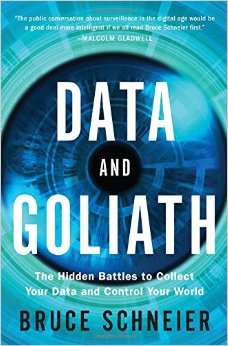
You’re being watched — all the time, no matter where you go or what you do. Not  by mysterious men in trench coats, or even black suits, shades, and earwigs — but by the very system you live in.  Perhaps watched isn’t the right word; monitored may be more apt.  In virtually every moment of the day in the developed world, billions of people are passing on data about themselves, knowingly and unknowingly. Our phones report where we are,  as do our cars if they are new enough;   in-store cameras track and analyze our shopping patterns, or alert security if we act aberrant;   and we add to the data stream ourselves by taking  inexplicable photos of our lunch and sharing them on facebook. Bruce Schneier has been involved with cybersecurity from the early days of the internet, and in Data and Goliath he alerts lay audiences to the fact that in the last fifteen years, a giant infrastructure of observation has grown around them, the joint work of companies out to sell you and governments out to control (sorry, “protect”) you. After reducing the reader to a wide-eyed paranoiac, he then offers suggestions as to regulation might rein in the government and corporations, and — more practically — gives the reader ideas of how to safeguard against the worst aspects of the All Seeing iWorld.

We live in a digital world, quite literally. Not only have computerized systems become nearly as ubiquitous as asphalt at this point – in our phones, our cars, our homes, our electric grid – but much of our live is now lived in a digital sphere. A decade ago that might have only been true for socially awkward teenagers who found online Starcraft more appealing than in-person awkwardness.  These days,  virtually everyone spends part of the day partially engrossed in the web, particularly through social media.  Unlike communing in a café over the latest photographs or stories, our online connections are monitored and recorded.  There’s no conspiracy involved;  we pass our information through electronic portals, and the information is saved as part of the network’s very infrastructure before it can be transmitted.  More deliberate monitoring and recording is also at work:  online businesses track our activity to create better ads,  and ever since 2001 the NSA has been obsessive about detecting terrorists through electronic data collection.  A certain amount of this is tolerable in both instances, but questionable territory is reached when Facebook begins using users’ tagged photos to create sophisticated facial recognition software, or when NSA begins piling up information and filching emails en masse from people not accused of a crime, merely declared connected by software.

Data and Goliath contains a litany of alarming and unsettling accounts of digital innovation across the globe.  Government practices in the United States, China,  United Kingdom, and Iran all fall under fire, with the US taking the heaviest flak given its Wikileaks exposure.  Have the multitude of stories about the NSA’s email abuses become commonplace?  Consider their exciting proprietary tools that imitate a cell tower, allowing them to listen to whatever phone latches on to it – or their coercion of American companies to add in “backdoors” to their telecommunications systems, like Cisco’s routers. That’s not just an American problem: international traffic flows through American infrastructure,  and as knowledge of Uncle Sam’s masterkey filters through the international community,  sales for US equipment are struggling and criminals are learning to trip the backdoors themselves. Central to much of the abuse is the idea of collecting as much data as possible, then looking for the patterns.

In the interests of not driving readers into the ranks of the Amish, Schneier attempts to provide grounds for hope, suggesting regulation that might rein in government and business alike. He proposes, for instance,  a reorganization of the NSA that would  reduce its scope and shift the more likely-to-be-abused aspects into a military organization with harsher oversight, like the US Cyber Command. One regulatory idea for the private sector he has is forbidding companies from maintaining lengthy records of consumers without their consent: Apple may need to know where your iPhone is for it to connect to service providers, but it doesn’t need to record your movements.  No branch of the government is likely to dismember the nascent surveillance state, not when they find it so useful – and find the prospect of public outrage after an attack so intimidating. More promising is the chapter on how people can minimize their own exposure to data collection. One relatively simple practice that I’ve adopted for years is using browser plugins like Disconnect to prevent facebook from tracking me across sites: even don’t even have to be a member for that plugin to create a cookie for my computer and compile traffic data about it.  If some agency is intent on finding you, being analyzed may be inevitable:  even people who take pains to move in the shadows of the web can be caught, including trained Israeli intelligence agents.

Data and Goliath demonstrates superbly how information-gathering is not simply a matter of government overreach, but endemic to the way the internet has developed thus far. The danger lies in our growing so used to this passive surveillance that we forget what it was to live privately. It is an invaluable resource for realizing how exposed we are living in the digital world.

Related:

Posted in General | Tagged , , , , , , , | 2 Comments

Reads to Reels: The Last Kingdom

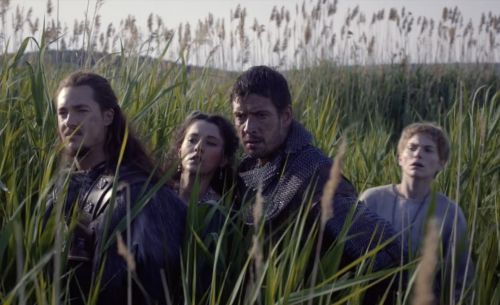
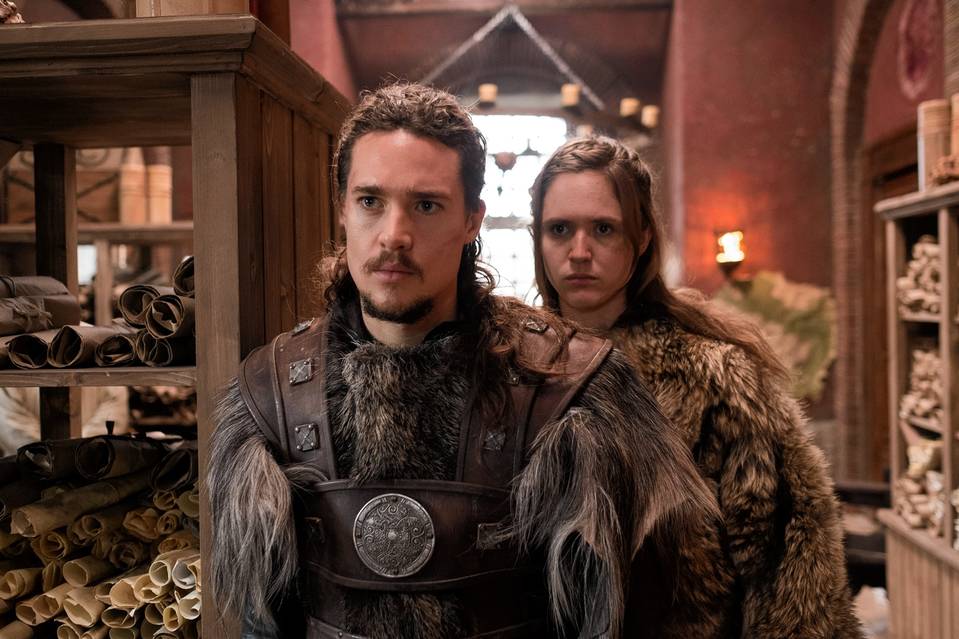
Bernard Cornwell’s Saxon Stories series begins with a young boy losing his father and brother to a Viking raid.  Incensed, the child attacks them on his own – and as amuses the lord leading the invasion that he adopts the boy as his own, raising him as a Dane.    Even as he grows to become a man, Uhtred of Bebbanburg – now Uhtred Ragnarson – loses his adoptive father in a powerplay. Blamed for the murder, he becomes an outcast, a man of no tribe.  To the Danes, he is a sniveling Saxon traitor; to the Christian English, he is an unknown factor at best, and a godless beast at worst.   What Uhtred craves is respect as a lord, a return to his Saxon father’s estate in Northumbria and fame in battle. The path to both is open only through alliance with the last remaining Christian king in England – Alfred.  Such is the set up for both Cornwell’s fantastic series, and the BBC’s fair adaption of it.

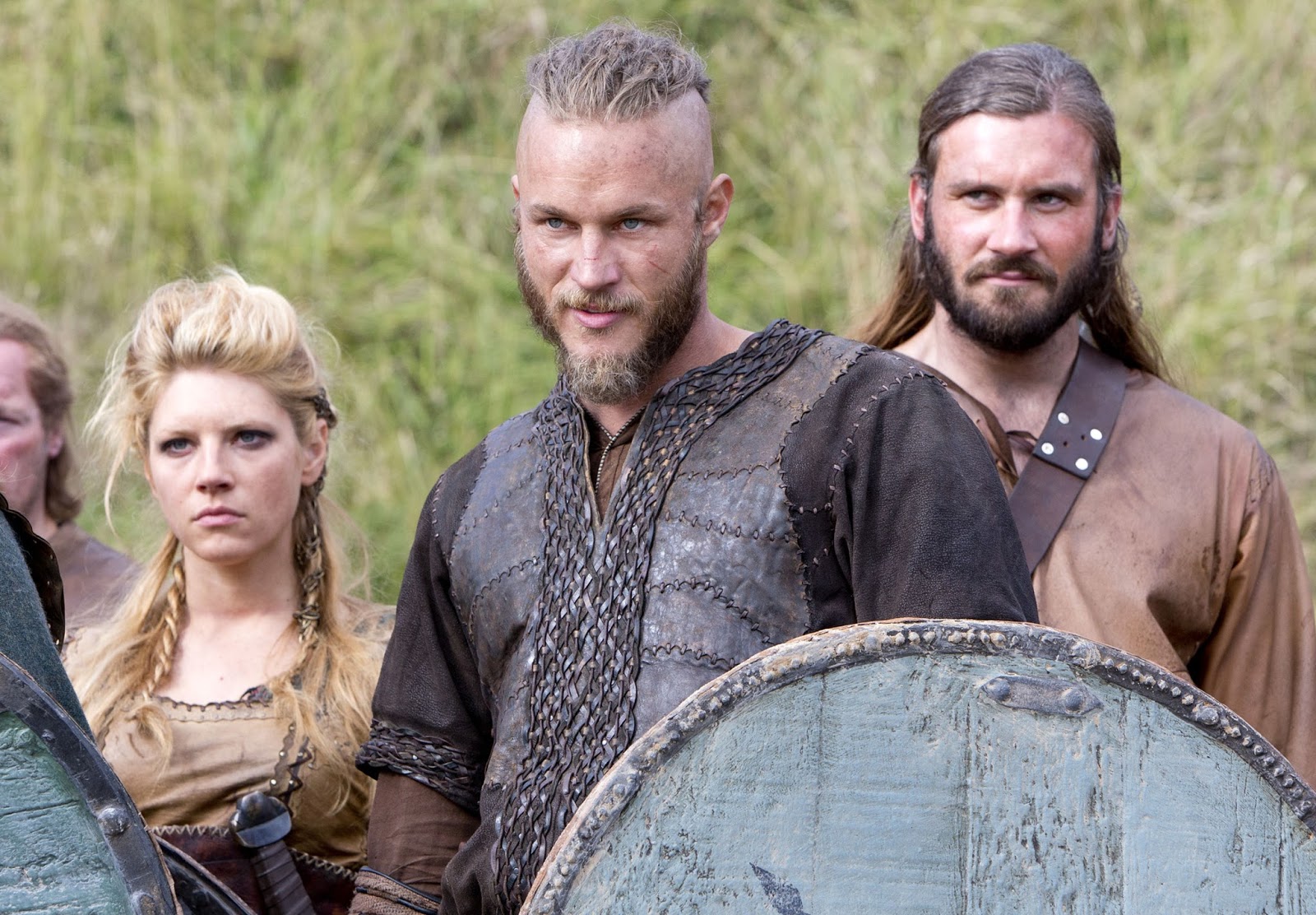
It took me a while to warm up to this DVD version of The Last Kingdom,  as Cornwell’s dramatic narrative voice and witty dialogue are almost wholly absent.   Initially, Uhtred is rather selfish and whiny, and matures in fits and starts throughout the series.  Visually, the series is superb, especially in the final episode when the two armies meet in battle.  Some of the later Vikings have outstanding appearances.  It’s been ages since I read the first book,  but the series as a whole seemed to borrow a few elements from other novels in Cornwell’s work.  The Danes, who seemed rather tame at first, quickly developed some pizzazz.   This actually became my enduring gripe with the series: despite the Danes being invaders, thieves, and rapers of England,  it is the defenders who are held in contempt.  The Danes bounce around dancing, drinking,  battling, and whoring, while the Christians are moving mud around their farm and praying.  When another Saxon child-turned Dane whines about their kinsmen – “Why are they so miserable?” – it was too much.  Brida, dear, ‘tis the Dark Ages. Believe me, the Danes at home are moving mud around their farms as well.   It’s work that creates civilization, not face-paint and thieving.  The contempt for the English  grows more outrageous toward the end, when the Danes are aided by a Celtic sorceress who is psychic and heals a baby through folk-magic.   When the Danes spend the entire series laughing at the Christians for praying for guidance,   it’s a bit ridiculous for their side to have an actual psychic. (HBO’s Vikings has a similar problem: the Norse are tough and cool, with a psychic woman, and the Saxons soft and whimpering. )


The Last Kingdom is at its most interesting when considering its relationships. Uhtred’s divided loyalties are explored more fully in the books, of course, but we get glimpses of it here.  Two of the Danish soldiers that threaten  the English remnant are Uhtred’s adoptive brother  Ragnar, and his companion-lover Brida.   He doesn’t want to fight them, and they don’t want to kill him (Ragnar, at least; Brida is more unpredictable)   Another man who is immediately antagonistic toward Uhtred, but becomes his best friend on the English side, is Leofric. Their growing friendship gives the series the majority of its humor, and the only time the dialogue ever approaches Cornwell’s snappy writing is when they are goading one another.

  I mostly enjoyed the series, save for its contempt of its own. If the BBC produces a series 2, I will probably view it…but given the cheap shots at the Saxons, I think I’ll wait for the DVDs to be discounted first.   There’s only so much modern snobbery one can tolerate at retail prices.

“Hey, remember when the Saxons were the cool ones kicking around the Britons, instead of the guys being kicked around by Ubba Come-Lately?”

Posted in General | Tagged , | 7 Comments

Dictator

Dictator
○ 2015 Robert Harris
416 pages

“Why should you be the one to stop Caesar?!”
“Who else is there?”

It is the twilight of the Roman republic.  Liberty and the rule of law are in tatters, withered by an alliance of egotists, and Rome itself imperiled by the manipulators of mobs. For Marcus Tullius Cicero, the days have never been darker. Having spoken out against the unholy trinity —  Pompey, Crassus, and Caesar — he finds himself an exile, forced to leave behind the life of Rome for a gloomy retreat in pestilential Thessolonika.  The greatest orator in Rome has not yet said his final piece, however. Soon the alliance of ambition will tear itself apart,  and therein lies one last chance for true men of the Republic to return the ship of state to a safe harbor.  For Cicero, the  rise and fall of Julius Caesar will be the last stand of republican virtue and Cicero’s own concluding moment of brilliance before winking out.  Dictator is the finale to Robert Harris’ biographical trilogy of Cicero,  one fitting but sad.

As the would-be great men vie for power, Cicero struggles between despair and determination. He is exiled twice, and withdraws wearily into the countryside of his own accord another time, growing steadily more tired from a struggle that seems pointless. The ever-shifting balance of power is ever against the restoration of the rule of law,  leaving the Republic dominated by first three personalities, then two, then one, and – finally, chaos that will spell an end to not only republican liberty, but to Cicero himself.   This is not a slow fade, however. Instead, Cicero will collect himself, gathering his robes and striding into the Senate – or wherever debate can be head once a rioting mob burns the senate building down – and delivering fiery oration against those who would reduce Rome into another petty dictatorship, or maneuvering in private to frustrate Caesar and Marc Anthony’s dreams of kingly power.

The political drama might be stronger if most readers didn’t know exactly what might happen; taken as a story, removed from history, the ending is wholly unexpected, as  not until the last does Cicero’s underestimation of Octavius backfire against him and doom Rome to empire.  Another element of the story, more pervasive here given the vagaries of fortune and Cicero’s fight against gloom, is philosophy. In his periods of isolation and defeat, Cicero creates an update to Plato’s The Republic, and several commentaries on Stoicism. These aren’t woolgathering for him, either;  his appreciation for the preeminence of virtue, his practice of some Stoic precepts,  serves as his motivation to endure whatever fate sees fit to throw at him. If it means tempting death by defying Caesar – so be it.

Dictator has been a long time coming,  but it is a fitting send-off for a man hailed as a father of the nation. In Imperium we saw him rise from rural obscurity to the senate, achieving rank on his merits alone; in Conspirata, he faced down a mob to defend the rule of law, and in Dictator – when the Senate has burned, and every constitutional authority buried – he goes down fighting, thrusting his throat toward an executors knife and bidding him witness: this is how a Man dies  The conclusion rendered by Cicero’s secretary Tiro is best, however:  what matters most with Cicero is not his undeserved death, but his accomplishments in life.  He was the last man of the Roman republic, and Harris’ treatment of his life does both Cicero and the reader well.

Posted in historical fiction | Tagged , , , | 2 Comments

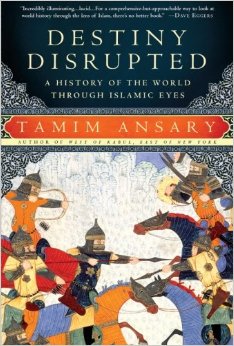
Destiny, Disrupted

Destiny, Disruted: A History of the World Through Islamic Eyes
© 2009 Tamim Ansary
416 pages

When Tamim Ansary was a boy, he loved history. Specifically, he loved narrativehistory, the kind of drama that brought the past to life.  The problem was that the only histories he could find written in  this style in Afghanistan were written by Europeans, and as such were expressly about European history.  Being unable to find a narrative history about his own people, he decided to grow up and write one. Destiny, Disrupted is a sweeping survey of the middle east, telling the story of Islamic civilization from its own point of view. It is cavalier history, galloping through the centuries and shooting from the hip. Yet for all its breeziness, Ansary offers more insight than idle jollies. Here is the story of what became of Egypt, Babylon, and Persia, of a civilization that brought them together, shone brilliantly for a few centuries, and then fell away. But the past is never dead, as the present turmoil in Syria and Iraq makes all too plain.

The story begins, of course, in the fertile crescent, with city states that become empires. We in the west know of Egypt, Babylon, and Persia because of their connection to our own story, always included as a necessary prelude in any western civ text.  But as the western narrative moves from Greece to Rome, then Europe as a whole, the world of the middle east continued to grow in its own right.  Persia was the greatest power it ever produced, warring – in different iterations – with both Alexander and Rome. For all of its glory, however, Persia was only an antecedent to the state created by Muhammad and his successors.

The beginnings of Islamic civilization – Muhammad and the succeeding caliphs Abu Bakr, Omar, Othman, and Ali – receives outsized attention not only because they were the creators, but because so much of what followed continues to look back on them. Key to Ansary’s account is that Islamic was not merely a religion, but a transformative political community that overcame not only Arab tribal differences, but racial quarrels as the expanding Muslim state captured vast portions of the multiethnic Byzantine and Persian empires. This age was to Muslims what Rome was to the west – and even more so, because it combined the moral and spiritual force of religion with the establishment of law and economic success: imagine if classical Rome and Christian Rome’s golden ages had happened at the same time,  a sudden eruption of law and charity around the Med, and that the only emperors were the Five Good Ones, started off by a figure like King Arthur or the biblical David. This was the weight the founding era held for Muslims, and which has since pressed Muslims on, looking for the restoration and aggrandizement of what once was.  There is no singular school of thoughts on how to restore it;  it has been attempted through feats of arms, like the Turks; through religious martialism, like the Taliban, or through politics, led by both strongmen and populist revolts. As conservative politics look to the golden past, and progressives look to building a golden future, Islam can encompass most visions simultaneously. 

The problem with golden ages and transcendent spells is that they always wear away. After  the assassination of Ali, things went downhill. Islam would fracture into two, then three, then a multitude of polities.  Near the turn of the first millennium,  there were three ‘caliphates’;   successors-by-assassination Abbasid, the lone-survivors of the old  Umayyad’s in Spain, and the Shi’a Fatimids in Tunisia.   Against this disunity came Frankish barbarians from the west and Mongolian barbarians from the east; the capital of golden-age Islam would be utterly ruined, millions killed, and Islam reduced to a sideline player in someone else’s story.  Even later military triumphs at the hands of the Turks, who rebuilt and advanced much of the original empire, even invading Austria, could not bring back the golden age.  The twentieth century is wrought with Islamic nations’ attempts to find their way again after being dominated by the industrialized west, and Ansary’s count covers revolutions in Turkey, Iran, and Egypt, along with the rise of militias and terrorist organizations in Afghanistan and Palestine.

What Ansary has achieved here is a captivating story of an empire rising in glory, stagnating, falling apart, and then struggling to find itself again. The last few chapters are on various Islamic peoples’ attempts to come to grips with modernity — needing it to catch up to the west, but disagreeing on which aspects to incorporate — and display the kind of thoughtfulness that makes this work more valuable than just a historical survey. This is on display earlier, too, especially when writing on the role of Shi’ism, starting first as politics, taking on theological importance, and then molding Persian politics.  One section, a European recap prior to beginning the industrialized portion of the book, does give me pause.  He writes, for instance, that the Vikings took over England and thereafter became known as Normans.  Technically the Normans did descend from Vikings, but they settled in France over a hundred years before their progeny ever  entered England.   In another instance, he attributes the split between Catholicism and Orthodoxy to being solely the result of Diocletian splitting the empire, and later describes Christianity as being essentially about the individual. Perhaps he’s thinking of Objectivism, but I am tolerably sure Christianity involves a deity,

Aside from the chapter on Europe,  Destiny is a wonderful piece of narrative history, informative and funny. Ansary sometimes sounds as if he is writing for cowboys, what with referring to people as “folks” and to disturbances as “ruckuses”.  It has an odd humor about it, like when he refers to the Mongolian treatment of a ruling family: they didn’t want to shed royal blood, he writes, it wasn’t their way.  They wrapped the royals in curtains and them kicked them to death, instead.  Moral crisis solved!  

Although this slightly predates the Arabic spring and the rise of ISIS, both only affirm this book’s relevance. For an insight into the middle east, it seems an unmatched introduction.

Related:

Posted in history, Reviews | Tagged , , , , , , , , | 4 Comments

Picking Up

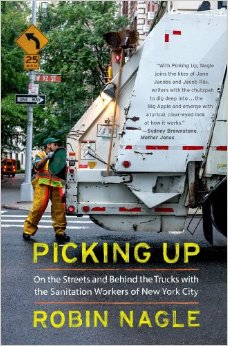
Picking Up: On the Streets and Behind the Trucks with the Sanitation Workers of New York City
© 2014 Robin Nagle
304 pages

When young Robin Nagle stumbled upon a communal dumpsite in the middle of an otherwise picturesque meadow, she was astounded by the thoughtlessness of her fellow campers. Who did they think would take care of their rubbish, the  garbage fairy?  People rarely give thought to their garbage service, unless it hiccoughs, but sanitation workers are arguably more indispensable than police or firemen.  Given individuals can get by for decades without calling for fire or police services, but try going decades without the garbage man. Sure, if you have a suitable vehicle you can haul your own bags to the dump, but how do you feel about living in everyone else’s rubbish?  A city like New York, a hive of millions of souls, would choke within days were it not for an efficient army of men and women in white trucks and olive uniforms hauling their refuse away.In Picking Up, Ms. Nagle joins those men, delivering stories and an inside look at a sanitation department working overdrive in New York City with unexpected humor.

Garbagemen are, despite the lack of a caste  system in the United States, our untouchables. We pretend not to notice these men and women whose job it is to take care of that which we have decided is beneath our attention. Certain aspects of their work can’t fail but be noticed: garbage haulers and mechanical sweepers are work trucks, loud and odoriferous, and their working environment places them in the middle of every aspect of urban life.  The men and women themselves, however, are overlooked, unless they’re being held as the subject of derision.  Ms. Nagle’s time spent with the department — first as an anthropology student, then as an actual worker —  looks at san-men square in the face. Through the details of their lives, Nagle teaches readers the ins and outs of keeping city streets clean.

Nagle begins with a brief history of garbage collection in New York, moving forward to present day municipal waste services. There are distinct operations;  the most prized work is picking up actual bags of trash, preferably dumped in one massive pile called a flat.  This is heavy and sometimes dangerous work, depending on what is being disposed, but it pays well.  Crews assigned to travel down a street dumping its public waste baskets into the truck face far more tedious hours, and street sweepers present their own challenge.  This work is constant;  sanitation never sleep, operating two shifts, and on some streets the the job is never done. As soon as a collection truck has finished its route, so many pedestrians have thrown their fast-food rubbish into the bins that they’re already full and the truck makes the round again, like a very smelly bus stop.   In the winter, sanitation workers assume a second job — clearing the streets after every snowfall.   Keeping the New York economy running on ice-free streets is such a demanding task that some DSNY planners regard plowing or preparing for plowing their first duty, with rubbish-hauling merely something to occupy time with during the summer.    What doesn’t change with the seasons is the danger: sanitation work is the fourth-deadliest in the United States, behind airline piloting, logging, and commercial fishing. Spending eight to twelve hours working on city streets alive with traffic exposes sanitation workers to being mowed down by cars, and their crushing equipment is a peril to their limbs if not life.

Picking Up makes for fascinating reading; it’s not so much about trash as the men who take care of it. Nagle’s journey always stops at the transfer station; what happens to it after that, who else is involved in making it go “away”, is not her concern.  This is a study of men (and a few stray women) at work, constantly keeping the commercial machinery of the City from  being clogged by its own refuse. It ventures to muse on waste and consumerism, slightly, but sticks mostly to regaling the reader with the diverse day to day experiences of the sanitation department — navigating traffic in massive trucks, manhandling bag after bag of mysterious waste, dealing with unions, government bureaucracies, a distant city government, and a hostile if not dismissive public — and how the men adapt.

Related:
Gone Tomorrow; Garbage Land.  What happens to trash after the transfer station.
Hack, Melissa Plaut.  Another account of driving/working in New York.
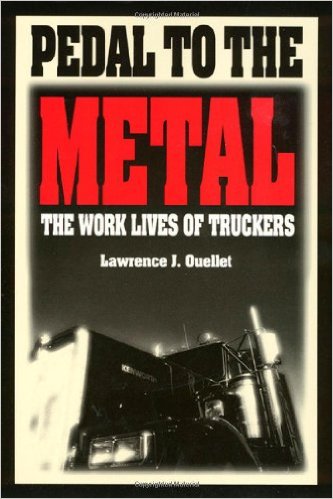
Pedal to the Medal,  a truck-driver turned sociologist’s similar treatment of truck drivers

Posted in General | Tagged , , , , , | 3 Comments

Be it Hereby Resolved

The Broke and the Bookish’ theme for Top Ten Tuesdays this week concerns New Years resolutions, naturally. I’m not usually one for resolutions, or even paying attention to the New Year, but it’s as good a time as any to set some goals for the new few months.

1. Give honor where it’s due


I don’t review every book I read — some don’t ignite my interest enough to merit it,  some are simply too short or don’t distinguish themselves — but a rare few are books I like so much that I shy away from reviewing.  They were so provoking I feel as though I’ll miss something or not do justice.That number is increasing, though, so I think a good project for me this year would be re-read a few of these and post reviews.  Of the above titles, two fall into the “awe” category, three I read in a sequences with too many similar books and was tired of thinking about the subject, and one (Happy City) was an accident.

2.  Have more fun

I read a lot of nonfiction, following a rapacious interest in..err…everything, but a lot of times I read series of books that leave me gloomy and despaired.  I’ve come to realize that this is my version of sitting in front of the television, being caught up in everything that’s going wrong in the world.  Just recently I started creating a list on urban poverty to read later in the year,  with titles like: Without a Net: The Female Experience of Growing Up Working Class, and stopped myself. This sort of thing has to be considered like salt, a little at a time.  So far, in January, I’ve read only titles about things that make me happy — science, horses, garbage collection, and now, trucks.  (I’m a SimCity 3000 nerd. Yes, books about garbage collection and power lines make me happy.)

3. Take the Classics Club challenge seriously

I joined the Classics Club last year but haven’t pursued any titles on it yet. That will change this year.

4. Wander away from the track

Vast portions of the world are still terra incognita for me: South America has never been touched outside of reading The Motorcycle Diaries, and I haven’t read about subsaharan Africa for six years.

5. Give those Amazon delivery teams a rest
My stack of purchased-and-unread books is starting to climb again. I’m not at the point of having to institute another bar on buying books a la the To Be Read Takedown Challenge, but I definitely need to start reading my own stock faster instead of ogling Amazon’s. (Fun fact: they have three books on garbage I haven’t read.)

What sort of books do I have on hand at the moment? How Greek Mythology Can Save Your Life, Small is Still Beautiful, and The Great Debate: Edmund Burke, Thomas Paine, and the Birth of Right and Left to start.  There are a lot more on my Kindle, because they’re cheap and invisible.

I think five will do to start, yes?

Posted in General | Tagged | 2 Comments

Adieu to you, and you and you and you —

As 2015 was ending I finished up a couple of works which merit mentioning. Firstly is Jane Austen’s Emma.  I have read Austen before (Pride and Prejudice), intrigued by mention of Darcy as a model gentleman,  Emma was thus my second foray into the author’s works, though I did not enjoy it nearly as much.  The plot is familiar to most:  Emma Woodhouse is a witty,  self-assured, and quite attractive woman so enormously satisfied with her life that she seeks to manage others. She attempts to pair a few of her single neighbors up, disaster ensues, much chatter follows, and eventually everyone winds up married off – including her. There were quite a few utterly brilliant lines in here – a favorite, following a haughty woman’s “discovery” that Mr. Knightly was a gentleman, noted that he was unlikely to ‘discover’ her to be a Lady, given her manners.  This was only a first reading, I think, given Emma’s reputation as Austen’s “perfect” novel. Perhaps I missed something in the end-year weariness.

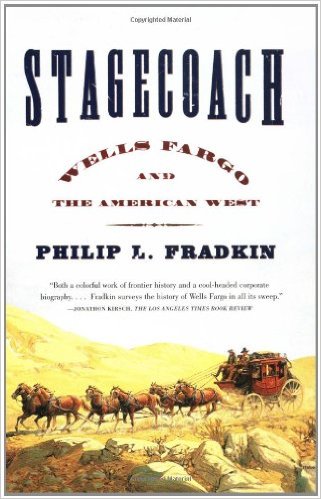
Closer to my usual fare was Stagecoach: Wells-Fargo and the American West.  As the title indicates, it is primarily a history of Wells-Fargo’s rise to fame in the 19th century. It was an unusual company, doing its best to fill a vacuum of infrastructure and service in the  still-being-settled west.   Principally, the firm provided banking and express services. Its commercial network provided both communication and transportation, at a dearer rate than the Postal routes but far more efficiently. It became most famous for the mail and treasure that traveled on stagecoach lines, and one chapter sheds a little light on the workings of stages in particular. After nearly dropping the ball on the transition to railroads, Wells-Fargo rebounded and became such a productive company that it drew the attention of trust-busters, who found the collusion of banking and railroads worrisome. The bank that exists today has only a tangential connection to the former behemoth of California, but retains the imagery of a stage coach — which proved a useful brand image even in the late 19th century, reminding prospective customers of how the west was won.

2016 is off to an excellent start so far, with How I Killed Pluto already read and reviewed, and another fantastic book following that.  Right now I’m nibbling at a couple of books, but I’m really looking forward to what January holds. Today I chanced upon a list of books I scribbled down next year, and I must say…I forget about some of the most interesting books.

Oh! I’m presently watching The Last Kingdom, a BBC miniseries based on my favorite bit of Bernard Cornwell, the Saxon Stories series.  So far it doesn’t stack up too well against Vikings, but the latter is…brutal.

Danish tourists inquiring about the time. 
VIKINGS!


Posted in history | Tagged , , , , , , | 5 Comments

10 Titles that Win

I remarked recently that How I Killed Pluto and Why It Had it Coming is the best title I’ve encountered in eight years of reading and blogging.   What kind of company does it keep? Drawing from the last five years, these were the titles that popped out most:

  1. How I Killed Pluto and Why it Had it Coming, Mike Brown
  2. Death from the Skies!, Phil Plait
  3. Cinderella Ate My Daughter, Peggy Orenstein
  4. They Eat Puppies, Don’t They? Christopher Buckley
  5. The Naked Lady Who Stood on Her Head, Gary Small
  6. Hey, Mom, Can I Ride My Bike Across America?, John Siegal Boettner
  7. Gang Leader for a Day, Sudhir Venkatesh
  8. Amusing Ourselves to Death, Neil Postman
  9. The Tyrannosaurus Prescription, Isaac Asimov
  10. The Demon-Haunted World, Carl Sagan

I decided to create a Goodreads list for people to share the most memorable titles they’ve discovered — do contribute if something sticks out!

Honorable Mentions:
Jennifer Government, Max Barry
Our Inner Ape, Frans de Waal
Wampeters, Foma, and Granfalloons, Kurt Vonnegut.
The Invisible Heart: An Economic Romance, Russ Roberts
Folks, This Ain’t Normal, Joel Salatin
Give Me Back my Legions! Harry Turtledove

Posted in General | Tagged | 7 Comments

How I Killed Pluto (And Why It Had it Coming)

How I Killed Pluto (and Why It Had it Coming)
© 2010 Mike Brown
288 pages

Is that not the greatest title ever? How I Killed Pluto and Why It Had it Coming is the tale of Pluto’s rise and fall as a planet, delivered by an astronomer who discovered a series of objects in the Kuiper Belt in the early 2000s.  The discovery of one object larger than Pluto forced the International Astronomical Union to come to a decision: what, exactly, is a planet?  The resulting definition would famously demote Pluto to ‘dwarf planet’, in the company of Ceres and Eris.   Brown’s confession argues that the 2006 decision wasn’t the first time the concept planet had to be redrawn, and that Pluto’s status as a planet was tenuous to begin with.  Regardless of one’s own astronomical convictions,  How I Killed Pluto  is popular science at its best,

What is a planet?  School children may learn that planet stems from the Greek word for wanderer, given that Earth’s neighbors  were seen to move through the sky independently of the ‘rest’ of the stars.  To the Greek mind, ‘planet’ encompassed not only ‘our’ planets, but the Sun and Moon as well — for they, too,  were celestial roamers.  Astronomical knowledge grew throughout the medieval era, however,  arriving at a worldview in which ‘planet’ meant a body that orbited the sun — and included the Earth.  New discoveries continued to challenge the mental map, like a couple of small bodies between Mars and Jupiter. Initially regarded as planets, they would eventually be given their own distinct category — asteroids — once it realized there were not one or two bodies out there, but scores of them.   The same would had proven true for Pluto, Brown argues, had we realized how much more was out there. Instead, the limits of our technology left us ignorant of most of Pluto’s neighborhood, and without context for its placement. For seventy years, Pluto enjoyed a status that it didn’t quite merit. As much as Brown would have liked to have taken credit for discovering the “tenth planet”, thinking as a scientist he couldn’t quite stomach it. The modern map of the solar system includes distinct groups of objects: the terrestrial planets, an asteroid belt, the great gas giants, and the far-circling Kuiper belt around us.  Viewed objectively, how could a minuscule dot plucked from the Kuiper belt be considered in the same category as Jupiter, but not the others?

How I Killed Pluto succeeds in many levels.  As a pop science piece, it delivers a sense of how science works. Not only does Brown’s account cover the day to day work  of a modern astronomer — poring through computer screens, analyzing the data for what the programs missed — but the kind of organized, critical thinking required to piece together order from chaos. Brown’s passion for collecting and organizing data is, in a word, pervasive; when his daughter is born (in the same year that he discovered several bodies that were pending official names) , she becomes a science project. He charts her feeding and sleeping periods, attempting to figure out if one method of feeding is more effective than another, and creates graphs in attempt to see patterns. (He is allowed to get away with this by virtue of being married to another scientist, one whom he met in the basement of a telescope).  Brown is an excellent communicator,  using analogies that work without feeling forced.  He is an author who a reader like to hear talk, brimming with  both passion and intelligence.

Brown’s memoir was an utter delight to read, and frankly makes me fear for the rest of the year: things can only go down from here.

Posted in science | Tagged , | 5 Comments

The Best of 2015: Year in Review

Previous yearly wrap-ups:
2007 | 2008 | 2009 | 2010 | 2011 | 2012 | 2013 | 2014

Welcome to the 9th annual year in review, in which I highlight the best of the year’s reading, hopefully without producing a column of text that rivals the Bayeux Tapestry.


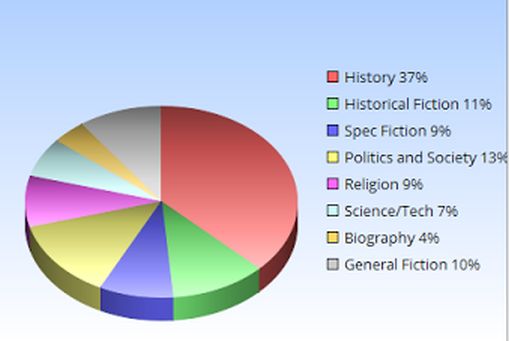
Big year for history, obviously. This chart doesn’t include everything, just the major categories. Speculative fiction includes science fiction, alt-history, horror, and (ordinarily) fantasy, but I didn’t include the Narnia books given their size.

First up, a top ten list:

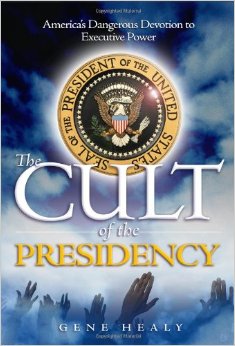
1. The Cult of the Presidency, Gene Healy
A history of the presidency’s transformation from administrator to Dear Leader, developing with rapidity after Theodore Roosevelt and Woodrow Wilson. I read this last January for Presidents’ Day, and thought about finishing the review in time for my Independence Day readings, but was fairly sick of politics by that point.

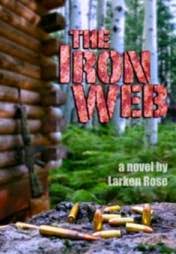
2.The Iron Web, Larken Rose
A wounded cop, a scared teenager, and a rural community of hippies and anarchists debate politics while being besieged by an out-for-blood ATF.

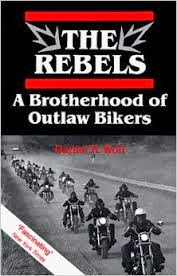
3. The Rebels: A Brotherhood of Outlaw Bikers, Daniel Wolf
A sociological study of a Canadian biker gang.

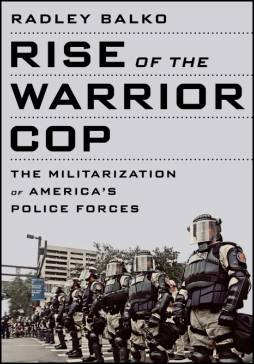
4.Rise of the Warrior Cop, Radley Balko
A history of police militarization, beginning in the 1970s but gaining steam with the wars on drugs and terror, respectively.  If I could only recommend one book this year, it would be Rise, addressing as it does issues that run deeper than the latest protests over who the police shot.

5.Happy City  Transforming Our Lives through Urban Design, Charles Montgomery
A citizen’s guide on how urban design can create a more fulfilling life — or a more frustrating one.

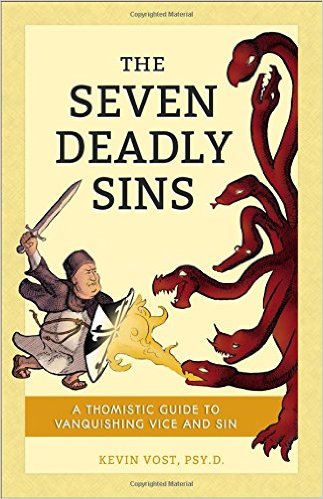
6. Seven Deadly Sins: A Thomistic Guide to Vanquishing Vice and Sin, Kevin Vost
Sums up Thomas’ Aquinas’ reflections on what  vices do to us, how they quicken in our minds, and how we can overcome them; given Aquinas’ classical background, this is heavy in advice from Stoics like Epictetus, Seneca, and Marcus Aurelius.

7. Pedal to the Medal: The Work Lives of Truckers, Lawrence Ouelett
A sociological study of truck drivers — dated, but right up my ally.

8. Selma 1965, Chuck Fager. A much-lauded and very fair history of the attack by State troopers and a sheriff’s posse on Civil Rights marchers in Selmont, Alabama, written by a student protester on the ground.

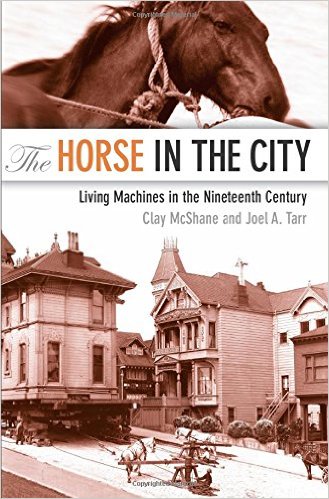
9. The Horse in the City,  Clay McShane and Joel Tarr (History)
A history of how horses shaped the urban experience in the equine Golden Age: the 19th century.

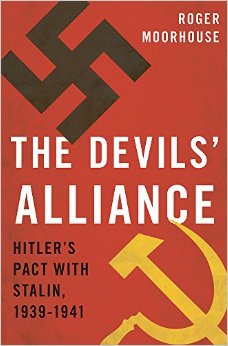
10. The Devils’ Alliance: Hitler’s Pact with Stalin Roger Moorhouse
A history of -….c’mon, it’s right there in the title.

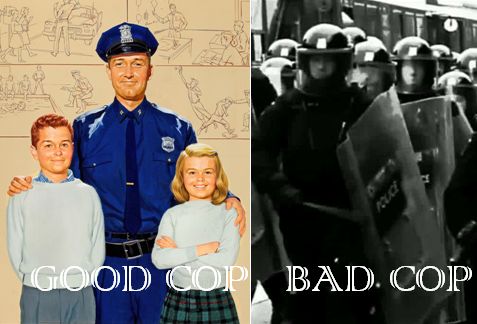
Next year will see a return to more balanced reading, with some books in science and civic interest already lined up.  My history reading should take me into fresh territory, specifically into Asia and the middle east. There will a good string of vintage literature,  I suspect, given my participation in the Classics Club, and the fact that a friend of mine wants to do a buzz-through of the Harvard Classics.  Given (or despite) the fact that near year is an election year, there will probably be a couple of relevant books. Not campaign pulp, mind you, but more interesting things like Ralph Nader’s Unstoppable: The Left-Right Alliance to Dismantle the Corporate State.   Two potential series are “The Digital World” and “Good Cop, Bad Cop”. 


..it will alternate books about police doing good work, and police doing police-state work. 

Honorable Mentions:

The Cult of the Presidency, Happy City, and The Once and Future King all deserve reviews, and have nearly-complete drafts. Perhaps I should resolve to give books I’ve missed reviewing their just deserts.


Happy New Year, all! 

Posted in General | Tagged , | 3 Comments