New features

The beginning of the New Year brings with it a good opportunity to try new things.  Since this blog’s creation in 2007, nonfiction has always dominated fiction, for my mission  in life is to learn all I can about this world’s peoples and their philosophies.  I have found the Internet an invaluable ally in this regard. As a way of making this blog more helpful to those of you who are also insatiably hungry for understanding,  I’m introducing two new features here that are shortcuts to the good stuff! 
1. Related vids

YouTube hosts an amazing amount of user-created content that can deepen appreciation for a subject, or introduce it in a more approachable way. So, for a few particular books, as I find especially helpful connections, I will share them here.  For instance, I might share a short dramatized version of The Epic of Gilgamesh, or an educational clip that explains an especially intriguing concept from a book by its author,  Most importantly, these will not random, but videos I have actually watched and can recommend earnestly. 
This feature may appear as much as once per week to as little as once per month.  As an example,  suppose I read a book like Waiting on a Train.   I might post something like this:
I encountered this clip last night; it is an eight minute review of why passenger rail fell off so dramatically in the mid-20th century,  why it continues to  languish, and why it is unlikely to make a major comeback outside of a couple of regions, unless something dramatic happens. I found it thorough and fair-minded, viewing as someone who would visit Europe purely for the trains but who realizes the enormous problem the country’s general sparseness poses for a iron-horse revival.
2. Podcast of the Week


Back in 2007, I used to download several podcasts per week,,, on a dial-up connection.   I liked them that much, and still do.  I listen/juggle to a great many podcasts, though I’m not married to any.  Their subjects are diverse, so some I listen to as often as they publish, and some I only check with every week or every month.  The majority of them are conversational, with a few being lecture-based and a couple being more panel-like, (My real-life restaurant-and-bar conversations tend to be more about cinema and current events than literature, alas, so I get my stimulating conversation vicariously.)   Each week I intend  to spotlight an especially good lecture or conversation. Some potential subjects: astronomy, bicycling, economics, geopolitics, history, skepticism, and urban planning,  
Be warned: I’m especially fond of podcast conversations about books.  
So, here’s to trying new things! 


Posted in Reviews | Tagged , | 3 Comments

Laughing Without an Accent

Laughing without an Accent: Adventures of a Global Citizen
© 2008 Firoozeh Dumas
256 pages

In 2003, Firoozeh Dumas charmed readers with stories about her transoceanic childhood, unfolding in both in Iran and the United States in the 1970s. This sequel to Funny in Farsi uses the same basic approach, blending funny stories about her relatives with reflection on the immigrant experience and the human experience in general.  Here, though, a third culture has entered the picture — that of her French husband’s — and, with more stories about her life as a parent, she is more serious at times.

 I remember her familial caricatures fondly from last year, especially that of her frugalistic father. Here we find him mystifying his son-in-law by presenting him Christmas gifts wrapped in on-sale “Congratulations, graduate!” and “Happy birthday!” wrapper paper —  subjecting the family to various misadventures after attempting to bring home several  “bargain-priced” tables in a purple hatchback, Her mother’s enthusiastic but creative use of English also features again. As a parent Dumas writes more seriously, recording her personal triumph in showing the family TV the door; not only did she create precious space for imagination and rest in her home, but her children were spared thousands upon thousands of commercials.  Imagination is important to Dumas; as a college student she is dismayed to realize her fellow students think getting drunk and gyrating is a good time. She’d much prefer a morning walk accompanied with literary conversation. (Her mother attempts to warn off the future husband, stating that Firoozeh never stops reading.) Through the humor and reflection readers are allowed to experience the warmth of her extended family, gathering frequently as they do — even if it’s just to watch The Price is Right and yell at Bob Barker. (Her father’s love of bargains makes Price his absolute favorite bit of American television programming.)  

As with Funny in Farsi, I found this simultaneously educational, funny, and cozy.

Posted in Reviews | Tagged , , | 3 Comments

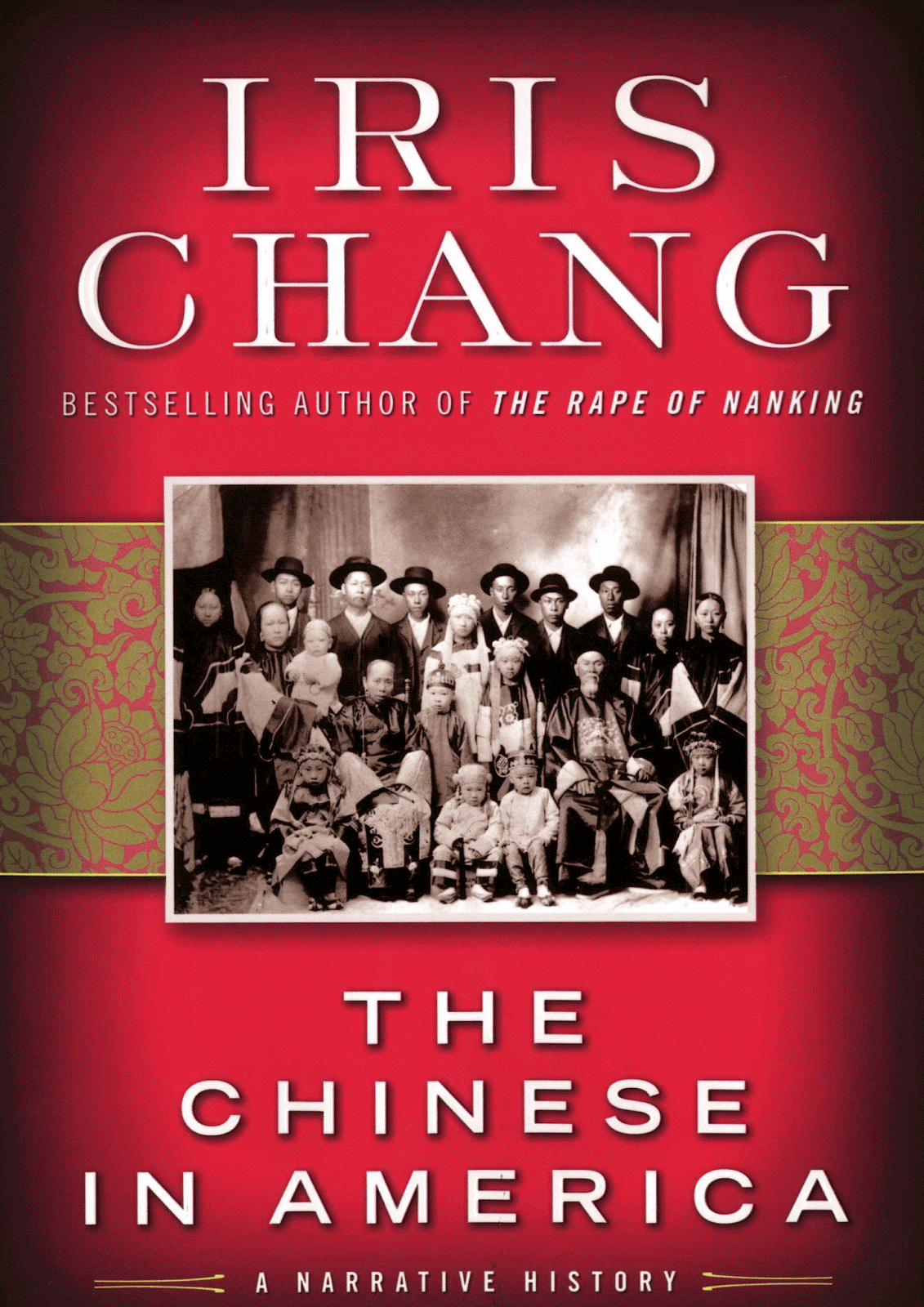
The Chinese in America

The Chinese in America: A Narrative History
© 2003 Iris Chang
558 pages


Like most Americans, my earliest notion of the Chinese in America is an association with the Transcontinental railroad. As it happened, their story begins before that, with the California gold rush. Poor Chinese men, having caught wind of the bonanza in California, made their way to “Gold Moutain” in hopes  of making a fortune and returning to China with it. While many hit the jackpot and returned, still others made another home in America, becoming actors in its story. In The Chinese in America,  Iris Chang superbly runs together three threads:  a history of China, as the decline of the last empire and the resulting civil strife (including war)  created a need for opportunities and safety to be found abroad;   the history of the United States,  lassoing in the West and needing all the railroad men, miners, and farmers it could get;  and the story of the generations who traveled from one nation to the other, attempting to adjust to a new country without losing their heritage.   It is an admirable story of perseverance amid bewilderment and hardship.

 The earliest Chinese visitors to the United States came not to flee wicked oppression in China, but to make money on Gold Mountain and go home rich men.    A few did strike it lucky and retire wealthy, but many more stayed. Although most of the Chinese who settled in the United States remained on the west coast, not all congregated in urban Chinatowns. They searched for opportunity wherever it might be found; working farms and ranches, mines and railroads, and – occasionally — even finding their way to New England and the South.   There, despite racially-orientated legislation, they found tacit acceptance, safe in their ambiguous status.  That changed in the 1870s,  when a depression set teeth on edge and prompted unemployed laborers to blame the cheap labor flooding in from the East.   The Chinese Exclusion Act followed, barring most immigration from Asia. Strict quotas were imposed, and only certain professions were entirely welcome.    The Exclusion act would hold until the 1940s, when the United States and the Chinese people became allies, both targets of Japanese imperialism.  (Shortly after World War 2, racial limitations on immigration were ended altogether. even as the war and those which followed generated anti-Asian prejudice)  As one generation pushed the frontier by breaching the Rocky Mountains, linking the coasts and allowing agriculture to prosper in the west, another stretched it still further in aviation and software engineering. Chang doesn’t limit herself to politics and economics; a strong reliance on oral history imparts a good dose of social history, as well, like the evolution of  “Chinese” food.

The Chinese-American story is not one I have any experience with — the South’s Asian population is predominately Korean and Vietnamese, at least in my neck of the woods. What little I knew came from histories of San Francisco (particularly Good Life in Hard Times, with a section on Chinese gangs).  This  was, then, a welcome introduction to another aspect of America’s mosaic.

Posted in history, Reviews | Tagged , , , , , | 2 Comments

Wonder and Skepticism

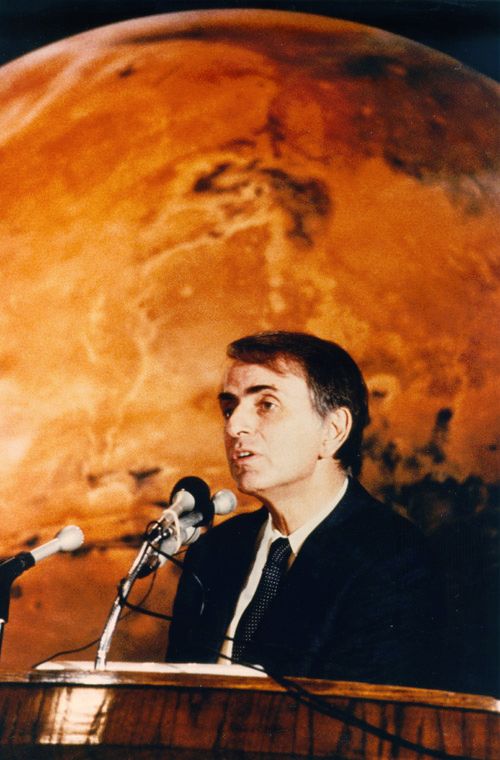
Last night I suddenly wanted to listen to Carl Sagan’s last address to the Committee for the Scientific Investigation for Claims of the Paranormal (now known as the Committee for Skeptical Inquiry).   I needed to hear Sagan’s voice, his particular blend of awe, humor, and bracing rationality.   In this particular speech he shares his introduction to science, particularly astronomy, comments on its value (practical and personal), and reflects on how the values of skepticism might be communicated more broadly, warning against an attitude of arrogance on the part of those who consider themselves rationalists.

“I’m always amazed that there is another area that I’d never thought of — crop.circles.  Aliens have come and made perfect circles and mathematical equations…in wheat!. Who would have thought it? Or they’ve come and eviscerated cows — on a large scale, systemically. Farmers are furious. I’m just always impressed by the depths of inventiveness that the new stories that are debunked in Skeptical Inquirer reveal…but then on more sober reflection, it seems to me the stories are fantastically unimaginative. That compared to the stunning, unexpected stories of science across the board, they have a kind of dreariness to them, a lack of imagination, a human chauvinism to them.   That’s all they can imagine extraterrestrials doing? Making circles in hay?

“…the last way for skeptics to get the attention of those people is to belittle, or condescend, or to show arrogance toward their beliefs. They are not stupid; it is a problem of society more than anything else. If we bear in mind human frailty and fallibility, we will have compassion for them. [….]  The one deficiency which I see in the skeptical movement is an us-versus-them [attitude]…a sense that We have a monopoly on the truth, all these other people who believe in these stupid doctrines are morons or worse — that’s it, if you’ll listen to us, if not, to hell with you — that is nonconstructive. That does not get our message across. That condemns us to permanent minority status. “

Posted in Reviews | Tagged , | 2 Comments

Stiff Upper Lip, Jeeves

Stiff Upper Lip, Jeeves
© 1963 P.G. Wodehouse
227 pages

As had so often happened before, I felt that my only course was to place myself in the hands of a higher power.
“Sir?” [Jeeves] said, manifesting himself.

Bertie Wooster has two great weaknesses: needy friends and forceful females.  Now, alas, they’re conspiring to take him to a  house whose master is quite certain Wooster is a kleptomanic loony who ought to be put away. Still, for the sake of two friends whose engagement is endangered  by something mysterious, Bertie must journey and face great personal peril, from village constables to Scottish terriers, to play the part of peacemaker. Naturally, he ends up in jail.

Stiff Upper Lip, Jeeves is a short novel in PG Wodehouse’s hysterical Wooster & Jeeves tales. They’ve come up before, but in summary: the main character, Bertie Wooster, is a society wastrel who lives on a family allowance and spends most of his time chumming in gentlemen’s clubs and avoiding the schemes of his family to get him either gainfully employed or married   He does attempt to make himself useful in getting his friends out of scrapes, usually by attempting to manipulate events. In this he typically ,makes things worse, but fortunately he has his brilliant valet, Jeeves.   There is no social predicament too complicated for Jeeves to finesse, though sometimes at Bertie’s personal expense.

In Stiff Upper Lip, Bertie labors to save his friends’ engagement primarily so that the newly-freed bride to be won’t renew her interest in him, but when he arrives at Totleigh Towers one problem quickly multiplies into a blizzard of shenanigans that blinds even Jeeves for a bit.  As always,  Bertie-Jeeves books are a brilliant joy  to read just for the language.   I wonder if these books weren’t written under the influence of ardent spirits, because they’re too giddy to be the work of  a sober mind. Bertie can’t tell a story without inventing a noun (“Aunt Agatha called up with a what-the-hell”),  a gerund (“I what-ho’d her”),  or verbs (“legged it over to the Drones’).      

Wodehouse is positively mirthful, a welcome start to the year — but interested parties should start with something like Carry on, Jeeves, instead. This is a sequel to another story and I would have been lost utterly had I not read Wodehouse previously and watched the DVD specials with Hugh Laurie and Stephen Fry repeatedly.

Posted in Reviews | Tagged , , | 3 Comments

Never stop learning

Posted in Reviews | Tagged | 1 Comment

2016 Cumulative Reading List

…whew.

— January —
1. How I Killed Pluto and Why It Had it Coming, Mike Brown (Science)
2. Stagecoach:  Wells-Fargo and the American West,  Phillip Fradkin (History)
3. Picking Up:  On the Streets and Behind the Trucks with the Sanitation Workers of New York City, Robin Nagle
4. Defeating Sin: Overcoming Our Passions, Fr. David Huneycutt
5. Destiny, Disrupted: A History of the World Through Islamic Eyes, Tamim Ansary
6. Dictator, Robert Harris (Historical Fiction)
7. Data and Goliath: The Hidden Battles to Collect Your Data and Control Your WorldBruce Schneier (Technology and Society)
8. Facing East: A Pilgrim’s Journey into the Mysteries of Orthodoxy, Frederica Mathews-Green (Religion)
9. Demonic Males: Apes and the Origins of Human Violence, Richard Wrangham and Dale Peterson
10. Future Crimes:  Everything is Connected, Everyone is Vulnerable, and What We Can Do About ItMarc Goodman
11. Warriors of the Storm, Bernard Cornwell (Historical Fiction)
12. Ain’t My America: The Long, Noble History of Antiwar Conservatism, Bill Kauffman (Politics)
13. Taxi! A Social History of the New York City Cab Driver, Graham Hodges (History)

– February —
14. Swiped! How to Protect Yourself in a World Full of Scammers, Phishers, and Identity Thieves, Adam Levin (Technology and Society)
15. Unstoppable: The Emerging Left-Right Alliance to Dismantle the Corporate State, Ralph Nader (Politics)
16. The War of the Three Gods: Romans, Persians, and the Rise of Islam,  Peter Crawford (History)
17. Genome: the Autobiography of a Species in 23 Chapters, Matt Ridley (Science)
18. 2001: A Space Odyssey, Arthur C. Clarke (Science Fiction)
19. Lost to the West: the Forgotten Byzantine Empire that Rescued Western Civilization, Lars Brownworth (History)
20. A  Survival Guide to the Misinformation Age, David Hefland (Science/Skepticism)
21. An Economist Gets Lunch: New Rules for Everyday Foodies, Tyler Cowen (Food)
22. The Moon is a Harsh Mistress, Robert Heinlein (Science Fiction)
23. The Lives of a CellLewis Thomas (Science)
24. Unnatural Selection:  How We are Changing Life Gene by Gene, Emily Monosson (Science)
25. The Social Conquest of Earth, Edward O. Wilson (Science)
26. Equal to the Sun, Anita Amirrezvani (Historical Fiction)

— March —
27. The Picture of Dorian Gray, Oscar Wilde
28. Fin Gall: A Novel of Viking-Age Ireland, James Nelson (Historical Fiction)
29. The Wisdom of the Myths: How Greek Mythology can Change Your Life, Luc Ferry (Philosophy)
30. All Other Nights, Dara Horn (Historical Fiction)
31. Dixie’s Forgotten People: The South’s Poor Whites, Wayne Flynt (History)
32. Pilgrim’s Progress, John Bunyan (‘retold’ by James Thomas)
33. The Scotch-Irish: A Social History, James Leyburn (History)
34. Armed and Dangerous, William Queen and Douglas Century (Police)
35. The Lincoln Lawyer, Michael Connnelly (Legal Thriller)
36. The News: A User’s Manual, Alain de Botton
37. The Return of the King, J.R.R. Tolkien (Fantasy/ English Lit)
38. The Road to Little Dribbling, Bill Bryson (Travel)
39. The First Congress,  Fergus Bordewich (History)
40. Brideshead Revisited, Evelyn Waugh (English Literature)

— April —
41. Great Expectations, Charles Dickens (English Literature)
42. Lord of the Flies, William Golding (English Literature)
43. Frodo’s Journey, Joseph Pearce (English Literature / Religion)
44. The Invisible Man, H.G.Wells (Science Fiction)
45. My Man Jeeves, P.G. Wodehouse (Humor)
46. Bilbo’s Journey, Joseph Pearce (English Literature)
47. Jane Eyre, Charlotte Bronte (English Literature)
48. The English Resistance: Underground War Against the Normans, Peter Rex (History)
49. When the Eagle Hunts, Simon Scarrow (Historical Fiction)
50. Master and Commander, Patrick O’Brian (Historical Fiction)
51. The Promise, Chaim Potok (Fiction)
52. Murder on the Orient Express, Agatha Christie (Mystery)
53. Funny in Farsi, Firoozeh Dumas (Memoir)
54. Waterloo, Bernard Cornwell (History)
55. The Quest for Shakespeare, Joseph Pearce (Biography)
56. Reading Lolita in Tehran, Azar Nafisi (Literature/Memoir)
57. The Memoirs of Sherlock Holmes, Sir Arthur Conan Doyle
58. In the Days of the Comet, H.G. Wells (Tedious Fiction)
59. The Voyage of the Beagle, Charles Darwin (Science/Memoir)
60. Driving with the Devil: Southern Moonshine, Detroit Wheels, and the Birth of NASCAR, Neil Thompson
61. ST: The Patrian Transgression, Simon Hawke

— May —
62. After the Prophet: the Epic Shia-Sunni Split, Lesley Hazleton
63. Aces over Ypres, John Stack (Historical Fiction)
64. Diving Companions: Sea Lion, Elephant Seal,  Walrus, Jacques-Yves Cousteau
65. Sphere, Michael Crichton (Science Fiction)
66. Rome Sweet Home,  Scott and Kimberly Hahn
67. Iran and the United States: An Insider’s View, Seyed Hossein Mousavian (History/Geopolitics)
68. On the Grid: A Plot of Land, an Average Neighborhood, and the Systems That Make Our World Work, Scott Huler
69. Off the Grid: Inside the Movement for More Space, Less Government, and True Independence in Modern America, Nick Rosen
70. The Planets, Dava Sobel (Scienceish)
71. In God’s Path: The Arab Conquests and the Creation of an Islamic Empire, Robert Hoyland (History)
72. 8.4, Peter Hernon (Science Fiction)
73. The Persians: Ancient, Mediaeval, and Modern Iran, Homa Katouzian (History)
74. All the Shah’s Men,  Stephen Kinzer (History/Geopolitics)
75. The Grid, Phillip  Kerr (Science Fiction)
76. Memorial Day, Vince Flynn (Rambo Fiction)

— June —
77. Liberty, DefinedRon Paul (Politics)
78. Trojan Horse, Mark Russinovich (Cyberthriller)
79. Earthquakes in Human History, Jelle de Boer,  Donald Sanders (Science/History)
80. Big Box SwindleStacy Mitchell (Politics)
81. Saving Congress from Itself, James Buckley (Politics)
82. Volcanoes in Human History, Jelle de Boer, Donald Sanders (Science/History)
83. Cyber War: The Next Threat to National Security, Richard Clarke (Politics)
84. When Asia Was the World, Stewart  Gordon (History)
85. The Orthodox Church, Kallistos (Timothy) Ware  (Religion)
86. Sons of Anarchy: Bratva, Christopher Golden
87. Green, Blue, and Grey: The Irish in the American Civil War, Cal McCarthy
88. Don’t Hurt People and Don’t Take Their Stuff, Matt Kibbe (Politics)
89. The Great Taos Bank Robbery, Tony Hillerman
90. ST DS9: Wrath of the ProphetsPeter David, Michael Jan Friedman, and Robert Greenberger
91. Freedom and Virtue: the Conservative-Libertarian Debate, ed. George Carey (Political Philosophy)
92. The Great Debate: Edmund Burke, Thomas Paine, and the Origin of Right and Left, Edmund Burke (Political Philosophy)
93. Harvest of Empire: A History of Latinos in America, Juan Gonzalez (History)
93. Death Comes for the Archbishop, Willa Cather (Historical Fiction)
94. White Fang, Jack London (Adventure Fiction)
95. O Pioneers!, Willa Cather (Historical Fiction)

— July —
96. The Monkey Wrench Gang, Edward Abbey (Fiction)
97. Our America: A Hispanic History of the United States, Felipe Fernández-Armesto (History)
98. The Obstacle is the Way, Ryan Holiday (Self-Help)
99. Enterprise: the First Adventure, Vonda McIntyre (Star Trek)
100. Literary Converts, Joseph Pearce (Literature)
101. The Red Badge of Courage, Stephen Carne (Historical Fiction)
102. Do Androids Dream of Electric Sheep?, Phillip K. Dick (Science Fiction)
103. Domesticated: Evolution in a Man-Made World, Richard Francis (Science)
104. 10% Human, Alanna Collen
105. Requiem, Michael Jan Friedman and Kevin Ayan (Star Trek)
106. Go Directly to Jail, ed. Gene Healy
107. Inferno, Dante; trans. Anthony Esolen
108. Crescent and Star: Turkey between Two WorldsStephen Kinzer
109. A Country Called Amreeka: U.S. History Retold through Arab-American Lives,  Alia Malek
110. The Journey Home, Edward Abbey (Essays)
111. Fire on the Mountain, Edward Abbey (Fiction)
112. The Ugly Little Boy, Isaac Asimov and Robert Silverberg (Science Fiction)
113. The Spanish Frontier in North America, David J. Weber (History)


–August —
114. Glass Houses: Privacy, Secrecy, and Cyber Insecurity in a Transparent World, Joel Brenner
115. ST DS9: Devil in the Sky, Greg Cox and John Gergory Betancourt
116. The Director, David Ignatius. (Cyberslumberer)
117. AirframeMichael Crichton (Thriller)
118. Rising Sun, Michael Crichton (Thriller)
119. Playing to the Edge, Michael Hayden (Politics/Memoir)
120. small is still beautiful, Joseph Pearce
121. The Ordinary Spaceman, Clayton C. Anderson (Astronaut Memoir)
122. Send More Idiots, Tony Perez-Giese
123. Stalingrad: The Fateful Siege, Anthony Beevor (History)
124. Dreamland: Travels Inside the Secret World of Roswell and Area 51, Phil Patton
125. The Thin Man, Dashiel Hammett
126. Miracle at MidwayGordon W. Prange, Donald M. Goldstein,  and Katherine V. Dillon
127. The Pawnbroker, Aimée Thurlo and David Thurlo (Thriller)
128. The Porch and the Cross, Kevin Vost
129. The Cargo Ship Diaries, Niall Doherty
130. The Arabs in History, Bernard Lewis (History)
131. Las Alamos, Joseph Kanon (Thriller)
132. Wheat Belly, Ken Davis (Health/Nutrition)
133. Real Dissent, Tom Woods (Politics)
134. When Tigers Fight: The Story of the Sino-Japanese War, 1937-1945; Dick Wilson (History)

— September —
135. Rescue Warriors: The US Coast Guard, America’s Forgotten Heroes, David Helvarg
136. Murder at Fenway Park, Troy Soos (Mystery)
137. How the Scots Invented the Modern World, Arthur Herman (History)
138. Tolkien’s Sanctifying Myth: Understanding Middle-Earth, Brad Birzer
139. Musonius Rufus on How to Live, adapted Ben White. (Philosophy)
140. ST: The Better Man, Howard Weinstein
141. ST: War Drums,  John Vornholt
142. Bloodletter, K.W. Jeter
143. America First! Its History, Culture, and Politics, Bill Kauffman
144. Turbulent Skies: The History of Commercial Aviation, T.H. Heppenhimer
145. Hillbilly Elegy, J.D. Vance
146. Deke! Manned Spaceflight from Mercury to the Shuttle, Deke Slayton and Michael Cassutt
147. The Pride and the Fall: Iran, 1974-1949, Anthony Parsons
148. Azazel, Isaac Asimov
149. Night of the Living TrekkiesKevin David Anderson and Sam Stall

— October —
150. Out of the Silent Planet, C.S. Lewis
151. Harry Potter and the Cursed Child, J.K. Rowling, Jack Thorn, John Tiffany
152. Timeless Mexico, Hudson Strode
153. World War Z, Max Brooks
154. Magnus Chase and the Gods of Asgard: Sword of Summer, Rick Riordan
155. West of the Revolution, Claudio Saunt
156. The Brave Cowboy, Edward Abbey
157. Jasmine and Stars: Reading More than Lolita in Tehran, Fatemeh Keshavrarz
158. The Greeks, H.D.F. Kitto
159. Dubh-Linn, James Nelson

— November —
160. Heretics and Heroes, Thomas Cahill
161. Hidden Order, Brad Thor
162. Divided Highways: Building the Interstates, Transforming American Life, Tom Lewis
163. Don’t Get Above Your Raisin’: Country Music and the Southern Working Class, Bill Malone
164. The Road Taken: The History and Future of America’s Infrastructure, Henry Petroski
165. When It was Worth Playing for: My Experiences Writing about the TV Show SurvivorMario Lanza
166.  Bye Bye Miss American Empire, Bill Kauffman (Politics)
167.  Lost Enlightenment: Central Asia’s Golden Age, from the Arab Conquest to Tamerlane, S. Frederick Starr (History)
168. The Motel in AmericaJefferson S. Rogers, John A Jakle, and Keith A. Sculle
169. Civilian Warriors: The Inside Story of Blackwater, Erik Prince
170. The Works: the Anatomy of a CityKate Ascher
171. Columbine, Dave Cullen
172. Sapiens: A Brief History of Humankind,  Yuval Noah Harari
173. Conclave, Robert Harris

— December —
174. The Flame Bearer, Bernard Cornwell
175. Danger Heavy Goods, Robert Hutchinson
176. The Epic of Gilgamesh, trans. Danny Jackson
177. The Aeneid for Boys and Girls, A.J. Church
178. You Have the Right to Remain Innocent, James Duane
179. Inside the Kingdom, Robert Lacey
180. Glimpses of World History, Jawaharlal Nehru
181. The Chinese in America,  Iris Chang

Posted in General | Tagged | 7 Comments

Telling the Future

Well, dear readers, another year is upon us!  How shall we use the time?   Here are some things to expect in the coming year from these parts…

1. Discovery of Asia
My big challenge this year is to make good my ignorance regarding pre-20th century Asia, by  focusing on India and China.

2. Classics Club Challenge (Year II)
Last year I went after the low-hanging fruit of my Classics list, mostly Anglo-American novels. This year I hope to be a bit more ambitious.

3. Read of England ’17 


Since time immemorial, or perhaps only since 2009, I have done a little ‘salute’ to English history and literature.  In recent years it’s been my custom to devote April to England entirely, in observance of Shakespeare’s birthday and St. George’s Day, both on April 23rd. Expect that to continue, because I always find it a joy.

4. The Digital World, continued

Last year I intended to read a series of books on the digital world around us, as it continues to reshape our societies and economy. I became fixated on cybersecurity, instead.  This year we’ll try to read beyond that.

5. Rebuilding towards the  Future


Another planned series this year will be hopeful books about the future — about ways people acting as citizens of their local communities are changing them for the better, about ways technology is allowing people to make more use of their time and resources and create a better life for and with their neighbors, that sort of thing.  Most importantly, it will be about the actions of ordinary people, at the scale of the local — whether  they are working with their neighbors to make their street a better place or  using technology like Uber apps to serve the needs of others and make a living as their own boss.

6. Science!

While I read science every year, I tend to focus on anthropology and biology at the expense of everything else. I haven’t read any physics since 2011! In the interests of refreshing my general scientific literacy,  I’ve composed a list of different categories, basically borrowing those from my Science Index, and — in an ideal world — will attempt to read a book from each category before lapsing into my favorites.

7. Celebrating American Independence
As usual, in late June and early July there will be books either on the early colonial period, the Revolution, the war, or the period of the early Republic.  I may throw in some American lit this year as well.

Posted in Reviews | Tagged , | 4 Comments

Classics Club: Year I

Twenty-sixteen was my first full year in the Classics Club challenge, and I’m off to a good start. Virtually everything came from my American Lit and English Lit specials in April, June, and July, though.

2015:
Emma, Jane Austen (12/29/2015)

2016
2001: A Space Odyssey, Arthur C. Clarke (2/12/16)
The Picture of Dorian Gray, Oscar Wilde (3/2/2016)
The Pilgrim’s Progress, John Bunyan (3/13/2016)
Brideshead Revisited, Evelyn Waugh (3/26/2016)
Great Expectations, Charles Dickens (4/1/2016)
Lord of the Flies, William Golding (4/3/2016)
Death Comes for the Archbishop, Willa Cather (6/27/2016)
White Fang, Jack London (6/29/2016)
O Pioneers!  Willa Cather (7/1/2016)
The Red Badge of Courage, Stephen Crane (7/6/2016)
Inferno, Dante (7/16/2016)
The Epic of Gilgamesh,  trans/ Danny P. Jackson (12/2/2016)
The Aeneid (prose trans. A.J. Church 12/4/2016, verse trans. Robert Fitzgerald pending)

I don’t have a specific plan for 2017. While I’d like to proceed chronologically from this point (and I have The Histories checked out), in truth I will probably read randomly from my list. 

Posted in General | Tagged | 3 Comments

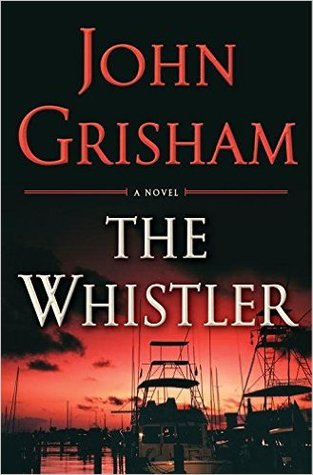
The Whistler

The Whistler
© 2015 John Grisham
384 pages

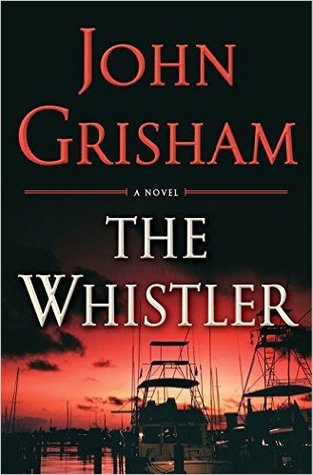
The offices of the Board of Judicial Conduct rarely see excitement.  Responsible for investigating claims of judicial abuse and defrocking offenders, their rowdiest target has been an old lech who forgot which bar  he was a member of and attempted to seduce various women in the courtroom. But now a disbarred lawyer who represents a shadowy chain of confidants claims to have information that might expose the most corrupt judge in American history.  According to the ex-lawyer, the mysterious robed one is in bed with a swamp gang, skimming millions from an Indian casino.    After a series of deaths and disappearances, lead character Lacey Stolz and the BJC are forced to call in the FBI to help bring the errant judge and the conspiracy to justice. (Which they do, rather quickly.)

Although I faithfully read the latest Grisham book every year,  I’ve been enormously disappointed in most of his recent works — so much so that I didn’t even look forward to trying this one, I merely cracked it open for tradition’s sake. I’m happy to report that the book was not awful; it was even moderately enjoyable. Huzzah for mildness!   Execution-wise there’s not a like to brag about: forgettable characters,  flat dialogue, and repetition. (Seriously, Lacy Stolz mentions how glad she is not to be married so many times that I hope Grisham’s wife doesn’t read this and think he’s complaining vicariously.)  On the bright side, the Board of Judicial Review is fresh ground for Grisham, and the extensive time spent on an Indian reservation is new as well. (Grisham did poke into this area in Ford County, but that was only one story.)   Grisham also stays technologically relevant by having one character monitor a house break-in through an app on her phone.  Best of all, though, the characters are not the abysmally awful cretins of Rogue Lawyer.  They even have friends who like them.

The Whistler is a very vanilla sort of book; tasty enough not to put down, but not so compelling that it consumes the reader. It’s genuine airplane/vacation reading, with a rushed ending in case boredom sets in.

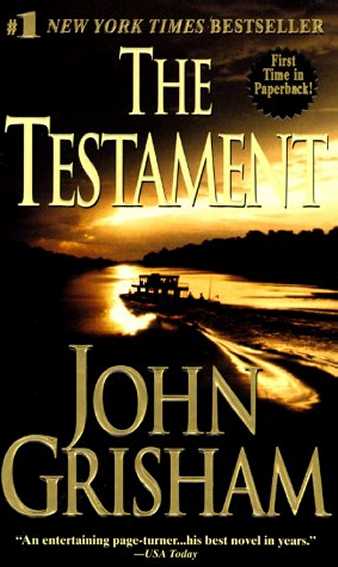
“The covers are the same? ….make the new one red. They’ll never know.”
Posted in Reviews | Tagged , | 3 Comments