El Narco

El Narco: Inside Mexico’s Criminal Insurgency
© 2012 Ioan Grillo
336 pages

El Paso, Texas, can boast one of the lowest metropolitan crime rates in the United States. Immediately opposite it on the Rio Grande, however,  Ciudad Juarez, has until recently been regarded as North America’s murder capital.  Juarenses are not exceptionally violent people. but their city is one of the battlegrounds in a decade-long melee for money.  El Narco, the product of a journalist who has reported on Mexico for years, covers the origins and growth of drug-trafficking  gangs in this country so far from God and so close to the United States.   Grillo’s review of the guerra contra los drogas  reveals how far-reaching the cartel wars are, not only creating a horrific bodycount, but eroding the legitimacy of government and civil order, and creating subcultures obsessed with death.

In the beginning, Mexico’s narcotics farmers were surprisingly like Appalachian hill people,   who found corn liquor a lot is easier to make money off of than corn. Like America’s hill people, they were organized by familial clans and sometimes competed for territory.  Prohibition in both the United States and Mexico led, in due time, to organized groups superseding the clans in many respects, but not until the end of Mexico’s one-party state did the cartels run wild.   From 1929 to 1994, the ‘institutional revolutionary party’ held complete command in Mexico, with control so complete  that Grillo maintains throughout the book that Mexican democracy only began in 1994.  When they finally ceded power, however, their systems for maintaining order — corrupt as they were — disappeared with them, and ever since Mexico’s leaders have been trying to fill the vacuum.

I don’t live anywhere near the US-Mexican border, but in an age of global news it’s hard to miss occasional stories of massacres. The most bloody violence pools around the main routes northward, as Mexico’s gangs are not only moving their own goods but transporting merchandise from South America.  Because the industry is so lucrative, it’s highly attractive to men and women from economically depressed areas, despite the violence. Gangland allure works its usual magic,  as disadvantaged people are drawn to the spectre of wealth, influence, and the aura of being a tough guy.  That aura is aggrandized by the Mexican tradition of corridos,  ballads that tell stories and celebrate or mourn the lives of their subjects.   Cartel smugglers and gunmen have become the heroes of a growing  library of narcocorridos,  celebrated as poor men who have made it rich by defying the man.  Considering how much of Mexico’s local and state governments in the contested areas are compromised by the cartels — sometimes local police work directly for the gangs —  one wonders how much of the man there is to defy.   Certainly the federal government and army are doing their best, but the narcos are creating their own variants of Mexican culture: one  cartel seems to have its own cult,  and another psuedo-catholic cult is centered on the worship of a female Death Angel.  As the cartels branch out into other areas of crime, like extorting protection money and kidnapping for ransom, Grillo warns that what Mexico is facing is less than a prolonged spat of gang fighting, and more like a Syrianesque insurgency.

As Grillo documents, Mexico has tried valiantly to crush the narcos through sheer force,  targeting leaders and using the movement of money to trap them.  Grillo believes that prohibition ultimately creates the financial incentive fueling these gangs, but there’s little grounds for hope that drug prohibition in the US will end anytime soon: while many states are giving up on marijuana, the present attorney general is an implacable supporter of the drug war police state.  And even if a miracle happened, how long would it take for Mexico to recover from this poison that has been seeping into its soil for twenty years?

Disturbing but gripping reading.

Posted in Reviews | Tagged , , | 4 Comments

The Adventure of English

The Adventure of English: The Biography of a Language
© 2011 Melvyn Bragg
336 pages

In The Adventure of English, Melvin Bragg delivers a mythic history of the language that treats our lingua franca as a living personality — battered and now triumphant.  Beginning with the arrival of the Angles and company in Britain and continuing well past Indian independence,  this ‘adventure’ is one of a peasant tongue turned phonic empire.

English’s survival was, as Wellington said of Waterloo, a damn close-run thing.   After establishing a home for themselves in Britain,  the English kingdoms were nearly extinguished by the Norse invasion centuries later. They were not so lucky in 1066, when England was invaded and taken by William and his Normans. Although the vast majority of English’s 100 most common words are survivors from the old Ænglisc,  Bragg estimates that eighty-five percent of the old English vocabulary was lost in the Norman invasion, being supplanted by their version of French.  The  foisting of a French ruling class upon an Anglo-Saxon peasantry created classes of words;   French monopolized administration, religion, law, and so on,  leaving the rude basics of life like farming to the old tongue.   English survived, however,  and even captured the Normans:  their children picked up English from nurses and other servants. As  England and Normandy grew further apart amid politics and war,  and England and France became one another’s favorite enemy,  English reemerged as the language of court and law.   It would struggle mightily to take over religion, aided chiefly by Henry VIII’s libido,  and by the  late 16th century had started to become self-conscious, with an increasing number of people insisting that there was a Proper English, and you ain’t speakin’ it.   Then it took over the world.

The last half of this English history largely concerns itself with the diverse vocabularies developed by Anglophones as they spread across the globe via the English empire. In North America,  settlers happily acquired words from various Amerindian languages and other colonial powers.  In the Caribbean,   slaves from scattered African tribes used bits and pieces of English to create  pidgin tongues — and in India,  English was used to establish a common language between lingual populations who found embracing a common enemy easier than embracing an intimate rival.   English’s growth wasn’t merely in geography and population, however; as the English became the predominant commercial and technical power of the world,  the language became important in its own right:  to learn it was to gain access to the reams of new knowledge being acquired in the heady days of the  scientific and industrial revolutions.

Bragg’s colorful history of English brims over with memorable lines, like “Shakespeare threw words into bed together who had never before shared even a common acquaintance”, and his regular anthropomorphizing the language — treating it as a person, with desires and ambition —  may annoy historians and linguists alike. But for lay readers who have an interest in their mother tongue — and wonder why, for instance, it has so many French words, and uses Latin for science, and  is brimming with a wondrous amount of spelling and pronunciation quirks —  The Adventure of English is one to set out on.

Related:
The Mother Tongue: English and How it Got that Way, Bill Bryson

Posted in history, Reviews | Tagged , , | 4 Comments

Confront and Conceal

Confront and Conceal: Obama’s Secret Wars and Surprising Use of Power
496 pages
© 2012 David E. Sanger

Barack Obama may have been the only Nobel Peace Prize winner in history to order lethal force used on a regular basis, but things could have been worse. Confront and Conceal attempts to make a case for an “Obama Doctrine”, one which avoids epic disasters like the destruction of Iraq, but still asserts American influence via surgical operations and international organizations.  Sanger reviews the actions of the Obama White House regarding Iraq, Afghanistan, Pakistan, North Korea, China and Iran, with a special section on drones and cyberwarfare. He relies on extensive interviews with administration officials, including then-secretary of State, Clinton, as well as State Department cables which were made available via Wikileaks.  He creates a picture of an Obama who — though mocked for his weakness or aggression, depending on the mocker —  attempted a cautious but efficacious approach  to foreign policy.  Considering Sanger’s access — interviewing heap-big chiefs  as high as as the secretary of state- –   it is perhaps no surprise that the representation rendered here is admiring, on the whole.

Obama encountered no shortage of foreign policy crises during his first time. He began it faced with the deathly tar pit of Afghanistan,  further complicated by the amount of trouble-makers hiding in the western fringes of Pakistan.  Excising the United States from Afghanistan wasn’t as simple a matter as cutting losses and leaving, for neither the DC nor Pakistan desired a power vacuum between Pakistan and Iran.  The Arab spring, which forced DC to choose between its interests and its proclaimed values, further muddied the waters. The cascade of populist revolts took everyone by surprise, including the President who was determined to restore the American reputation in the middle east.  To avoid messes like Iraq and Afghanistan, Obama  preferred to use a light footprint approach: if American interests were at risk, then action must be taken –but the action should be swift and precise, using new tools like drones and cyberwarfare.   Diplomacy was preferable to brute force, however: Obama was also a genuine internationalist, who preferred using global organizations to apply pressure to ne’er do wells like Qaddafi, and to effect change.  This was not always possible;  the Iranians didn’t trust his intentions and regarded him as timid; the international community remains divided over Syria, with some supporting Assad and others supporting the rebels and ISIS.   Ditto for North Korea: as vexsome as they are to all of their neighbors, China included, they won’t just go away. Leaving the north in the hands of the Kim family cult isn’t an attractive option for China, but it’s more attractive than millions of malnourished and uneducated refugees streaming into China.

Anyone who has followed my reading for any length of time may have picked up on the fact that I am not a fan of DC, in any administration.  I did have a grudging respect for much of  Obama’s foreign policy, however,  at least until he began getting the country more entangled with Syria and resurrecting Cold War tensions.   That respect was validated here, as Obama seems to have approached DC’s expanse of empire with the desire to do as little damage as possible. I don’t know how strong willed and idealistic someone would have to be to sit in the One Chair of the west wing, surrounded by the whispering host of the DC establishment,  faced with a neverending series of crises and commitments, and say “To hell with you, I’m not playing this game”, and start manipulating the Titanic of state  away from its inevitable course of empire.  Obama seems to have resisted it for several years: agreeing to escalate in Afghanistan, but only with a pre-determined date to cut losses and run;  continuing Bush’s development of the Olympic Games project, which would give him  more options in Iran;  and using drones instead of conventional bombing and strike team, because those were the only options DC produced. (The targets were ‘terrorists’, of course.  DC wouldn’t casually assassinate just any reichsfeinde. That would never happen, no sir.)

Cantankerous sarcasm aside,  Confront and Conceal was a varied and endlessly fascinating history given the range of topics and their (unfortunately) continued relevance.  The Kims are even more problematic now than they were;  Syria continues to exact a morbid fascination for the establishment, and China…well, it’s still there. So too are the opportunities for mischief the digital world has opened, as this weekend’s crippling wave of digital attacks (chiefly in Britain) have shown all too well.   I would take its general admiration for the establishment with no small level of salt, however.  Foreign-policy wise, I think it’s especially helpful for the material on the US-Pakistan relationship.

Related:
Playing to the Edge, Michael Hayden. Another keyhole light inside  the establishment.

Posted in Reviews | Tagged , , , , , , , | 3 Comments

On the Shoulders of Hobbits

On the Shoulders of Hobbits: The Road to Virtue with Tolkien and Lewis
© 2012 Louis Markos
235 pages

Fairy tales don’t teach children that dragons exist; they know dragons exist. Fairy tales teach children that dragons can be defeated.  GKC declared that, and Louis Markos would support it. Here he demonstrates that fairy tales have much to teach even adults. In On the Shoulders of Hobbits,  Markos uses the Chronicles of Narnia and the Lord of the Rings to guide readers through the Virtues — four Classical, three Christian — using the imagery of the Road (complete with obstacles and diversions) to guide the reader along.

 Given his ‘on the road’ subtitle, it’s only appropriate that Markos begins by examining both the Narnian books and LOTR in the light of characters making a hero’s journey, confronted with obstacles and monsters, and eventually fulfilling their destiny.    Some of these application of virtue will be obvious to any reader;   main characters from both series frequently demonstrate courage in the face of adversity, for instance.   Others are less expected, even by the author.  Markos  was raised in a tradition that barred alcohol and tobacco on the grounds of morality, and yet in the world of Tolkien he found characters gaily enjoying pipeweed and strong drink – from time to time.  Their temperance was the temperance of the ancients, the practice of the golden mean. That mean, or balance,  is a necessary component of the practice of the other virtues; for instance, courage is a balance between cowardice and recklessness. Without temperance, courage would not be itself.   The exercise of other virtues distinguishes Tolkien and Lewis’ heroes from their opponents:  for instance,  Faramir practices a prudence about the One Ring that his brother Boromir,  lacks — though both are equally courageous.  A smaller ending section examines other common lessons the Lewis and Tolkien books teach; the consequences of making a deal with the Devil, for instance,  as illustrated by Narnian characters who view the White Witch as a useful ally, sometimes even as they admit she is tyrannical.  (As a real world example, Markos points to the West’s alliance with Joseph Stalin, whose penchant for mass murder was even more thoroughly exercised than Hitler’s.)

Although On the Shoulders of Hobbits makes for easy reading, it’s not superficial. Markos has penned several works on classical education, C.S. Lewis, and philosophy, and here he exhibits a familiarity with the ethical writings of philosophers and popes alike.

Posted in Reviews | Tagged , , | 5 Comments

Astrophysics for People in a Hurry

Astrophysics for People in a Hurry
© 2017 Neil deGrasse Tyson
200 pages

Astrophysics for People in a Hurry is exactly what it says on the tin, a brief cosmological primer that presents the basics of cosmology, explains the ways we are continuing to learn about the cosmos, and ends with a Saganesque hush meditating on what the cosmic perspective has to offer. Neil deGrasse Tyson is an active science popularizer, the creator and primary host for StarTalk Radio, which has grown beyond a podcast to become a video series and book – not to mention his day job as director of the Hayden Planetarium in New York City.

Astrophysics is a review of what is known about the big picture, and avoids string theory, m-theory, branes, and other things best considered by people not in a hurry. Tyson does include a section on dark matter and dark energy, however, since the math of our current model of universal expansion doesn’t make sense without including them . Tyson is quick to defend against the idea that ‘dark matter’ – accounting for the detected weight of matter which doesn’t seem to interact with anything – as a math cheat, since the weight of something is there…we just haven’t figured out what it is just yet. Along the way, Tyson also comments on topics like why the cosmos tends to produce spheres (planets, suns, clusters of galaxies…), the history of radio telescopes, and the supreme importance of the period table.

As someone whose most recent interaction with astrophysics has been The Big Bang Theory, since I haven’t read anything in this area in four years, I found Tyson completely enjoyable.

Posted in Reviews, science | Tagged , , , | 8 Comments

The Elephant and the Dragon

The Elephant and the Dragon: The Rise of India and China and What It Means for All of Us
© 2007  Robyn Meredith
272 pages

For most of the 20th century, Europe and the United States enjoyed an outsided influence on global trade, in part because  large portions of the world had sealed themselves off, stewing in their own ideological juices and maintaining impoverished populations. As the 20th began to give way to the 21st, however,  the eastern world re-opened. The Elephant and the Dragon begins with a historical note explaining how China and India came to renew their participation in the global economy, then appraises the ways their surging involvement has altered that global system and themselves.  Written and published before the ‘great recession’ — observing then things now taken for granted, like offshoring — the book is presumably not quite as relevant as it was on its publication.  The fundamental transformations Meredith observes, however, are still in effect.

Why the ‘elephant and the tiger’, instead of ‘the Asian tigers’?  Meredith views India’s economy as pachydermesque in that while it was slow to get to its feet, slower still to get moving,  it will be all the more harder to stop as it picks up speed.  Its energy will come not from one point — the Politburo — but from billions of Indians, driving forward towards the future they want.   India’s economic revival came seemingly as a last resort, when in 1992 its leadership recognized that the country was broke.  Although the liberalization that followed allowed India to use its existing resources (a strong number of English-speaking professionals) to better effect,  its lack of more material resources — infrastructure like highways and modern airports — prevented it from becoming an instant industrial power like China.   India liberalized at just the right time,  becoming an important part of the expanding information technology sector.  What began with the dot come surge  has continued to the point that India had become the western world’s “back office”. its workers supplying customer service ,tech support,  computer programming, and the like.  By now (2017), India’s economy has grown being merely the support staff of the west, however.

China’s own ‘liberalization’ — economic, not political — began in 1978 when Mao’s successor realized the middle kingdom was falling far behind the west,  and needed to adopt some of its methods if only out of self defense. (Even during the Mao years, China had learned from Russia’s mistakes and so avoided total public control of agriculture.)   Although the communist party’s pivot towards capitalism meant ceding constant command of the economy, the Party maintains absolute political control and still ‘guides’ the economy by establishing long-term goals, like an expansion of the highway system.  Although westerners commonly regard China’s trade advantage as being desperately cheap labor, in reality there are many places with cheaper labor.  China combines relatively cheap labor with industrial infrastructure and a government interested in stable growth.

The Elephant and the Dragon is largely oriented toward the world of business, using India and China to illustrate how crucial offshoring and vast supply chains have become to the global economy.  Goods are not simply made in a Chinese factory; they pass from city to city in varying stages of completeness, which is why online retailers can offer so much customization.  “Made in” labels have lost all real meaning, for a given good will have been produced from goods and materials from across Asia, with other components added in by the United States and Europe.  Is a car finished in the United States, but from parts produced in China and Mexico, truly ‘made in America’?  

While there are more current books, for someone interested in the course of globalization — particularly the intermingling of the Asia and western economies — this is still a good start.

Posted in Reviews | Tagged , , , , , | 5 Comments

Spain in the Southwest

Spain in the Southwest: A Narrative History
© 2013 John Kessell
480

In the early 1500s, the Spanish triumphed over the Aztecs and established a new Spain — an empire forged out of the new world.  The equatorial tropics were only the beginning for Spain, however, as far above them loomed the entire continent of North America,  full of possibility.   The Spanish were lured north with simple and expressed motives: there was oro in them thar hills.  They were teased with stories of great cities to the north, rivaling even the splendor of now-perished Tenochtitlan. Their explorations would take them as deep into the interior as Kansas, and create a new province for colonial Spain: “New Mexico”. The Spanish in the American Southwest is a history of the Spanish empire in the present-day states of New Mexico, Texas, Arizona and California, one which aims to tell the story of cultures in collision — or collusion, as the Spanish often relied on alliances with locals, using chronic warfare between populations to make friends.   The province of New Mexico was named such in the hopes that it would prove as abundantly wealthy as Mexico,  but easy loot wasn’t to be found. Angry natives were, though, and in abundance — constantly resisting the dons and once driving them out of the region entirely. Still, the ‘new Mexico’ would remain a Spanish possession, maintained at great expense for the benefit of seemingly no one but the Church, until Napoleon invaded Spain and provided the opportunity for the New World to declare independence from the old.

As this is billed as a narrative history, what are some of the interesting threads?  Accounts of exploration always have an aura of fascination about them, although the Spanish were more disappointed with the constant lack of golden cities than mesmerized by the landscape.  In this history we see the Spanish grow from explorers to conquerors, and then — as the generations pass — men who belong more to New Mexico than they do Spain. They struggle constantly with the neighbors, whose kin they have effectively enslaved and alienated from the local gods — and later on, the Spanish have to double down on the unproductive province because of other European powers. France is especially aggressive in Louisiana and Texas, and the Anglo-Americans keep eying the west with a certain avaricious glint. The main reason Spain held on to the Southwest prior to strategy becoming a factor, however, was religion, as the religious orders (Jesuits and Franciscans) assured the Crown that they had baptized many souls, people who will be killed by their neighbors should Spain leave.  Speaking of the friars,  don’t think of them as gentle souls living lives of poverty and service to their fellow man. The friars in the southwest were potentates, who relied on the forced labor of the locals and who threatened even the Spanish military and civil powers in terms of authority. One early friar — addled by the desert sun and encouraged by his distance from Italy — claimed to have the full authority of the Pope in the New World, and another effectively ousted the first governor of New Mexico proper when he (Peralta, the Santa Fe avenue’s namesake) challenged the cleric’s rule.

More will follow on the Southwest this year, including a travel account based on Coronado’s first foray into the region, a history of the region between Mexican independence and the American invasion;  and a modern history of the state of New Mexico itself.

Related:
The Spanish Frontier in North America, David Weber
West of the Revolution: An Uncommon History of 1776, Claudio Sant. Covers the Russo-Spanish contest in California
Death Comes for the Archbishop, Willa Cather.

Posted in Reviews | Tagged , , , , , | 7 Comments

Captain to Captain

Captain to Captain
© 2016 Greg Cox
368 pages

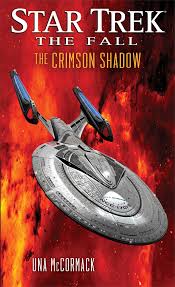
Captain Kirk is surprised to be hailed by the formidable former first officer of the Enterprise, a woman so accomplished she still retains the nickname “Number One”, enroute to a little shore leave. Her stated goal is to visit the Enterprise, where she was once such a commanding presence that her voice is still the model for the shipboard computer’s audio output.  Her unstated goal is to remove something from a secret vault on the ship that only the captain and his first officer — and only the captains and first officers  before him — know about. She has unfinished business with the device,  born of a tragedy incurred while she was a young lieutenant on the Enterprise, and before it’s too late she wants to make whatever amends she can.

Captain to Captain is the first in a trilogy of books by different authors, celebrating Star Trek‘s fiftieth anniversary, and should entice Trekkies immediately with the promise of exploring the mysterious character of Number One.  Appearingly only in Trek’s pilot episode, she played the logical and unemotional first officer, alongside a…well, not quite unemotional Mister Spock.  According to Gene Roddenberry, he was told by network officials that he must get rid of the woman and the alien, so he ‘married the woman and kept the alien, not being able to do it the other way around’. Of course, the woman wasn’t so hard to get rid of: Majel Roddenberry would return quickly as Nurse Chapel, the voice of the computer in every series but Enterprise,  and Lwaxana Troi. But that was later. Number One was the original.

We learn quickly that she is from a planet which is not Earth, and which has given her a name unpronounceable to most Federation Standard ears:  she simply uses the monicker “Una”, a nickname from her Academy years, as her given name. Following her cat burglary aboard the Enterprise,  the book switches to her original mission, under Captain Robert April. Here she is cool and confident, but not impersonal; she has a strong attachment to several of her crewmembers, even indulging one in many jokes despite his being directly under her command.  Perhaps she embraced more reserve after the tragedy that befell her assignment, which started after the Enterprise discovered a formerly-visited planet had suddenly been invaded by a mysterious citadel of obvious alien origin, which was busy destroying rain-forests, enslaving the locals, and being very poor neighbors altogether. 
Captain to Captain begins as a mystery before quickly developing into an action novel, one which peaked a bit early (4/5ths in) and then threw in the Klingons to keep things exciting. I only bought it for Number One and Cox, and got my money’s worth, but could see pursuing the rest of the trilogy later. The second book is by David Mack, for pete’s sake. 

Posted in Reviews | Tagged , , | 5 Comments

Departing England

From the cover of Commodore Hornblower

Yesterday we bid goodbye to April, and thus for me, to Read of England 2017.  I believe I found a good balance between literature and history, though next year I may mix in a few biographies, perhaps with a theme — Soldier,  Scientist, Statesman Considering that I logged a couple of classics, I’m generally pleased. I didn’t quite get around to reading a James Bond tale, though. There are a couple of books not reviewed, though one is on the way.   The only thing I can say about Doyle was how oddly surprised I was to find that his first Holmes story was one-third western.

English Literature
A Study in Scarlet, Arthur Conan Doyle
Perelandra, C.S. Lewis
The Merry Adventures of Robin Hood, Howard Pyle
Sense and Sensibility, Jane Austen
On the Shoulders of Hobbits, Louis Markos
From Narnia to a Space Odyssey:  CS Lewis and Arthur C Clarke, ed. Ryder Miller,
The Canterbury Tales, Gregory Chaucer. Modern English interpretation provided by Peter Tuttles.

Historical Fiction, set in England:
The Eagle and the Wolves, Simon Scarrow
Hood, Stephen Lawhead

English History
London at War, Phillip Ziegler
Sister Queens: The Tragic, Noble Lives of Catherine and Juana,  Julia Fox
In the Beginning: The Story of the King James Bible, Alister McGrath
The Armada, Garrett Mattingly
1066: A New History, Peter Rex

With Read of England over, what’s to come in May? Well,  the Discovery of Asia will resume its course, with a little more history incoming. I’ve had a fierce science itch for several weeks now, and am also yearning to return to the Southwest , both in body and in books.  Reading histories and stories from the land of enchantment is easy enough, but I’m hoping to visit the region again personally next spring.   Expect a few English strays and even a Star Trek book in the weeks to come.

Posted in Reviews | Tagged | 11 Comments

The Canterbury Tales

WHOOOOOOOOOOOOOOOOOOO!

*ahem*

If you’ve ever glanced at my Classics Club list, you’ll see Canterbury Tales sitting there, and I’ve regarded it as one of the tougher ones on my list — in the same tier as the Russians,  April is the ideal month for reading the Tales, in part because it’s set during April (“Whan that Aprille with his shoures soote …”),  but mostly because April is a month I’ve dedicated to England for the past several years.  With its girth in mind, I began early, on March 1st.   (That marked the first day of Lent, and I was amused by the thought of reading about a pilgrimage during a time inspired by pilgrimage.)

I will note from the beginning that I did not read the tales in Chaucer’s original English. My library, happily, has a 900+ page volume that presents a column of Chaucer alongside one of ‘modern’ English, and it was the modern English which I largely read. I often compared the two columns, reading as much as I could of Chaucer before having to take a peek at the meaning of words, and I saw enough to realize — based on the fact that certain words were suppose to rhyme – -that Chaucerian English really did sound much different from ours.

I assume most people are aware of the general premise of The Canterbury Tales, but just in case: a large group of people on pilgrimage to Canterbury (intent on honoring Thomas a Becket) converge on an inn. Since they’re all headed the same way, they decide to engage in a little friendly competition: each person will spin a couple of tales there and back again, and when they all return to the inn they will decide who gave the best story, and all pitch in to give that person a free meal.  Such is the General Prologue,  after which various personalities step forward to give a story. The stories vary in length and in mood, as do the storytellers; some are noblemen, like Knights; others are commoners,  some are women, some are members of religious orders.  Some of the stories are noble, some tragic, some sad, and some very silly.

Rather than reviewing Chaucer (rather like reviewing Homer!), I want to share a couple of general comments and then recap some of the more memorable stories from the first half of the Tales, when I was still taking notes.  I was surprised by the varied settings of the stories; some are set as far afield as Russia, Syria, and Greece. As with The Merrie Adventures of Robin Hood, there are grievances aplenty against the landed nobility, including the church.  Lastly, while I’ve heard much about the medieval cult of courtly love, I never appreciated how fantastically silly medievals were for romance until I read through some of this preposterous goings-on.

And now, recaps of a few more memorable tales, complete with a moral:

Knight’s Tale:  Two cousins imprisoned together fall in love with the same woman, and are violently jealous even though they’re in a tower and there is zero chance of them courting her.    Naturally one escapes and the other is pardoned, and upon pursuing the girl they meet in a field and start fighting. Who should discover them but the king who imprisoned them in the first place, who — persuaded by the girl, who turns out to be his sister — allows them to meet one year hence, with their respective armies, and enter into trial by combat to see who shall win her hand.

The moral:   Finders keepers.

The Miller’s Tale:  One woman is pursued by two men while still married to a third. The story involves two occasions of rear ends being kissed by mistake.

The moral: Wait until daylight to kiss people.

The Clerk’s Tale:  A King is pressed by his people to marry and decides to marry a beautiful and virtuous peasant.  Despite her character, wisdom, and beauty, the King is constantly suspicious of her and inflicts a series of Job-like tests upon her which amount to (1) making her believe he’s killed her children,  (2) making her believe he’s going to annul their union and marry someone less controversial, and (3) having her PLAN THE NEW WIFE’S WEDDING.   When the wedding guests arrive, and lo! The “bride” is actually her long-lost daughter, with long-lost son in tow,  everyone enjoys a happily-ever-after moment. (Instead of “What the heck, Dad? moment.)

The moral:   What seems like psychopathic behavior may, in twenty years, turn out to be  a convoluted plan with a happy ending.  So uh, have patience.

The Wife of Bath: After entirely too much information about her five husbands, the Wife of Bath tells the story of a Knight who raped a woman and was brought on trial to the King’s court, whereupon the Queen gave him one year to  solve the question: What do women want?   Having queried high and low to no avail, the Knight resignedly begins returning to the court to meet his death, only to chance upon a horribly disfigured old woman who will give him the answer if he promises to anything she wants.   He gives the answer to the Queen and is promptly confronted by the old woman, who bids him marry her.   He resists by recounting her faults (poverty, age, etc);  she rebuts them by praising poverty, age, etc, and finally he relents to marrying her.  She then asks him:  would he rather she be old and faithful, or young and tempting to others?   He leaves the matter to her, and  she — happy that he has ceded his judgement to hers — decides to become both young and faithful. (Oh,  and the answer to ‘what do women want?’ is ‘to be in charge’.)  Hurrah for…resignation…?

The moral:   Rape is evil, but if you find a witch who wants a husband, you might get away with it.

Middle English prologue read at 1:14
Posted in Reviews | Tagged , , , , , , , | 11 Comments