Corona Diaries #1

March 17, 2020 

Earlier today in conversation with a priestly friend, she mentioned that she and some of her  fellow clergy were keeping “Corona Diaries” to document their respective organization’s practices in the wake of the current pandemic, to monitor what worked and what doesn’t.   As someone who kept a journal regularly from 1996 to 2009 or so,   and as a historian, this idea appealed to me. I thought I might keep an intermittent log here to look back on in a few  years and remember how things were.  
bing-covid-17mar2020
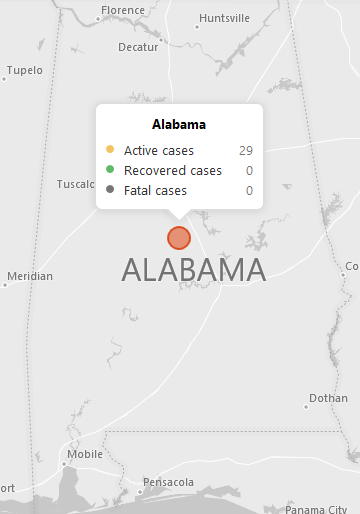
Image taken from Bing’s COVID Tracker, 3/17/2020

On Friday afternoon, just before lunch, the State of Alabama confirmed the first case of COVID-19 in the state, from a civilian working on behalf of the military who had recently returned.    The entire atmosphere changed within an hour, as organizations began implementing pandemic response plans:  schools  and churches suspended activity for the next three weeks, the Selma Pilgrimage (a tour of historic homes that takes place in the spring) was rescheduled for late April, etc.   Pandemonium erupted at the local Wal-Mart,  which is the main source for most consumer goods within Selma, as people went after the toilet paper (??) and the medicinal alcohol.    The library remained open throughout the day, as well as Saturday.    Following Governor Kay Ivey’s declaration of a State of Emergency,   however, the Library put its own plan into effect. Until April 6th, the library building would be closed to the public; staff would remain inside to serve the public as much as possible under the circumstances. 

What that’s to look like is still being determined. Yesterday,  we devoted ourselves to a deep cleaning of the library.  Not a light switch, not a pencil,  not  an elevator button went un-cloroxed. We also answered phones and tried to keep the public informed. As I’ve recently taken over the responsibilities of a colleague who had to abruptly retire following some medical issues, I have an entire office of books and documents to examine, sort, etc.     Today, however,  I’ve mostly been kept running – literally – through our attempt at offering curbside service.   As we’re the main source of scanning, copying, and faxing in our community,   we’ve been directing people to come to one of our exits, meeting them down there,   accepting their paperwork, then running back inside to process it to meet their needs.  We’re following hygienic procedures, of course:  putting on latex gloves prior to handling outside documents, and washing our hands on re-entry into the library.   Needless to say, we are all getting our exercise!

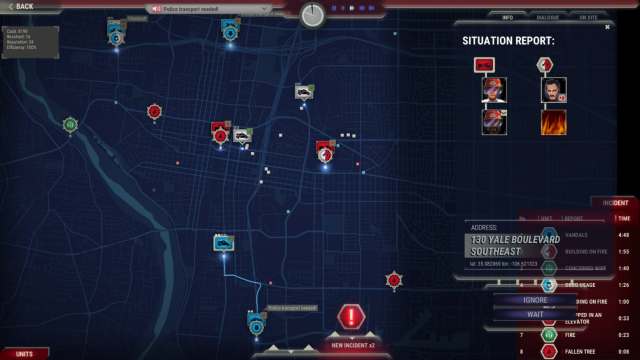
So far I haven’t heard of any serious problems as a result of the panic;  Winn-Dixie was perfectly normal on Friday night when I picked up some drinks and chips for a games night party, and on Sunday when  I visited Wal-Mart I noticed lean-looking shelves but no destitution.   Lean-looking shelves aren’t that uncommon at the local Walmart, so nothing out of the ordinary there.     Personal-wise,   I have plenty of books to occupy myself with, and have started playing a new-to-me game called 9-1-1 Operator.    The player takes phone calls and dispatches a limited number of police cars, fire engines, and ambulances to deal with a much larger number of incidents and emergencies.    Some incidents merely appear on the map, but others are actual phone calls where information has to be interviewed-out of the caller, or picked up from background information.  One ‘prank call’ is actually someone calling the police while pretending to place a pizza delivery order, for instance.    There’s something therapeutic about responding to crises in the wake of one  — although, when I had five fires in Albuquerque and only two engines to address them, I didn’t feel very relaxed!  The Breaking Bad reference amused me to no end, though.
diosmio


Anyway! I hope everyone stays safe. I’m  still reading, so there will be reviews coming out soon.
Posted in General | Tagged | 12 Comments

Station Eleven

stjon
“I stood looking over my damaged home and tried to forget the sweetness of life on Earth.”

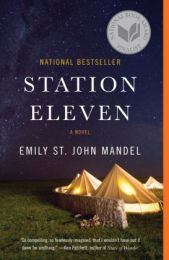
In New York City, an acclaimed actor collapses in the middle of his King Lear performance. Hours later, the world as we know it is over.    Station Eleven is easily one of the most fascinating books I’ve ever read, in part because of its structure.     Although it sounds like a science fiction novel,  Station Eleven is a complicated book to summarize or explain.  Given the current panic over Corvid-19, I thought it would be a timely read — but I suspect it would be just as absorbing during a less frantic time.

On the night the book opens, the Georgian Flu has arrived in North America: within two days, most of the population will be dead.  Some of the principal characters  are members of the Traveling Symphony, a caravan of musicians and actors who visit the towns in their circuit and bring back to life the beauty of the old world, if only for a night — allowing survivors to listen to Beethoven and Shakespeare.  Their motto comes from Star Trek Voyager:   SURVIVAL IS INSUFFICIENT.    After  a run-in with a strange figure known as the Prophet, several members of the company disappear,  and the survivors choose to regroup at an old airport known as the Museum of Civilization, where trinkets from the time before the end have been saved.  But these characters are only one of the layers  of the novel;  there are several planes of narrative that intersect in the lives of a few individuals who appear throughout the novel in different ages.  Structurally, I was reminded of Catch-22, because there’s a lot of jumping between times and characters here, but the connections between the different stories grow and grow as the novel progresses.  One of the narratives is a fictional story within the story, a SF graphic novel about humans on a space station (guess what it’s called)  who escaped from Earth’s takeover by aliens, only to find themselves pining for the light of the sun again.

I imagine this book will be very popular with English professors in a few years, because there’s a lot to unravel and talk about here.   One of the elements from the SF series,  for instance, involves people who live in a part of the station called the Undersea,  who can imagine no happiness or future for themselves until they somehow find a way back to Earth.  But this waiting-for-life attitude, this sleepwalking, is also commented on in the more conventional parts of the novel: people who have done what’s expected of them, but they’ve never found their passion in life, never truly awoken and lived. One of our characters, Jeevan, was like that — until that night a man collapsed on the stage, and he found his calling.

Station Eleven is an absolutely memorable novel, one I suspect I’ll read again — if only because its structure makes absorbing the whole story in one pass unlikely.  It’s unusual, but unexpectedly compelling.


Posted in Reviews, science fiction | Tagged , | 9 Comments

American Dirt

American Dirt
© 2020 Jeanine Cummins
387 pages
americandirty
It was the garden party from hell. One moment,  Lydia Pérez was enjoying her niece’s quinceañera; the next, she and her son Luca were huddling in the shower, listening as their family was butchered by drug traffickers out to make a point.  Unable to trust the police, hunted for by a powerful mobster, and afraid for their lives  Lydia has no choice but to flee,  joining thousands more on a northward journey in hopes of creating a better life el norte.   A harrowing but timely novel, American Dirt  puts human faces to issues many readers may only encounter in the news.

Lydia and her fellow migrants face not only the inherent dangers of their path —  the lethal  train jumps, the almost-certain threat of being manipulated and taken advantage of  —  but find that the violence they left behind continues to seek them. Lydia is an object of sick fixation to the kingpin in southern Mexico, La Lechuza, a man whom she befriended without knowing his true nature.  From Acapulco to southern Arizona,  he has eyes and willing agents who want nothing more than to capture her and claim the reward.  Lydia’s traveling companions also have their troubles, and some will fall along the way.  American Dirt excels as a suspense thriller,  as Lydia and her son are forced to move from train to train, making overland treks on foot, weighing every stranger – are they trustworthy or treacherous?   There are no authorities to whom one can turn;  every rank of law enforcement and the military are corrupted, if not by the gangs than by personal viciousness.   There are scenes of murder, dismemberment, and something approaching a rape scene – so reader be warned. But there is also grace —  from the clergy who feed and shelter migrants, to ordinary citizens who offer advice and resources to spare  the refugees as much abuse and danger as  they can.   But the light amid the darkness is most obvious in the relationships between Lydia, Luca, and several other travelers who they share so much of the journey with – supporting one another along the way through their respective problems.  

 After reading American Dirt I was surprised to find it’s at the center of a controversy; Latino authors decry it as not being authentic enough and taking attention away from voices closer to the ground.  I can’t speak to that, but what I know is that it’s an absolutely gripping story, one  that kept me invested throughout,  and has prompted me to learn more about why so many feel compelled to take on the miseries of the trek north, as well as wonder what those of us who live in the United States and Mexico can do to respond to the needs of migrants which respects both their dignity and the two nations’ sovereignty.   It’s definitely a story that will linger long in my mind,  much as The Kite Runner did.


Posted in Reviews | Tagged , | 5 Comments

Quotes from the Ground Beneath Us

“Quotations to follow tonight,” I said. I didn’t expect AT&T to have another network outage, though mercifully this one wasn’t as long as the twelve days (you better believe I counted) of February. But enough telecom griping! On to the quotes!
=========================================================

Intuitively, we might think, Yes, the environment matters, he explains, but the environment has become an abstraction; it’s hard to connect with because we’re not there anymore, and increasingly isolated from it. “The things that we should be concerned with are actually becoming more foreign and more unfamiliar to us,” he says. This, he tells me, is the worst consequence of all the concrete.

“Once, he tells me, a reporter asked him how many archeological sites there are in Mexico, thinking there could be more than a hundred thousand. And Matos told him, ‘Don’t worry, there’s only one, and it’s called Mexico.'”

That transformative power comes from the fact that when we slice and dice the ground with our roads, we weaken the ecological fabric on which life depends. Ecologists call this fragmentation, and its costs are enormous. A recent study led by Nick Haddad of North Carolina State University found that ‘fragmented habitats lose an average of half of their plant and animal species within twenty years, and that some continue to lose species for thirty years or more.‘”

“Diversity isn’t something that exists in the world; diversity makes the world. The things that regulate the populations, the things that keep the pests in check, the things that structure the amounts of the different kinds of fishes in the seas—they’re all based on biodiversity and the ecological interactions between the organisms. So if you lose it, you’re going to reshape the world.”

In fact, simply in terms of numbers, the wilderness below ground blows the world above away.

“But still there is a wildness in the ground that brings the prairie potholes alive each spring, for days or weeks or months at a time. Dry beds in the landscape, shapes to which most of us would be blind, are the shallow basins in which so many lives will form. The ducks that visit our city skies, that flash past in fast Vs over suburban lakes and ponds—those ducks are made of this ground. This is the fountain of energy that Leopold spoke of, rising from soil into sustenance into brown and gray-white bodies, cinnamon and emerald heads. This is that fountain rising into beaks and feet, eyes and wings. ‘What really drives the system is invisible,’ Ray says, turning the Chevy back toward the interstate.”

I stop in the road. To my left are the gathering flocks, to my right a field of wheat. It is like being up close to something back in time. Like a secret still going on. What are we if not a creation of days and experiences, of moments we have stopped to notice the world—the faces of family before us, the beauty of distant mountains, the ground at our feet. I am made from times like these, when I follow whatever voice I heard—who knows where it comes from?—and walk out alone along dirt roads to find a scene like this.

As red-winged blackbirds sing, setting sunlight shines on the cranes’ gray bellies, on the plains, as though the same golden energy that fills their wings fills the ground on which their feet will land. This ground feels akin to that of the West—the dry air, the cottonwoods, the big sky—even though it’s of the plains. What has passed beneath me? A thousand thousand years of animals moving, eating, mating, dying—the bones below us we never will know. This outermost surface of the earth all the while becoming the richest soil.

“There are no unsacred places,” writes Wendell Berry, “only sacred and desecrated places.”
Posted in quotations | Tagged , , | 1 Comment

Of murder and meaningful ground

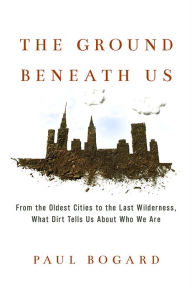
A friend recently introduced me to the terms lentic and lotic, referring to stagnant and fast-moving bodies of water, respectively.  My Lenten series has so far been very lentic,   as I’ve been distracted by life’s goings-on.    I have done a little reading, though: The Ground Beneath Us, followed by  Agatha Christie’s The Body in the Library.  I’m nearly done with my first Lenten read, on fasting.

moirder

“What I feel is that if one has got to have a murder actually happening in one’s house, one might as well enjoy it, if you know what I mean.”

I obviously had to try  Christie’s original after reading The Bodies in the Library,  which played with its premise as well as its title.    We open on a country estate, where the maid has just discovered a bottle-blonde in a cheap dress,  lying in repose in the library.  She’s unknown to everyone in the house, and some investigation by both Miss Marple (a friend of the family) and the county constable reveal that she’s a missing dancer from a hotel some thirty miles away.  Although there are a handful of suspects, none of them have opportunity or much motive, and the truth-seekers are flummoxed until a second body is discovered – this one a young girl,  left in a burning car.   Although there’s no direct evidence,  the investigators have a hunch that both of these senseless deaths are related, and from their reading of the facts and of human nature,  the truth comes out. I found The Bodies in the Library much more entertaining than say, Hallow’een Party,  with some choice quotations and a good curve at the end.

ground

Before that, I thoroughly enjoyed The Ground Beneath Us,  which proved far more varied than the expected book on the rich life of the soil.   The author, Paul Bogard,  has produced a fascinating piece of reflective journalism mixing history, science, nature writing, and culture together,  a work so varied it almost stymies an effort to offer a general summary.   As the reader would suspect, there’s plenty of material in here on the health — or rather, the dismal state of — our soil. The author offers the opinion that countries throughout the world have, on average, sixty harvests left before things are exhausted.  We visit several places in this theme, including the Alaskan frontier, where melting permafrost is allowing methane previously trapped in the soil to seep into the atmosphere and accelerate global warming.  But Bogard’s approach isn’t purely scientific; we spend considerable time in the Southwest, exploring Anansi religion,   ponder Civil War battlefields and the concept of hallowed ground, and even visit Treblinka,  a site made eerie both by the amount of death carried out there and the fact that the Nazis  almost got away with concealing its existence completely; as they retreated, they carefully disassembled everything and destroyed the evidence as best they could.   Such a measure is doubly disturbing, for it reveals the Nazis knew of the moral horror of their ‘work’, in the care they took to conceal it.     Although Ground Beneath Us doesn’t pack as much scientific weight as I would have liked,   its writing and variety of content carry their own enormous attraction.   Quotations to follow tonight!


Posted in Reviews, science | Tagged , , , , , | 6 Comments

Ash Wednesday


Today is Ash Wednesday,  called for the service in which western, liturgical Christians contemplate the inevitability of death, and the need to focus on that which matters.  The forty days of Lent will  follow, and that season of preparation is typically used by Christians to adopt a discipline, or abandon something which tends to lead them away from the religious life.  To mark the occasion here, I’m going to be reading a few books of Christian literature, aiming for one a week, on various subjects — history, doctrine, practice, and culture.    I haven’t selected all of my reads just yet,  but I’ll kick off the series with my delayed review for The Four Loves, and have three books all set up to establish momentum.

This is not remotely an appropriate hymn — it’s more of a folk-punk piece from a band who always remind me of my college days — but it always reminds me of Ash Wednesday.

Don’t fear death or your mortality
Just let it be the motivation that you need
To live the life that you want to lead
And sing!
We are nothing more than setting suns
So let’s glow glorious until the day is done
And we’ll all fall back down below the land
Together underground is where we stand

Posted in General | 4 Comments

Second Sleep

Second Sleep
© 2019 Robert Harris
302 pages

41YsDF5XiRL._SX334_BO1,204,203,200_

Sometimes, readers, it pays not to read anything about a book before you start it. Take Second Sleep, for instance, which I picked up purely on the strength of its author (Robert Harris,  creator of various and sundry historical thrillers).  From the publisher blurb, and from the opening scene  — an instant hook  — I assumed I was reading historical fiction set in medieval England, in the year 1481.    But there were little notes of dissonance, things outside the corner of my reading eye that didn’t sit quite right. I ignored them, absorbed in a young priest’s desperate attempt to get to  safety, and then to make sense of his brother-cleric’s demise. But then came…The Paragraph, the one that stopped me in my tracks, the one that made me read it over and over again until something clicked, and I realized I wasn’t reading historical fiction at all, but something even more interesting.  Without spoiling anything,  let’s just call Second Sleep a thriller about secret knowledge set in a world whose future is very much like our medieval past.

I already knew Robert Harris as an excellent author of historical fiction from his Cicero trilogy, and his diverse thrillers which followed — everything from a mystery centered around the Dreyfuss affair, to a political story about an obvious Tony Blair stand-in.  His writing is at its usual strength here; I was attached to young Christopher Fairfax immediately, as a young priest anxious to prove himself,    but one whose desire to be a faithful son of the Church  is challenged by what he finds in a dead priest’s library — and his investigation of the priest’s death, near a site called the Devil’s Tower that the locals treat with fear.    Infected with curiosity, Fairfax lingers in the village long after he was meant to return to the Cathedral,   and is absorbed into a story a thousand years in the making.  I was spellbound until the end, though my anticipation had been so heightened that the end was…underwhelming.

And now,  reader,  I have to venture to into spoiling the premise, though not the story.   If you want to encounter the curveball in the early chapters for yourself, don’t read on.  What makes Second Sleep so fascinating is that it presents our future, one in which a neo-medieval society has recreated itself from the ashes of a great apocalypse that saw massive starvation and the complete collapse of global civilization.  Those who pry into the past, especially those who wish to restore its scientific accomplishments, are persecuted  by the authorities, for fear of inviting God’s wrath again.  And yet Fairfax, once he’s read a letter in the priest’s study, can’t unread it, and so the thriller develops– can he and a couple of sympathetic compatriots uncover what a thousand years of history, and a powerful social order, wish to bury?   As Fairfax delves into the past,  Harris gives himself the opportunity to offer some biting commentary on the  unbelievable fragility of our present order,  and the uncaring way we drift into ever-more ethereal lives.

Although Second Sleep won’t challenge the Cicero trilogy for my favorite Harris work, it  easily surpasses the likes of Conclave and Munich, and I suspect I’ll be thinking about it in December!

Related:
A World Made by Hand, Jim Kunstler.  Very similar in presenting a future that’s reminiscent of our past, though Kunstler’s story is set much closer to the aftermath of the disaster.
A Canticle for Leibowitz, Walter M. Miller Jr
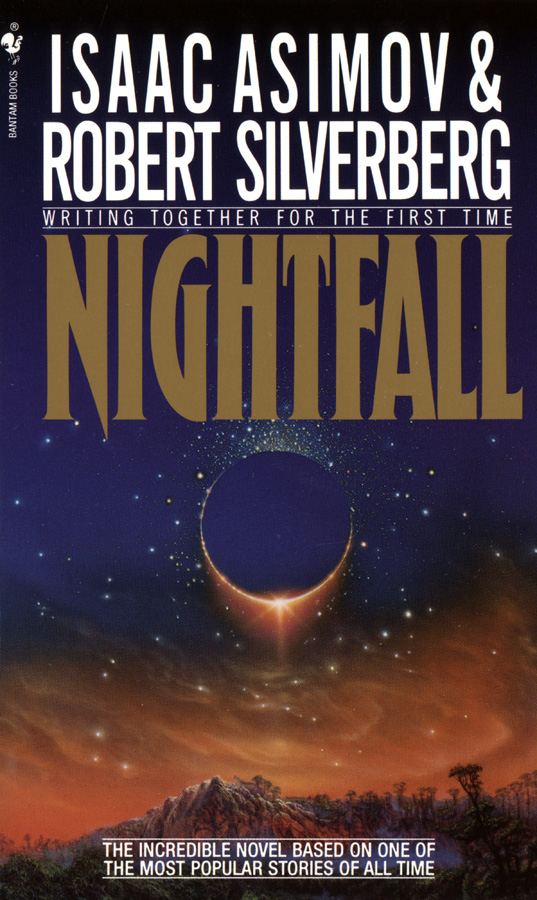
Nightfall, Isaac Asimov

Posted in Reviews | Tagged , , | 5 Comments

The Bodies in the Library

The Bodies in the Library
© 2019 Marty Wingate
336 pages

bodies

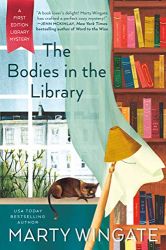
Hayley has a secret: she doesn’t know a blessed thing about Agatha Christie’s fiction. Or Dorothy Sayer’s.   Her literary expertise is all things Austen, but thanks to a friend on the board, she’s just landed a cozy position as curator at a private home turned library, the First Edition Society. She’s filled with ideas for how to help the Society fulfill its founder’s dream, to share the glories of Golden Age Mystery literature with the public,    but first there’s a slight…problem.  The dead guy, that is.   A member of an Agatha Christie fanfiction club is dead,  lying in repose in the library, and with  her job on the line, Hayley turns to reading Agatha Christie to inspire her in her quest to find out whodunit and save the library .

So…that’s a fun premise,  especially if you like Agatha Christie novels. The title of this is an obvious play at Christie’s own The Body in the Library,  and there are other references to Christie novels throughout.  Ordinarily this isn’t the sort of thing would appeal to me, aside from the books-about-books idea (always fun!),  but it’s been making the rounds at Book Bunch*,  and I thought it would be fun to try.  Ultimately that’s where The Bodies in the Library‘s virtue lies, fun; it’s an entertaining book, but not one I ever took too seriously.   Everything was a little too convenient for me – -the ease with which cops gave up information to Hayley so she could solve the mystery,  the fact that everyone seems to know each other, the speech the villain gives at the end  to revel in how they’d done it – -but those may be part of the ‘cozy mystery’ subgenre itself, I’m not sure.   I was especially underwhelmed by the murder itself and its motivations.  The premise goes a long way, though, as it did with Camino Island — another mystery filled to the brim with chat about authors and boosk.


*A group of people at my local library who meet on a weekly basis to talk about the books we’ve read in the last week, over  hot tea and baked goods.   My contribution? Science and rasberry-drizzled lemon squares.

Posted in Reviews | Tagged , , , , | 7 Comments

Prague Fatale

Prague Fatale
© 2011 Phillip Kerr
432 pages

kerr

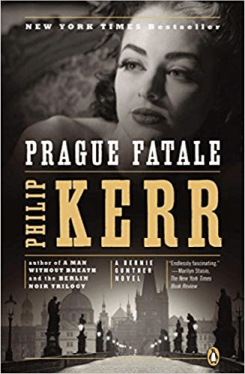
Bernie Gunther is a man contemplating suicide.  Once, in the Weimar years, he was a happily married policeman. But his wife died,  he fell into the bottle, and not long after that Germany itself became intoxicated with a dream that would prove a nightmare – one that Gunther has seen far too much of. Following Hitler’s rise to power,  Berlin’s detective corps —  Gunther included – were absorbed into S.S..  Haunted by scenes of industrial murder, Gunther doesn’t care enough about his life to even pretend to like the Nazis, and his brazen honesty,  coupled with dogged detective skills, makes him a valuable  if unwilling asset to Nazi officials whose pragmatism overpowers their ideology.    In Prague Fatale, Gunther is pulled away from a strange murder in Berlin, ‘invited’ to join General Reinnard Heydrich at his new estate outside of Prague. Someone is after Heydrich’s life, and the Man with the Iron Heart wants to know who.  When Gunther arrives, he finds himself surrounded by contemptible men, all of whom loathe one another – and when the one man he likes is murdered,  Gunther’s guard detail turns into an investigation with tragic results. 

I never fail to enjoy a Kerr/Gunther novel,  but I’ve learned over the years to take them sparingly.  Full of dark humor, historical details (including slang), and Raymond Chandler-like narration,  they would be an absolute joy to read were it not for the often-dark subject materials:  Prague Fatale introduces an extended torture scene late in the novel, and while it’s far from being as harrowing as The Lady from Zagreb,  it still requires a sunshine-and-kittens palate cleanser.  Heydrich and Gunther have fascinating exchanges, as the cynical Berliner hates the general, and the general knows it.   Although Gunther hardly cares if Heydrich dies,   Kerr gives him reasons to be personally involved in the resolution of the murder, and later Heydrich’s on-going attempts to expose a Czech spy. It’s that personal investment that makes the novel’s final act fairly harrowing.  I knew things wouldn’t end well – I’ve read too many  in this series to expect anything but a Pyrrhic victory —      but even so, I close this thoroughly entertained, but again determined to wait a few months before I read Kerr again. 


Posted in historical fiction, Reviews | Tagged , , , | 6 Comments

The Planets

The Planets: The Definitive Visual Guide to Our Solar System
© 2014 various authors (Smithsonian Institute)
256 pages

planet
I knew the moment I laid eyes on this book that we had to have it in the library.  I was given the happy task of acquiring some science books for both our circulation and reference collections, and this one proved an instant winner.   Its premise is straightforward: it’s a visually-laden guide to our solar system, with chapters devoted to each major body, or systems of bodies (in the case of the asteroid belt, the Kuiper belt, and comets).   But “visual guide” doesn’t just mean pretty pictures. It means a jaw-dropping collection of photographs and computer generated images that deliver information while simultaneously pleasing the eye.  Each planet and several moons, for instance, are given a two-page cross section that demonstrates the varying layers of the body and its atmosphere – showing Mercury’s strangely small core, for instance, and Mar’s wispy atmosphere.  Information that could be a little dry if delivered in a narrative, like a chronicle of the various satellite flybys of a given planet or moon, is given a graphical twist. Images from various satellites and landers provide an all-around treat, but this isn’t just a picture book.  Textual information is generous, and made for some fun reading.    The Smithsonian has produced another volume like this  but focused on the Universe as a whole, and I look forward to encountering it. Absolutely recommended  for reading pleasure or reference use.  


Posted in Reviews, science | Tagged , | 6 Comments