
Last night, shortly before going to bed, I saw the sad news that Wendell Berry had died. Brother Berry means a great deal to me, and has for the last fifteen years. I considered him our greatest living American, closely followed by Ron Paul. Below are ten quotes that came to mind as I considered dear Mr. Berry.
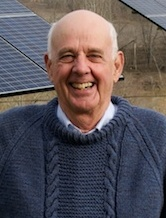
The best American is gone. May his spirit live on. May each of us strive to embody it.
Some of my quotes from Brother Wendell:
“Telling a story is like reaching into a granary full of wheat and drawing out a handful. There is always more to tell than can be told.” – JAYBER CROW
“One Saturday evening, while Troy was waiting his turn in the chair, [he said] “They ought to round up every one of them [war protesters] and put them right in front of the communists, and then whoever killed who, it would all be to the good.”
There was a little pause after that. Nobody wanted to try and top it. I thought of Athey’s reply to Hiram Hench.
It was hard to do, but I quit cutting hair and looked at Troy. I said “‘Love your enemies, bless them that curse you, do good to them that hate you.’”
Troy jerked his head up and widened his eyes at me. “Where did you get that crap?”
I said, “Jesus Christ.”
And Troy said, “Oh”.
It would have been a great moment in the history of Christianity, except that I did not love Troy.” – JAYBER CROW“We sat there, thus apart and together, for a long time.
After a while she stood up, brushed the leaf chaff from her clothes, and said, “Well, I guess we ought to be going.”“She said “we”. What did she know? We never spoke of such things. This was in 1970, the year after I moved to the river. She was forty-six years old that year. I had loved her, had belonged to her, then, for a long time. When I think of her now, I am sometimes persuaded that she already knew that. Is this because any man believes, or fears, that a beloved woman not only knows more about him than he knows himself but also knows it sooner than he can hope to know it? Or did she really know?
“She said ‘we’, and I stood and followed her by another way back to the path through the cane and on to the road, where she went her way and I mine.” – JAYBER CROW
“You have been given questions to which you cannot be given answers. You will have to live them out – perhaps a little at a time.’
And how long is that going to take?’
I don’t know. As long as you live, perhaps.’
That could be a long time.’
I will tell you a further mystery,’ he said. ‘It may take longer.” – JAYBER CROW“It is not a terrible thing to love the world, knowing that the world is always passing and irrecoverable, to be known only in loss. To love anything good, at any cost, is a bargain. – JAYBER CROW
(can you tell why JAYBER CROW is my favorite novel?)
“What can’t he helped must be endured,” said Mat Feltner, and he was a man who knew.”
“Like industrial sex, industrial eating has become a degraded, poor, and paltry thing. Our kitchens and other eating places more and more resemble filling stations, as our homes more and more resemble motels. ‘Life is not very interesting,’ we seem to have decided. ‘Let its satisfactions be minimal, perfunctory, and fast’. We hurry through our meals to go to work and hurry through our work to ‘recreate’ ourselves in the evenings and on weekends and vacations. And then we hurry, with the greatest possible speed and noise and violence, through our recreation — for what? To eat the billionth hamburger at some fast-food joint hellbent on increasing the ‘quality’ of our life? And all this is carried out in a remarkable obliviousness to the causes and effects, the possibilities and the purposes, of the life of the body in this world.” – WHAT ARE PEOPLE FOR?
“When despair for the world grows in me
and I wake in the night at the least sound
in fear of what my life and my children’s lives may be,
I go and lie down where the wood drake
rests in his beauty on the water, and the great heron feeds.
I come into the peace of wild things
who do not tax their lives with forethought
of grief. I come into the presence of still water.
And I feel above me the day-blind stars
waiting with their light. For a time
I rest in the grace of the world, and am free.” – THE SELECTED POEMS OF WENDELL BERRYIn those days nobody knew he was a boy who belonged to a story. In those days he did not know it himself. – THE FORCE OF A STORY
“The living can’t quit living because the world has turned terrible and people they love and need are killed. They can’t because they don’t. The light that shines into darkness and never goes out calls them on into life. It calls them back again into the great room. It calls them into their bodies and into the world, into whatever the world will require. It calls them into work and pleasure, goodness and beauty, and the company of other loved ones.” – HANNAH COULTER
We can get rid of the television set. As soon as we see that the TV cord is a vacuum line, pumping life and meaning out of the household, we can unplug it. What a grand and neglected privilege it is to be shed of the glibness, the gleeful idiocy, the idiotic gravity, the unctuous or lubricious greed of those public faces and voices! And we can try to make our homes centers of attention and interest. Getting rid of the TV, we understand, is not just a practical act, but also a symbolical one: we thus turn our backs on the invitation to consume; we shut out the racket of consumption. The ensuing silence is an invitation to our homes, to our own places and lives, to come into being. And we begin to recognize a truth disguised or denied by TV and all that it speaks and stands for: no life and no place is destitute; all have possibilities of productivity and pleasure, rest and work, solitude and conviviality that belong particularly to themselves. These possibilities exist everywhere, in the country or in the city, it makes no difference. All that is necessary is the time and the inner quietness to look for them, the sense to recognize them, and the grace to welcome them. They are now most often lived out in home gardens and kitchens, libraries, and workrooms. But they are beginning to be worked out, too, in little parks, in vacant lots, in neighborhood streets. Where we live is also a place where our interest and our effort can be. But they can’t be there by the means and modes of consumption. If we consume nothing but what we buy, we are living in ‘the economy,’ in ‘television land,’ not at home. It is productivity that rights the balance, and brings us home. Any way at all of joining and using the air and light and weather of your own place – even if it is only a window box, even if it is only an opened window – is a making and a having that you cannot get from TV or government or school. – THE WORLD ENDING FIRE, the Best of Wendell Berry. Edited by Paul Kingsnorth.
“Rest in peace’. That’s not the way these accounts are kept. We don’t rest in peace. The life of a good man who has died belongs to the people who cared about him, and ought to, and maybe itself is as much comfort as ought to be asked or offered. And surely the talk of a reunion in Heaven is thin comfort to people who need each other here as much as we do. I ain’t saying I don’t believe there’s a Heaven. I surely hope there is. That surely would pay off a lot of mortgages. But I do say it ain’t easy to believe. And even while I hope for it, I’ve got to admit I’d rather go to Port William. ” – A PLACE ON EARTH


I just read of his passing on another blog. Thanks for sharing, thus inviting me to revisit his writing
My pleasure! Always happy to introduce him to people.
I read him years ago, and then stopped for whatever foolish reason. I’m almost done with my Mary Oliver poetry collections, so I may revisit his