Today’s TTT is books we’re anticipating being released this year, but I did that last Wednesday, so I’m going to offer a preview of what this year’s Science Survey might constitute. But first, a tease!
Hurrying means that you miss out on many things. Riding a train will take you far, but it’s a misconception to think that this will give you more insight. Flowers in the hedgerow and birds in the treetops are accessible only to the person who walks on their own two feet. – THE CAT WHO SAVED BOOKS
Cosmology and Astrophysics To Infinity and Beyond, Neil deGrasse Tyson
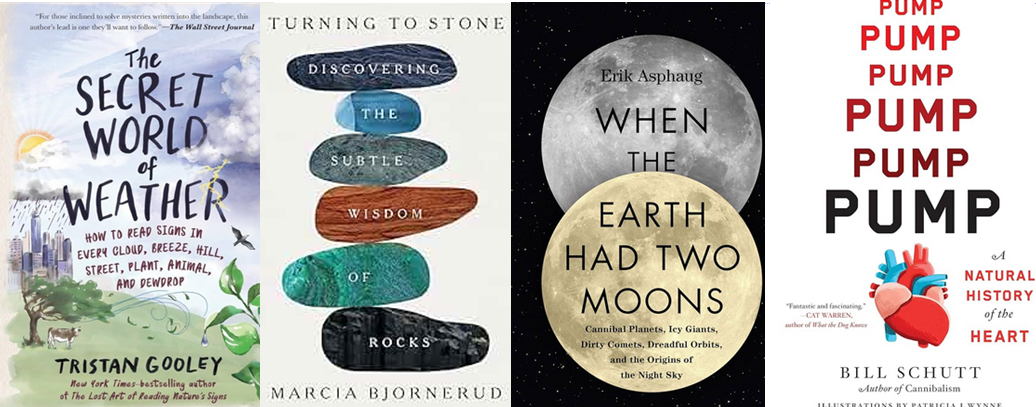
Local Astronomy When the Earth Had Two Moons
Geology, Oceanography, and Natural History Turning to Stone: Discovering the Subtle Wisdom of Rocks
Chemistry and Physics Ten Drugs: How Plants, Powders, and Pills Have Shaped the History of Medicine
Cognition, Neurology, and Psychology: Reader, Come Home: The Reading Brain in a Digital World – A Neuroscience and Education Exploration of Empathy, Attention, and Our Future
Biology Pump: A Natural History of the Heart
Flora and Fauna Weeds: In Defense of Nature’s Most Unloved Plants
Archaeology and Anthropology A Hunter-Gatherer’s Guide to the 21st Century: Evolution and the Challenges of Modern Life
Weather and Climate The Secret World of Weather: How to Read Signs in Every Cloud, Breeze, Hill, Street, Plant, Animal, and Dewdrop
Ecology Entangled Life: How Fungi Make Our Worlds, Change Our Minds & Shape Our Futures
Thinking Scientifically Books do Furnish a Life, Richard Dawkins
Wildcard: (Science Biography, History of Science, Science and Health, or Science and Society) Crossings: How Road Ecology Is Shaping the Future of Our Planet
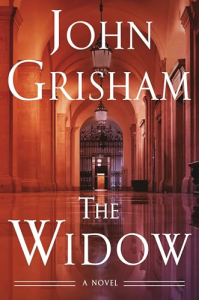
Simon Latch is a seasoned attorney in a dead marriage who struggles to make ends meet, even as he sleeps on a cot in his office. When an elderly woman approaches him for some estate work and mentions that she has $16 million in stocks between Wal-Mart and Coca-Cola, his heart can’t help but skip a beat. “Miss Netty” could keep him from complete insolvency. As Simon goes to work preparing a will that will keep her and her late husband’s money from being devoured by the locusts at the IRS, he also begins making himself into Miss Netty’s friend, treating her to dinners every week, and gently prodding her to take her end-of-life care more seriously. Then, she dies – and Simon finds himself being accused of murder. While I do have a large gripe with this novel, The Widow was largely better than most of the potboilers Grisham has churned out in the last twenty years – not a great challenge, to be sure. I enjoyed it until close to the end, when the supposed whodunit gets an ending from out of left field: it’s not a mystery that allows the reader to participate in the conclusion of, let’s say. I liked the relative intimacy of the novel, as we’re dealing with only a few characters, and Simon is a delicate mix of pathetic and morally…muddy. He’s not a bad guy by any means, and I’d argue that his client is taking as much advantage of him as he hopes to take of her – she’s milking him for food and all manner of services, legal and otherwise, while he waits for the penny-pinching woman to start paying him for his time. His being accused of murder and placed on the wrong side of the bar was a fun change, but I found the resolution rushed and unsatisfying. Still, it kept me safe from the blue glow of a computer screen for a few hours!
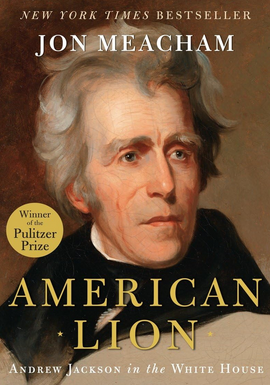
I thought it would be amusing to do a history short round after realizing I’d read two books in which Jon Meacham focuses on Kentucky-born presidents who became icons and who dealt with secession crises. First up, Andy Jackson!
Andrew Jackson is a singularly American figure; no other nation could have produced him. Just over two hundred and eleven years ago, he won a flabbergastingly improbable victory over the British at New Orleans, making a war that had already ended in a grudging truce into an roaring victory in American memory. Jackson – who had led men on his own through the wilds of the ‘old southwest’, bearing the pain of duels past as they trudged toward New Orleans – became a folk hero and went on to transform national politics and become the President. Although today he’s only associated with Indian removal, Meacham points out that his policies there were perfectly in line with other politicians of the period, like William Henry Harrison. Jackson is a tough old bird, resilient both physically and emotionally. Raised practically an orphan, he nevertheless forged a path for himself in the military and law. Raised in the southern honor culture, he had a tendency to get into duels and would carry the debris of several with him. He wasn’t just a violent hillbilly, though — he could conduct himself with grace that surprised his opponents in Washington. He had many, too, because he viewed the Washington elite as just that, an elite who were unresponsive to the needs of the people. In an age of increasing suffrage, the people had louder voices — and Jackson not only heard them, he marshalled their energy. Interestingly, although Jacksonianism was avowedly opposed to elitism and centralism in government — one of the reasons Jackson constantly attacked the National Bank, seeing it as a tool of eastern bankers to keep the country in hoc to them — Jackson in office was not a protolibertarian icon. He was heavy-handed, both with the bank and with South Carolina after the palmetto state threatened secession if the tariff of abominations — which sheltered northern industry at the expense of southern consumers — was not scotched. In this Jackson is not an exception: many who criticize the use of power find it strangely intoxicating when the One Ring is on their own finger. This was an engaging and fair take on one of early America’s more complex and fascinating figures.
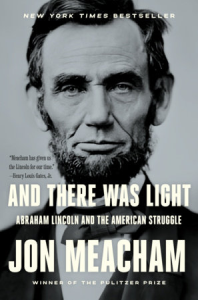
Next up, Abraham Lincoln.
Lincoln is usually rated alongside George Washington in terms of ‘great American presidents’; and perhaps that’s fitting in one way. Just as Washington was first to preside over the Union created by the Constitution – a new approach to Republic from the previous Articles of Confederation Republic — so did Lincoln effectively create a new Union in his attempt to save Washington’s from sectionalism and dismemberment. And Then There Was Light takes a fairly obvious tack towards Lincoln, hailing him not only as the man who kept the Union together, but in the process recognized that this was the moment to finally destroy the noxious institution of slavery, and labored to do so. It’s fairly hagiographic, at least as much as a modern writer can admit that anyone who died before us can have a shred of virtue. Meacham’s attitude is that while Lincoln was not the saint moderns might wish him to have been, he was all the saint it was possible to be in his time and circumstances. As such, the even-handedness from the Jackson biography is absent here: any opponent of Lincoln’s is a nogoodnik. Even the anti-war northern democrats, who protested the war in general and especially war measures like conscription and the like, are simply dismissed as allied with his enemies, and when listing the states that seceded Meacham does not bother to point out that the second wave, which would include many of the men who would frustrate the Union for years, did not happen until Lincoln called for troops to suppress the rebellion. (In the text they come off as being summoned to defend the Capital, surrounded as it was by hostile Maryland and Virginia.)
Fortunately for Meacham, his subject is inherently interesting: a poor Kentuckian turned Illinois rail-splitter was struck by ambition to be not only known, but unforgettable. Lincoln had a gift of gab — a quick wit and a sense of humor that made him both a good lawyer and an excellent political booster. According to Meacham, it was Stephen Douglas’ Kansas-Nebraska act that lured Lincoln fully into politics: he was so opposed to the potential for slavery’s expansion that he felt compelled to enter the arena. Although my libertarian politics do not allow me to give many laurels to Lincoln — he is one of the principle figures of the the Republic’s transition into the Dominion of DC — I cannot help but sympathize with him. I admire any man who shoots up from nothingness into national prominence through dogged hard work and ambition, and Lincoln served under the most dismal of circumstances. Not only did he inherit a country at war, but he was struggling with his own inner demons and would lose children in the process — and, when he’d finally neared the dawn of potential peace, a bitter actor shot him. Lincoln is a marvelously complex fellow, and I will not settle for just one book on him.
Do not be surprised to see Mr. Meacham again; I fully expect to read his biography of George H.W. Bush, which will be interesting since Bush Sr was my “childhood” president, and his face is the first that comes to mind when I think of The President — just as Queen II is always The Queen and John Paul II is always The Pope.
COMING UP: John Grisham’s The Widow and a radio adaptation of The Hobbit, if its obnoxious renderings of goblins and other monsters do not drive me to stop listening to it.
He looked at her the way all women want to be looked at by a man….
As ifThe Great Gatsby needed more drama! LA Theater Works’ The Great Gatsby is a condensed audio adaptation (2 hours) of Fitzgerald’s original that focuses primarily on the relationships between Nick Carraway, Jay Gatsby, Jordan Baker, Tom Buchanan, and — of course — Daisy Buchanan. It features an ensemble cast, with at least one recognizable name in Rufus Sewell. If you do not know his name, you probably know his face: he’s good at characters who stand partially in shadow and menace, like Alexander Hamilton in John Adams and John Smith in The Man in the High Castle. Here, he features as Jay Gatsby himself. My experience with this was conflicted: while it’s been nearly five years since I read the actual book, I did see the movie only a few months ago and retained a lot of familiarity with the characters and stories. I was thus mostly listening for the voice acting and sound design, both of which were quite good. I especially liked the atmospheric sound effects, like jazz music playing in the background of party scenes, highball glasses clinking when one character is prepping drinks, and phone conversations sounding like phone conversations. The Great Gatsby, for those unfamiliar, is the story of a young man named Nick who moves in next door to an eccentric and fabulously wealthy chap named Jay Gatsby; Gatsby has a little advanced knowledge of Nick in that he knows Nick has a cousin named Daisy. Gatsby, as it turns out, is madly in love with Daisy and dated her some years ago, only to lose her between war and his own poverty. Now he’s loaded, and he wants a second chance. Only problem? Daisy’s married. Drama ensues! I enjoyed this audio production, though I cannot say why the story haunts me so: most of the characters are horrid, but that’s the charm of art. Sometimes it resonates in ways and layers we can’t readily identify.
“So we beat on, boats against the current, borne back ceaselessly into the past.”
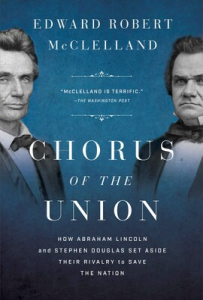
Before the last month or so, my awareness of Stephen Douglas was that he had sparred against Abraham Lincoln in the Lincoln-Douglas debates. I did not realize until reading 1858 that these debates were not part of the 1860 presidential election, but were instead part of a Senate race. Douglas would win, but their very public debates gave Lincoln a larger stage — and they would be part of the wind that bore him towards Washington, along with Douglas’ inability to keep his increasingly polarized party on the same track. When Douglas learned that Lincoln had beaten him in the presidential race, he said — “I must go South.” Not because he wished to join the southern democrats in seceding, but to try to argue them out of it. In retrospect, that seems like a doomed mission: the South arrived at its Democratic convention spoiling for a split with their northern brothers — first in the party, and then in the union. “Three cheers for the Independent Southern Republic!”, they cried as they walked out of the convention hall and paraded down the street into another hotel. Chorus of the Union is a deep dive into Lincoln and Douglas’ history, and how (two-thirds of the way in) Douglas put his own politics aside in a last-ditch effort to prevent the breakup of the union and the possibility of civil war.
Stephen Douglas and Abraham Lincoln both made their political fortunes in Illinois, but were not native sons of the west; Douglas came west from Vermont, and Lincoln’s family from Kentucky — but they were part of a third generation in American politicians, and followed closely on the heels of prominent westerners like Henry Clay and Daniel Webster. The two knew each other from their young adult days, debating politics in the back rooms of stores — but Douglas sought political office and won great acclaim, while Lincoln served for a brief time to return to working as a lawyer. Interestingly, it was the one who made the other’s career. Lawyer Lincoln, raised by anti-slavery Baptists and deeply bothered by his few encounters with slave parties being transported along the river, was resolutely against the institution, and when Douglas championed an act — the Kansas-Nebraska act — that would effectively allow for its continued expansion, Lincoln rejoined politics as an active campaigner. The two would run against one another in 1860, but Douglas would be running against the disintegrating factions of his own party to boot. “The Democracy” had split first into northern and southern parties, and then into still other groups, to the effect that Lincoln would ultimately win despite only claiming 39% of the popular vote. After Douglas realized his candidacy was lost, he journeyed into the South hoping to argue against secession — and, McClelland marks, he took that danger far more seriously than the Republicans themselves. Lincoln and Douglas had made their careers in Illinois, a place that was divided itself between commercial and agricultural interests: Illinois’s southern third was commonly called Egypt for its rich river deltas that had attracted plantation culture early in its history. Both men were used to having to balance competing interests — but Douglas, unlike Lincoln, knew how ornery southerners could be.
The resulting third goes a long way to redeeming Douglas, I think. For most of the book, it is extremely easy to sort the two men into two very different buckets. Lincoln is the pragmatic idealist who hates slavery on moral grounds, is determinedly hopeful that it will die, but acknowledges that it cannot be done within the grounds of political reality. Douglas, however, is politics first: he may dislike slavery in an abstract way, but didn’t truly care about it one way or another. His focus was on maintaining the Democratic party — or The Democracy, as it was often known at this time — despite the fire and fury of abolitionists and secessionists alike. After the election, that shifted naturally to a fervent desire to maintain the Union. Douglas in this moment is not playing politics; he is traveling, arguing, and contending for his country, in a way that pushes him nearer to self-sacrifice than readers have yet seen. In his visits South, he denounced Lincoln and all the Republican party stood for, but maintained that the election of any one man could not justify the destruction of the Union. The Constitution itself, the powers of the States, would diminish Lincoln’s ability to act even if he entered office with a mission against the South. The South’s chances of preserving its interests are greater inside the Union than out, he said — and this proved to be true, since Northern states passed a great many laws (from intense protective tariffs and infrastructure bills to playing around with fiat currency) that would have never passed a Congress in which Southern states had a voice. Amusingly, while in Nashville Douglas crossed paths with the arch-fire eater Yancey, who had just been visiting the North to dissuade them from voting Lincoln! Douglas ventured even into Montgomery, Alabama, Yancey’s stomping grounds and the first home of the southern Confederacy: there, his carriage was pelted with eggs, though he did give a speech before departing downriver to Selma. He returned to Washington to help argue for legislation that might pacify the fears of the South, though nothing was able to be passed before Congress’s session ended. After the war began in earnest, Douglas traveled through the north, admonishing his fellow citizens to rally around the president — and in the summer of 1861, his health spent in his impassioned pleas to Americans north and south, he died in his hotel room while still on the mission.
This was quite the book. I’d gotten into it because I was intrigued by the notion of Douglas standing by his former opponent. This is not that unusual in politics — John Quincy Adams and Henry Clay both backed Jackson against the French when they were being obnoxious deadbeats, and those dons hated Old Hickory — but given the stakes involved I wanted to read more about it. Having read a few other books in this subject in the last few months made the revisit somewhat laborious at first — especially the level of detail that McClelland gets into with the Debates — but seeing Douglas really come into his own in the last third made the march worth it. This is also as close as I’ve gotten (so far) to a proper biography of Lincoln, though one will follow this, and it made me more appreciative of Lincoln’s gift for humor — though his constant jokes about Douglas’ height make him seem a little mean-spirited at times. What I liked most about it beyond Douglas rising to the occasion beyond the pettiness of party politics was getting a rare look into political goings-on during the “secession winter” in which the US government as it stood, and Lincoln’s slowly-forming team, pondered what course to take following South Carolina & company’s decision to start singing a new descant. This is slightly wonkish at times, but serious students of the period will delight in the detail, and more casual ones can still endure given McClelland’s accessible writing style.
Quotations
“You can’t overturn a pyramid, but you can undermine it,” Lincoln told Locke, “that’s what I have been trying to do.”
Lincoln was not yet Douglas’s equal as a political operator, but the debates had proven he was Douglas’s intellectual superior. Lincoln was better read, for one thing. Not only had he read more widely than Douglas, he knew how to read. When Douglas studied history—as he had done for the first time while researching the Harper’s essay—he sought only to validate his own beliefs.
“The gentleman forgets to tell the ladies that he is a bachelor,” Thomas Craig of Missouri ribbed Cochrane. The proceedings broke up for several minutes, as the entire hall burst into laughter. “I was about to inform the ladies,” Cochrane said, attempting to defend himself. Craig had another riposte ready. “Oh, no matter! There is no need to volunteer the announcement, for the looks of the gentleman are a sufficient guarantee that he has not been, and never can become a married man.”
“Mr. Lincoln is the next president,” Douglas told his secretary, James B. Sheridan. “We must try to save the Union. I will go south.”
“I reply that if they elect Mr. Lincoln, on their heads rests the responsibility,” Douglas blustered. “No man on Earth has exerted his energies so much to defeat Lincoln’s election as I have. No man on Earth would regret his election more than I would. I regard him as the head of a party, the whole principles of which are subversive of the Constitution and the Union. I would regard his election as a great public calamity, but not as a cause of breaking up this government. e election of no man on Earth by the people, according to the Constitution, is a cause of breaking up this government.”
As Lincoln held court, in an armchair too commodious for even his gangly frame, a visitor from New York asked whether the South would secede if he were elected. “They might make a little stir about it before,” Lincoln said, still uncomprehending of the passion his candidacy had aroused in the South, “but if they wait until after the inauguration and for some overt act, they will wait all their lives.”
While Douglas’s support was broader than any candidate’s, nowhere was it as deep. In 1860, the electorate was polarized between Northerners who wanted to stop the spread of slavery and Southerners who demanded its expansion. Douglas, who based his campaign on the principle that the federal government should not take either side, was rejected by majorities in both sections.
“It is not of your professions we complain,” James Seddon told Lincoln. “It is of your sins of omission—of your failure to enforce the laws—to suppress your John Browns and your Garrisons, who preach insurrection and make war upon our property!” “I believe John Brown was hung and Mr. Garrison imprisoned,” Lincoln retorted.
“Civil war must now come,” the Richmond Enquirer editorialized the morning after. “Sectional war, declared by Mr. Lincoln, waits only the signal gun from the insulted Southern Confederacy, to light its horrid fires along the borders of Virginia.”
Hermione: Look, Hagrid’s our friend, why don’t we just go and ask him about it? Ron: That would be a cheerful visit. “Hello Hagrid! Tell us, have you been setting anything mad and hairy loose in the castle lately?”
Make way for the Heir of Slytherin, seriously evil wizard coming through!
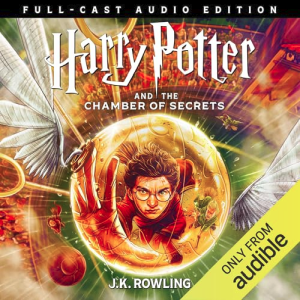
First up, Harry Potter and the Chamber of Secrets, full cast audio edition. I loved the full-cast audio edition of Harry Potter and the Philosopher’s Stone, and while I’d intended to spread out my credits in this series, I couldn’t. I love the early books so much and this performance of the stories was so wonderful I felt compelled to continue. Harry Potter and the Chamber of Secrets was the first audiobook I ever listened to in the tenure of this blog, but this full cast audio edition is a much richer animal than even Jim Dale’s charming performance. The same strengths from the first audio drama apply: a full cast, of course, with almost no weak points save for a Snape who just sounds like a bored and bitter bureaucrat. The sound design is atmospheric, so we hear footsteps and characters reacting in the background, that sort of thing. Chamber of Secrets adds the wonderful talent of Kit Harington to voice Gilderoy Lockhart. He’s perfect for it, though I’ll confess my mental image is still Kenneth Branagh. Aragon, the giant spider, is appropriately disturbing.
“Books have souls,” repeated the cat softly. “A cherished book will always have a soul. It will come to its reader’s aid in times of crisis.”
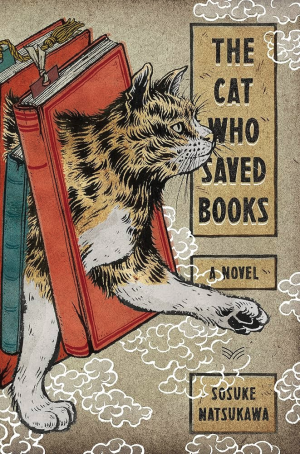
And next, a little Japanese magical realism: The Cat Who Rescues Books. We open on Rintaro, young man who practically grew up in his grandfather’s bookshop and who has inherited it in the wake of his death, but since the funeral has reduced himself to a ‘hikikomori’, a recluse. One of his his classmates keeps coming by to check on him, but it’s not until a talking cat appears and orders him to help rescue some books that he is forced to start dealing with his grief. The cat and Rintaro go on a series of missions that are effectively criticisms of some aspects of book culture and book publishing. Two of the missions chide readers whose entire approach to reading books is maximizing book counts: one man reads books but locks them away afterwards and doesn’t revisit or reflect on them, and another is obsessed with reducing books to a paragraph or so so that readers can ‘read’ more books. It’s like blinkist for novels, I suppose. As Rintaro struggles to argue with these people and how them how they’re missing the point of literature, he not only begins to rediscover purpose, but to rethink his decision to sell his grandfather’s unique bookstore. This is a strange novel at times – the dialogue in the ‘missions’ is stilted, set as they are in quasi-magical realism scenarios – but sweet all the same.
WHAT have you finished reading recently? American Lion, Jon Meacham. A biography of Andrew Jackson; The Cat Who Saved Books, Sosuke Natsukawa.
WHAT are you reading now? To Infinity and Beyond, Neil deGrasse Tyson; Chorus of the Union, Edward McClelland; and Heirs of the Founders, H.W. Brands. Clearly I’m in a casual-dating phase at the moment, though things are getting a little more serious with Chorus of the Union. It helps that a lot of the content is basically just a reminder of the men and scenarios I’ve been reading about the last month and a half.
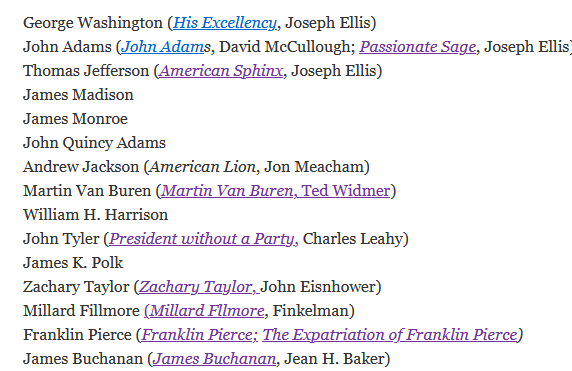
WHAT are you reading next? One of those above, or And There Was Light, a Jon Meacham biography of Abraham Lincoln. I think once I take a shot at Lincoln I need to backtrack and finish off the Founding generation presidents, as well as Polk.
Today’s prompt from Long and Short Reviews is, “Books We Are Looking Forward to Being Released in 2026”. This is also the TT prompt for next week, and I’m terrible at the question ever year because I simply do not track upcoming releases. So, I’m mostly going to be trawling amazon’s upcoming releases entries and hoping I see some prospects.
(1) The Crossroads, CJ Box. A new Pickett novel, coming out in February.
(2) Harry Potter and the Prisoner of Azkaban, full cast audio edition. Coming out in late January. I’m currently 2/3rds through Chamber of Secrets and am enjoying it enormously, though it’s weird that Hugh Laurie voices Dumbledore. “I say, Peeves, seems we’re in the soup again. Better leg down into the dungeons and see what’s causing all the rumpus, eh?”
(3) Liturgies of the Wild: Myths that Make Us, Martin Shaw. From this book’s blurb, I think it’s an expansion of Chesterton, Tolkien, and Lewis’ conviction that myth is important for grappling with reality.
(4) Black Baseball in Alabama: Rough Diamonds of Dixie, Shane Earnest. Releasing late January. I’m looking forward to this one because a local player played for Harvard and very nearly got picked up by a professional Boston team decades before Jackie Robinson.
(5) End of the Road: Inside the War on Truckers, Gord McGill. McGill is the author of Autonomous Truckers, a trucking substack that I follow, and is preparing to release a book at the end of March.
(6) GIRLS: Generation Z and the Commodification of Everything, Freya India. India is one of my very favorite substackers. She doesn’t post very often, but when she does it’s dynamite. (Ditto Paul Kingsnorth, who I found through his Abbey of Misrule.)
And now, one book I’ve found solely by trawling:
(7) This Book Made Me Think of You, Libby Page. A widow starts receiving a book and letter a month from her late husband.
The first TTT for 2025 is our favorite reads of 2026. But first, a tease!
“That just tears it then,” Grainier said, quite agitated. “I’m pulling this team up, and you can walk from here, if you want to beat around and around the bush. I’m taking you to town with a hole in you, and I ask a simple question about how your dog shot you, and you have to play like a bunkhouse lout who don’t know the answer.” “All right!” Peterson laughed, then groaned with the pain it caused him. “My dog shot me in self-defense!” TRAIN DREAMS
(1) Open Season, CJ Box. I am permitting Mr. Box one, and exactly one, entry on this list. This was the start of the game warden mystery-thriller series featuring Joe Pickett that I was obsessed with for two and a half months.
(2) Ty Cobb: A Terrible Beauty, Charles Leehrsen. A comprehensive and readable biography that also rebuts the libel on Cobb’s memory by Al Schmuck.
(3) Provoked: How Washington Created the New Cold War, Scott Horton. A history of DC-Moscow relations since the dissolution of the Soviet Union. I have three different draft reviews of this and am hoping to either edit one of them into publishing shape or find a new angle of approach so I can post a review by Feb 24.
(4) Friends Divided, Gordon S. Wood. A history of the friendship between Adams & Jefferson.
….that was actually it for bolded, five-star entries. For #10, I should mention a book I enjoyed enormously that also guided my film-viewing for quite a bit.
HONORABLE MENTION: Harry Potter and the Philosopher’s Stone, full cast audio edition. SUPERB. I started listening to Chamber of Secrets and the sound design is similarly excellent.
“My wife and young children live on the main road to Boston, fewer than five miles from the full might of the British Empire. Should they sit and wait for Gage and his SAVAGES to rob them of their home, their possessions, their very lives?! No,sir! Powder and artillery are the surest and most infallible conciliatory measures we can adopt! – John Adams, “Independence”, HBO’s JOHN ADAMS
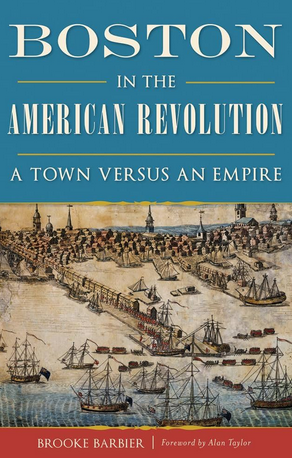
When people ask me, a son of the Deep South, why I root for the Red Sox, my usual answer is that I began wearing their hat decades ago because I liked the look of it, and then they went and won a world series for the first time in eighty years so I had to keep following them. That’s ..true, and part of the affection, but as a history-addled child I loved reading about the Revolution, and Boston has inarguable pride of place there. The revolution without Boston is France without Paris. It was there that Hancock, Dr. Warren, and the Adams cousins crafted resentment into rebellion and revolution — there that British soldiers first faced off against their American subjects, and not far from there that the first shots were fired at Lexington and Concord. Boston in the American Revolution is an informal history of the Hub City’s role in the Revolution, one that often addresses the reader directly and ends each chapter with almost a bit of tour-guide content. Photos of the prominent places mentioned are included, with instructions on how to find them and added information like “This isn’t actually where the Boston Massacre happened, but it’s close enough you won’t get run over here.” These highlighted sites are all part of “The Freedom Trail”.
The book is also an anti-mythic history, as it demonstrates that a lot of Boston patriots were…um, a bit unhinged. Not the aforementioned men, but Bostonians had a tendency of clustering into mobs, chasing men they did not like into their homes , throwing whatever they could find at the house and into the windows, and then retreating back into taverns after the object of their rage started shooting at them. We hear in popular stories of the Boston Massacre, but not of the Rope-Makers drama which is almost hysterical: a British soldier inquires at a rope-making place if they need any extra hands, because he’s paid practically nothing; he’s insulted and gets in a fist-fight in with the insulter and loses. He comes back with friends, a brawl ensues, the Brits lose. They come back with dozens of friends, they get in a brawl, they lose. Some of these same rope-makers would be in the Boston Massacre crowd squaring off against and antagonizing British soldiers! The amount of violence leading up to the Revolution — a decade before 1776 — was surprising to me, in part because histories of the Revolution tend to highlight a few key moments and then blur the years together, so that readers are left thinking this was a sudden eruption of conflict, and not a steadily-boiling pot of the same that finally began roiling in 1776. It reminds me a bit of the sectional crisis that came to a head nearly a century later, but which had slowly been percolating since the 1820s. I also found it interesting to learn that part of Britain’s slow resistance to armed rebellion was the fact that Thomas Gage had been under-reporting rebel sentiment for years to make it appear as though he was managing things better than he actually was.
Although the book was quite entertaining, I did raise my eyebrows a few times: the author describes Bunker Hill as the war’s bloodiest battle (…maybe by the rate of British casualties, 40%, but by no other metric), and is ocasionally much too informal, once adding a ‘Meow’ comment to a quotation in which General Washington dismisses the haggard-looking officers of the Continental Army. I could see this working very well for someone who is planning a visit to Bahston, and I enjoyed the close focus on the town itself, but I can reccommend it only with caution.
The Classics Club, now thirteen years strong, posted a fun-looking survey yesterday morning.
When did you join The Classics Club? How many titles have you read for the club so far? Share a link to your latest classics club list.
I joined the Classics Club for the first time in 2015, completed my first list in a timely manner, and then began anew in 2020. Last year I effectively “paused” my read and am counting 2026 as the “last” year for my current list,The Classics Club Strikes Back. I’ve read 84 titles to date, 50 from the original list and 34 from the current one.
What classic are you planning to read next? Why? Is there a book first published in 1926 that you plan to read this year?
I’m feeling most drawn to The Confessions by St. Augustine, which I’d planned to re-read during Advent.(I read it over a decade ago, but I suspect I would enjoy it far more now — and not only because it’s translated by my favorite Latinist, Anthony Esolen.)
Classic author who has the most works on your club list? Or, classic author you’ve read the most works by?
Jane Austen and John Steinbeck are tied at 4 (in the two lists), I think. I have read all of Jane’s main works (ignoring juvenalia) save for Mansfield Park.
If you could explore one author’s literary career from first publication to last — meaning you have never read this author and want to explore him or her by reading what s/he wrote in order of publication — who would you explore? Obviously this should be an author you haven’t yet read, since you can’t do this experiment on an author you’re already familiar with. Or, which author’s work you are familiar with might it have been fun to approach this way?
I’m not sure if this counts, but I’d love to do a deep dive of Solzhenitsyn. I’ve read his Gulag Archipelago, of course, and A Day in the Life of Ivan Denisovich, but I feel certain I haven’t gotten more than knee-deep into what he offered.
First classic you ever read?
My first classic was also my first ‘adult’ novel: I received a Great Illustrated Classics edition of Jack London’s Call of the Wild. I read it all day that Christmas.
Which classic is your most memorable classic to date? Why?
I could say Gulag Archipelago again, but instead of double-dipping I will mention Jane Eyre because of an outstanding quote from it that lives in my head. “I will hold to the principles received by me when I was sane, and not mad — as I am now. Laws and principles are not for the times when there is no temptation: they are for such moments as this, when body and soul rise in mutiny against their rigour; stringent are they; inviolate they shall be. If at my individual convenience I might break them, what would be their worth? They have a worth — so I have always believed; and if I cannot believe it now, it is because I am quite insane — quite insane: with my veins running fire, and my heart beating faster than I can count its throbs. Preconceived opinions, foregone determinations, are all I have this hour to stand by: there I plant my foot.”
Least favorite classic? Why?
In my wrap-up post for my first list, I specifically called out The Sun Also Rises. “The appeal of this was entirely lost on me,” past-me declared.
Favourite movie or TV adaption of a classic?
My initial thought was Great Expectations with Ioan Gruffud and Ian McDiarmid, and I’ll still stand by it — but the ladyfriend and I recently watched a version of Little Women that was awesome. And I’ve read both of those for the CC!
Favorite biography about a classic author you’ve read, or the biography on a classic author you most want to read, if any?
I think the only biography of a classic author I’ve read would be about CS Lewis.
Favourite classic author in translation? Do you have a favorite classics translator? What do you look for in a classic translations?
I honestly don’t pay sufficient attention to the translator, unless I’m reading a Russian novel in which case it can make a huge difference. The only exception is Anthony Esolen: while he’s written many books on Christianity, society, and culture, he’s also a Latin translator who has covered The Confessions, The Divine Comedy, and The Nature of Things. His translation of the Commedia was especially helpful because he combined it with annotations that explained medieval cosmology, Italian politics, etc.
Do you have a favorite classic poet/poem, playwright/play? Why do you love it?
One of my odder hobbies is memorizing poems, or at least reciting them and trying to memorize them. The first poem I memorized was “The Tyger” by William Blake, in part because I was obsessed with tigers as a kid and in part because the cadence of the poem bewitched me. I can almost hear it as a song, or at least an eerie chant. (Tennyson’s “Charge of the Light Brigade” followed, thanks to Star Trek Deep Space Nine.) Though “The Tyger” may be beautiful, it doesn’t have the meaning for me that other poems do. I’m thinking specifically of “Invictus” — which I’ve been reciting for nearly twenty years now — and “Breathes There the Man”. I also love Epistle II of Pope’s “Essay on Man“, for this bit:
Plac’d on this isthmus of a middle state, A being darkly wise, and rudely great: With too much knowledge for the sceptic side, With too much weakness for the stoic’s pride, In doubt to deem himself a god, or beast; In doubt his mind or body to prefer; Born but to die, and reas’ning but to err; Alike in ignorance, his reason such, Whether he thinks too little, or too much:
Which classic character most reminds you of yourself? Which classic character do you most wish you could be like?
Maybe Davita, from Davita’s Harp. That may sound outlandish, but I strongly sympathized with her coming from a secular background, raised by parents obsessed with creating a socialist revolution, and being instead drawn to her grandparents’ Jewish faith. Off-list, Larry Darrel from The Razor’s Edge was another character consumed by the search for Meaning.
What is the oldest classic you have read or plan to read? Why?
If a sudden announcement was made that 500 more pages had been discovered after the original “THE END” on a classic title you read and loved, which title would you be happiest to see continued?
You know, I think Melville could have written more about whales in Moby-Dick.
Favorite edition (or series) of a classic you own, or wished you owned, if any?
The version of Little Women I read had a wonderful cover.
Do you reread classics? Why, or why not?
It depends on the classic — I’ve reread several Londons and Steinbecks, for instance, and I’ve read The Bible many times — the Protestant one, anyway. Years ago I’d begun trying to read all of the deuterocanonicals but my attention wandered off. It’s not as if they’re that numerous, but you know me….my brain is a dog chasing six rabbits at once. The ladyfriend and I are doing the Bible in a Year program with Fr. Mike Schmitz, so it will be interesting to see if he includes those.(It appears he does!)
Has there been a classic title you simply could not finish?
I wound up switching to an abridged version of Hunchback of Notre Dame. I should do it proper at some point.
Has there been a classic title you expected to dislike and ended up loving?
Loving is too strong a word, but I was very much surprised by The Jungle. Until the end, where the main character disappears listening to endless political blathering, it’s a fairly compelling story.
List five fellow Classic Clubbers whose blogs you frequent. What makes you love their blogs?
I follow so many book blogs and substacks I would be hard-pressed to pick the CC members out!
If you’ve ever participated in a readalong on a classic, tell us about the experience? If you’ve participated in more than one, what’s the very best experience? the best title you’ve completed? a fond memory? a good friend made?
Marian and I read The Great Gatsby together back in 2021, which is strange because it feels like I just read that last year. (Probably because I did watch the DiCaprio film last year.) The ladyfriend and I are plotting a readalong of Little Men if I can find my copy.
If you could appeal for a readalong with others for any classic title, which title would you name? Why?
The Confessions by St. Augustine. Would be interesting to read it with Christians of different denominations (Orthodox, Catholic, Protestant) to see the different responses.
What are you favourite bits about being a part of The Classics Club?
I like the camaraderie, and the ability to discuss the same books with people who have also read it. I live in a small town, so it’s difficult to have good bookish conversations — and that’s even true despite my working in a library, because no one else reads the books I want to talk about!
What would like to see more of (or less of) on The Classics Club?
I’d like to see more of me reading from my list, since my last CC entry was from 2024.
Question you wish was on this questionnaire? (Ask and answer it!)
Characters from Classics you’d like to have lunch, or at least a walk, with. I choose Willie Talos/Willie Stark from All the King’s Men. If he had any of Huey Long’s charisma he’d be a hoot and a half.


 Reading Freely