The Mature Flâneur

While rooting around for books for The Grand Tour, I spotted ‘flâneur’ and immediately went for the bait. I know this word from back in 2012 when I was an ardent Francophile and was reading books like French Women Don’t Get Fat and French Kids Eat Everything. It’s a beautiful word, meaning to meander or stroll through a city without intention, merely walking and observing and letting the life of the city take you where it will. For some reason I thought the author was going to flâner from Lisbon to Norway — i.e. walk — but that’s not the case. This is more of a travel memoir with frequent tangents — and that’s the point, since part of the attraction of flâneuring about is to be open to unexpected discoveries. After leaving Lisbon and Paris, though, there is very little strolling going on: there are instead train rides, EV treks to the Artic, and even kayaking. As Ward and his wife explore Lisbon, the Alps, etc, the reader is treated to all kinds of interesting sidetrails: rebellious art in Paris that resulted in an explosion of buildings decorated by female nudes; a library in Porto that inspired JK Rowling; the role of Wild Men in Europe’s mythology; the history and culture of the Sami people, who range across Scandinavia but who are treated most justly in Norway, etc. Portugal has a larger presence than any other country, bookending the collection of tales: this possible owes to Ward’s Portuguese wife, or perhaps his fondness for Portuguese vino. (I was surprised and amused to learn that ninety percent of European grapes are grafted on to American rootstocks because of aphid protection. That must be so very difficult for the French to live with.) It’s an entertaining read, for the most part, and interesting: Ward isn’t visiting the usual tourist spots in Europe, but rather pointing out strange and wonderful things he finds off the beaten track. It was nice bit of vicarious wandering, unpredictable and varied.

When we checked into our hotel, the Funken Lodge (more swanky than
funky), we were given the polar bear briefing by a cheerful young Irish
woman named Lisa. She told us bears only wander inside the town itself a
couple of times a year. “So, if you see a bear, immediately run into the
closest house or car. Everyone in town is very trusting, and no one locks
their doors,” she said with a smile.

It’s because of these early graves that it is now illegal to die in Svalbard.

Posted in Reviews | Tagged , , , , , , | 4 Comments

Lisbon: War in the Shadows of the City of Light

Lisbon is a history of how Portugal’s president-dictator Antonio de Oliveira Salazar carefully navigated between his own Scylla and Charybdis, attempting to keep Portugal out of the Second World War despite its longstanding alliance with England, and the fact that Franco next door would might be delighted to unify Iberia with some nudging from the Nasties in Berlin. This wasn’t simply a question of picking teams: both the Allies and Germany had reasons for wanting their reins around Portugal’s head. The Germans needed tungsten that Portugal had in great supply, and the Allies saw control or use of the Azores as vital for projecting force. Salazar appears to have ably threaded the needle, not allowing the Allies to begin using the Azores until after the war’s midpoint when Hitler was spilling so much blood from the Baltic to Africa that he had to accept it as a fait accompli. (He also helped convince Franco that keeping Iberia out of the war was a better option for both nations.) Other issues that come up in this history are Portugal’s role in allowing refugees to escape Festung Europa, and its acceptance of Nazi gold, some of which was payment for tungsten but some of which was being evacuated out of the Reich and was stolen from Hitler’s victims. This is definitely a ‘serious’ title about 1940s foreign policy, not a sexy spy story despite the amount of espionage that went on. As an American whose knowledge of Portugal is limited to the Age of Discovery, learning about Salazar and his “New State” was also interesting.

Quotes:

Such was the concentration that Salazar devoted to steering Portugal through the war that, in addition to serving as prime minister for the duration of the war, he also served as minister of foreign affairs, minister of war, minister of the interior, and for the first part of the war, minister of finance. Salazar viewed it as his personal mission, and challenge, to prevent Portugal from being dragged into the war and repeating the mistakes of World War I.

The Germans sent him on his way in July 1941, but Pujol still got only as
far as Lisbon. Here he approached the British embassy again, but without
luck. Still based in Lisbon, Pujol pretended to be in Britain by creating a
fictitious set of characters and locations, and dispatched a mass of
misinformation to his Abwehr handlers.[….] From a German perspective, Pujol had seemingly become one of their most successful agents, running a network of some twenty-seven subagents, none of whom actually existed. In the three years in which GARBO was operative he sent some 1,399 messages and 423 letters to his extremely satisfied German handlers back in Madrid. His prose was never dull: He wrote with brio, always keen to seemingly praise the Germans and to attack the Jews wherever possible. The success of Pujol’s double life and value to the Allies is confirmed by the fact that he remains one of the few agents to be decorated by both sides in the war.

Posted in history, Reviews, World Affairs | Tagged , , , , , | 3 Comments

Red Dead’s History

We’re thieves in a world that don’t want us no more.

As a student of history who also plays a lot of video games which touch on history, I wonder sometimes what skewed version  of history unread players take from it.  Tore Olsson takes that same question and applies it to Red Dead Redemption 2, and finds the game surprisingly and refreshingly accurate,  albeit with quite a few provisos. Red Dead’s History is a curious mix of pop culture and history wherein Olsson uses the game to explore different aspects of American – mostly southern – history in the 1890s.   Although the book  frequently leans more into the game’s context than the game itself, and often bristles with politics,  I found it an enjoyable enough read – intriguing  enough that I may check out his book on Southern and Mexican agrarian reform later on.

For the uninitiated, Red Dead Redemption 2 follows the slow disintegration of a gang of outlaws in the last days of the Wild West: following a botched ferry job, the gang is chased into the mountains during a brutal blizzard: with the way West blocked by both the law and bounty hunters,  the van der Linde gang reluctantly descend eastward and are steadily pushed into an area that represents everything from Louisiana swamps to the Appalachians, where they become increasingly desperate and demoralized, plagued by both industrial-age law enforcement and their leader’s increasing mental instability. Along the way, they witness an America in transition, the rural and agricultural being replaced by the industrial and corporate powers.  As Olsson follows the story, he comments on the American frontier, the treatment of native Americans, the role mass-bison murder played in their displacement, race and economy in the south, the dawn of women’s suffrage movements, and the treatment of “hillbillies” in the game. Although Olsson is generally complimentary of RDR2’s faithfulness to history, he  notes that it’s more generally accurate to the 1870s, rather than the 1890s:  the postwar Klan would’ve been gone, Confederate redemptionists would have been fighting in politics, not in paramilitary groups, and Native Americans wouldn’t have had a presence at this point.  (The lack of Jim Crow laws in St. Denis/New Orleans is technically accurate for 1899, but would be highly off the mark by the game’s epilogue, at which point they’d become pervasive across the South.) 

As far as history goes, this has moments both high and low:  I was intrigued by his analysis of the Roanoke Ridge area as being a bad representation of southern Appalachia, replete with “hillbillies” who were a stereotype born of the 20th century desire to strip the Appalachians timber and mountains and shove the isolated and ignorant hillbillies out of the way.  There were some interesting sections in here, like on the growth of enclosure and convict labor,   which frankly only had a tangential connection to the game.   Olsson uses the brief mission in which the gang raids an island prison to free one of their number from the fields as an example of how “central” convict labor was to the South, which fails on two fronts:   first, it’s literally the only example of convict labor in the game,   only appears to allow for an easy rescue of John Martson, and is connected to a federal pen with no role within the southern economy. The convicts there are presumably working for their keep.  The “enclosure” section has an even weaker RDR2 connection: Olsson declares that when the gang moves into the South,  camping sites are much harder to find in the wild.  There are a lot more farms in Lemoyne than New Hannover or West Elizabeth, but as someone who’s played RDR2 pretty much every week since it released, I’ve never had a problem finding a place to camp there. Lemoyne is huge!

Another highlight for me was the fact that Olsson is aware that poor or middling whites existed: outsiders tend to think of the antebellum South as only containing black slaves and white Scarlett O’Haras, when in reality most southerners were white freeholders, most of whom (70%) didn’t own a single slave. Despite this, Olsson doesn’t bother probing into why they would have fought the Civil War: he spends no time discussing the prominent role States played in the antebellum constitution, ignores any sectional strife in the half-century leading up to the war, and dismisses any notion that southerners would have fought an armed invasion of their states simply for notions of honor or self-defense. I’d bet money he’s never read a single diary from a southern soldier, or entertained the wild idea that people might fight a war for reasons entirely unrelated to the war’s official causes. Did any British lad who was murdered by the state’s machines at the Battle of the Somme give a ha’pence about Serbian neutrality? Olsson has a dismal understanding of the Civil War, more clearly evidenced by his shock that Union generals who were so good on the Great Crusade to End Slavery were so cruel to the native Americans after the war. Perhaps, professor, the more plausible explanation is that the generals were merely agents of the DC state and pursued with equal vigor and mercilessness the Southerners fighting for independence during the War for the Union as they did the native Americans who were resisting their own conquest and subjugation by the state? (Again: I’d bet money he’s never read letters or diaries from Union soldiers, despite hailing from Massachusetts.)

Although I had more than a few gripes with the text, Roger Clark’s delivery was enjoyable to me as an RDR2 nut, especially when he repeats lines from the game in his Arthur Morgan voice. As shallow as I found the author’s take on some subjects, this was an interesting way to approach history.

Posted in history, Reviews | Tagged , , , , , , , , | Leave a comment

WWW Wednesday

WHAT have you finished reading recently? Just yesterday, I finished reading One No, Many Yeses by Paul Kingsnorth. It’s one of his earlier books, set back when he was still more of an activist than a mystic-farmer-critic.

WHAT are you reading now? Still plugging along in Lisbon and the Selma architecture galley.

WHAT are you reading next? Very possibly Jim Sciutto’s The Return of Great Powers: Russia, China, and the Next World War. I began nosing into it the night before and am almost halfway through. Um, so this and the question above should probably swap places.

Posted in General | Tagged , | 4 Comments

Savage Gods

Savage Gods is a challenging book to review because of its nature: it is a meditation, or perhaps a rumination, by the author on his continuing search for meaning and the role of writing and the word in that search. Paul Kingsnorth fell in love with Nature from an early age and got into the green movement owing to his love of its beauty; in his twenties, he was a firebrand activist, writing for The Ecologist magazine and in the habit of chaining himself to things to stop their being bulldozed for parking lots and the like He traveled the world meeting people who were also fighting back against — what was it? Globalization, corporate rule, McWorld, industrialism? Something he could see but not yet define, though later he would call it The Machine. He realized in his long visits with traditional societies, though, that there was something missing in the West, some life had gone out of it completely: the West was desecrated, dehumanized, and so he decided to retreat to create a more human life for himself, his wife Jyoti, and their children. They found a rural cottage in Ireland and began trying to live a plainer life.

It is there that Paul writes these meditations, telling part of that backstory even as he ponders at length over the power words and writing have over him — how they demand he serve them even as he wonders if the abstract nature of the written word, of language, separates him to some degree from reality, even as it gives him the capacity to understand and think about it. There’s a lot of mysticism in this: Paul, despite being raised thoroughly secular, is God-haunted, and he conveys some of his interior arguments as dialogues between himself and the Norse gods Loki and Freya. I don’t know what I would make of this if I stumbled upon it by itself: as someone who knows Paul’s story, though, I found it incredibly interesting to view him in a transition point. I know that Paul’s journey will lead him further away from the material to the transcendent — from Buddha to Wicca to eventually to an Eastern Orthodox monastery in Ireland, where suddenly The Word will become all the more interesting as a concept. This is a strange book, the thoughts of an artist in anguish because he longs to write but finds he can’t quite catch the wind in his sails, the thoughts of an activist who is now turning trying to restore earth rather than “set the world on fire“, as the against me! song put it. As someone who is just a little younger than the age Paul was, but who has already gone through that transition from ideologue-warrior to someone seeking meaning through stewardship and creation instead of politics, I found it compelling despite its strangeness. This is a fascinating piece, but it’s not for everyone.

Highlights:

Money whips us around like a tornado, money and capital, greed and ambition and hunger and power, they uproot people and scatter them about and we all keep our heads down as the Machine passes through, drizzling us across the landscapes of the world, breaking the link between people and place and time, demanding our labor and our gratitude, hypnotizing us with its white light, transforming us into eaters, consumers of experience and consumers of place, players of games, servants.

I had a plan. The plan was to settle, to have some land, to root myself and my family. To escape from the city, to escape from the traps. To grow our own food, educate our own kids, draw our own water, plant our own fuel. To be closer to nature and further from the Machine. To be freer, to be more in control. To escape and, at the same time, to belong. To learn things I didn’t know anything about but wanted to, because I felt they’d make me a better, rounder adult person: planting trees, keeping hens, managing woodland, carpentry, wiring, building, all the small skills required to run a few acres of land and to be part of it. On top of that, to bring up our young children at home. And on top of that, to write books: truer books than I had ever written before. To write something great, something real, something so intense that nobody could read it without dimming the lights first.

Something I’d been writing about for years, in that book and elsewhere: human cultures come from places. They arise from them, curl out of them like smoke from hot ash. People do too. We’re not free actors. We can’t just skip from peak to peak, buzz from city to city with no consequences. I knew this, so why didn’t I know it?

The middle-class Europeans blockading summits and waffling about Negri and Fanon bored me to tears. They were rootless; they were as lost as me.They came in by plane or train from some other European city, they put on their black masks and Palestinian scarves, shouted at some fat cats, got tear gassed and then went home. Empty gestures, empty words, and I was empty too. But in the Baliem Valley in Papua or the Lacandon jungle in Mexico found something else; something older, deeper, calmer and very much more real. I found people who belonged to a place. I had never seen this before. Where I grew up, there was nothing like it. It had—it still has—more meaning to me than any other way of human living I had seen. I wanted to know: what would that be like? And could I have it?

I wanted to be a tree, but I am not a tree. I wanted to sing to the forest, but no one ever taught me the words, and I don’t suppose they ever will because there is no one in my world to teach me. Nobody here has known the words for centuries. I was born in those rootless suburbs and they have given me a rootless soul. I am not a tree. I am some kind of slinking animal in the hedgerow. I am a seed on the wind. I am water. I am coming to the rocks at the lip of the fall.

Take a story from a place and drop it into another place and it doesn’t necessarily make sense, at least not at first.Like people, stories don’t always travel well. Nothing belongs everywhere, and some things only belong somewhere. But some stories, when they travel, can spark strange new things in unmeasured hearts.

We stumble on alone, and our smartphone apps and robots that can order a curry for us from the Internet and toy drones for Christmas and regular doses of antidepressants and celebrity TV—all the great swirling ocean of bullshit we have surrounded ourselves with in lieu of life, in lieu of living—this is our civilization’s equivalent of a middle-aged executive buying a red sports car and sleeping with his secretary.

I feel that words are savage gods and that in the end, however well you serve them, they will eat you alive.

I thought I could make it all fit if I could just muster enough cleverness. But the world is not short of cleverness and not much is right. Now I know this is a god my words refuse to serve. No more cleverness. No more opinions. Opinions are easy to come by. Stillness is the really hard work. Not knowing is the hardest work of all.

‘In Western Civilization,’ says the poet Gary Snyder, ‘our elders are books.’ Books pass on our stories. Books carry the forbidden knowledge and the true. Books are weird things, inhuman things, abstract things, but they are gateways, at their best, to the world to which the drum and the fire and the sweat lodge used to take us. The Otherworld. At her best, the writer is a shaman, a priestess, a summoner.

The only reason to write is because you can’t not write; because something sharp and heated is pushing you through. We write, I write, because of life’s brevity and the need to blaze.

Late May. I am in the field, scything the grass and the docks down. I am mowing shirtless in the rain and I remember why I came here and suddenly, in an instant and just for an instant, I am here. I am nowhere else. I am the field and the motion of the scythe and the falling of the rain and the movement of the muscles in my back and shoulders, the sideways motion of my stiff hips and I think nothing at all. I just mow. I just move. I just am. For a moment, I just am. Sometimes, when you least expect it, you are given a gift.

If you mistake the map for the territory, though—if you start to believe that reality will bend to your will if you just grip it hard enough—then you are asking for trouble.

Recently, at a conference in America, I watched Martin Shaw, my mythologist friend (everyone should have a mythologist friend), tell the story of The Odyssey over the course of a week to a crowd of 200 people. It was quite something. When you hear an accomplished oral storyteller tell a story, you are brought up hard against a fact that everyone in a pre-literate culture would have known from experience: a story is a living thing. When the storyteller begins, some strange animal lurches into the room, curls around the roof beams, intervenes, changes everything. A story is a summoning from the otherworld. And some tales want to have their way with you.

Posted in Religion and Philosophy, Reviews | Tagged , , , , , , | 2 Comments

Top Ten More Books I Didn’t Review

Today’s treble T is “Book we didn’t review”. In 2020 we did a similiar topic, “Books We Loved But Didn’t Review”, and I gaze upon that list I realize: I still haven’t reviewed `em. Well, most of them. I did get around to reviewing The Way of Men.That may change this year since I’m doing purposeful re-reading. Today, I’m going to list ten more books I haven’t reviewed, drawing on my “What I Read in ______” lists. The amount of unreviewed titles is….oof.

But first, three teases:

[Our friend] arrived late because he’d been arguing with a man selling red T-shirts with pictures of Stalin on them.
“Do you realize,” he had said, pointing at the merchandise, that this is the greatest mass-murderer of the twentieth century?”
“Don’t blame me,” said the man, “I just sell T-shirts.” – Paul Kingsnorth, One No, Many Yeses

This field: it belongs to us, to me and my wife, because we paid for it and we have a piece of paper lodged with a lawyer somewhere that proves it. But my lifetime will flicker out and this field will still be here, as it was before I came. I am passing through this field like the heron sometimes passes above it and foxes come through every night and red-tailed bumbles drone past on their way to the hedgebank petals. I am here now, and then I will be gone again. So the field does not belong to me, really. Do I belong to the field? Probably not that either. I would like to. But I have only been on this land for three years. I have only been in the country for three years. I am a blowin, as we are called in these parts. You can’t just turn up in a place and claim it. A place needs to claim you. – Paul Kingsnorth, Savage Gods

Observation can tell more about the observer than about the environment being observed. It reflects the values, beliefs, and worldview of the witness. We see through the lens of our interests, and understanding. […] Hiking with a birdwatcher is quite a different experience than hiking with a geologist — one points out the flicking wings of a Ruby-crowned Kingler, the other notes the lavender glint of Lepidolite mica. Neither may notice the changing cloud formations that spell tomorrow’s snow. […] What we see is largely who we are and what we have learned to see. There is no such thing as an objective observer.” – “Eyes Wide Open”, What We See: Advancing the Observations of Jane Jacobs

Feminism against Progress, Mary Harrington. A critique of the sexual revolution and related technologies from unexpected quarters.

The Hardest Job in the World: the US Presidency,  John Dickerson. An analysis of the post that argues that foreign policy consumes the office, and yet it’s rarely an issue that voters care about.

Several books by Anthony Esolen, whose writing I love but fear I can’t do justice to, despite re-reading them. Such books include Life under Compulsion, In Defense of Boyhood, and Ironies of Faith.

We Have Been Harmonized: Life in China’s Surveillance State, Kai Strittmatter. I have a great introduction written for a review of this, but I’ll need to go back and re-read it to write the actual review bit.

Men on Strike: Why Men are Boycotting Marriage, Helen Smith. I have a mostly-full review written for this, but don’t like it.

How Emotions are Made, Lisa Feldman Barrett. Such a good neurology read and I neglect it still.

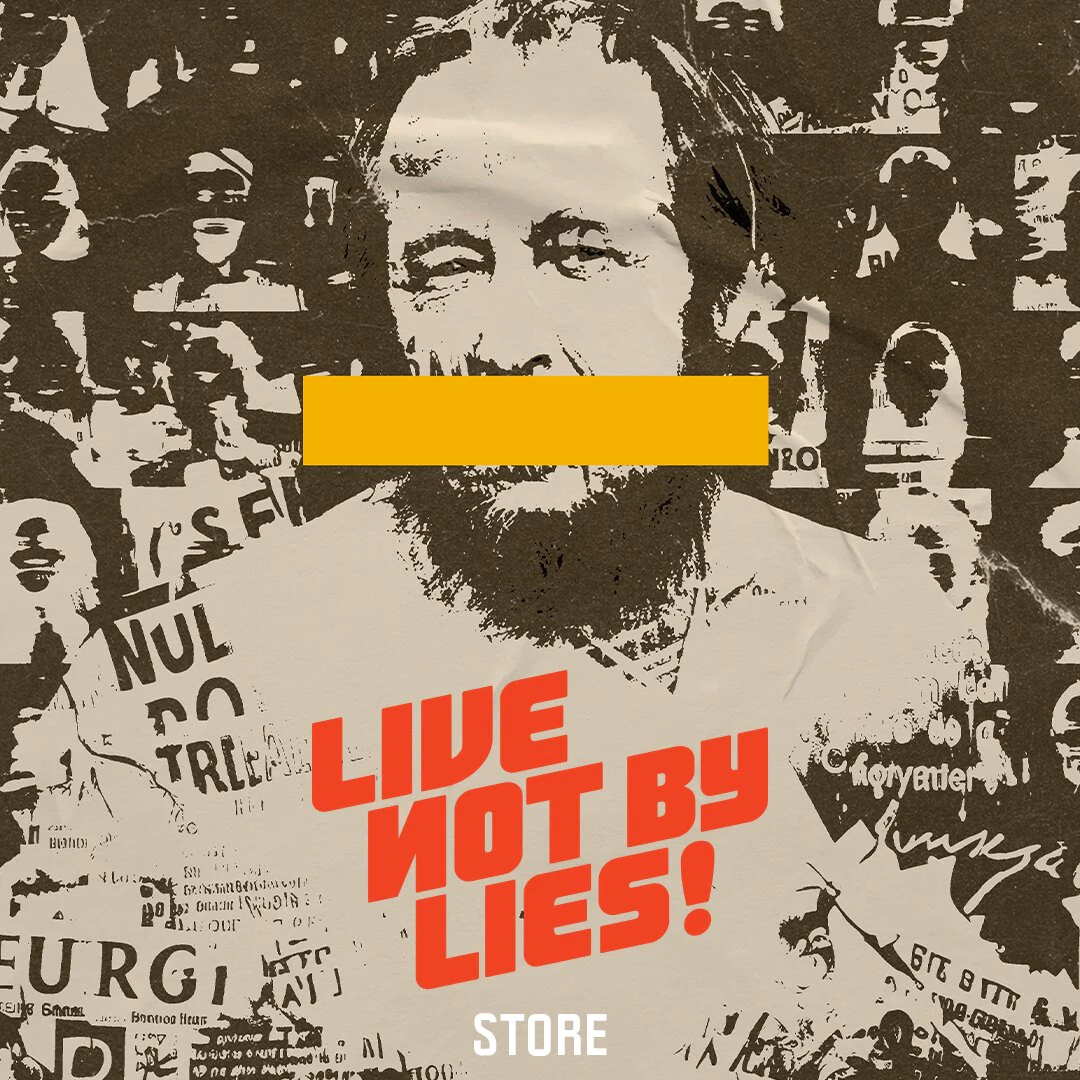
Live Not by Lies: A Manual for Christian Dissidents, Rod Dreher. On the approach of soft totalitarianism.

The Professor in the Cage: Why Men Fight and Why We Like to Watch, Jonathan Gotschall

Bad Therapy: Why the Kids Aren’t Growing Up, Abigail Schrier.

Anxious Generation, Johnathan Haidt

Posted in General | Tagged , | 8 Comments

Sidetracks

Gary Oberg grew up in Minnesota hunting and fishing, and has continued to do so for seventy years — mostly for fun, but sometimes for business as he was also a mechanical engineer who designed reels and other sporting equipment. Here he shares forty stories of his adventures in the wild, set mostly in Minnesota and Canada but reaching Alaska, too. While I was expecting something like Giant Whitetails, this was more about mishaps and adventures Oberg and his friends got into while hunting and fishing. Moose appears to be Oberg’s prey of choice, at least in this collection: he and his friends are constantly making deep treks into the wilderness to find and shoot them. There are are fishing stories, too, both on land and sea and sometimes on ice: Oberg has special passions for walleye and halibut. Not all of the stories actually involve hunting and fishing: he includes, for instance, his memories of biking to Alaska with his wife on the Alaskan Highway, or the ALCAN. If you aren’t remotely interested in hunting or the outdoors, there are still amusing stories here — like Oberg doing some night fishing, and then being startled by the sight of a human head breaking the surface. Turns out a resident on the lake liked night swims and was curious about his floating neighbor! Another one sees Oberg and his hunting party arguing over whether they should duct-tape a failing part on their moose-meat wagon: Oberg and a friend make a trek to the nearest city, only for the mechanic to say, “Ehhh, duct tape would work, my welding options for this are pretty dismal.” All in all, an enjoyable if not memorable collection.

Related:
The Other Side of Selma, Dickie Williams. Many hunting stories mixed in with the “Selma in the 1960s” stories.
Giant Whitetails, Mark and Terry Drury

Posted in Reviews | Tagged , , | 4 Comments

Ends of the Earth

When Neil Shubin was a young biologist, he got his start looking for fossils in the poles, where now frozen wastelands were once jungles teeming with life. Doing science at the poles is uniquely challenging and physically demanding, sometimes to the point of being life-threatening. Here, Neil Shubin remembers and records his and others’ forays into the Artic and Antartic regions, where amid savage winds and persistent gloom scientists seek to advance our knowledge about Earth’s past, present, and future. A mix of memoir, history, and science, Ends of the Earth is an interesting frozen sundae of science topics: hydrology, geology, oceanography, and climatology which could have got even more varied had it mentioned the IceCube Neutrino Observatory in Antarctica.

Shubin’s other works have been tightly focused, but this one is more loose as we bound back and forth between the two poles and the topics between them. There’s a lot covered here: Shubin’s memoirs from his own polar visits, where he learned how to survive amid the brutal cold and offers tips for aspiring Shackletons; the history of Antarica, Greenland, and the Artic’s exploration; reviews of how glaciation was discovered to work, and how glaciers have shaped the landscape; and ruminations on what the shrinking of the ice caps holds for us, past and present. There’s also a bit of Artic politics, since the north pole is ringed with nations, some of whom have missiles pointed at each other constantly. I was amused to learn of a dispute between Canada and Denmark over a lifeless rock called Hans Island: evidently they would take turns planting their respective flags and leaving a bottle of whisky or schnapps to make good the claim. I find Antartica particularly fascinating given its varied landscapes, but despite liking Shubin and enjoying the book well enough, it never pulled me in the way I expected.

Related:
The Ice at the End of the World, John Gertner

Posted in Reviews, science | Tagged , , , , | 6 Comments

WWW Wednesday + Long and Short Reviews Prompt

WHAT have you finished reading recently? Um…Bloodlands, from a week ago. (I’m reading, I promise, I’m just reading too many things at once.) I also finished reading And Then You Die of Dysentery, but I don’t know if that counts given that it’s basically a bunch of pixel art memes for aging millennials. Gift from the ladyfriend that was a nice palate-cleanser after Bloodlands.

WHAT are you reading now? Oh, boy. Well, there’s the book about WW2 Lisbon, which is interesting enough but not as unputdownable I’d expect a book full of spies to be; The Ends of the Earth which is about science at the poles; and a galley proof of A Field Guide to Selma Architecture, which I helped in some of the research. I have also been reading What We See: Advancing the Observations of Jane Jacobs, by various authors.

WHAT are you reading next? Hmmm. Well, these just arrived in the mail for the Great Re-Read! (The red book is Cathedral, Forge, and Waterwheel: Technology and Invention in the Middle Ages. )

Today’s prompt from Long and Short Reviews is ….”What to read if you want to understand ____________”. So, let’s say you want to understand why postwar American cities look like asphalt vomit with chunky bits of Dollar Generals and McDonalds boxes mixed in, instead of cities that we’ve been building since the concept of building things near each other struck Grog and Ugg way back when, then there are three books I’d reccommend: James Kunstler’s Geography of Nowhere, which is probably the most accessible and funny; Suburban Nation, which is the most useful given its pictures; and Crabgrass Frontier, which gives more historical context.

Posted in General | Tagged , | 4 Comments

Top Ten Love Freebie + Teaser Tuesday

Today’s TTT is a “love freebie”, so I’m going to go with substacks I “love” reading. But first, the tease!

Polar ice can take almost infinite shapes as it crystallizes, moves, and melts. The area around McMurdo Station exhibits this diverse world of ice in microcosm. The mountain ranges near McMurdo look like a dessert that would have pleased Rendu; the ice covers the mountains like a pure white syrup, filling canyons and valleys as it flows. Elsewhere ice looks like glass that has shattered into shards, strips, or chunks ranging in size from a small car to an entire skyscraper. The nearby sea is covered by ice that looks like a layer of foam at one time of year, a quilt of polygons at another, and a folded blanket at still another. Part of the awe of seeing a polar vista comes from imagining how a chemical formula as simple as H2O can underlie worlds of shape and movement that are almost magical in their variety. (The Ends of the Earth, Neil Shubin)

So, substacks! I’ve developed something of a substack addiction in the last few years and could probably spend an entire day doing nothing but sipping coffee and reading there. It’s a fascinating platform, especially because it’s easy to find commentors’ blogs and the fact that substackers frequently write about thoughts inspired by others, creating an unfolding conversation. I’d like to use today’s freebie to share ten of them: not necessarily my top ten favorites, but an interesting cross-section.

(1) GIRLS, Freya India. GIRLS takes as its subject the effects of social media and the digital world on young women — Gen Z women like herself. She has written some of my favorite articles on substack, period, like “What’s Become of Us“. Her archives are really interesting stuff. Freya has done interviews with other substackers I read.

(2) Rod Dreher’s Diary. This substack began as Dreher’s musings on religion, beauty, and culture, and later began including political pieces after he left the magazine he edited to move to Europe. He’s an intense, thoughtful writer who I found fascinating twelve years ago when I first stumbled on his writing. Dreher has to be the best-value-for-money on substack, because he posts every single weekday and sometimes on a weekend if he’s reading something interesting and has to share insights from it. His posts can be long, with a reflection that incorporates multiple books: yesterday’s post, for instance, drew on Hannah Arendt, Robert Putnam, Mary Harrington’s substack, and The Triumph of the Therapeutic.

(3) Word and Song, Anthony Esolen. This one is unique in Esolen’s approach, which is not to sound off on things in the news, but rather contribute to the preservation and restoration of culture by sharing music, books, poetry, and films which are especially beautiful or have something to say to the human heart – and he reads the poetry! Esolen is one of my favorite authors because he is so saturated with western literature.

(4) The Abbey of Misrule, Paul Kingsnorth. Kingsnorth edited a collection of Wendell Berry’s essays, and is a fellow critic of the inhuman and unsustainable industrial system, and the culture it creates to maintain itself — something he calls The Machine. When I began looking into him, I found his most interesting substack, an ongoing critique of industrial modernity from an Orthodox perspective that’s very nature-oriented. Paul Kingsnorth recently was one of the guests at a conference in Birmingham called Resisting the Machine, and is featured on the left above, with Rod Dreher on the right — I was sitting in the back near the coffee machine, hence the muddled photo)

(5) Pilgrims in the Machine, Beth McGrew. This substack’s subtitle is “Being human in the age of acceleration”: it touches on culture and simplicity. (A….lot of my substacks have a ‘humanity vs modernity theme…)

(6) Mary Harrington, aka “The Reactionary Feminist”. Harrington is the author of a book called Feminism against Progress, which I need to reread and review; in it she scrutinizes and attacks the sexual revolution and all that followed from a feminist perspective.

(7) Urban Speakeasy, Andy Boenau. This one is all about human-oriented urbanism, transporatation, etc. His most recent post is an open letter to the next HHS secretary that points out the health minefield created by America’s awful awful awful awful awful awful auto-oriented urbanism.

(8) Aaron Renn. As with Kunstler, this is an author I began following long before substack was a thing: I’m not sure how I encountered him, but when I began reading him his principal subject was masculinity, modernity, and Christianity. That’s still the core of his writing though he’s expanded a bit over the years, and has recently published a book called Life in the Negative World.

(9) Sean of the South. Sean Dietrich is a southern humorist whose pieces are often heartfelt articles on people who find joy amid pain and suffering. He’s the author of numerous books, too, from novels to memoirs and essay collections.

(10) The Free Press. Started by Bari Weiss, this is a platform for a host of indie journalists that doesn’t skew toward one ideology or another. It’s nice to get thoughtful reportage, including critical or investigative writing, that doesn’t go into histrionics or exhultation over the subject.

Posted in General | Tagged , | 18 Comments