Pedal to the Metal

Petal to the Metal: The Work Lives of Truckers
© 1994 Lawrence Ouelett
247 pages

ICC is a-checkin’ on down the line
I’m a little overweight, and my logbook’s way behind
But nothin’ bothers me tonight, I can dodge all the scales all right


Six days on the road, and I’m gonna make it home tonight. 
(“Six Days on the Road”, Dave Dudley)

Whatever images spring to mind at the mention of “sociology professor”, that of a long-haired truck driver probably isn’t one of them. Yet Lawrence Ouellet was, before becoming an academic,  a genuine working man – a soldier, a telephone lineman, and most notably a trucker. In Pedal to the Metal, two of his dissimilar passions meet. Drawing on his experience at three different small contractors, and referencing a range of social theorists including Thorstein Veblen,   the book not only delivers a sense of what it is like to be truck driver, but explores the truckers’ motives in connection with deeper economic principles.  Ouellet takes readers on a ridealong at each subject company, sharing both his and his coworkers’ experiences and thoughts about their work, detailing  the job’s particularities.

 The book develops toward a section on the difference between extrinsic and intrinsic awards, with Ouellet concluding that different aspects of the work appeal to different men. Those who are merely workers – men who exchange their time for money and take little pleasure in the job itself –  don’t mind routine and value jobs mostly for comfortable pay.   On the other end of the scale are ‘super truckers’ who are primarily attracted to the job because of mythic appeal; they enjoy playing the part of the outlaw, the rugged man who dominates a vast machine and spends his days trekking across the country,  tackling mountains and evading the law.  These men prefer to work at companies where destinations are highly variable, allowing for constant challenges that demand the best rigs money can buy – and who often express their pride in what they do by sinking their own money into customizing trucks further.   Ouellet sees most truck drivers as being attracted to the work because of its mystique, though over time they drift toward the conventional because of the demands of family. No young father wants his glimpses of his children to be limited to once-a-month layovers.  Trucking as a lifestyle defies the tendencies of capitalisim (in the author’s view) to reduce men to mere economic units.It’s a criticism shared in spirit by Wendell Berry, who scorns ‘employees’ – men with no real connection to the work beyond pay. Ouelett’s is certainly no mere prole, for near the book’s end he recounts the pains and glories of trucking with passion that makes plain his genuine love for it.

Pedal to the Metal has much to recommend it for anyone remotely interested in trucking, both as a career choice and as one of the most important elements of all economies regardless of scale.  It certainly has no rival in giving readers both insight into the everyday work, coupled with a study of sociological probing into the values of the men attracted to it. Its only real disadvantage is its publication date; based on research done in the 1970s and 1980s,  modern truckers work under far more technological scrutiny and regulatory restraint. Men who pride themselves on taking a load of petroleum up and down mountains without incident, who through experience gain the wisdom to choose superior routes, are now reduced to being monitored constantly, their location and speed within a search query’s tap by the home office.  The men in this study who despised the notion of being company men, of allowing the boss to get the better of them, would no doubt chafe under the constant eye of conditions today -. Trucking may yet one day be the sole domain of “company men”, shuttling back and forth on preset routes, and taking little pleasure from operating under the steady LED eyes of the machine. If nothing else, Pedal  will bring back to mind the days when truckers were truly cowboys of the highway.

Posted in Reviews | Tagged , , , , | 4 Comments

Before the Throne

Before the Throne: A Modern Arabic Novel
© 1982 Naguib Mafouz, trans. 2008 Raymond Stock
128 pages

In ancient Egyptian mythology, the souls of the dead were weighed before the gods. In Before the Throne, the dead pharaohs, generals, leaders, and dictator-presidents of Egypt process before the heavenly court, where the great lord of their ancestors, Osiris, sits waiting to judge them.  Even as Egypt is conquered and her people forget the gods, Osiris and his divine family maintain a watchful eye on the Land of the Nile, whose people are theirs.  Originally written in Arabic in the 1980s,   Before the Throne is a history of an ancient people, who have endured much but have finally regained independence, told through a fantastical trial.

Some sixty men and women are brought before Osiris’s throne, and at first their judgments follow a fairly predictable formula:  Thoth, the court reporter, offers a brief recap of the individual’s life, followed by the defendant asserting his merits. Osiris is rarely impressed, cross-examining to the point of grilling his mortal subject, while his sister-wife Isis plays the part of public defender, offering grounds for mercy. Most of the time the subject in question is allowed — if grudgingly — admittance to glory, while some are cast into purgatory and a rare few into Hell itself.  As more pharaohs pass muster, however, they become active spectators to successive trials; great pharaohs bemoan their descendants’ stupidity in losing hard-won gains, or exult in their successors’ steadfast defense of Egypt’s people against a multitude of greater empires, fighting to their last.  The ranks of the judged include noble pharaohs and revolutionaries alike, and they bicker with one another and the defendants. Akhenaten, for instance, noted for turning away from Egyptian mythology in favor of a new monotheism, is written as  single-minded religious fanatic who is profoundly unhappy with every leader who follows until he sees in the rise of Islam the fulfillment of his own vision.  After the Persian conquest, when Egyptians endure many centuries of foreign rule,  individuals who fought for Egypt as Egypt are singled for scrutiny; the gods acknowledge limits to their sovereignty, as they begin wishing leaders success in their Christian and Islamic trials.  They are Egypt’s gods, even if Egypt has become the domain of another  deity.

Translated from the Arabic,  this is a most curious book. There is virtually no awkwardness in the translation, although each rulers’ time is so short that few have personality. The few who do (Akhenaten ) gain it only by complaining in every trial, least until Osiris demands that they behave. The fact that Mahfouz is writing for a predominately Muslim audience while wanting to connect to the gods of Egypt’s past reveals itself in the complete lack of concern on the god’s part about Akhenaten’s revelation, and the fact that they acknowledge their children have become the wards of the Abrahamic faiths.  Judging by the book’s conclusion, in which some of the major subjects implore Egyptians to learn the lessons of their lives — lessons like the importance of justice, of fighting for Egypt as a thing itself distinct  from the Arab people or from global Islam, of revolution as a progressive force to realize the nation’s potential —  Magfouz wrote to offer encouragement in a time when Egypt was struggling to find its place in the “modern” middle east, finally governing itself again and trying to contend against powers like the United States as unrest was sweeping the middle east. The book’s published translation so soon after the Arab spring, in which again the land was given with chaos, is a most appropriate season for looking back at the leaders of the past, both noble monarchs and revolutionary leaders of the people, and examining where they failed and where they prospered.

Posted in General | Tagged , , , | Leave a comment

The Great Cities in History

The Great Cities in History
© 2009 ed. John Julius Norwich
302 pages

            The Great Cities in History takes readers on a literary world tour, traveling through space and time to visit the greatest political bodies in history.  Civilization is nothing if not the ‘culture of cities, and here we experience its hotspots.  Historian John Julius Norwich and a host of other historians deliver celebratory treatments of cities within their realm of expertise, covering six continents and lauding every place from the ancient to the modern.  Here are the locus points of empires, world-spanning religions,  and prosperous commercial enterprises  This is a work of historical tourism; the authors are sharing each site and its community’s story with us in the way that a tour guide might. Most of the cities are still occupied in the present day, but the challenges mentioned are limited to environmental degradation.  The text is lavishly decorated with hundreds of illustrations, including full-page photographs, art reprints that show scenes of local culture, and photos of surviving artifacts (in the case of extinct cities).  The cities are organized on the basis of when they achieved their greatest historical impact, so we begin with Uruk and end with cities that appear to be leading the way into the future, like Shanghai and New York. Some cities merit multiple mentions; Constantinople reappears as Istanbul, Rome and London  pop up twice, and Mexico City questionably qualifies given its siting upon the also-covered Tenochtitlan.  The near east and the adjacent Mediterranean world predominate, of course.  The dozens of sections are organized by timeframe, but not linked together with a common narrative; some authors focus onl y on their city’s greatest moment, while others track to the current day. They make for fun reading, however, least for those with even the slightest appreciation for history. Modern readers accustomed to the world being divided up by nation states, drawing great boxes around swathes of earth and claiming them as their own,  should find a renewed appreciation here for the fact that human history has been dominated not by kings and abstract empires, but physical polities defined by stone walls.   Great Cities is a treasure to look at and makes for excellent light historical reading.


Posted in history, Reviews | Tagged , , , , , , , | 1 Comment

The Space Between Us

The Space Between Us
© 2007 Thrity Umrigar
321 pages

“A hard land, yes, full of mountains, but toughness has its own beauty.” p. 200

The Space Between Us is a modern Indian tragedy, told through the plight of two women who guide their families alone,  fighting despair and deceit.  Serabai and Bhima have spent much of their lives together, witnessing and consoling one another through crisis after crisis, but they remain alienated from the other by class — for Bhima is Serabai’s servant. Nothing illustrates their distance like the news that each is expecting a new grandchild; for Sera,  such a birth is a source of energy and excitement. For Bhima, it is the fount of despair.  Abandoned in life by her husband,  robbed of her children by disease, she has fallen from a modest apartment into the slums and sacrificed everything in the hope that her granddaughter Maya would succeed in college and go on to a comfortable life. Now that hope has fallen away,  and the aging grandmother must continue to bear the burden alone, caring for a pregnant college dropout.  As Bhima  struggles against physical exhaustion, poverty, and now a deep despair of the soul, Sera attempts to help her even while hindered by timidity in the face of customs of caste. This is not simply a story of the present, however, as much is delivered through the two women’s reminiscences, stories from the past that add enormous meaning to their present struggles. As the past is unearthed, the reader who is drawn in by the enchanting prose is staggered by a final revelation that destroys what little hope and peace the characters have.  Umrigar has a talent for  throwing readers  not only into the desperate poverty of the Bombay slums, but into a dark night of the soul.  As past and present dance with one another, Bhima is steadily crushed, tortured as though she were thrown upon a medieval rack. The one consolation in this story is that she does not give up; her head is bloodied, but unbowed. It is a grim novel,  however, in which the high point is that the main character doesn’t commit suicide.

Related:

  • A Man in Full,  Tom Wolfe, in which another impoverished parent is ground beneath the heel of life, pushed beyond endurance, and finds some inner strength. 
Posted in Reviews | Tagged , | Leave a comment

Travelin’ man

Hello again, dear readers! I’ve been on a mini-vacation this past weekend, staying with my sister’s in-laws in Atlanta and watching the Atlanta Braves take on the Chicago Cubs.  The game itself was a sleepy affair, with little hitting and  only two accidental runs in the third and fourth innings.  It was a weekend of good company and zero responsibilities, however,  and not until the ride home did I retreat into reading.

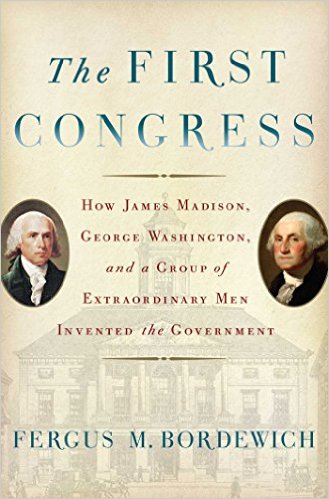
 I knocked off Pandora’s Lunchbox, a bit of food-journalism in the style of Fast Food Nation that documents how pervasively preservatives are used in our food, even food that seems pure and wholesome.  I may give it a more detailed review, but it’s not on the level of Schlosser’s aforementioned work or Salt, Sugar, Fat, a somewhat more recent work.  If you don’t think much about food, it’s certainly enough to make grocery aisles loom like a carnival of horrors.  Fans of Food Inc, Fast Food Nation, and related works will find the ground familiar.  Another book I finished before the mini-vacation was Kevin Gutzman’s James Madison and the Making of America, a biography of Madison that focuses on his years as a member of the Constitutional congress and within the Executive branch.   Although Madison is known as the father of the Constitution, Gutzman work shows how every clause was the productive of multiplie personalities, all arguing with one another, and that the end result was a product Madison was reluctant to accept responsibility for. Despite his later alignment with the Republicans,  Madison began as a nationalist who wanted a stronger central union. It was enjoyable enough, but between lectures and books I overdid revolution and the Constitution.

Since returning from vacation I’ve started John Julius Norwich’s Great Cities in History, which I love. It’s a beautiful book,  covered in photos of art and of cityscapes,  delivering history from around the world. It’s one of those pieces that people stop and admire if they spot it. Look for it soon. After that, the fun will continue!

Posted in history, Reviews | Tagged , , , | Leave a comment

Engines of War

Engines of War: How Wars Were Won and Lost on the Railways
368 pages
© 2010 Christian Wolmar

An army marches on its stomach, but for a hundred years it rode to victory only on the rails.  It was Napoleon who observed the importance of supplies the military,  and well he should know, for the nigh-twenty years of wars he raged on the European continent were the last major conflict prior to the advent of rails. In Engines of War, veteran railway historian Christian Wolmar addresses how trains transformed war,  allowing for greater conflicts to be sustained over a wider front, and often serving as the locus of conflicts themselves.  Although the American Civil War and the Great War feature most prominently, Wolmar also dwells on the Boer and Russo-Japanese wars, and includes many minor episodes which are fascinating. Who knew, for instance, the role of railroads in the Arab revolt from Ottoman rule?

The most important aspect of the railroads to war, of course, is logistics — the transport of men and material to the battle, including food, ammunition, and forage. Mankind has waged war against itself since human history began, but not until the industrial age did he do it on so terrible a scale. Wars between ancient empires — the Roman and Carthaginian, for instance — might last decades, but these lengthy conflicts did not tax their nations they way they do now for most of the 20th century.  Battles were comparatively much smaller, and more seasonal. Invading armies relied on raiding hostile territory to supply themselves, and as professional armies were rare, generally consisting of private subjects whose labor was needed back at home.  Rail lines made projecting and sustaining a force in the field far easier — as they did early in Crimea, allowing Britain to sustain a siege halfway across the world.  Or, take Sherman’s famed march to the sea, for instance, his bloody chevauchée from Atlanta to the southeast coast of Georgia. Despite a reputation for feeding his troops off the land, his initial push was fueled by a rail-fed stockpile.. The incorporation of railroads allowed for intense strategic planning: the Schlieffen Plan, Germany’s strategy for a quick resolution to the Great War,  was essentially a train timetable. Despite how quickly trains could deliver men to the front, however, Wolmar maintains that the rails favored defensive warfare more than the offensive. Any advance made by an invading army would take them into territory with sabotaged infrastructure, often incompatible with the invaders’ systems.

The rail lines could also be used as weapons themselves; carrying artillery or serving as mobile gunships. Armored cars first appeared in the Boer war, and were used to suppress insurrection in vital areas.  The importance of defending the rails, even with trains themselves, is made obvious by the Arab revolt from Ottoman rule. The Ottomans created a rail line stretching down the Arabian peninsula to allow pilgrims on the hajj to more easily reach Mecca, but during the revolt it was subjected to such chronic attack that  the troops which depended on it for supplies were forced to surrender.  Other methods of attacking rails were less successful:  airplane-born bombs, for instance, were rarely accurate enough to touch down on so narrow a line drawn on the landscape.  Even  when lines were rendered inert, every military of the period created divisions which specialized in rail repair.  Germany was especially diligent about maintaining large stockpiles of extra rail supplies, to allow for nigh-instantaneous repair. Only when its entire war effort was failing did the rail lines finally collapse.  In his other works, Wolmar analyzes the comparative advantages of government and private management of rail systems; here the insistence on efficiency takes on a more awkward tone when it results in more prolonged wars and the horror of the holocaust.

Despite their importance for nearly a century,   so linked to the projection of power that their construction could spark wars (as between Russia and Japan in 1905), even a rail enthusaist like Wolmar has to admit the age of the train is past, militarily speaking.  The nature of war itself has changed.. We are as unlikely to see massed armies butchering each other with Maxims and artillery as we are to see cavalrymen running about with sabers in the next war.  This is the age of cruise missiles, drones, and small groups of soldiers deployed in surgical strikes by helicopters.  Even in larger operations, troop transports that can transverse alien territory are more efficient than building even the light strategic rail of the Second World War.

Engines of War is an altogether fascinating book, revealing how  the vital necessity of rail lines during wars not only altered weapons and strategy, but changed both the role of the government and the behavior of the rail lines in peacetime.

Posted in General | Tagged , , , , , , , , , | 3 Comments

A Canticle for Leibowitz

 A Canticle for Leibowitz
© 1960 Water M. Miller
320 pages

A thousand years ago, nuclear war swept the Earth,  rendering to ashes the civilizations which inaugurated it.  In the southwestern desert, however,  there lies an outpost of another civilization – one far older. Just as an epoch earlier, when the monasteries of the Catholic Church preserved classical learning amid Gothic chaos, here the clerical orders dutifully safeguard what fragments of knowledge they can find.  Humanity is populated with genetic monsters and the landscape deadened by radiation, but in the monastery of the blessed Leibowitz there is hope. As the secular world begins to climb back to its feet, however, with new Charlemagne at the head, hope for a renaissance is mingled with anxious anticipation of what mankind will do to itself once it has recovered from the shock. Can we learn from our mistakes?

Maybe not, A Canticle for Leibowitz mournfully concludes. The story unfolds in three parts, appropriate for a novel in which the main characters are monks, and across several thousand years.  The first section is set a thousand years after the Deluge of Flame, wherein Earth was nearly sacrificed to its own bloodlust; this grim setting is made light traveling by a most inept adept – a young, bumbling monk who discovers the remains of a fallout shelter with scientific importance.  In the second section, humanity is in the midst of a rebirth, and in the third section, the wheel of destiny seems to turn again. Canticle grins skull-like even as its characters are in the midst of death.  A seemingly immortal and comic wanderer, having seen age past into age with his own eye, ties the stories together, plaguing but fascinating each sections’ characters, is a guide. Not that he narrates the story, nor ever sticks around for long, but he has seen enough of the human condition to know not to take it too seriously.

The Cold War era saw a variety of works written in obvious fear of what might happen if the bellicosity of the United States and the Soviet Union resulted in actual war: On the Beach, for instance, and Alas, BabylonCanticle is less concerned with immediate destruction, however, and more with how the human spirit may cope with it, what truths the disaster might bring to life. There’s an obvious exploration here of the tension between the culture-preserving aspects of religion, and the change-inducing inquiry of science, but I was impressed by how the monks sought to maintain dignity in everything they did, even in the face of despair.  One copies blueprints of a device from before the Flame, but pours hours – years, even – into adding lavish illustrative borders to it. The brothers fight against death;  death of the old culture and its knowledge and  the physical death of the survivors amid war and radiation poisoning. This makes them unpopular, because death sometimes seems like the easiest course of action. After the deluge, mobs killed scientists and other intellectuals for bringing down ruin on them; the monks survived this persecution only barely.  When civilization rebuilds and begins flirting with nuclear arms once more, leading to new outbreaks of radiation poisoning, some attempt to flee the pain by submitting themselves and their children to euthanasia camps. But the monks inveigh against this, urging the afflicted not to take their lives into their hands so cavalierly. Refuse to surrender to fear – live with dignity, trusting in God. It’s a diffcult message, of course, but ensures that the novel remains relevant and even thorny in our own era, even though the terrors of the Cold War are over.

The novel’s end is bittersweet, as mankind by and large repeats its mistakes. This is especially tragic given how long the humans of Canticle had lived with their ancestors’ mistakes: they were the ones living with greatly heightened levels of serious genetic disorders, and a landscape ruined in part by the ravages. They were the ones forced to claw their way back from the stone age after reaction against technology inflicted a ‘cultural revolution’ of sorts. Yet they persisted in straying near the edge yet again.  There are reasons to be optimistic, however;  at novel’s end, the church at least has realized a plan to prevent this from happening again, by sending out a colony mission. In our own lives, we survived decades of brinkmanship and incidents that could have turned deadly.. We’ll never truly learn from our mistakes, but when the consequences are as forboding as immediate and wholesale destruction, there at least we may hesitate enough to save our lives.

Related:
Nightfall and Foundation, in which knowledge is preserved by religious institutions, though in a less straightfoward manner.


Posted in Reviews, science fiction | Tagged , , , | 5 Comments

Surprised by Lewis

Earlier in the week I was reduced to laughing fits trying to read through C.S. Lewis’ account of his early life in “Surprised by Joy”. Somehow I knew what was coming and the anticipation made the ecstasy worse. 

[My father] relied wholly on his tongue as an instrument of domestic discipline. And here that fatal bent toward dramatization and rhetoric produced a pathetic yet comic result. When he opened his mouth to reprove us he no doubt intended a short well-chosen appeal to our common sense and conscience. But alas, he had been a public speaker long before he became a father. Words came to him and intoxicated him as they came. What actually happened was that a small boy who had walked on damp grass in his slippers or left the bathroom in a pickle found himself attacked with something like Cicero on Cataline, or Burke on Warren Hastings; simile piled on simile, rhetorical question on rhetorical question, the flash of an orator’s eye and the thundercloud of an orator’s brow, the gestures, the cadences, the pauses. […] While he spoke, he forgot not only the offense, but the capacities of his audience. All the resources of his immense vocabulary were poured forth. I can still remember such words as ‘abominable”, “sophisticated”, and “surreptitious”. You will not get the full flavor unless you know an angry Irishman’s energy in explosive consonants and the rich growl of his r’s.”

p. 22-23, Surprised by Joy, as collected in The Inspirational Writings of C.S. Lewis.
Posted in quotations | Tagged | 3 Comments

Coming Attractions

This week will see a clearing-of-the-decks as far as the American Revolution books go as I start reading a more diverse batch of books. A few weeks ago I acquired five books I’ve been waiting for over a year to purchase (one of my rules for controlling purchasing binges) and have already read two.  The others:

  • Philosophy for Life and Other Dangerous Situations
  • Happy Cities: Transforming Our Lives through Urban Design
  • and
  • The Moon is a Harsh Mistress, Bob Heinlein

Joining those will be some recent discoveries at my university library:

  • The Spice Route: A History, John Keay. This is to sample the author, who has short histories of India and China I’m interested in checking out.
  • The Great Cities, ed. John Julius Norwich (Author, A Short History of Byzantium)
  • Cod: A Biography, Mark KurlanskyFrom the author who brought us Salt! 
  • Christianity and Rabbinic Judaism, ed. Hershel Shanks
  • The Essential Writings of Mahatma Gandhi. I had intended on reading this after My Experiments with Truth. 
  • A Vanished World: Medieval Spain’s Golden Age of Enlightenment, Christopher Lowney
  • Pandora’s Lunchbox: How Processed Food Took Over the American Meal, Melanie Warner

I had planned on getting some science books, but I lost my list, and if I stayed in the library any longer I would have come home with a frightening pile.  I did buy Frozen Planet, though, so I’m still getting my science fix, albiet in narration by David Attenborough.   I’ll probably mix some novels in here as well.

Well, here’s to a summer spent hiding inside from the scorching heat and humidity with fascinating reads!

Posted in General | 1 Comment

We Could Not Fail

We Could Not Fail: The First African-Americans in the Space Program
© 2015 Richard Paul, Steven Moss
312 pages

Between the murder of the Reverend Martin Luther King Jr, and both political and racial riots throughout the United States, 1968 was a tumultuous year for the American nation. It closed, however, with the glimpse of a hopeful future — a glimpse of the heavens, as three astronauts circled the Moon in low orbit in December. We Could Not Fail is a history of NASA’s connection with the Civil Rights movement, revealing how its vision of the future threw light upon the dark legacy of the Jim Crow past.  The history unfolds in a series of miniature biographies,  though only one actually approaches the astronaut program.  Most of the people involved worked as NASA technicians or within industries that supplied it.   NASA shared its history with the Civil Rights program,  and not simply because the movement’s most restive years coincided with the push for space, during the administrations of men who claimed (in JFK’s case) or devoutly cared about fulfilling the promise of the American dream. The space ideal of NASA didn’t just help inspire Americans, southerners included, to push beyond old limits — it also  provided the means for uplifting the south. Johnson,  a Texan himself, believed that the greatest hindrance to the south growing beyond segregation was its economic despondency.  Create regional prosperity in the south, he figured, and inequality and the institutions that supported it would evaporate away.  Because NASA was the most highly visible arm of the Federal government during this years, it had a special responsibility to effect more equal hiring practices.  Despite the pressure of the Kennedy brothers and Johnson, NASA struggled, more for want of material than ideas. Most engineers and support staff were recruited from the south itself, and segregated communities ceded ground only grudgingly to what NASA administrator James Webb wanted to do. One struggle, for instance, was reforming local housing politics, as discrimination kept black employees from relocating near NASA’s base of operations. Similarly, while there were black technical schools, NASA overlooked them: fortunately, men like Julius Montgomery,  a  black engineer, were advocating for the integration of places like Florida Tech.   We Could Not Fail documents well the struggle of LBJ and Webb  to make NASA’s promise a reality, through the lives of the would-be astronauts, activists, engineers, teachers, and other ordinary heroes who endured oppression with moral dignity, persevering until their value both as human beings and pioneers in a new age of exploration were recognized.

Posted in Reviews | Tagged , , | 3 Comments