Jasmine and Stars

Jasmine and Stars: Reading More than Lolita in Tehran
© 2007 Fatemeh Keshavarz
180 pgs
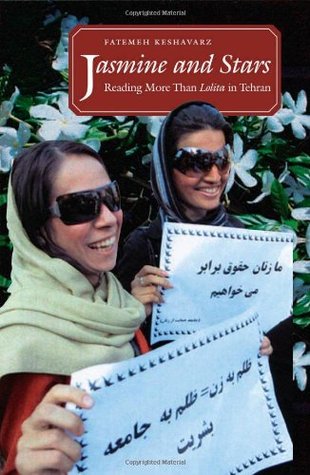
Fatemeh Keshavarz’s Jasmine and Stars: Reading More than Lolita in Tehran rebukes Azar Nefisi and other writers for contributing to a ‘new Orientalism’ that looks at Iran only as a place inferior to the west. The author opens Jasmine and Stars with a reminiscence of her summers spent in Shiraz. Growing up, Keshavarz’s family spent the nights outside, bringing out wooden cots so they could fall asleep to the view of the glittering stars above, and wake up to the smell of jasmine flowers that her grandmother used during her morning prayers. As exquisite as these summers could be, there was a moment of gloom: the annual migration of grasshoppers. Their migrating mass blocked the starlight and threatened the fields, and some lollygaggers would fall from the skies and litter the yard. Most of the literature westerners read about Iran or the middle east — Reading Lolita, Tehran Honeymoon, The Kite Runner — focus on the transient grasshoppers, with nary a mention made of the beauty around them. In response, Keshavarz simultaneously provides tales of jasmine and stars — recollections from her youth, mixed in with reflections on Persian literature — and directly critiques the substance of Reading Lolita in Tehran.

Her greatest problem with RLT is the depiction of literature as something foreign, as though Nefisi’s literature circle created the only opportunity for her students to ever encounter thoughtful literature. Keshavarz holds that there is no culture on Earth more passionate about its literature, or literature in general, than the Persian people. As illustration, she discusses many works, only one of which (Rumi’s poetry) has any name recognition in the west. She also points to the enormous popularity of particular authors and poets, most of whom have produced literature the authorities would not endorse, but do not oppress. The Persia of her youth, and the Persia she visits regularly today, is one that engages with literature and arts constantly — filling public theaters. Similarly, Keshavarz contends that the depiction of Iranians in literature like RLT is simplistic: the women are naive, and the men all knuckle-dragging tyrants. As a counter, she recalls many stories about extraordinary men and women she knew in Iran, and continues to visit – stern military officers who spent their nights painting, and of an illiterate peasant farmer who so loved a particular poet that he committed her every verse to memory.

Jasmine and Stars is a fascinating little mix of literary reflection, criticism, and memoir that provides readers with a welcome view of Iran beyond its political structure.

Related:
Interview with the author on NPR’s Speaking of Faith/On Being, covering “The Estatic Faith of Rumi”.

Posted in Reviews | Tagged , , , | Leave a comment

Week of Enchantment: The Garden of Eden is Missing its Critters

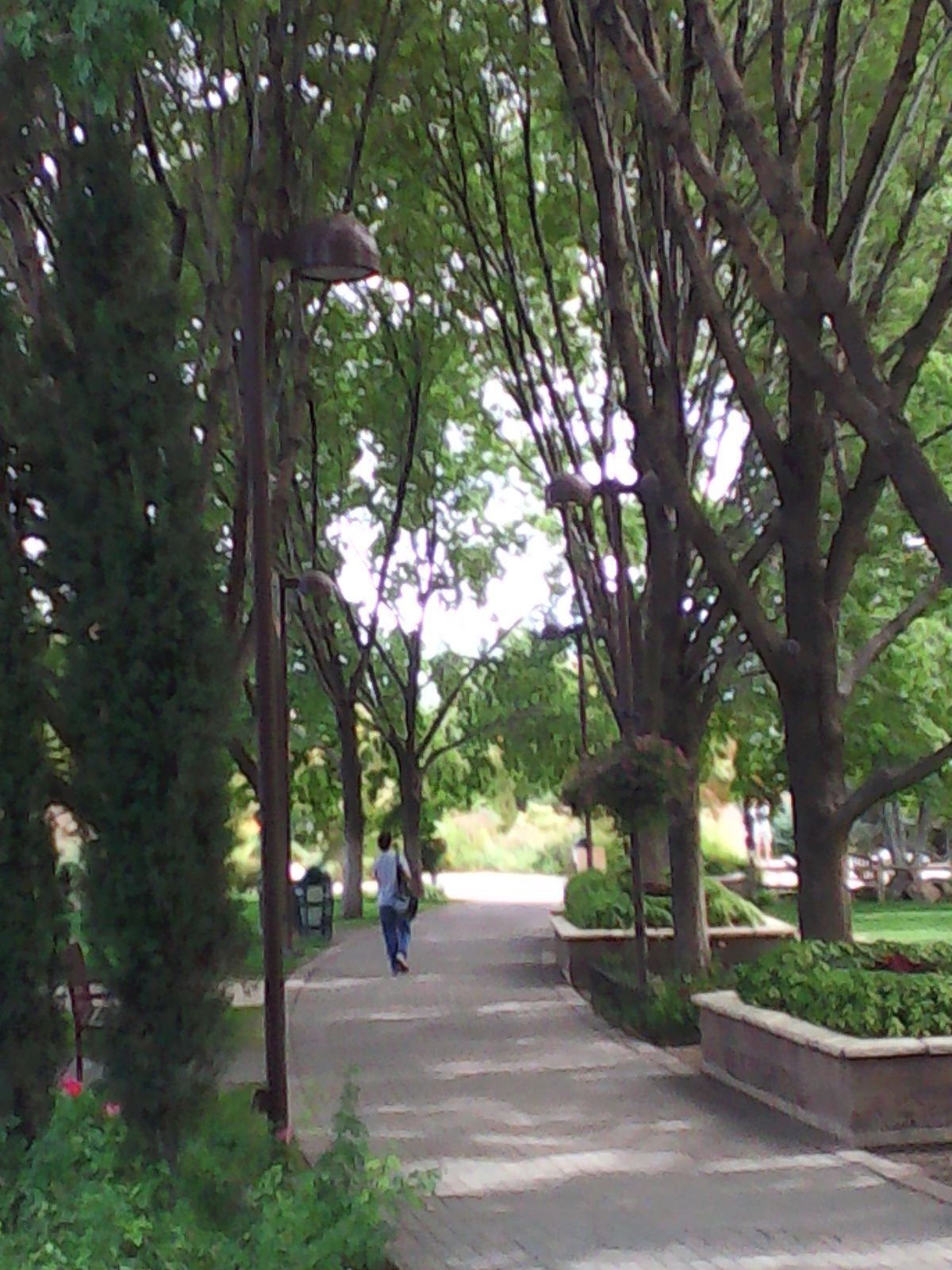
From here  I moved to the attached Gardens, one of the most beautiful, romantic, and sometimes weirdest spots in New Mexico.  Beauty first:  Moorish gardens open the area,  ending in a tree-lined walkway that is utterly  peaceful

This goes around a park with a lagoon, and following the arbor-laden path took me to several greenhouses. The greenhouses are massive, multiple-story places.

  Another area of the gardens is done up in Japanese style, including round stones buried in the water used as a stepping bridge. The strangest part of the gardens, though, is the multi-acre farm in the middle.

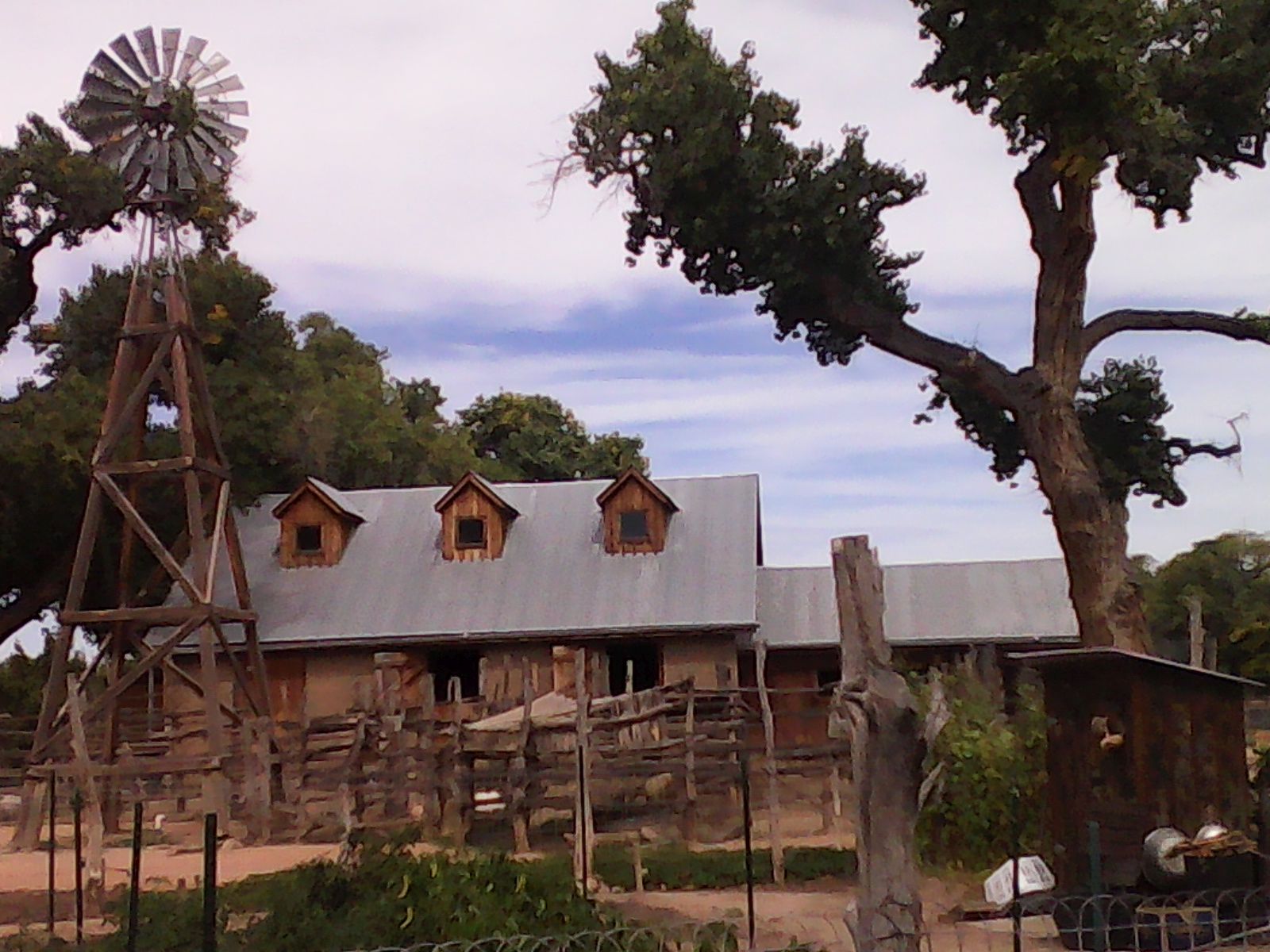
“Farm”? Yes, farm. In the middle of Albuquerque,  there are apple orchards, vineyards, and rows of other crops.  Despite the abundance of rusting old farm equipment and the penned-in steer and horses, this isn’t a museum. There’s a barn on the premise that actually makes cider.  The irrigation used, at least in part, is traditional, as the farm is maintained here to remember how agriculture on the Rio Grande used to be.

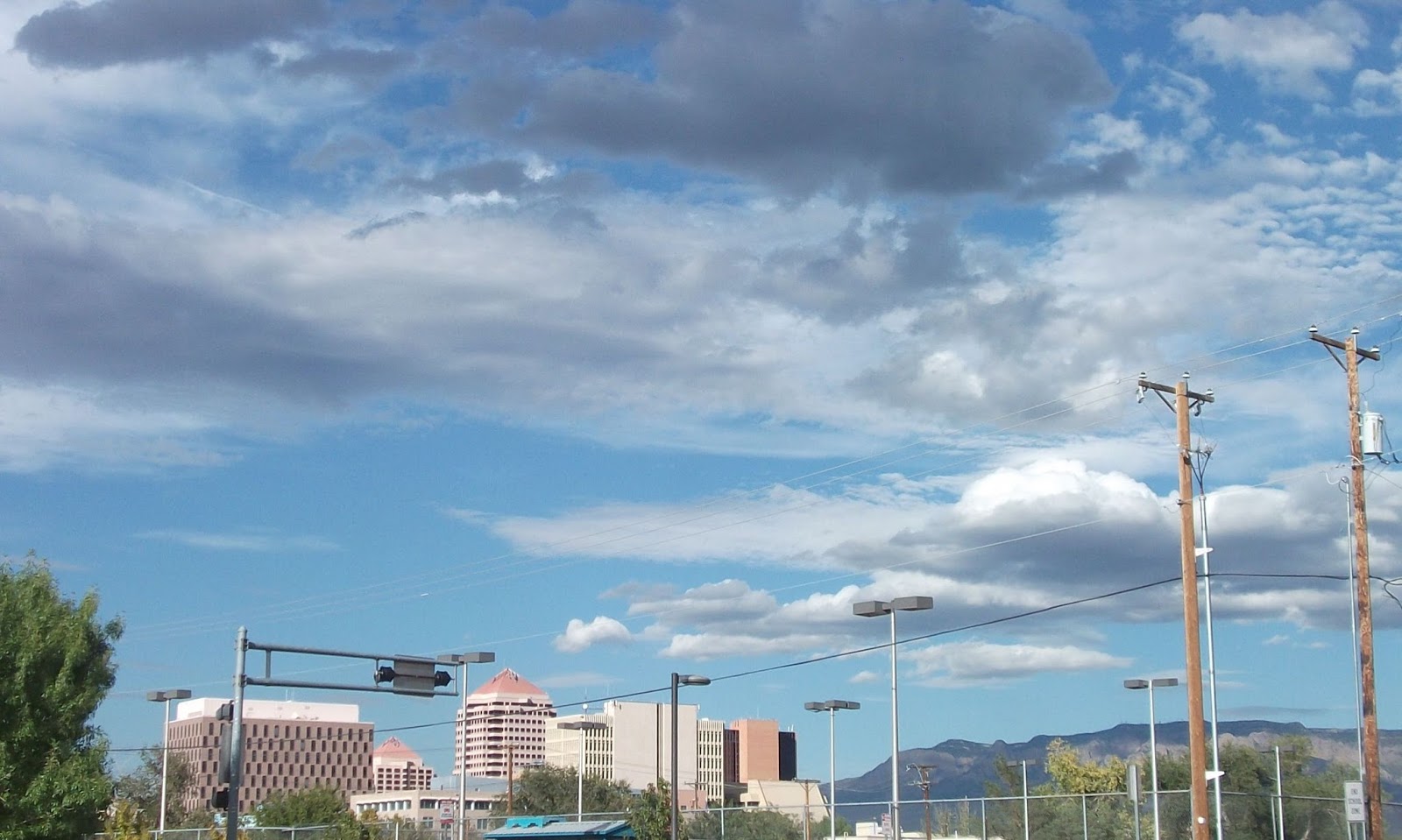
Downtown Albuquerque, everyone!

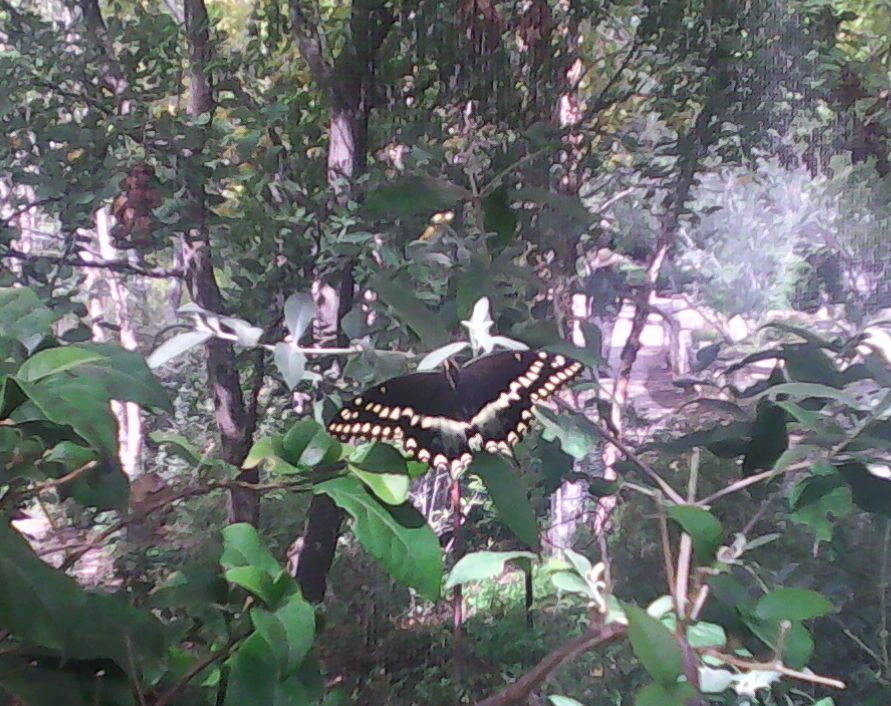
One exceptional and enclosed area houses butterflies, who flit by constantly. I made it my mission to take a picture of one of the blue ones in flight, although the young woman on station warned me it was impossible.

A nearby building housed bugs, which were far less photogenic. I deleted several pictures of leaves before I remembered those were shots of LEAF INSECTS. D’oh.

The gardens took an enormous amount of time to enjoy, and that cypress walk was just as lovely going back. If I lived in ABQ, it would be an obvious place to go on a date.

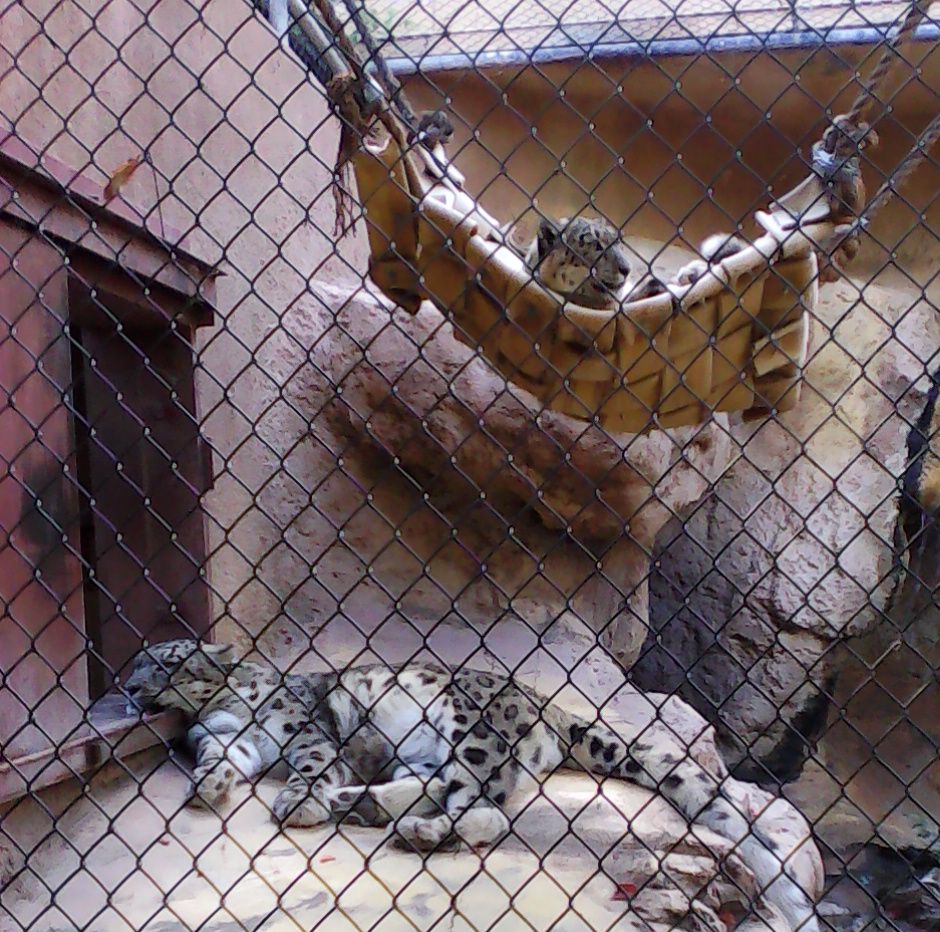
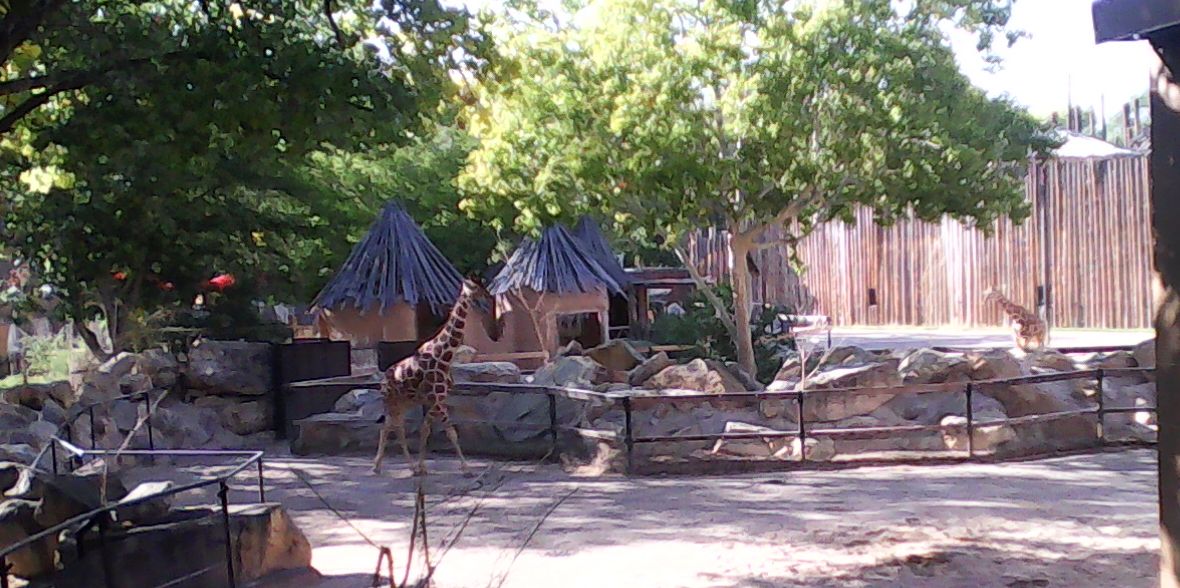
After this, I headed for the zoo. Not that I hadn’t seen enough animals this week, but it was two miles away; how could I resist?  I didn’t realize how late in the day it was, and in fact I very nearly got kicked out of the zoo at closing.   There were three kinds of exhibits: the ones where the animals were not there for explained reasons, the ones where the animals were not there for unexplained reasons, and the ones with actual animals.  The polar bears were no-shows, and I arrived just in time to see the chimpanzees disappearing into a wall like hairy Oompa-Loompas.   Bear in mind this wasn’t at closing, but starting around 4 a lot of the animals were being wheeled in,  so I wound up doing a lot of trekking and not seeing much at all.   After an hour and a half of wandering, booming voices warned me the zoo was closing in fifteen minutes, at which point I started scurrying.

In total, waste of energy, time, and $8.  I did see a few things, though:

Breathing steam! …or mist.
Is it five o’clock yet?

Zoom issues again, hence the blurriness. 

I came back to admire this fella after being disappointed by another exhibit, and was just in time to see him turn his back on a group of people.  Heh.

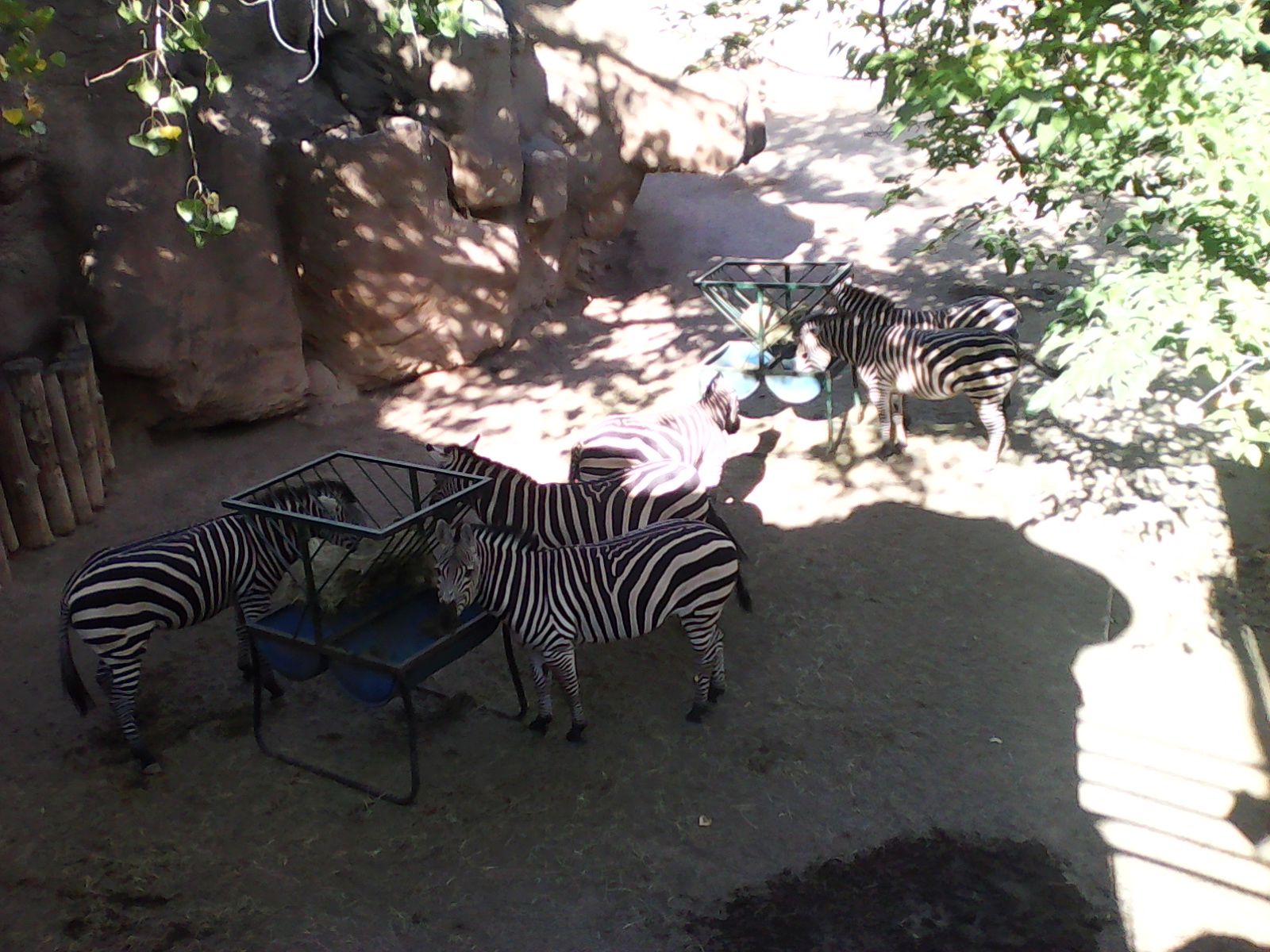
Grant’s Zebra. I’d like to know who this Grant fellow was. Every zoo I go to, he’s donated zebras. 

A hippo! 

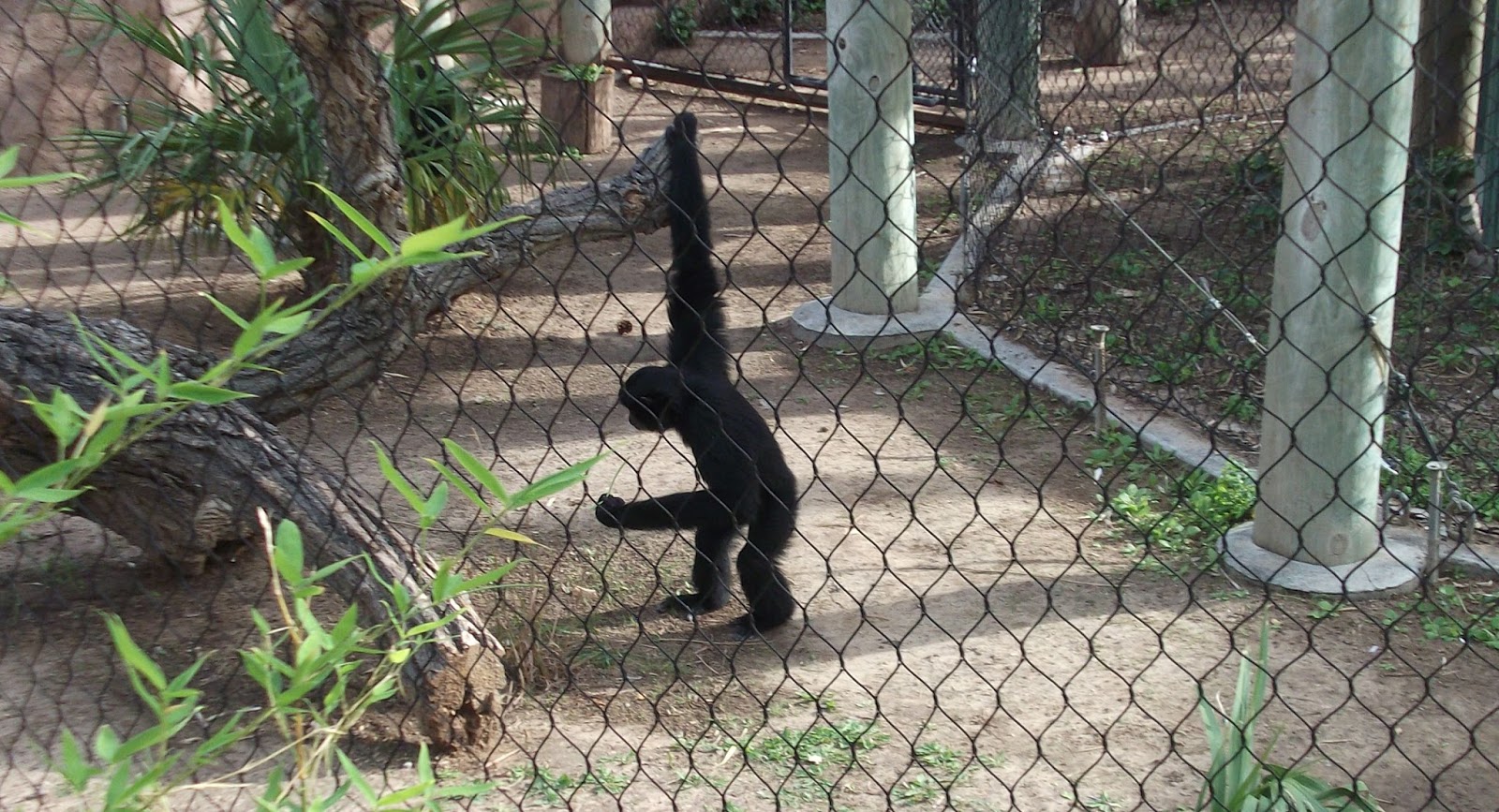
The only primate I managed to see before closing, and at this point I was frantically trying to find a way out so men in carts didn’t come after me. 
Although I’d planned to go downtown and look at a piece of ‘pueblo deco’ architecture, at this point I was so tired of walking the only thing I wanted to do was return back to my room.
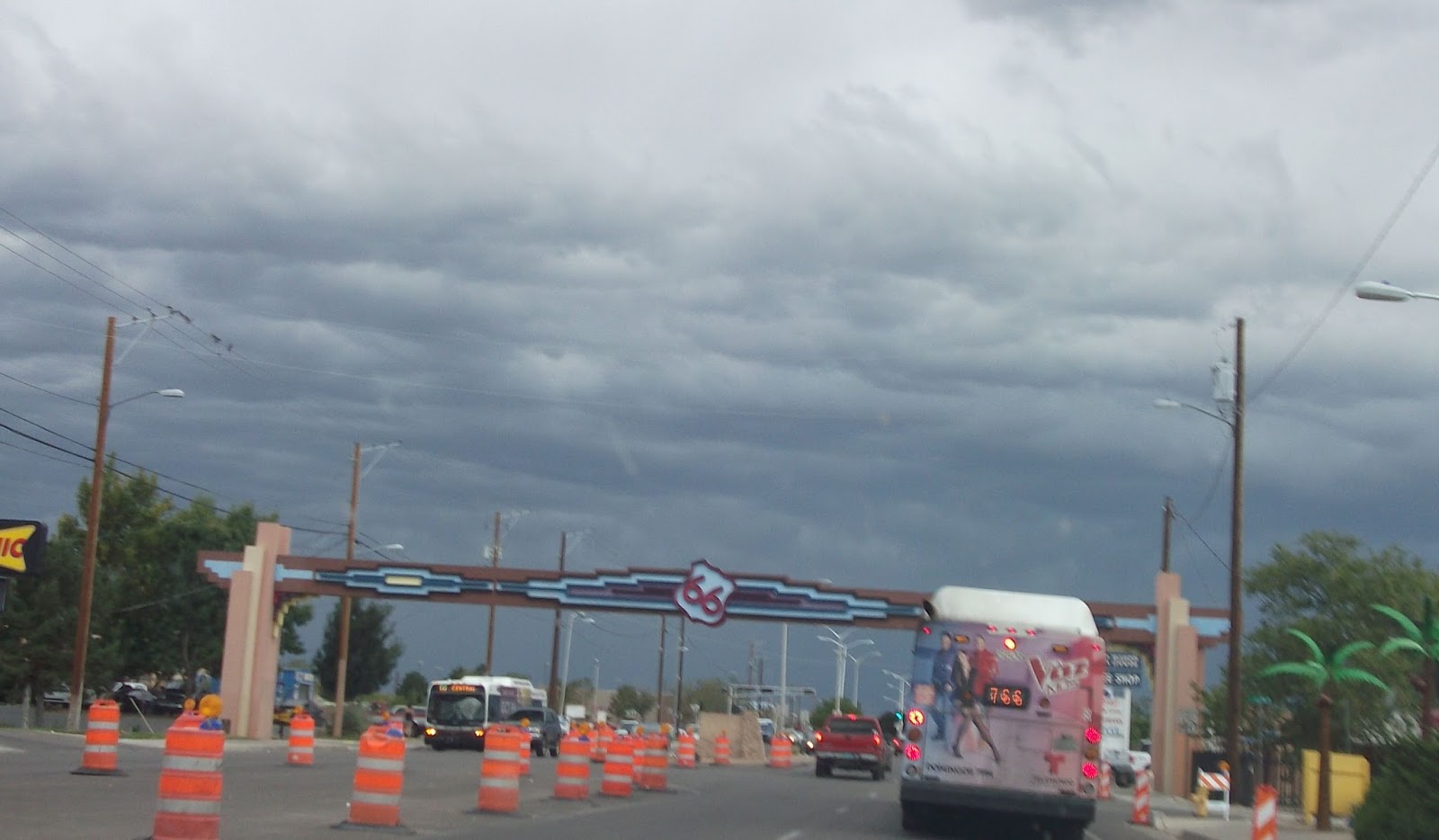
And so, back up Central I went, passing under something claiming to be Rt. 66, home to rest up for Santa Fe and my last day in New Mexico. 


Posted in General | Tagged , , | 2 Comments

Week of Enchantment: Tourists, Sharks, and Gardens, oh my!

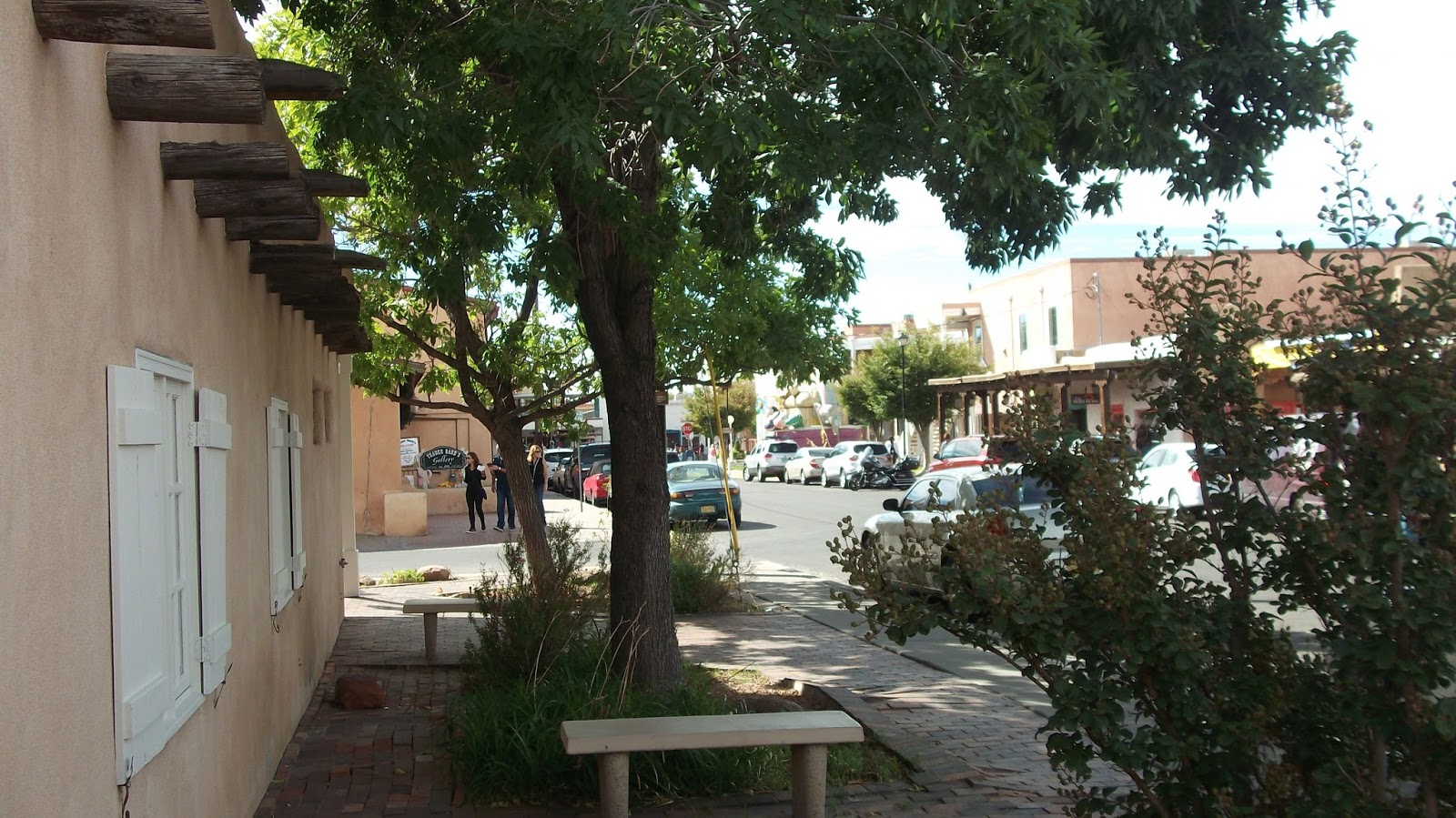
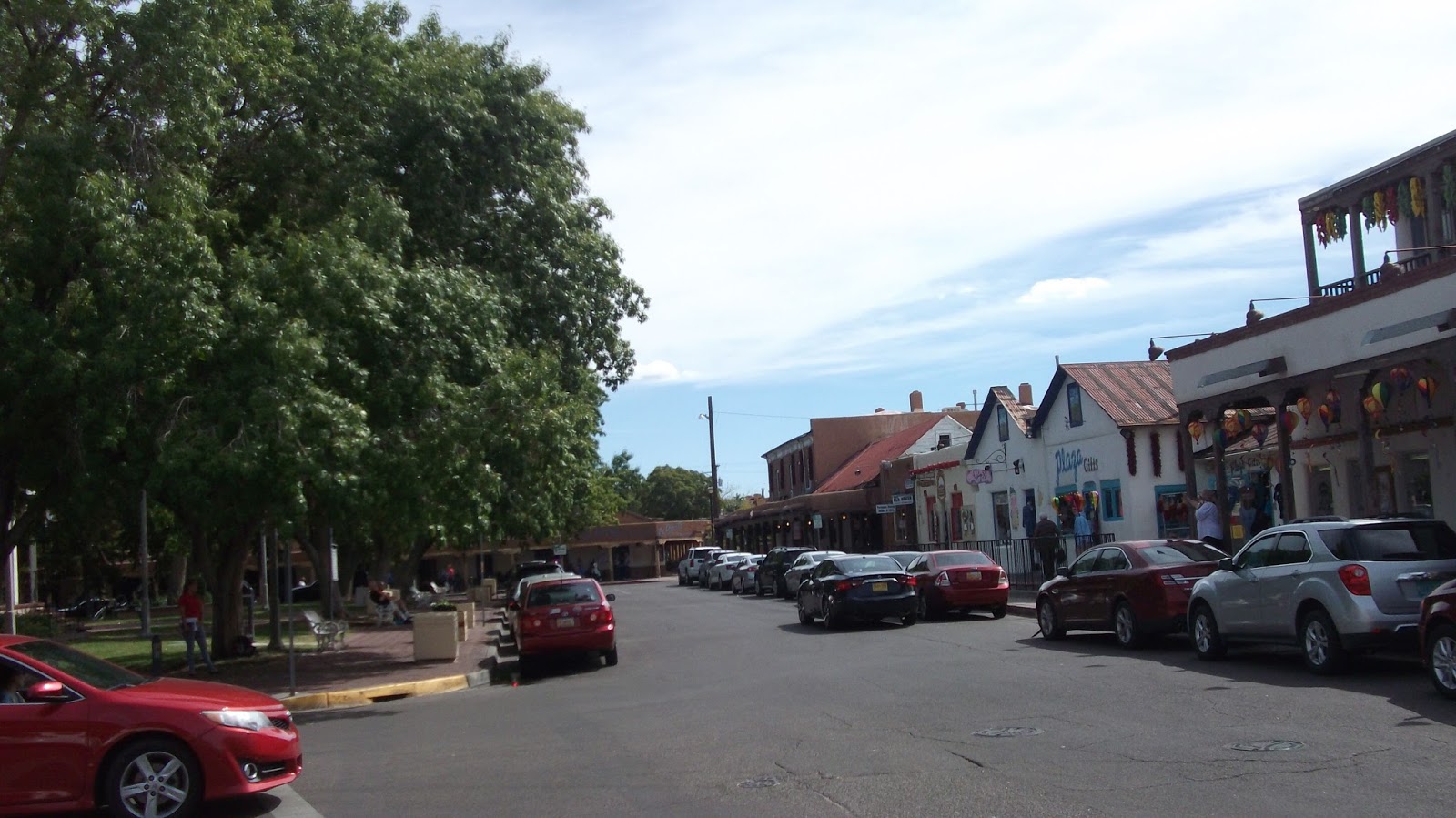
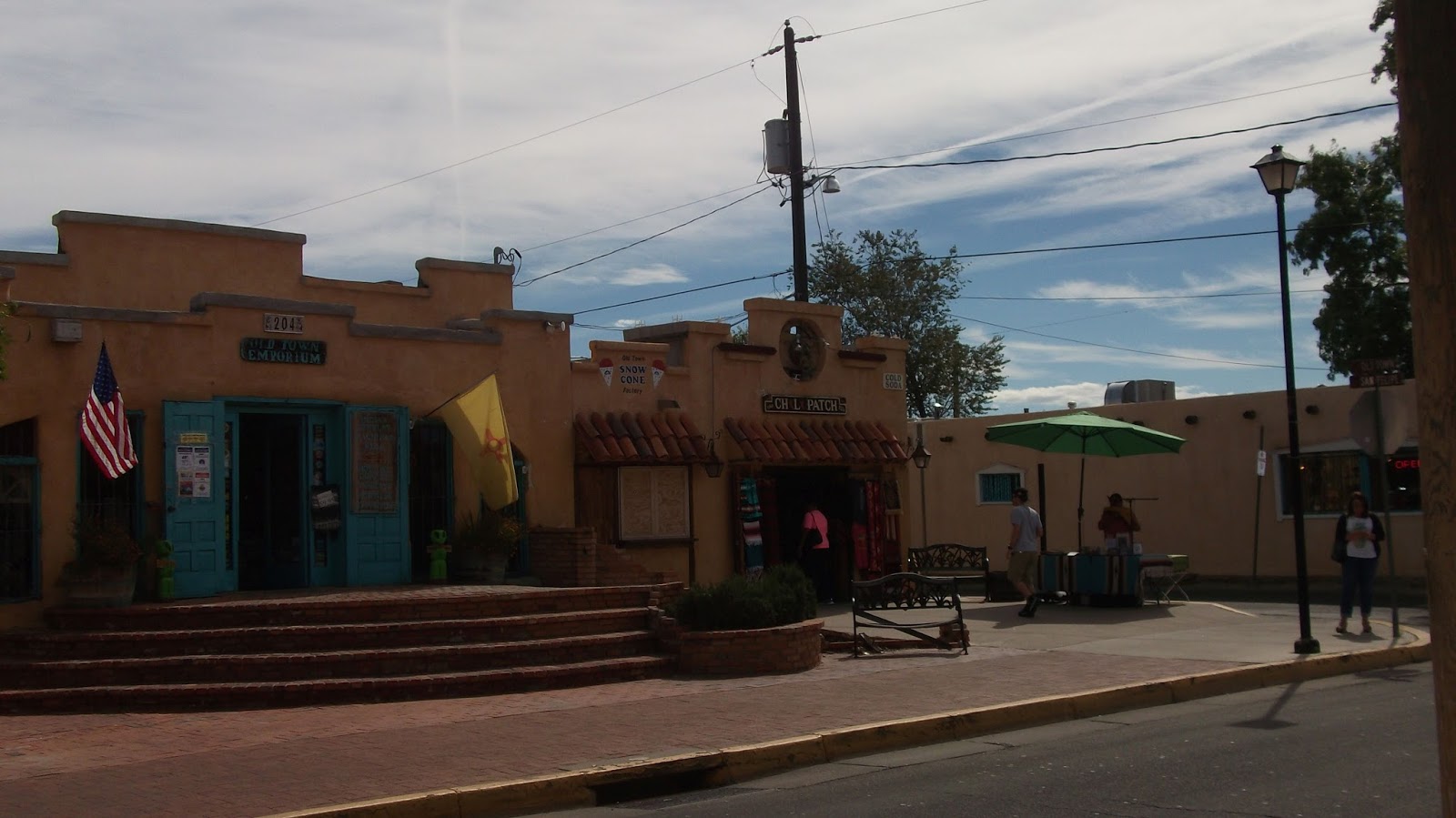
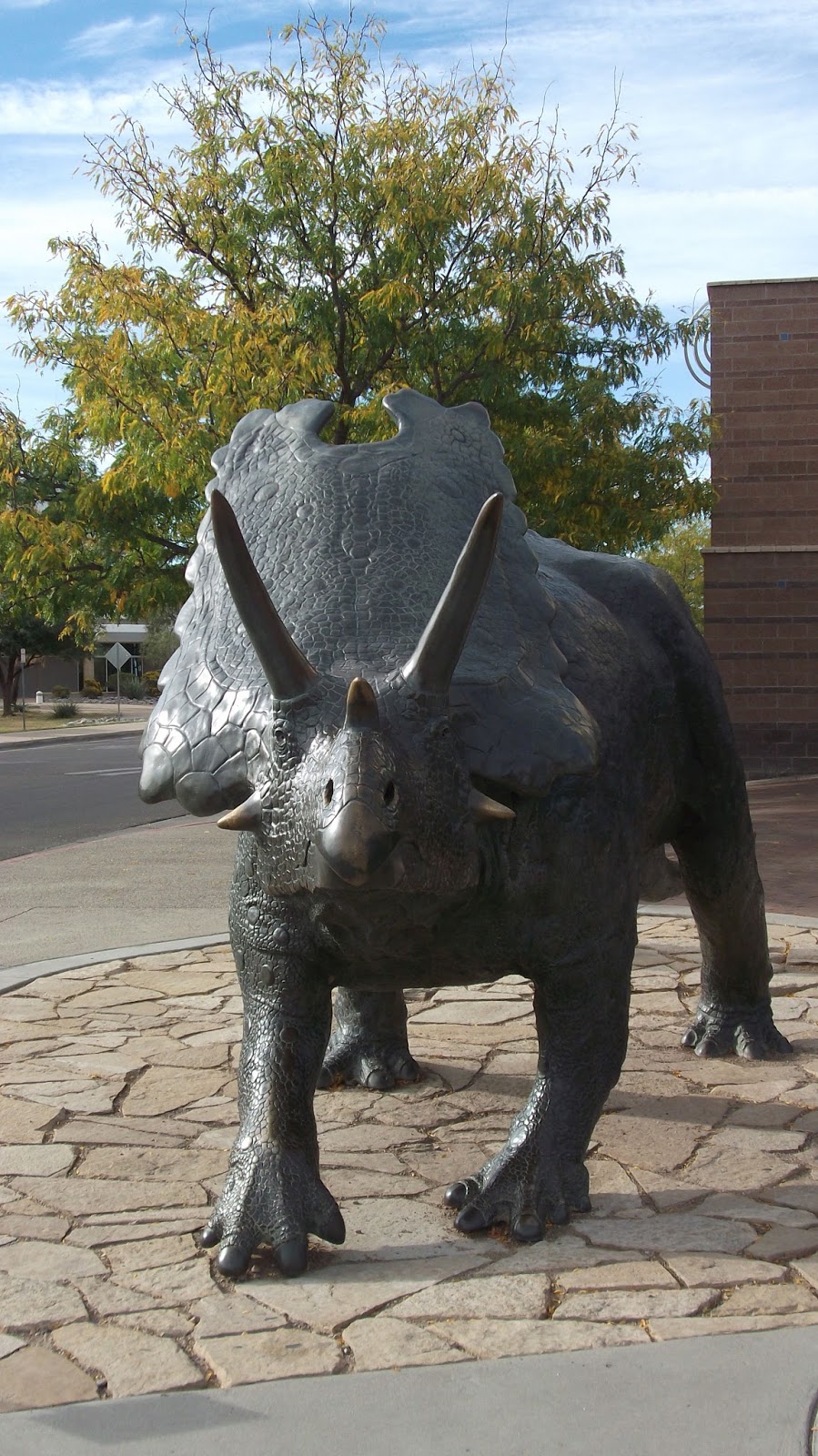
Emerging from the natural history hours later, and returning to old town, I discovered that everyone else had woken up and joined me.  Cars poured in and filled the once-empty plaza, but with them came pleasant music and even pleasanter sounds. Those bronze figures shared earlier were planted outside a museum of history and art, but from what I could tell the art was modern.  My attempt in Las Cruces to find a southwestern art museum had resulted only in a large Japanese pottery exhibit, so I wasn’t  excited about the prospect of paying $12 and being dismayed again.  I could see all the art I wanted on the streets!

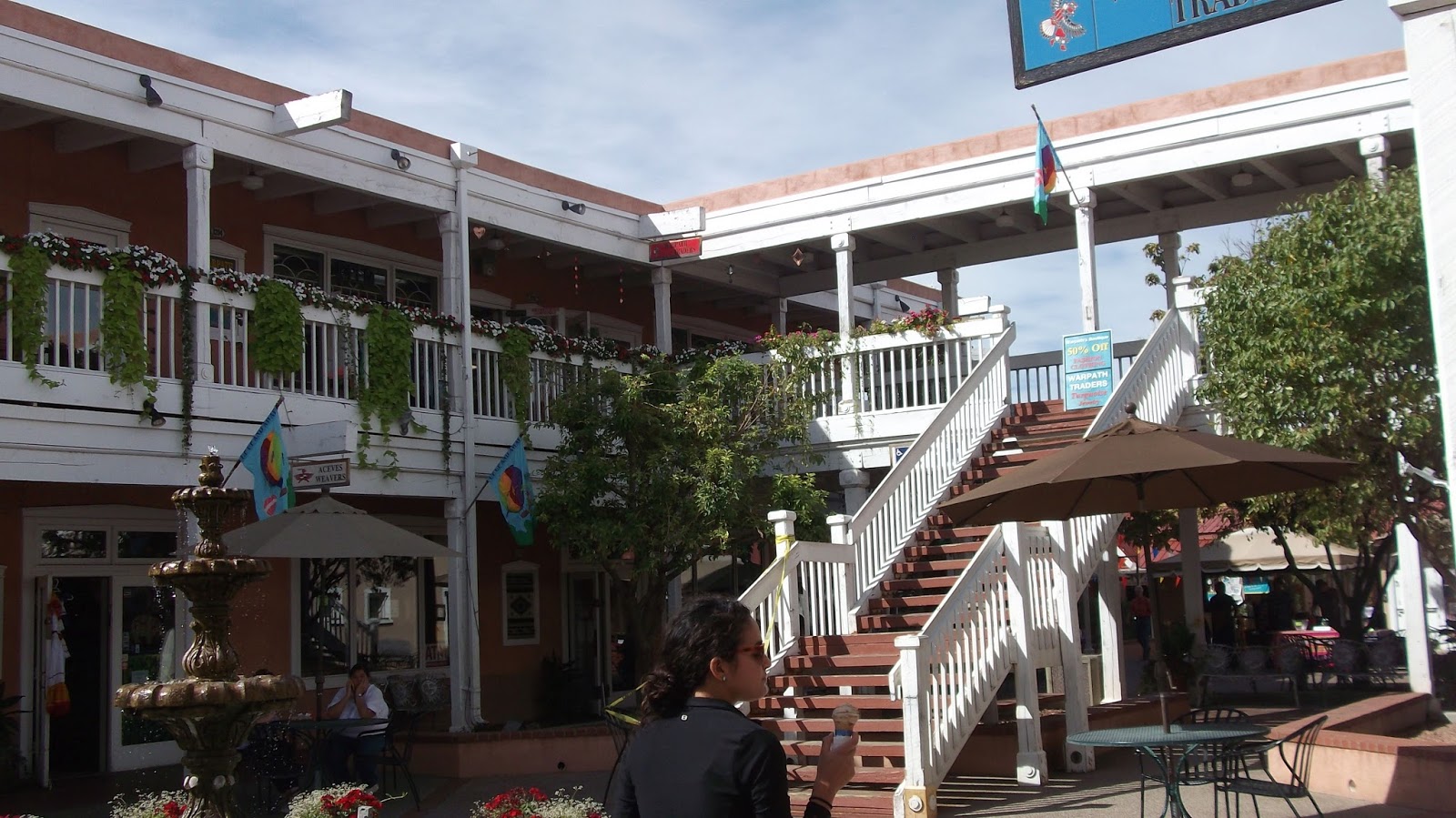
Entering the outdoors ‘mall’, I drifted until I spotted a restaurant.  This was the first and only time anyone asked me “Red or green”. I’d been waiting all week to be asked, and I knew the answer.  “May I have it Christmas?”  I’d like to report on the experience of having red-green chile sauce, but the dish I had it on (a chimichanga) was so large that I didn’t taste much of it.   The only unqualified dining sucess I had all week was on Friday, since after a long day of driving I tended to either look for fast food I didn’t recognize, or better  yet grabbed a chicken and Hatch green chile burrito from Allsups gas stations.  Those were quais-regional AND cheap.
Entrance to the ‘mall’
Plaza central to the left
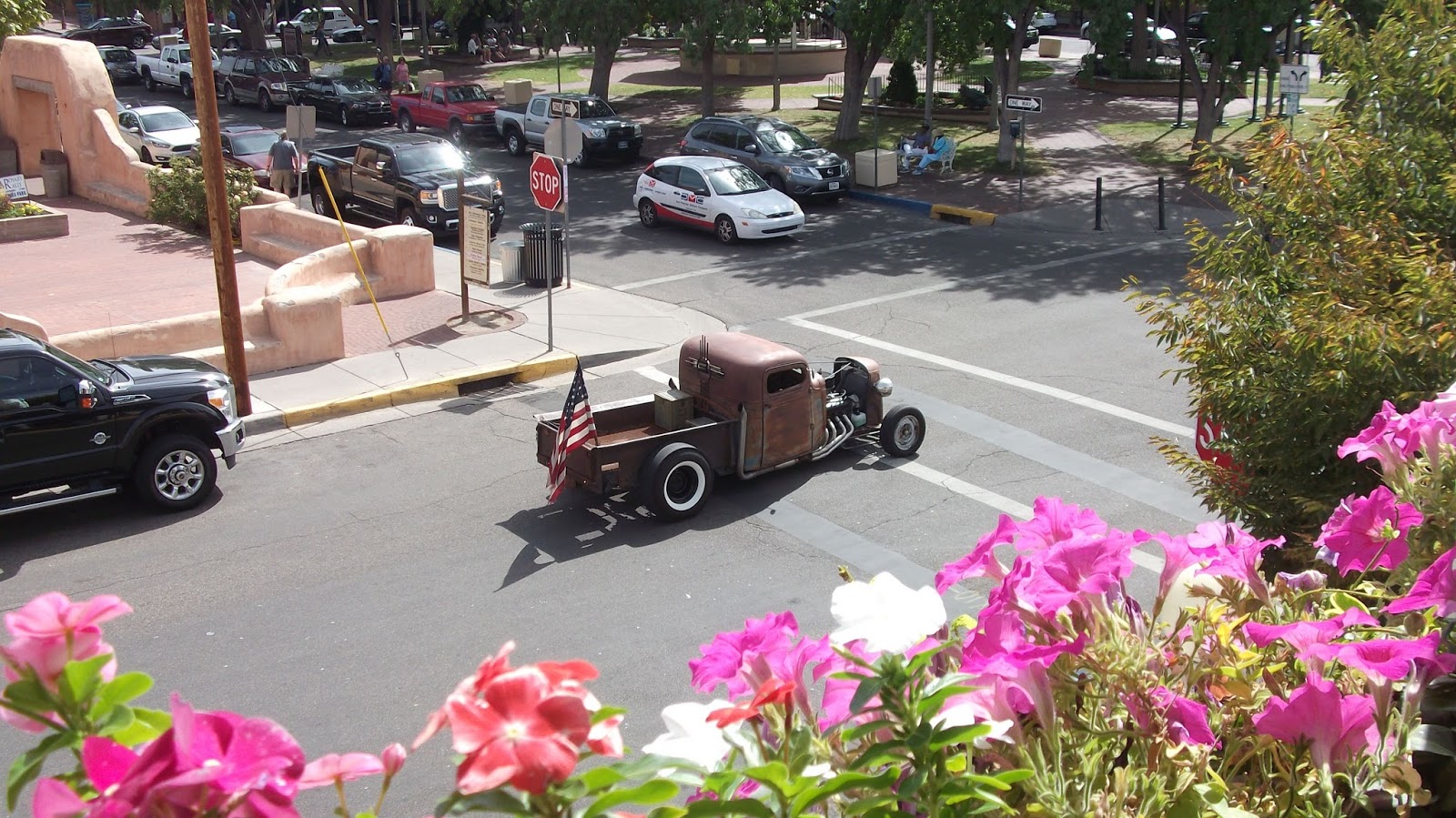
I saw this guy go by four times — looking for a parking place, I’ll warrant
Inset: I SAW THAT CAR IN ROSWELL, TOO! 

As much as I enjoyed the sights and sounds of the plaza,  one place downtown I wanted to visit was the Aquarium, Zoo, and Biopark.  It turns out that the entrances of the Aquarium-Biopark and the Zoo are two miles apart, although on my map they were parked in a continuous blob of green.  The aquarium-biopark was amazing, the zoo was an amazing disappointment.  But first, the amazing.

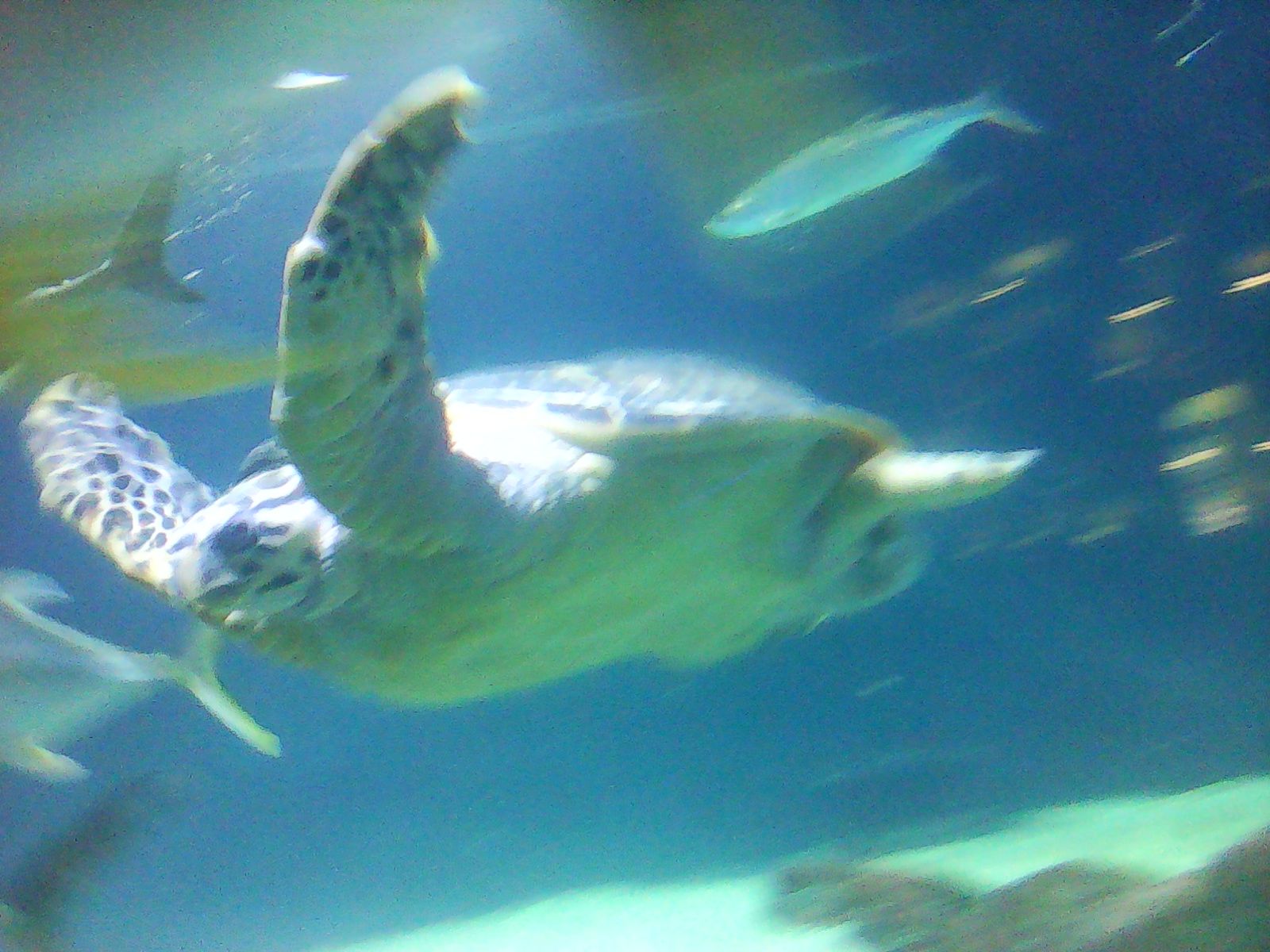
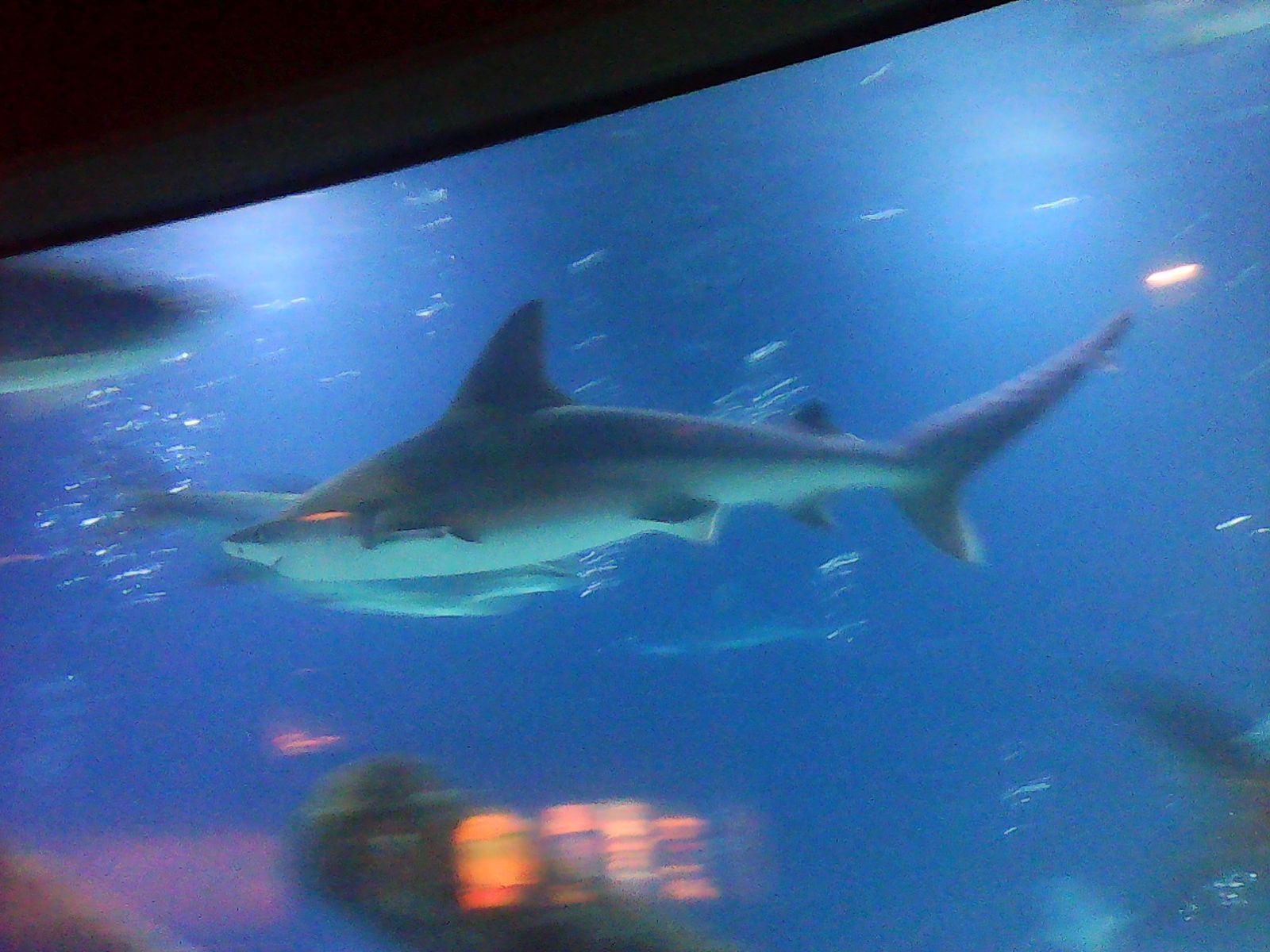
The ‘underwater tunnel’ won me over immediately to the Aquarium, as I’ve been longing to see the one in Atlanta, but that place is an interstate spaghetti bowl. After a few minutes enjoying the sight of fish over my head,  I next encountered a large tube of jellyfish, and a shallow pool of manta rays. One of the rays would ‘surf’ the side of the tank, flashing his underbelly, but they’re so fast I never caught him in the act.  The big attraction, of course, is a floor-to-ceiling tank that features hundreds of fish, including several sharks.

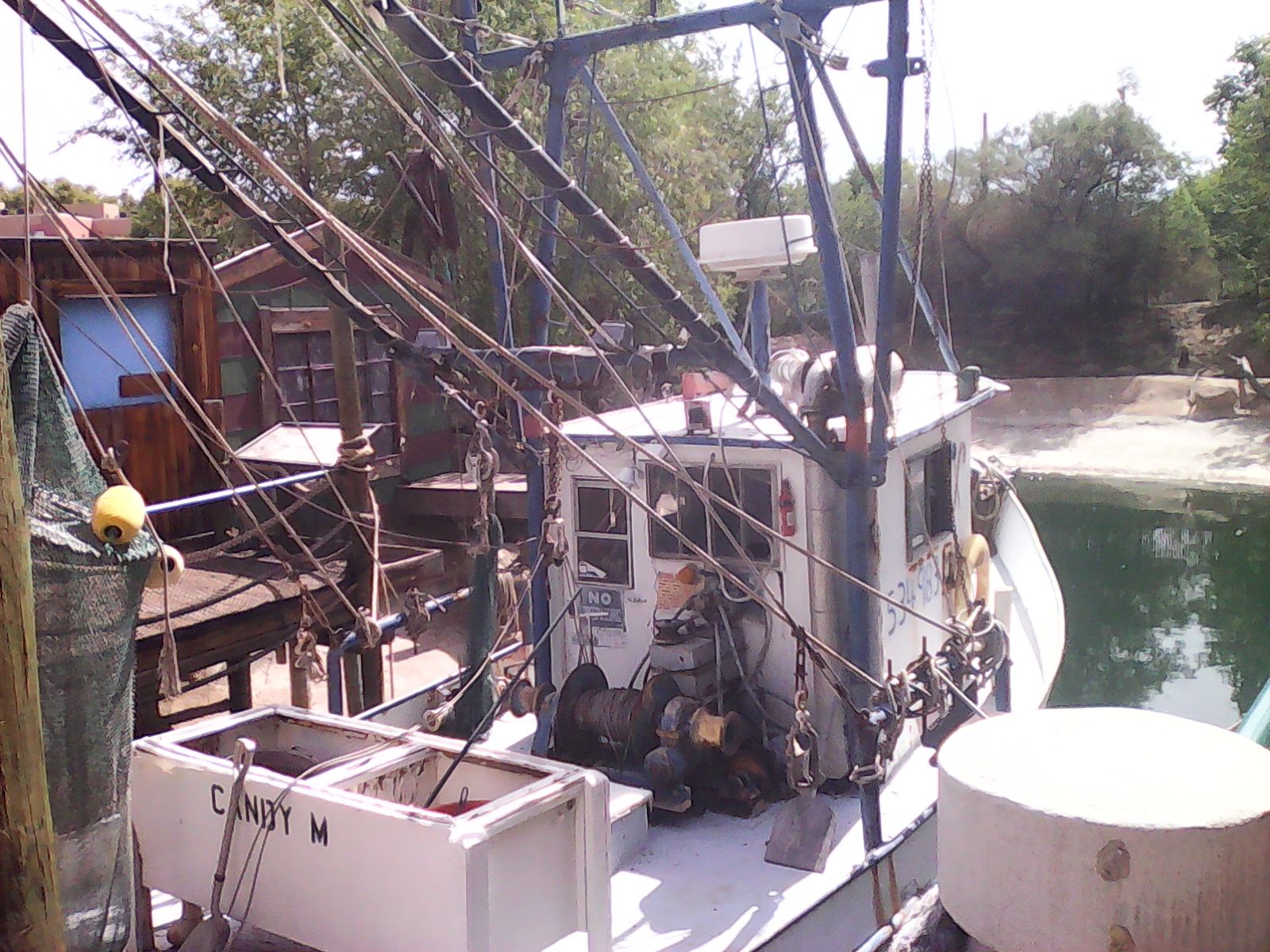
The basement of the aquarium included several model ships, and I spied an actual boat in the back of the place. It may have access to the nearby Rio Grande.

On to the Gardens!

Posted in General | Tagged , , | Leave a comment

Short rounds: explosives and Martians

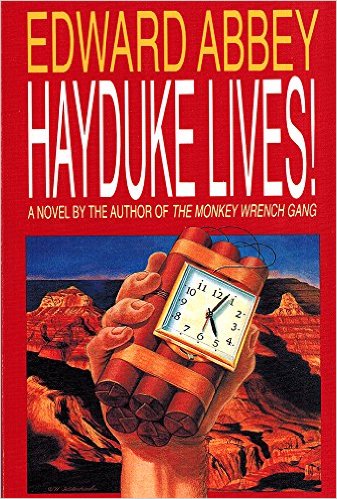
Tonight I finally gave up on Hayduke Lives!, the sequel to Edward Abbey’s Monkey Wrench Gang. The plot only arrives four-fifths of the way into the book, having been preceded by lots of stream-of-consciousness rambling, pointless arguments, and enough breast fixation to embarrass even a frat brother.  There’s more bosom-gazing here than in a supermarket romance novel, making me wonder if Abbey was yanking his readers’ chains. I like Abbey, but not enough to make it the last forty pages. I signed on for manhunts and rants, gosh-darn it!

Another quick comment: while I was waiting for my flight to take me to Texas and New Mexico back in late September (a month ago this very day), I started reading Out of the Silent Planet. I thought a story about a man whose country walk was interrupted by an unexpected trip to Mars might be apropos for a plane ride.  There are some maliciously ambitious scientists, see, performing an experiment, and while doing a favor for an old lady and trying to find her son, Dr. Ransom happens upon them and is abducted. He wakes up to find himself on a ship, and later on a bizarre planet full of creatures who seem terrifyingly weird, but prove to be peaceful and rational company — much more so than the men who abducted Ransom.   The book’s most interesting point is the metaphysics of its world, I suppose, as Lewis infuses science fiction with medieval cosmology. The planets are not merely  islands of matter in an ocean of nothingness, but part of a heavenly plane where ethereal creatures known as Oyéresu rule. Earth is an anomaly, its presiding Oyarsa having rebelled against the heavenly higher-ups.  Having read the third book in the ‘space trilogy’ already, I know the cosmology gets even more interesting, with the Oyarsa of other planets being the basis of the Greek gods.  A medievalist like Lewis definitely brings the unexpected to the table when he tries his hand at science fiction.

Posted in Reviews, science fiction | Tagged , , , , , , | 2 Comments

Reads to Reels: Brave Cowboy/Lonely are the Brave

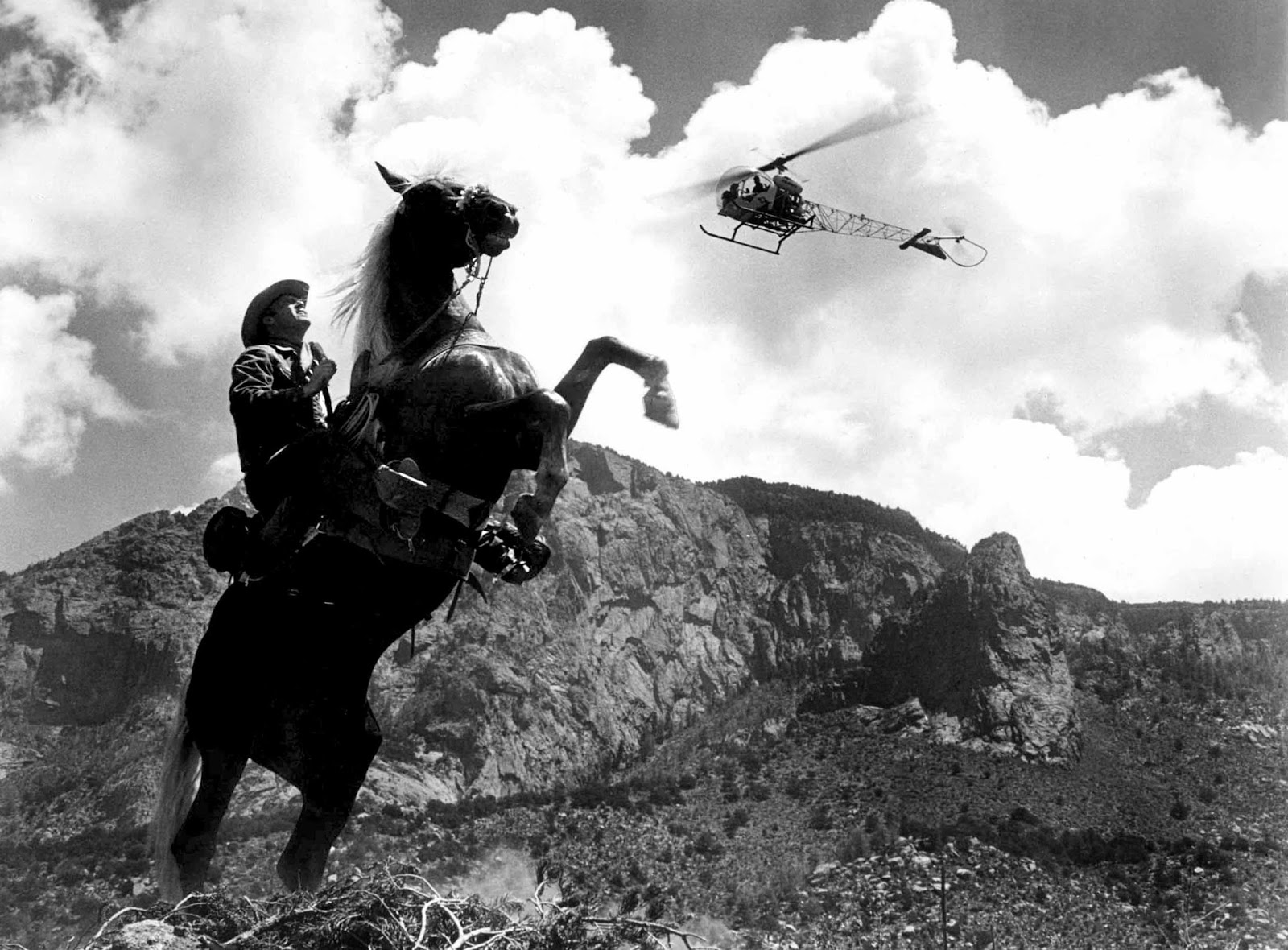
Lonely are the Brave dramatizes Edward Abbey’s Brave Cowboy, and I daresay improves upon it.  As with Abbey’s original, the plot features a cowhand who still lives and breathes in the Old West, thrown into conflict against the forces of the modernizing west. When he learns that a friend is imprisoned, he rides to the rescue, arranging a jailbreak and fleeing to the mountains to elude the law. But in the modern west, sheriff’s posses include Jeeps, helicopters, and CB-radio coordination.

Here again is the solid story, of a man defending his friends and their conscience against cold, bureaucratic tyranny.  The sheriff here is a warmer character, though, played by Walter Matthau, who admires his foe from afar.  The acting in general is superb, and the cast includes many a familiar face aside from the stars. Carroll O’Connor, better known as Archie Bunker, appears  several times as a truck driver….and George Kennedy, whose booming voice and massive teeth appear in Cool Hand Luke to Oscar-winning fame, shows up here as one of the cruel deputies. The cinematography manages to capture the beauty of New Mexico even rendered without color.   The ending, too, is improved with a dash of ambiguity, creating ample reason to believe the cowboy will hit the saddle again.  I enjoyed the music, done by the same fellow who later scored several Star Trek films, and could only find one little fly in the ointment. The cowboy’s friend, Paul, is imprisoned not for fighting the draft, but for helping Mexicans cross the Rio Grande.    I suppose on the eve of American involvement in Vietnam, defying conscription wasn’t quite as palatable as it might have been in the early fifties when the book was set.  (Central characters Jack and Paul had served in the Army, after all; their contempt was not against fighting, but what they and Murray Rothbard viewed as state slavery.)

Lonely are the Brave is easily the best book-to-film adaptation I’ve seen, in terms of faithfulness and cinematic quality.

Posted in Reviews | Tagged , | Leave a comment

The Brave Cowboy

The Brave Cowboy: An Old Tale in a New Time
©  1956 Edward Abbey
277 pages

“Where’re your papers?”
“My what?”
“Your I.D. — draft card, social security, driver’s license.”
“Don’t have none. Don’t need none. I already know who I am.”

When  stock wrangler Jack Burns heard tell that his old friend Paul had gotten himself thrown in the can, he knew there was only one thing to do: get himself thrown in so he could arrange for a jailbreak. So,  riding north he goes on his not-so-faithful horse, Whisky. Two problems:  one, Paul doesn’t want to be jailbroken, because it’s only a two-year sentence and that’s a lot easier for his young family to bear than a lifetime of being hunted.  Two, the sheriff isn’t an old-timey fellow with a tin star and nothing else. He’s got helicopters.

  The Brave Cowboy is a western in the modern era,  and ends fairly badly for those who pay more attention to the ‘western’ part than the ‘modern’ part.    One of Edward Abbey’s earlier works, it features two quasi-anarchists, one of whom is imprisoned for resisting the draft,  and several other characters whose paths violently intersect toward the tale’s end.  It’s a sad story,  almost announcing the Death of the West.    Burns isn’t a lantern-jawed hero on a white horse, but he holds to an older sense of honor, and he counts among his friends more recognizably ‘good’ characters. (Paul is such a fellow,  a pillar of his community who refused to comply with the Selective Service: not because he objected to soldiering, he objected to the government’s assumption of ownership over citizens’ lives.)  Abbey’s terrain description is more functional than poetic here; his talent for conveying the ecstatic beauty of western vistas may have still been in the honing.  What’s not absent is Abbey’s attitude, his righteous beef against the government and corporate power, against anything oversized and overmighty: half the book is a chase scene through the New Mexico wilderness, as Burns on his horse defies and eludes the local cops, State Police, and even the Air Force, while living off the land.

Dated and crude, but it’s hard to lose with a cowboy fighting the Man.  Burns may be a prefigure of Hayduke, from The Monkey Wrench Gang — there’s even a horse named Whisky in Abbey’s sequel to MWG, Hayduke Lives!   Another note: this book was the basis of Lonely are the Brave.

A few interesting covers:

Posted in Reviews | Tagged , , , , | 6 Comments

West of the Revolution

West of the Revolution: An Uncommon History of 1776
© 2015 Claudio Saunt
288 pages

In 1776, the bid of thirteen colonies for independence wasn’t the only interesting goings-on in North America.  From Alaska to Cuba, colonial and native powers were fighting, trading, exploring, and competing with one another. West of the Revolution begins with Russian forays into the Aleutian islands,  moves south to Calofornia, where Spain frantically attempted to create a safeguard after catching wind of the Russians,  and then takes readers across the Rockies and plains until the Mississippi is reached. There, we travel south to Cuba, which was not only a prospering sugar plantation but a potentially powerful trading partner of the Creek people in the Southeast.   Brief and full of interest,  West of the Revolution not only sheds light on what else was happening in 1776, but provides the context for future developments in American history —  the drive towards the Mississippi and the hunger for Florida.  There’s also a rare look into Canada, or rather the Hudson Bay area and still later, a region that encompasses both Canadian and American states. A section on the Black Hills, known to Americans as the home of Mt. Rushmore,  makes plain their importance to the Sioux and other tribes: the Hills are an oasis of rain in a relatively dry region, and for generations a source of food and materials in lean periods.   I discovered this book via a podcast (Ben Franklin’s World) and can pass on the recommendation,  no less for the information on Russian and Spanish colonization as for the tour of North America, this most diverse and extraordinary continent.

Posted in history, Reviews | Tagged , , , , , , , | 2 Comments

Week of Enchantment: Epic? Nay, MAMMOTH!

The natural history museum in downtown Albuquerque is monstrously big, and after arriving at its service doors I made my way around the campus (“building” does not suffice), admiring the way the landscape was sculpted and filled with plants to deliberately portray different areas of New Mexico.  I was very nearly the first person in, and decided to do only the museum tour. There’s a planetarium, but I was just at the VLA yesterday and had seen massive photos of galaxies, not just stars, there.  The museum is so incredibly HUGE that simulated stargazing wasn’t missed. (And…the last time I visited a planetarium, it turned out to be a light show and I fell asleep.)

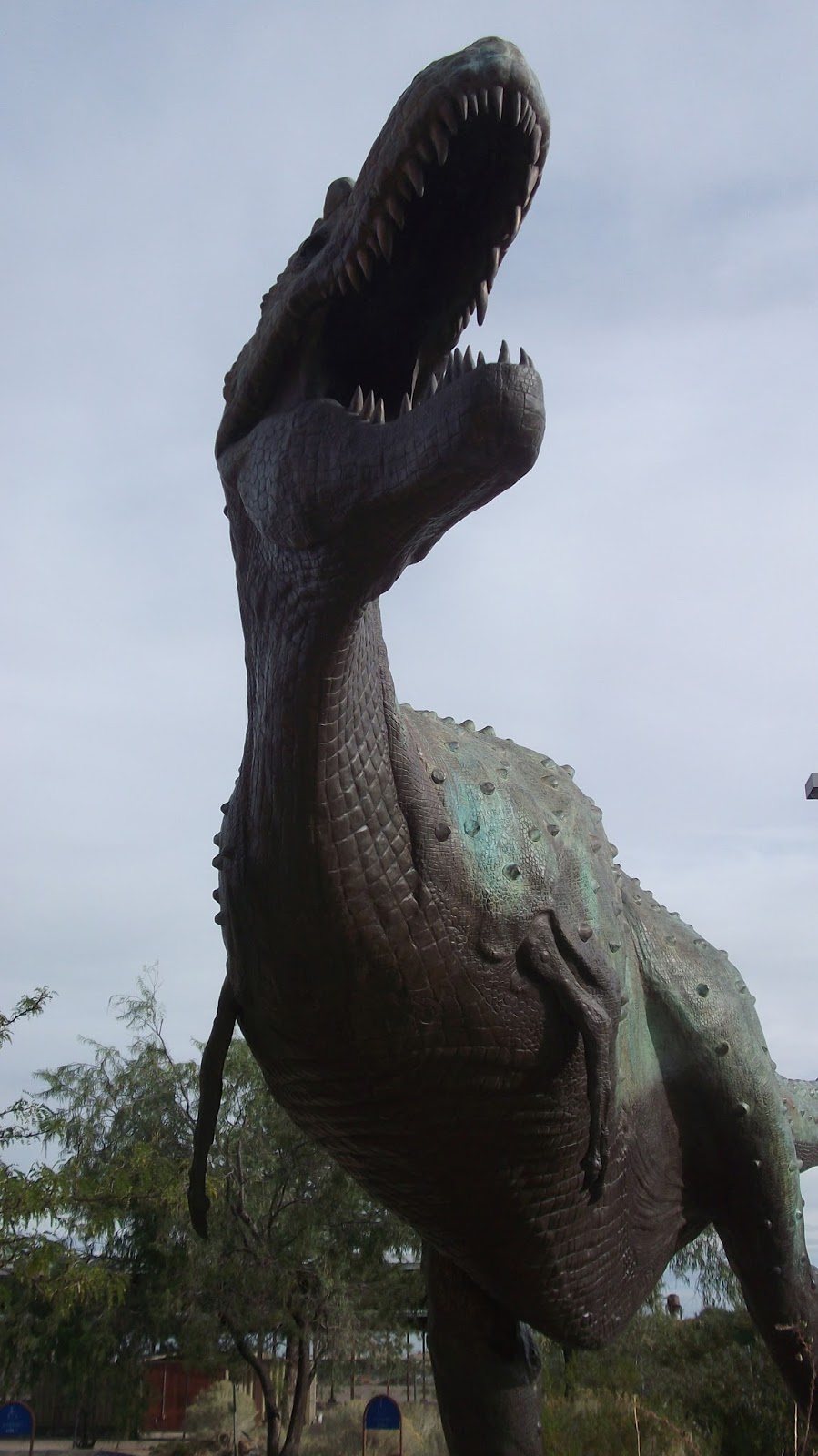
Where to begin with this place?   Its heart and soul is natural history, with an extensive and winding tour through time that involves dinosaurs, the ice age, and early American man.   The museum tells the story through massive skeleton reproductions, murals, ‘real-life’ models, and flat pictures.  Just as Carlsbad gave the definition ‘cavernous’ real weight, here too the megafauna gave ‘mammoth’ a new meaning.   They were imposing even as frames, and people used to summon the courage to attack them for meat!

Note the the man in the foreground for scale.

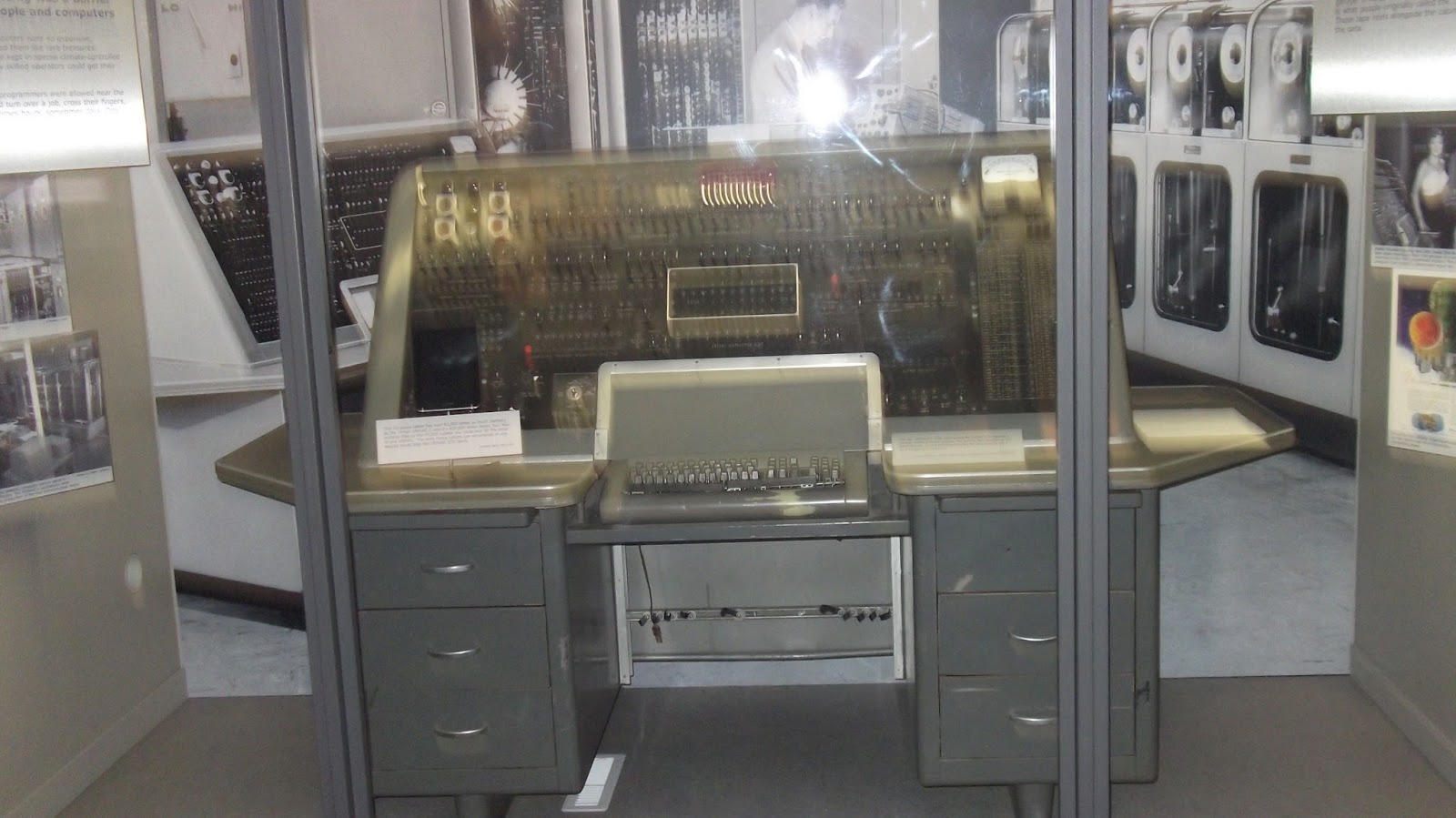
A computer science wing attracted my interest going in, though I found it too noisy; television monitors are everywhere,  with interviews of various people like Bill Gates talking about New Mexico’s role in turning computers from warehouses into pocket conveniences.  They had all manner of interesting gadgets there: early portable radios, an array of vacuum tubes and transistors; teletype machines, even a UNIVAC.

The plate said UNIVAC, and I’ve realized now that UNIVAC is a brand name and not a particular machine. 

 The noise moved me out, though, and into the space science hall. There I played with a Mars rover, rotating its camera around with a joystick. It’s not as easy as it sounds, because the rover’s eyeball isn’t obvious.  Massive models of the planets (“and Pluto”) line the wall, and a small theater offered a depressing film on environmental destruction, ozone depletion, that sort of thing.  Natural history is king here, from the the T. Rex models to the enormous rock collection. There’s even a reproduction of a cave, and live animal exhibits.  In another area, Actual Science is done — there’s a closed off area visible by glass where people were peering into dishes and studying their computers.  Perhaps they were an exhibit: “Science At Work”.   The museum also has live animals, at least fish and reptiles.

Posted in General | Tagged , , , | 4 Comments

Week of Enchantment: Takin’ that Left Turn at Albuquerque

Ever since I arrived in Albuequerque, I’d be haunted by the constant din of traffic. I entered town in the middle of it, and remained surrounded by it. It never ceased — even at three am in the morning, I’d awake and hear the steady roar of the interstate and Coors Boulevard.   Here in Old Town, though, long before tourists and shopkeepers had arrived, I was free from the storm of steel.

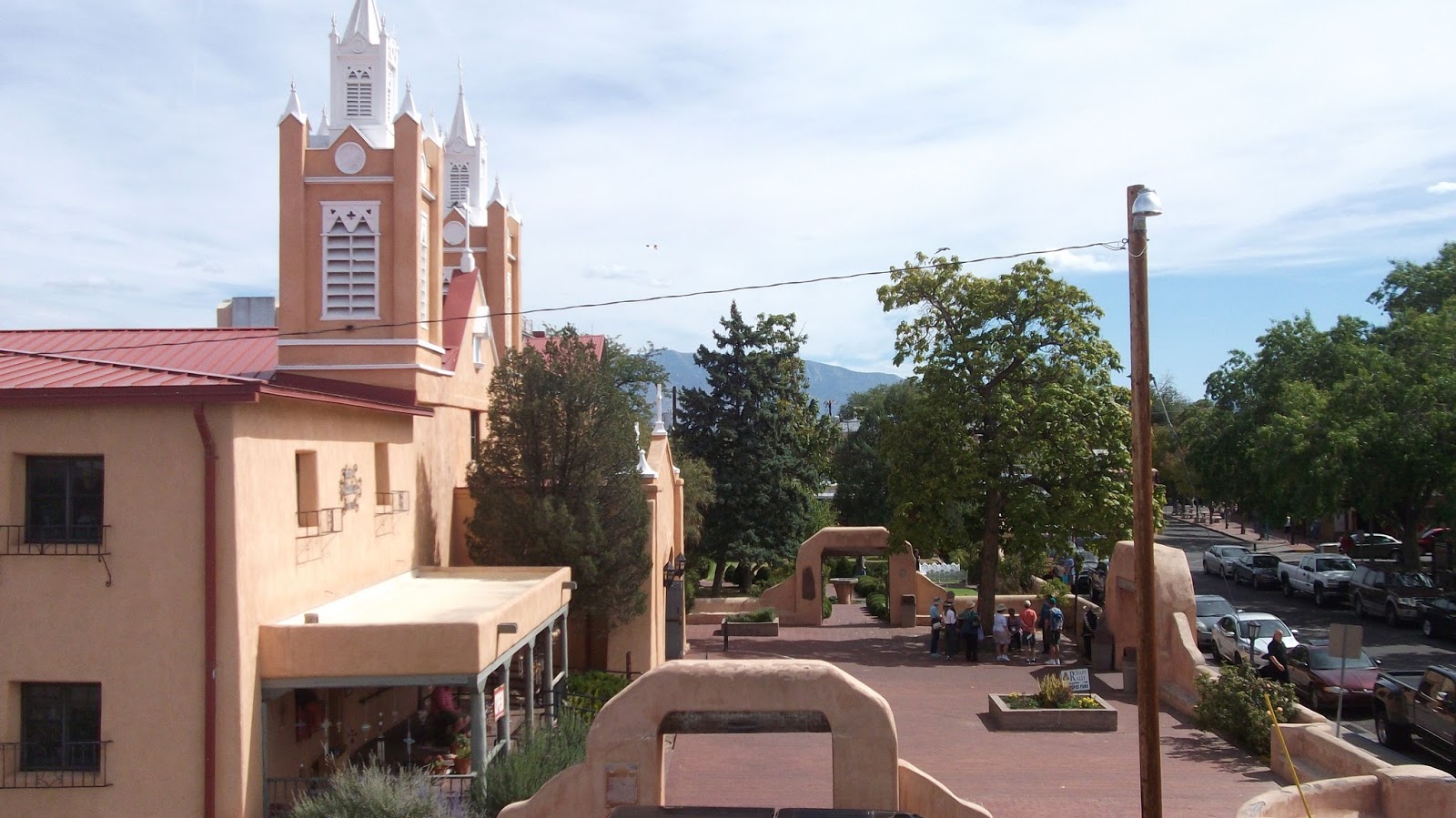
I beelined for the church, of course, it being the largest and most attractive building. Called San Felipes, it was closed for the moment, but early visitors like myself could still wander the courtyard.  After getting my bearings, I noticed the doors being opened and entered.

Sanctuary of San Felipes. Notice statue of Mary on left, posed above an entombed Jesus.  
San Felipes later in the day

San Felipes was the only church I visited whose aura hadn’t been trampled under by throngs of fellow tourists, and I enjoyed five minutes of peaceful silence before anyone else came in. They came armed, with cameras, so I took my own shots and departed.  From here I would wander in and out of streets admiring the architecture.  I decided to see if I could find the science museum, but on the way encountered art.

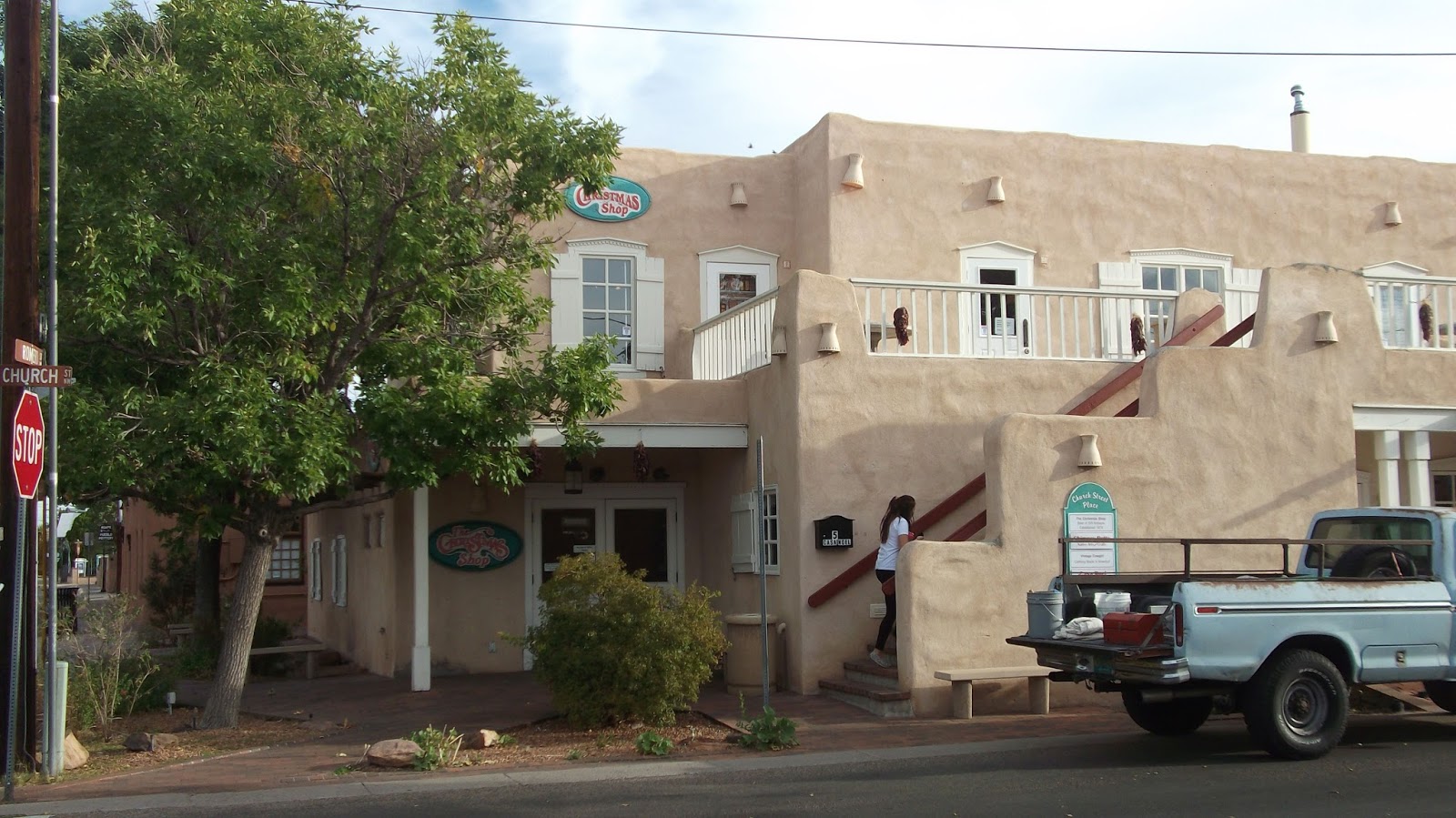
Does that say ‘Christmas Shop’? Yes. Does it refer to red and green chile? No.

Monument to Spanish colonists


To the left of our intrepid explorers lays the rear of the science museum. Onward! 

Posted in General | Tagged , , | Leave a comment

The Sword of Summer

Magnus Chase and the Gods of Asgard: The Sword of Summer
© 2015 Rick Riordan
491 pages

Magnus Chase is the Boy Who Lived.  As a youngster he witnessed his mother sacrifice herself for him, dying at the hands of some evil creature that he remembers as a wolf.  Having been homeless ever since, Magnus is confronted  on his 16th birthday by a lost relative who duly informs him:  Magnus, yer a Norse god!

..okay, the son of a Norse god. Not Odin, of course, just Freya — the fellow we named Fridays after. God of summer and the growing season, apparently.  (Demeter with a beard?) Long ago,  Freya gave up his sword for love, which is unfortunate because he needed it to fight in Ragnarök,  the battle at the end of the world. The only one who can retrieve it from its watery grave is his only living son…Magnus. You know how these things go if you’ve read any Riordan at all. The plot for all the series so far: “Hey, kid, you’re a demigod. The world is ending in a week (by the solstice/equinox/new moon)  unless you and your plucky sidekicks (one girl who can fight, one boy who can’t but is a magic native providing exposition) can find, rescue, and transport the Magic MacGuffin across the continent and frustrate or kill  the minions, mini-bosses, or Monster of Chaos itself.  (It’s hard to take Ragnarok seriously when the world is on the precipice of doom every single novel.) This happens in nearly every book of all the series, which is why I haven’t bothered reading him in a while.

I found Sword of Summer mildly enjoyable in a cartoonish sense.  Very little of Norse mythology’s dreadful awe is here, though it’s impossible to make light of Loki being chained with his slain son’s entrails.  Aside from that Riordan’s world — full of Elvish TV addicts,  Dwarfen Taylor Swift fans, and entirely too many characters who introduce themselves with an interesting monicker, then add, ‘Call me Jack//Otis/Bob’ — is definitely juvenile.   Magnus, introduced as homeless for several years, doesn’t bear any sign of that beyond leaf debris in his hair.   There are interesting moments, though;  Magnus’ Valkyrie,  Samirah, is a hijab-wearing Arab woman who sees no conflict between working for Norse gods and worshipping Allah.  According to her, her family has a history of involvement with the Norse.  There are more subtle jokes, too;  one set of characters consistently refers to their boss as the Capo.  They’re not Sicilian mobsters, though, they’re using the word in its Latin sense: their boss is a head, carried around in a bag.

 As glad as I am to see fiction about northern mythology,  the Norse stories mentioned as background to Magnus’ quests, combined with the mostly-funny chapter titles, are the chief entertainment, aided slightly by more unexpected characters like a deaf-mute Elf and and Samirah.  I might read the second book, but only when in need of a little light diversion, as I was this past weekend.

Posted in Reviews | Tagged , , | 1 Comment