Florida Under Five Flags

Florida Under Five Flags
© 1945 Rembert Patrick
160 pages

Note: I read from the 1st edition. This cover is from the 5th edition,  which has been updated and presumably revised.

The State of Florida entered the Union in 1845; in 1945, presumably as a centennial celebration, Florida Under Five Flags was published to provide an outline history of the state, from its beginnings as a Spanish frontier post through to the ‘present day’. It is a history which can be enjoyed in a single evening, and is amply illustrated with historical art depicting cities like St. Augustine and Jacksonville; photographs of street scenes and prominent personalities are also included.

Florida titular historical accomplishment is having been an object of contention between virtually every European power with an eye toward American colonization. (Fernandina Beach cheekily claims to be the city of eight flags.)  The Spanish arrived first, though Ponce de Leon perished amid his explorations. The French were the first to plant a settlement, though the Spanish bloodily drove them out and began establishing a fuller colony, one with several towns and a network of missions. While Florida was expensive for the Spanish to maintain, its forts were crucial in protecting access to Mexico and the rest of “New Spain”. The English quickly took an interest in Florida, but despite capturing the city of St. Augustine, were unable to triumph over its fortress, the Castille de San Marcos. What eluded them in combat was won in treaties, however, and Spanish Florida became British-controlled West and East Florida — governed from Pensacola and St. Augustine, respectively. Florida flourished under British rule, but would be ceded back to Spain following the American Revolution. Amid the turmoil of the Napoleonic years, Louisiana and Florida were both juggled by France and Spain, and the aggressive interest of the nearby United States made selling the land more feasible than defending it into the poorhouse.

Florida, having been depopulated virtually every time it switched hands, began attracting settlement from the Southern coast; the multitude of planters from Virginia, Georgia, and the Carolinas who took a part in creating a new American state meant that despite Florida’s radically different climate, in culture it was part of the South, and would follow where the southern states led. That meant secession only twenty years after becoming formal members of the Union. Florida’s ports were immediately targeted by the Union navy, falling before the war was even a year old, but Florida itself was spared most of the devestation of the conflict. Only a few minor skirmishes occured within the state, mostly over the control of salt-works. Florida was still subjected to Reconstruction, but plagued by corruption that set back genuine progress for decades. Florida soon recovered, and as railroads unified the state and linked it more firmly to the rest of the county, its cities began growing all the more. A once economically-sleepy peninsula home only to rude huts and subsistence agriculture had been transformed into a prosperous State, one which played an important role in the Spanish American war and which was poised to participate even more fully in American life.

I read this principally interested in colonial Florida. While it is only an outline history, the narrative is perfectly enjoyable as a story. I suspect parts of it would be rendered differently were it published in the modern era, particularly the author’s mere mild condemnation of slavery. I didn’t realize how long Florida took to become fully “settled”; the author writes that Florida’s frontier wasn’t closed until 1920. A book published so long ago is arguably irrelevant for understanding modern Florida, considering how radically it has changed in demographics, culture, and in its standing with the rest of the Union — but as a survey of Florida’s early history, it is perfectly enjoyable and helpful.

Original cover:
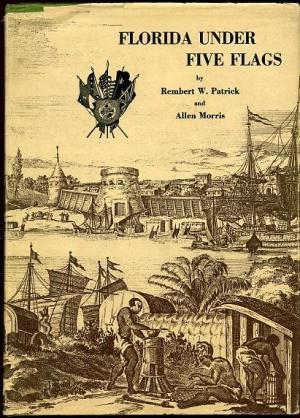
A scene from colonial St. Augustine.

Posted in history, Reviews | Tagged , , , , , , | 1 Comment

Classics Club Spin Challenge

On Friday, the administrators of the Classics Club challenge are going to post a random number from one to twenty. Those of us enrolled in the Classics Club Challenge( reading fifty classics of our choosing within five years) have been asked to list twenty of the books left on our to-read list.  We are then challenged to read that number on our list which matches the random number posted on Friday.

Here below are my twenty possibilities!

  1. The Aeneid, Virgil
  2. The Histories, Herodotus
  3. The Conquest of Gaul, Julius Caesar
  4. The Decline and Fall of the Roman Empire, Vol. I, Edward Gibbon
  5. One Thousand and One Nights, trans. Husain Haddawy
  6. The Prince, Machiavelli 
  7. The Seven-Storey Mountain,  Thomas Merton
  8. War and Peace, Leo Tolstoy
  9. The Hiding Place, Corrie ten Boom
  10. The Swiss Family Robinson, Johann David Wyss
  11. Canterbury Tales, Chaucer
  12. The Education of Henry Adams, Henry Adams
  13. Moby-Dick, Herman Melville
  14. The Jungle, Upton Sinclair
  15. A Farewell to Arms, Ernest Hemingway
  16. The Sun Also Rises, Ernest Hemingway
  17. Invisible Man, Ralph Ellison
  18. East of Eden, John Steinbeck
  19. Catch-22, Joseph Heller
  20. Love Among the Ruins, Walker Percy
I’m working on one of these presently, so perhaps I’ll get wildly lucky and get it.  I am doing well on my challenge,  staying right on target: I’m hovering at the 50% mark with two and a half years left.   
Posted in Reviews | Tagged | 6 Comments

Real Music

Real Music: A Guide to the Timeless Hymns of the Church
267 pages
© 2016 Anthony Esolen

In his book Out of the Ashes: Restoring American Culture,  Anthony Esolen devoted an entire chapter solely to music. Here he does one better! To sing is to pray twice, wrote St. Augustine, and Real Music demonstrates that emphatically. There is nothing quite like the musical tradition in Christian liturgy; a newcomer to an Anglican or Catholic church may first appreciate the mere sound of the organ or harp, but when time is invested in these services — when one attends throughout the year, for several years — the real beauty and power of its hymns, offertories, anthems, etc. reveal themselves. These hymns are not merely pretty lyrics put to pretty music, but are themselves poetic articulations of the Church’s theology and scripture. The Christian music tradition can do much more than make a listener feel “nice”; hymns can fill the soul with beauty and the mind with poetry. Esolen attempts to convey this experience not over a course of years, but into one book, devoting different chapters to distinct areas of the tradition. He here covers Eucharistic hymns, hymns of glory and penitence, hymns celebrating life and challenging death. Esolen does not merely present hymns to the reader and comment on their theology; he guides the reader through how the hymns’ very meter and grammar strengthen the meaning. This book is a treasure for Christians who love traditional hymnody, or who have heard it on the wind before and yearn to know more about it.

Posted in Reviews | Tagged , , , , , , | 2 Comments

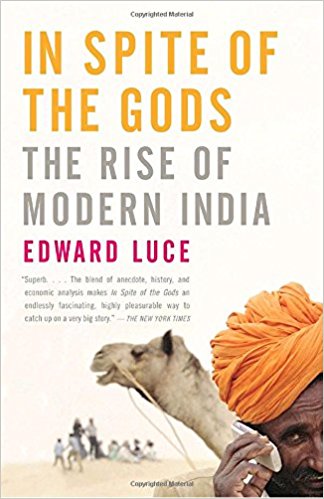
In Spite of the Gods

In Spite of the Gods: the Rise of Modern India
© 2007 Edward Luce
400 pages


In Spite of the Gods appraises India’s culture as its ancient civilization enters the 21st century as the world’s largest democracy and one of its largest economies.  Its author, Edward Luce, lived in New Delhi for years as the bureau chief for the Financial Times, and traveled throughout India for reports and interviews.   While This Brave New World  evaluated how quickly and thoroughly India was approaching the ‘standards’ of modernity (public health, political and economic participation, etc),  In Spite of the Gods  looks more broadly at how India’s deeply-rooted culture is digesting the momentous changes of the 21st century.  I say digesting because the author holds the view of many that India’s culture has the strength of the ages; it is ancient, diverse, and resilient. It does not collapse in the face of change; it incorporates aspects of change while preserving itself, rather like Buddhism was digested into Hinduism, changing it but not prevailing over it.

  This book is never far from the person and work of Jawaharlal Nehru, who jokingly referred to himself as the last Englishman to rule India.   Nehru was India’s first prime minister after independence, and because so many of the other founding generation died within a few years of achieving their goal, he played an outsized role in shaping the legacy of independence.   Nehru’s statement can be considered seriously not just because he was educated in England, but its modernity shaped his mind and character;  while Gandhi’s vision for India was framed within its own tradition, Nehru’s was more of an English intellectual, a westerner: his view of progress involved massive factories, a state-administered economy, secularism, and so on – not village anarchy and Hindu tradition.   Nehru lives in India not simply through his family, who are invariably involved in national-level politics, but because his legacy is continually tested.

 Nehru’s economic legacy is slowly but surely being discarded, for instance, plank by plank; the “license Raj” that he and his descendants established to ensure that India’s economy didn’t become another outpost of western capitalists has indeed done its work of preventing outside investment in India…but that is increasingly not something people want, and had the further effect of squelching growth within India.  Only when the Raj began being dismantled in the early 1990s did India join China as one of the “Asian Tigers”.     Nehru’s secular vision is likewise being tested by the healthy support of Hindu nationalist organizations.   The essential problem there, Luce maintains, is ethnic-religious nationalism set against India’s diversity will create nothing but partisan reaction and more trouble.  This book was published years before  the election which brought Prime Minister Modi  — representing a nationalist party – to power.   While Luce presents the BJP as only an ethno-nationalist party, whom he likens to the fascists in their focus on  the tribe and their gods,   another author (Manuel, This Brave New World) attributed the BJP’s success to Indians’ desire for more economic freedom.

Luce covers much else;  the persistent influence of caste, for instance,  which Gandhi deplored and which the ‘untouchables’ continue attempting to escape from via politics and religion.  Likewise, he devotes a chapter to the mythic important of The Village in the Indian imagination, where it is not simply an artifact from the past but infused with the same spiritual importance the west used to place in families and the polis.  Luce notes that much of India’s economic growth has in fact been nurtured by cottage firms that don’t necessarily need metropolises and big factories, and that Nehru’s fixation on massive capital hobbled India with debt at a time when her people  didn’t have an economy to handle it. There is much else to say,  but in short – In Spite of the Gods is compelling for outside audiences who are trying to understand India’s role in the global community. It’s more personal and gossipy than Brave New World, but I would read the two books in tandem.

Posted in Reviews | Tagged , , , | 4 Comments

Selma 1965: The Photographs of Spider Martin

Selma 1965: The Photographs of Spider Martin
© 2015 University of Texas; photography Spider Martin
128 pages, 80  photographs

During the 50th anniversary of the Selma March back in 2015,  one of the more popular exhibits in the city was a public showing of Spider Martin’s photography. Martin, named for his skinny, agile frame — and perhaps his ability to clamber up a tree for particularly engaging shots — covered  all three march attempts in 1965,   taking some unbelievably  close to the action.   Selma 1965: The Photography of Spider Martin collects Martin’s best material to present a visual history of the entire campaign.   Although virtually all of the shots are available in an online gallery,  here they are presented with both a historical introduction covering the Selma movement, and with captions which explain what is happening  and who is involved. The editor emphasizes John Lewis’ role, pointing him out in every picture he appears in.   For those readers who have only seen the movie Selma, Lewis was one of the young Selma leaders who reluctantly ceded the leading position of the local movement to King and his organization.    While the photographs are utterly remarkable first for having captured one of the pivotal moments in Civil Rights history, they also have artistry to them; one challenging photo has Brown Chapel mirrored in a man’s sunglasses as he stares at the building. Others capture fleeting  instances. While most photos of Martin Luther King depict him in his role as a Civil Rights Leader,  full of confidence and courage,  in one shot he is caught in a more humbly human expression, one which is  curious and anxious,   Martin’s gallery is utterly worth looking at, and below is a selected list of links, the title of which describe the moment for those who need a caption.

1. Lewis and others praying before starting the infamous first march which was attacked in Selmont by State Troopers and a county posse.
2.  The first march, descending to meet a line of troopers.
3. The moment in which charging troopers hit the first ranks of the marchers
4.  The marchers flee for their lives, leaving many of their number behind injured. There were no fatalities, however.
5. State troopers pursued and harried the marchers across the bridge and for several blocks back to Brown Chapel
6.  The Tuesday following, King arrived to lead another attempt. Again troopers met them  at the bridge,  reading out a Federal injunction legally forbidding King to march on the state highway until questions of legality and safety were addressed. King here listens as the injunction is read.
7.  After the first bloody march was broadcast on television, King issued a national call to link arms, asking members of the clergy nationwide to join him. The city was flooded with outsiders, much to the horror of those not interested in the movement.  Here Selmians and those who joined them clear the bridge and  start the long three-day trek to Montgomery.
8.  To ensure the marchers’ safety, the Alabama National Guard was used by LBJ to stand guard. This highway is now a much wider link between the cities.
9.  The three-day journey would have been a challenge for anyone, but this man apparently did it on crutches.
10. King delivers the “How long? Not long” speech at the State Capitol building, facing Dexter avenue

Posted in Reviews | Tagged , , | Leave a comment

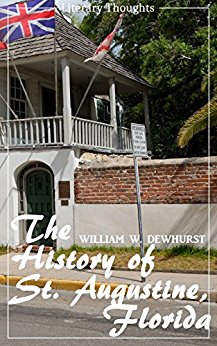
A History of Saint Augustine, Florida

A History of Saint Augustine, Florida
© 1881 William Dewhurst
196 pages

St. Augustine is the oldest European city in North America, founded by the Spanish in 1565.  Sitting at the mouth of the St. John river in northern Florida, it originally served to help defend Spanish ships from mischievous English pirates.   Its history offers students a view at the turbulent story of Florida during the colonial period; first an object of fixation to Spain, France, and Great Britain,  and later on one to Spain, Great Britain, and the United States.   Although Dewhurst’s A History of Saint Augustine, Florida is an older work, a product of the 19th century, modern readers will find its author’s hatred of slavery and defense of native Seminoles, Creeks a refreshing departure from that century’s usual conceits.   It combines colonial history with accounts both tedious and fascinating, and is largely more about colonial affairs using the city than about civic life.

 I didn’t realize until reading this how little I have ever thought of historic Florida. During the American Revolution, for instance, it was technically an English possession, a colony even; but because England had acquired Florida from Spain so recently (1763,  a hair over ten years before), and because the initial governors scared all the Spanish away, England had to repopulate the peninsula with new settlers–  and not just English-types and Scots, but Greeks. These newcomers shared no history or notion of common struggle with the northern colonies, and so when thirteen of their neighbors became states, the Floridians ignored invitations to the Continental Congress.  Less is said about St. Augustine during the Civil War, for the city was  captured by the US Navy before the war was a year old. Those who despised  the thought of living under foreign rule left the city, leaving a few loyal Unionists and a larger population who didn’t  care one way or another.  The author ends the book by saying that Jacksonville’s railroad connection to St. Augustine will keep it popular as a health resort,  winter haven, and site of tourism.

This little introduction to St. Augustine has only confirmed my realization (in reading The Spanish Frontier in North America) that Florida’s colonial history warrants more attention!  I will be visiting St. Augustine within a few month’s time, so do not be surprised to see more histories of Florida and St. Augustine in the weeks to come…

Posted in history, Reviews | Tagged , , , , , , | 6 Comments

Miseri

My podcast and lecture time this week has been devoted to a series of lectures on southern literature and the like, all at least an hour long. This Wednesday being Ash Wednesday, however, and the start of Lent, I thought I would share little music. Specifically, a piece by Allegri called “Miserere”, which puts Psalm 51 to music.  It’s a favorite piece of mine not because I can follow the words, but because the soprano part has several moments of exquisite glory.  (One of the first of which is around 1:48- 2:05 in this video).

The Psalm is one of repentance, and is rooted in the story of David, Nathan, and Bathsheba. As it goes,  King David spied a beautiful woman bathing from the roof of his palace, while all the other men were off at war.  Enraptured, David sent for the woman and pursued her as a lover despite her being married to one of his captains. When she revealed she was pregnant, David realized his reputation would be destroyed — and so he attempted to sully it further, by calling for Bathsheba’s husband Uriah to return from the front. David then encouraged Uriah to spend some family time with his wife, but Uriah refused; how could be he comfortable in bed with his wife when his men were out on the lines?  Uriah persisted in this noble refusal even after David got him liquored up, so the king sent  Uriah to the roughest part of the lines out of desperation. There he died, David married Bathsheba, and everything stayed hush-hush.

Until….a preacher named Nathan showed up and delivered to David a sad story about a rich man who wanted to entertain some guests, who so decided to seize his poor neighbor’s pet lamb and kill it for dinner, rather than departing with any of his own stock.  David, incensed, roared that the man should be put to death, at which point Nathan replied….thou art the man.  Enter the Psalm.  I’ve linked to the full version there, but here’s a small portion:

Behold, thou desirest truth in the inward being;
    therefore teach me wisdom in my secret heart.
7 Purge me with hyssop, and I shall be clean;
    wash me, and I shall be whiter than snow.
8 Fill[b] me with joy and gladness;
    let the bones which thou hast broken rejoice.
9 Hide thy face from my sins,
    and blot out all my iniquities.
10 Create in me a clean heart, O God,
    and put a new and right[c] spirit within me.
11 Cast me not away from thy presence,
    and take not thy holy Spirit from me.
12 Restore to me the joy of thy salvation,
    and uphold me with a willing spirit.


Posted in Reviews | Tagged | Leave a comment

Selma Shots

As a followup to my review of a recent history of Selma, I’d like to share some photographs of my hometown I took a few years ago (2010 – 2011) when I was trying to experience it as a tourist might.

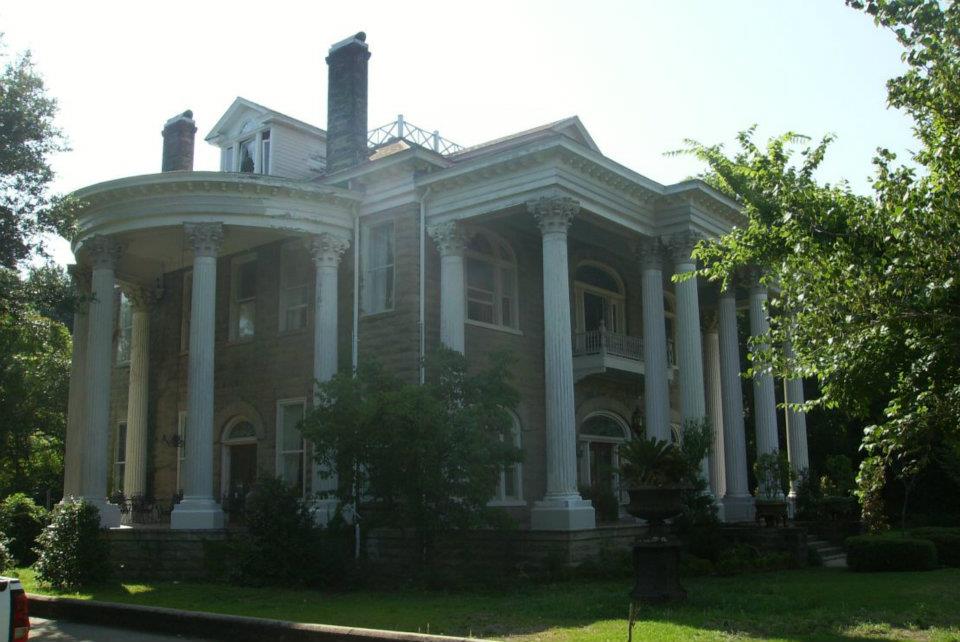
Sturdivant Hall, easily in the running for Selma’s most picturesque building. Originally a home, it now stands as a museum with gardens around it. There are several private residences that rival it for sheer beauty, but Sturdivant Hall  is often used on tourism brochures.

My favorite house in Selma, sited on Lauderdale street. 
A similar home on Parkman Avenue. 
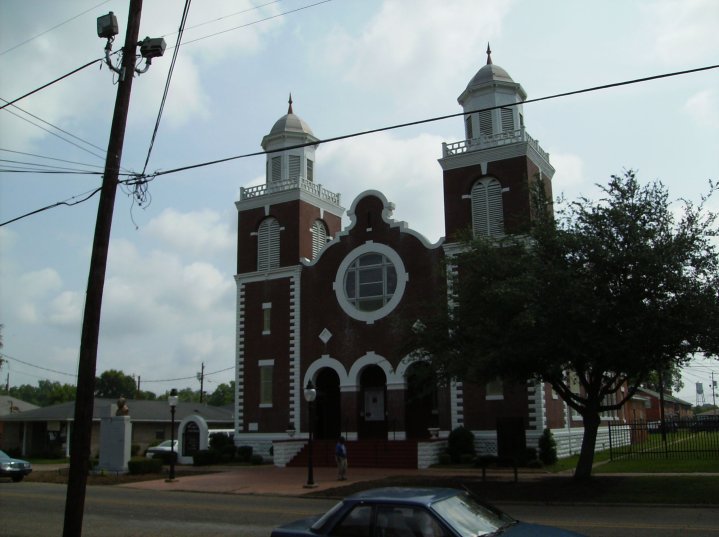
Brown Chapel, headquarters of the Selma movement during the Civil Rights era. 
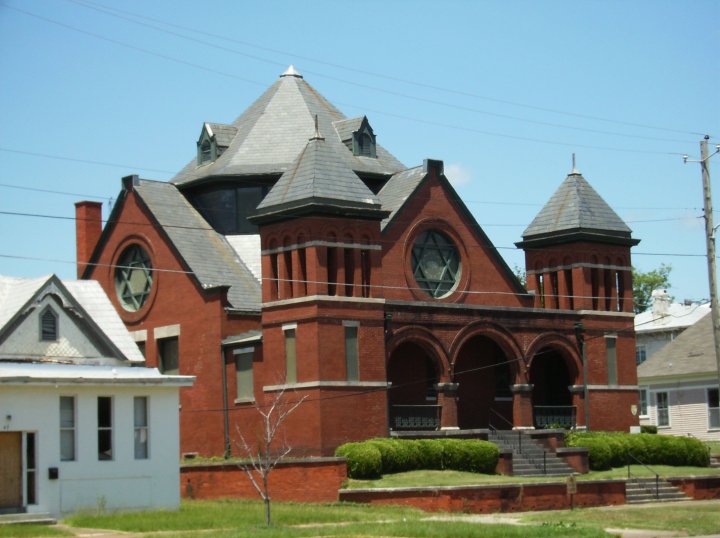
Temple Mishkan, testament to a Jewish community that was once considerable. In the late 19th century, Jewish merchants lined Broad Street. The interior of the Temple is unusual for having stained-glass windows depicting David and Esther; images of people are not common in Jewish houses of worship. 
My favorite building in Selma. St. Paul”s Episcopal.  When I began walking around Selma I found St. Paul’s particularly irresistible. I believe  part of the magic is its courtyard; partially enclosed from the street by a low brick wall, it’s framed by the church on the left, a parish hall on the right, and cloistered administrative offices in the rear. 
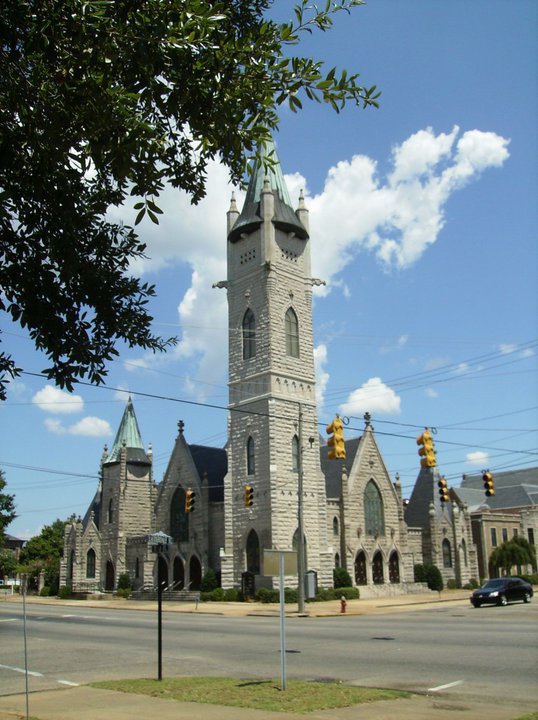
The tower of First Baptist edges out its neighbors’ — Cornerstone Presbyterian, St. Paul’s Episcopal, and Church Street Methodist. It’s a neogothic structure that gives Selma part of its signature skyline. 
Who knew Baptists like gargoyles? 

Curiously,  there are just under a dozen homes in the city that have a marked Spanish-southwestern influence to them; some merely used stucco, and one looks like a hacienda buried in the jungle.  This is a sedate example. 
There is no shortage of fine homes standing in Selma,  and since the obscene destruction of the Hotel Albert, the city’s citizens have been more conscience of the need to keep some abandoned beauties in good repair.  Many former residences are now offices for lawyers, dentists, and the like. 
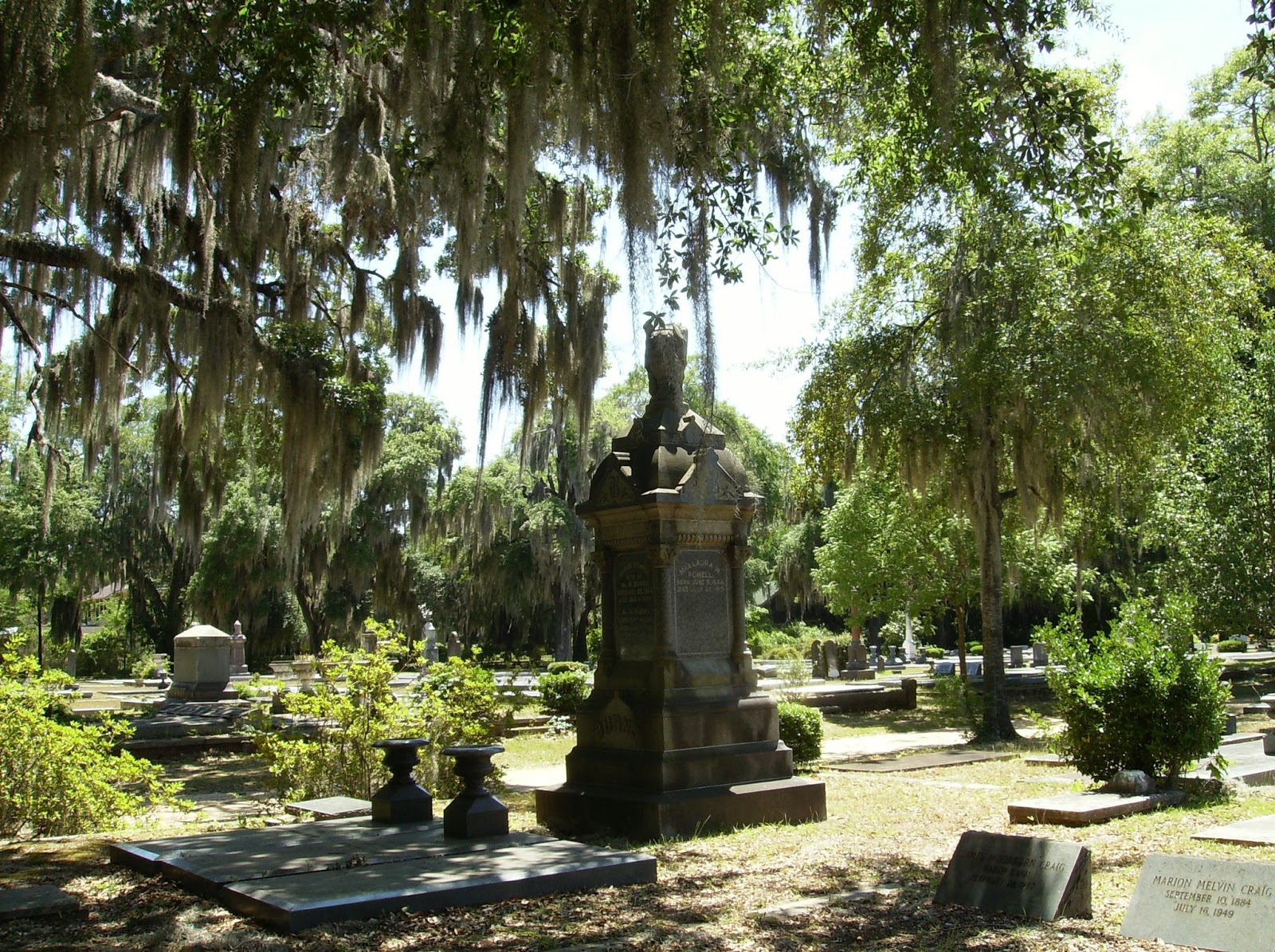
Live Oak Cemetery, running alongside Dallas Avenue, is an eerie place to visit; filled with ornate monuments to previous generations, guarded by Spanish moss. 

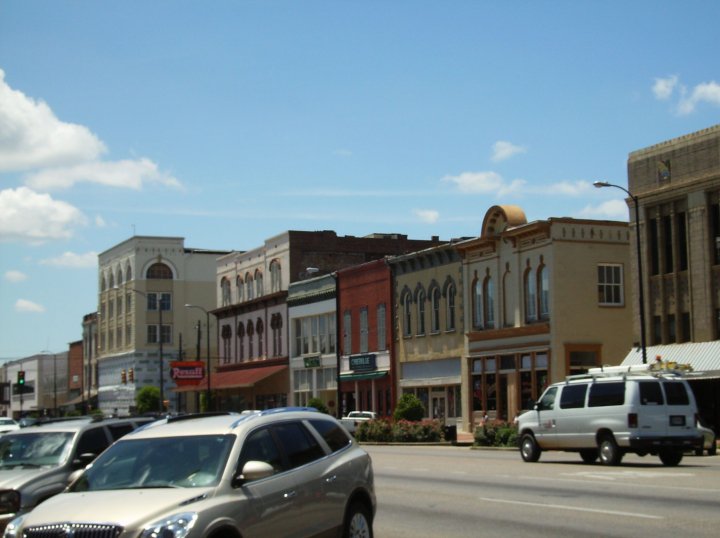
Not all of Selma’s downtown buildings are in use, but both the government and private foundations do their best to ensure that this kind of heritage is preserved. 
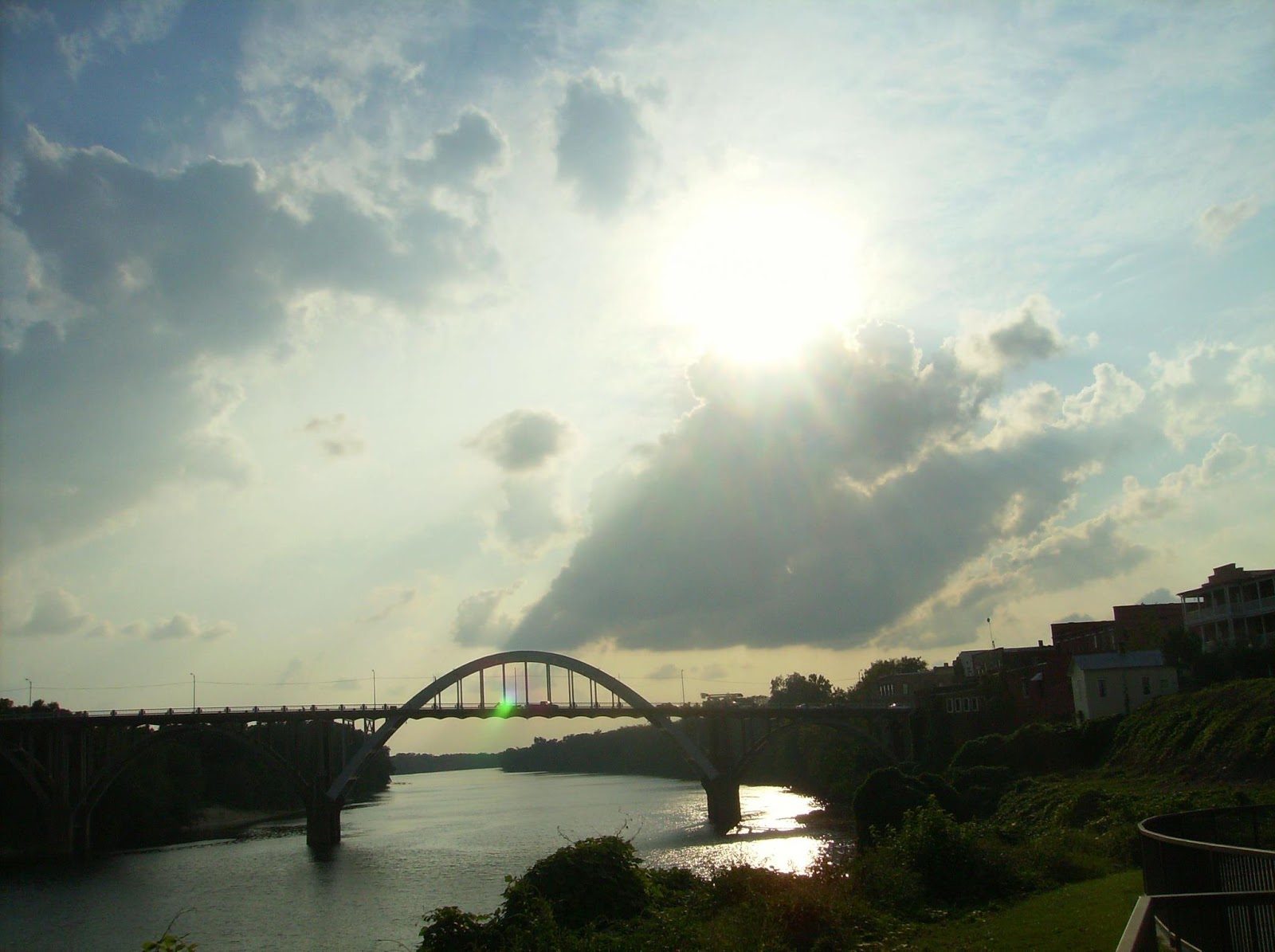
Let’s end this little peek at Selma with its most iconic structure, the Edmund Pettus Bridge.  That little yellow building on the right is the Bridgekeeper’s house, which formerly controlled another bridge which could pivot to allow ships passage. These days the only ships on this stretch of the Alabama are pleasure craft — fishing boats and the like — though bodies like the Black Warrior River still bear the odd cargo ship. 

Posted in Reviews | Tagged , | 12 Comments

Selma: A Bicentennial History

Selma: A Bicentennial History
© 2017 Alston Fitts III
384 pages

On December 4th, 1820, the Alabama legislature granted a town charter to a burgeoning community established on a high bluff overlooking the Alabama river. The place, named after a cities of heroes from a Scottish poem in the romantic period, would quickly create its own heroes and stories. In Selma: A Bicentennial History, longtime Selma resident Alston Fitts delivers a celebratory history of the town and its proud yet troubled heritage, in advance of its 200th birthday.  He builds on his initial history (Selma: Queen City of the Blackbelt),  which was published in the 1980s; here, his initial history is greatly expanded, using references to other works to take readers through the Civil War, Reconstruction, and the 20th century through one city’s experiences. The work never shies away from the city’s most controversial moments, but strives to be fair to all parties. For a Selmian, this is a history that does the city justice, with a multitude of fascinating little stories based not just on old records, but interviews with the city’s residents. Their many contributions to the book, in interviews and photographs, make it a true reflection of the city rather than just the view of one author.
To those only familiar with Selma’s modern history, as a small city only remembered for being the site of the Civil Rights movement’s crowning moment, Selma  reveals another place — a center of industry and trade that rivaled Montgomery for prosperity and political influence; a city sure enough of its future to argue for its selection as the Confederate capital during the war between the States.  Selma and its mother county, Dallas,  contained some of the richest soil in Alabama, and both civic and business leaders made the most of that wealth by aggressively pursuing railroads; long after the great river had ceased to be the chief commercial artery of the state, Selma’s network of banks and railroads were poised to prosper further in the 20th century. Its rails and river made a commercial center, but it was no slouch in regards to industry:  Selma housed an arsenal rivaling Richmond’s as well as a principal naval foundry during the war, making it a target for Union troops; still later, during World War 2, Selma hosted an air force base that survived into the 1970s.    Selma’s wealth was not merely monetary, however; her citizens were truly dedicated to the city, pouring themselves into creating civil institutions like schools, hospitals, and the library. They created block after block of magnificent buildings, many of which still stand today: the historic district of Selma is one of the nation’s largest. 
Selma’s past as an agricultural titan would bear unexpected fruit throughout the 20th century, however. The economic culture of the antebellum South meant that Selma and Dallas County’ wealth came from fields worked by slaves,  to the degree that Dallas County  has maintained one of the largest black populations in Alabama for generations. When Reconstruction began in the postwar South, it contributed many black businessmen and politicians.  These gains would fade and be reversed by the end of the 19th century, however, culminating in the establishment of Jim Crow segregation laws and the 1901 Alabama Constitution. The latter document established barriers to voting which included poll taxes, property holdings, and the explication of Constitutional articles; these requirements together reduced the black voting population in Dallas County from several thousand to under a hundred.  These barriers, disenfranchising poor blacks and whites alike — and flying in the face of Alabama’s original constitution, which incorporated universal white male suffrage — would not fall for over sixty years.   Selma entered the national spotlight again in 1965, when a local voting league invited Martin Luther King, Jr. to help draw attention to the cause of suffrage in the city. Fitts notes that the league was able to accomplish what it did largely because the black community in Selma was so healthy, with a strong middle class supporting several hospitals and two colleges. One of the most dramatic moments of the Selma campaign, for instance, was the mass support black teachers lent to it when they absented themselves from teaching to march instead.  Visiting in 1968, King himself was astonished by the progress of the black community, and the strengthening relationship between it and the city’s white population.  Legendary mayor, Joe Smitherman, had just been elected to the office in ’65, and continued to sit the big seat throughout the rest of the century in part  because he made himself a ready ally of of the black community. Unfortunately, racial harmony would be disrupted as Selma entered the 1990s,  as a certain group of lawyers created such a hostile atmosphere in the city that one of the state’s most integrated systems fell to pieces.  Still, the city is doing what it can to move past that episode, as the actors involved are now dying off. Perhaps their bitterness will buried with them.  The city now has a young mayor in Darrio Melton who has already demonstrated  a strong intent to scrape away the old barnacles and begin making progress once more. 

As a modern history of Selma, Dr. Fitts has done a superb job of presenting the most essential elements of previous histories, connecting them to broader histories of the South and southern institutions (black churches, for instance, via use of Wilson Fallin’s Uplifting the People),  His heavy use of interviews and the photographs of Selma citizens make it a community story, almost, and one that the generations are able to contribute to given that he references one older history written by a Selma mayor.   As a native son of the Queen City, I found quite a few questions answered here, learned some interesting tidbits along the way, and finished the book feeling ever more affectionate toward this, my storied hometown.

Related:
Selma 1965, Chuck Fager
Reporter: Covering Civil Rights…and Wrongs in Dixie, Al Benn

Posted in history, Reviews | Tagged , , , , , | Leave a comment

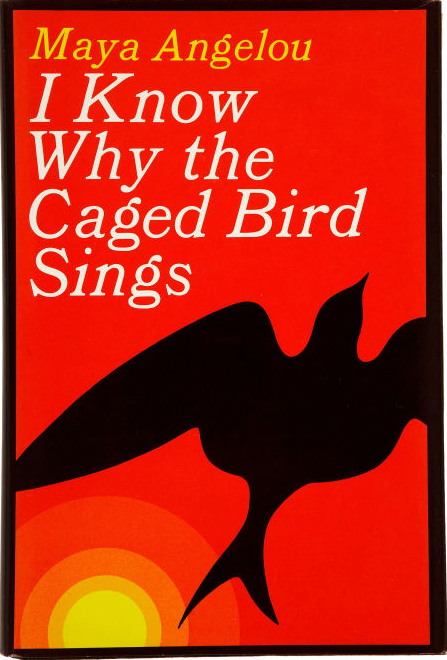
I Know Why the Caged Bird Sings

I Know Why the Caged Bird Sings
© 1969 Maya Angelou
304 pages

I Know Why the Caged Bird Sings is an autobiography in the form of a novel, following a young woman’s coming of age as she journeys from a small town in the South to the big city – and then there and back again.  Functionally abandoned by her parents, and constantly worried about her status as not only an awkward and homely girl from a family full of photogenic frames and faces, but being a racial outcast, Maguerite makes her way by a loving grandmother and brother and books aplenty. I read I Know Why the Caged Bird Sings largely out of peer pressure, since it is always mentioned in the hallowed company of books like The Scarlet Letter and Tom Sawyer, hailed as essential American and Southern literature.

Racism dominates Caged Bird just as the wilderness fills the reader’s experience in The Last of the Mohicans;  Angelou writes that segregation was so complete in Stamps, Arkansas that she hardly ever saw a white person.  In her younger years , Stamps’ white citizenry were phantoms who she scarcely regarded as human.  They were cold and distant authority figures, or ‘powhitetrash’ wretches who behaved like little barbarians yet expected the blacks of Stamps to defer to them.  On the rare occasions that Marguerite and her family entered the white side of Stamps to buy goods unavailable in their own neighborhoods, they ran the risk of being refused service – as happened with a dentist.

This book remains controversial because of several scenes of sexual violence, which I approached with some trepidation – intending to skim over them, if need be. There are three scenes like this within the same chapter, and Angelou renders them in a way to convey a child’s confusion and detachment – the sort of detachment one adopts while at the dentist, or in preparation for a surgery, a self-defense against panic. Following these scenes, Marguerite enters a mute period in which she reads more devotedly than ever, before finding a positive vision of womanhood in her community to guide her out of the darkness.

In her path to womanhood, Marguerite was provided with several examples, strong in their own way.   Central to her life is her grandmother, “Momma”, who operates a general store that is also the community center for Stamp’s black community.  While the store never makes them wealthy,  the family’s frugality and Momma’ adaptability allow them to weather even the Depression in mild comfort, lending money even to white business owners – including the dentist who considers his obligation merely fiscal, and refuses to budge from his policy of not treating blacks.    Momma and her family provide a safe haven for the main character and her brother, a haven not found when they visit or live with their parents.   Marguerite’s mother is beautiful and independent, but her world is full of violence; when Marguerite is raped, it is at the hand of one of her mother’s beaus. Her father, too, is handsome but not altogether reliable;  when he takes Marguerite to Mexico to buy supplies,  his drunken revelries force Maguerite as a young teenager to attempt driving for the first time in literal terra incognita – a mountainous descent in rural Mexico.   A third example for Marguerite is the mysterious Mrs. Flowers, who has a regal bearing and a full library, both of which inspire Maguerite to better things. For the most part, she takes those lessons to heart — fighting a protracted campaign to become a streetcar conductor, the first black woman to enter the service. Yet at the end, she decides to have sex with a boy to determine that she is not a lesbian, promptly becomes pregnant, and after the delivery of her boy, the novel ends. It’s as if a story of King David ended abruptly with his having Uriah killed so he could cover his petty lust with Bathsheba.  I know the person of Maguerite — Maya Angelou — went on to greatness, but as a novel by itself, it’s a weird way to end things.

Posted in Reviews | Tagged , , , , , , , , | 4 Comments