Beautiful Genius

After leaving the Castillo, I began exploring the streets of a city which had come alive.  Already, the wide sea-front avenue and the narrow alleys of the ‘old town’ proper were filled with the smell of food, from grilled fish to gelato.  Buskers were beginning to claim their respective spots, and I made my first donation to a man doing an acoustic version of “Turn the Page” by Bob Seger.  The other major building I wanted to see in the town was the Basilica of St. Augustine, and so I made my way blindly, moving forward only at glimpses of the spires.

The basilica doors were closed for a funeral, so I milled around the plaza for a bit. After escaping a confrontational man in his cups who claimed to be a tour guide who could get me onto an island ordinarily restricted to federal employees (what, Rikers?),  I admired the general scenery until the sound of bagpipes drew my attention. What proved to be a funeral service at the basilica had ended.  

After waiting twenty minutes or so for the bereaved to leave and the doors to be reopened to the public, I entered the basilica very quietly and sat in a chapel for a moment to gauge the situation. If nothing else, I could sit and soak in the atmosphere.  More tourists came in behind me, and they weren’t shy about roaming around taking photos, so I  took a few of my own and beat a respectful retreat.

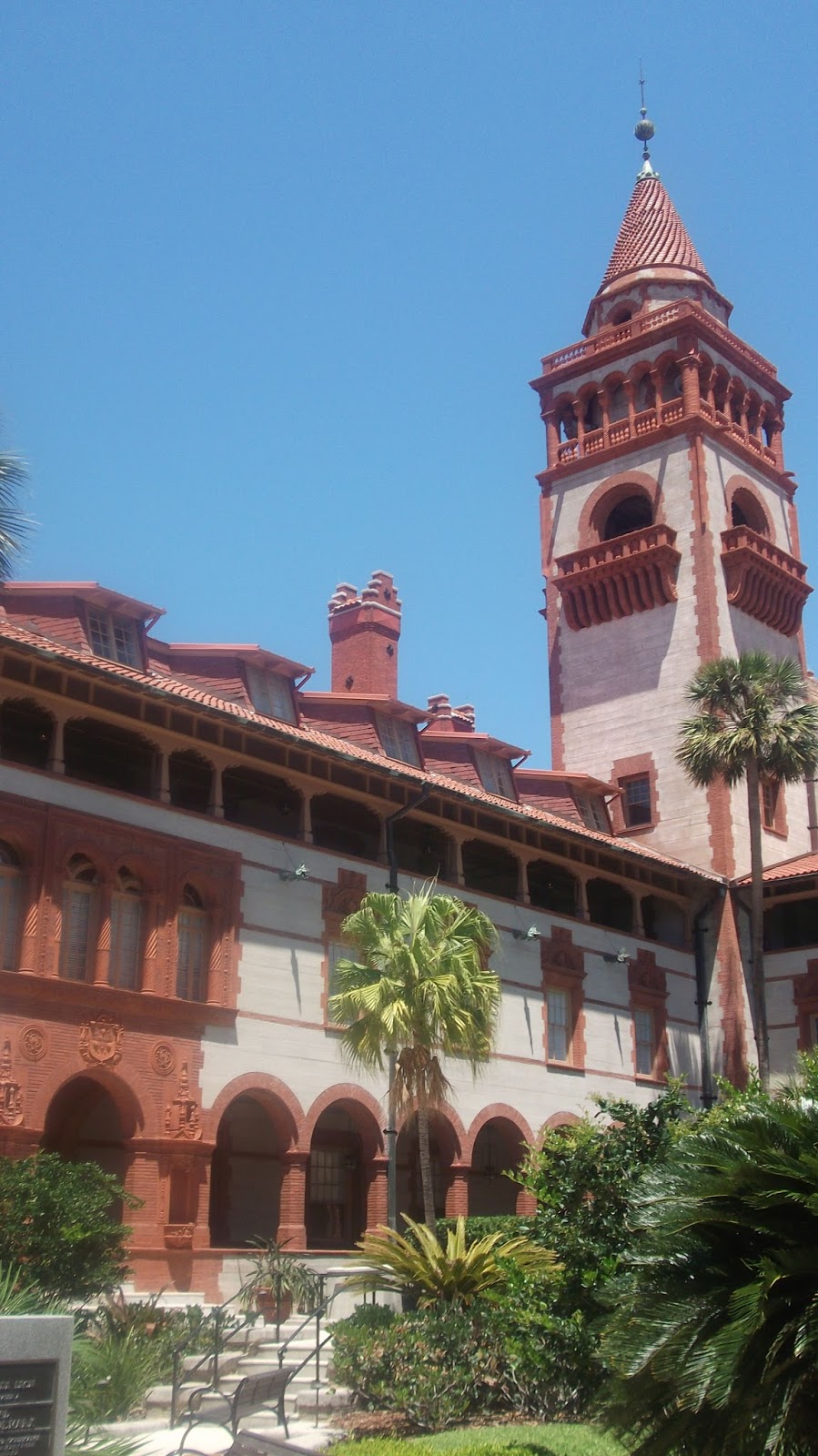
Although I would spend over twelve hours downtown the first day — strolling, sitting, cruising —  the day’s biggest surprise came early, around noon, when I laid eyes on Flagler College.

Established as the Ponce de Leon, a luxury hotel in a time when people wintered in St. Augustine, Flagler College now bears the name of its architect, Henry Flagler. This man also contributed several other buildings to downtown St. Augustine, but he wasn’t just a local architect. He helped found Standard Oil and developed one of the first major railways in Florida.  By the time I finished touring the gallery and dining hall of the college, I was completely awed by the man.

Even an unpracticed eye like mine couldn’t help but notice the overwhelming amount of detail. The Ponce de Leon rvivaled even the two basilicas I’ve been in for architectural grandeur. Even the water tower was a visual feast.   To the learned eye, there were even more surprises.

For instance, this fountain? Not just a fountain. It’s the central point of a cruciform courtyard, but also presents an image of sword stuck planted in the ground — a sword of triumph and conquest.  It’s also ringed by twelve frogs, one for each month, and four turtles, one for each season.

The inside is similarly divine. Much of the interior is painted in gold leaf, and replete with mythic imagery.  The gallery floor is a mosaic with minute imperfections that were sewn in intentionally, so as not to rival Creation in their perfection. And the dining hall —  Dios mío!   Decorated with colorful panels memorializing Spain’s empire,  it was lit brilliantly by sun and chandlier. My camera didn’t do justice to the amount of golden light in the room. It was awe-some in the truer, older sense of the word.

Trying to capture some of the light in the dining hall, and not doing it justice.
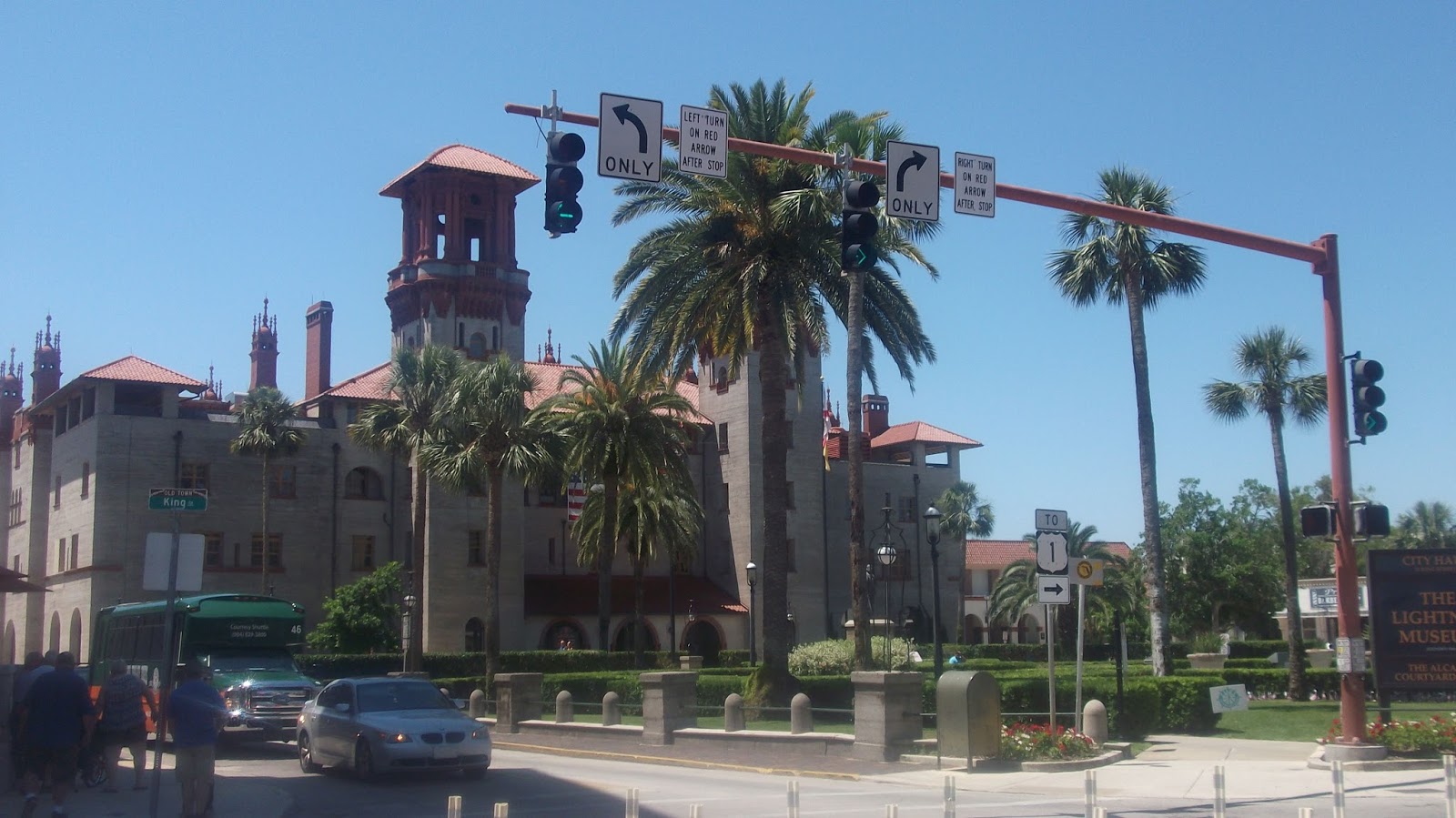
Across the street is another hotel that Flagler designed, which is now home to City Hall and the Lightner Museum.  Initially named the Alcazar Hotel, it was less exclusive. 
Another hotel Flagler owned, but did not design, was the Casa Monica.  Check out those balconies! 
My university library has a biography of Flagler, so next month I’m looking forward to learning more about him.  His were not the only beautiful buildings in St. Augustine, however!

Posted in Reviews | Tagged , , | 4 Comments

Citadel of the Spainards: Castillo de San Marcos

Last weekend I traveled down to St. Augustine, the oldest city in the United States, to engage with Spanish history, see the Atlantic ocean, and enjoy a town so architecturally rich and dense that it’s almost like visiting Europe.

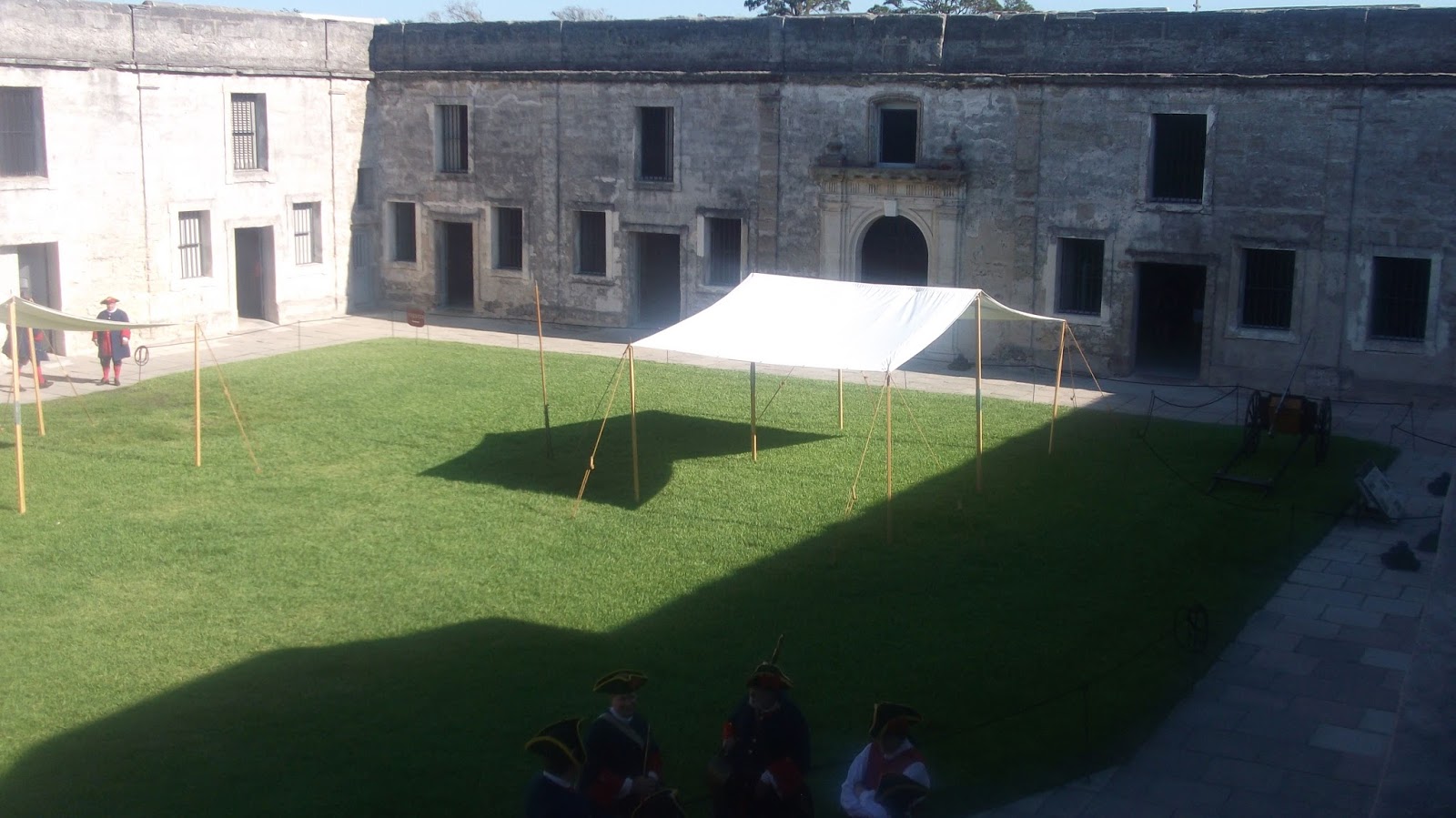
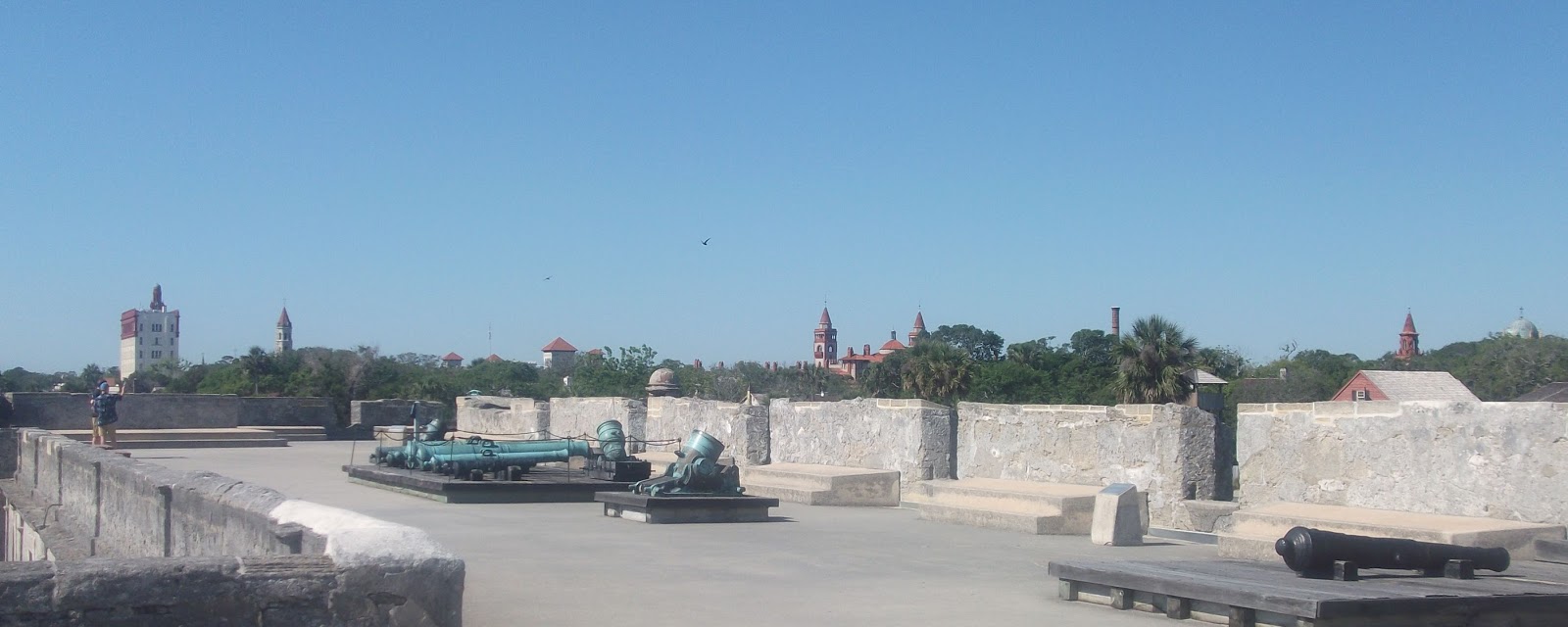
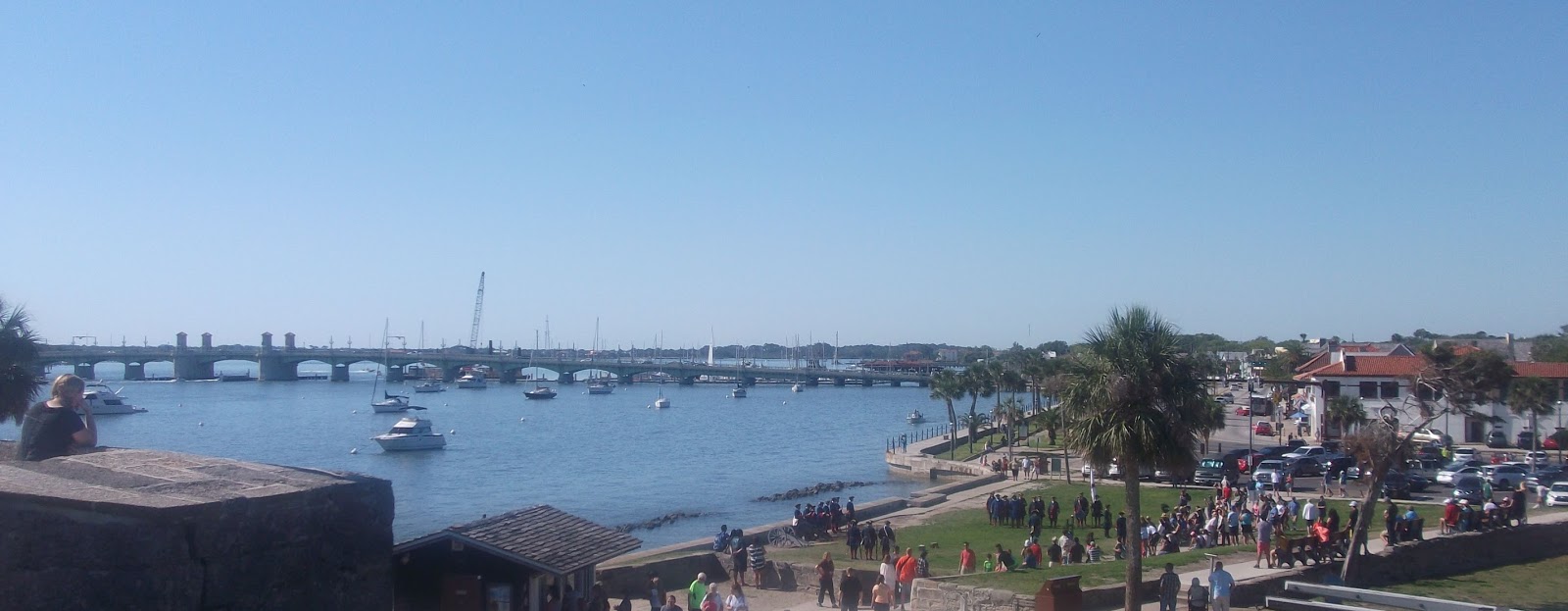
The Castillo de San Marcos was constructed by the Spanish, beginning in 1670, after the previous wooden forts to defend St. Augustine were destroyed. The star-patterned structure would withstand serious sieges, but never fall in war: it would only be surrendered in peace treaties.    A friend of mine  and I arrived early in the morning, shortly after seven, to walk around the fort area before it opened.  To be around the fort in the early morning is to witness a curious mix of the bellicose and the bucolic,  severe towers and cannons facing a beautiful morning on the bay. 
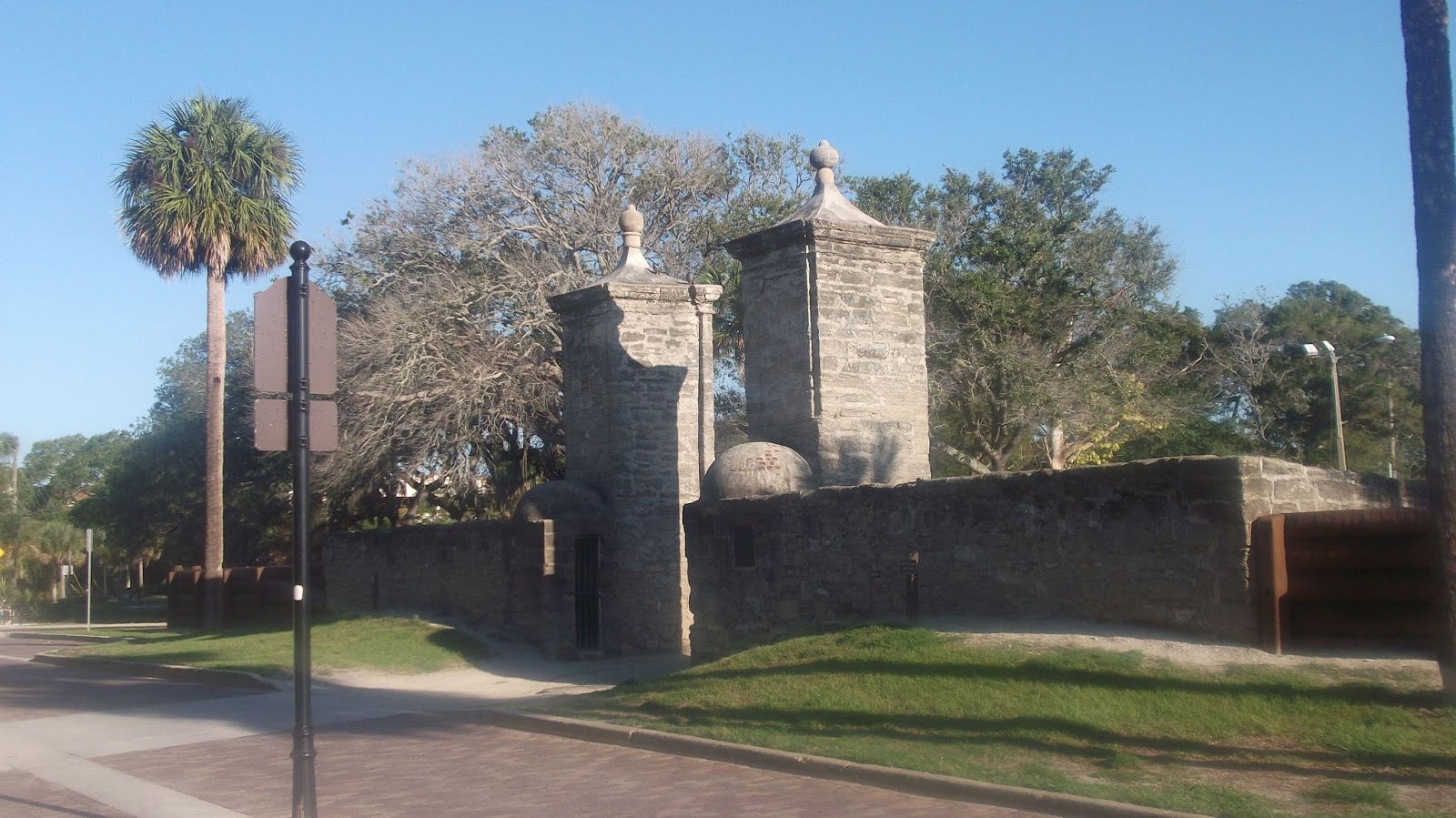
From the ramparts, a reconstruction of the old wall extends into the town itself, leading to the Old City Gate. 
A few of the fort’s casements have been coverted into museum pieces, demonstrating living quarters, ammunition stockpiles, and so on.
If I understood the plan of the north wall, much of the city now regarded as downtown exists beyond the borders of the original wall.   Many of St. Augustine’s major buildings share the architectural touch of one man, Henry Flager, who gives the skyline a distinctive flavor.   Anyone who lives in the Southeast  should see this city during sunset. 
This is my favorite shot from the weekend, as it captures so much of St. Augustine:  its military history, its beauty, and the energy in its cozy old town. The spirit I enjoyed so much in Albuquerque and Santa Fe’s plazas was present here throughout the city, and consequently a friend of mine and I spent fourteen hours downtown on Saturday, and just over ten on Sunday.  I didn’t even read when we returned to our motel rooms — I just showered and fell into bed asleep.

Posted in Reviews | Tagged , | 5 Comments

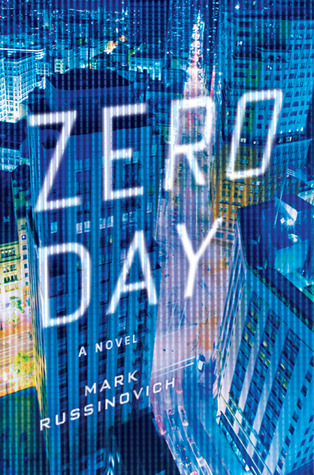
Zero Day

Zero Day
© 2011 Mark Russonovich
328 pages

Two cybersecurity experts, both with government backgrounds, realize their current cases have a connection. The more they dig the more widespread the danger grows, and  to their horror they realize what seems like an ordinary bit of digital vandalism is merely the prelude to a total infrastructure attack that is planned for the anniversary of September 11th.  Computer systems in the United States and Europe — from private PCs to those controlling ships and power plants — are being hit with an array of distinct but related viruses, all of which have the simple goal of turning their targets into complete bricks.  The effect on the west will be catastrophic when the full attack is released.

Zero Day is a technical thriller, with cyber-forensics constituting most of the book. The ending chapters are a brief switch into action,  but on the whole only readers with a serious interest in computer crime stories should try. Unfortunately, those are the very readers who are liable to be annoyed by the multitude of electronic conversations here being rendered in highly abbreviated form, with so many missing vowels one might as well be reading Hebrew.  There’s also a bit of l33t speak, which — seriously, is that still a thing?   I enjoyed  this book’s sequel, Trojan Horse,  far more, as it had more balanced characters (here we have evil Arabs, Russian hackers, and corrupt bureaucrats), and hope that means Russinovich continued to improve.

This completes my WannaCry-inspired sweep of books, although they’ve led me to an older history of the hacking community, publishyed in 1995.

WannaCry Sweep:  The Dark Net | Kingpin | Countdown to Zero Day | Zero Day

Posted in Reviews | Tagged , | 3 Comments

Kingpin

Kingpin: How One Hacker Took Over the Billion-Dollar Cybercrime Underground
© 2011 Kevin Pulsen
288 pages

If Meyer Lanksy had gone straight, a contemporary of his noted, he could have rivaled Nelson Rockefeller. Maybe the same could be said for Max Butler, only a few years older than Mark Zuckerberg. Instead of becoming a billionaire, however, Butler’s genius and entrepreneurial risks landed him in prison for thirteen years with a $30 million dollar debt to pay off. Kingpin recounts his beginning as a teenager given to pranks, discovering the internet as a place with ample opportunities for play, and follows his slide into crime. Although Butler attempted to direct his skill and curiosity towards creative purposes — becoming a ‘whitehat’ security consultant, a hacker for the good guys — his early experiences with the Justice Department gave Butler a chip on his shoulder, and he continued to flirt with darkness, unable to resist tests of his skill.

Butler entered the scene just as hacking’s very character was changing. A generation of telephone ‘phreakers’ turned programmers whose motivation had been exploring the technology itself was giving over to those who saw in the internet an opportunity for quick money. Central to this story, and Butler’s evolution as a criminal, is credit card fraud. Although he tended to get into trouble as a kid, Butler wasn’t malicious at heart: he liked to push the boundaries, especially when he could experiment with his skills. When he began stealing card numbers, he did so from other fraudsters, and used a similar justification when he began compromising the systems of banks: they were the utter bad guys, constantly luring poor people into debt. What were they but crooks pretending to be legitimate? Time and again Butler contemplated going straight, but he’d see an opportunity for showing off and couldn’t fail to take it up. One of his most dramatic achievements is covered early on, when he single-handedly effects a takeover of several underground forums, combining their databases into his own and deleting the originals from the internet. It was a hostile takeover that made Butler the king of a carding empire, netting him a $1000 a day just from stealing, selling, or using credit card data.

Kingpin is the fascinating history of not just a man, but of a criminal industry. Because of creative minds like Butler’s, identity theft doesn’t just threaten people who thoughtlessly throw sensitive information into the trash. Butler’s bread and butter was milking restaurants’ point of sale systems — those machines shoppers use for credit card transactions — so anyone who uses a credit card in stores is vulnerable. In recent years, for instance, customers of Target and Wendy’s have been exposed. The government and businesses have attempted to respond by moving to cards with an embedded chip which is nominally more difficult to extract data from, but after reviewing Butler’s many adventures it’s hard to believe anything will be secure for very long.

Good reading for a bit of ‘modern’ true crime, told by someone like Butler who once practiced the dark arts, but who managed to stay on the straight and narrow.

Related:
Spam Nation, Brian Krebs

Posted in Reviews | Tagged , , | 5 Comments

Mars

 Mars
© 1992 Ben Bova
560 pages

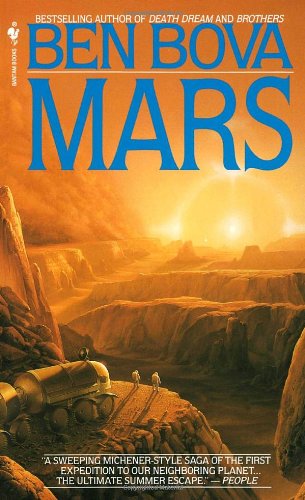
Mankind has finally arrived on Mars, via a joint venture between the United States, Russia, Europe, and Japan. An expedition slated to last several months on the planet itself plans to explore part of the Valley of the Mariners as well as a volcano. While each member of the international expedition has his or own private ambitions to realize on the planet —   honoring Yuri Gagarin, or living up to a celebrity-scientist-father –  at least a couple of members are seriously hoping to find signs of life, living or extinct.   Although the mission is  carefully planned and equipped with redundancies, the crew still trip over one another’s personalities, and must fight against technological failures, the easy hostility of the Red Planet, and (worst of all) politicians back home.  Ben Mova’s Mars  is a tale of scientific enterprise and adventure, slightly dated in parts but timeless in its descriptions of Mars’ eerie beauty.

I’d never heard of this author until the library displayed a few of his books,  and his lead character here — a half Navajo  geologist who is fascinated by the similarities between Mars and northern New Mexico’s landscapes —  caught my eye.   The story has two parts: as the geologist and his colleagues settle into life on Mars and begin their research in earnest, overcoming obstacles like dust storms and each other,  Bova occasionally flashes back to the months that led up to the expedition. (It’s very similar in structure to Stephen Baxter’s Voyage, another “go” for Mars story.)  There are other elements, too: the lead character’s sort-of girlfriend is a news reporter eager to use her connection to him to scoop everyone else, and the expedition as a whole is at the mercy of the vice president, a blonde-haired bully who is planning a presidential run and is paranoid that everyone is out to get her.  Bova is at his strongest when taking readers through the scientific puzzles and descriptions of the Martian landscape, evoking the astronauts’ wonder.  I found the frequent description of the Navajo as an “Injun” by the international expedition a little odd. While American media is pervasive, including westerns which are oddly popular in eastern Europe,  would Russians and Japanese scientists really  regard him as some uber-foreign creature?   Of course, the main character does promote cariacturization of himself, deliberately using phrases like “White man speaks with forked tongue” when his commanding officer promises something and then has to contradict it.

Bova has a series of SF books about the future of human spaceflight, and I look forward to exploring him more.  He ends this book with a terrific hook…..the possible discovery of life beyond Earth.

Related:
Voyage, Stephen Baxter
The Martian, Andy Weir

Posted in Reviews, science fiction | Tagged , , | 14 Comments

Mind’s Eye

© 2014 Douglas E Richards
362 pages

A man wakes in a dumpster, covered in blood. He has no idea who he is, but there are men trying to kill him.  This dumped stranger isn’t completely defenseless, however. he wakes to find the killers’ and everyone else’s minds wide open to him.  He can read minds, and what’s more, his brain has its own wireless connection, allowing him to dive into the internet and pull up any bit of information he needs, all without blinking.    The man soon discovers himself to be the victim of an arrogant bioengineer whose motives are utterly sinister, and the fantastic expansion of his mental abilities will be desperately needed as the man flees and fights mercenaries, false friends, and the US military.  At its best, The Mind’s Eye offers a look at the fascinating possibilities and problems that widespread cranial implants could present humanity; at its worst,  the writing veers to the awkward, and the villains indulge in those “I’m about to kill you, so why don’t I tell you my ultimate plan?” kinds of speeches.   (The uber-villian’s ultimate motive is also wholly unbelievable — the mad scientist/technocrat unmasks himself as a crusader for a completely unrelated cause, and there’s been no hint, not even a shadow, of the other identity. )

The only reason I made it through this novel was the technical concept. I can only hope the characterization and dialogue improve in Richards’ later novels..

Posted in Reviews, science fiction | Tagged , | 8 Comments

La Regresa

Well, dear readers, I have returned from two twelve-hour days walking around St. Augustine, bracketed by two seven hour drives. I have stood in the waves and watched the sun set over the city,  climbed a lighthouse fourteen stories above it,  and descended into basements to learn the stories of conquerors and architects from days gone by.  More importantly, I’ve passed two very full days — arriving as the sun was rising and leaving after nightfall — strolling the streets of a city brimming over with life and architectural richness.  It was a fantastic weekend.   At the moment I’m still resting and curating my photos, but here’s a couple of previews:

Castille de San Marcos. 
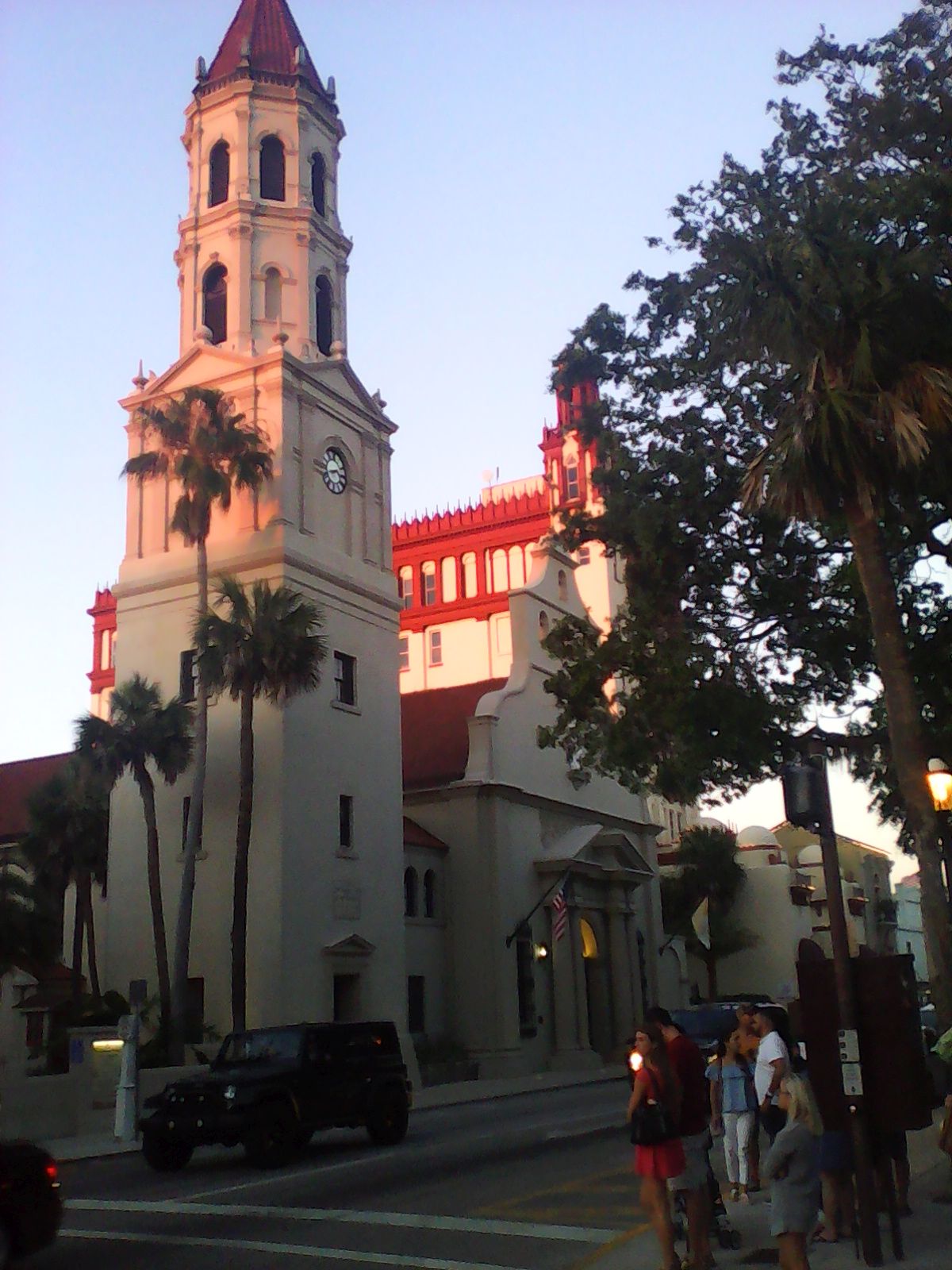
Twilight rays on the Basilica of St. Augustine
Posted in Reviews | Tagged , | 3 Comments

Countdown to Zero Day

Countdown to Zero Day:  Stuxnet and the Launch of the World’s First Digital Weapon
© 2014 Kim Zetter
448 pages

A couple of years ago I created a new label, ‘digital world’, in recognition of the fact that the Internet is no longer a discrete system (like a grid of water pipes). It has seeped into every aspect of our everyday lives, as basic as electricity. Through it, the entire developed world moves. War is no exception to this digital revolution, and the fun is just beginning. People may associate cyberwar with the theft of intelligence, or perhaps monkeying-around with the power grid, but the case of “Stuxnet” demonstrates how weaponized computer programs can cause physical destruction no less complete than a bomb. What’s more, the specific vulnerability used to great effect here is virtually universal in the industrial world. Countdown to Zero Day is a forensic-political history of how the United States used a computer virus to effect the kind of destruction only imaginable before by an airstrike, and a warning to the entire online world that we are vulnerable.

If war is the continuation of politics by other means, cyberwar appears to occupy a grey area between the two. The policy of the Bush administration, once it became obvious that Iran was pursuing nuclear weapons, was to squelch the threat through any means necessary. While there may have been many in DC who wanted to see another example of shock-n-awe, even Bush knew a third war in the same mideast minefield wasn’t possible. Remote sabotage, however, offered an alternative to war or a nuclear Iran, and a program which started under Bush would bear full fruit during the Obama administration. What a small elite knew in DC as “Olympic Games”, the world would later call “Stuxnet”: a virus that began as a carefully targeted weapon and but which would later spread across Eurasia.

The author delivers the full story of Stuxnet in a back and forth narrative: the first track begins with the eruption of the virus, and the methodical picking-apart that Symantec, Kapersky, and other cybersecurity firms subjected the code to. Step by step, they attempted to figure out what the code was doing, how it got in, what mechanisms the code was using, and finally — what was its intended target? This campaign of digital detection work wasn’t the product of one cyber Sam Spade, but a collaborative effort between various businesses who shared their information and results. Eventually, over the course of two years, they realized that the initial program was highly target specific: it was aimed at two kinds of programmable logic controllers, or computers used in industrial work. The particular PLCs targeted were used in rotors that were specific to the kind of centrifuge that Iran used to enrich uranium.

The teams dissecting the Stuxnet code marveled several times at its structure, but marveled all the more when they figured out – -based on reports coming in from Iran — how the program worked. Because the centrifuges’ speed and weight necessitate careful handling — slow acceleration and then slow deceleration, nothing too abrupt — the program’s main attack was to methodically stress the centrifuges by taking them up to speed, or down, in patterns resigned to slowly ruin the pieces. What’s more, long before this act of digital undermining ever began, the program silently sat and waited, recording the normal activities: during the actual sabotage, the program fed recorded data to he plant’s control room, meaning eventually the Iranians had to physically watch the motors to see what was happening. The program had a nucleus so deeply hidden that when the machine software was placed under repair by the Iranian engineers, the core program methodically re-wrote the new programming. It’s as if an invasive bacteria promptly turned the body’s immune system into its own means of reproduction.

The case of Stuxnet is important because PLCs are pervasive; they aren’t just used in manufacturing, but are common wherever computer-controlled machinery is used. They’re in hospitals, food production plants, powerstations, transit networks: there’s no end to the mischief that could be managed by attacking them, and until recently very little done to protect the systems. Stuxnet was a wakeup call to many technical directors in the developed world, an alarm bell to their vulnerability. As the recent WannaCry attack which cripped hospitals in the UK demonstrates, however, we’re not taking cybersecurity anywhere near enough seriously. (The WannaCry and Stuxnet attacks also demonstrate the volatility of cyberweapons: they don’t go away. In both cases, code and tools designed by DC were trapped and corralled into use by other parties.) Throughout the world we rely on computers which haven’t been protected for years, or we have foolishly ensnared vital public infrastructure like the power grid with the public internet. Stuxnet was only the beginning — perhaps it may be like the Hiroshima-Nagasaki attacks, a singular event that frightens everyone into more caution. I doubt it, though.

Related:
@ war: The Rise of the Military-Internet Complex, Shane Harris
Glass Houses: Privacy, Secrecy, and Cyber Insecurity in a Transparent World,  Joel Brenner

Posted in Reviews | Tagged , , , , , | 3 Comments

Off to St. Augustine

Dear readers, you may remember a few months back I read a slew of books on colonial Florida’s history. I did so with purpose, for I’d then scheduled a four-day trip down to the Florida coast, with the aims of spending two days in St. Augustine.   Wish me well, for I’m off to drive seven hours. I’ll be driving almost as many miles as I did in New Mexico, but with six days compressed into two.  It’s Memorial Day weekend, too, but if I can handle Albuquerque during the Balloon Fiesta, I can handle anything shy of Atlanta.   My rental this round is a luxurious-looking  Hyundai Veloster.  Yowza!

Until Tuesday!

Posted in Reviews | 4 Comments

Ten potters, one brain of clay

If we are the books we read, then for the last ten years I have been growing and changing under a public eye. Nothing I’ve read has been hidden; most of it has been commented on, if ever so lightly.   Of course, magazines, blogs, and online lectures have played a considerable part in shaping my mind. As part of my ‘anniversary celebration’, I’d like to reflect on ten authors who have had a significant hand in shaping my worldview over the last ten years.

I should note, however, that a list like this is inherently misleading:  few of these authors were one-man armies. Indeed, most of them had an effect because their subtle influences mixed  and reacted with one another.

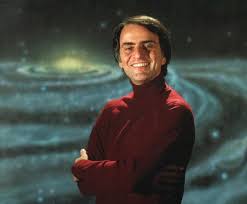
Carl Sagan


For most of my adolescence, I lived in constant fear of doomsday and the tortures of Hell. I grew up in a very passionate and opinionated branch of Pentecostalism, one that I could not connect to despite my best efforts, and  by the age of twenty I was utterly demoralized.  Years of frustration, terror, and exhaustion left me so calloused to the threat of Hell that I just couldn’t care anymore. I decided that I was going to make the best of my life, however meager that might be.

Through a forum for ex-Pentecostals, I discovered reason to believe that the Pentecostals were not right about me, that I and the rest of humanity were not damned to a torture pit forever.  I flushed all they told me and began building a worldview from scratch,  igniting then the ravenous hunger for nonfiction that continues even today.  Carl Sagan  was one of the first voices I encountered, and what a gift he gave me. He restored my childhood awe of the Cosmos and helped give me a sense of optimism about the future of humanity.   For years thereafter, whenever reading about society made me depressed and anxious, I would return to science and be refreshed. More fundamentally, however, my extensive reading of science  in 2006-2007 (which was dead-even with history, if you can imagine that)  gave me a fundamentally scientific worldview, which shapes my reading of other disciplines. For instance, one of the reasons market economics caught my eye was  because the emergent order therein reminded me rather of biological evolution.

Henry David Thoreau


“I went into the woods to live deliberately”… that approach called to me in the spiritual vacuum following my abrupt departure from the Pentecostals.  I had around this time discovered the great Robert Ingersoll, and admired his commitment to taking nothing on authority.  It was an approach I adopted for myself, but it wasn’t simply pragmatic: I needed to know, as a teenager becoming an adult,   that my values were mine, that they were real and not passively accepted. Already wary of consumerism out of fiscal self-defense, Thoreau first awoke in me an interest in simple living —  sow the seed of a deep conviction that flowered later on, namely that a thing can be morally wrong evil if the State has declared it legal — and a thing can be right even if the State declares it illegal.

Although Thoreau’s simple living had a quasi-mystical approach,  another author named Erich Fromm gave me another justification, couched in the language of psychology. What intrigued me about Fromm was his belief — expounded in a book called To Have or to Be? —  that the modern world had erred in developing a possessive view of itself.  That is, we define ourselves by what we possess, instead of by our character.  I can still remember his example of person plucking a flower in an effort to capture, to posses the beauty — an action which actually destroys the thing that is so desired.   Part of the reason I keep this example in mind is that I believe the ever-presence of cameras has this effect in terms of our experiences. So intent are we on capturing the moment — taking photos to post to facebook — that we take ourselves out of the moment and so, lose it.   This is something I have to remind myself of constantly, especially while on vacation.

Frances and Joseph Gies


Until I encountered the Gies, my perception of the Middle Ages was fairly typical: I regarded them as a dark period in European history between the high points of the Roman empire and the Renaissance, where learning and the arts existed in perennial stupor, where nothing happened but death and war and pushing around mud.   The Gies introduced me to another medieval world,  one in which the institutions that failed were struggling to reform themselves, or being replaced by new structures.   The Gies didn’t merely give me a new appreciation for the Medieval period, however, they awoke me to a kind of…chronological snobbery. The view of the medieval epoch as a long period of civilizational death is self-serving flattery on the part of those who came later — those who, in fact, were standing on the shoulders of the people they dismissed as ignoramuses.   Will Durant would reinforce my newfound appreciation for the medieval period, and Neil Postman would later make me aware that modern minds are just as pliable and superstitious as the “ancients”:  we are ‘enlightened’ only to the extent that our institutions have been managing to acquire, save, and utilize more information.

James Howard Kunstler


My exposure to James Howard Kunstler begins with a lecture at the University of Montevallo, in which Kunstler connected  suburban sprawl, peak oil, and the financial crisis.  I subsequently read his book, The Geography of Nowhere, which allowed me to understand my own strong interest in historic cities and communities — particularly the idea of ‘place’.  I’ve since read much about urbanism and place, and through those studies (and others) became more locally-oriented. Additionally,  Kunstler’s  doomsday lecture — delivered at the height of the financial crisis in 2007 —  made me more aware of the need for resilience and preparedness.  By this I don’t simply mean he enticed me to become a prepper;  he made me aware that systems can be inherently fragile.  In agribusiness, for instance,  monocultures increase fragility because one disease can have an outsized effect; in urban planning,  the concentration of zones into pods and traffic into collector roads increases fragility by narrowing network options.  I would see fragility at work in politics and economics, too, which is why I’ve moved away from top down, rational-plan oriented politics and more towards decentralization. Kunstler has thus had a long albeit sometimes indirect influence on my thinking.

In retrospect,  one of Kunstler’s subtle effects was to undermine my easy belief in government intervention by demonstrating to me how DC’s programs had helped destroy American cities.

Neil Postman

I discovered Postman entirely on accident, finding his book Building a Bridge to the 18th Century while searching for a history of the enlightenment.   I found Postman an intriguing enough author that I went on to read his book about technology and society, which gave me eyes to see just as the internet was becoming less a distinct place to go, and more a component of everyday life.  Postman argued that technology is not value-neutral, that its uses carry conceptions about the world: our ability to do a thing leads us to believe doing is perfectly normal.  We never question whether so much of our attention should be focused on smartphones throughout the day,  that we should expect instant reply texts from people, that we should design babies to appeal to our own vanity.  More fundamentally, Postman argued that we have adopted the ethos of the machine — Efficiency above all —  at the cost of humanity, quality, or other values.

Technopoly and Amusing Ourselves to Death were the two books that most penetrated my thinking.

Marcus Aurelius
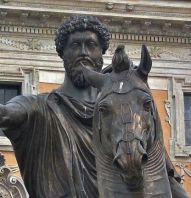

A sermon on humanist spirituality introduced me to the Stoics,  and Marcus Aurelius’ writings proved a source of needed peace and sanctuary during a particularly unsettling year in college.  I cannot overrate Stoicism’s influence on me. It made religion comprehensible for one thing:  my native religion consisted of living in terror of an invisible authority figure with many rules, some of which made sense and some of which didn’t. (Why did he want us to scream at him?)    It was the Stoics who helped me understand the power of viewing the Cosmos  as a thing with a moral-rational order, and the serenity from attempting to live within that order.  Stoicism made Greek philosophy come alive, gave me a new appreciation for the idea of Virtue altogether, and would later on  contribute to my political  maturation.  (Specifically: once I started focusing only what I could control,  I started viewing as inappropriate  for other people to control what was beyond themselves, specifically other people and me.  Self government, to me, grew to mean something much deeper than casting a vote for one fraud over another every four years.  Self-government meant self-command.

Emilie Carles

Emilie Carles was a French peasant girl with a quick mind, whose intelligence was appreciated by local authorities and guided towards an education.  She became a teacher in her village, but her real education came from studying the changing world around her with a critical eye.  She was particularly molded by the Great War, through which she developed a deep disdain for government twinned with a love for humanity. For her…government, organized religion, and organized big business were foes of humanity,  joy, beauty, and innocence.  Her brothers and cousins were anarchists and libertarians, and as the sons of France continued being thrown into war or prison, she continued teaching her children to think for themselves and to refuse to allow the government to control their hearts and minds — to divide them from their fellow men. (I was already cynical about the Great War,  and remain so.)
Carles is important because she opened the door for me to explore the Left. Before this I didn’t have a political philosophy, as such, just the belief that we ought to help people who needed help, as well as a strong attachment to the Bill of Rights. I’d never seriously considered the ideas of socialism because of their  connection with mass murderers like Stalin and Mao, but Carles’  writings were more democratic and pacifistic. Yet Carles’ door gave me a unique angle of approach: the more I explored the left from that direction, the less I favored state and central control; by the end of college I was thinking of myself as a left-libertarian, one who simultaneously distrusted big business and big government.  (I have a longer  essay called “Accidentally Evil: Considering Libertarianism” that explains my shift from left-libertarianism to plain-ol-liberterianism in full, and includes comments on the role of Stoicism and Gandhi.)

Howard Zinn 


At one time I regarded Zinn so highly that when he died, I changed my forum avatar to his face for a year in memoriam. Now my image of him is more troubled, old affection mixing with new and contrary convictions.  Zinn’s histories of the marginalized and powerless coming together in mobs and forcing the government to respond to their needs used to inspire me, but now I see that approach as problematic on several fronts — first, the protesters  aren’t so much actors as pleaders before the king, subjects, and two, they invariably campaign not for a cessation of coercion, but a redirection of it.  Still, I ever believe that people must be in control of their lives, and while my own thinking on the subject has more in common with  Jefferson than Marx these days, for a while what most appealed to me about the left was the idea of people obtaining the means to be economically independent.  The Epicureans taught, and I am still tempted to believe, that genuine liberty necessitates economic self-direction.  History indicates that total autarky is the path to poverty: just see any nation that has sealed itself off from trade.

Russ Roberts



Had I been born into money, no doubt I could have lived a happy existence doing nothing but going to university for my entire life, with the summers off for travel and museums.  I wasn’t, though,  so my ravenous hunger for understanding has to be fed from other sources — books and podcasts.  I found Russ Roberts while looking for podcasts from professionals (lawyers, economists, and doctors specifically)  because I wanted to glean some of their insight.   Roberts was, to my faint horror, a free market economist. Still, he had interesting conversations with people on the return of industry to America, and on how milk was distributed — something of interest to me, someone who is prone to read books on the history of coal or cattle or housework.    I found Roberts astonishingly — maddeningly — pleasant.   He would interview people he disagreed with, and they’d have the most amicable of discussions, and he was so doggone nice I wanted to keep listening to him.  Later on I started reading his novels, which were political and economic policy arguments in story form. It was through Roberts that I developed a partial understanding of basic economics, as well as an appreciation for libertarian political philosophy.  Eventually I would connect the libertarian nonaggression principle to my own strong sympathy for Gandhi”s refusal of violence, and since then (2012/2013) I’ve been firmly settled as a libertarian.

Jane Jacobs



Reader, you will search in vain for a review of any Jane Jacobs books on my blog — for despite the fact that she  is easily one of the top five influences on my thinking,  I’ve never been able to reduce my wonder at her books to a review.  When I began reading The Death and Life of Great American Cities in 2010, I could still describe myself as a social democrat on a good day, and a left-libertarian on a bad day. That is, I disliked both government and corporate power, but if I was feeling optimistic I could still support government ventures.    A third of the way into Death and Life,  my belief in government planning was over.  Granted, Jane didn’t do this by herself:  I’d long been acquiring an appreciation for the complexity of systems and seemingly inevitable backfire from authors like Kuntsler and Michael Pollan, and  my increasing belief  in ’emergent order’ — was leading to an interest in how markets worked.  But Jane wasn’t writing about free markets. She was writing about cities.  Specifically, she was an observer of humans living in cities, and she watched and contemplated the ways their use of the city changed its very nature, and how its physical form changed their use of the city.  I’ll have to re-read the book (again) to give it a proper review, but her influence can be reduced to two points. First, she made me realize that planning people’s lives without their  consent is immoral. Two,  her understanding of how cities really worked destroyed my resistance to understanding how free economies worked.

There are strong influences I did not mention here because I didn’t read full books by them, only essays or speeches or something (Gandhi, Robert Ingersoll)  or because they’re relatively recent and I don’t know yet what their influence will be. If I do this again in five or ten years, I’m pretty sure Russell Kirk will hold a spot,  as he has been camping in my cranium since I read a few of his works in  2013.  

If you made it through to the end, congratulations and thank you.  As I have reflected on these authors and their influence on me the last few weeks, I’ve been amazed at the connections, the interplay, and I wonder how I would respond to them if I encountered their works again. A few of these definitely require re-reading, particularly Postman and Jacobs.

Posted in Reviews | 4 Comments