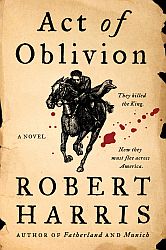
The puritan despot Cromwell is dead and the English king restored, but the balance books of history are not yet straight. There remain in England still breathing the men who presumed to put their king on trial, and who doubled down on their arrogance by executing him for crimes against ‘the people’. The Privy council is engaged in a hunt for the remaining regicides, and for one of their agents in particular — Nayler — it’s personal. He himself fought in defense of the King during the civil war, and it was at a celebration of Christmas Mass that he was arrested by the puritan fanatics, the stress of which caused his beloved wife to miscarry and die. Nayler will not rest in his hunt for two regicides in particular, even if he must comb the American colonies for years. Such is the premise of Act of Oblivion, which begins as an exciting thriller, as two would-be martyrs flee from England and seek shelter in the more Puritan of the American colonies. Unfortunately for the reader, and for Mssr. Nayler, the colonies are large and wild enough that the scent is lost, and most of the second half of the book sees the targets simply hiding in a basement (for years), and the increasingly dispirited Nayler resigned to killing time in England, with no real enthusiasm for life. Harris does his best to liven things up by having one of the regicides give us flashbacks from the Civil War, allowing us to witness the rise of the tyrant Cromwell, but things don’t get exciting again until the last chapter. Still, the story can’t help but command interest, spanning two continents and featuring some interesting moments in American and British history, like the Great London fire and “King Philip’s War”, also known as the First Indian War.
“There’s something horribly lonely about a place that’s almost home.”
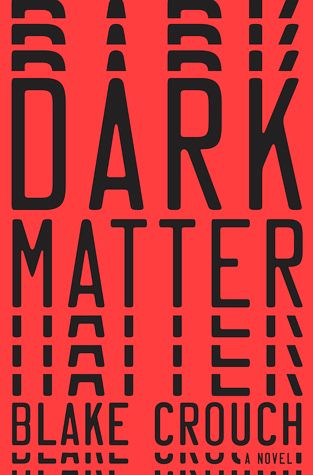
Jason Desseys is a first-rate physicist, one who could have earned his place in the history books alongside Feynman, Planck, and Hawking. He chose instead to focus on an unexpected role as a father, and has built a happy if not extraordinary life for himself – but that life is suddenly stolen from him one night on a walk home. A masked stranger whose voice and build seem oddly familiar kidnaps Jason, injects him with something mysterious, and he wakes, it’s to a stranger’s life. Jason is surrounded by ambitious, aggressive people who believe him to be someone he’s not, and he knows his life to be in danger – and as he begins to put the pieces together of what happened, Jason realizes the truth is even worse than he suspected. In Dark Matter, Blake Crouch delivers another emotionally powerful thriller with its feet solidly in quantum mechanics.
It’s practically impossible to comment on the plot here without dropping spoilers, so let me describe it simply: think Nicholas Cage’s The Family Man, but as a science fiction film relying on theories about the multiverse, and in which the main character is both the protagonist and one of the antagonists. Moving further into spoiler territory….
Dessen as a young man made a choice, whether to prioritize his family or his career. He chose his family, but another instance of him chose the career – and while both Jasons have wondered what their life might have been like had they gone a different route, the ruthless and career-focused Jason was able to create the means to find out, and was obsessed enough with what he saw in his alter-ego’s life to attempt to exchange places with him. Similarly ruthless are the people alt-Jason worked with, which is why Jason’s life is in such danger: the technology employed is still in the initial testing phase and is so concealed that even key members of the project don’t know what their contributions were used for. After being exposed and captured, Jason escapes into the very machine that stole his life, and tries to find his way back home through a soul-crushing series of alternate lives. Even when he finds his beginning, the drama isn’t over. It isn’t as simple as finding the man who replaced him and introducing him to a six-foot hole in the forest; Dessen’s extended journeys through the multiverse have resulted in dozens of nearly-identical instances of himself converging, all with the same goal: to get back to ‘their’ wife and child.
Although thematically Dark Matter is very similar to Recursion, in that they both address regret, suffering, and the need to come to terms with one’s choices, Dark Matter’s plot is more straightforward. It’s no less interesting for that, though, considering that Jason is fighting not only the inherent confusion of navigating the multiverse, but himself – many versions of himself, most with the same passion and intelligence as he but at least a few whose minds have been made sharper and who have lost more of their moral scruples along the way. Dark Matter is my second Crouch in the past week, and I’ll definitely continue reading him. He’s very good at attaching readers’ sympathies to his main characters, throwing them into fascinating situations, and making the reader think about not only technical possibility, but the importance of valuing the people in our lives and making the most of every moment.
Imagine a sudden headache, a nosebleed, and the instantaneous arrival of a lifetime’s worth of memories that are yours — and yet, not. Imagine remembering being married to someone for decades, having children with them, but also knowing and remembering that you lived another life — a life not married to them, a life where they remain a stranger with their own spouse and a history far removed from the one you remember the two of you sharing together. Imagine, too, you are not alone — there is a rising epidemic of ‘false memory syndrome’, and those affected are often overwhelmed with such confusion and emotional turmoil that the only way out is to throw one’s self off the building, or to wander into the cold ocean weighted down with stones. It’s such a life’s ending that Barry Sutton is faced with: a weary cop, living with memories of a dead child and a sundered marriage. Sutton knows in his gut that there’s more to the story than a mind-virus, or whatever the media is explaining the rash of suicides by — and his pursuit will connect his life to another’s, that of a brilliant scientist named Helen Smith who created an apparatus capable of saving and reactivating memories in the minds of those afflicted with Alzheimers. The combined story of these two people results in a captivating SF novel about memory, consciousness, time, and the inevitability of suffering. It’s easily the most interesting novel I’ve read all year.
I shouldn’t be surprised to be so captivated by Crouch: his “Summer Frost” was far and away my favorite in Amazon’s “Forward” collection, and its theme of sentience and artificial intelligence is not far from the topic here. Crouch drops the reader into the middle of two seemingly disconnected stories — a police mystery and a technical drama — that prove to be joined at the hip. From the start, it’s easy to bond with the two lead characters: Helen, the genius daughter anxious to save her mother’s mind, concerned about her generous benefactor’s motives but determined to create a solution to the disease that’s so harrowed her family; Barry, whose past pain makes him more sensitive and curious about the woes of others, even in a profession where cynicism quickly takes hold. Helen and Barry only grow more interesting as the story matures and we realize how interrelated their two queries are — learning, in fact, that Helen has invented the device before, and that a third party has hijacked her work for his own ends. Through Barry, who unwittingly becomes a subject of the machine, we experience both the promise of the technology — and the horror of it, when he’s exposed to the technology’s unintended consequences. He and Helen’s lives converge as they both attempt to prevent the potential power unleashed by the technology, and things spiral wildly out of hand, with a lot of emotional weight riding on the ending.
I’m very much impressed by Crouch’s storytelling here, managing to create enough disorientation in the reader to lure us forward in hopes of finding answers, without so much that it becomes overwhelming. I’ll be reading him again!
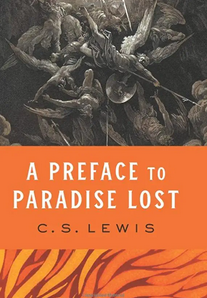
Although I’ve read much of C.S. Lewis, I’ve never encountered him in his chosen role as a master of English literature. I spotted some discussion about this Preface on Classical Carousel and was instantly intrigued, both for Lewis and for the fact that Paradise Lost is on my current Classics Club list. The Preface is a collection of essays given by Lewis, partially on the subject of epic poetry and partially on Paradise Lost itself. The book opens with Lewis’ lectures on the Epic as a genre, and gradually shifts into commentary on the characters and themes of Paradise Lost. I found the second half far more interesting than the first, in part because epic poetry has never ensnared my imagination properly: when reading works like The Aeneid, I’ve ‘cheated’ by encountering the story first in prose form! One particularly interesting part of this first half, though, was the lecture on the human heart in which Lewis asserts that we must abandon this notion of there being a Universal Man who we can find if we strip away all of the contemporary context around a given person. That context is essential to understanding the person: one can’t understand historic or literary figures if one doesn’t appreciate the culture around them. A knight without armor and chivalry is no knight at all. Instead of indulging in the vainglorious enterprise of removing everything about a character, an individual, or an author that makes them different from us — creating some pale imitation of ourselves — we should instead try to enter into their lives, attempt to see the world through their eyes. Lewis discusses the theology of the poem, which varies more from orthodoxy than is generally known, and delves into the character of Satan at length. Lewis’ analysis of Milton’s Satan will be familiar to anyone who’s read The Screwtape Letters or The Great Divorce: Satan is a creature obsessed with himself, and therein lies his doom: such myopia is its own punishment. We author our own hells. Also of interest were Lewis’ comments on Milton’s treatment of Adam, Eve, and the angels.
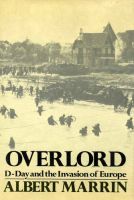
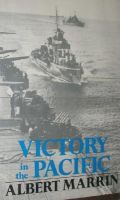
Many years ago when the world was new, the Twin Towers stood over Manhattan, and Europe was just starting to adopt the euro, I discovered a trilogy of books in my high school library about World War 2. They formed the basis of my knowledge of World War 2 and have, through repeated readings, merged into one composite tale. I was recently itching to re-visit them, so I hunted down copies of the two volumes I didn’t have.
In Overlord, Marrin combines details with narrative storytelling to deliver a sense of the importance of the mission of D-Day, the insane amount of prep work and logistics required to support it, and of course the outstanding courage of the men who broke through the walls of Hitler’s “Fortress Europe”. We learn about the extreme measures adopted to prevent the Nazis from learning about the plan, and take a look at pre-D-Day Britain, which suddenly had to host thousands of young Yanks and provide parking for an unbelievable amount of war material — planes, trains, and automobiles. (Yes, trains. The Allies anticipated the Germans destroying existing rail stock and were bringing their own, long with improvised harbors.) Once the action starts, Marrin covers everyone — the paratroopers, the glider crews, the men on the beaches. There are ample photos, though the quality is wanting. For a younger reader who wants an overview of how important D-Day was and how it was accomplished — and needs interesting details like Patton’s decoy army — Overlord remains a terrific read if you can find it.
Marrin’s story-like narrative with immersive details, and side explanations as needed make Victory in the Pacific especially valuable to those who know little about the conflict. This particular volume, in addition to including the expected (the story of the war, recollections of Marines doing the hard fighting in Tarawa, Iwo Jima, etc, small biographies of major military leaders) also explains how the machines involved in the war worked: there are illustrations of battleships’ firing anatomy, and of submarines’ double hulls along with information as to how their crews initiated dives and returned to the surface. There’s much color here, too — sailors’ songs and funny anecdotes that leaven the seriousness of the Navy/Marine mission to end the Japanese Empire’s dominion over the Pacific. One of my favorites was Marrin’s inclusion of a story about a Marine who, after his company had been briefed on how full their target island was full of venomous critters and nasty predators and the like, inquired — “Why don’t we just let the Japs keep it?” What I most remember about Marrin is his combination of technical details and emotional heft — so that we not only know how the machinery of war worked, but we get some sense of what it was like to be immersed in the war — to be bored, terrified, tortured by heat and pests, or ecstatic to hear the big guns of the US Navy driving away the enemy that relentlessly bombarded your camp.
My favorite in this series, of course, is The Airman’s War — but it merits its own post. (Also, I’ve misplaced it in my library. I took it out to read it, laid it down somewhere, and now it’s hiding.)
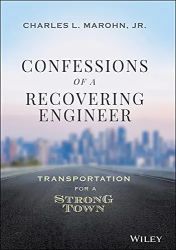
Chuck Marohn is a licensed engineer and urban planner who, in 2008, began sharing his concerns that the current approach to both building and financing the American urban landscape was disastrous. His one-man blog became a national organization devoted to educating and inspiring citizens, civic leaders, developers, and engineers to create better places and Strong Towns. Prompting his profession to do better was a vocation that grew not only out of Marohn’s concern for the world his daughters would navigate and live in as they grew older, but professional shame. As a young engineer, he built bad places and did it with pride, knowing he was following The Standards as laid out in the engineering manuals. Confessions of a Recovering Engineer attacks Those Standards, the overweening confidence the profession has in them, the domineering way in which they are applied, and the results this has had – not just on our urban form, but in fostering social problems like the disconnect between law enforcement and the communities they’re meant to be serving. Although as first glance a book on engineering and social ills might strike the lay reader as potentially too technical to be of interest, Marohn writes as a citizen to fellow citizen, and his subject concerns virtually anyone living in the United States or in places with comparable design, like Canada.
Confessions opens with the tragic story of a young woman and her family who were struck by a drunk driver while crossing Springfield’s State Street in the middle of a large block. The family were crossing mid-block and the driver moving at highway speed for the same reasons: the sheer scale of the block meant that walking through the rainy night to the next intersection with kids in tow was impractical to say the least, and that same scale allowed the driver to achieve highway speeds despite being in an urban environment where pedestrian and crosstraffic activity were common. It has become the norm in American urbanism for suburban streets to be built with the same principles that guide highway construction: wide lanes, gentle curves, broad clearances on either side so that cars that go off the road have space to recover without immediately striking trees, people, bike racks, and those other things people insist on cluttering cities up with. But highways and city streets are two very different forms, Marohn argues: a highway is a road, which is valuable for its ability to connect two or more places. A street is a platform for human and economic activity. Roads and streets are symbiotic, allowing for valuable places to grow and connect to other valuable places, making each the better. The great error engineers have done is attempting to create street-road hybrids, what Marohn calls “stroads”: they are ubiquitous in the United States, and each looks much the same, partially inspiring Jim Kunstler’s The Geography of Nowhere. Stroads, Marohn writes, are the futon of traffic infrastructure: they attempt to serve two functions at once and serve neither adequately. A stroad like State Street is so dominated by cars moving in aggressive spurts that the cultural and economic activity the dominates pedestrian environments like downtown Sante Fe or St Augustine are diminished – but the amount of crosstraffic and pedestrian activity also inhibits the free flow of traffic along the road, meaning that the vehicles are in a hurry to go nowhere quickly. They rage from light to light in a manner that might be comic if this environment didn’t foster accidents so effectively. Even more of a tragic comedy is the way we build spaces that encourage speed, realize people are speeding, and then spend more money adding speedbumps to slow people down.
Marohn argues that urban engineers have lost sight of the reason we engineer in the first place: it is not for the structure, but for whom the structure serves. Engineers raised on the gospel of creating wealth through road connections assume that the highway standards of roads should be applied everywhere; they prioritize the fast and ‘safe’ flow of traffic regardless of what it does to the human habitats that roads flow through, ignoring the fact that those same human habitats invariably make their roads slower and more dangerous. Most of the danger stems from the sheer unpredictability of the urban environment mixed with the speed of traffic, but there are other complications. One particularly salient example when Marohn was writing was that the scale of urban development in the United States has forced law enforcement to become a motorized, isolated, and spread-out body: instead of beat cops walking neighborhoods and establishing relationships with those they protect, we have created an urban form that makes the only interaction cops have with most people to be the traffic stop – a notoriously dangerous scenario that both cops and many citizens fear, where petty infractions like broken taillights can spiral into violence when both parties assume the worst of the other. Because the design of cities facilitates — encourages — speed, nearly everyone does it, and officers exercise a broad amount of discretion as to who they pull over and who they don’t, greatly increasing the use of profiling. Profiling can be useful, but it can undermine public trust in the police force. Marohn then shifts to examining prospects for improving transportation within cities: he urges city officials to convert stroads into either proper roads or proper streets, and focus on incremental growth instead of massive projects. He also reviews various options for the transportation future, from the practical (walkable cities, bicycles) to the faddish (autonomous electronic vehicles). The good news is that change is possible: State Street is being actively fixed, and Strong Towns recently posted an article on seven other stroads that have been converted to more humane streets.
Confessions is solid reading for citizens who are concerned about dysfunctional, ugly, and dehumanizing urban design. Marohn writes earnestly and largely manages to convey the details of problems without overwhelming lay readers with technical information. Given that I’ve followed Marohn since he was just a dude with a blog, I was eager to read this — and happy to recommend it to others.
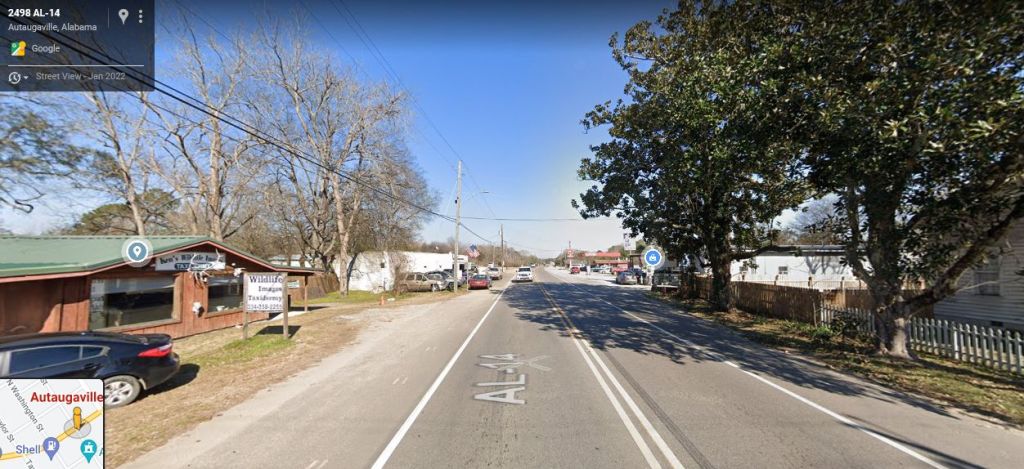
A practical example of what Marohn is writing about in regards to design can be found in comparing two cities both 20 minutes from me. Both are on an Alabama state highway, and both change the speed limit within their borders from the highway speed of 55 MPH to 30 MPH. In one, the speed limit is observed by most of the traffic, and even those who exceed it don’t do so by much. In the other, the speed limit is universally ignored unless there’s a police officer near by. I’ll leave you to guess which is which.
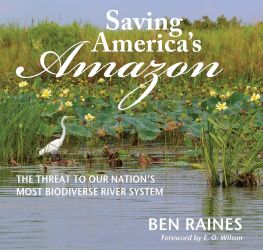
The Mobile river delta is one of the most biologically diverse places on Earth, but few know and still fewer appreciate this: for thousands of years, Alabama has served as a haven for many species found nowhere else, kept warm and rainy by generous sunshine and Gulf breezes. In the last century, though, and especially more recently, Alabama’s record-number of natural species has been rivaled by a record number of extinctions: dams, logging, and industrial development have been disrupting species migrations, destroying habitats, and poisoning broad areas. Ben Raines, E.O. Wilson, and others have suggested that Alabama is at a crossroads: either Alabamians began taking stewardship of this incredible treasure more seriously, or it will be lost. The scope of the problem is significant: speaking as an Alabamian who delights in exploring the state’s wild places and reading books about science and nature, even I was unaware of how unique the Mobile delta is until reading an article in the NY Times a few years ago. Raines’ gift for photography is employed to good effect here, with shots of staggering beauty showing off both the landscape and the unique I hope that Raines and other’s activism will help turn the tide, but his argument here would have been better served had he not frequently used ‘conservative’ as a bad word: given that his intended audience is Alabamians, demeaning the reader probably won’t help. If pictures are worth a thousand words, though, those included here will more than make up for Raines’ failure to read the room and convince readers that the Delta is a jewel worth cherishing and protecting.
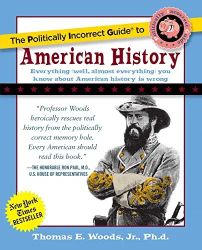
I don’t remember when I first began to break from believing the Standard View of American history, the view promoted in the textbooks paid for by the State and supporting its ambitions perfectly. Perhaps it was stumbling upon Howard Zinn’s A People’s History of American Empire. Although I’m now just as dubious about Zinn’s narrative of American history as those printed in DC-approved textbooks, it was useful in breaking ground for me, allowing me to consider views that didn’t have the imperial imprimatur. Woods doesn’t create a libertarian version of A People’s History here; instead, he focuses on controversial aspects in American history, even if other decades are equally target-rich. (Ah, the things that could be said about Nixon’s many economic sins and the oil crisis of the seventies…) Despite being a dissident in good standing for nearly fifteen years, and being a regular listener of Woods’ podcast for the last eight or so*, he still managed to deliver surprises. This is also one of the least abrasive and belligerent Politically Incorrect guides I’ve read, which made it more enjoyable to read, and more likely that I’d pass it on. There appears to be a huge amount of overlap between this and Woods’ 33 Questions about American History You’re Not Supposed to Ask, though, so if you’ve read one the other is probably redundant.
The book is strongest in the beginning, because there’s a smooth progression and the chapters are united by a common theme. Woods opens with the colonial period, stressing the distinct characters of the colonial groups (puritans, patricians, and plebes, essentially) and uses this to point out the colonies’ fierce jealousy of one another and their independent natures. This leads naturally into the war for independence, and the struggles following to create a workable constitution that respected both the desires of the States for self-rule, and the need for a larger union to serve the States’ common interests more effectively. Even after the Constitution was adopted, Woods points out, sectional competition still existed, particularly on economic lines. Tariffs that supported the North burdened the South, for instance, and the economic masters of the northeast and south continually competed against one another for political power. This, more than moral ardour or commitment to the American ideal of liberty, motivated the North’s attempt to restrict the expansion of slavery, and economic factors also influenced the North’s refusal to let the Southern states go: if the North insisted on noxious tariffs, the South could turn to Europe as its primary trading partner. David Williams, no libertarian, argued much the same in his People’s History of theCivil War. The grappling between each set of economic masters mattered little to the common soldier, of course most southerners owned no slaves and resisted the bluebellies for the same reason their forefathers fought the redcoats – independence and defense against invasion.
From here, the history is more episodic: Woods examines the push west, for instance, pointing out the inefficiency and corruption that followed when DC began giving railroad companies land grants, and defends Rockefeller and Carnegie against smears that they were robber-barons. The early 20th century offers plenty of grounds for commentary: Wilson’s hypocrisy and malice during the Great War are dealt with extensively: his lying to Americans to push his country into combat, and treating the blockade of Britain as a moral outrage while ignoring Britain’s harsher blockade of Germany, not to mention insisting that American ships should be able to sally through an active war zone without any risk whatsoever, when the Brits were known to fly false flags and use civilian ships like the Lusitania to move munitions. (Howard Zinn, again no libertarian, also points this out in his People’s History of American Empire.) Woods then debunks Hoover’s reputation as someone who “did nothing”: in fact, Hoover began the government intervention in the crisis of 1929 – 1930, expanded and made more malignant by Roosevelt, that made what should have been an ordinary economic hiccough into a prolonged Depression. (It’s not an accident that the first economic disruption after the Federal Reserve was created was also the worst: nothing good happens when self-appointed wannabe technocrats start trying to manage something as organic and complex as an economy.) Roosevelt, as you might imagine, gets a solid thrashing beginning with the New Deal and continuing with his dragging the United States into World War 2 and bullying the opposition by pulling radio licenses and siccing the FBI goon squads on dissenters. (The FBI, minions of empire since their inception!) The post-WW2 period is more scattered: Woods examines the legacy of the Civil Rights period, including the patent racism that affirmative action embodies, attacks Reagan’s reputation as a small-government kind of guy, and points to the disastrous foreign policy escapades of the 1990s, which would inflame anti-American sentiment in the mideast and end in horror in 2001.
All told, this was an entertaining and interesting romp through American history. Aside from the early colonial period, I was familiar with most of the content already. Woods skipped over some potentially interesting bits in American history, like the rise of the labor movement and the aforementioned mistakes of the 1970s, but he was no doubt restricted for space: the Politically Incorrect guides I’ve seen are fairly uniform regarding the size and formatting of the books. I’m most interested in his argument that relations between the early colonists and the native populations were more diverse and peaceful than understood — particularly the claims that some tribes invited European settlement to create buffers and allies between themselves and other tribes, and that the popular story that natives had no conception of selling land is an absolute lie. That merits further digging. In addition to this book being far more professional in tone than many in the PIG series, it has the added attraction of featuring criticism against both ‘liberals’ and ‘conservatives’, given Woods’ libertarian sympathies.
* The Tom Woods Show, which is a half-hour daily with subjects spanning history, economics, literature, and progressive rock. The show introduced me to the work of Scott Horton and Brad Birzer, among others. I’ve been listening to it since 2013 or so.
Persuasion is the story of a young couple broken apart by the young woman (Anne’s) family convincing her that her beau doesn’t have enough money or social standing to be a good match for her. After Anne’s foolish father squanders the family’s resources on trying to meet society’s expectations, they’re forced to rent out the family home to an admiral and his family. Said family includes…..the jilted beau, Captain Wentworth, who re-enters Anne’s social scene. After first studiously avoiding the other, the erstwhile lovers are forced to talk after the Captain’s new belle injures herself acting foolishly, and the old flame (never lost) flares up yet again. This time, though, said captain has money and social standing, so everyone is A-OK with the union and they all live happily ever after. Of the five Austen novels I’ve read, this is both the snobbiest and the most dangerous to live in, since there’s enough widows and widowers to make a drinking game out of. I think I’d find the novel more interesting if the ending hadn’t effectively legitimated Anne’s family’s snobbery: what if they were reunited and the Captain’s fortunes hadn’t improved, had indeed worsened, but Anne decided her affection and love for his character meant more than his meager funds and humble social status? That said, Austen does mock the snobbery, most obviously through her father — a man who has to quit his family home because he can’t bear to rein in his spending for fear of losing status, who distracts himself from his financial woes by poring over the equivalent of the Social Register. I enjoyed it well enough, but the ending was obvious from reading the back of the book: unlike Northanger Abbey, there was never any ambiguity.



 Reading Freely