
A Man Called Ove
© 2012 Fredrik Backman
368 pages
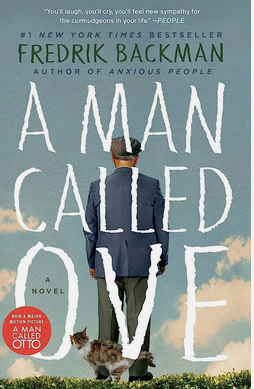
Ove is a simple man. He likes to wake early, patrol the neighborhood and look for trouble, take care of what needs fixing, grouse about people not doing things properly, and then return home for his morning coffee. And today, since his wife is still dead and he can’t think of a reason to continue puttering around, he aims to kill himself. He’s chosen his method — hanging, the old tried and true approach with no messy cleanup. Of course, he’s made preparations just in case, with newspapers covering the floor to protect them from the scruffs of lookie-loos and the like. He’s drilled a perfectly centered hole, his affairs are in order, and it’s time to go — but wait. Wait. There’s someone driving in the residential area! Cars are restricted to the parking area! IT’S POSTED! THERE ARE SIGNS! And they’re — they’ve backed a trailer over his mailbox! A Man Called Ove is a fascinating story of a man who wants to shuffle off and join the choir invisible, but whose deep-seated need to make sure things are done properly, and the persistence neediness of his neighbors and a cat that won’t go away, continues to bind him to Earth — where, eventually, he finds meaning beyond the memory of his departed beloved.
From the moment I saw the trailer for the American adaptation of this novel, I knew I wanted to see this. Not only did it feature Tom Hanks, my favorite actor, but the story-as-advertised by the trailer of a isolated curmudgeon finding friendship and meaning is one of my favorite arcs ever since encountering it first in A Christmas Carol. A Man Called Ove proved to be as serious and heartwrenching as it was funny, though. Part of the humor comes from Backman’s writing, which even in translation has a dry punch to it — but much of it is the inherent absurdity of a man seriously engaged in attempting to kill himself constantly being interrupted by his neighbor’s shortcomings and Ove’s own inability to not respond to them, because he is despite his outward grumpiness a man of moral principle. That means helping people, even if they don’t deserve it, and it also means making sure things are done The Right Way. You have to do it yourself if you want it done properly these days. Look at the new neighbors — they can’t even back up an automatic car with a rear camera, for pete’s sake.
The humor is consistent throughout the novel, but the meat of it is Ove’s growing relationships with his neighbors. He has lived in his neighborhood for decades, but was not a social person: in reading this, in fact, I wondered if Backman was attempting to create a person with Aspergers: Ove is utterly fascinated by technical matters and machinery, and uninterested in almost everyone except for his late wife Sonja, who he encountered by chance on a train platform and was completely altered by. It was as if something in him had malfunctioned: his black and white world suddenly had color in it, made all the more intense by her interest in him — a man who reflected the same virtues she adored in her father. The arrival of new neighbors, one an Iranian woman named Parvaneh whose good humor and no-nonsense attitudes combine to make her someone impossible for Ove to offend and equally impossible to ignore, completely disrupts Ove’s withdrawing into himself, into his pain and routine. As the novel progresses, he becomes increasingly more part of the neighbor’s lives’ — not just Parvaneh’s,but of a young man kicked out of his home because his father opposes his lifestyle, and of a mangy cat that needs a home, and of a woman who the State is threatening to take her house and husband away from her.
A Man Called Ove hits all the sweet spots for me, as we see characters beset by tragedy but not destroyed by it : instead, they rally, not through unfathomable reserves of inward strength because even those who might fail themselves can still support others. Backman’s story drives home the need for human connection, and its ability to overcome not just overwhelming loss, but worse evils like bureaucrats. All told, this is an utterly touching and funny little novel. I’ve already watched the American adaptation and plan on watching the Swedish movie to do a rare double feature Reads to Reels. I thoroughly enjoyed Backman’s writing, from the humor to the games he plays with tense and time, to drive home how very much alive and central Sonja’s memory is to Ove.
Highlights:
The colleague looks very happy, as people do when they have not been working for a sufficient stretch of time as sales assistants.
Her laughter catches him off guard. As if it’s carbonated and someone has poured it too fast and it’s bubbling over in all directions. It doesn’t fit at all with the gray cement and right-angled garden paving stones. It’s an untidy, mischievous laugh that refuses to go along with rules and prescriptions.
Isn’t that bloody typical, he thinks. You can’t even kill yourself in a sensible way anymore.
The cat gives him a judgmental stare, as if it’s sitting on the decision-making side of the desk at a job interview.
You go to the hospital to die, Ove knows that. It’s enough that the state wants to be paid for everything you do while you’re alive. When it also wants to be paid for the parking when you go to die, Ove thinks that’s about far enough.
He had certainly not begun this day with the intention of letting either women or cats into his house, he’d like to make that very clear to her. But she comes right at him with the animal in her arms and determination in her steps.
They stood in silence for a long time, with their arms around each other. And at long last she lifted her face towards his, and looked into his eyes with great seriousness. “You have to love me twice as much now,” she said. And then Ove lied to her for the second—and last—time: he said that he would. Even though he knew it wasn’t possible for him to love her any more than he already did.
He’s silent. And then they both stand there, the fifty-nine-year-old and the teenager, a few yards apart, kicking at the snow. As if they were kicking a memory back and forth, a memory of a woman who insisted on seeing more potential in certain men than they saw in themselves. Neither of them knows what to do with their shared experience.
“Loving someone is like moving into a house,” Sonja used to say. “At first you fall in love with all the new things, amazed every morning that all this belongs to you, as if fearing that someone would suddenly come rushing in through the door to explain that a terrible mistake had been made, you weren’t actually supposed to live in a wonderful place like this. Then over the years the walls become weathered, the wood splinters here and there, and you start to love that house not so much because of all its perfection, but rather for its imperfections. You get to know all the nooks and crannies. How to avoid getting the key caught in the lock when it’s cold outside. Which of the floorboards flex slightly when one steps on them or exactly how to open the wardrobe doors without them creaking. These are the little secrets that make it your home.”

 Reading Freely
I read this before it was published and knew right away that Backman was a new favorite author. He hasn’t let me down since!
I have several of his books on hold now, so I know the feeling!
Pingback: Midyear Review & June 2023 | Reading Freely
Pingback: Teesday Toose | Reading Freely
Pingback: The Secret Life of Albert Entwhistle | Reading Freely
Pingback: Top Ten Favorite Movies Watched in 2024 | Reading Freely