Carrying the Fire

© 1979, 2009, 2017 Mike Collins, foreward by Charles Lindbergh (!!!!)

Yet a higher call was calling, and we vowed we’d reach it soon
So we gave ourselves a decade to put fire on the moon
And Apollo told the world, we can  do it if we try —
There was One Small Step, and a fire in the sky!

(“Fire in the Sky“)

When I began actively looking to read more astronaut memoirs a few years ago, I noticed that Mike Collins’ Carrying the Fire was consistently one of the best-reviewed books out there. “That’s odd,” I thought. “Wasn’t he just the guy who circled the block for few day waiting for Neil Armstrong and Buzz Aldrin to stop making history and get ready to come back home?” I decided to give it a try as part of a series of connected memoirs (reading about the same missions from three different astronauts), and — wow. I’ve read a few dozen astronaut memoirs and histories, and this ranks right up there with A Man on the Moon — dogging its footsteps like Buzz Aldrin dogged Neil Armstrong’s. Collins began his career in NASA (after two failed applications) with the Gemini program, and through various bits of happenstance, found himself on the Apollo 11 mission that would make history. Collins doesn’t bother with accounts of his early life, but instead beelines for the meat. What makes Carrying the Fire a standout memoir is Collins’ artful mix of humor, technical explanation, stirring description, and human interest stories. He’s by far the funniest astronaut I’ve read, and unlike many he had priorities other than glory in space — saying “No” to an offer that would have let him walk on the Moon in a later Apollo mission, because he felt he’d put his wife and kids through entirely enough hell already. I am not surprised this book has been re-issued numerous times: the version I read was the 50th anniversary edition.

Mike Collins struggled to make the astronaut grade, in part because he was delayed getting into the test pilot program, and in part because the competition was so fierce. When Collins was vying for a spot in the second astronaut pool (“The New Nine”), he immediately sized up Armstrong and declared that the Navy pilot would definitely fly. Like Elaine Collins a generation later, Collins had to thread a very delicate needle: racking up time flying jets to qualify for NASA, while growing closer and closer to the ever-shrinking age cutoff. Much of Carrying the Fire is what one would expect to find in an astronaut memoir: Collins explains how he came interested in flying, and then space; describes his struggles getting in, and then the training. Collins is a comic, though, and recounts his experiences being probed and prodded not with the serious earnestness of say, John Young, but like a guy at the bar telling a story to amuse his buddies. One of my favorite sections included his analysis of his fellow astronauts, those doomed to die like the Apollo 1 crew excepting. These are both funny and cutting: he describes Aldrin as a man so preoccupied with being mad about not being the first man to walk on the Moon that he forgets to be grateful for being the second. This is not a breezy, off-the-cuff memoir like Riding Rockets, though, because Collins is despite his many laughter-inducing comments, serious about what matters, like the spectre of death they all lived with and the unremitting hard work it took to make a mission a success. He attempts to explain to the reader the technical problems being encountered, and the wholly unprecedented, absolutely weird environments astronauts were working in. Imagine having to solve intellectual and physical problems in an environment that not a single part of humanity’s natural history ever prepared us for. Collins is extremely good at drawing the reader out of the chair and into the astronaut’s flight suit — both through his descriptions, whether they be of Edwards airbase or the sight of the Earth and its patina of an atmosphere, and through the details he provides. Collins often inserts tables and other text ‘illustrations’ directly into the body of the book, sometimes just to amuse the reader with the sheer arcane details NASA was interested in. Collins is simply a fun author, someone whose book I picked up with delight and anticipation every single time — and there’s no hint from him that he was disappointed to come so close to the Moon, and yet not touch its surface. Instead, he enjoyed the demands and challenges of Gemini/Apollo, and savored his experiences there — taking joy in what he had accomplished and seen, instead of moaning about what he had not.

The Apollo book to read is still Neil Chaikan’s A Man on the Moon, but as far as astronaut memoirs go? It’s Mike Collins by, and sorry Alan Shepard for borrowing your phrase, “miles and miles”.

Next up: Tom Stafford’s We Have Capture, and then a special theme week. Or, if I don’t finish in time, a special theme week with a random astronaut memoir in the middle.

Posted in history, Reviews | Tagged , , , , , | 1 Comment

The First Family Detail

© 2014 Ronald Kessler
282 pages

Dan Emmett, in chronicling his career as a member of the Secret Service, harrumphed at those associated with serving the executive branch who got gossipy. It was unprofessional and vulgar, said he. Perhaps, but when the executive is himself unprofessional and vulgar, and living off the public dole in the sums of millions per year (thinking of salary and the various perks of office), I say they’re fair game. The First Family Detail, based on interviews and memoirs of secret service agents past and present, mixes criticism of the Service’s decline along with some fairly gossipy and very entertaining revelations about the men, women, and children who have enjoyed (or tolerated, or despised ) Service protection. These include not only the president and his family, but vice presidents, presidential candidates, and (by their association with the president) various members of DC’s cabal. The ‘serious’ parts of this book address the decline of the Secret Service, due to its politicization (the service competes for funds with other agencies, so it often kowtows to the demands of executives for less protection so as not to make the grand poobah grumpy at them at money-dispensing time), the expansion of its mission to cover non-presidential events like winter Olympics, and a growing culture of corruption and carelessness. Part of this owes to the men themselves: Clinton was such a profligate skirt-chaser that one of his mistresses would arrive as soon as Hillary had left the executive campus, and that this particular mistress was never entered on the books. Biden, as vice president, wanted to maintain his average Joe status by reducing his motorcade, while at the same time making multiple trips back and forth between his private home and D.C. on the public dime, and with such unpredictability that the agency was forced to maintain extra agents and run the ones they had absolutely ragged. Long hours means little time for P.T. or weapons training.

The protectees themselves run the gamut from considerate and respectful (the Bushes, especially Laura, are apparently loved, as are the Obamas) to hostile and abusive (Hillary). Kids who have grown up in the White House change their attitudes over time: Chelsea originally referred to the agents as “pigs”, aping her parents, (this from The Residence, not Kessler) but became a model first daughter as she grew up. Jenna and Barbara Bush were teenage nightmares, frequently attempting to escape from protection and possibly inspiring the several “first daughter gone rogue” films of the 2000s, like Chasing Liberty and My Date with the President’s Daughter.* Some executives varied their behavior depending on if their wife was around: Ronald Reagan was just as personable off-screen and loved to chat with anyone he encountered, but was marshalled a bit by Nancy who regarded her husband as too open & trusting of others and wanted to protect both him and his time. Clinton, meanwhile, was often brusque and inconsiderate, but when by himself liked to smoke a cigar and hang out with the agents. A lot of the information was square in line with other things I’ve read: the absolute abhorrence that was Johnson, Hillary’s vile and dehumanizing abuse of staff, Kennedy and Clinton’s inability to not like act randy chimpanzees (agents would literally steer pretty woman away from areas Billy boy was being transported to), etc. There were surprises, though: Carter and Ford ,who I regard as genuinely good and unpretentious people, apparently had their bad sides: Ford was a bit of a miser, and Carter was far less a man of the people around staff, ignoring them. (Also: despite SNL taunting him as a klutz, Ford remained a nimble athlete in office, and sometimes taunted agents who couldn’t keep up with him on the slopes. Be nice, Jerry.) While presumably no one likes being constantly shadowed and told they can’t do this-or-that (especially when they’re el presidente), some protectees are openly hostile and contemptuous of staff and agents, like Hillary — who insisted staff disappear at her approach, again verified by The Residence. Judging from the agent interviews here, few would want to be around her. Another surprise was Johnson’s own randiness: I’m not surprised that he was a skirt-chaser, but more surprised any woman would consent to be groped by such a repugnant human being, who would consort with mistresses in the presidential suite of Air Force One while his wife sat outside. At least Jack and Bill were young, trim, and charming.

First Family Detail was a fun but gossipy read, something of a guilty-pleasure to go along with the more serious presidential reading of earlier weeks. Given how popular the Bushes are and how disliked the Clintons are in this book, it could very easily be perceived as partisan, but the positive coverage given Obama and the few shots fired at Gerald Ford ameliorate this to some degree. That said, the good nature of the Bushes (’41 and ’43) toward staff and agents, and the more arrogant attitude taken by the Clintons, has appeared in other books so I’m largely satisfied in thinking Kessler’s reportage is in he area of fair-minded.

Coming up: Mike Collins’ excellent Carrying the Fire, and over the weekend Tom Stafford’s We Have Capture. Hoping to finish that one before another theme week kicks off. This year’s space camp deliberately involved the memoirs of three men who worked together (albeit not at the same time — Collins and Young were together on Gemini 10, and Young and Stafford on Apollo 10) to see how accounts lined up or did not.

Some highlights:

Even in summer, Nixon insisted on a fire in the fireplace. One evening after he had left the presidency, Nixon forgot to open the flue damper. “The smoke backed up in the house, and two agents came running,” says a former agent who was on the Nixon detail. “Can you find him?” one of the agents asked the other. “No, I can’t find the son of a bitch,” the other agent said. From the bedroom, a voice piped up. “Son of a bitch is here trying to find a matching sock,” said Nixon.

After he was diagnosed with Alzheimer’s, Reagan remarked, “Well, there must be a positive side to this. Maybe I’ll get to meet new people every day,” former agent Sullivan says. “He tried to make light of it, which is classic Ronald Reagan,” Sullivan observes. “Even though there was bad news, he’d try to put you at ease.”

Biden’s seven-thousand-square-foot home in Greenville, the hometown of many Du Pont family descendants, sits on four acres on a lake. Like the vice president’s home, it has a pool. Biden also owns a small carriage house on his property, where his widowed mother, Jean, lived until she died in 2010. The Secret Service now rents it from Biden for $2,200 a month. [Emphasis added. How I loathe DC.]

When in public, Hillary smiles and acts graciously. As soon as the cameras are gone, her angry personality, nastiness, and imperiousness become evident. During the height of the Monica Lewinsky scandal, a Secret Service uniformed officer was standing post on the South Lawn when Hillary arrived by limo. “The first lady steps out of the limo, and another uniformed officer says to her, ‘Good morning, ma’am,’ ” a former uniformed officer recalls. “Her response to him was ‘F— off.’ I couldn’t believe I heard it.”

[*] Starring Eric from Boy Meets World! One I watched multiple times on VHS back in the day.

Posted in Politics and Civic Interest, Reviews | Tagged , , , , , , , | 3 Comments

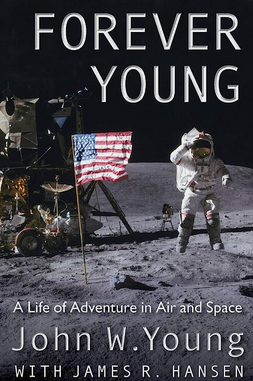
Forever Young


If ever the title “Mr. Astronaut” was given out, it would not go to John Glenn, despite his being the posterboy of Mercury; it wouldn’t even go to Neil Armstrong, who fifty-four years ago today became the first human to step foot onto another world; it would have to go John Young, who served in NASA for four decades. There, the poor but promising young son of a merchant would become an accomplished astronaut and administrator, developing close friendships with men like George H.W. Bush whose path he would have never otherwise crossed. Young began his career in the Gemini program, which saw the United States developing spacecraft rendezvous techniques and spacewalking, and would grow to maturity within it, commanding one of the last Apollo missions and then switching into a managerial role as head of the Astronaut Office. In that office, he oversaw the creation of the Shuttle Program, arguing for a fully-reusable approach but having to settle for the partially reusable system of disposable boosters and reusable space-planes. He piloted the first shuttle mission himself, and would bear the weight of responsibility as NASA attempted to find out what went wrong with Challenger. As an astronaut memoir, Forever Young is unmatched in its 40 year scope, and Young’s administrative position gives him an unusual top-down, analytical view on NASA’s history and technical issues. This makes for thorough but sometimes dry reading, except when he gets a little more fun with critiques of the Apollo 13 movie and the like. Unfortunately for Forever Young, I was reading this in tandem with Mike Collins’ Carrying the Fire, and Collins is such a ball to read that Forever Young (despite its substance) felt more like homework at times. Still, reading about the Gemini 10 mission from the view of both men made its already unprecedented task (reclaiming a payload Neil Armstrong was forced to abandon) even more interesting.

54 years ago today!

Posted in General, history, Reviews | Tagged , , , , , , | 3 Comments

LAS prompt: fun facts

Today’s prompt from Long and Short Reviews is an interesting fact the blogger knows. In keeping with this week’s Space Camp theme, I’m going to throw some astronaut trivia atcha!

And so, some astronaut fun facts from previous and current Space Camp reading:

  • Wally Schirra is the only one of the Mercury originals to participate in the Mecury, Gemini, and Apollo programs. He left Apollo after some tension between the Apollo 7 crew and Houston led to all three of the Apollo 7 crew never flying again.
  • Alan Shepard was the only one of the Mercury seven to walk on the moon. Despite being grounded before the Apollo program launched due to an inner-ear problem, an experimental surgery put him to rights again. Long the head of the Astronaut Office, Shepherd was able to participate in a lunar landing and (in his usual devil-may-care attitude) struck a golf ball from the surface of the Moon. He declared his first shot to be a slice. His fellow Mercury original, Deke Slayton, had also been grounded for medical reasons, but was able to participate in the Apollo-Soyuz mission with Russia.
  • John Young was the longest-serving member of the astronaut corps, beginning in the Gemini program, participating in a lunar landing, and being promoted to head of the astronaut office after Shepherd retired, where he oversaw the shuttle program and flew its first flight himself. He retired after 42 years.
  • The US Air Force was not content to leave space to a civilian ‘science’ program, and had begun their own, complete with eight chosen men. This program was eventually folded into NASA, and unfortunately only one of the ‘magnificent eight’ joined NASA properly. Had the others maintained their interest, their number would have included the first black astronaut, Robert H. Lawrence. Unfortunately, he was killed in a plane wreck in ’67. Three of NASA’s own had died in plane crashes: one because of a birdstrike and two because poor visibility led to the plane crashing into a building while attempting to land.
Posted in General | Tagged , | 10 Comments

Top Ten One-Word Titles

Today’s top ten list from the Artsy Reader Girl is one-word titles, so I’m going to look back at the first three years of this blog to check out what I was reading back then. These from 2007 – 2009 with a lot of representation from 2009. But foist, the Tuesday Tease!

“I do so know what’s it’s like.” Harriet was getting tired of standing up and screaming. She wished she could sit down but it wouldn’t have done. It would have looked like giving up.

Harriet the Spy

On the next to last day of the missions, the Soviets shot a laser at Challenger, tracking it. Though it was a low-powered laser, it was still enough to cause a malfunction of onboard equipment and temporarily blind the crew. The US government made a formal diplomatic protest. The message was not a terse as the one I would have sent.

Forever Young: Adventure in Air and Space, John Young

Mephisto, Klaus Mann. The story of an artist whose desire for accolades and wealth leads him to make a deal with the Devil — the Nazi party. I re-read this in 2021 for the Classics Club. That title links to my re-read of it, since back when I originally read Mephisto I was doing once-a-week walls of text that (frankly) were so devoid of personality I don’t re-read them.

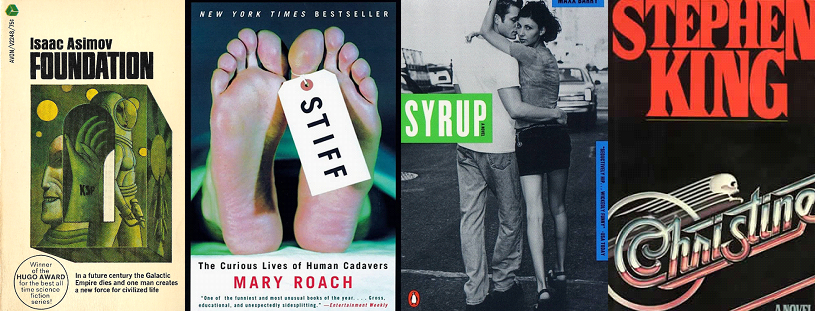
Foundation, Isaac Asimov. A collection of the first five Foundation stories, which would lead to my reading literally anything by Asimov I could find. He remains, years after I exhausted my access to his works, the author I’ve read the most of, with close to a hundred. Bernard Cornwell is runner-up with 50+ odd titles.

Pompeii, Robert Harris. A novel of the eruption of Mt Vesuvius and the towns it destroyed. One of my first Harris reads that made me realize how strong his historical fiction chops were. (My first-first read by him was Fatherland, but that was more of a mystery set in an alt-history world.)

Syrup, Max Barry. One of several of his anti-corporate satires I read, this one about the marketing of a controversial soda; a similar title was Company. I’d like to go back and re-read these to see how my perspective has changed. Interestingly, Barry himself has changed: instead of satires, his last four titles (beginning with Machine Man) have all been solidly SF.

Rubicon, Tom Holland. A history of the fall of the Roman Republic. I still prefer his Persian Fire for introducing me to Persia, Zoroastrianism, etc, but I’ve remained a fan of his over the years and am currently enjoying his podcast.

Christine, Stephen King. My first proper horror novel by Stephen King, since the previous ones were more fantasy & science fiction.

Citizens, Simon Schama. A sweeping history of the French revolution and the gorefest which followed. It was my introduction to the French revolution proper, and one that made me realize that historical events can be very complicated.

Stiff, Mary Roach. On the many uses of corpses. Roach is known for one-word titles, having followed this with Spook, Bonk, Guts, and Fuzz. (These concern ghosts, sex, …guts, and animal violations of human law.)

Contact, Carl Sagan. An astronomer’s take on what a real encounter with extraterrestials might look like.

Timeline, Michael Crichton. Possibly my first Crichton, an interesting mix of SF and historical fiction, in which some student-researchers explore medieval France.

Posted in General | Tagged , | 12 Comments

Breaking the Chains of Gravity

Breaking the Chains of Gravity: The Story of Spaceflight before NASA
© 2016 Amy Shira Teitel
304 pages

You know the story. The scene: 1950s America. Everyone is drinking on the back patio in suburbia, dressed in cardigans or pearls and pastel dresses, and admiring the latest model of a fin-tailed sedan, reflected in their “I LIKE IKE” pins. Then, from the skies, that sinister noise — beep, beep beep — and suddenly the peace of postwar America is broken by the realization that those nasty Ruskies are up to something, and money must be thrown at hosts of bespeckled young men wearing thick glasses and pocket protectors so that the moon doesn’t become the next Siberia! Well — stuff and nonsense, says Amy Shira Teitel. Not only have men and women been looking toward the stars with an aim to travel there since the 19th century, but the United States had been steadily pursuing rocketry and the possibility of space aviation since the close of World War 2. Breaking the Chains of Gravity, a second history of early aviation and the space age from Ms. Teitel, is a fascinating look into the history of rocketry and jet aircraft that would later join together in NASA. It’s a lite-technical history written for a popular audience.

Although Jules Verne and H.G. Wells were both scribbling about space travel prior to World War 2, rocketry really begins there — or shortly before, when Germany needed ways to maintain military readiness without running afoul of the vengeful Versailles treaty, which imposed strict limits on how many men in arms and equipment it could maintain. Rockets, which had the potential to be long-term artillery, weren’t thoroughly accounted for by the treaty: after all, though they’d been used in the Napoleonic wars, they hadn’t had demonstrated any real punch beyond amusement and racket. That would change as brilliant minds like Werner von Braun, who was interested in rockets as a means of opening a new frontier in space, were put to work. As is well known by this point, Germany was able to create a series of rockets that could carry explosives beyond its borders, at speeds and with stealth impossible for its bombers — not that it had many of those left by the time the V2 became operational. von Braun was no political idiot, and as the war’s resolution became clear, he looked for an opportunity to transfer his equipment, knowledge, and dreams elsewhere. The Brits, having experienced von Braun’s passion in an intimate and painful way, were not a viable option — nor were the Soviets, being as dangerous and maniacal as von Braun’s Nazi paymasters. The Amis it was, then, and von Braun was able to sneak his people and tools through SS sentryposts, evading capture by them and the advancing Russians and find a resort to hole up in and wait to be captured by Americans. From there, via Operation Paperclip and the like, American forces began experimenting with the remaining V2s in New Mexico, developing familarity with the technology. At the same time, though, men like Chuck Yeager were also pushing the envelope with jet airplanes, breaking not only the sound barrier but coming to the threshhold of space itself. The US military agencies were actively interested in how the human body could cope with hide altitudes, creating projects like Project Manhigh to float a man at the atmosphere’s edge for close to twenty hours. The launch of Sputnik added urgency to the space and satellite goals of Eisenhower and the defense establishment, but despite that Eisenhower was insistent on advancing space exploration through a civilian, not a military agency.

Breaking the Chains of Gravity is a thoroughly valuable book for those at all interested in the development of rocketry and the arduous task of figuring out aviation in the heights of the upper atmosphere and beyond. I was reminded in part of The Right Stuff, given Wolfe’s early focus on the men of Edwards (here known as Muroc Field). Breaking the Chains is a solid argument that the space race was one of a Russian surprise and ambush, but more of a steady progression that merely had a shot in the arm in the wake of Russia’s public entry into the age of space.

Related:
Into the Black: The Extraordinary Untold Story of the First Flight of Columbia, Rowland White. Heavy history of space aviation that overlaps with this somewhat, in covering military interest in space.
Fighting for Space, Amy Shira Teitel. The story of two extraordinary female pilots and their hopes to include women in the Mercury program
Dreamland: Inside the Secret World of Roswell and Area 51, Phil Patton. A curious mix of legitimate experimental aviation history and paranormal lore.

Posted in history, Reviews | Tagged , , , , , , , | 2 Comments

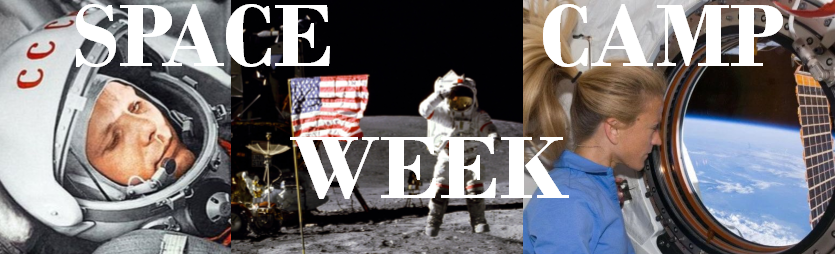
SPACE CAMP!!!!

Two years ago I decided to celebrate the anniversary of the lunar landing on July 20, 1969, with a week devoted to astronaut memoirs and space race histories. I enjoyed that so much I repeated it, and now here I am doing it again. Space Camp is now a RF institution! We’re going to start off with a history of space endeavor prior to Gagarin, then visit the biographies of three American astronauts — including the singular John Young, who is unique in flying in the Apollo, Skylab, and Shuttle periods of NASA — and possibly visit some lunar fiction. Space Camp is named after the kids’ camp/adventure/education program hosted by the Marshall Space Center in Huntsville, Alabama, and focuses on human spaceflight.

PREVIOUS SPACE CAMP READS

Rise of the Rocket Girls, Nathalia Holt (Civilian Support – Mercury onwards)
Fighting for Space: Two Pilots and their Battle for Female Space Flight, Amy Shira Teitel
We Could Not Fail: The First African-Americans in the Space Program, Richard Paul and Steven Moss (Civilian/Support – Mercury onwards)
Deke! US Manned Space Flight from Mercury to the Shuttle, Deke Slayton (Mercury-Apollo and onwards)
Soviets in Space: The People of the USSR and the Race to the Moon, Colin Turbett (Sputnik forward)
Two Sides of the Moon, Alexei Leonov and David Scott (Mercury/Sputnik – forward)
Men from Earth, Buzz Aldrin and Malcolm McConnell. (Mercury through to the early Shuttle years.)
A Man on the Moon: The Voyages of the Apollo Astronauts, Andrew Chaikin. THE Apollo history. (Gemini-Apollo)
Moon Shot: The Inside Story, Alan Shephard and Deke Slayton (Mercury – Apollo)
Lost Moon: The Perilous Voyage of Apollo 13, Jim Lovell (Apollo)
Into the Black: The Extraordinary First Flight of the Space Shuttle Columbia, Rowland White (Shuttle)
Through the Glass Ceiling to the Stars, Eileen Collins (Shuttle-ISS)
The Ordinary Spaceman, Clayton Anderson (Shuttle-ISS years)
Sky Walking: An Astronaut’s Memoir, Tom Jones. (Shuttle-ISS years)
Handprints on Hubble, Dr. Kathryn Sullivan (Shuttle)
The Burning Blue: the Untold Story of Christine McAuliffe and the Challenger Disaster, Kevin Cook (Shuttle)
Riding Rockets, Mike Mullane (Shuttle-ISS)
Spaceman: An Astronaut’s Unlikely Journey, Mike Massimino (ISS Years)
Bringing Columbia Home: The Untold Story of a Lost Shuttle and her Crew, Michael Leinbach & Johnathan Ward (Shuttle-ISS)
Endurance: A Year in Space, A Lifetime of Discovery, Scott Kelly (ISS)
Back to Earth: What Life in Space Taught Me About Our Home Planet, Nicola Stott (ISS)

Posted in General | Tagged | 4 Comments

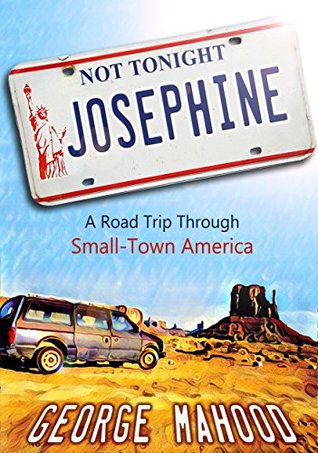
Not Tonight, Josephine!

‘You realise that most of the population of Harlowton was conceived in that park?’
‘Really? We had no idea.’
‘Well there ain’t much to do around here. So folks are either drinking in here, or else making out over in the park.’
‘Or doing karaoke in Ryegate,’ added Rachel.
‘Well yes, of course. But only on Fridays.”

To paraphrase Animal House, naive, drunk, and stupid is no way to go through life, boys. It does, however, make for an mostly entertaining account of two young Brits road-tripping through the United States. The drama and humor begins when these two lads (George and Mark) decide to buy an aging van dubbed “Josephine” from a suspiciously eager man in the backwoods, who declines to tell them that (1) the transmission is shot, (2) one of the tires isn’t quite the same size as the others, and as a consequence the entire chassis is being slowly deformed and (3) this is not a vehicle, it’s a moving scrapheap. Their mission: to drive from New York to California through America’s small towns, experiencing the real America. The $800 vehicle will eventually cost George over $4,000, and he will arrive in the Sierra Madre mountains in the winter, but it makes for an entertaining series of stories — at least, until his buddy Mark leaves and his girlfriend Rachel arrives.

I don’t know about you, reader, but some of my favorite stories involving my best friends involve times we made questionable decisions and, as a consequence, had little adventures. Like the time we got lost in a state park and decided to take a shortcut through a ‘shallow creek’, and — well, ended up thigh-high in something very much like quicksand, emerging on the other bank still very lost but now soaked and muddy to boot. Or the time we were hiking and got lost and emerged into the middle of a golf course, wandering through it and escaping via a very tony residential development where we were no doubt watched very carefully through blinds. Not Tonight, Josephine, is a book full of such misadventures, created by the fact that its storyteller and his comrade are young men whose confidence is outmatched only by their questionable judgement, made all the better by their being clueless out-of-place Brits who have never driven on the right side of the road before, let alone attempted navigating a vast rural landscape or the social graces of western bars. The first few weeks of travel are an exercise in frustration as Josephine breaks down on a regular basis, forcing them to pay for tows and repairs. These include replacing the red van’s back hatch with a bright yellow one from a Plymouth Voyager, which will attract no shortage of police attention. (The boys sleep in the vehicle and are frequently woken up in the middle of the night by cops who have nothing else to do but deem a dodgy-looking parked van as a clear and dangerous threat to the common good.) The boys drift from the north into the south from the midwest, then wander through Texas, New Mexico, Arizona, and Utah to the Sierra Madre mountains. They frequently end their nights drunk, which costs them a bit in Las Vegas when they take full advantage of the free drinks and discover that said drinks can cost a surprising amount in gambling losses. Some crimes are committed on the way, like George deciding to spirit away a few blankets from one hotel room.

The book loses considerable interest after Mark returns to Britain, and George settles in a resort town for the winter, working in an inn as a cook and driving in the evenings for a delivery service that sounds rather like uber-eats but without the app part. At least part of the book takes places in the year 2000, given that Mark and George watch Bounce and Pay it Forward, both released that autumn. Although we get to encounter a few odd wintering-over characters during George’s solo period, there’s nothing like the constant friendly arguing of Mark and George, and when George’s girlfriend Rachel arrives, she’s not remotely entertaining – -at least, in this book. Going by George’s other books, the couple marry and have three kids while going on adventures like wandering around South America even more clueless than they are here. The book is largely entertaining, though — Bryson esque but without the grumpiness.

Posted in Reviews | Tagged , , , | 3 Comments

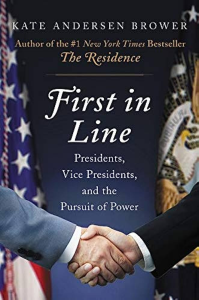
First in Line

First in Line: Presidents, Vice Presidents, and the Pursuit of Power
© 2018 Kate Anderson Brower
327 pages

The office of vice president was, for most of the 19th century, a near-superfluous one — but in the mid-20th century, the men holding that office rapidly grew in relevance, both because of a growing habit of becoming president (through assassinations, resignation, or electoral succession) and because the ever-growing demands of the presidential office made it necessary for the president to have a working partner, not just someone to balance the electoral ticket and hang around if he should happen to die. First in Line examines the office and the men who have filled it in the last half-century, paying special attention to how the relationship between el presidente and his second have changed from president to president, and how men of ambition have coped with suddenly being reduced to the ‘guy in back’. Although many of the men profiled here are well known to the reader because they later succeeded to the office, others and their relationships with their bosses were surprises.

Harry Truman had been vice president for all of four months when he suddenly inherited one of the world’s hardest jobs, and learned (to his astonishment) of the things previously hidden from him, like the atom bomb. Vice presidents were ticket-fillers, non-entities: their only duty was to break ties in the Senate, and were otherwise barred from even speaking there. Occasionally one was called on to fulfill the primary duty of the office, assuming the presidency in the event of a death, but mostly they hung around like a bad cold and complained about the uselessness of their job. The vice presidency was where political dreams went to die. As DC’s self-appointed mission as Leader of the Free World expanded after World War 2, though, the executive branch swelled, and the potential for actively using the vice president grew with it. Despite this, presidents were slow to adapt: JFK and LBJ regarded one another contemptuously, conferring together only an hour or so a week at most, and LBJ echoed that treatment with his own vice president: he and Nixon both persisted in using the man to stand in for them at funerals and the like, but otherwise expected them to keep their mouths shut and stay out of the way. Carter was the first to see the potential for a working partnership, and effectively transformed the office, establishing a pattern for a more productive vice presidential job that steadily grew until the election of Trump, in which his vice president suddenly reverted to The Guy in Back. (For comparison: LBJ and JFK had an hour or so together alone a week: Biden and Obama had at least five, and Pence maybe talked to Trump on the phone.)

Although Bowers writes that a common trend among presidential-vice presidential relationships is that they deteriorate, her book doesn’t especially bear this out. Kennedy and Johnson never liked one another to begin with, and Nixon and Angew’s relationship was very short-lived. Carter & Mondale remained working partners, as did Reagan and Bush: the latter’s lack of a close personal friendship owed in part to the frostiness between their wives. Clinton & Gore were very buddy-buddy until Clinton’s whoremongering scandalized Gore’s wife, and Clinton’s outright lying to Gore about the affair severed the men’s own bond. If Bush wasn’t close to Cheney beyond their working relationship, who could blame him? No one wants birdshot in the face. Obama and Biden are an outright rejection of that ‘trend’, growing closer with every year, and especially after Biden’s son (Beau, not the degenerate Hunter) died. Bowers offers no shortage of surprises here: the fact that Reagan strongly wanted Ford to run as his vice president, with the men sharing some presidential responsibilities; that John Kerry wanted to tap John McCain as his second in 2004, a mixed-ticket novelty; and that Pence frequently reached out to Biden despite his boss’s overt antagonism toward Obama’s former veep. I was wholly unfamiliar with Pence before reading this, beyond viewing him as being included on the ticket to be the staid normie and win over the parts of the Republican base that viewed Trump as unpredictable at best and repellent at worse. He has a very healthy relationship with his wife, and (astonishingly) used to have a radio show. In addition to exploring relationship dynamics in full, Bowers also touches on other parts of the vice presidency, like the official residence of the old Naval Observatory house, which is universally regarded by vice presidents who have succeeded to the White House as a more comfortable residence, given its arcadian setting and fact that it’s not a museum open for public tours.

First in Line was a fun surprise for me: I don’t know that I would have read it had I not gotten into a sudden unexpected bug for presidential books, but I’m glad I took it on. Not only did it introduce me properly to some overshadowed figures in American history, but it increased my appreciation for men who could put egos aside to serve the common good. It’s also generally entertaining – -who knew Dick Cheney had a sense of humor?

Highlights:

Johnson made it clear that he considered Kennedy an entitled elitist who was too young and too inexperienced for the job. “Have you heard the news?” he asked a congressman. “Jack’s pediatricians have just given him a clean bill of health!”

In 2004, Democrat John Kerry’s first choice for his running mate was Republican senator John McCain of Arizona. The two knew each other from Vietnam and from their years in the Senate. “It was clear that it wouldn’t fly. McCain didn’t want to do it, it was clear that it would have been too controversial in other quarters,” according to a person familiar with Kerry’s decision-making. “But if you said where was his heart when this was moving along, I would say McCain.”

I’m forty-three years old,” John F. Kennedy told his aide Ken O’Donnell, to calm his nerves after Kennedy named Lyndon Johnson as his running mate, “and I’m the healthiest candidate for president in the United States. You’ve traveled with me enough to know that I’m not going to die in office. So the vice presidency doesn’t mean anything.”

The Carters’ eight-year-old daughter, Amy, cried over her father’s decision not to name Glenn as his running mate. “I wanted an astronaut to be the Vice President,” she said.

As vice president, Cheney rather enjoyed his image as one of the most polarizing figures in recent American history. Cheney’s former chief policy adviser Neil Patel said that, during the second term, he bought Cheney a Darth Vader costume complete with the iconic mask, and he wore it into the Oval Office one day and posed for a picture with aides. After leaving the White House, Cheney drove a black pickup truck with a Darth Vader hitch cover.

Cheney’s dark image was a mutually beneficial part of their dynamic: Bush did not mind being underestimated.

Biden’s uncle Ed stuttered, too, but was never able to conquer it. He never married, never got a good job, and he drank a lot. Biden never wanted to end up like Uncle Ed, so he never had a drink and he never stopped working to get over his stutter, memorizing poems and practicing speeches endlessly.

Pence declared, “Servant leadership, not selfish ambition, must be the animating force of the career that lies before you.” He continued: “Don’t fear criticism. Have the humility to listen to it. Learn from it. And most importantly, push through it. Persistence is the key.”

Posted in history, Politics and Civic Interest | Tagged , , , , , , , , , | 5 Comments

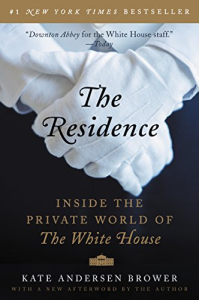
The Residence

The Residence: Inside the Private World of the White House
© 2016 Kate Anderson Brower
336 pages

They say that no man is a hero to his valet, but perhaps no man is properly a villain, either. Richard Nixon, despised by the nation after the Watergate scandal, left a score of saddened butlers, florists, ushers, and the like after he resigned from the presidency. Perhaps the pundits and talking heads thought him a crook and a scoundrel, but to the men and women who keep the White House running, he was a kind, if formal. boss. The Residence takes us inside the White House, into the life of the home itself, where staffers continually attend to the need of the president, his family, and guests — preparing meals, arranging flowers, dusting chandeliers, buzzing about like a host of Jeeveses and providing such an array of services that outgoing presidents are left wondering if they can cope as adults anymore after so many years of having everything done for them. Although the White House staff are remarkably discreet, a few interviewed here do reveal interesting details about their former bosses decades after the facts, and Ms. Brower’s collected accounts offers different perspectives on the executives of the last century — humanizing villains, exposing the warts of heroes, and confirming that LBJ remains the most obnoxious man to ever sit in the chair.

A tourist to the White House standing on one of its lawns may regard it as a three-story structure, but it has six floors and two hidden mezzanine levels. It is a massive building, for years the nation’s largest residence and one requiring a staff of over a hundred to keep running smoothly. “Required” is perhaps not quite the right word, considering that some of the services offered by staff are over-the-top, bordering on ridiculous. Flowers in rooms are continually replaced even if no one is using the rooms; beds are changed after any use, even a 20-minute catnap; suit jackets disappear the second they’re taken off, whisked away to the dry cleaner. Was the president just taking it off to get comfortable for a few minutes? Doesn’t matter, he can wear another suit. There are even multiple chefs, one dedicated solely to pastries. Given that the White House has to entertain other muckety-mucks, all of whom are similarly indulgent, this is understandable to a certain degree. At least the president’s family has to pay for that food — a fact that apparently catches many by surprise. Although many services are provided at no charge, the executive is financially responsible for moving costs, food, and dry-cleaning — leading some presidents like Carter to plead with their chefs to be more economical, serving leftovers. (Chefs comply, to a degree, but if guests are involved not so much: the honor of the Residence demands only the best.) Perhaps that explains Trump’s serving of McDonalds! The workloads of some of the staff are absolutely nuts, with eighty-hour weeks not uncommon: one butler kept putting off getting a bypass because The President Needed Him, and died of a heart attack while on the job. There is such pride and prestige associated with working for the White House, though, that staff serve there for decades despite the stress and fact that many of them could earn more in the private sector. The election of Barack Obama made black staffmembers (who appear to be in the overwhelming majority, judging by the included photos) especially proud to serve.

Ms. Brower’s book addresses a variety of aspects about interactions between its staff, the president, and his family. We get to know the executives and their wives as bosses, not national leaders, and some of them were pills to work for. Jackie Kennedy & Nancy Reagan were especially demanding, though Mrs. Reagan’s husband was far easier to get along with. President Reagan was downright chummy with the staff, so eager to get in long conversations that those with a job they needed to get done in a hurry might politely avoid him just so they could get about their business. The worst boss award has to go to LBJ, who was not only a constant abusive bully, using his height and other anatomical bits to intimidate staffers (and guests), but had a bizarre obsession with the shower, which he used over $10,000 worth of military funds to alter to his demands — creating a unit that sprayed with more force than a firehose, at scalding temperatures, with separate nozzles pointed at various parts of his under-the-belt anatomy. Working in the White House has the odd quirk of the job potentially radically changing every four years: no sooner has one family’s dining tastes and personality quirks been learned and absorbed than comes a new set of bosses, with wildly different attitudes and needs. The Kennedys and Clintons favored fine dining and haute cuisine: Johnson and Bush preferred simple Texan fare like chili and Tex-Mex. (Well, Hillary preferred haute cuisine: Bill snuck junk food whenever he could get away with it.) Going by this account, George H.W. Bush and his wife were by far the most generally popular — loved, even, and so mourned by the staff at their departure that Hillary axed one of them on suspicion that they were calling Barbara to leak information about the Clintons. (In reality, Mrs. Bush was calling one of her staffers-turned-friends for help using her new computer.) The elder Bushes hit the sweet spot of respect and conviviality — not too familiar, not too formal, and they and their son established such friendships with staff that even after retirement, George W. sometimes went fishing with old favorites. Speaking of kids, Brower has a separate chapter on growing up in the White House, which is easier for small kids who know nothing else (like the young Kennedy) and much harder for those like the Bush girls who have experienced some degree of normality. (As ‘normal’ as you can get when granddad was president and dad was governor & owner of an MLB team, anyway.)

This was an all-around fun book to read, offering surprises and confirmations at the same time. I’d heard JFK was a womanizer, for instance, but didn’t realize that he had such a reputation for womanizing and adultery that the staff learned to avoid the second floor altogether in Jackie’s absences, given the high chances of seeing naked secretaries dashing around. (Also off limits: the pool, where he could be found sitting naked with similarly clad lasses.) I was surprised that Nixon was so much more well regarded by the household staff than the West Wing staff, though I’ve never really delved into his presidency beyond his economic mischief and foreign policy. Ms. Brower confirms an odd allegation I’d encountered about Eleanor Roosevelt, who did indeed fire all white domestic staff members and replaced them with blacks, on the grounds that staff worked better when they were all of the same ethnic group. Madame Segregation, that’s our Mrs. Roosevelt. Although reading about the extraordinary expenditures that go into White House operations made me grumble and harrumph (especially the constant redecorating at taxpayer expense) I couldn’t help but be charmed by the human image of the executive families — of Michelle Obama and Hillary Clinton doing their best to give their girls normal lives, of presidents confiding in valets during elevator rides when the burdens of the world and their family were crushing them — and enjoyed this thoroughly.

If you are tiring of this week’s spontaneous theme, I regret to inform you that it shall continue. You’ll get a reprieve when Space Camp kicks off, though.

Posted in history, Politics and Civic Interest, Reviews | Tagged , , | 3 Comments