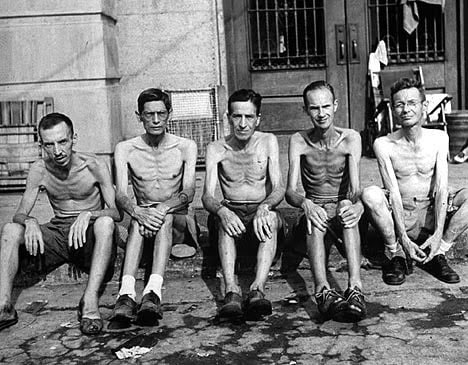
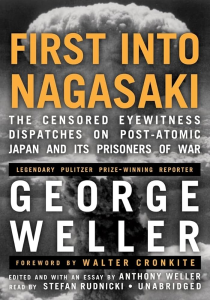
WHAT have you read recently? First into Nagasaki, a memoir of a journalist interviewing Nagasaki survivors and POW survivors. Very dark.
WHAT are you reading now? Just starting The Dispossessed by Ursula le Guin, a buddy read with Cyberkitten. Also still reading Family Unfriendly because I keep getting distracted. Also still technically reading two books on volcanos. (See aforementioned note about distractions.)
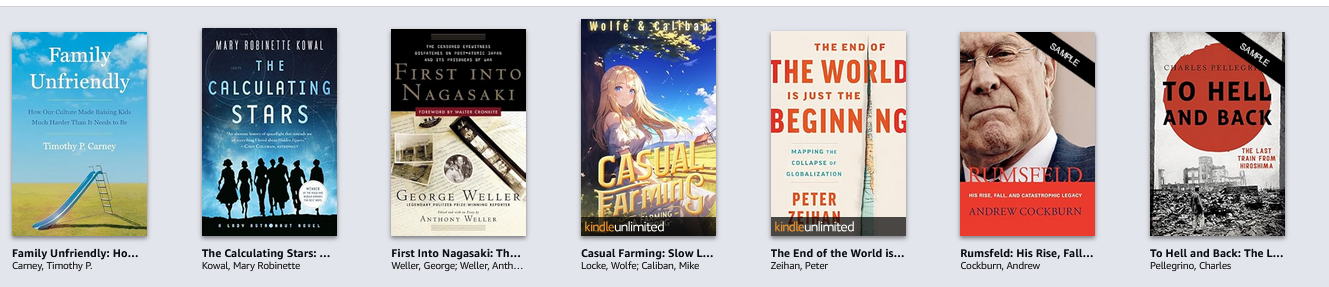
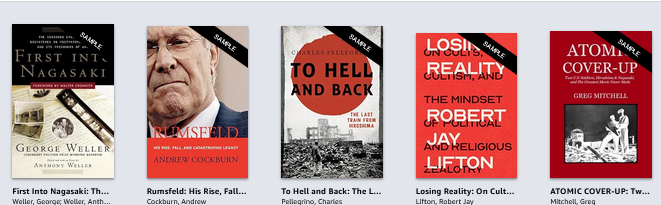
WHAT are you reading next? as the Beach Boys said, “God only knows”. Here’s what the Kindle shelf looks like:
“Casual Farming: A LitRPG” was described to me as “Stardew Valley, but if it was a book”.
Long and Short Reviews Asks: Funny Animal Video or Story?
Hmm….I used to have a short-hair chihuahua named Hippie that looked exactly like the Yo Quiero Taco Bell dog, and somewhere there is a photo of 8th grade me wearing an embarrassing “Yo Quiero Taco Bell” t-shirt with the dog ON the shirt, while simultaneously holding the dog. This dog used to get under the coffee table, knock his head on the underside of the table, then go roaring at the door because someone had knocked. He had a long-haired son, Charlie, who I had all the way into college. Charlie was much more mellow than his Napoleon-complex father. During COVID I adopted another dog, Idgie, named for Idgie Threadgoode.
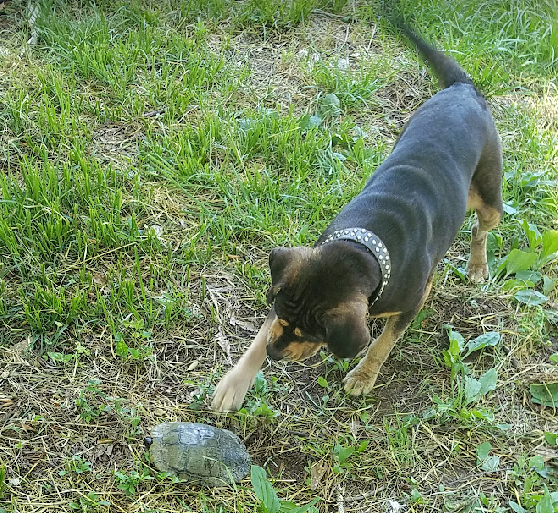
Idgie defending the ol’ homestead from vicious turtles.
Goodreads Wanna-Read Sudden Death
In the Tales of the Black Widowers series, every month a group of professionals from different fields meet to dine and talk together, and the host is allowed to bring a guest — who, in payment for his free meal, must submit to a grilling that always begins: Mr. _________, how do you justify your existence? Well, earlier in the week Vera over at Dark Shelf of Wonders participated in a Goodreads TBR cleanup with these rules created by MegaBunnyReads:
Go to your Goodreads want-to-read shelf.
Ask Siri to pick a number between 1 and however many books are on the list.
Go to that book and look at it and the 4 after it, for a total of 5.
Read the synopses of the books.
Decide: keep it or should it go?
Discuss here.
So, I called upon the name of the Bard, and lo! It answered….12. However, being a wicked libertarian, I played with the rules a bit and asked Bard for five random numbers instead of just using 12 and the 4 after it.
#12 Games People Play, Eric Berne. Added December 23, 2011.
We play games all the time–sexual games, marital games, power games with our bosses, and competitive games with our friends. Detailing status contests like “Martini” (I know a better way), to lethal couples combat like “If It Weren’t For You” and “Uproar,” to flirtation favorites like “The Stocking Game” and “Let’s You and Him Fight,” Dr. Berne exposes the secret ploys and unconscious maneuvers that rule our intimate lives.
Keep or cast into outermost darkness? I say keep. We have this at my library and I eye it ever so often. The funny thing is that “Let’s Him and You Fight” is a tactic employed in the Civilization series — getting into war with a foreign power, getting another foreign power to join in, then ducking out and letting the two waste their strength on one another.
#87: On the Road with St. Augustine: A Real-World Spirituality for Restless Hearts
his book shows how Augustine can be a pilgrim guide to a spirituality that meets the complicated world we live in. Augustine, says Smith, is the patron saint of restless hearts–a guide who has been there, asked our questions, and knows our frustrations and failed pursuits. Augustine spent a lifetime searching for his heart’s true home and he can help us find our way. “What makes Augustine a guide worth considering,” says Smith, “is that he knows where home is, where rest can be found, what peace feels like, even if it is sometimes ephemeral and elusive along the way.” Addressing believers and skeptics alike, this book shows how Augustine’s timeless wisdom speaks to the worries and struggles of contemporary life, covering topics such as ambition, sex, friendship, freedom, parenthood, and death. As Smith vividly and colorfully brings Augustine to life for 21st-century readers, he also offers a fresh articulation of Christianity that speaks to our deepest hungers, fears, and hopes.
Ooh! I could pair this with a Confessions re-read.
#154: The Ugly Truth: Inside Facebook’s Battle for Domination
Given that I read a massive history of FB last year (Facebook, Steven Levy), I can see dropping this one, but re-adding it in a few years.
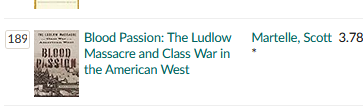
#189: Blood Passion. I think I’d keep this. First heard of Ludlow via Woody Guthrie’s song on it.
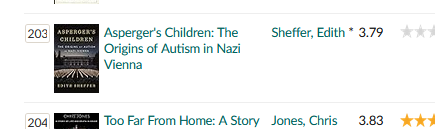
#203: Asperger’s Children. Pretty sure I added this during one of my tangent-moods. It’s not something I’d tackle now, but maybe later — a bit like An Ugly Truth.
So, we managed to confirm 3 and…..hem and haw our way on two more. Oh, well.
George Weller, a reporter for the Chicago Daily News, arrived in Japan only to be told that its southern islands were off-limits to reporters, dashing his hopes of being able to see what this new super-bomb had done to Nagasaki. At least….for a few minutes. After some nosing around, Weller found a soldier who was willing to get him into the city, and — there he was, days before anyone else showed up. Posing as a colonel, Weller arranged for the Japanese to give him tours of the area, including access to hospitals to talk about the mysterious disease “X” afflicting survivors — and then he began checking out the POW camps where American, British, and Chinese prisoners had been reduced to slave labor in mines and factories. Conditions were so harsh that over a quarter of all prisoners would die during the war. The stories the prisoners had to share were utterly harrowing, and they comprise most of this book, with Weller’s atomic investigations taking a back seat. The further the reader progresses, it’s easy to understand why, as witnessing the living skeletons of prisoners took precedence over idle curiosity as to how The Bomb worked. This is definitely a “graphic content” kind of book, so consider yourself forwarned.
Many Nagasaki prisoners virtually lived underground, working in mines that the Japanese had formerly abandoned as unsafe. Doesn’t matter if a cave-in kills ganjin, after all. Weller also includes other POW stories that he encountered outside of Nagasaki, including the tale of two men who evaded the Japanese for 70 days on Wake Island — collecting rainwater to drink, raiding camps for supplies, and creating a crossbow to ‘nail’ goonie birds and rats with. (Literally — nails were used as ammunition!) Most of the stories are far more miserable, though, chiefly the Death Cruise: as American forces began hammering the Philippines, the Japanese began moving POWs out of Manila, with the intent of letting them add to the slave-labor rackets . An astonishing 80% of the 1600 prisoners taken aboard the Oroyoku Maru would perish — stuffed into dark, suffocating ship’s holds like cargo, denied fresh air, water, or food, and let to fall prey to disease and madness. Twelve hundred men perished of disease, infection, or Japanese ‘discipline’ — and still others died when planes from the USS Hornet attacked the ship.
Pervasive throughout the text is the absolute vileness of the Japanese armed forces: I’ve read The Rape of Nanking and another book on Bataan, so I wasn’t surprised, but honestly after so many years the mental calluses soften and one is shell-shocked again. The cruelty comes not simply in withholding food and water, not simply abysmal conditions and constant beatings administered to weak and dying men, but the delight the armed forces took in subjecting men to such prolonged pain — making them kneel on bamboo for hours at a time, filling prisoners with water and then jumping on their stomachs. Weller charges that the Japanese had a racial superiority complex rivaling or outstripping the Germans, as they were equally cruel to Filipinos who attempted to offer even meager morsels of food to prisoners. One pregnant woman was even bayoneted and her baby ripped out of her body. As one officer informed an American pleading for more water, “We want you to die.” Some officers were willing to part with water for a price — wedding rings, for instance. One wonders why the ‘honor’-obsessed men simply didn’t shoot their prisoners rather than let them waste away and bask in their misery. There are occasional splashes of humor here — a Japanese intendant obsessed with making the prisoners play baseball, another who seriously believed lecturing ducks would counter their falling ‘production’ — prisoners were filching eggs — but by and large it is a soul-grating story of inhumanity.
This is an eye-opening but difficult-to-read book. As far as first-hand details into Japanese camps, it’s certainly effective, and unforgettable. Not for the faint of heart, though. It appears Weller filius has also edited Weller pater’s wartime writing into a larger book, Weller’s War, which I can see checking out at some point. Need something fluffy as a palate cleanser first, though.
Highlights:
A few, who had happened to be looking that way, saw the mushroom cloud climb over Hiroshima. But they had then been in the mad camp at Omuta, where an insane Japanese captain with a mania for baseball kept the diarrhea patients running bases in a lavatory league of his own.
In swaybacked or flattened skeletons of the Mitsubishi arms plants is revealed what the atom can do to steel and stone, but what the riven atom can do against human flesh and bone lies hidden in two hospitals of downtown Nagasaki.
The Japanese POW camps are one of the great omissions in World War II memory. Despite the large numbers involved—140,000 Allied prisoners through the war—they have not been portrayed in films, chronicled by historians, or officially documented as the Nazi camps have been, though they were seven times deadlier for a POW.
Murao eventually did overreach himself. He proposed that several new hospital buildings be built, and drew up plans. If carried out, his camp plans would have changed the entire coal mine into a gigantic hospital, completely girdled with ball fields. He also demanded more gloves, mitts, balls and bats. At this point the Army officers saw that they had an empire-builder on their hands, though of a peculiar order. They decided to get rid of him.
Fear was already working its way on the bowels and kidneys of the men. Asked for slop buckets, the Japanese sent them down. These buckets circulated in the utter darkness far less readily than the similar food buckets. A man could not tell what was being passed to him, food or excrement.
The second day on the tennis court the prisoners received their first meal—two tablespoonfuls of rice, raw. Their standard measure had become the canteen cup for an entire line of 52 men, and the tablespoon for each man.
It was unmistakable from the beginning that the Japanese had not lost their intention of killing their prisoners by thirst. Here was a freighter fresh from the principal harbor of Formosa, whose water tanks should have been filled to the brim. Of rice the prisoners received a one-half canteen cupful daily, but of water they received less than they would have if cast away in an open lifeboat. The ration was 2 to 4 spoonfuls daily. “If you forgave the Japanese everything else,” says one survivor, “I cannot see how you could forgive the way they denied us water all the way from Manila to Japan. Some starved, some were suffocated, some were shot by guards, some died of sunstroke, some died of cold; all things that were deliberately caused and avoidable. But everybody was thirsty, and everybody was kept thirsty all the time.”
Today’s TTT is posts that most exemplify ourselves, which is…er, quite the challenge when I have over 3500 posts from the last seventeen years available here. I’m just going to try to think of ten characteristics of this blog in general.
But first, a tease!
“Margery Benson,” Margery said out loud. “You have delivered a baby. Now where is your gumption? Drive a car.” (Miss Benson’s Beetle, Rachel Joyce)
A few, who had happened to be looking that way, saw the mushroom cloud climb over Hiroshima. But they had then been in the mad camp at Omuta, where an insane Japanese captain with a mania for baseball kept the diarrhea patients running bases in a lavatory league of his own.(First into Nagasaki. George Weller; edited by his son Anthony Weller.)
In Java, the prison enclosure at Bandoeng had two sets of captives: 5,000 men, Allied military, and 1,200 ducks, Javanese. By a system of ruses the Allied prisoners, who were always hungry, found a way of stealing the eggs laid in captivity by their fellow prisoners. Egg production went down 50%. The commandant blamed the ducks. He studied their lives and reached the conclusion that they were dissolute and frivolous. One day he ordered all the ducks to be driven off their ponds and arranged before him in as orderly a fashion as frightened ducks could be. Then, roaring at the top of his voice, he delivered them a lecture. “Your egg production is down, do you understand?” he shouted. “And why has it fallen? It is not for lack of food. Do not tell me you are starving. You eat well. But you are not like Japanese ducks. You are lazy. You simply do not wish to lay. You are insubordinate ducks, obstructionist ducks. Well, I have a cure for that. For two days you will go on half rations.” (Ibid)
And now, the content.
(1) Cities. I’m fascinated by cities. I began playing city-sims in 1997, from historical likes like Pharaoh to modern builders like SimCity 3000 and Cities Skylines. I’ve read a lot about cities over the years, not just because they interest me from an academic point of view, but because I believe strongly that the built environment has a huge impact on the quality of our lives. Happy Cityby Charles Montgomery was written to that effect.
(2) Human flourishing. Relatedly, a consistent theme in this blog has been the study and pursuit of Eudaimonia. It’s not simply ‘happiness’, because happiness is fleeting and can be artificially induced with drugs. By human flourishing, I mean a state wherein we are not only not miserable, but one in which we’re both fully alive and growing — growing in virtue, growing as people. To that end I read a lot of books, sometimes analyzing things that diminish flourishing (consumerism, addiction, etc), or studying works like The Meditations that have offer tools for moving towards flourishing. Alain de Botton is a frequent source of insight, as not only has he done philosophical reviews himself, but he writes wonderfully meditative pieces on the meaning of work, of travel, even of architecture. One of the most impactful books I’ve read in this vein has been E.F. Schumacher’s small is beautiful.
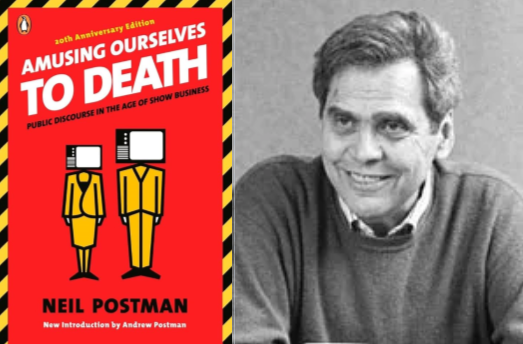
(3) Relatedly, tech-wariness has also been a running theme on this blog, as far back as ’08 when I read Al Gore’s Assault on Reason, followed by Neil Postman’s works: Technopoly and Amusing Ourselves to Death. Nicholas Carr’s The Shallows was not long afterward, and of course last year I did several books on social media’s shape on our mental health and society in general. People who know me IRL may be surprised at this, because I’m generally considered a ‘techie’: I do IT work at the library, I constantly take IT classes via Coursera, I used to mod my computer, that sort of thing. I don’t want to dive into the deep end here, but suffice it to say I’m aware of how technological use shapes us, and not necessarily in good ways. We get phones and suddenly subscribe to the notion that everyone should always been available; we get used to the internet and AI and begin losing our ability to engage in deep, focused mental work; we get on social media and transform into nasty, vile versions of ourselves. That’s not to say that they can’t help the cause of flourishing, but people have to fight to make that happen — aggressively, persistently. All of the inertia is in the opposite direction, I think.
(4) Annnd in a completely different vein, Star Trek. I’ve been a Trekkie since I was seven, when I caught an episode of the original series in a hospital bedroom. The 1990s and very early 2000s were a great time to get into Trek, because TNG, DS9, and VOY all shared the same design language. There were obvious differents in sets, of course, but there was consistency and continuity with the uniforms, ships, LCARs system. etc . As a kid I’m pretty sure I was mostly attracted to the cool tech, but by high school had begun to appreciate the series for their exploration of serious questions, and the complex moral dramas of Deep Space Nine . I will never forget the episode “Inter Arma Enim Silent Leges” in which Dr. Bashir, furious over actions Starfleet Intelligence was taking to help the war effort, asked if it were possible to defend values through means that undermined them. That question would become more important to me after the terror war began a few years later. I’m currently doing a rewach of The Original Series that will become a rewatch of All of Star Trek, as time & such allow.
(5)History, of course, has been my passion since I was a kid. I enjoy both serious, critical histories as well as the more fun narrative histories like La Belle France Among my favorite histories are those by Frances and Joseph Gies, who did social histories of the medieval era. I stumbled upon their The Medieval City and have since read nearly everything they’ve written. Their Cathedral, Forge, and Waterwheel prompted a sea-change in my thinking, breaking me out of the William Manchester view that the medieval period was just a thousand years of peasants pushing around mud. One of the most monumental things I’ve read during the tenure of this blog has been the Story of Civilization series, over ten thousand pages exploring every aspect of Western (and adjacent) civilization. I say adjacent, because the series begins in Mesopotamia, and Persia is explored deeply in The Age of Faith despite the focus shifting to Europe.
(6) I’ve been reading science nonstop since 2006: when I began, it was to establish a scientifically literature worldview, because I’d departed from a Pentecostal sect that embraced Young Earth Creationism, that sort of thing. I was still deep into that project in 2007, when I began this blog: I believe it remains the only year in which Science beat out history. These days my science reading is organized via the Science Survey, structured to maintain a broad general knowledge. Sone of my favorite science reads have been V.S. Ramachandran’s Phantoms in the Brain, Carl Sagan’s Shadows of Forgotten Ancestors, Sagan’s Demon-Haunted World, and The Hidden Life of Trees.
(7) Historical fiction is a mainstay here, and this may one of its strongest years to date, becaue in addition to my ususal shooty-stabby stuff, I’ve been reading other books that are HF, like The Hazelbourne Ladies Motorcycle and Flying Club. Bernard Cornwell is king there, though in recent years I’ve really been enjoying Ben Kane and Max Hennessey.
(8) Science fiction is another persistently strong presence here, and that would be the case even outside of Star Trek, which I generally don’t count in my SF reads. That probably ties to my frequent thinking about technology and science. Easily my favorite SF book in recent years has been Daniel Suarez’s DAEMON, but Blake Crouch knocked me off my feet last year.
(9) Transportation. As mentioned last week or the week before, I love transportation. That sounds weird, but — well, I generally qualify as weird. Not only do I read books about planes, trains, and automobiles — and horses and shipping and bicycles — but I play games like American Truck Simulator and Cities in Motion which are transport-oriented.
(10) And finally, the unexpected. Reading Freely has always been a topic-diverse blog, and I often roar off on unexpected tangents like my presidential obsession last year, my “books set in coffeeshops and bookstories” series earlier this year, and then the wholly inexplicable appearance of romances (or “love stories”) this year.
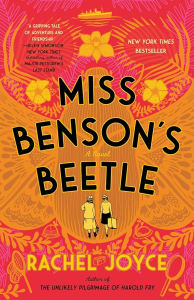
Margery Benson has had it. A heartbreak ruined her great passion in life, studying beetles, and for the last decade she’s wasted away teaching a subject she’s not interested in to children who are even less interested in it. After a particularly rough episode at work, she’s decided to throw caution to the wind and chase her dreams again. She has nothing to lose, after all, except a life in which she’s quite unhappy. When she was a little girl and still had hopes and aspirations, she fell in love with beetles, particularly one in her father’s book that was supposedly just a rumor — a golden, soft-winged beetle. Now, there’s nothing stopping her from searching for it. Globe-hopping isn’t the sort of thing one does alone, though: she’ll need an assistant. A smart, resourceful assistant, someone who knows French and doesn’t mind roughing it a bit. Instead, Margery gets……Enid Pretty, a flirtatious chatterbox who arrives with loads of luggage that includes a fur coat – for a journey to the tropics. Miss Benson’s Beetle is an interesting novel about vocation and friendship. In this it’s reminiscent of The Unlikely Pilgrimage of Harold Frye, — with an older protagonist taking on a physically demanding journey, their self-doubt and physical limitations overriden by a powerful sense of The Quest. To this Joyce adds an unlikely but powerful friendship that’s forged by trials faced together, and a completely new aspect — malice, in the form of a mentally distressed former prisoner of war who is obsessed with them and is talking them down, intent on “leading the expedition” himself. There’s also Enid herself, who has a past she’s definitely being misleading about. I enjoyed this, though not nearly to the same degree as The Music Shop and Harold Frye. It’s chiefly memorable for the setting (New Caledonia) and the two main characters: Enid is delightfully wacky, and Margery an inspiration. Joyce does not disappoint!
Quote:
“You’re deep in this. You’re in it up to your eyebrows. And you don’t seem to realize. It isn’t like me. Your vocation is not your friend. It’s not a consolation for someone you lost once, or even a way of passing the time. It doesn’t care whether you’re happy or sad. You must not betray it, Marge.”
“Enid? Opening my top will not work. And neither will flashing my legs. He’s a woman.” “Wait. The policeman is a woman? How can that be?” “I don’t know. But it’s a woman.” “No. I have never seen a policewoman. When did that happen? They don’t have women policemen in New Caledonia.” “Well, maybe on the east coast they do. Or maybe she’s the policeman’s wife and the policeman is sick today so she’s doing the rounds on his behalf. I don’t know. We have no time to debate this fascinating subject. She’s coming!”
“But no matter how awful life was, I would never want to give up. I would always want to keep living. Just waiting for that moment when it might get better. You need to remember nthat, Marge. You must never give up again.” She touched her belly. “We are not the things that happened to us. We can be what we like.”
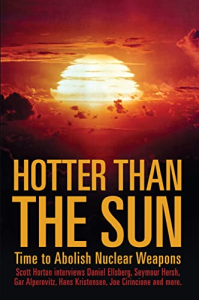
Nearly eighty years ago, a single B-29 bomber flew over the Japanese city of Hiroshima and dropped a single bomb, baptizing humanity into a dark new era once the blinding white glow had ended. In the fifties and sixties, the amount of nuclear weapons soared to absurd numbers — an estimate of 70,000 bombs between the two powers. While the number of nuclear arms has fallen since the height of the Cold War, governments still possess more than enough to destroy the world many times over — whether through deliberate stupidity and malice, or through broken-arrow incidents, and three powers (DC, Russia, and China) are actively expanding and sinking their wealth into means of global death. Given that two conflicts are currently raging that could easily escalate to catastrophe, it’s never been more important to attack this existential threat. Scott Horton, who has been host of Antiwar Radio and conducted thousands of interviews since 1999, here offers transcripts of those interviews that have a nuclear connection — either because they discuss weaponry and treaties directly, or because they delve into geopolitical issues that might serve as a flashpoint. The guests include former war planners like Daniel Ellsberg, nuclear industry engineers and publishers, US army scientists, and foreign-policy experts. Although not a conventional narrative, it’s a fascinating and varied blend of politics, history, and technical analysis.
A key recurring theme here is that any use of nuclear weapons poses a threat to the entire population of Earth, either through damage to the atmosphere, radioactive drift, or — in the case of escalation — a global holocaust followed by a nuclear winter that will kill all life on earth except for cockroaches and Raytheon lobbyists. Given this, it’s insane that governments are not only moving to a first-strike posture (i.e. we’ll launch on the threat of a launch, not merely in retaliation) and to systems that can respond automatically. Given the state of the United States and Russia, it’s dismaying and enraging to realize how many billions are being thrown at new whizz-bang systems when the means already exist to destroy humanity multiple times over. A second key point is that the military-industrial complex and politicians connected to it are deeply invested in maintaining and expanding nuclear arms. Obviously, a firm that has ungodly amounts of money sunk into creating nuclear weapons doesn’t want governments to suddenly stop buying them, and even if they weren’t finding ways to compensate politicians directly through electoral donations and the like, those politicians still rely on the MIC to provide jobs for the people who vote them in. The interviews span nearly twenty years, which allows for some interesting and often frustrating perspectives. Horton and several guests were excited about Senator Obama’s frequent mentions of the need for nuclear disarmament, but later — whoops! — now Mr. Peace Prize is authorizing billions to ‘modernize’ DC’s armageddon arsenal. A lot of interviews are set around the original Ukraine crisis in 2014, which itself is the reason for the current war. This was an extremely informative book across multiple fields: I’d never heard of the ‘nuclear sponge’ principle, for instance, in which the plains states were chosen to site major ICBM locations in hopes that the Soviets would prioritize nuking them over American cities. And they say DC never thinks about flyover country! In addition to examining various geopolitical factors that lead to international tension and the possibility of nuclear war — Iran and Israel, India and Pakistan, and so on — Horton and his guests also discuss at length the culpability of DC in making tensions worse, either by scrapping existing treaties (W, Trump) or shoving missiles deeper and deeper into Eurasia (Everybody…) On the bright side, we do get to witness moments like Reagan and Gorbachev dramatically reducing nuclear stocks (and coming very close to discussing total disarmament), and I was surprised to learn that many high-ranking military officials (Eisenhower, MacArthur, and even Curtis LeMay) were against the bombing of Hiroshima, seeing it as morally rephensible and militarily unnecessary. Given that MacArthur and LeMay were both willing use the Bomb with gusto during the Korean war, that says something about how cold-bloodedly malicious the Autumn ’45 bombings were.
Unfortunately, in the present climate, it’s unlikely any progress will be made, as there are no strident disarmament voices on either side, even from anti-war figures like Paul and Massie. That makes this a grim book to finish — but it’s chock full of interesting information, and is easily my favorite of Horton’s published transcripts books. Do check out his podcast if you’ve any interest in world affairs, geopolitics, or DC’s foreign policy. Scott has two books on the Terror War: one focusing on Afghanistan, the other on the war in general.
And alas, it has added to my interest list.
Highlights:
The Hiroshima bomb had the explosive power of 13–14,000 tons of TNT—in other words, more than a thousand times the 10 tons that were in the World War II blockbuster. What I don’t think many Americans realize to this day is the difference between an A- and an H-bomb, the difference in scale. The first real test of a big bomb in the mid-’50s had the explosive power of 15 million tons of TNT. In other words, a thousand Hiroshimas. (Daniel Ellsberg)
Because by every account, Cheney wanted to attack Iran with nuclear weapons on their underground site right through the term, and it was Bush, of all people, that we relied on. Well, I think that shows the situation that humanity is in, when our survival depends on the prudence and judgment and wisdom of a George W. Bush, wherein the species—and this is not rhetorical—the species is in very deep trouble. There’s no if there; that’s where we are.(Daniel Ellsberg)
So, we’re doing a lot of things that are going to have long-term effects that we haven’t really weighed, and we have a constitutional issue in this country. Supposedly, tariffs are under control of Congress, not the president. The reason the Founding Fathers did that is that they wanted a deliberative process before we did this sort of thing we’re doing now, announcing policy with a tweet in the middle of the night, which is exactly how some of this has been announced. So I think the Congress—which has defaulted on many, many issues, from the ability to declare war to the ability to set tariffs and regulate trade—needs to do what we pay them to do, which is to debate, decide, have hearings, educate, shape policy and monitor it, and not just to default to the president. (Chas. W. Freeman II)
Horton: I think probably to this day, most Americans don’t know about the firebombing of Tokyo. The censorship has lasted. [Anthony] Weller: I think there’s very little in that story that people want to know about—from the firebombings, to the atom bombs, to the POW camps— which were horribly brutal. Notice that the Nazi POW camps have entered the kind of cinema mythology, but the Japanese POW camps, which were seven times deadlier, have not. [*] The hell ships are virtually unknown, the war trials are virtually unknown; and the fact that the Japanese carried out biological experiments just like the Nazis and that MacArthur enabled a lot of those scientists to come to America and become pharmaceutical magnates. They traded their freedom for the secrets of their experiments in case we needed help with tortures of prisoners in the future. All this stuff is unknown.
We have a military-industrial-congressional complex that lives off inflated threats and inflated responses to those inflated threats. That’s just a fact. We use the defense budget like a jobs program; it doesn’t derive from specific analyses of issues that we have to deal with. It’s a “more is better,” basic philosophy. We never could spend enough, and the fact that we have been spending so much money—$6 to $7 trillion on wars in the Middle East that we can’t win and won’t win, and that produce nothing—is exactly why we have a $4 trillion infrastructure deficit in the United States. It’s the reason why we have been disinvesting in our educational system, science and technology, and research and development outside the military sphere. This is not a formula for national success. Our allies, the countries that we protect, like Japan and the Europeans, have been very sensible. We offer them a free ride, and they’ve taken it. They put their money into stuff other than military equipment and preparations for war, and they’re doing pretty well. (Chas W. Freeman II)
“People are speaking about the “Sanctions from Hell”—and it’s nice to catch the news with terms like that—and it’s not just Americans; Western Europe also is persuaded that economic warfare is just an alternative to kinetic warfare. What they are ignoring is that in our own past, economic warfare became kinetic warfare. We wouldn’t have had Pearl Harbor if we hadn’t been waging a fierce economic war against Japan to deny it access to raw materials. That’s one thing. A trade war can become a real war, and a conventional war can become a nuclear war. Putin has said very straight that if the survival of Russia is in question, he will go nuclear. (Gilbert Doctorow)
Well, the Russians aren’t bunny rabbits, and anybody who thinks that they’re nice and cuddly is making a serious mistake. But there’s no reason why they should be cuddly. They are realists. They’re defending their own interests. We are not considering other people’s interests, and that is the key error, the key fault, in our foreign policy—that the rest of the world does not exist, that there are only American interests. That is not sustainable. That is not realizable. And it can get us into serious trouble. (Doctorow. Emphasis added by me.)
It’s funny to think about: George H. W. Bush might, in a sense, be quantitatively the greatest man who ever lived. He went and signed deals that eliminated tens of thousands of nuclear weapons from our arsenal and from the Russian arsenal as well. That’s actually, if you think about it, the greatest accomplishment of any two men in a room that ever happened. They got rid of a grand total of something like 60,000 H-bombs. It’s incredible to think that the American and Soviet arsenals were ever built up to those kinds of numbers in the first place, but what a legacy, and what a legacy to invoke! (Scott Horton)
It’s absurd that there should be this obsession with Russia when the total Russian defense budget, which is roughly $61 billion, is less than the amount the U.S. defense budget goes up in a year. It’s ridiculous. (Andrew Cockburn)
You’ve got some Pakistani colonel on the Indian border, and he’s going to make a decision as to whether or not we’re going to destroy 70 percent of the Northern Hemisphere’s ozone. It’s really not a place we want to be, and there should be an international full-court press on stopping this, on reversing this, and it could be done. – Conn Hallinan
Horton: The U.S. has this weird relationship with Israel about their nuclear weapons, where we pretend to be ignorant. The West pretends not to know that Israel has nuclear weapons. But the deal is they’re not members of the Non-Proliferation Treaty, and they don’t openly declare that they’re a nuclear weapons state. It’s a “strategic ambiguity,” that’s their diplomatic term for it.
Smith: Right, that’s their policy, and it’s because of the power of the lobby and Israel’s desire to keep this kind of thing “away from the kids” that we are complicit in that ambiguity, and it makes a lot of other moving parts of the U.S.-Israel relationship possible. If the U.S. were to come out and openly say that Israel is a nuclear weapons state, immediately, the Symington and Glenn Amendments to the foreign aid law would kick in, and the U.S. would no longer be able to deliver any taxpayer-funded military or civilian aid to Israel.
[*] Note this claim is for prisoner-of-war camps, not the civilian death camps that murdered 11 million people.
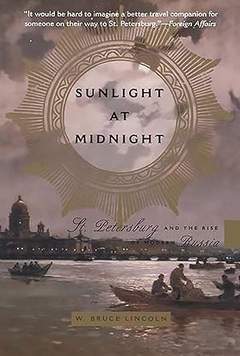
I must confess to not knowing much at all about Russian cities: say Moscow, and I think of the Kremlin and the subway art; say St. Petersburg, and I have some hazy idea that it was built in the model of a western-European city. (About Vladivostok, I can tell you it’s on Russia’s Asian coast, and that’s it.) I recently paid a bookish visit to St. Petersburg through American Phoenix, in which John Quincy Adams was stationed there as foreign minister, and was intrigued enough by his descriptions to try a history of the city available at my library. Sunlight at Midnight is a biography of a city, and one that rose on purpose, designed and intended to orient Russia toward the modern, industrial west. Its placement on the Baltic was chosen with deliberation, creating a seaport that could be used to ignite Russia’s commercial and industrial power, despite the tendency of the Nevas river to flood and the fact that the port was frozen shut for months on end. (The city had its delights, though: for one, the fact that sun never quite sets during the summer, leading to “White Nights”, a cultural celebration that continues today.)
St Petersburg became closely associated with the Tsarist empire, so much so that as Russia’s aggrieved proletariat began pushing toward revolution, the city itself developed a negative connotation, and when the Soviets took power they would center their far-more tyrannical empire in the traditional capital of Moscow. Because this is the biography of a city, there’s far more focus on architecture and culture than politics at large, despite St. Petersburg’s capital status. That said, politics does erupt in St. Petersburg on a regular basis, given that it was the site of the October Revolution (which led to the temporary establishment of a parliament) and then later the unrest that would lead to the tsar’s abdication and (some months later) the Bolshevik coup against the provisional government. This could lead to dramatic changes in the city: it lost nearly half of its population in the economic upheaval and political changes of the 1920s, for instance, though it would rebound later on. Lincoln provides a wonderful variety of photos from state archives, and they’re not all lumped together in the center but linked to specific sections. Although I knew St. Petersburg had been a target during World War 2 (the Siege of Leningrad), I’ve never done a deep dive into the Leningraders’ experience: it’s harrowing, to say the least. Death visited the city even more frequently than Nazi shells and bombs, as people fell prey to disease and starvation during the near-900 day siege. Art, always close to the subject in this book, is never more interesting than during the siege, as one composer began writing his seventh symphony on bed-sheets and later performed it for the first time during the siege itself to raise morale. Musicians were actively dying off from disease during practice and rehearsals.
Lincoln has done a great many books on Russia, and I will be looking at a few more. This one I just stumbled upon: it was in the library bookstore when I needed something to read during lunch.
Dedicated to St. Petersburg, her people, and her defenders
When I first searched my name in high school, I saw “crown” and was quite pleased, but later I saw it meant “crown of martyrdom” I was raised in a devout Pentecostal home, and when I was born, they named me after the first Christian martyr, Stephen, who was stoned to death for preaching Christianity while Saul of Tarsus, later known as St. Paul, held the coats of those that stoned him. Perhaps being named after someone murdered by a mob is why I don’t like mobs.Anyway, I’m named after St. Stephen, whose saint day is December 26, and who inspired the song “Good King Weneceslas”. Here’s me singing it in COVID-time. Photographs cover 10+ years at my church.
Good King Wenceslas looked out on the Feast of Stephen, When the snow lay round about, deep and crisp and even. Brightly shone the moon that night, though the frost was cruel, When a poor man came in sight, gath’ring winter fuel.
“Hither, page, and stand by me, if you knowst it, telling, Yonder peasant, who is he? Where and what his dwelling?” “Sire, he lives a good league hence, underneath the mountain, Right against the forest fence, by Saint Agnes’ fountain.”
“Bring me flesh and bring me wine, bring me pine logs hither, Thou and I will see him dine, when we bear them thither.” Page and Monarch, forth they went, forth they went together, Through the rude wind’s wild lament and the wintry weather.
“Sire, the night is darker now, and the wind blows stronger, Fails my heart, I know not how; I can go no longer.” “Mark my footstep good my page, , tread now in them boldly, You shall find the winter’s rage freeze your blood less coldly.”
In his Master’s steps he trod, where the snow lay dinted; Heat was in the very sod which the Saint had printed. Therefore, Christian men, be sure, rank or wealth possessing You who now will bless the poor shall yourselves find blessing.
And yes, I only know this song because of the masterpiece that was Sir Patrick Stewart’s “A Christmas Carol”. Here’s a Zoom choir from the Dark Times.
Today’s prompt from Long and Short Reviews is, “What’s a book you wish were more popular?”
“For in the end, [Huxley] was trying to tell us what afflicted the people in ‘Brave New World’ was not that they were laughing instead of thinking, but that they did not know what they were laughing about and why they had stopped thinking.”
Neil Postman’s Amusing Ourselves to Death was published in 1985, but Postman’s analysis of how modern technology, especially television, trivializes information and supplants it with entertainment has neverbeen more relevant than in the age of news via-facebook, news-via twitter, news-via-tiktok, etc. where reactions and emotional shares matter more than say, thoughtful substack analysis of events. I remember being blown away by Postman when I stumbled on him — completely by accident! back in ’07, ’08. He is the reason I didn’t buy a smartphone until 2018. I owe him a re-read.
And now, to WWW!
WHAT have you finished reading recently? I finished my big California Diaries re-read, as well as a history of St. Petersburg that had been my lunchtime reading at work for the last month or so. Review to follow today.
WHAT are you currently reading? Still working on Family Unfriendly: How Our Culture Made Raising Kids Much Harder than it Needs to Be, and recently started Star Trek: Firewall by David Mack. There are a multitude of Kindle NF titles I’ve read like 10% of and then got distracted by.
WHAT are you reading next? I REALLY SHOULD FINISH THE VOLCANO BOOKS. BOTH OF THEM. (Mary Beard’s Fires of Vesuvius, on Pompeii, and Mountains of Fire: The Menace, Meaning, and Magic of Volcanos by Clive Oppenheimer.
And….here we are, at the end of one of my absolute favorite series. The third round is a bit like Return of the Jedi, in that we have really strong books plus some stuff that, like Ewoks, feels more like filler in that they’re one-off issues that haven’t appeared before and won’t show up again. Still this conclusion has a lot of great moments in it. This has been a huge dose of escapist nostalgia for me: it was nice to return to a world where no one was using cellphones, where people would drop by one another’s house just to see if they were there and wanted to go hang out at the park.
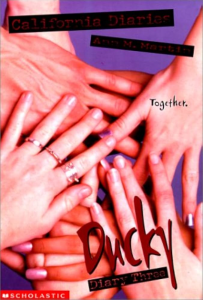
Dawn and Sunny still aren’t speaking, despite Mrs. Winslow getting closer and closer to the end. A happy distraction has arrived, though, in a form of a concert that features a guitarist Dawn is absolutely smitten with — obsessive, silly smitten, a fun change from our usual serious, introspective and grounded Dawn. After she and Amalia fail to score tickets, they’re distraught — but enter Ducky, who had gotten four. Ducky will be happy to take Amalia, Dawn, and Sunny along with him. Oh, boy. enter the awkwardness. Things get worse at the concert when Sunny acts out in a way that hurts Ducky — yes, St. Ducky, the amazingly considerate Ducky, the guy who is there for her even when he’s dealing with his own stuff. Granted, Ducky does open the door to a night of bad decisions on everyone’s part when he agrees to drink a rum & coke that a friend of his brother’s provides, but Sunny makes things a lot worse than they needed to be. Granted, her mom is on the precipe of death, but that’s no excuse for near-emotional abuse of friends. Still, her friends love her more than their despair of her recent behavior, which leads to reconciliation at the end despite the 2 am screaming.
Quotes:
“He tried to kill himself. He tried to kill himself.“ “But maybe I wasn’t a good enough friend to him.” “Oh, that is so self-centered. Don’t give yourself so much credit.” Ducky looked wounded, just for a moment. Then he burst out laughing. “I don’t know whether to feel insulted or comforted,” he said.
I DO NOT UNDERSTAND SUNNY.
But I still wish we were best friends again.
We all kind of agreed that NO MATTER WHAT Sunny’s reaction to us was, we would rally around her. We would MAKE her be our friend again, and then we would stick with her through the worst, until things got better again, and forever. Because that’s what friends do.
Sunny, Diary 3:
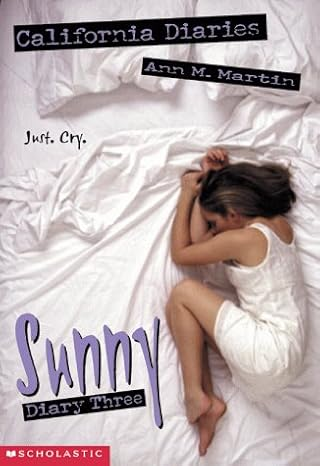
Sunny’s third and final diary in this series is…..bittersweet. As you might guess from the cover, the great horror that has been steadily growing through the series, the black hole that is Mrs. Winslow’s death, will here have its victory. The journal is divided into two parts: the first are Sunny’s entries from the last few days of her mom’s life, as she, her dad, and her aunt Morgan rally around one another and brace themselves. Dawn is there, the girls having mended fences, and — after a scene where Ducky and Sunny have a heart to heart — so is he. This section of the book hits rougher than it did twenty years ago, given that teenage-me had yet to experience a serious death. As sad as this part of the book is, I was looking forward to certain elements of it, because this is the book that the reader really gets to know Mrs. Winslow. In the previous books she’s been part of Sunny’s life, but when Sunny can get past her dread and despair enough to go see her mom, there’s usually someone else there. We get glimpses of their relationship, glimpses of the person, but never a full look. Here we get that, as Sunny talks to her mom here more than she has in the previous books combined. Mrs. Winslow gives Sunny her journals, and Sunny begins to read (and share them) in the second half. This book is both sad and sweet — heartbreaking in what Sunny has to endure, but bracing and comforting realizing that despite Sunny’s frequent failings, grace has prevailed and she, her family, and her friends are facing this together.
My brain is no longer my own. It’s been hijacked by Mom. I hate you, Mom. I love you, Mom.
“It does feel that way. You just have to remember that the way things feel isn’t always the way things are.”
“Morgan,” said Mom, “tell Sunny what you felt would be an appropriate baby gift when she was born.” Aunt Morgan and Dad began to laugh. “Oh, no! That was deranged!” cried Aunt Morgan. “Tell me,” I said. I couldn’t imagine what they were laughing about. “No!” said Aunt Morgan. “Okay, then I’ll tell,” said Mom. “Sunny, two days after you were born, your aunt Morgan flew out here and showed up at our house bearing a huge bottle of vodka. A pink ribbon was tied around its neck.” I wrinkled my nose. “Vodka for a baby?” I said. “No, for your parents!” exclaimed Aunt Morgan. “I couldn’t think of a better gift for two adults who were about to have their entire lives turned upside down.”
Should I be writing all these things down? I don’t know. I am chronicling my mother’s death. It doesn’t seem right.
THIS ISN’T HAPPENING THIS ISN’T HAPPENING THIS ISN’T HAPPENING THIS ISN’T HAPPENING
A half hour later Amalia had joined Dawn, Ducky, Maggie, and me. Now the five of us were sitting around crying, laughing — and talking a bit more than we had been earlier. When was the last time the five of us were together in one place other than school? Was it the night of that dreadful party, the night we met Ducky? That was months ago. It seems like forever ago. I have been so horrible to most of my friends lately. And here they all were, gathered around me like a cocoon. Protecting me. Loving me. Not caring how horrible I’ve been. For just a second I felt a teeny, teeny bit better. Then I remembered what is going to happen tomorrow.
Maggie, diary 3. After the emotionally intense ride that was Sunny’s finale diary, Maggie is almost comfort food. The therapist that Amalia found for her in round two is working wonderfully, and Maggie has realized that she was being so restrictive about her food because it was one of the few areas in her life she had any control. At a movie-launch party (…boy, her dad is busy with his movies — three in one year!), she bumps into a rising teen star Tyler something-or-another, and they hit it off, which leads to Maggie and VANISH being invited to be extras in one scene, providing authentic teen-garage band sound vibes to the movie. Her relationship with Tyler is very up and down, because as much as she likes him, she wonders how on the level he really is. Even if he’s not just a shallow, limelight-obsessed actor who doesn’t have the seriousness for a real relationship, what if he’s using her because of her father’s connections? Given that the reader has only just met Tyler, the stakes in this book are very low — a possibly needed followup to the intensity of the preceding book.
Quotes:
Ducky said that our lives over the past few months would make a good TV series. “It certainly wouldn’t be a sitcom though,” said Amalia. “If it’s not a comedy then I don’t want my character in it,” Sunny told us. No one said anything. But we were all thinking, How can it be a comedy if your mother dies in it? “My mother would want it to be a happy series,” Sunny said softly. “She loved to laugh.”
Amalia, diary 3. This has a bit of a Very Special Episode feeling going on: while Amalia is dealing with general life stuff (finals, ambiguity in re this guy she’s been going out with, but not Dating), but then one night during a date, she’s confronted by a group of drunk mean girls who physically assault her and even spit on her out of ethnic hate, so she’s dealing with the pain and anger of that, which is amplified after Brendan begins distancing himself from her — either because he doesn’t know how to deal with her having feelings in general, or doesn’t know how to approach the issue of prejudice. To make matters worse, Amalia’s emotional state leads her to lash out at Maggie, who has been hanging out a lot at Amalia’s place to avoid her drunken mother and workaholic-control freak father. After Amalia’s sister Isabel shares her own experiences with Amalia, she realizes how to rise above the pain and not let it deform her. Given that we’re pushing toward the end of the series, Amalia and Maggie also make up.
Quotes:
Ducky, diary 3. We approach….the finale. Amalia is still wrestling with commitment issues in re: Brendan, who she really likes but doesn’t want to fall for. Maggie’s mom is no longer spiraling out of control, she’s an absolute train-has-left-the-tracks-and-is-about-to-wipe-out–a-city. Ducky literally has to wake up in the middle of the night and pick up Maggie and her little brother, because their mother is in a drunken rage so severe that Maggie almost calls the police. (Where is dear old dad? Working on yet another movie.) Helping Maggie is as bit of a relief for Ducky, because things with Sunny are getting weird. Of all the relationships in this book, I’ll admit to liking Ducky and Sunny’s the best — in part because Ducky is such a wonderful guy who becomes for Sunny exactly what she needs: a big brother who cares about her as she is, not as a potential love interest. Their senses of humor and style mesh perfectly. Through all the chaos of the past year, he’s been there for her — and to a more limited degree, she for him, giving him someone to talk to about his own problems even if she’s a bit distracted by cancer and boys. But now…she keeps laughing at his jokes a little too hard and he keeps seeing her give him strange looks . And then she kisses him, but — well, there’s no floating hearts, no rising “Love Theme”. Ducky loves Sunny, but not….that….way, and he doesn’t know what to do about it. He’s reluctant to ask the girls about it, because….well, isn’t Sunny more their friend than his? Fortunately, their connection leads to a beachside talk, whereupon they agree to be Best Friends, and the book and series end with a sweet pizza party. I was really sad when this series ended, but it was a nice final book.
Quotes:
Heartburn and Heart Pain This could be the title for a country music song. Taco takeout indigestion. And stupid, stupid, stupid Ducky. Asking Ted’s advice? AGAIN? WHAT WERE YOU THINKING?
“Don’t get all mush-brained on me. That’s probably why I kissed you in the first place—the mush factor of summer.” “And I thought it was my unique sense of style,” you joke back. Sunny rolls her eyes. “I’ll give you unique,” she says. You laugh. “You’re the one who dreams of personalized bowling shirts,” you say. And Sunny laughs. It feels so good. Best friends.
You look up at the stars. If you wished on a star, you’d wish for friends exactly like these. You, Christopher, are one lucky Duck.
Today’s TTT is a freebie about relationships, so I’m going to just throw out the first platonic relationships that pop up in my head. But first, teases!
I half joke that raising children inculcates the virtue of detachment. You learn not to love any physical belonging too much, because you know it might be destroyed any minute. (Family Unfriendly)
“I don’t want to mess us up,” you blunder on. “Keep talking like that, you will,” she shoots back. Light. Fast. A smile with glitter on it. You get the hint. Sunny is smiling but that is not a happy smile. It’s a smile that says: Shut up, Ducky.You’ve hurt my feelings. So you shut up. (Ducky, diary 3. Ann M Martin.)
Harper: So, you and me are going to stop a rebellion? Sharpe: Well I don’t see no bugger else.
(1) Battle-bros:Sharpe and Pat Harper. These two are great together. From their first meeting in a brawl, they grew to be family, and Cornwell’s gift for funny dialogue is never better than with these two.
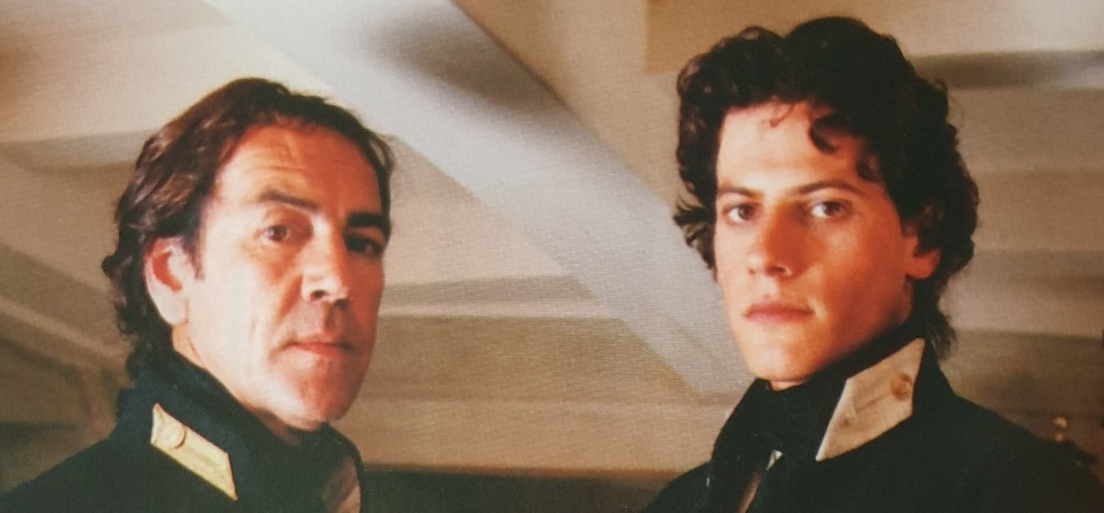
(2) Captain Dad: Sir Edward Pellew and his fictional protege, Horatio Hornblower. Realizing that Pellew (in real life) rose from the ranks himself throws Pellew’s paternal affection for ol Horry in a new light.
(3)We’re Neither of us Quite Sure, Ducky and Sunny. Ducky is a sixteen year old who rescued Sunny and her friends from a hazing incident, and became a taxi-driver and friend to them — but was especially close to Sunny, very much like a brother. Although all of their friends ship them, a kiss makes them realize that whatever their bond is, it’s not the romcom kind. Actually re-reading Ducky diary 3 now.
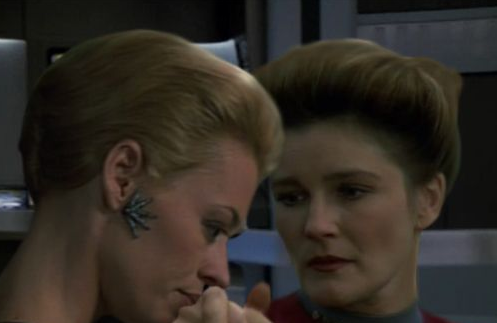
(4) Captain Mom. I love the near mother-daughter bond between Captain Janeway and Seven of Nine: Janeway made the decision to remove Seven from the collective, and as such feels a sense of responsibility for helping her reclaim her humanity. These two have both appeared in ST Voyager books, so I’m claiming it.
(5) My enemy, my unwitting ally: Gollum and Frodo. As you may know if you’ve read LOTR, there’s a moment when Frodo could kill the treacherous Gollum, but — in a moment of hesitation, wondering at what goodness the creature might still possess — he stays his hand. Given that Frodo falters at the last and it’s Gollum’s obsession with The One Ring that leds to it being destroyed, Frodo’s mercy essentially saves Middle Earth from Sauron.
(6) Jayber and Athey Keith. In Jayber Crow, a barber in search of the answers to Life, the Universe, and Everything washes up (literally — there’s a flood) in Port William, a declining agricultural village in Kentucky. He encounters a a great many people he will grow with over the years, none more important than Mattie Keith, a woman he loves unrequitedly, and whose father is an inspiration to him. Every time I read Jayber I’m touched by Jayber’s devotion to Athey in his declining years as they watch his work being steadily eroded by Mattie’s husband, a faithless and ambitious hound.
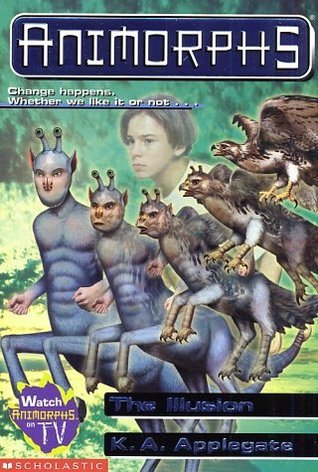
(7) Brothers across the stars: Tobias and Ax, from Animorphs. Early in the series, Tobias was stuck in his redtailed hawk morph, and the distance this put between him and his humanity made a stronger bond with Aximili (etc etc), the marooned Andalite teenager, easier to build. They also had a unique relationship with Elfangor.
(8) Aslan and Edmund. I always marvel at Aslan’s love and mercy toward the treacherous, cretinious Edmund of The Lion, the Witch, and the Wardrobe.
(9) Cato and Macro, the young pup and his grizzled mentor. They have an interesting dynamic because Cato quickly outstrips Macro in rank, but remains open to his guidance.
(10) Dex and Moss, just a monk and a robot out wandering and looking for answers.







 Reading Freely