Top Ten Books I Want to Re-Read

This week, the Broke and the Bookish are musing over books they’d like to re-read.

1. The Black Widowers Series, Isaac Asimov
(Tales of the Black Widowers, More Tales of the Black Widowers, Casebook of the Black Widowers, Banquets of the Black Widowers, Puzzles of the Black Widowers, and Return of the Black Widowers.)

Isaac Asimov is my very favorite author, and a few years ago I found a mystery series he’d penned while browsing in the library. The setting is a gentlemen’s social club, which meets in a downtown New York restaurant every month for drinks, dinner, stimulating conversation — and a mystery. The club calls itself the Black Widowers society, and they never intended to get into the mystery business — but every month they invite a visitor, and every month (oddly enough) that visitor  manages to intentionally or accidently present them with a puzzle to think through. Intellectuals and artists, they ask probing questions and rely on both their collective knowledge and a series of reference books. The solution sometimes relies on literary, historical, or scientific information, but it’s always there for the reader to grasp — if only he can think of it before the Widowers’ gentleman waiter Henry can.  I love the series and spent more money on books than usual just so I could have the complete set. If I happen to be having dinner alone for whatever reason, I like to go and fetch a Widowers book so I can enjoy dinner with Asimov’s sleuths. It doesn’t matter to me that I’ve read a given story so many times I know the solution: I enjoy their conversation and the way they work through things. The discussion ranges everywhere from the sciences to humanities to popular culture, so it’s a treat for someone who’s a regular visitor to every part of the library like myself.

2. The Many Loves of Dobie Gillis, Max Shulman.

I do love this collection of tales concerning  a cocky, brilliant, and charming college student who is always getting himself into trouble, usually over girls.

3. Harry Potter and the Prisoner of Azkaban, J.K. Rowling
Why?

“Mr. Moony presents his compliments to Professor Snape and begs him to keep his abnormally large nose out of other people’s business.”
“Mr. Prongs agrees with Mr. Moony, and would like to add that Professor Snape is an ugly git.”
“Mr. Padfoot would like to register his astonishment that an idiot like that ever became a professor.”
“Mr. Wormtail bids Professor Snape good day, and advises him to wash his hair, the slimeball.”

It’s better if you know the context, obviously.

4. Where the Red Fern Grows, Wilson Rawls

I remember being read this story in elementary school. It was one of the most depressing but touching books I’d ever heard, because I was so attached to dogs myself. Heaven knows why I want to read a book that’s just going to reduce me to blubbering like a toddler in need of a nap, but it’s been such a long time. (If you’ve never read it, it’s about a boy who works hard to buy two coon dogs (Old Dan and Little Ann), and they become inseperable companions until…bad things happen.

5. The Pigman, Paul Zindel

It’s been an awfully long time since I’ve read this tragic story about two troubled teenagers who befriend a lonely old man.

6. Too Good to be Forgotten, David Obst

This is a memoir of growing up in the 1960s, which I read in 2006 and remember fondly.

7. Redwall, Brian Jacques

This is the book which inspired a series, this novel is a fantasy adventure story of a large rat who leads and army of vermin against a abbey of peaceful woodland creatures defended by a badger, a funny old rabbit, and a legendary warrior with a sword forged from a stone from the heavens. It’s sort of like Lord of the Rings, but there’s no magic.

8. The Grapes of Wrath, John Steinbeck

I read this back in 2001 (starting on 11 September, actually), but only for an American literature class. Now I would read it because it is the kind of book I’d be interested in: one with a social message that focuses on salt-of-the-earth people.

9. Shadows of Forgotten Ancestors, Carl Sagan

I bought this book last year (or the year before…) with the express purpose of re-reading it, but I’ve not quite gotten around to that. If I remember correctly, it’s Sagan’s anthropological work and concerns human evolution.

10. Disaster! The Great San Francisco Earthquake and Fire of 1906, Dan Kurzman

I read this years ago (2004, 2005?) from my home library, but when I decided to re-read it I found the book had been discarded or lost. I wound up buying a similarly-titled book and enjoying it well enough, but it wasn’t this one. To be honest, I’m not positive this is The Book, since I wasn’t keeping a log back then…but the title makes me sure enough to look for used copies online.

Posted in General | Tagged | 3 Comments

Sharpe’s Escape

Sharpe’s Escape
© 2004 Bernard Cornwell
357 pages

“Lieutenant Slingsby,” the Colonel said, “tells me that you insulted him. That you invited him to duel. That you called him illegitimate. That you swore at him.”
    Sharpe cast his mind back to the brief confrontation on the ridge’s forward slope just after he had pulled the company out of the French panic. “I doubt I called him illegitimate, sir,” he said. “I wouldn’t use that sort of word. I probably called him a bastard.”

p. 135,136.

1810: the Iberian Peninsula.  Britain’s attempt to defeat the French in Spain has failed, and for the mment they are retreating into Portugal. To Wellington, the rereat is a strategtic withdrawal: as the British army seeks safe shelter behind concealed fortifications protecting Lisbon, they leave nothing but a scorched and barren wasteland, purpously destroying food stores as they go. The French, advancing further into enemy territory, are finding themselves in a desolate wilderness, contending with a hostile population who harry there every move. Soon they will see Wellington’s secret battle-lines, and be forced to engage the British in ruinous battle or face a cold winter’s occupation in a dead land where the only thing living are angry partisans.

 Alas, poor Richard Sharpe’s position is not so secure.  Temporarily relieved of command to give an aristocratic lieutenant a chance to gain battlefield experience, Sharpe is assigned as quartermaster and finds himself locked in a cellar, trapped behind enemy lines as part of a running feud with two very nasty Portugese traitors. It’s not enough that his long-time superior officer and friend seems to be throwing him under the bus, career-wise, but Sharpe can’t seem to avoid getting into one tight fix after another. His and Harper’s story is a havoc-filled run to safety that should mark the end of Wellington’s retreat and the beginning of the campaigns that will take Sharpe into France and to ultimate victory.

Enjoyable as expected: next will be Sharpe’s Fury

Posted in historical fiction, Reviews | Tagged , , , , | Leave a comment

The Red Pyramid

The Red Pyramid
© 2010 Rick Riordian
516 pages

For centuries the gods of Egypt have been removed from the Earth, imprisoned by human magicians in an attempt to put an end to their destructive inter-deity conflicts. But shortly before Christmas, in the British Museum, an archaeologist ended their long exile in an attempt to save the cosmos from ultimate destruction. Freed from the Duat, the shadowy netherworld, five gods — Osiris, Isis, Horus, Set, and Nepthys — found new homes in human hosts. Now, their strength growing, the battle between Maat (order, justice, peace) and Chaos could very well destroy the Earth. In the center of this growing storm are two young people, long-separated siblings who become  orphans when they lose their father in the opening pages. They will play a pivotal role in the battle to come.

The Red Pyramid begins the Kane Chronicles, Rick Riordian’s second fantasy series. While his Percy Jackson and the Olympians brought the Greek gods to life, The Red Pyramid moves to the land of Egypt.  Although the essential story is the same —  the god of chaos and death is being naughty,  human children who unwittingly possess great divine power are thrown into conflict with him, they brave peril and sarcastic deities to save the Earth from ruin, and…..find out whoops, there’s an even bigger threat in the shadows — the exotic splendor of Egyptian mythology sets The Red Pyramid firmly on its own feet, and even adds to the original Greek series. The Egyptian gods are a fascinating lot, a mixture of familiar human forms and severe predator heads, like falcons and alligators. As alien and exotic as these beings may appear to western readers,  the dualistic worldview in which they are grounded will seem familiar: the gods strive to preserve or destroy Ma’at, the cosmic sense of order and justice, against the forces of chaos.  This doesn’t quite correspond to the good vs. evil  view of western society, but it is similar — and more sensible, from an outside standpoint. Even to a mostly secular mind like mine, our life’s energy is poured into the fight against entropy: we create works of art and organized long-lived societies to fight the universal tendency of decay.  The conflict of The Red Pyramid thus seems more fundamental than the family squabble between gods and titans that gave the Olympians series its overall arc.

Though the story is mostly familiar, I enjoyed the new setting and characters and will be reading further in the series as I am able. Riordan’s odd sense of humor was also a high point.

Posted in Reviews | Tagged , , , | 2 Comments

Booking through Thursday: In Public

Booking through Thursday asksDo you carry books with you when you’re out and about in the world?
And, do you ever try to hide the covers?


If I’m caught without a book, it was an accident — as I keep books in my car and usually remember to grab one on my way out of the house in case I am caught in a traffic jam or stuck waiting on an appointment. While living at university I always had some leisure reading in my backpack, and even if I just went outside for a stroll around campus I took a book with me;  ideal reading spots always chanced to catch my attention. If none of my friends were present in the dining hall, I enjoyed my meal with a book — and  often spent my time between classes or during slow periods at work reading. Even when I worked in a factory, I kept a book in my lunch bag to enjoy during the middle of the day — a welcome respite after hours of monotonous assembly-line work.

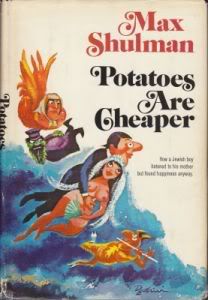
As for hiding covers…well, there was a Max Shulman book I purchased with an illustrated cover. I didn’t realize this until I was reading at work, but one of the figures on the cover was a nude woman with very colorful…cheeks.  Fortunately I spotted that before my boss did, heh.

Posted in General | Tagged | 10 Comments

Dhammapada

Dhammapada, Annotated and Explained
© 2001 translated Max Müller, annotated by Jack Macguire
129 pages

Yesterday I drove to the state capital, Montgomery, and while there visited the main branch library. I noticed they offered several versions of the Dhammapada, one of the oldest and most accessible portions of Buddhist scripture. It contains some 400+ verses; short aphorisms on the way of enlightenment. Compasssion, self-discipline, and meditation are mainstay themes of the verses. The wisdom expressed here is universal: you don’t need an education in Buddhism to grasp the essential messages. On the off chance that you are utterly and completely ignorant as to what Buddhism is about,  this translation comes with an introduction that sets things in context and is fully annotated to explain themes in Buddhist thought, or references to Indian culture those outside it might miss. The authors also occasionally include quotations from other Buddhist sources (other works, as well as living teachers like the Dalai Lama), separated from the main text, so that readers may examine a theme from multiple angles. The combined result is a great success. When I decide to purchase a copy of the Dhammapada for future reference and inspiration, this will be the version I will look for.

Posted in Reviews | Tagged , , , , | Leave a comment

Teaser Tuesday (20 September)

Today I snuck into the children’s section of the library to pick up a Riordian number, and while in the R’s noticed a book I’d not seen before. Naturally I checked it out and read it at lunch, giggling the entire way through. A couple of teasers

‘…and Wee Willykins kissed and huggled the hoppity pot and promised always to help the dollies and never to be an old grumpy-wumpkins again.’
Mrs. Bloxam’s tale has met the same response from generations of Wizarding children: uncontrollable retching, followed by an immediate demand to have the book taken from them and mashed into pulp.

p. 39, Tales of Beedle the Bard.  (J.K. Rowling, “Albus Dumbledore”)

This exchange marked the beginning of Mr. Malfoy’s long campaign to have me removed from my post as headmaster of Hogwarts, and of mine to have him removed from his position as Lord Voldemort’s Favorite Death Eater. My response prompted several further letters from Mr. Malfoy, but as they consisted mainly of opprobrious remarks on my sanity, parentage, and hygiene, their relevance to this commentary is remote.

p. 42, Tales of Beedle the Bard. (J.K. Rowling, “Albus Dumbledore”)

Posted in General | Tagged | 1 Comment

Tales of Beedle the Bard

The Tales of Beedle the Bard
© 2007 J.K. Rowling
111 pages

“Translated from the ancient runes by Hermione Granger.
Commentary by Albus Dumbledore
Introduction, Notes, and Illustrations by J.K. Rowling”

If the end of the Harry Potter story this summer has left you sad, this charming little collection of stories set in-universe will bring a smile to your face. Mentioned in The Deathly Hallows, the book was ‘defictionalized’ as part of a charity drive, along with Quidditch through the Ages and Fantastic Beasts. Alas, there are only five stories included, but each is followed by commentary from Albus Dumbledore, who comments on the story’s meaning and legacy with his usual wise and gentle wit. The commentary is not only amusing, but it fleshes out the wizarding world all the more for fans of the series. Any and all fans of the Harry Potter series should enjoy this little collection of heart-warming fairy tales from a world where magic actually exists.

Posted in Reviews | Tagged , , | Leave a comment

This Week at the Library (14 September)

This week at the library…

I’ll be finishing a biography of Marcus Aurelius, as well as the Discourses and Handbook of Epictetus. As it turns out, reading them together gives me a complementary experience, as Epictetus’s philosophy inspired Marcus’ own, and the author of the biography spends time comparing and contrasting the two.

At the library, I picked up:

  • Sharpe’s Escape, Bernard Cornwell
  • The Reformation, Will Durant. Considering my current study of Anglicanism, I’m actually looking forward to this one despite my usual abhorrence of theology. 
  • I also picked up Walking with Dinosaurs, because I needed something science-y. That Physics Made Simple book turns out to require knowledge of trigonometry which I don’t have. Alas. 
Posted in Reviews | Tagged | Leave a comment

Sharpe’s Gold

Sharpe’s Gold
© 1981 Bernard Cornwell
256 pages

Napoleon triumphant! Spain is lost, defended only by partisans fighting a ‘little war’ — and Britain’s peninsular foothold in Portugal is teetering on the edge of an abyss: the army is right out of money. Desperate, Sir Arthur Wellington contracts the indomitable Captain Richard Sharpe for a little productive mischief: he’s to sneak behind French lines and ‘borrow’ a pile of gold stashed in a partisan-held held down. The plan is simple, and of course must go the way of all simple plans: right down the toilet. When a key member of Sharpe’s party disappears beneath the blades of French lancers, Sharpe is forced to improvise. Of course, improvisation is Mr. Sharpe’s specialty.

The plot has the usual staples of a Sharpe novel: adventure, betrayal, romance (for Sharpe), and a dramatic ending. Compared to some of Cornwell’s other dazzling plots, this one would not stand out were it not for what it reveals about the relationship between Sharpe and Wellington, and the character of Sharpe himself.  According to Wikipedia, this was Cornwall’s second novel, but it establishes and drives home the fact that there is a special link between Wellington and Sharpe:  the highborn general may not like Sharpe, but he knows the rifleman can accomplish the impossible.  Wellington trusts Sharpe, and Sharpe’s refusal to court failure sees him make a staggering decision that shows how resolute a man he can be. This is a man who will take on a force of nearly a thousand with only 53 men — and that’s  only the beginning of the story. At the same time part of Sharpe’s strength seems to derive from a faith in Wellington. Though not friends, they are titans, working hand in hand to defeat one of the greatest figures in western history.   I for one am looking forward to seeing the rest of their journey.

Next time: Sharpe’s Escape.

Posted in historical fiction, Reviews | Tagged , , , , | 1 Comment

Top Ten Books from Other Blogs

This week the Broke and the Bookish are discussing books which they encountered first through other blogs and bloggers.

1. Sharpe’s Eagle, Bernard Cornwell

Reccommended to me by Cyberkitten of Seeking a Little Truth, this novel introduced me to the Napoleonic action hero, Richard Sharpe.

2. Persian Fire, Tom Holland

Suggested to me by the Resolute Reader after I read Holland’s Rubicon,  chronicling the collapse of the Roman Republic.  Persian Fire looks at an earlier period in history, at the rise of Persia, its conflict with Greece, and the growth of Zoroastrianism which would come to influence the Abrahamic religions.

3. The Lightening Thief, Rick Riordian

Recommended to me by Baley of the Reader’s Book Blog. I later read the entire series, enjoying it all the way.

4. Parasite Rex, Carl Zimmer

Imagine a world where parasites control the minds of their hosts, sending them to their destruction.Imagine a world where parasites are masters of chemical warfare and camouflage, able to cloak themselves with their hosts’ own molecules.Imagine a world where parasites steer the course of evolution, where the majority of species are parasites.Welcome to earth.

Reccommended to me by Neurovore of Neurovore’s Nuclear News Network, or N^4. Hoo boy, was this an eye-opener. You have no idea how wondrously terrifying and disgusting life can be until you’ve read about the life cycle of parasites.

5. The Age of Absurdity, Michael Foley

I only heard of this book through Cyberkitten,  and read it back in January. I haven’t reviewed it yet, because — like The Sane Society — it comments on so much that I feel hard-pressed to do it justice. The essential idea is that we have created societies which not only fail to meet our needs, but often run counter to them.

6. The Handmaid’s Tale, Margaret Atwood

Neurovore again. This is a dystopian novel set in a nightmare future in which crazy Christians have taken over the United States and created a society based on the Hebrew scriptures — complete with the total subjugation of women.  Considering the Republican Party’s current offerings, perhaps we should read it in preparation.

7. The Blank Slate, Stephen Pinker

…Neurovore. This one takes on various misconceptions about human psychology, including the idea that we are born ‘blank slates’ who act from cultural conditioning only, and not instinct, and the concept that we are born ‘good’ and then corrupted by the artificial construct of society. It’s a naturalistic approach to psychology and neuroscience: quite refreshing.

8. The Magicians, Lev Grossman

Reviewed by Joy of Joy’s Blog. Its cover caught my attention, but the book is stunning. It’s sort of a realistic, cynical take on Harry Potter-style fantasy.

9. Into the Wild, Jon Krakauer

Suggested to me by Baley, this is the story of a young man who lost his life while trying to find himself.

10. Nemesis, Isaac Asimov

This is tagged ‘reccommended to me’, so someone reccommended it to me. (Hence the tag, “reccommended to me.”) I don’t know of many people who would know Nemesis, so I am going to take a guess and say that it was Cyberkitten’s doing.

Posted in General | Tagged | 9 Comments