The Wisdom of the Myths

Wisdom from the Myths: How Greek Mythology Can Change Your Life
© 2014 Luc Ferry
416 pages

Well over a year or so ago, in a mood to read about the classical tradition, I happened upon Wisdom from the Myths: How Greek Mythology Can Save Your Life. Well, that seemed serendipitous, to say the least, despite the fact that the last time I read Ferry he was rather underwhelming.  That mood passed, but it’s come round again, and so this weekend I enjoyed Ferry’s introduction to the Greek mythos. Wisdom from the Myths is two things;  Ferry retells the major stories of Greek mythology, patching them together from Homer and the dramatists, but brings them together to argue that they constitute a coherent worldview.  This is one of an orderly  universe in which man has a definite role as a member of a polis. (Odysseus’ journey is read then as a spiritual one, with the hero confronting the death of his identity when tempted by Calypso. He may remain with her as an immortal, but in so doing would destroy every aspect of what makes him human — his identity as a father, a son, a husband, a king…a mortal, whose glory is in living well in the face of death.) The cosmos’ order is nearly self-correcting in that most negative behavior results in self-destruction, though it does seem to require the occasional hand from Zeus through his agents, Heracles and those who are aware of this unitive order.  As in A Brief History of Thought, Ferry turns again and again to Stoicism, which he views as the fulfillment of this worldview.  Ferry is not a Stoic, but quite sympathetic. He’s unusual in that he champions a secular worldview but takes mythology and philosophy seriously, as more than just-so stories and naval-gazing.  He manages to go almost the entire book without overly arcane references, a triumph for an academic.   I enjoyed this far more than A Brief History of Thought, at least as a recap of Greek mythology with a Stoic bent, but the title is overblown.

Posted in Reviews | Tagged , , , , , | 3 Comments

Spin Me Right Round, Baby

Every so often the Classics Club does a ‘spin’ challenge, in which players post a list of twenty books from their classics-to-be-read pile, number it, and wait. After we’ve had a few days to post the list, the folks at the Classics Club blog issue a number. Whatever number they draw, that’s the book to be read next.   So, here’s twenty items from my list, and I await Monday with anticipation!

  1. The Aenid, Virgil
  2. The Histories, Herodotus
  3. The Conquest of Gaul, Julius Caesar
  4. One Thousand and One Nights, trans. Husain Haddawy
  5. The Hunchback of Notre Dame, Victor Hugo
  6. Inferno, Dante
  7. Lord of the Flies, William Golding
  8. The Pilgrim’s Progress, John Bunyan
  9. Brideshead Revisited, Evelyn Waugh
  10. Great Expectations, Charles Dickens
  11. The Education of Henry Adams, Henry Adams
  12. Life on the Mississippi, Mark Twain 
  13. Up from Slavery, Booker T. Washington
  14. Death Comes for the Archbishop, Willa Cather
  15. O Pioneers!  Willa Cather
  16. White Fang, Jack London
  17. Moby-Dick, Herman Melville
  18. The Jungle, Upton Sinclair
  19. East of Eden, John Steinbeck
  20. The Moviegoer, Walker Percy
Posted in Reviews | Tagged , | 8 Comments

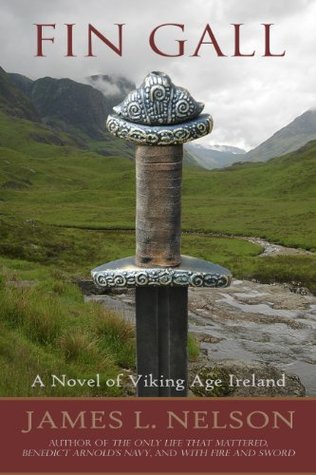
Fin Gall

Fin Gall: A Novel of Viking-Age Ireland
© 2013 James Nelson
290 pages

When a Danish longboat happened upon a small Irish craft on the rough seas , it found more than quick booty.  Onboard the boat was the Crown of the Three Kingdoms, a priceless artifact more precious for its political import than for its jewels. Whomever was granted the Crown gained the allegiance of the major kingdoms of Ireland; what price in gold or influence would the Irish tribes pay to have it restored?  Alas for the crew of the Red Dragon, the Irish weren’t the only ones fighting among themselves– for Dubh-linn, a booming Danish ship-fort, has been taken by the Norwegians!  So begins Fin Gall, a story of medieval war and adventure amid frantic infighting.

 In a surprisingly crowded field of Viking fiction,  Fin Gall distinguishes itself through its Irish setting and the well-crafted naval scenes.   The fractious nature of Ireland, made worse by competing Scandinavian clans crafting alliances with and against the Irish tribes, provides the basis of the plot. One Irish lord has been named chief, another resents it; one Norse lord wants to dominate Ireland,  an underling resents it;  much backstabbing ensues. The Red Dragons spend the book tripping over entangled alliances,  brawling, and hustling away.   The lead character, Thorgrim Nightwolf, is an interesting sort, so cunning that his men think he can transform into a wolf and gain a foretaste of the future through his dreams. His motives throughout the novel are refreshingly decent:  though he has come to Ireland to raid and plunder, he spends most of the book trying to keep his son Harold and an elder relation safe from Norwegians, Irish princes, and women. There’s a lot of pungent boasting, though not quite as riotous as Cornwell’s, and two back-to-back sex scenes which little changes but the name of the Irish lass involved.  Those Irish ladies are the weakest point here: they both encounter captive Danes, both help them escape for private motives, and both wind up randomly sleeping with the Dane in question.  The play-by-play is not especially awkward, but anything beyond “And they went to bed” is more information than I care to read.   After much danger has been out-lived, through both wit and luck, the book ends with a nice hook for the next novel: Dubh-Linn.

I’ll definitely be pursuing this series, as both of its ‘hooks’ are well-set for me. Most Viking fiction I’ve read takes place far inland, but this had a multitude of maritime scenes, and they made the savage sea really come alive. I also appreciated the way the Irish were handled here in general,  aside from the two women who blurred together.  They will probably become more distinct in further books, especially considering that one is a princess with a Danish in the oven.

Related:

Posted in historical fiction, Reviews | Tagged , , , , , | 2 Comments

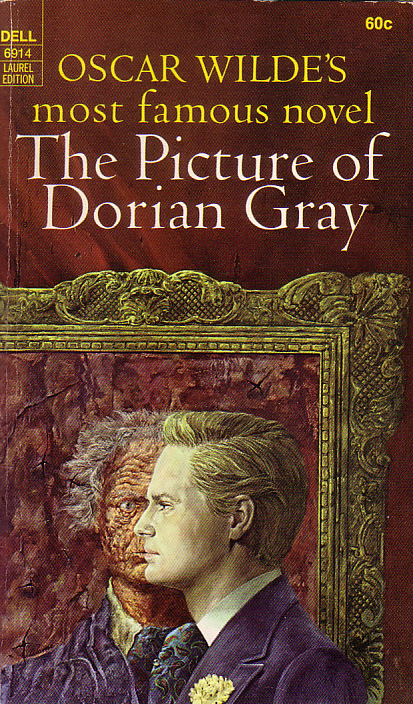
The Picture of Dorian Gray

The Picture of Dorian Gray
© 1890 Oscar Wilde
180 pages

Dorian Gray is the picture of youthful innocence, but his portrait is one of deathly corruption. After sitting for a painting rendered by his friend Basil, Dorian becomes a source of infatuation for himself.  Awed by his own beauty, Dorian is driven to angst by the sight of his own beauty and confesses that he would do anything, even give his soul, if the figure in the painting would age instead of himself.   Through such a Faustian bargain, the portrait becomes Gray’s hidden self, his conscience  reflecting the ugliness within as he becomes increasingly self-obsessed. The Picture of Dorian Gray is a tale of sin and degradation, of a man’s destruction — the fulfillment of the teacher’s exhortation in Ecclesiastes that all is vanity.

Although The Picture of Dorian Gray ends in death, being the literary account of a moral crash-and-burn,  Wilde’s wit makes for numerous fun moments. There is a bitterness to the laughs,  the vicious humor; the many stabs taken at society and middle class morality are strikes rendered by truly vicious men,  individuals who commit murder and abandon themselves to moral chaos. Many witticisms attributed to Wilde are placed in here the mouth of the malicious Lord Henry, like “The only way to get rid of a temptation is yield to it.”  One hopes that few readers look for wisdom from the likes of Henry, who is such a profoundly dismal influence that the painter Basil begs him not to corrupt young Dorian. (Alas for Bas, soon Dorian will be doing the corrupting…and to such an extent that many of his deeds can’t be named directly, but alluded to only by the fact that people leave the room when he arrives.)    During at least two points in the work, Dorian wavers at a moral crossroads, but at both times he only slides further into the pit, unable to free himself from his one fixation: self-adulation.

Gray is a curious accomplishment,  humorful but with a great sadness. Gray’s obsession with himself, his surrounding of himself with trivial amusements, are haunting.  For all his pleasures taken, for all the pursuit given to making himself feel good, Dorian at the end is worse for the wear. The one character who remains interested in his person — Henry again — does so because Dorian is an amusing spectacle.  Even the man who encouraged him on his descend will not accompany him on it, merely watch coldly from above.  Selfishnesss reigns. In a world filled with trivial amusements, and now more than ever obsessed with perpetual youth, Dorian Gray remains a warning.  In both art and substance, Wilde’s sole novel commends itself to the modern reader.

Related:
Mephisto, Klaus Mann

Posted in Reviews | Tagged , , , , , , | 6 Comments

Equal of the Sun

Equal of the Sun
© 2012 Anita Amirrezvani
431 pages

When Javaher came to the Iranian court, he did so with a secret mission: he intended to find out who murdered his father, and then return the favor.  So intent was he on this that he had himself made a eunuch to qualify for court service.  He quickly found himself at the side of an extraordinary woman, the Princess Pari — who, standing in for her aging father, effectively ran the government. But when the shah died without designating a successor,  both the realm and the palace are thrown into chaos. Being a woman,  Pari is not allowed to take the reins herself…but she has no intention of letting her family’s labors go to waste in civil war.   Her intervention makes her a target in the wave of violence that follows her father’s death in the next two years, and eventually ends in tragedy. Equal to the Sun is her faithful servant’s contribution to history; though she will be dismissed by the official histories, penned by scribes bowing to the wishes of far inferior and petty potentates,  hers is a story worth telling.

This is Amirrezvani’s second novel set in historical Iran, and continues her lovely incorporation of oral tradition within the twists and turns of the text.  The novel’s basic plot  is basic court intrigue, albeit with an mesmerizing figure at the center.  Princess Pari was a real personality, though given how little record there is of her life there’s a lot of interpretation at work here. Not lost on the author and her characters is the reign of Queen Elizabeth, who is fighting the same battle in England that Pari fights in Iran, that  a woman can reign as effectively as a man.  Amirrezvani draws a few discrete parallels to Elizabeth’s story, having Pari declare herself married to her country.  Her possession of the royal farr,  the glory and  essence of sovereignty,  is recognized by increasingly more characters as the novel wears on. In a court of men obsessed with tribalism and looting the coffers, she remembers how glorious Iran once was, and can see danger looming in the restive Ottoman empire, now looking at the internecine chaos as opportunity for its own expansion. Pari’s downfall is not jealous men, however, but a jealous woman. Her death is so surprising and abrupt that the reader is almost as horrified as Jahaver.

While Blood of Flowers had a more original premise (telling the story of an unknown artisan who creates exquisitely beautiful tapestries),  I welcome the return of Amirrezvani to  storytelling.  If she had only written a novel set in historical Iran, that would be of interest enough, especially given how passionate her characters are towards one another and their goals. But her integration of  oral tradition — folk stories in Blood, epic poetry here — with the text of the novel — is unique. Her characters are inspired and nurtured by stories old, even as they try to figure out their own destiny.   Parts of the book do bear a the too-heavy stamp of modern writing, though, like the intermittent sex scenes.  I tried to skip through them — is there anything more awkward than reading a woman’s version of a eunuch trying to have sex? —   but pillow talk often turned to political intrigue or mystery-solving.   That aside though…if she writes again, I’ll read her again!

Posted in historical fiction, Reviews | Tagged , , , , , | 7 Comments

This Just In

During the weekend I said in comments here that I would love to see a book about spontaneous or emergent order that crossed disciplines. Well, by golly, now there is one — and it’s by Matt Ridley, who penned The Red Queen and Genome. Turns out he’s a member of the House of Lords, to boot. He appeared on Monday’s EconTalk, which has been the source of some of my favorite reads here in the last few years. They talked about language,  morality,  the history of science, and the reversal of American political parties in the late 19th century, in which the ‘liberal’ party became illiberal.   Their conversation can be enjoyed or read here.
                          
Bill Kauffman recently joined Jim Kunstler on the KunstlerCast to yak about localism, American literature, and a little politics. (Jim’s most recent political post: “Between the Obscene and the Unspeakable.”)     I had the rotten luck to discover this one yesterday right  before going to work, and so had wait for hours and hours until I could listen to two very colorful small-town partisans enjoying one another’s company.  Kunstler, for those who have joined me recently, penned The Geography of Nowhere and The Long Emergency. The first was a godsend for me,  articulating  a lot of unease and longing, and the latter has sharply influenced me over the past few years.  Kauffman, of course, is a barrel of fun. Neither of these guys can be put into a political party:  Kunstler claims to be a Democrat, but he has such visceral contempt for virtually everyone involved on both sides that I think it’s a lesser-of-evils decision for him:  more Democrats than Republicans make mouth-sounds about the futility of playing god overseas.  What brings these fellas together, though, is their shared localism. They both believe in the virtue of small-town America over the suburbs and big cities, though in addition to the communal aspects Kunstler holds small towns to be less fragile, economically. Both gentlemen practice what they preach, living in New York  villages…and Kunstler,  patiently awaiting the collapse of globalization,  homesteads. 
So, if you want to listen to some interesting conversations, this week is off to a good start.
Posted in Reviews | Tagged , , , | Leave a comment

You Still Can’t Call me Inspector Gadget

A few years ago I penned a few thoughts  (“Go Go Gadget Literature?”) distancing myself from e-readers and e-books, then exploding in popularity. A recent post by Lori at Should Be Reading made me think of it, and for good reason: I’ve had a Kindle Fire for just about a year now.  “What?” cry you, “Have the mighty fallen?!”

Eh. It’s not so dramatic.  I bought it as a tablet, really. Perhaps I was already on the slippery slope, for a few months prior to that I’d downloaded Kindle for PC so that I could read the occasional supremely cheap or free ebook on my computer.  It was an easy step, really, to buy the gadget and since it was my 30th birthday…why not?   In the year since, the Kindle and I have gotten along tolerably well:  last year, I read no less than eleven titles on it. (The first? Kindle Fire HD for Dummies, naturally.)  That’s something on the order of 7% of my reading from last year, though, so my pursuit of real books hasn’t been diminished in the least. On the contrary, the ability to zap previews of books to the Kindle has led to my buying the real deal.  The kindle allowed me to plow through the entire Narnia series within a couple of weeks despite some rascal having later books in the series checked out. So far, I have used my Kindle only for exceptionally cheap e-books, books received for free via the kindle lending library or my own, or (as is the case this year) NetGalleys.  I don’t carry my Kindle about with me, for fear the thing will drop or be stolen. I don’t have that problem with real books; those I own are subject to all manner of abuse, riding with me in cars and taking hits from the slings and arrows of everyday life. I have so far avoided the biggest peril of e-books, distraction. If I get an itch to check my email, I make it wait until I hit the end of a chapter.  Some genres lend themselves well toward the e-reader; I thought Spam Nation an appropriate e-book read, but I try to avoid reading ‘real’ literature on it (classics, for instance). Literature should have the same weight in the hand as it does in the mind, and it’s best to take it with a drink. Tea, perhaps, or my favorite vice, coffee.

 So, while I have embraced the new, the old is in no wise threatened. At least…not by me, but then I do call myself a young fogey.

Posted in Reflection, Reviews | Tagged | 7 Comments

The Wild Weird World of Biology

So, it turns out The Lives of a Cell has little to do with cells.  I checked it out figuring to learn something about how cells work, since I’m a ways removed from fifth-grade life science, or even freshman bio.  I wasn’t just judging the book by its cover — when I peeked in, there was a paragraph about mitochondria!  As it turns out, though, Lives is a collection of essays sharing the theme of sociobiology. As our cells are a collection of organisms working together for mutual benefit, and our cells themselves work together with other cells again for mutual benefit, and bacteria within us work with us for our mutual benefit, the author attempts to apply this to the human race as as a whole, likening language and other constructs to the vast structures that insects build together. No insect is conscious of what it is doing, but it does it, and it creates something wondrous and vast.  I enjoyed the author’s voice enormously, but the actual science is probably dated. It has a seventies charm about it, though,  bringing to mind the fanciful idea that the Earth is one big organism.

(This cover is…fun.)

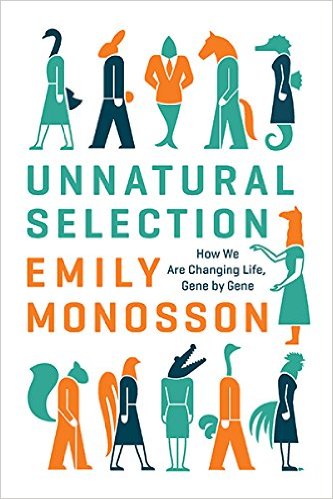
That was polished off on Friday, and over the weekend I roared through the utterly eye-opening book Unnatural Selection, on how medicine, pesticides, and such are forcing rapid evolutionary change all around us.  Expect a review for it in the next couple of days. I’ll be following that up with E.O. Wilson’s The Social Conquest of Earth, and after that..golly, I might just give biology a slight break.   There are all sorts of rabbits I might chase next, though I’m laying off new purchases for a little while, so I’ll mostly be working from my little stack of unread nonfiction or from my monthly bag-o-books from the uni library.

Here’s to wrapping up February with a bang!

Posted in Reviews, science | Tagged , , , | 2 Comments

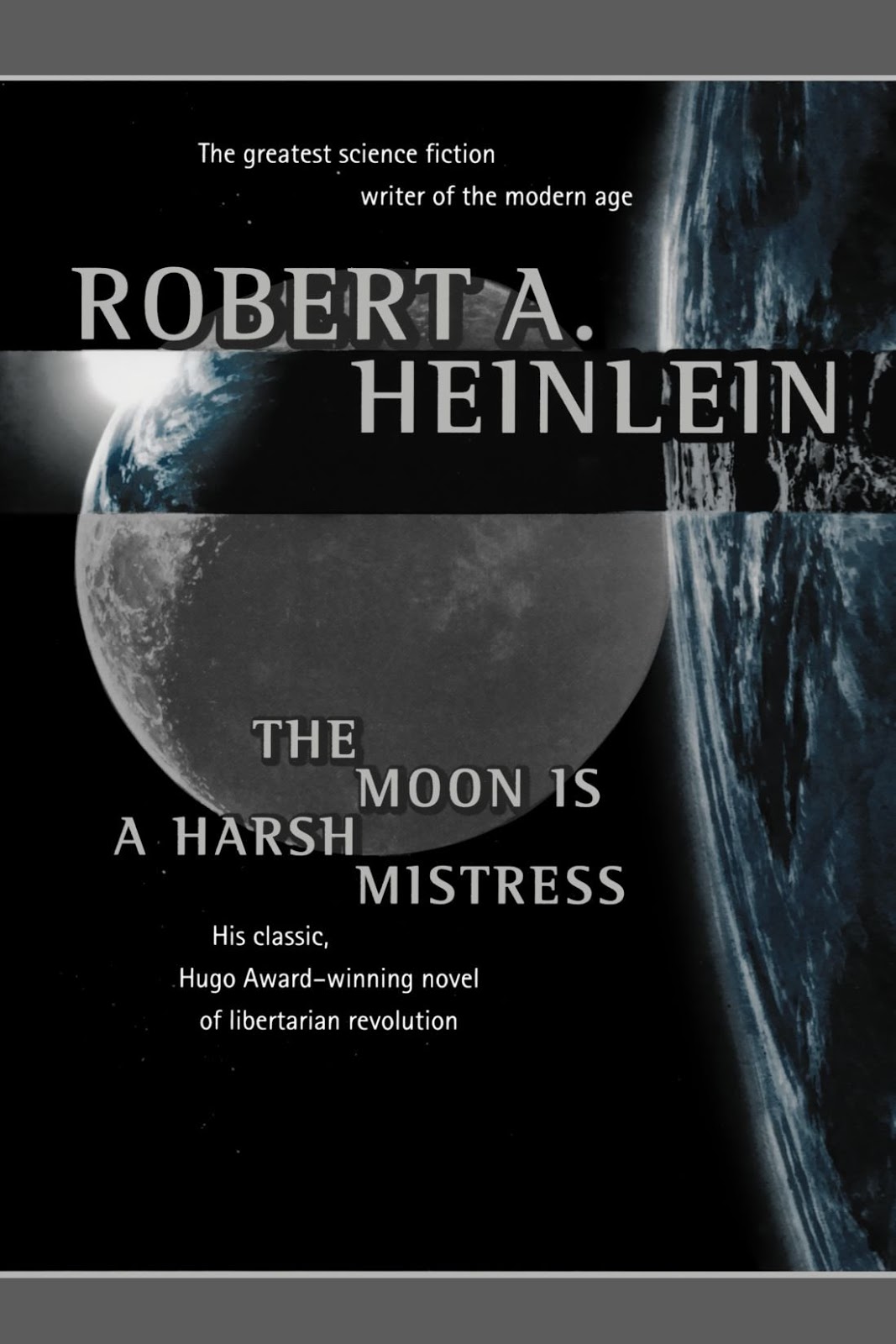
The Moon is a Harsh Mistress

The Moon is a Harsh Mistress
© 1966 Robert Heinlein
382 pages

So you say you want a revolution? Bozhemoi! The Moon is a Harsh Mistress combines politics and science fiction to follow a colonial rebellion…in space. In the year 2076,   the residents of a Lunar penal colony tire of Earth’s   mercantilist policies, which keep the “Loonies” impoverished. After a political rally is brutally crushed by the Lunar Authority, a few souls decide to homebrew a little regime change.  The resulting story follows a conspiracy of three as it ripens into a popular revolt, defending itself against the indignant government of Earth.

The lunar settlements began as collections of Earth’s combined political and criminal refuse, but have since become full-fledged communities, with homesteading families and unique customs.  Save for the authority invested in a man called the Warden, there is little overtly penal about the various settlements scattered about the lunar landscape. There are no walls, no chains – only the fact that long-term lunar residency makes a return trip to Earth virtually unthinkable, given the weakening of the body.   The adjustments needed to operate on the moon are an important plot point later on,  when earth-lubbing troops attempt an invasion.  More interesting is a figure central to the plot and the revolution: the supercomputer used by the Lunar Authority to manage various systems. Unbeknowst to virtually everyone save the computer engineer (Manny) who serves as the main character, the central computer has been expanded so much that he has become both self-aware and mischievous; assisting in a revolt against the Lunar Authority is a joke right up his alley.   Another area of interest are the social arrangements on Luna; because women are greatly outnumbered by men, polyandry is common.

Although I assumed from the start that the revolution would be a success, these various elements ensured that the novel remained thoroughly interesting. Kudos to Heinlein for borrowing from both American and Russian revolutionary mythology to inspire his conspiracy. Frankly, given that this book was written during the Cold War, I was surprised at the abundance of Russian names and slang; Heinlein wasn’t exactly a fellow traveler, referring to the Soviets as the ‘butchers of Budapest’.  Welcome were the  forays into political philosophy, as the conspirators argued over what the root problems facing them were, and how they should avoid them if a new government was created. (“If” because overt laws were unknown on the moon, replaced by rigorously-enforced customs.)   One character describes himself as a rational anarchist, maintaining that – regardless of abstractions like “the state” – every man alone is responsible for the choices he makes.  Nothing can be sloughed off onto the state, nothing excused.    Moon is an overt expression of libertarianism, in both insisting that every man bears his own moral responsibility, and in denouncing those who attempt to claim control over another’s life.  Still, Mannie observes with a sigh, there seems to be some instinct within us to want to meddle.

Fifty years after publication, the political philosophy isn’t the only relevant portion. Although modern readers will find the notion of one computer controlling the entire planet as rendered here (and in much of Asimov’s early fiction), fanciful, Heinlein is closer to the mark than is obvious. The sorts of mischief that Mike employs to aid the rebellion – providing information entrusted to him by the warden,  spying via telephone hookups, providing secure channels of communication, disrupting services – are the same kinds of havoc cyberwarfare can wreck today. We do entrust the planet’s care to a machine: a network comprised of millions of computers, with more connection every day.

In Moon we have a novel with all manner of notable subjects which is at the same time an fun  story in its own right. Oh, the ending is more or less foretold, but  the author intrigues from the start by delivering the story in a pidgin English heavily flavored with Russian expressions.  It seems odd on the first page, but seems natural within a few sentences.  Heinlein provides a fair amount of humor, as when Manny receives a massive smooch from a lady rebel upon his induction into the nascent conspiracy and says “I’m glad I joined! What have I joined?” Most of it comes from Manny’s own narration however, as when he is commenting on the mess that is being human.  This will remain a favorite, I think, and one so brimming with argument that it merits frequent re-reading.

Posted in Reviews, science fiction | Tagged , , , , | 7 Comments

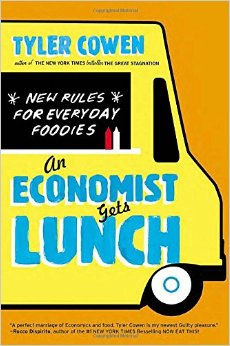
An Economist Gets Lunch

An Economist Gets Lunch: New Rules for Everyday Foodies
© 2012 Tyler Cowen
293 pages

Imagine going out to eat with someone who really likes to talk about food, and imagine that this person is also an economist. That’s An Economist Gets Lunch, three hundred pages of very excited chatter about food culture and markets across the world.  There’s no argument to be had, just sheer enthusiasm for the subject at hand, one that I had to be wary about reading because it kept giving me the munchies.   Cowan’s concoction is a weird mix of  culinary discussion, economics, world travel, and history.  He doesn’t produce a set of rules: there’s a principle guideline, followed by many little bits of advice. The key principle is this:  food is a product of supply and demand, so look for options where the supplies are fresh, suppliers are creative, and the customers are demanding. The implications of this are broader than “avoid fast food”.   Cheap doesn’t necessarily mean bad;  most of Cowan’s favorite culinary experiences happen while traveling in less-industrialized areas of Mexico,  Nicaragua, Sicily, Thailand (he’s very well traveled, this fellow) and other places. Because food markets are predominately local there, supplies tend to be fresh and the creators specialists in their region’s offerings. The price is dirt cheap, compared to the cities.  A high price tag doesn’t indicate that the food is exquisite, either: often it carries with it the money sunk into creating a luxurious restaurant environment, complete with superfluous staff like valets, or the high rents.Cowan especially disdains the city centers of touristy areas like Paris and Rome. You want good Italian food, hop on a train and head for the back country, he urges. And French? Try Japan.   
Cowan makes for an interesting dinner companion, going from this to that topic. He starts off with a discussion of why American fine dining is largely inferior to Europe’s, blaming it on Prohibition, television, and parents who cater to their kids’ bland palates.  Later on he devotes an entire chapter to the majestic enterprise that is barbeque, and defends agribusiness. Don’t blame agribusiness networks because they produces crappy fast food, says Cowan, any more than you would blame the printing press for producing pulp fiction.  Curiously for someone who is generally aware of the impact politics have on markets, he assumes the entire reason people rally against GMOs is because they’re scary. It’s not a question of the products being proven safe, but of power and corruption: the companies producing these things are the ones with commanding market shares and accompanying political influence, supposedly regulated by their former coworkers. No sooner has he written on this, however, has he returned to an apparently favorite topic: the ins and outs of good Chinese food. 
This is a book of interest, but it goes back and forth so much I have no idea who the target audience is. There’s definitely more information about food than economics, for what it’s worth. 
Related:
  • EconTalk interview with Cowen on the book. You can scroll down for a transcript of the conversation and get a lengthier feel for the author’s many food interests.

Posted in Reviews | Tagged , , , , | 3 Comments