From Raiders to Kings

“Remove justice, and what are kingdoms but great robberies? For what are robberies themselves, but little kingdoms?”
~ St Augustine

I can still remember being scandalized in seventh grade when I opened the next chapter in our western civ text to discover we would be studying THE CONQUEST OF ENGLAND. England, conquered? At that age, for whatever reason, I had a notion of England as an impregnable island fortress: from that time on I regarded the Normans with enmity. Recently, though, I found myself in possession of a generous gift card and a desire to find out just what those Normans got up to outside of England. As a regular reader of medieval European history, I’m always stumbling upon them getting up to mischief, and figured a survey would be helpful. Given Lars Brownworth’s adjacent research into the Byzantines, Rome, and the Crusades, From Raiders to Kings is not only a very readable survey, but one that brings in useful context without getting long-winded.

The story of the Normans begins, of course, with the story of the Vikings — aggressive Norse and Danish raiders who savaged Britain, France, and other parts of Europe while also vigorously exploring across the Atlantic and into what we now call Russia. Viking predations caused the coasts of France to depopulate themselves, as people moved away from areas of easy access to the raiders; when the Franks decided to bribe the Norsemen with land, sea-facing Normandie around Rouen seemed an obvious place. There the Northmen in Frankland — the Normans — slowly began slipping into respectability. After first following the French Normans and their eventual attack on Britain — where other Vikings had also been attacking, leading to poor Harold Godwinson having to fight attacks back to back in different areas of the country — Brownsworth moves to the arguably more interesting Sicilian Normans. The Norman arrival in Sicily was amusingly mercenary; they were at first hired to fight one side, then switched the other when geld proved shiner and more numerous there; eventually they began a conquest of Sicily. The Med was…..complicated back then, and most of the book focuses on the constant political wrangling that goes on between the Norman powers, the Eastern Empire, saracens of various sorts, the Papal States, and other European powers. Because of the focus on the Sicilian Normans, my animosity toward the conquerors of Anglo-Saxon Britain was quickly put aside in the very entertaining history of the Normans in the Med. One chapter is called “William the Bad”, followed by “William the Worse”: What’s more, even while the Normans frequently shifted allegiances over the years — especially where the Eastern Empire was concerned, since Constantinople could be both patron and arch-rival — they also fought against misplaced enemies like Anglo-Saxons in the Varangian guard. Englander displaced by the arrival of zis people with outrageous accents were delighted to be able to seek vengeance against the Normans, even if they weren’t quite the same Normans.

The Normans, in short, was an unexpected ball of fun. It added enormously to my appreciation of the medieval Mediterranean world, even if I don’t quite buy Brownsworth’s hypothesis that the sheer amount of energy the Normans added to Europe transformed its history and helped propel it into global dominance, at least for a few centuries. What is obvious is the Normans’ gift for adaptability: they always took what they had and grafted it on to the existing culture to create systems that not only worked, but flourished. This led to some institutional strength that persisted even if a strong man perished and was succeeded by someone with an inferior skillset. Alas, I think I’m almost done reading Brownsworth unless I can find a copy of his Macedonian book. Perhaps I’ll put a word in with his uncle the indie bookstore shop owner….

The alliance with the Lombards was short lived. Even with Norman arms stiffening their forces, they were crushed by Byzantine forces in the first real clash. The battle was enough to prove the worth of Norman swords to the Byzantines, however, and they immediately hired them to quash the troublesome insurgents. Abandoning the cause of Lombard freedom as easily as they had picked it up, the Normans cheerfully set to work
enforcing the imperial will.

Under the brilliant Macedonian dynasty of Byzantium, the empire had turned the tide against the caliphate and was engaged in a great push to clear the eastern Mediterranean of Muslim pirates. The Macedonian line had ended with the death of Basil the Bulgar-Slayer in 1025, but although the emperors who followed him were weak, the army Basil had created was still formidable and won a string of victories in Syria and along the Anatolian and North African coast.

Charismatic, headstrong, and larger than life in nearly every respect, Maniaces had a reputation as imposing as his physique. Even the usually unflappable members of the imperial court seemed stunned in his presence. After reporting that the general was ten feet tall and had a roar that could frighten whole armies, the imperial historian Michael Psellus concluded by saying that “those who saw him for the first time discovered that every description was an understatement”.

Maniaces gave every sign of panic, assuring the Saracens that at first light he would appear in their camp with every bit of treasure the city possessed. As a gesture of his good intentions, he sent along a large amount of food and drink for the victors to enjoy. The wine in particular had the intended effect as the Saracens were parched and in the mood to celebrate. Before long they were hopelessly drunk and Maniaces’ soldiers slipped into their camp and butchered every last man.

The Crusades are usually thought of as single armies, or single waves of armies, launching themselves in a certain year. However, they were more like continuous movements; not armies so much as armed men moving in ebbs and flows to the East. There was no single route they chose to travel, and no single recognized leader, just a vague agreement of the leading princes to gather at Constantinople.

Andronicus was a curious figure, possessing all of the brilliance of his family with none of its restrain. In 1182 he was already in his sixties but looked two decades younger, and his exploits, both on the battlefield and in the bedroom, were legendary. By the time he marched on Constantinople he had already seduced three cousins, been banished twice, and had acquired a reputation as an innovative — if slightly eccentric — general.

It would have been difficult to pick a more unsuitable group of people to run a government. The three advisers, a eunuch named Peter, a notary named Matthew, and the English archbishop Richard Palmer, spent most of their time trying to assassinate each other.”

Posted in history, Reviews | Tagged , , , , , | 7 Comments

WWW Wednesday

WHAT have you finished reading recently? In Distant Lands, Lars Brownworth

WHAT are you reading now? I just started The Normans: From Raiders to Kings by Lars Brownsworth.

WHAT are you reading next? Perhaps The Devil in the White City, Erik Larson. A coworker has recommended to me on multiple occasions and frequently expresses her disbelief that I’ve not yet read it.

Posted in General | Tagged , , | 11 Comments

In Distant Lands

When the Crusades are mentioned today, it is almost always in the context of weary self-flagellation by Westerners searching for some ersatz virtue in denouncing their own history. Forgotten are the Muslim assaults on the Eastern Empire, the conquest of much of Iberia, the invasion of France, and even the attempted attack on Rome. For the modern post-Westerner, there is and can be only one narrative: imperialism! Lars Brownworth offers a far more interesting account—one in which the Western desire to redeem Christian cities from Turkish rule intertwines with Byzantium’s careful efforts to balance quarrelsome allies and uneasy truces with foes like the caliphate, which could not be defeated outright. Despite its brevity, In Distant Lands covers remarkable ground, tracing the course and consequences of each Crusade and showing how often their fate was decided as much by internal politics—among both Christians and Saracens—as by swords on the field.

Brownworth’s previous work into the Normans and Eastern Empire comes in handy here, especially when trying to cover the role played by the East in the crusades. I had previously heard of the Fourth Crusade as a malicious betrayal of Constantinople by the European powers passing through and deciding instead of capture the city: the truth is rather more complicated. From the First Crusade onward, Constantinople was in an unenviable position. While the Franks and Germans coming through with lusty cries of “DEUS VULT!” were brothers in Christ, their arrival would inevitably destabilize the peace the Eastern Empire had established with the Saracen powers who had taken much of the Middle East for Mohammad. Worse: when the Crusaders did make strides, Constantinople viewed this as their being helpful lads and returning the Empire’s cities to Christendom….and itself.

One example of this shows up early, when an increasingly bedraggled Crusader army woke up one morning to find that the city of Nicaea, which they’d been besieging for weeks, had suddenly thrown up Imperial colors. During the night, the caliphate’s forces had withdrawn and allowed Byzantine troops to march in. Now it was a Christian city again, safe within the Empire: no loot for you Franks and Germans, sorry. Time and again, the Empire’s need to act pragmatically toward powers who would still be there after the westerners had gotten bored and gone home would disrupt relations between the armies of Christendom. (The Empire and the Germans had especially terse relations, given that the Holy Roman Empire styled itself as the heir of Rome. Heir of Rome? Rome still exists — in Constantinople, with the real Emperor!) Not that they needed help — every single Crusade was disrupted by internal quarreling, most notably in the Third Crusade between Phillip II and Richard. Fortunately, the Saracens were also often divided, with Sunni and Shiia caliphates fighting amongst themselves, and civil wars happening within the caliphates. Still, as crusade after crusade went on — some under very capable leadership like France’s Louis IX — Europe began losing interest in saving Outremer. It didn’t help that Europe’s princes were more concerned with one another, and that the Pope had lost a lot of moral authority by targeting “crusades” against temporal enemies. By the book’s end, France had essentially captured the Papacy in Avignon, and many of the Middle East’s ancient cities like Antioch and Tyre had been wiped off the map by vengeful Saracens no less destructive than the Mongols.

This is impressive work, distilling a lot of drama and fighting into a volume scarcely more than 200 pages. It gave me a much better appreciation of the Empire’s delicate position during the Crusades, and an appreciate for the fickleness that is fortune: there were so many times when the tide was moving one way or another, only to suddenly break when something random happened. As much as I dislike the Normans, reading this makes me eager to read the last Brownsworth title I’ve not read: The Normans: From Raiders to Kings.

Posted in history, Reviews | Tagged , , , , , | 11 Comments

Teaser Tuesday

“The belief in the inevitability of the past — that whatever happened had to happen — is the great enemy of learning from history.” Lars Brownworth, IN DISTANT LANDS

Posted in General | Tagged , , | 7 Comments

Dynasty

The names Caesar and Augustus have been known to me for as long as I can remember,   from the Bible’s Christmas story to early world history texts with colorful illustrations of the Forum. Despite the long history of Rome,  the Augustan family still retains its most colorful characters like Caligula and Nero:   only relatively few emperors since them, like Marcus Aurelius and Constantine, have any name recognition at all for the general public.  Dynasty is a history of this most colorful lineup of men: Caesar, his nephew Octavian (Augustus);   Tiberius,  Caligula, Claudius, and Nero.  Through them we see a slide from the rule of law and moral authority (supposed or otherwise) into military junta and rank decadence.  No stranger to Tom Holland’s pen,  I found Dynasty compelling and informative reading.

Instead of presenting the familiar narrative of a slow, steady erosion from Republic to Empire, Holland lets the men’s lives speak for themselves. We see that the transformation was not gradual at all, but began to lurch dramatically in the last days of Tiberius. Caesar and Augustus both saw themselves as saviors of the old order, which had in fact already partially collapsed during the days of the civil wars between Marius and Sulla, and the unorthodox triumvirate.  Tiberius’ reign appears to mark a crucial point: he was a creature of duty, almost slavishly so. He divorced when told to divorce, he married when Augustus told him to marry, and he looked after several sets of heirs who might one day replace Augustus at the expense of his own happiness and glory.  He was an aristocrat in both the best and worst senses of the word: he shared Marcus Aurelius’s later sense of noblesse oblige, but not his Stoic cosmopolitanism — that regard for all men as fellow creatures. Instead, Tiberius viewed the plebes in a more patronizing way: he would take care of them, but they were unwashed masses who merited no say in government. Despite his attempts to favor the senatorial class and the senate himself, Tiberius was dismayed and angered that the nobles were more than happy to let him carry the full burden of Empire.  Hating Rome and its people, he withdrew like Achilles into his tent,  slipping into his own private decadence and allowing Rome to be led – after his death – by a “viper”.   Caligula and Nero these days are bywords for cruelty and decadence,  and they are bridged by an old man who came to power at the tip of a gladius – not his own, but the praetorian guard.  The guard would become far more active in the political life of Rome after the last subject of this book is dispatched at their hands, leading to the year of four emperors.

The House of Caesar was an extremely dangerous family to be born into, given the pitilessness of Roman politics. Children were hardly safe, either from intrigue or outright murder. They didn’t need to be remotely suspected of being involved in a ruler’s either, either: Caligula’s daughter was murdered immediately after his own assassination purely to get wipe out his family line, and not in a nice way. Brutality is endemic here, even in peacetime with good rulers. Holland does not spare the reader’s sensibilities by shying away from graphic details like the normalization of rape and brutal violence: this is especially apparent with Caligula and Nero, who appeared to worship transgression for its own sake. It gets a bit lurid at times, but made me more appreciative how revolutionary Christianity would be once it swept the Empire — condemning the easy and abusive divorces of the Romans, declaring the humanity of slaves, and asserting a new moral order. Away from the salacious detail, I greatly enjoyed Holland’s writing in general. He appears to have written another work, Pax, that makes this and Rubicon into a trilogy: don’t be surprised to see it in the future, though not immediately.

Quotes

‘Nature produced [Caligula], in my opinion, to demonstrate just how far unlimited vice can go when combined with unlimited power.’

‘These are the objects of my prayers. A plot of land – not so very large. A garden, a spring beside the house, its water ever-flowing, and a small wood on a slope.’as the obituary delivered on him by Seneca, a philosopher who had known him well.

Whether cheering on boxers in back streets, sporting a battered sunhat or roaring with laughter at the sight of a hunchback, Imperator Caesar Augustus retained just a hint of the provincial. None of which did him any harm among the mass of the Roman people. It gratified them to think of the Princeps as a man without airs and graces. Intimate personal details, carefully leaked, helped to cast him as a citizen of honest, simple tastes.

A man as promiscuous as Augustus was reputed to be seemed to many citizens to lack the self-control that was properly the mark of a Roman. Unchecked sexual appetites, while only to be expected in a woman – or, of course, a Greek – were hardly appropriate to a citizen steeled in the noblest traditions of the city. Energies devoted to sleeping around were better suited to serving the glory of the Roman people.

Scolded for not emulating her father’s ostentatious frugality, she only laughed. ‘While he may forget that he is Caesar, I never forget that I am Caesar’s daughter.’

The kingdom of Armenia, a land of icy mountains, thick forests and notoriously effective poisons, lay sandwiched uncomfortably between the rival empires: too indigestible to be swallowed, too tasty to be left alone.

What they adored most of all, however, was the sheer blaze of his glamour. He might be prematurely balding, and possessed of large feet and his father’s spindly legs, yet Caligula knew how to thrill a crowd. The Roman people were bored of grim old men. Now at last they had an emperor who seemed to glory in living the dream. That summer, opening a new temple to Augustus, Caligula rode to the inauguration in a gilded triumphal chariot. Six horses pulled him. ‘This,’ so it was noted, ‘was something wholly cutting edge.’

For decades, secure within its chrysalis, protected by the cunningly crafted hypocrisies of Augustus and the superseded traditions so valued by Tiberius, a monarchy had been pupating; now, with the return of Caligula from war, it was ready to emerge at last, to unfurl its wings, to dazzle the world with its glory. No longer was there to be any place for the pretensions of the Senate – only for the bond between Princeps and people.

As for Caligula himself, he remained on the pontoon; and when he had eaten and drunk enough, he amused himself by treating some of his companions much as he had done his uncle, and pushing them into the sea. Finally, determined that the celebrations not end in anticlimax, he ordered that some of the vessels where his men lay feasting be rammed. And as he watched the action, ‘so his mood was all elation’.

Seneca, when he imagined Roman ships powering their way to as yet undiscovered continents, did not necessarily approve. As a philosopher, he saw nothing to celebrate in perpetual motion. The prosperity that was the mark of a great empire was, in his opinion, a treacherous and soul-destroying thing, characterised by perpetual restlessness, and destined only to torment itself.

‘What an artist perishes with me.’ So Nero, with his customary lack of modesty, had declared as he steeled himself to commit suicide. He had not exaggerated. He had indeed been an artist – he and his predecessors too. Augustus and Tiberius, Caligula and Claudius: each, in his own way, had succeeded in fashioning out of his rule of the world a legend that would for ever afterwards mark the House of Caesar as something eerie and more than mortal. Painted in blood and gold, its record would never cease to haunt the Roman people as a thing of mingled wonder and horror. If not necessarily divine, then it had at any rate become immortal.

Posted in history, Reviews | Tagged , , | 3 Comments

WWW Wednesday + Book Series We’ll Never Read

WHAT have you finished reading recently? The Iron Dream, a satire of pulp fiction that uses the premise that Adolf Hitler left Germany in 1919 and later became a prominent sword-and-sorcery writer during the golden age of pulp fiction. It’s….all kinds of weird.

WHAT are you currently reading? Dynasty, by Tom Holland, is my fun read; it’s a history of the house of Caesar. Against the Machine when I’m focused and ready for more reflective and serious reading.

WHAT are you reading next? Most likely Caesar by Adrian Goldsworthy; it’s waiting at the post office for me now.

Today’s prompt from Long and Short Reviews is “Book Series We Will Never Read and Why“. The easiest answer, of course, is romantic or erotic fiction, whether that’s 50 Shades of Grey or anything in the apparently rapid-growing ocean that is romantic fantasy. I suppose there are also huge series like Robert Jordan’s Wheel of Time, simply because they’re so enormous. Additionally, if sex and violence mark Game of Thrones the way they’re supposed to, that’s also something I’m not terribly interested in pursuing.

Posted in General | Tagged , | 9 Comments

The Iron Dream

You know how I mentioned October would have a nod to German history, and maybe combine it with horror? …this is not now I expected that to happen. This will surely be my strangest book read for 2025.

There I was, innocently browsing Substack, when lo! I spotted an outlandish title: WHEN ADOLF HITLER WROTE SCIENCE FICTION. Well, color me clickbaited! The post was about this book, The Iron Dream, which contains a satire of pulp-fiction action-fantasy bookended by a fictional academic analyzing it from a literary perspective. The academic and the satire are both composed in an alternate history: the framing scenario is one in which Adolf Hitler immigrated to the United States after World War 1 and developed a career for himself as a pulp writer, something in the realm of Robert E. Howard. His Hero is larger than life, his antagonists grotesque monsters who are as revolting as cockroaches. Hitler’s most famous work, the one that inspired his following, was Lord of the Swastika.

There, a man (Ferric Jagger) in a post-apocalyptic landscape secures a future for humanity by joining a bicycle gang and creating an army to destroy all the mutant half-men races lumbering around. This task is made considerably easier once the Hero discovers The Steel Commander, a magic truncheon that has been waiting for the Heir of Slytherin to show up and claim it. I haven’t read much, if any of the fantasy-adventure pulps — a bit of John Carter of Mars, but that’s it — so I don’t know how successful this book is in aping the style. It’s certainly delivers enough risible bombast, but with ubiquitous Nazi imagery (swastikas and heavy use of red/black) to unsettle the reader. Feric’s “Sons of the Swastika” are even more flamboyant than the IRL Nazis: Feric, the Commander, wears an SS uniform with a red cape, and SS boots all have lightening bolts emblazoned on them.

Spinrad also weaves in some more subtle Hitler references, like the Hero’s preference for a vegetarian diet: contagions from the Fire that destroyed civilization are more concentrated the higher one moves up the food chain. There are also possible historical connections, with an evil empire obviously modeled after the Soviet Union, and another race who play the same antagonistic role in the story that Jews did for Nazis in real life .As morbidly amusing as the premise and execution are, they go on for far too long: half the book is a long, unbroken chain of ogre-slaughtering and bombastic speeches delivered atop piles of bodies. The ending was not what I expected, though. It’s hard to recommend this book on anything other than the absurd premise, though fans of the pulp styles might find additional interest, particularly since Spinrad was allegedly attacking the power fantasies of those works and labeling them as fascistic.

I’m Stag Stopa, and we’re the Black Avengers, and if you don’t know what that means, you’re about to find out. We like riding our bikes and getting drunk and wenching and a good fight and stomping mutants and big mouths and not much else.

Related:
Ursula LeGuin’s review

Posted in Reviews | Tagged , , | 9 Comments

Top Ten Satisfying Series + Teaser

Today’s TTT is “satisfying book series”. But first, a tease…

When scolded for not emulating her father’s ostentatious frugality, she only laughed. ‘While he may forget that he is Caesar, I never forget that I am [Augustus] Caesar’s daughter.’ Caesar himself, unsurprisingly, was not amused. When the Princeps declared that he had ‘two wayward daughters to put up with, Julia and the Roman Republic’, his tetchiness was laid revealingly bare. (DYNASTY, Tom Holland)

(1) Star Trek: Millennium. This trilogy knocked my socks off when I read it first in the early 2000s, and I enjoyed it just as much when I re-read it here in 2011. The trilogy begins as a simple mystery aboard Deep Space Nine — the discovery of two bodies fused into the hull of the station, their uniforms some 20 years dated — and turns into a universe-threatening thriller. It has the singular acclaim of having inspired a video game, The Fallen.

(2) Star Trek: Destiny, David Mack. This trilogy took a lot of characters and storylines in the Star Trek Relaunch series and incorporated them into an epic story that both concluded the great Borg War storyline, and shed light into the Borg’s origins. When I started getting pack into Treklit in the 2010s, people would not shut up about Destiny, and I quickly understood why.

(3) The Arthur trilogy, Bernard Cornwell. This outstanding trilogy features all of Cornwell’s usual strengths with the added appeal of playing with Arthurian lore: the mythic aura that hangs around any Arthur story manifests itself here, especially in the second volume where there’s the slightest whiff of the otherworldly and fantastical. I think it’s the only book I’ve read in my 18 years of blogging that I referred to as “magnificent”.

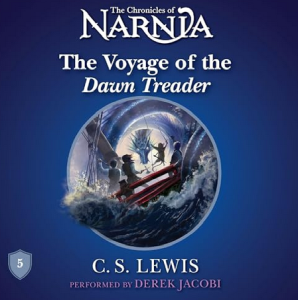
(4) The Chronicles of Narnia, C.S. Lewis. I only read The Lion, the Witch, and the Wardrobe as a child, but a few years back I decided to read the entire series and delighted in almost every one. (The Magician’s Nephew is still my least favorite, but I enjoy it well enough.) I was especially blown away by the last books, The Silver Chair and The Last Battle. Two favorite quotes from Silver Chair:

“We’ve got to start by finding a ruined city of giants,” said Jill. “Aslan said so.”
“Got to start by finding it, have we?” answered Puddleglum. “Not allowed to start by looking for it, I suppose?”

“I’m on Aslan’s side even if there isn’t any Aslan to lead it. I’m going to live as like a Narnian as I can even if there isn’t any Narnia. So, thanking you kindly for our supper, if these two gentlemen and the young lady are ready, we’re leaving your court at once and setting out in the dark to spend our lives looking for Overland. Not that our lives will be very long, I should think; but that’s a small loss if the world’s as dull a place as you say.”

(5) The Joe Pickett series. This is straying a bit from my definition of “finished” series, especially seeing as a new book is scheduled for next year already, but I do find the books deeply enjoyable. Between the outdoor setting and the strength of the various characters, it’s the standout of the year for me.

(6) Sharpe, of course. I’ve been marching with the rifleman for….fifteen years and haven’t gotten tired of him since.

(7) Port William. There is nothing quite like visiting Wendell Berry’s farming town, whose story has been told by multiple characters across the decades. Speaking of, Marce Catlett is being released today!

(8) California Diaries, Ann M. Martin. This was a middle-school series following five friends’ lives across the course of a year via their journals that I loved so much I revisited it last year.

(9) The Black Widowers series. Every month, several professional men get together in a New York restaurant in a private room to enjoy dinner, conversation, and — a mystery, presented them by the guest of the month. While I enjoy these for their puzzle elements, frankly I delight in the conversation and argument between the memorable guests.

(10) Ben Kane’s Richard the Lionheart series.

Posted in General | Tagged , | 26 Comments

Merlin’s Tour of the Universe

This is a book I’ve been meaning to read for years, though the only thing I knew about it was that it was authored by Neil deGrasse Tyson. Tyson is the director of the Hayden Planetarium and a public advocate for science, with a podcast. Merlin’s Tour of the Universe isn’t a regular monograph, but rather a collection of questions and answers via newspaper. Tyson answers through his alter-ego Merlin, who is evidently quite old. The book is rather dated on some facts, of course, and some views: Merlin sees no threat to Pluto’s planetary status at all, while NDT himself caused a stir by removing Pluto from the hall of planets even before the astronomy cabal had exiled it into the outermost darkness of “dwarf planets”. The book was published in 1989, so this is no surprise — though realizing there were no identified planets outside of our solar system at this time was a bit weird for me. Generally, I enjoyed the format and the content, though there were some oddities like Merlin declaring that Earth should not be capitalized because it wasn’t named after anyone, unlike the other planets. Merlin may be a space wizard, but as far as English grammar goes, he’s an orc: proper names don’t need to have a person involved! The variety of questions was good, and gets better the more it moves away from Earth: I especially enjoyed Merlin’s attempt to explain why people can “see” the Milky Way while still living within the Milky Way via blueberry pancakes. (I am very partisan towards blueberry pancakes, however.) There are many perspective-rattling questions here, and some amusingly dated, like debates over when the Millennium began. Ah, for a world when 2001 was thought of as only the “real” date the New Millennium began. Now we live in one in which when Tyson proposes readers get together at a certain spot in New York City at a certain date in 2018, I had to Google Maps it to see if the place still existed or had been removed by jihadis. Despite this book’s age, it has its charms, especially Merlin’s penchant for responding in poetry..

Here is one such poem:

Mercury has no moon, and
Venus does not, it is true.
But Earth, of course, has one, while Planet Mars, take note, has two.
Mighty Jupiter, by jove,
Displays sixteen moons—what gall!
But Saturn sets the record
With seventeen —large and small.
Uranus has quite a few
With its fifteen moons in thrall.
Neptune’s eight, and Pluto’s one
Tallies sixty moons in all

I had ChatGPT “update” the poem thusly:

Mercury has no moon, and
Venus none as well, it’s true.
But Earth, of course, has only one,
While Mars holds tightly two.

Mighty Jupiter, by Jove,
Parades ninety-five in all!
Yet Saturn tops the table—
One-forty-six, large and small.

Uranus has twenty-eight,
In Neptune’s thrall are sixteen.
And Pluto, classed a dwarf, has five—
Its family can be seen.

So tally them together,
This grand celestial run:
Nearly three-hundred moons we know—
And still we’ve just begun!

Quotes:


Dear Merlin,
I don’t understand how a black hole could become so dense that
it could be the size of an atom
Erin French
Lansing. Michigan

Dear Erin:
Neither does anybody else.


Posted in General, Reviews, science | Tagged , , , | 8 Comments

The Best of Oct ’24 – Oct ’25’s Teases

Three years ago, I started posting Tuesday Teasers after a long period of dormancy — so long, in fact, that the original host of it from 2009 was no longer around. After a year of consistent teases, I shared my top ten favorites; I forgot to do that last year, but this year I’m on top of things! So, here are ten of my favorite teases from October 3rd, 2024, til today.

“Imagine it — to be the King-Emperor of nearly five hundred million subjects and to be able to locate the twelve dullest, then gather them together around one table. It takes a special kind of genius.” (Precipice, Robert Harris)

“I’m guessing you didn’t slip a sedative into my drink and drag me all the
way out into the boondocks and drape me from a tree just to discuss, I don’t
know, philosophy. ’Less you have, in which case I apologize for misreadin’
the situation. It’s just, you don’t look the philosophy type.” (Firefly: Life Signs)

[Our friend] arrived late because he’d been arguing with a man selling red T-shirts with pictures of Stalin on them.
“Do you realize,” he had said, pointing at the merchandise, that this is the greatest mass-murderer of the twentieth century?”
“Don’t blame me,” said the man, “I just sell T-shirts.” – Paul Kingsnorth, One No, Many Yeses

Observation can tell more about the observer than about the environment being observed. It reflects the values, beliefs, and worldview of the witness. We see through the lens of our interests, and understanding. […] Hiking with a birdwatcher is quite a different experience than hiking with a geologist — one points out the flicking wings of a Ruby-crowned Kingler, the other notes the lavender glint of Lepidolite mica. Neither may notice the changing cloud formations that spell tomorrow’s snow. […] What we see is largely who we are and what we have learned to see. There is no such thing as an objective observer.” – “Eyes Wide Open”, What We See: Advancing the Observations of Jane Jacobs

“Do you have a birth certificate?”
“No.”
“May I ask why not?”
“I was a baby. I wasn’t in charge of the paperwork.” (Camino Ghosts, John Grisham)

“When you’re sneaking up on somebody, you might consider keeping your voice low,” Wacey hissed as McLanahan approached. “It’s an old, sly Indian trick.” – OPEN SEASON, C.J. Box

“What do you mean you shot him and then HIT HIM WITH A FISH?!” THE DISAPPEARED, CJ Box.

“Harris dashed forward only to have another mine shred his abdomen and legs; after flicking grenades into a line of pillboxes, he sprinkled sulfa powder onto his protruding intestines, cinched his web melt to keep the innards in, and wandered down to the beach to find a medic.” THE DAY OF BATTLE, Rick Atkinson

“You don’t want to get mixed up with them,” Joe said. “They’re bitter and they’re well armed and they hate the feds.”
“They sound like my kind of guys,” Nate said. THREE INCH TEETH, C.J. Box

“The way they tell is, the whole place is full of intransigent locals who don’t respect their authority.”
“Probably just me,” Joe said. THREE INCH TEETH, C.J. Box

There’s a reason I read the entire Joe Pickett series through in two months!

Posted in General | Tagged , | 2 Comments