
Here we are at the end of another year. After the distressing takeover of fiction in 2024, I was determined to not let that happen again. Then entered CJ Box, whose 26-strong Joe Pickett series lassoed my intentions off their horse and carried them into the wilderness where I was happily lost for several months. Nearly all of April and May’s reading were CJ Box, and I almost got sucked into another game warden series but was saved by the fact that my library doesn’t have as many Doirons as it does Boxes. In all, it was a strong and I think varied year, with chaotic alt-history, Grease, and crime mingling with my usual staples.
I began the year with great aspirations. I was going to tour Europe through history books, learning about the days when Sweden and Poland were major players. I was going to finish my second Classics Club—and I was going to re-read a bunch of books that were formative for me to see how another decade of life had changed my perspective. I read exactly one book in the Grand Tour, forgot the Classics Club list even existed, but did re-read a few titles. Not the main one I’d intended, Death and Life of Great American Cities, but I’ll take the pitches I can get over the plate.
Blogwise, I’m generally pleased with my activity as a scribbler: I reviewed virtually everything I read, I don’t think I missed a single Teaser Tuesday/WWW Wednesday, and I began experimenting with a feature called Saturday Shorts that last about as long as many other features I’ve played with over the years. I’m still divided on it: I liked the idea of featuring short stories on occasion, but it’s also been my habit the last few years to withdraw from the blogging world on weekends to focus on that ‘real life’ thing people still talk about. Maybe as a monthly feature.
Top 5 Most Highlighted Books:
Against the Machine, Paul Kingsnorth.120 highlights
Provoked: How Washington Started the New Cold War with Russia, Scott Horton.87 highlights.
Man of Iron: The Turbulent Life and Improbable Presidency of Grover Cleveland. 50 highlights
Friends Divided: John Adams and Thomas Jeffferson,36 highlights.
The Light Eaters: The Unseen World of Plant Intelligence, Zoe Schlanger. 32 highlights
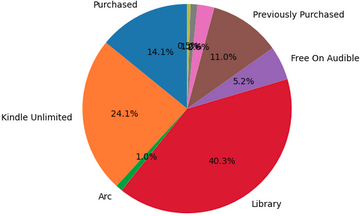
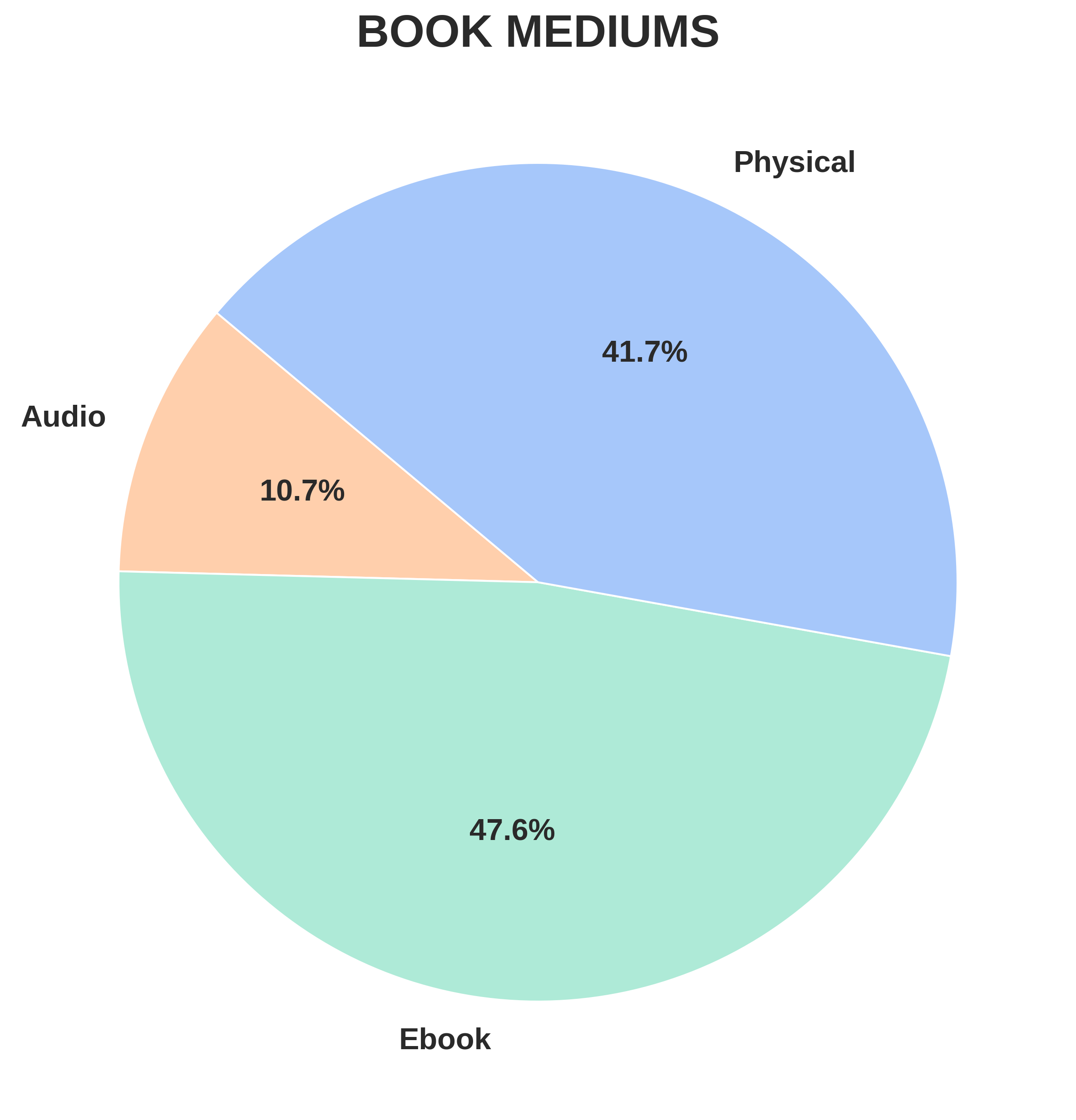
Fun With Pie


History
History had a strong year, with well over FIFTY titles by itself and closer to seventy if biographies are included. That’s not unusual: history is typically queen of the stacks, nonfiction or otherwise. An early standout for me was Susan Besser’s Selma: An Architectural Field Guide, which gave an architectural analysis and history of hundreds of buildings in my city’s historic business and residential districts. Given that I’m a local history librarian, this was both a godsend and something I was able to contribute to. The year’s early history offerings were mostly baseball oriented, a favorite being Memories from the Microphone, a history of baseball broadcasting. I listened to this as an audiobook and highly enjoyed the narrator’s impersonations of Dizzy Dean, a pitcher-turned-sportscaster. I also thoroughly enjoyed Ty Cobb, Charles Lehrson’s thorough biography of the great ballplayer. After that, it was fairly varied: the Mob in Cuba, Rome, medieval Europe, etc, and so on until I went on a Civil War binge the last two months of the year. The highlight of that, and a highlight of the year in general, was Battle Cry of Freedom by James McPherson, with The Life of Billy Yank by Bell Irwin Wiley not far behind it. I read several of Wiley’s social histories of the war after Billy. Biographies were a bit thing this year, even before my history binge in November and December: I had fourteen biographies for the year, including two other top-ten favorites, Benjamin Franklin and Gandolfini. The latter wound up guiding my movie-watching for the rest of the year as I began devouring Gandolini’s film presences.
Mysteries and Thrillers
Man alive, was I obsessed with CJ Box’s Joe Pickett series. I have never just married a series the way I did the Pickett stories, nor dedicated a post to raving about it. Joe is such a likeable character, I loved the storytelling that used the Wyoming landscape to full effect, and the books manage to hit all the emotions throughout the series. I also read some Paul Doiron, another game warden novelist, but held myself back to allow nonfiction to catch up. Expect more of him next year, though. Box got me to reading some game warden nonfiction, too. He’s one of those authors like Asimov or Cornwell who just completely changed my reading life the year I found them.
Historical Fiction
HF is usually one of my strongest categories, and after a strong start I thought it would be sitting pretty at year’s end. Then CJ Box happened, I think, and I was trying for the rest of the year to avoid fiction running away again. The year’s opening book, Sword Brethren, is the beginning of a most promising series – that of an English nobleman who is betrayed and forced to seek fame and fortune in Eastern Europe. That’s an area I know vanishingly little about prior to the 20th century, I’ll be looking for more by that author. 2025 also marked my returning to Steven Saylor after a long break, in part because I was in a serious Roman mood for a bit that led to me buying an enormous Augustus Caesar biography. I also returned to an old favorite, Max Hennessey, and read a couple of his aviation novels. Marce Catlett could fall in the area of historical fiction considering that it begins in 1907 and ends (I think) somewhere in the middle of the 20th century. It was another of my top ten favorites, another Port William story.
Science
Science started off with a bang, with three entries in January alone, followed in February by two more. And then, mysteriously in the late spring, it dropped off the radar and only a deliberate push in late December allowed me to finish the year with my head up and not hanging. Some of my ‘science’ titles were also not purely science – Storm of the Century and Bringing Back the Beaver – but they had enough science content to pass muster. Although Primate Made put up a good fight, I think The Light Eaters prevails as my favorite science book of the year. I am getting closer and closer to finishing Neil deGrasse Tyson’s works: I think the only one I’m lacking now is his entry on science and the military-industrial complex.
Science Fiction
SF was also weak, unless we count the Roswell High YA series that I re-read, in which case it had a strong year by the numbers. I listened to a few short stories by Arthur C. Clarke, but the only SF titles I’ll remember from this year are Husk and SHELLI: MurderMind, the latter being a sequel to the SF mystery-thriller I enjoyed so much last year. I also read Scalzi’s latest, though it was more of a lark than anything else. I’d expected a big boost in SF in November, but between a Narnia re-read and the Civil War, that did not happen. Relatedly, I only read two Star Trek books. I’m not sure how to account for the falloff: certainly the fact that fewer Trek books are being published helps, alongside the literal death of the extended litverse I loved so much from 2004 until the return of Trek to the screen. Now we’re seeing the return of The Aliens of the Week, which honestly makes me feel contemptuous. We had characters with history, alien races with histories and developed cultures, and now — now it’s back to Planet of Hats.
Politics and Civic Interest
This was an interesting category this year. I began it with Strong Towns: The Book, which I’d anticipated reading for a few years – having follower of the author for sixteen years now. I read a couple of titles on the Biden administration, neither of them compelling, and enjoyed digging into The Nixon Conspiracy. That almost kicked off a Nixon binge, as I have two Nixon titles waiting to be finished and keep eying Being Nixon on the shelves of my local indie bookstore. Midyear I began thinking about America @ 250 Reading, and consequently read a few more presidential biographies, my favorite being Man of Iron. And then there’s Paul Kingsnorth, whose works partially touch on politics, but more on him later. The big kahuna in this category, though, is Scott Horton’s Provoked, a history of DC-Russia relations since the ‘end’ of the Cold War. I listen to Horton’s podcast, so I thought I’d be familiar with most of the content….but brother, I didn’t know the half of what mischief DC has perpetuated in Europe. Here I thought it saved its chaotic energy for destroying the middle east! I have several drafts of a review and am still faintly hoping to I also took a deep dive into political history at the end of the year, studying the personalities involved in the sectional strife of the early 19th century that ultimately led to Civil War. That will continue into the New Year, I think, as I’m deep into a Tyler biography and am anxious to start on Chorus of the Union.
Paul Kingsnorth
“I want to know what’s real. I want to know what’s true. And I also want to know why the world is going mad.” Interview, New York Times.
Yes, he gets his own category, because he’s too singular a writer to be filed anywhere else. Imagine Wendell Berry refracted through Eastern Orthodoxy and the lived experience of a former political activist. After meeting Kingsnorth at a conference last year and hearing him speak about Against the Machine—which he described, without irony, as his life’s work—I went back and read his earlier nonfiction, even knowing he regarded those books as preparatory steps. Kingsnorth resonates deeply with me because he articulates questions I’ve been worrying at for most of my adult life. Like Berry, he writes powerfully about our alienation from creation and the personal, social, and political costs of that severance. Where writers like Neil Postman and Nicholas Carr focus on technology’s effects on attention and cognition, Kingsnorth pushes further, weaving those concerns together with Matthew Crawford’s insistence on our nature as embodied, working creatures and with Berry’s ecological and moral vision. His critique of “the machine” is not merely technological or political, but civilizational—and spiritual. He’s definitely my favorite discovered author of the last few years. His Against the Machine is on my top ten list for the year, but Savage Gods was a precursor that I liked enormously. One No, Many Yeses and Real England were also interesting, but not not a patch on Savage Gods or his ecological memoir from last year.
2025 was a big year for reading, and while I didn’t make progress in my goals, I had a lot of fun and am currently digging ever deeper into a “history hobbit hole”. That will continue into the New Year, especially since it’s part of my America @ 250 project, but the 19th century will lose its monopoly on my reading once the New Year hits. I always like for January to be a nice mix of subjects: on the off chance that anyone views my “What I’ve Read This Year” tab, I like to give them an idea of the chaotic variety here. As far as 2026 goes, I do not have any huge reading plans: America @ 250 will begin in earnest, and I’ll share more details about that in the days to come. It will be joined by my “fifth” year working on my second classics club list, as well as the usual science survey.

 Reading Freely
So how many books did you work through for 2025?
190. If I wanted to push today, I could make 191.
This verifies my suspicion that no one ever looks at my “WHAT I’VE READ THIS YEAR” tab. XD
Most people don’t. And I wouldn’t because I wasn’t expecting you to have them numbered like you do.
One year I organized by genre/category, but I found I disliked not knowing if I was keeping pace with my past selves.
I love the pie charts, but then I’m a bit of a geek 🙂
I know you prefer to read more nonfiction than fiction, but I hope you have a happy derailment in 2026 too. Because it is just so fun to find a new rabbit hole of books we must read.
Hah! This is true. 😀
Nice summary!
I like your blurb for each genre.
Here are my stats: https://wordsandpeace.com/2026/01/02/year-of-reading-2025-part-2-statistics/