
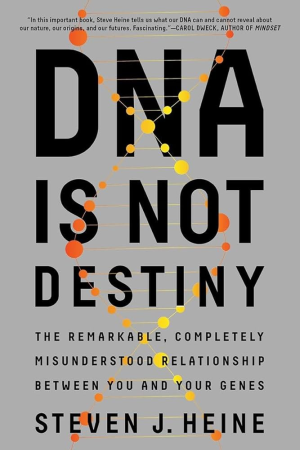
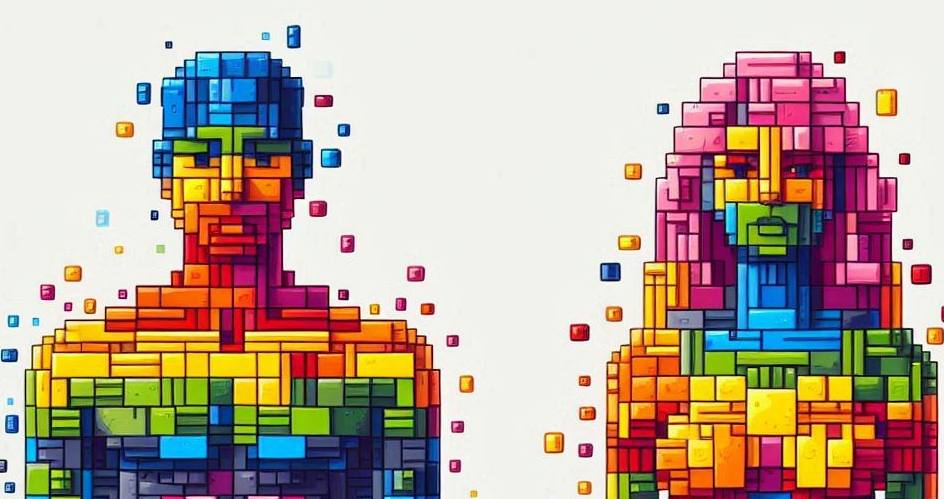
When I first learned about DNA, I formed a very elementary notion of it being a bit like lego blocks: this bit was the blonde hair, that gene was green eyes, that sort of thing. Later on, as I began my informal-but-earnest science education, I realized things were more complicated than that: DNA is just chemicals, after all, and it can react with other chemicals so that it’s not expressed the same way every time. There’s an entire science devoted to this, epigenetics. DNA is not Destiny was evidently written at least in part to the public fascination with commercially available DNA sequencing (23andMe, Ancestry, etc) and especially to the biological determinism, or ‘essentialism’ as Steven J. Heine puts it, that it was creating in its wake. Heine opens by the book by first explaining how complicated genetic expression actually is, and then examines a few topics like sexual orientation, race, and eugenics in the light of that complexity. The result is mildly interesting, but not provocative or memorable. The core lesson is that Gregor Mendel was absurdly lucky to have stumbled upon genetics by testing the traits he did, because they happened to be single-switch traits. This makes them a minority in the complicated world of our genes, since many traits depend on reactions from multiple genes (“polygenetic”) and many genes themselves are polytropic, i.e. when they’re active they have various expressions across the body. What is not covered is how the same gene can be expressed differently through in-utero clues, something that absolutely fascinated me in She Has Her Mothers Laugh. I could see this book as being useful to someone who has gotten a 23ndMe report and wants to know how seriously to take its summations: Heine advocates skepticism given that analysis of the same genes can vary from company to company, as what our genes make of us is extremely complicated, abd sensitive to an array of factors we still don’t have a full reckoning of. This was an enjoyable read, but for substance I’d greatly recommend She Has Her Mother’s Laugh over this.
Just for fun, I tried to get Bing Image Creator to make a lego-block human.

 Reading Freely
Genetics is indeed FAR more complex than we used to think. As you say, single gene actors are rare beasts. Things like intelligence, orientation (there is no ‘gay’ gene!) and much else is controlled by 5, 10, 50 genes…. It does mean, of course, that genetic planning and designer babies is going to be a LOT more difficult than originally thought. All those Sci-Fi tropes we know & love have gone up in a puff of genetically engineered smoke I’m afraid!
Fun stuff, isn’t it? Genetics is one of my fave read topics.
I don’t know how DNA works either, but I have personal experience of some of the effects of the genes of my parents. I inherited brown hair from my Mother (my Father and his siblings were all various shades of blond), but in addition I have turned gray very slowly like my mother and one of her two brothers. At seventy-five years and counting I have yet to go completely gray. This contrasts with Father’s siblings who all were gray much earlier.
One of my coworkers died in her mid-eighties without a gray hair to be seen — and she never dyed it.
One of my coworkers in my first job out of college was already turning gray in his late twenties. Also, Between my sister and myself, in addition to the hair coloring, I shared facial characteristics with my mother and one of her brothers while my sister looked more like my father’s side of the family.