
Lately I’ve gotten into the bad habit of getting almost to the end of the book, and then saying — “Okay, not enough of that to take to work, I’ll start a new one and then finish the other one tonight.” When tonight comes, of course, I’m busy trying to understand SQL and database organization or get to level one hundred in the Skull Caverns, so now I have a little stack of “80-90% read” books sitting on my desk. A couple of short rounds, though:
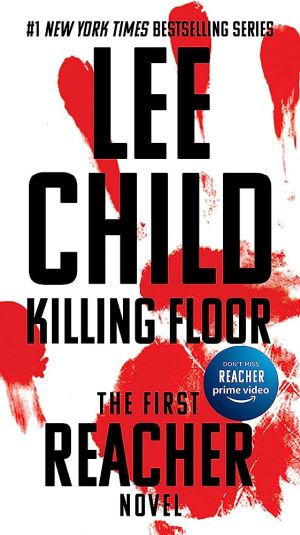
Someone or something suggested that I would like the Jack Reacher novels by Lee Child. I can’t remember the source, oddly, but the premise of Killing Floor immediately drew me in. A man with a mysterious past disembarks from a bus and walks fourteen miles to a small Georgia town in the middle of nowhere, one that’s oddly well kept-up, and is immediately arrested after he orders breakfast at the local diner. The reader quickly gathers that Reacher is a man with formidable talents, especially in the realm of security, investigation, and combat. Reacher is accused of being involved in a murder outside of town, but fortunately for him one of the cops is an outsider in the city whose own problems with the local establishment make him take Reacher’s claims of an alibi more seriously — but there are more reasons than his own safety for Reacher to take what’s going on in this little town seriously. I thoroughly enjoyed the character and the initial mystery, but there was one extraordinary coincidence that’s remarked on and never explored properly, and Child introduces a romance almost immediately that (as someone who is just meeting the character) I wasn’t particularly invested in.

Swiching to nonfiction, I also read through the short KU title Mass Killings: Myth, Reality, and Solutions. The title largely addresses mass shootings, and Hardy helpfully advises the reader of the particular FBI-rooted definition he’s using, one which is more concise than the sloppy “Whatever we can use to boost ratings” used by the media. Hardy compares mass killings in other countries and points out that one reason most people aren’t aware of them is because they don’t get broadly publicized. He then tackles misconceptions about shooters themselves, namely that they’re bullied and just ‘snapped’: in point of fact, most shootings are planned out for weeks, sometimes even months, and the perps tended to be the ones being antagonistic toward those round them. David Cullen’s Columbine dived deeply into both the shooters’ preparation and their personalities, indicating how deeply antisocial they were. Mental illness is ubiquitous among the shooters, who are often narcissistic, sociopathic, or both at the same time. Hardy also evaluates proposed solutions, favoring most the hardening of potential targets, and pro-active intervention in the cases of those who express violent contempt or the idealization of murder of those around them. He argues that even if every single one of the most common gun control proposals were adopted, they wouldn’t be efficacious, pointing to the number of shooters who were not legally allowed to possess arms yet obtained them anyway, through theft, deception, etc. Restrictions on magazine sizes would also be pointless, given the number of shooters who have brought multiple firearms with them, and restriction of certain firearm types would also do little given the sheer variety of firearms used, most of which are ordinary arms used in self-defense, from pistols to hunting rifles and shotguns. He also strongly admonishes the media for their role in the poisonous and symbiotic relationship in the rise of mass shooters: medias make narcissistic individuals into celebrities, attracting further malignant acts in the pursuit of infamy. Recent shooters have gone as far as mailing the corporate press what amount to press kits, with their screeds and video clips for mass distribution. If there was ever one just reason to ‘cancel’ anyone, it should be the perpetrators of mass violence: do not name them, Hardy writes, and never, under any circumstances, share their manifestos. Why do the the press make sure we know the names of the murderers, but not those of the fallen?

 Reading Freely
I haven’t read any Reacher/Child novels but *really* enjoyed the 1st series of ‘Reacher’ on Amazon Prime. Looking forward to the 2nd series.
As to Mass Shootings…. Did the author propose anything other than not mentioning the shooters name? Or did he throw up his hands and say ‘price of Freedom’?
The author had several proposals, from reform of mental health laws that have led to increasing problems since the 1980s, coupling that kind of intervention along with paying attention to those who espouse violent idealation, along with the hardening of targets — guards who are not unarmed fat guys browsing reddit, for instance, etc.
Did he say anything about the significant disparity in numbers of incidents between US mass shootings and other western nations? Because although the US isn’t the only place where these things happen it is rather an outlier in them… and the last time I checked we all have similar “mental health issues” etc in common…
He uses “mass killings” for a reason, and compares US data to multi-kills in numerous country countries. Handguns, rifles, etc do not possess people and say “Go forth and shoot me”. Given how much of the population was armed and trained to be so immediately after WW2, for instance, it’s clear to me that shootings are a social problem, not a gun problem.