When Neil Shubin was a young biologist, he got his start looking for fossils in the poles, where now frozen wastelands were once jungles teeming with life. Doing science at the poles is uniquely challenging and physically demanding, sometimes to the point of being life-threatening. Here, Neil Shubin remembers and records his and others’ forays into the Artic and Antartic regions, where amid savage winds and persistent gloom scientists seek to advance our knowledge about Earth’s past, present, and future. A mix of memoir, history, and science, Ends of the Earth is an interesting frozen sundae of science topics: hydrology, geology, oceanography, and climatology which could have got even more varied had it mentioned the IceCube Neutrino Observatory in Antarctica.
Shubin’s other works have been tightly focused, but this one is more loose as we bound back and forth between the two poles and the topics between them. There’s a lot covered here: Shubin’s memoirs from his own polar visits, where he learned how to survive amid the brutal cold and offers tips for aspiring Shackletons; the history of Antarica, Greenland, and the Artic’s exploration; reviews of how glaciation was discovered to work, and how glaciers have shaped the landscape; and ruminations on what the shrinking of the ice caps holds for us, past and present. There’s also a bit of Artic politics, since the north pole is ringed with nations, some of whom have missiles pointed at each other constantly. I was amused to learn of a dispute between Canada and Denmark over a lifeless rock called Hans Island: evidently they would take turns planting their respective flags and leaving a bottle of whisky or schnapps to make good the claim. I find Antartica particularly fascinating given its varied landscapes, but despite liking Shubin and enjoying the book well enough, it never pulled me in the way I expected.
WHAT have you finished reading recently? Um…Bloodlands, from a week ago. (I’m reading, I promise, I’m just reading too many things at once.) I also finished reading And Then You Die of Dysentery, but I don’t know if that counts given that it’s basically a bunch of pixel art memes for aging millennials. Gift from the ladyfriend that was a nice palate-cleanser after Bloodlands.
WHAT are you reading now? Oh, boy. Well, there’s the book about WW2 Lisbon, which is interesting enough but not as unputdownable I’d expect a book full of spies to be; The Ends of the Earth which is about science at the poles; and a galley proof of A Field Guide to Selma Architecture, which I helped in some of the research. I have also been reading What We See: Advancing the Observations of Jane Jacobs, by various authors.
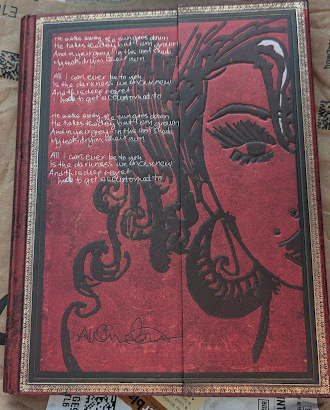
WHAT are you reading next? Hmmm. Well, these just arrived in the mail for the Great Re-Read! (The red book is Cathedral, Forge, and Waterwheel: Technology and Invention in the Middle Ages. )
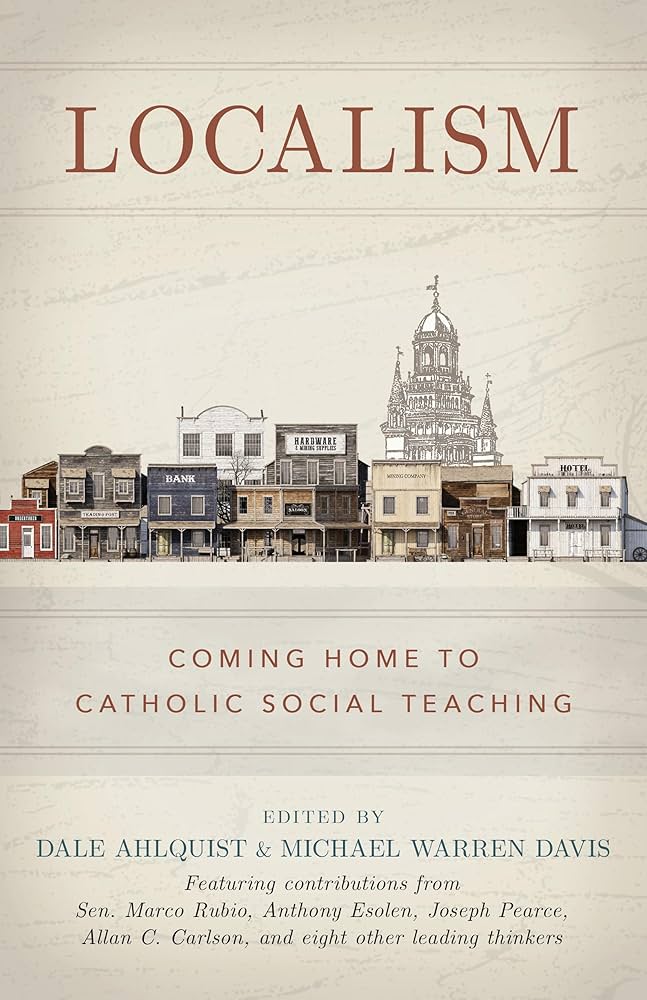
Today’s prompt from Long and Short Reviews is ….”What to read if you want to understand ____________”. So, let’s say you want to understand why postwar American cities look like asphalt vomit with chunky bits of Dollar Generals and McDonalds boxes mixed in, instead of cities that we’ve been building since the concept of building things near each other struck Grog and Ugg way back when, then there are three books I’d reccommend: James Kunstler’s Geography of Nowhere, which is probably the most accessible and funny; Suburban Nation, which is the most useful given its pictures; andCrabgrass Frontier, which gives more historical context.
Today’s TTT is a “love freebie”, so I’m going to go with substacks I “love” reading. But first, the tease!
Polar ice can take almost infinite shapes as it crystallizes, moves, and melts. The area around McMurdo Station exhibits this diverse world of ice in microcosm. The mountain ranges near McMurdo look like a dessert that would have pleased Rendu; the ice covers the mountains like a pure white syrup, filling canyons and valleys as it flows. Elsewhere ice looks like glass that has shattered into shards, strips, or chunks ranging in size from a small car to an entire skyscraper. The nearby sea is covered by ice that looks like a layer of foam at one time of year, a quilt of polygons at another, and a folded blanket at still another. Part of the awe of seeing a polar vista comes from imagining how a chemical formula as simple as H2O can underlie worlds of shape and movement that are almost magical in their variety. (The Ends of the Earth, Neil Shubin)
So, substacks! I’ve developed something of a substack addiction in the last few years and could probably spend an entire day doing nothing but sipping coffee and reading there. It’s a fascinating platform, especially because it’s easy to find commentors’ blogs and the fact that substackers frequently write about thoughts inspired by others, creating an unfolding conversation. I’d like to use today’s freebie to share ten of them: not necessarily my top ten favorites, but an interesting cross-section.
(1) GIRLS, Freya India. GIRLS takes as its subject the effects of social media and the digital world on young women — Gen Z women like herself. She has written some of my favorite articles on substack, period, like “What’s Become of Us“. Her archives are really interesting stuff. Freya has done interviews with other substackers I read.
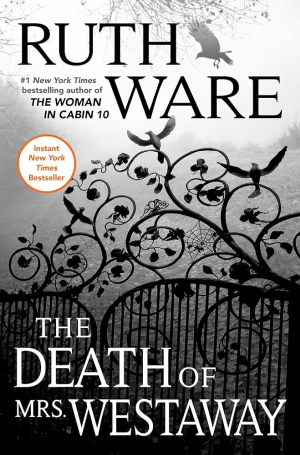
(2) Rod Dreher’s Diary. This substack began as Dreher’s musings on religion, beauty, and culture, and later began including political pieces after he left the magazine he edited to move to Europe. He’s an intense, thoughtful writer who I found fascinating twelve years ago when I first stumbled on his writing. Dreher has to be the best-value-for-money on substack, because he posts every single weekday and sometimes on a weekend if he’s reading something interesting and has to share insights from it. His posts can be long, with a reflection that incorporates multiple books: yesterday’s post, for instance, drew on Hannah Arendt, Robert Putnam, Mary Harrington’s substack, and The Triumph of the Therapeutic.
(3) Word and Song, Anthony Esolen. This one is unique in Esolen’s approach, which is not to sound off on things in the news, but rather contribute to the preservation and restoration of culture by sharing music, books, poetry, and films which are especially beautiful or have something to say to the human heart – and he reads the poetry! Esolen is one of my favorite authors because he is so saturated with western literature.
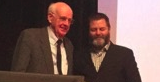
(4)The Abbey of Misrule, Paul Kingsnorth. Kingsnorth edited a collection of Wendell Berry’s essays, and is a fellow critic of the inhuman and unsustainable industrial system, and the culture it creates to maintain itself — something he calls The Machine. When I began looking into him, I found his most interesting substack, an ongoing critique of industrial modernity from an Orthodox perspective that’s very nature-oriented. Paul Kingsnorth recently was one of the guests at a conference in Birmingham called Resisting the Machine, and is featured on the left above, with Rod Dreher on the right — I was sitting in the back near the coffee machine, hence the muddled photo)
(5) Pilgrims in the Machine, Beth McGrew. This substack’s subtitle is “Being human in the age of acceleration”: it touches on culture and simplicity. (A….lot of my substacks have a ‘humanity vs modernity theme…)
(6) Mary Harrington, aka “The Reactionary Feminist”. Harrington is the author of a book called Feminism against Progress, which I need to reread and review; in it she scrutinizes and attacks the sexual revolution and all that followed from a feminist perspective.
(7) Urban Speakeasy, Andy Boenau. This one is all about human-oriented urbanism, transporatation, etc. His most recent post is an open letter to the next HHS secretary that points out the health minefield created by America’s awful awful awful awful awful awful auto-oriented urbanism.
(8) Aaron Renn. As with Kunstler, this is an author I began following long before substack was a thing: I’m not sure how I encountered him, but when I began reading him his principal subject was masculinity, modernity, and Christianity. That’s still the core of his writing though he’s expanded a bit over the years, and has recently published a book called Life in the Negative World.
(9) Sean of the South. Sean Dietrich is a southern humorist whose pieces are often heartfelt articles on people who find joy amid pain and suffering. He’s the author of numerous books, too, from novels to memoirs and essay collections.
(10) The Free Press. Started by Bari Weiss, this is a platform for a host of indie journalists that doesn’t skew toward one ideology or another. It’s nice to get thoughtful reportage, including critical or investigative writing, that doesn’t go into histrionics or exhultation over the subject.
On a scale of 1 to 10, how demoralized, depressed, and soul-dead do you want to be? Ten? Well, have I got a book for you! 1Bloodlands: Europe Between Hitler and Stalin examines the grim fate of Eastern Europe from 1933 to the death of Stalin. Beginning with Stalin’s imposed famines on Ukraine, moving through the Great Terror, the devils’ alliance in which the two dictators divided Poland between themselves and began butchering its people, and then Hitler’s attempt to create an invincible European empire by attacking the Soviet Union, at the same time mass-murdering millions. It is six hundred pages of murder, inhumanity, ideology, and insight — and while well worth reading, readers going in should brace themselves for its inhumanity, which begins with the evil systems themselves and then spreads to former victims.
Bloodlands is an interesting book, both in the horrors it captures and the way it integrates them into broader European history as a whole. Snyder writes that people tend to treat the Holocaust like something separate, a unique tangent that Hitler went on that was unrelated to any other part of European history — and that comparatively little is said about the Soviet death tolls, in large part because of the fall of the Iron Curtain and the inability of Soviet historians to say anything that would rebuke the Stalinist regime. Not only does Snyder look fully at Stalin’s famines, the great terror, and other mass killings from the Soviet side, but he fits them into the perspective of what Stalin was trying to create and what powers he feared. Despite knowing about the Russo-Japanese war of 1905, I’ve never considered how sharply Stalin feared more expansion from Japan in Asia, let alone that he viewed a Germano-Polish-Japanese encirclement as a very real threat to his dominion. The same is true for Hitler, though as mentioned the west is far more familiar with the Hitlerian death toll than Stalin’s. Even so, Synder reframes the western understanding of Hitler’s hateful actions toward European Jews. Stalin followed up on this sadism with the Great Terror, which began as a way of purging anyone who wasn’t behind Stalin’s interpretation of Marxism, and his regime, but expanded to persecute ethnic minorities. Things would get worse, though.
The Molotov-Ribbentrop act shocked the world, declaring nonaggression between Nazi Germany and the Soviet Union. Each was the long-avowed ideological enemy of the other; each drew life from hating the other and blaming it for all the world’s ills. And yet it had a purpose soon exposed, for the two unions soon divided up Poland between themselves, and there the blood truly began to flow as both powers attacked Poland’s intelligentsia, making sure the occupied territories were deprived of leadership. It was during this period that the Katyn Massacre took place, a mass shooting from the Soviets that murdered more than 22,000 Jewish Poles. Now, however, Hitler threw his hat into the running for the most homocidal man in European history. Hitler, having been isolating Jews from Reich-controlled society and shifting them to concentrating camps — decided that the Final Solution would no longer consist of expelling Jews from the Reich, but exterminating them even as the German army suddenly attacked the Soviet Union and its conquered territories like Ukraine. Synder points out that there is a difference between concentration camps and death camps, and that virtually all of Hitler’s “death factories” were in the Bloodlands: he intended, after the defeat of Stalin and the Soviet Union, to depopulate an area of as many as thirty million and then de-industrialize it, focusing instead on agriculture to feed the Reich. The enormity of Hitler’s demonic hate for the Jews was made manfiest in the fact that even while the German armies were actively retreating from the advance of the Soviets, Jews in cities that were about to conquered by the Soviet army were urged to take trains to “safety”. Those who took the chance were gassed.
It is in the back and forth between the Nazi and Soviet powers that this book truly waxes horrific, because we are witnessing the same people being murdered and brutalized by two different powers, both hateful against minorities despite the fact that one of them was ‘internationalist’. (At Yalta, Stalin would insist on making countries of the bloodlands more ethnically homogenous, forcefully moving Germans, Poles, and Ukrainians about to make it happen) Terror and death were constant, and in the end the victims became horrors themselves: German residents of Poland, for instance, were treated as enemy aliens and entire villages were raped — and these were not necessarily new settlers, but German-speaking Poles who had lived there for generations.
This is a….harrowing book. I stopped reading several times to focus on something else, just for a break. Snyder makes the text especially effective by opening up with a real person who lived, loved, laughed, and perished at the hands of these awful men and their collectivist cronies. This makes the horror personal, closing the door that might allow us to slip into the world of abstract statistics. But what makes it worth continuing through, though, is Synder’s thoughtfulness — both in trying to understand the way Stalin and Hitler were incorporating this evil into their attempts at creating some idealized empire, and in groping for what this dark part of European history has to say to us.
WHAT have you finished reading recently? Conversations with Carl Sagan, a collection of interview transcripts; and I’m within 30 pages of finishing Bloodlands: Europe Between Hitler and Stalin. It ends a bit like War and Peace, with an essay that’s connected to the foregoing book but is distinct.
WHAT are you reading now? Nosing into Lisbon: War in the Shadows of the City of Light, a history of Lisbon during World War 2. I’d also started looking at Lonely Vigil, a history of coastwatchers in the Solomons. Goodbye Darkness has kicked the year off with a WW2 mood, I suppose!
WHAT are you reading next? Very possibly Neil Shubin’s new release, Ends of the Earth: Journeys to the Polar Regions in Search of Life, the Cosmos, and our Future.
Napier Hall
Today’s prompt from Long and Short Reviews is, “A Story about a Memorable Friend”. Move-in day for my college dorms was a full weekend and a day before classes started, and I arrived at Napier Hall as soon as possible — eager to experience both the college town I would grow to love, and the wonders of high-speed internet. In my first weekend there, I stumbled into the same guy several times — literally, as we bumped into each other in the bathroom, getting breakfast at the “caf”, etc. We bought brought books to the dining hall and wound up becoming friends, despite very different political leanings: he was a Bill O’Reilly conservative, and I was an earnest and zealous progressive. We both loved history, though, and enjoyed arguing with one another other and a mutual friend, a Buddhist libertarian who liked cigars. (We’d stay talking in the dining hall until the staff were putting chairs up and giving us the stinkeye — boy, do I miss that.) Since we had the same major, we were in a lot of classes together. Although I’ve mellowed over the years, back then I still tended to be very formal and serious, and he had the kind of personality that would bring my own fun side out — so we’d do stuff like go on night walks through the town and parks, investigating stores that were still open, etc. Possibly my favorite memory stemmed from a running joke: we’d made up some organization called “The Elders of Napier”, some secret society that met in the attic and did secret-society things. I created a fancy letterhead, got a sheet of stationary, and printed an invitation to a meeting of the Elders of Napier and slid it under his door. My friend, having forgotten about the joke, took it to the RA (the student-supervisor who made sure no one was smoking pot or running a brothel out of their dorm rooms). I walked out one day to refill my water bottle and was shocked and hilarified to see my friend and two RAs holding the invitation in the hall and trying to figure out who these Elders were and how they had attic access.
We’d watch movies together, and I still remember the moment in Das Leben der Andern when we both yelled at the TV in shock that subjects of East Germany had their typewriters registered. Eventually we had a falling out when a political argument went too far, probably connected to the 2008 election — one I abstained from because Obama bitterly disappointed me as senator when he voted to renew the Patriot Act. A few years later, though, we reconnected on facebook and discovered to our mutual amusement that both our politics had changed and become more mutually libertarian and anti-state. Happily, though, we still disagree on enough that we can enjoy energetic discussions, only now we can’t bang on the table or gesture wildly for emphasis.
When I began trying to build my own worldview back in 2006, Carl Sagan’s books were instrumental in giving me a scientific orientation — and a scientific education. By the time he first appeared on the blog (November 2007), I was a rapacious enough fan that I’d read the overwhelming majority of his pop-sci books. For those who missed his time in the sun( he died rather young, weakened by a rare blood disease), Sagan was an astronomer and prominent science advocate who featured in the PBS show Cosmos, still an extraordinary watch today. When I spotted this book I had to give it a try: Conversations is a collection of interview transcripts with Sagan ranging from the seventies to May 1996, months before he died: they range, too, in tone and depth, as sometimes Sagan can go into more technical details (when being interviewed by science magazines) but on other occasion it’s similarly casual, as with his interviews on the Charlie Rose show.
Several things popped out at me while reading this: first, Sagan’s scientific versatility, as he had training in biology and chemistry and in fact did his astronomical work in that vein — trying to identify chemical compounds from the Voyager data. Two, although I’ve often heard that Sagan was poo-pooed by the scientific establishment for being a popularizer, these interviews also demonstrate that Sagan’s tendency to speculate and think out loud in public — on air, in columns, etc — grated them. They wanted him to do his imagination work in the presence of his peers, not the public — despite the fact that his charisma and imagination excited the public, too, and made him into a rare celebrity-scientist. Sagan used his high profile to advocate for better science education — no more football coaches teaching chemistry, please, and focus on the lab instead of textbooks — as well as speak on public policy issues that needed to be informed by science, like global warming and ozone damage. Sagan was particularly frustrated by the fact that, after the Cold War was over, the American government continued to sink so much of its GDP into the military instead of focusing on problems or investing in the future. Those familiar with Sagan won’t find any surprises here, especially not if they’ve read books like Pale Blue Dot and The Demon-Haunted World: the latter third of the book is dominated by interviews that were inspired by book launches there.
Although most of this was familiar content to me, it was nice to revisit Sagan after so long.
[T]he enormous amount of radio energy that we’re pouring out today is due to three sources. One is the high frequency end of the AM broadcast band, another is just ordinary domestic television, the third is the radar defense networks in the United States and the Soviet Union. Those are the only signs of intelligent life detectable on Earth from .a distance. It’s pretty sobering. It’s often asked, if there is extraterrestrial intelligence how come they don’t come here? Now we know. Just listen to what we’re sending out.
At the tin1e of the launching of Viking 1, Sagan wore two NASA badges, one identifying him as a scientist and the other as a correspondent for Icarus, a scientific journal he edits. It was as though he was having a hard time deciding whether he was a scientist or a writer.
“The Soviet Union has collapsed. The Cold War is over. Presumably we’re not obliged to invade lots of other nations.We can protect ourselves for a fraction of that $300 billion, and the money saved could do an enormous amount to solve many of our other problems.” (If only, Carl, if only….)
PT: Science saved your life. CS: This is not the first time I almost died. This is my third time having to deal with intimations of mortality. And every time it’s a character-building experience. You get a much clearer perspective on what’s important and what isn’t, the preciousness and beauty of life, and the importance of family and of trying to safeguard a future worthy of our children. I would recommend almost dying to everybody. I think it’s really a good experience. PT: Probably once is enough for most people.
PT: Coming as you do from a hard-science background, how do you think psychology is doing as a field? A lot of the issues in your book are big areas in psychology. CS: I’m not a psychologist. I don’t have a comprehensive surveillance of the whole field, so all I can do is give you an offhand impression. The thing I’ve been most appalled by is the sense of so many psychotherapists . . . that their job is to confirm their patients’ delusions rather than help them find out what really has happened. It took a long time to convince myself that’s what’s happening, but it certainly is happening.
We have a society based on science and technology, and at the same time we’ve arranged things so that almost nobody understands science and technology. That’s a prescription for disaster as clear as anything.
Today’s TTT is books we were excited to see released in 2024, but I read both of the books whose release I was looking forward to, so today’s it’s just a tease from Bloodlands: Europe Between Hitler and Stalin.
The logic of the Soviet system was always to resist independent initiatives and to value human life very cheaply. Jews in ghettos were aiding the German war effort as forced laborers, so their death over pits was of little concern to authorities in Moscow. Jews who were not aiding but hindering the Germans were showing signs of a dangerous capacity for initiative, and might later resist the reimposition of Soviet rule. By Stalinist logic, Jews were suspect either way.
That’s a…grim one. Let’s try again…
[T\he enormous amount of radio energy that we’re pouring out today is due to three sources. One is the high frequency end of the AM broadcast band, another is just ordinary domestic television, the third is the radar defense networks in the United States and the Soviet Union. Those are the only signs of intelligent life detectable on Earth from .a distance. It’s pretty sobering. It’s often asked, if there is extraterrestrial intelligence how come they don’t come here? Now we know. Just listen to what we’re sending out. (Conversations with Carl Sagan)
Every record has been destroyed or falsified, every book has been rewritten, every picture has been repainted, every statue and street and building has been renamed, every date has been altered. And that process is continuing day by day and minute by minute. History has stopped. Nothing exists except an endless present in which the Party is always right.
This is a buddy read with Cyberkitten! I distinctly remember reading 1984 for the first time in high school, as it was the most depressing thing I’d encountered since Flowers for Algernon. and yet it’s one I’ve returned to time and again — not for its plot, so much, as for the sinister world Orwell constructed, and the insights gained from studying it. I posted a review for 1984in 2013, so this will be a little more informal and muse-y.
I imagine anyone reading this knows the gist of 1984, but I’ll render it anyway just in case a Martian has added me to their RSS feed.A minor functionary in a police state whose name is Winston Smith works in the “Ministry of Truth”, which is more than a propaganda firm: it continually revises books and newspaper articles to comply with the reality dictated by the Party. Wheat harvest lower than predicted? No worries, we can alter the predictions retroactively and remove all evidence to the contrary. Winston’s role in actively manipulating ‘the truth’ creates a strong amount of cognitive dissonance and a deeply-buried hatred for the party that controls his entire life and the world around him. Rebelling, he begins a secret journal to write down his thoughts, to have something solid to look back on — and has encounters that make him think there’s hope for the future. Then, of course, hope is thrown into the woodchipper. The result is a deeply unsettling but perspective story that has cast a long shadow over the Anglo-American world, making it a modern classic and must-read.
I’ve read 1984 several times over the last 20+ years, and every time different parts of it have leapt out. My first reading simply would have been a depressing story of a man in the clutches of an all-powerful state. The book improves with age, though — at least, the age of the reader. Later readings, as I matured, brought out different aspects. I noticed, for instance, that while people frequently make Big Brother dictator references, that misses something important: Big Brother is not a man, but the system: a system that controls every aspect of people’s lives, spying on them via Telescreens that propagate ‘news’ and issue orders. There is no Caesar to assassinate, but an network of cruel technocrats. I noticed, too, the sheer inhumanity and ugliness of this world: ugliness and inhumanity pervade this novel: goods are shabby, food tasteless, streets grey, faces pale and spiritless. People are experts in masking their faces so their emotions don’t give away doubt, confusion, or anything that’s not hatred toward the Party’s enemies. The one moment where something of joy and light enters the picture is when Winston is approached by an attractive woman who seems to know he’s a rebel-in-the-making, and they have a love affair beginning with a tryst in a field. The role of sexuality and nature here are a wonderful contrast against the joyless industrial machine Winston and the rest are caught up in. Sexuality has a similarly subversive role in Brave New World, as I recall — animal passion disrupting the cold command of the State.
Reading this in 2025 was an interesting experience: we all relate the insights to our particular political irritants. My political biography began with my opposition to the terror-war and the federal-corporate surveillance state it created, so when I read this in 2013 the aspects on surveillance were especially salient. That’s still incredibly relevant today, especially since Google and facebook appear to be more attentive than any Party official with a telescreen, hastening to muffle, smother, or outright block what they judge as thoughtcrime — Google even plays with its search results, astonishing given that Search is what it made its name on. Government surveillance can have only grown since 2013, and the beast on the Potomac has yet to forgive Edward Snowden for exposing its sins to the world. What stood out most this time, though, was the political control of language, which has been on full display the last decade or so — with sense thrown out the window. A world where math can be racist and women are reduced to “cervix-havers” is one consumed by nonsense and unreality brought to mind by “newspeak” and “doublethink”. The Ministry of Truth in 2025 might have an easier time of weaving unreality, given the sheer fluidity of the digital world, and the overwhelming amount of content generated. How difficult it would be for any person to hear a signal in the noise, let alone continue paying attention to it as Winston does here. Even if someone had documentary evidence of wrongdoing in the party (as Winston has, briefly) it could simply be dismissed as a fake.
I doubt this is my last time reading 1984: it is a genuine classic, giving new gifts every decade. Coming up next: Bloodlands, a history of Europe between Hitler and Stalin. So much mass murder by men with bad mustaches.
Quotes:
It was always the women, and above all the young ones, who were the most bigoted adherents of the Party, the swallowers of slogans, the amateur spies and nosers-out of unorthodoxy.
The horrible thing about the Two Minutes Hate was not that one was obliged to act a part, but, on the contrary, that it was impossible to avoid joining in. Within thirty seconds any pretence was always unnecessary. A hideous ecstasy of fear and vindictiveness, a desire to kill, to torture, to smash faces in with a sledgehammer, seemed to flow through the whole group of people like an electric current, turning one even against one’s will into a grimacing, screaming lunatic.
The Party said that Oceania had never been in alliance with Eurasia. He, Winston Smith, knew that Oceania had been in alliance with Eurasia as short a time as four years ago. But where did that knowledge exist? Only in his own consciousness, which in any case must soon be annihilated. And if all others accepted the lie which the Party imposed— if all records told the same tale—then the lie passed into history and became truth. ‘Who controls the past,’ ran the Party slogan, ‘controls the future: who controls the present controls the past.’
‘Don’t you see that the whole aim of Newspeak is to narrow the range of thought? In the end we shall make thoughtcrime literally impossible, because there will be no words in which to express it.
The hypnotic eyes gazed into his own. It was as though some huge force were pressing down upon you— something that penetrated inside your skull, battering against your brain, frightening you out of your beliefs, persuading you, almost, to deny the evidence of your senses. In the end the Party would announce that two and two made five, and you would have to believe it.
Not merely the love of one person but the animal instinct, the simple undifferentiated desire: that was the force that would tear the Party to pieces.
He wondered vaguely how many others like her there might be in the younger generation people who had grown up in the world of the Revolution, knowing nothing else, accepting the Party as something unalterable, like the sky, not rebelling against its authority but simply evading it, as a rabbit dodges a dog.
Every record has been destroyed or falsified, every book has been rewritten, every picture has been repainted, every statue and street and building has been renamed, every date has been altered. And that process is continuing day by day and minute by minute. History has stopped. Nothing exists except an endless present in which the Party is always right.
I’m one of those Millennial kids whose childhood had a BC/AD split. I was more or less oblivious to computers in the early and mid-1990s: though they were present in our elementary classrooms, none of my teachers used them. I remember once in maybe sixth grade there was a period where we used floppy disks to play some edutainment game that involved a barn. It was that same year (1996 or thereabouts) that my best friend G held a party at his house, and those who wanted to use the word processor program on his computer to type our book reports could: all I remember is a blue screen and white text. That night he showed off the modem and logged in to something that was …..a chatroom with medieval-fantasy visuals, I think? I’ve asked him about this and he can’t remember any specifics. The concept of the internet fascinated me, and two years later when my next-door neighbor moved in and we became friends, he and I would “surf the web” together, typing in websites we’d found on boxes and books (I literally kept a notebook to record URLs like scholastic.com and Whitehouse.com and boy did that last one teach me the importance of domain suffixes). As I remember, we mostly hung out in Yahoo chatrooms, because back then they were all that and a bag of chips. (Can I get an amen from the 1990s kids? After you crack your back and take your pills for the evening, I mean. ) In 1998 I dropped band to take computer classes because (1) I didn’t want to play the tuba, those things are huge but the director was a tyrant and (2) computers were coool. That’s probably one of the better decisions I ever made, because my ability to type and use keyboard shortcuts has much of the library-visiting public that I am a wizard. Anyhoo, it was either in late ’98 or late ’99 that my parents bought a computer, a Hewlett-Packard Pavilion.
(Not our model, but in the neighborhood.)
Although I enjoyed using computers very much, I was not an adolescent techie, so I can’t tell you anything about its specs. It was a Walmart entry-level machine, and the only thing I remember about it is that it had a 9-GB hard drive. I remember this because I quickly became a computer gamer, and it didn’t take long for me to enter “Oh, you want to install this game? You have to uninstall something else” territory. At first, we weren’t online, so the first few months were amusingly primitive. The computer came with Microsoft Encarta, which I was obsessed with: I would spend hours just reading articles, and then play the games that came with it. I was much awed by the panoramic photos included, and disappointed that I couldn’t access web links. Some things I could read, but not understand: I felt certain that Creedence Clearwater Revival sounded like some kind of event, maybe like Woodstock, but the program kept returning images of a band. (CCR would eventually become one of my favorite bands, once I realized they were the artists behind several ‘oldies’ I liked, and was able to explore their offerings via software like limewire.) My first proper computer game was Star Trek: Hidden Evil, which…..oh, boy. I’m very nostalgic for several Star Trek games from this period (ST Armada and STElite Force), but Hidden Evil aiiiiiiiiiin’t one of them. (Strictly speaking, SimCIty 2000 was my first PC game, but I played it on a Walmart display computer.) When we first got online, it was by using “free” ISPs like FreeI and Netzero: I remember the later because it made me listen to an Avril music video while dialing in. It’s software would limit the user to two hours per day, buuuuuut I figured out that I could copy the ISP phone number, then use Microsoft’s network program to dial in and enjoy internet with no Netzero clutter and no limits.
That Pavilion is the only machine I’ve ever owned (well, used in its case, since it was a family machine) that I wasn’t able to save the data off of. It “died” at some point and I was given a Medion computer for Christmas in either 2004 or 2005, which “died” in turn in 2009. (I say “died” because it was probably just a power supply issue, buuuuuuuuut I was young and knew nothing about PC hardware.) However ,that Pavilion introduced me to whole new worlds, both online and off: I got into game modding because of The Sims 1, exploring its files and realizing I could replace the default pajamas with downloaded “skins” (clothing) by giving the downloads a particular file name. It gave me confidence in using computers, in manipulating them to do interesting things. I have fond memories of using Homebuilder and Geocities to create websites: my geocities effort was just me and HTML, as I remember. (I still remember enough to impress my coworkers. And for my next trick, anchor tags! Ooh, la la!) I don’t think Gen-Z and Gen-A’s will be able to appreciate the sheer novelty of the internet: it was a different place entirely, a place we wanted to escape to rather than from. It wasn’t omniscient: it was this ethereal domain where we could explore, tinker, etc — not be drowned in ads and unfortunate tweets.
Supermarket Woman, 1996. Japanese comedy about a man with a struggling supermarket who runs into an old high school flame and, upon realizing she has Housewife insight into supermarket operations, hires her. Fascinating to see 1990s fashion in Japan.
Emilia Perez, 2024. An interesting crime…musical about a cartel warlord who hires Zoe Saldana to help him get sex-change surgery, hide it from everyone, and deposit his wife Selena Gomez and their kids in a new life. Four years later, the warlord is a charity guru who wants the kids back, so Saldana is called back into service and things go….awry. Lots of singing, some dreadful.
Wonka, 2023. A Charlie and the Chocolate Factory prequel that not only doesn’t suck, but is a scrumpdiddlyumptious prequel. Will probably be one of my favorite movies of the year.
Night of the Hunter, 1955. Robert Mitchum plays a seriously disturbed killer who acts like a preacher: while in prison for an evidently minor crime (stealing a car is a 30 day sentence), he learns of a man who robbed a bank and hid the money with his son. Mitchum, upon getting freed, and knowing that the bank robber is now hanged, decides to seduce the widow and see if he can’t find the stolen loot. The result is a disturbing but captivating crime-horror drama in which the preacher winds up chasing two children. Interestingly, Mitchum played another murderous parson in Five Card Stud. This was loosely based on a true story.
A villain defeated by…..Harmony!
Midway, 2019. An action drama about the early Pacific War, which begins with the assault on Pearl and culminates in the battle of Midway, in which the naval and air forces of the empire of Japan got a righteous comeuppance. Gorgeous visual shots, good acting. Dennis Quaid has an understated role.
Father Goose, 1964. Cary Grant plays a coast-watcher in the Pacific Theater. After trying to help a nearby fellow coastwatcher, Grant encounters a woman and a bunch of girls who he has to rescue. Hilarity ensues as they disrupt his whisky-soaked bachelor existence on the island.
Election, 1999. Reese Witherspoon and Matthew Broderick. Broderick plays a high school civics teacher whose best friend’s career was ruined by sleeping with a student, Reese Witherspoon — who is smart, ambitious, and into older guys. Resenting her for ruining his BFF’s life, and resenting his own attraction to her, Broderick recruits a football himbo to run against Witherspoon in the SGA elections, while simultaneously falling into an affair with his former BFF’s wife. Odd film: enjoyable enough, but none of the main characters were sympathetic and I was mostly watching it for the obvious humor of Ferris Bueller being a high school teacher, and the general presence of Reese Witherspoon, who Freeway has enticed me into liking. Also, I saw a computer in the movie that baffled me: it looked NOTHING like 1990s computers. Possibly a NeXTstation.
The Grand Budapest Hotel, 2014. A movie about a hotel concierge and his sidekick during the outbreak of WW2. PACKED with talent: Jude Law, Ralph Fiennes, Ed Norton, F. Murray Abraham, etc.
Man Hunter, 1986. Crime/suspense/horror drama about a serial killer known as The Tooth Fairy. Unfortunately, my two movie-watching buddies kept nonstop talking and arguing, so I missed a lot of the quiet moments, but got the general jist. Movie ends with a weird Baywatch style still — all pastels and upbeat music after two hours of grimness. One of two movies featuring Hannibal Lecter.
Desperate Living, 1977. A friend of mine was having his 65th bday party and he really likes John Waters film for some reason, so the rest of us endured this while he laughed and laughed. A schizophrenic wife and her panicky maid who has been stealing murder the wife’s husband and then run off to an outlaws camp in the woods, where a woman whose bad acting is only worsened by her teeth has proclaimed herself the Queen: the wife and maid room with a pair of women, one of which wants to be a man and is fomenting rebellion against the Queen. This is only slightly less trashy than Pink Flamingos, and that’s saying something. Presumably the worst movie I will see this year.
Lemony Snicket’s Series of Unfortunate Events. 2004. Still one of my very favorite films after all this time. Introduced the ladyfriend to it.
Eraserhead, 1977. Watched in honor of its deceased director David Lynch. I have no idea what that was about.
JAWS, 1975. Spielberg & John Williams on music. This was my first time. Enjoyed the superb use of camera angles and music; have never failed to like Richard Dreyfuss. Very effective suspense thriller.
Dance, Girl, Dance, 1933. Ladyfriend and I watched this thinking it was the 1940 version with Lucille Ball (her favorite), but the youtuber who uploaded it didn’t realize it was the 1933 original and not the 1940 movie with the original name. Given that the Hays Code didn’t hit until ’34, this movie features a lot of risque stuff: a couple “living in sin”, a man groping a woman’s chest, female actresses showing much more skin than one would expect, etc.
The Hangover, 2009. Four dudes go to Vegas for a bachelor party. Three dudes wake up in a hotel suite with chickens and a tiger. Oh! And a baby. Don’t forget the baby. A search for the fourth dude commences, limited by the fact that no one can remember what happened last night. (After they remember, of course, that they’ve left a baby alone with a tiger and several chickens.)
Legend, 2009. Tom Hardy plays the Kray twins, who ran London’s underground in the fifties and sixties.
Being There, 1979. A simple-minded gardener who has been raised in a townhouse and has never been beyond it is forced to leave after the Old Man of the house dies. He wanders the streets and becomes one of the most influential men in the world. Fascinating movie, especially the ending.
All the Way, 2016. A film about LBJ’s rise to power and his attempt to secure it via the 1964 Civil Rights Bill. Some amazing acting, especially from Bryan “Say My Name” Cranston.
Jesse! We gotta bomb Cambodia!
Star Trek: The Wrath of Khan. 1982. A re-watch, obviously. Still the best ST film. Great music, effect, acting, and story.
Star Trek: The Search for Spock, 1984. Unexpectedly funny, unexpectedly heart-wrenching. “My God, Bones, what’ve I done?”
Risky Business, 1983. Tom Cruise is a prep teenager whose parents have left him the house for a few days. After being encouraged by one of his friends to live a little, he winds up in hock to a prostitute, at war with Joey Pantoliano, and short one $40,000 Porsche. I have never seen Joey Pants with hair.