
My substack subscriptions have an obvious cluster concerning humanity and the machine — or more specifically, how modern technology, particularly devices and the omnipresent digital world, warp or distort humanity. I was fortunate to encounter The Shallows and Neil Postman’s corpus of work fairly early in my adult reading life, and combined they gave me a reflexive tech-skeptic stance when thinking about attention, memory, and cognition. I began attending to issues they brought up — like Carr’s observation that reading on devices tends to fracture our attention, by continually linking to other sources and sending us on so many mental detours that we’re apt to somehow find ourselves watching “toddlers talking to dogs” videos on Youtube through a long chain of digressions. Over the years I have tried to fight back against the internet’s effects on attention and memory by imposing discipline on myself — restricting the number of tabs I can have open, resisting the urge to click on embedded links when I’m reading articles, etc — and engaging in habits like poetry memorization that not only strengthen my mind but root me further in culture. That said, when I saw this post at School of the Uncomformed, I was like a dog happily beating its tail against the floor.
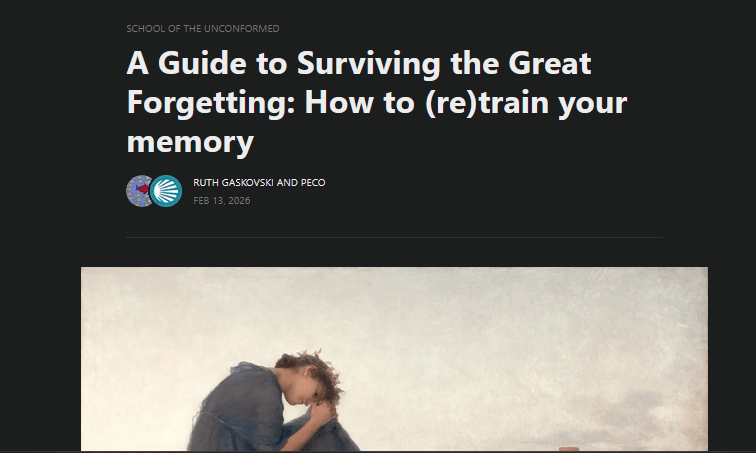
The article first reviews the problem of out-sourcing our memory to the digital world, then looks at ways we can practice and strengthen our ability to put things to memory. Some of these I’ve already adopted, like the deliberate memorization of poetry, but they go beyond the what and present the reader with the how. I am still struggling to master “Barefoot Boy with Cheek” and am looking forward to trying some of their tips. They also suggest memorizing speeches, studying visual art — physical art, not just digital mirrors of art, journaling, and storytelling.

 Reading Freely
Journaling, CHECK!
I’m good to go, Commander…
I find reading, and then REVIEWING, books really helps…