
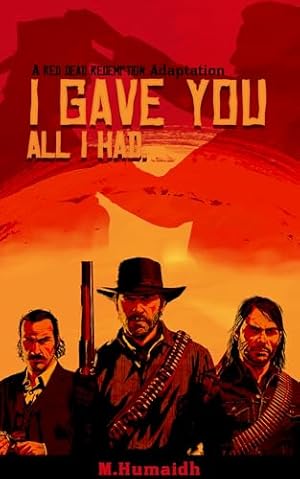
Dear reader, are you familiar with the “Mom can I have _______” | “We have _______ at home” | “_______ at home: ” meme? If not, this may give you the idea. I open this review with that ominous question because this book feels an awful lot like “RDR2 at home”: we have the same character names, we have the same towns. We have, in a very loose sense of the word, the same story — “the same story” in that it opens with the van der Linde gang running into the mountains to escape the aftermath of a botched ferry job, and ends with betrayal, bloodshed, loss — and a spot of hope. Beyond that, though, I wondered if the person who wrote this had even played the game, as characters and their scope of actions are wildly off the mark. Large parts of the game are bizarrely omitted or marginalized: in this telling, the gang descends from the mountains into Valentine, starts dealing deals with the Braithwaites (who live in another state, in an area of the country Dutch hates and only went into because of the Pinkertons chasing them out), and then mosies over to St Denis after a few fistfights to try to rob a prominent businessman as soon as they roll into town. Not only is this absurdly truncated and inaccurate, it’s nonsensical storytelling, with the gang knowing about people they haven’t met yet. I largely kept reading it out of morbid curiosity: as with Angels and Demons, an increasing part of the fun of reading this was yelling at the book. Some of this can be excused on the grounds that it’s an adaptation, not a novelization, so the same broad story happening through a slightly different chain of events is plausible. The mischaracterizations, though — John wanting to take Jack and abandon the gang when HE SPENDS MOST OF THE GAME DENYING JACK IS EVEN HIS — grated, and any story has to make internal sense, which this frequently does not. While I’m loathe to attack the work of an RDR2 fan, I’ve read better fanfiction.
Dutch grinned. “Opportunity, my boy. Trouble is just the name small men give to ambition.”
And he thought about the letter in his satchel. Mary’s handwriting still haunted the seams of his conscience. “You’re a good man, Arthur,” she had once said, voice trembling. “I just wish the world had let you be one.” As fireflies blinked across the brush and the sound of the camp drifted into the trees, Arthur Morgan rode on.

 Reading Freely