
A plague has destroyed much of human civilization, but in Texas, at least, there is a remainder. Before the plague and subsequent collapse, pioneering scientists had created a way for human consciousness to be transferred to a digital world — a playground, almost, where transferred minds could be and do anything they like, and be in connection with all other residents of the digital world Meru. At first, few people were interested, despite the fact the creator had transferred himself and his wife — at least, that is, until a new disease began killing pretty much everybody. People began fleeing the real world into the playground Meru in droves, creating a network of transfer stations across Texas and beyond. While the plague has long gone, “transferring” into Meru has become an adult right of passage — and Isaac is looking forward to his own Transfer, despite it meaning that he can’t cuddle his IRL girlfriend anymore. But then his closest friend Luke urges Isaac not to go through with it, that there’s something more to Meru and its inventor-administrator than meets the eye. After Luke takes drastic action to disrupt the transfer equipment, Isaac finds Luke’s self-sacrificing passion disturbing enough to wonder for himself — and finds himself in a world of trouble. Husk is an interesting SF mystery-thriller with a focus on the possibility of digital immortality/post humanism, and a memorable villain.
I thought at first this would be a book about the lure of digital worlds as an escape from physical reality, a bit like Ready Player One‘s use of the Oasis. It’s certainly easy to see why in a shattered world like that of Husk that people would want to escape to live in some fantasy, one peopled with their family and friends who had also become digital rather than human consciousnesses. Instead, it’s more of a thriller with lots of surprises, set in a daunting world of fortified tech-centers, sometimes connected to the ruins of former cities. Although these tech centers (Alpha, Epsilon, etc) have a shared background, they’re not in communication with one another, and in fact one is outright rebellion against the system that Isaac unwittingly finds himself a part of. Without drifting too much into spoiler territory, Isaac has a narrow escape and finds himself in the wilds where he finds friends and continues searching for answers, a search that will take him through more of this post-collapse world and into constant danger. The novel sometimes waxes philosophic about the nature of consciousness, but not so much the reality of death. Possibly the best element of this novel, aside from the Fallout-esque landscape, was the villain: I’ve tried to steer clear of anything spoilery, but imagine if Big Brother was a distributed machine intelligence, a bit like DAEMON . There’s added emotional weight in the book when Isaac is forced to confront those who think he’s betrayed them, or those he knows betrayed him.
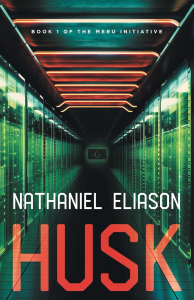
All told, this was a cool find. When I saw it at booksirens I clicked immediately because of the server room cover art, but the premise hooked me and I wound up reading it constantly. I’ll be looking for more from this author, but I understand this is his first novel.
Over time we realized that technology, including the bots, wasn’t really the problem. It was the total surrender to them, especially surrendering what made us human.
“If you only experience the world through a screen, it’s hard to say what world you’re really experiencing. Could be the real one. Could be one someone wants you to think is real. And besides, the best way to trap someone is to let them build the cage. Those walls…not just to keep people out, you know.”

 Reading Freely
Sounds FUN (without the sarcasm this time!)… I do like ‘Matrix’ type stories plus the post-apocalypse thing.. I see its the first book in a series too………….
It will be interesting to see where he tries to take the series given the events of this novel.
Sounds almost like a non-comedic version of that tv show “Upload”.
This sounds really good!
Pingback: All Systems Red, SFM #6, & Dune Two | Reading Freely