
It’s been a quiet week for reviews, largely because I’m nibbling on several books at once instead of committing to anything.
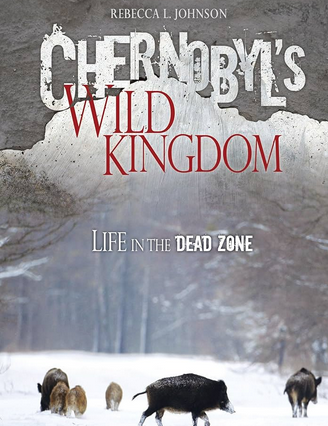
Chernobyl’s Wild Kingdom is, as I discovered upon laying eyes on it at the post office, a junior-level science book about how wildlife living in the exclusion zone around Chernobyl. (I was so delighted by finding a book on this subject I ordered it without looking into the details. Oh, well.) The book begins with a simple explanation of how reactor 4 exploded, one I’d say borders on simplistic but that’s coming from someone who’s read Midnight at Chernobyl and rewatches the Chernobyl series an unhealthy amount. Because the radiation was so deadly, people at the time assumed the Exclusion Zone would turn into a dead wasteland. Instead, even high-radiation areas like the Red Forest became home to an increasing number of animals, including species that had been marginalized by human development in other parts of Russia, Belarus, and Ukraine. How is life surviving and even thriving amid such high levels of radiation, in which the animals composed of radioactive nucleotides, having ingested them in the water, lichen, and grass? The answer is…we don’t know. The book looks at two species, voles and barn swallows, and both of them tell different stories. The voles may exhibit ‘radiohomeostasis’, in that their bodies have adapted to persistent low-level radiation by becoming more aggressive about cell repair, but nearby barn swallows often have visible tumors producing from their bodies. The author also mentions the giant catfish living in the lake that once supplied cooling water to the plant, but argues that the size owes not to radiation, but because this particular catfish species stocked in the pond is one that will naturally grow to a large size (eighteen feet!) when not exposed to aggressive predators (i.e. us). The book was interesting, but didn’t have a lot of substance. Still, can’t fault it for that given the intended audience.
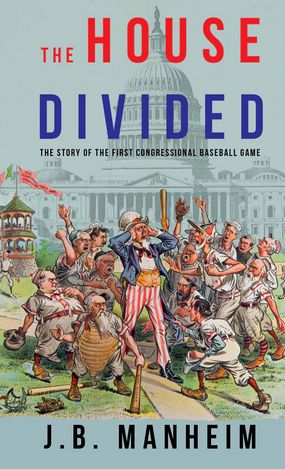
Next up was The House Divided, which is billed as a history of the first Congressional baseball game, is more a history of the fight in the house to get a tariff bill passed. The game was the idea of a former ballplayer turned Congressman, who saw it as a way to ease tension and increase rapport between the parties. I had no idea the Congressional ballgame was even a thing, so I enjoyed the book at first just for that novelty. but not even baseball can make tariff negotiations exciting. I liked the minibiographies of the Congressmen/ballplayers at the end, complete with their ‘statistics’. The cover is also fun!

 Reading Freely

I definitely grew up with the belief that a highly radiated zone, like around Chernobyl, would essentially be a DEAD Zone like you see in end-of-the-world movies. Seems that we were wrong on that! But it also shows how resilient life can be, even in very harsh circumstances. I don’t have anything in my TBR pile about life there (afterwards). I’ll look out for something when I finally get to reading about the accident itself!
Turns out my “A Nuclear Power Plant Was Here” forests in SimCity 3000 were truer to life than thought.
I guess that life, erm.. [dramatic pause] finds a way….
My favorite of his movies — though I’ve not yet seen “The Fly”!
Oh my. Chernobyl wildlife? A little worrisome to imagine the birds that fly through.
The book on Wildlife around Chernobyl sounds interesting. Thanks for bringing it to my attention.