Like most, if not all, Selmians, I was surprised and saddened by the sudden death of former Mayor George Evans. The mayor had been a figure in my life since I was a child, as he was the school superintendent and periodically addressed our classes through the years. Later on, when he served on city council and then as mayor, he was a breath of fresh air — serving as he did between two self-obsessed preachers whose egos brought them into constant conflict with the city council. Selma’s Mayor is part biography, part memoir: Egertson met the mayor during a tourist trip to Selma and was immediately taken with his graciousness, and put aside her disinterest in biography after he asked if she might be willing to aid him in writing his own memoirs. They worked together through coronamania, but he passed away unexpectedly before the book could be finalized. The book is thus a memoir by Eggertson about her collaboration with the mayor, their evolving friendship, and his life in service. When the book is focused on its subject — the Mayor — it’s a wonderful tribute to a man who embodied the motto “service before self”. It is slightly marred, however, by the author’s intruding self-consciousness: she’s so nervous about being a white woman writing a book about a black man that her feelings frequently get in the way of the subject.
George Evans grew up in the segregated South in a time when Selma’s black and white kids effectively lived in two worlds that only rarely bumped into one another. Raised well by a strong set of parents, the future mayor took even greater strength from his high school mentors, particularly coaches. He was a distinguished enough athlete that a Catholic university in Kansas offered him a full scholarship, which took him from the Gulf to the plains — and, for the first time, he was living and working with whites. Perhaps it owed to the Catholic university, or the fact that Kansas was 90% white and had never had enough inter-racial contact to produce conflict*, but Evans found that getting along with his classmates and teammates was easy — frictionless. It made him realize that racial conflict at home was not a preordained fact of life, but something that could be overcome. When he began entering into the workforce as a teacher, school integration was becoming the norm, and he would make good the lessons his teachers and coaches taught him to become a mentor to multiple generations of young people — rising through the ranks of school administration, and following the prementioned path of serving his city on the city council and then as mayor. One of the young people he mentored was Terri Sewell, one of Alabama’s future state representatives.
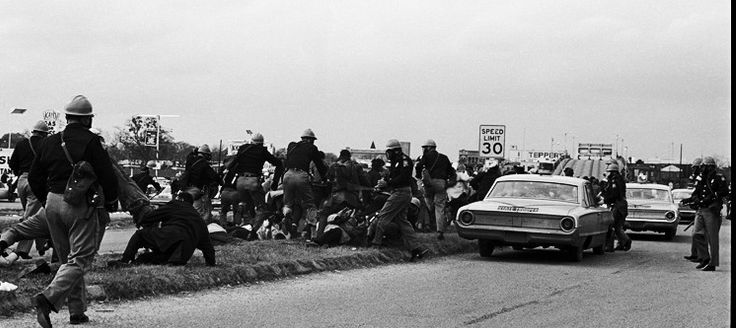
As a Selmian, I enjoyed most of this book enormously. I was fond of the mayor, not only from my school days but from his relationship with the library: even after he’d left office, Mayor Evans came to the library to read stories to children. His love for the city and its people, regardless of their race or politics, was obvious to me, and I liked seeing how it manifested itself in various ways throughout his long career here. Before the book was released, I had no idea that his education had been in Kansas, of all places, let alone a Catholic university. I also didn’t know that he was both a teacher and a referee, and drew on athletic mentoring his entire life to help foster senses of teamwork. I knew he was a force behind trying to revitalize the Riverwalk/Water Avenue area of town, but the book reveals even more interesting ambitions for the city. As much as I enjoyed the parts about Mayor Evans, though, the parts that were more author-centric were…tedious, and unfortunately this is not unique to the books I attended a booktalk by her last year, and far too much time was consumed with her biography when every one in the room was there to hear about Mayor Evans. It didn’t help that — being a local — I knew some of the people she was talking to and found her naive. She blithely accepts one lady’s claim to being the youngest person to be “attacked on the Bridge on Bloody Sunday”, which is false on two grounds: one, the woman in question was a teenager in the third march, and two, no one was attacked on the bridge in the first “Bloody Sunday” march. The attack happened when marchers attempted to begin marching on the state highway after a judge denied them the permit, but somehow “being attacked across the bridge” has become some a potent myth in the last thirty years. Similarly, she accepts the assertion that Selma’s incoming manchild mayor unseated Evans because of the “young white vote”, which is absurd given Selma’s demographics. (Selma’s white population is ~16%, and I’d venture to say the average age of white persons is between 50 and 60.) She does at least mention the economic factor, but not Manchild’s youth, charisma, and status as an attractive newcomer in a race filled with aging men who had either been mayor or been running for mayor for decades.
I wound up rating this 4 stars on goodreads, more of Mayor Evans’ sake than the books.
[*] With the somewhat obvious exception of Indian wars, of course…

 Reading Freely