
Today at lunch, I finished Battle Mountain and am therefore caught up with the Joe Pickett series. While it’s partially a relief to be able to read something else, I have rather enjoyed my habit in the last two months of settling in to a lawn chair after work and reading Pickett books for two hours or so before the twilight and bugs drive me back indoors — reading about Joe on the ranges as the wind blows the smell of honeysuckle all around me, birds and squirrels start winding things down, and the sun slowly sinks below the treeline. It’s one of those “If this isn’t nice, I don’t know what is” scenarios Kurt Vonnegut liked to write about. Since I am ‘finished’ with the series for now — at least until next year — I wanted to spotlight some of my favorite things about the series. Reviews of the series will roll out daily (save for Sundays) until May 6th.
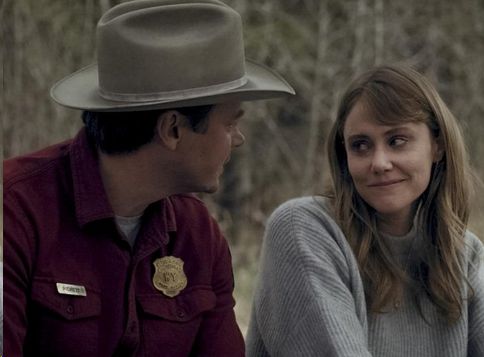
- Joe Pickett himself is a refreshing change, a genuinely good man who, while increasingly disappointed by the politics and corruption he witnesses over 20+ years, is still not a cynic. If one were to create an Alignment Chart for Pickett characters, Joe himself would be Lawful Good. Not only is he a good man to his core, so much so that he can’t bring himself to attack in cold blood a man whose actions would have made me rage in animal-like fury, but he’s also conscientious — lawful. His friend Nate calls him Dudely Do-Right, because he keeps himself within the bounds of the law, so much so that he once arrested the governor for fishing without a license.
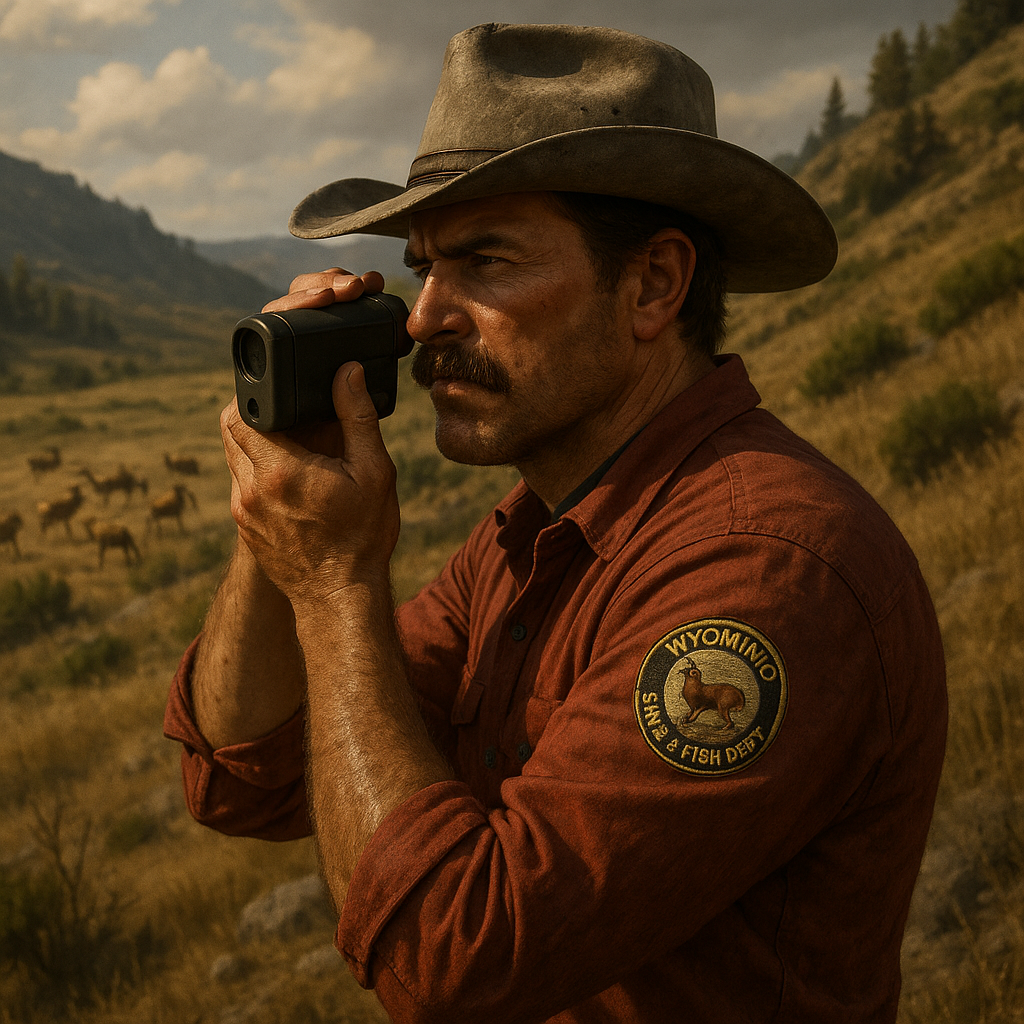
- The landscape of Wyoming itself — or rather, landscapes, as they change by season and region — are an active part of the plot and are often beautifully described by Box, and escaping into that world through words has been one of the pleasures of finding this series, even when the winter blizzards turn the outside world into a salient threat to Joe’s life.
- The relationship between Joe and his wife, Mary-Beth. Other series I’ve read with lawyers/detectives/etc always involved jaded divorcees or crusty bachelors, never family men. Joe and Mary Beth are a genuine team, though, supporting one another in ways that tests their patience — and as the years progress, Mary Beth shines as a detective of sorts, using her librarian magic to find information that allows the pair to make sense of the mystery Joe’s found himself in. I said the pair with purpose, because Mary Beth has the hunches as often as Joe does. Mary Beth is also a wonderful character in her own right, someone who builds a business for herself and shields her daughters from the worst aspects of their Grandmother Dearest.
- The general rural setting, outside of the landscape. This is my first time reading a mystery series that is set not in a metropolis like Chicago, New York, or Los Angeles, but rather in very rural Wyoming. Growing up in the rural South, this is a world I’m nonetheless familiar with: its characters are men and women who have callouses on their hands, whose jeans are dirty and sometimes stained with engine oil, whose boots are scuffed and whose trucks bear the signs of a lot of use. I liked being around characters who were used to fussing with fishing line, taking rifles apart to oil them, and so on — it’s not something I see in most of the fiction I’ve read, and the familiarity made it easy to really fall into this world.
- Speaking of, the fact that this series and its characters have literally grown over 20+ years made it all the more real. Although I was experiencing it in fast-forward mode, I loved seeing Joe and Mary-Beth’s kids grow up and become their own characters, overcoming their separate trials. Sheridan, especially, has emerged from the background to become part of the action. The girls all had very distinct personalities, too. The passage of time has seen Joe grow from being the new kid in town who everyone laughed at because he’d arrested the governor to becoming a game warden whose character and feats characters must take seriously — whether they admire Joe or loathe him.
- I found this series through an article shared on a library facebook page about how CJ Box had fostered a new wave of men reading by promoting his books through unorthodox ways: instead of doing booktalks at coffee shops and libraries, he cast his line where the fish were biting already: on sports and outdoors shows. The article highlighted that while the main character was a game warden — and a very by-the-book lawman — his antagonists were often the federal bureaucracy itself. Frustration with government bureaucracy — its incompetence, its arrogance, its remoteness from the lives it impacts, its perpetual ability to operate without accountability — is a running part of these books. That’s not to say that All G-Men are villains, because they aren’t. Joe frequently runs into federal agents of various organizations who are intelligent and well-intentioned, but sharply limited by policy and politics into doing stupid things. I stopped watching NCIS and other shows 15+ years ago or so because I disliked the hero worship of the technocratic police state, and Box’s more wary treatment of them is wonderfully refreshing.
- Connected to this is the way politics is generally treated in the books: a lot of the books will touch on issues of the day that affect Wyoming, like wind subsidies, natural gas mining, the release of wolves into the wild, etc — and have characters arguing about them in the book, even as the plot works its way out involving them. I liked that Box could reflect points from both sides. That hasn’t been as much the case in the more recent books, in part because they’ve been action oriented, and antifa has been used as useful-dumbs by the big bad, Axel Soledad. I say this not in defense of antifa, of course, they’re violent punks who I’d love to see on the wrong side of fight with the Hells’ Angels — but Box’s student mooks in the last book were real caricatures, complete with demanding that the violent psychopath they were about to follow into battle begin every meeting with a land acknowledgement statement. I enjoy laughing at that silliness as much as the next fellow, but Box’s books are much better when his antagonists have some meat on their bones.
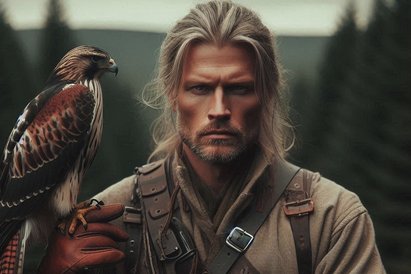
- Nate Romanowski. What a character. Nate is introduced early on as someone who keeps to himself and lives off the grid. He’s revealed to have a history in special operations, but had some falling out with the government and is now as much an anti-government libertarian as someone could ask for. Nate is a master falconer who uses his partnership with the birds of prey to keep himself fed. After Joe exonerates Nate early on, Nate pledges to protect the Picketts and becomes their close friend, nearly part of the family: Nate is known for his firepower and in the stories is used to move the plot through morally ambiguous — at least, certainly illegal — means that Joe couldn’t, and does his best to maintain ignorance of. Nate is intense, someone with a deep connection to nature that he facilitates by sitting naked in trees, or submerging himself in creeks for long periods so he can try to appreciate the world from a bird or fish’s point of view. Despite his intensity, and the tragedies that often emerge around him, he’s also sometimes the source of comic relief. Nate’s relationship with the Picketts — especially Joe, Mary-Beth, and Sheridan – is special.
- The general range of believable and interesting characters across 25 books. There are very few John Grisham characters I can remember much about, unless they live in Clanton and I’ve been exposed to them multiple times, or have re-read them. I think I’ve even mentioned in my Grisham reviews that some of his characters were such voids I would forget them the moment I posted a review. In Box’s books, though, numerous characters have remained in my head over the last two months, even if they’re long gone. Sometimes it’s because they’re positively weird, or because their maliciousness is so awful and yet believable. I don’t think any of the reviews featuring the Cates family have posted yet, but good lord. Beyond the weird or awful there’s also various shades of corruption, like the absolutely goofy McClanahan who, upon becoming sheriff, starts trying to become a chracter of the Old West, throwing out hackneyed words of wisdom and wearing a dramatic mustache. The reader wants to loathe McClanahan for being such an obstinate jerk who makes Joe’s life harder than it needs to be, but at the same time he’s so mockable.
- Back to Wyoming and immersion: reading this series has been an education for me in both geography and culture, as my constant googling of placenames has led to a map of Wyoming taking residence in my head, rather like Sid Meier’s Pirates taught me far more Caribbean geography than my high school could even attempt. While my goal for western trips is to finish the Four Corners before wandering outside, there’s a strong possibility that my next western excursion will be into Joe Pickett territory.

 Reading Freely
Congratulations! If only I could finish a series… ANY series… that fast! [lol]
will they bring back Joe to TV. That was the best 2 seasons of any show ive watched. Really miss it.
I just finished it last night and was really enjoying it!