
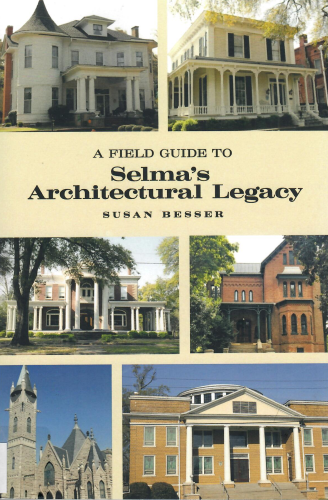
Note: Yes, this has nothing to do with Read of England, but the author sent me a copy for review on publication. Additionally, I assisted in some of the background research and fact-checking in the book’s final stages.
My hometown of Selma, Alabama, boasts the largest contiguous historic district in the State of Alabama. Selma was a preeminent center of commercial shipping and manufacturing in the 19th century, at one time so influential that both of Alabama’s US senators hailed from Dallas County: John T. Morgan and the much-libeled Edmund W. Pettus. Such wealth — peaking at the turn of the 20th century, before the arrival of cars marginalized the river and rail traffic that Selma’s prosperity was built on — led to an amazing array of public and private buildings. Although some have, tragically and often avoidably been lost to history and ‘progress’, an enormous stock of beautiful houses, churches, and other buildings have survived. Selma: An Architectural Field Guide is an impressively detailed catalog of historic Selma architecture that combines histories of the buildings with architectural analysis. The lengths of the histories varies on the subject, of course, and the longest write-ups are reserved for buildings who need context to appreciate most fully, like the L&N Depot and the related importance of railways to Selma’s commercial history. Pleasingly, Besser doesn’t just spotlight the grand mansions and impressive public architecture like the Federal Building: she includes here a great number of modest homes, including an abundance of Craftsman-style residences, and modest churches and schools. — and in a happy surprise, some of the statuary of Old Live Oak is included as well! The book is smartly organized and illustrated, generally moving street by street with the exception of some themed chapters: Civil Rights sites and Lost Architecture, for instance.
Given that Old Town was harrowed by a EF-3 tornado in January 2023, destroying many historic structures, this guide is especially timely in helping tell the stories of these buildings and publicizing their beauty to raise awareness for the need for physical preservation. Perhaps a case in point: one of the building featured on the book’s cover, Weaver Castle (2nd row, 2nd column), sustained severe roof damage but has since been repaired. I am well-versed in Selma history and yet found surprise after surprise here, including little stories that fill these buildings with a bit of humanity — like that of a Union soldier who decided not to burn one home because he recognized that its owner was a fellow Freemason. The amount of research on display here is most impressive, and I say that as a local history librarian for whom Selma’s history is my business and passion: this is a twenty-year labor of love that is an absolute treasure — especially for me, since it’s already starting to inform my digital archives project, allowing me to add in build dates & design information to my item descriptions.

 Reading Freely
Cool to be involved in something like this!
She kept me on my toes with all KINDS of questions to research. Was quite fun!
Being tasked to do research @ work was always one of my fave jobs. That and being told ‘be creative…’ [grin]
What a cool experience!
One of the perks of the only local history librarian (and practically only historian) in town!
Lovely! Thanks for sharing this treasure
Oh how cool that you assisted with background research and fact checking. I love that this book is helping to raise awareness of the need to preserve buildings and history and that it comes in super handy for your digital archives. I did my co-op in a University Archive and loved it so your digital archives project sounds so exciting!
Interesting history and images showcasing the town’s breathtakingly gorgeous architecture.