
592 pages
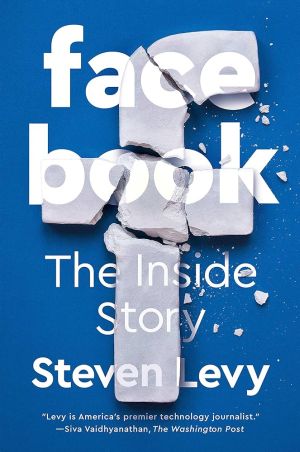
“Look at us,” my buddy chuckled. It was the halfway point of a 3-hour night class, and we’d been given a fifteen minute break to hydrate, caffeinate, and evacuate. Four people immediately flowed into the student common area and occupied the computers there, and all four of us were signing into facebook. It was 2007, and facebook was still in its innocent ascendancy, not yet a household world — but before long, I’d be installing browser extensions to cripple the website’s ability to track me online and regarding it as a necessary evil at best. Facebook’s growth from a Harvard-based social networking website into a global platform for consumerism, meme culture, political turmoil, shopping, etc is covered ably and soberly here by Steven Levy. Levy a veteran tech historian whose post at Wired gave him long exposure to both Mark Zuckerberg and his chief operating officer, Sheryl Sandburg, allowing him to ask questions of the Zuck that other reporters might have been shot down for. Here we witness an interesting project morph first into something with genuine commercial potential, and then into a global and pervasive digital power that is and continues to transform the world, offline and on, and Levy smartly weaves together technical, personal, business, and political threads for an altogether compelling and largely balanced story.
Despite its current importance, I can’t remember when I first heard of facebook: I know I couldn’t register for it, since my community college didn’t have student email back then, and potential users needed a .edu address. But who needed it? I had MySpace, with its blogs, customizable home pages, and ability to inflict music on anyone who visited your page. And yet a year and a half later, it wasn’t MySpace we college students were checking compulsively. Facebook was the latest creation of young Mark Zuckerberg, our contemporary, who grew up with a tech-friendly father and who was constantly creating software on his own time — including a program called Synapse, which used a person’s winamp playlists and playtime to guess what what songs a person wanted to listen to next. Another program allowed students to see which classes their friends were enrolled in, and gave Zuckerberg his first look into how hungry people were for information about their friends, leading him to another project that would become Facebook. The skewed version of events portrayed in The Social Network, based on the one-sided Accidental Billionaires, makes for a fun story, but is off the mark.
Levy covers facebook’s rapid expansion in the era of “move fast and break things”, as it was driven largely by engineering and the desire for growth, and dominated by a group of socially awkward young men captivated by what their new software toy could do and what it might become. Astonishingly, new hires were expected to commit code changes within their first few days at the website, a way of promoting new ideas. (One wonders how many newbie code changes were simply repairs to problems created by previous newbie code changes!) Fortunately for them and their bank accounts, as the company grew it brought in people with actual business experience — chiefly, Sheryl Sandberg, who became The Adult in the Room and gave facebook a less chaotic organizational atmosphere. The history of these years is something of a walk down memory lane for me, making me remember how the site used to be: I can remember the absolute contempt we had for the Newsfeed when it dropped, and the weird years when it seemed like facebook was trying to incorporate messy customization aspects of MySpace. Facebook’s approach was “Do this and see how it lands — if there’s an issue, we’ll remove it, maybe apologize, and throw something else out there”. A big example of this was Beacon, which allowed facebook to plant its flag all over the internet and made it possible for users to share their web activity with their friends — sometimes without meaning to, as when one man’s surprise engagement was ruined when his facebook profile announced that he’d just purchased a ring. His intended was dismayed that he’d bought it on sale. What is love if not going stupidly into debt for shiny rocks?
Facebook got better and better at optimizing the website to attract people’s eyes to it and keep them there, which was good for its ad-oriented business, but also worked towards its mission of ‘bringing people together’. As the 2010s passed middle age, though, the platform that was so great for selling things and bringing people together proved that it was also a great machine for selling….well, everything else, including politics and disinformation. Zuckerberg and co also realized that “bringing people together” can look like a mob burning things down or a conspiracy-theory echo chamber just as easily as it can be a kumbaya circle. In terms of content moderation, it often found itself in the same pickle as YouTube: there were so many people creating so much content at once that responding to everything was impossible, Europe’s demands that it remove offensive posts within 24 hours notwithstanding. There were the same gray areas: is quoting a celebrity saying something vile as bad as saying something vile? Does the historic significance of a nude child running away a burning village scrub away the fact that it’s a photo of a child? Facebook’s obsession with bringing everyone together meant the darker parts of internet culture, like the shock-trolls of 4chan and the like, were suddenly exposed to the innocent and unsavvy, leading to perfectly innocuous soccer moms falling for Qanon theories. Even as it tries to impose order despite its preference for free speech, facebook catches fire from both sides — from one, if it doesn’t do anything, and from another it’s viewed as impartial. It definitely grew more partisan during the coronamania period, but that’s not covered here.
Facebook: the Inside Story is a solid history of a significant period of the digital world’s life, one that doesn’t shy away from facebook’s mistakes and vulnerabilities but which acknowledges that the company is trying to rein in the Gollum of its own creation. A few more books in this vein are coming — The People vs Tech, The Chaos Machine, and antisocial media among `em.
Related:
If you don’t like facebook building an ad profile about you based on your web traffic, consider using the Facebook container extension for Mozilla Firefox, and the Disconnect extension for any browser.

 Reading Freely
Thankfully I missed that particular boat. Possibly timing, possibly limited access to computers around that time & a deep sense of cynicism about the whole thing.
Yeaah. facebook is the reason I’ve dutifully avoided other social media like snapchat, tiktok, etc ever since. It’s one of those things where users can’t really escape: even if you request your account to be deleted, facebook’s ‘profile’ for you is still there waiting to be reactivated.
Pingback: Wednesday bringeth a trio of memes & bookish games | Reading Freely