
approximately 14 hrs
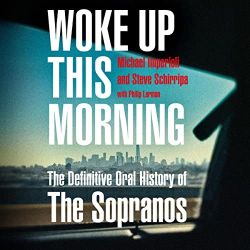
Ho! Waitaminute. This is a review of a book about The Sopranoes called Woke Up This Morning. It would be wrong to begin it without “Woke Up this Morning”.
Alright, wiseguy, you watched the theme? Good. This thing of ours, it’s no good you go about exploring Sopranoes content without the proper mood-setting. So twenty years ago, David Chase creates a show that’s unlike anything else seen before. I won’t say “or since”, given that we’ve had a few other works of similarly brilliant television, most notably Vince Gilligan’s Breaking Bad — and Gilligan has acknowledged that without The Sopranoes breaking the ground it did, Walter White would have never existed. The Sopranoes was notable, chiefly, for featuring an anti-hero, a mob boss who opens the story by seeing out a psychiatrist to treat a recurring issue of panic attacks. James Gandolfini would deliver a masterful performance as Tony Soprano in the years to come, and he was joined by dozens of other very serious actors whose talents were brought to bear through solid storytelling and tight writing. That storytelling took The Sopranoes into new terrain, as no characters were truly safe from being knocked off — fitting, given the nature of their their work. The show would be notable for the complex emotional and moral ground it covered: Tony’s relationship with his mother, his divide between being a dad to Med and AJ, and being Mr. Mob Boss; his frequent need to choose between friendship and business. The storytelling was artful on multiple levels, like the use of subtle visuals — witness one dead character appearing in a mirror in a scene where the memory of his treachery and death were on the minds of the characters. They don’t see him, but it’s a visual way to express his continuing presence despite his character’s absence. The Sopranoes was the first show to really live up to HBO’s “Home Box Office” name, being filmed as and delivering the weight of a movie. We watched putzi before David Chase gave us the gift of his art.
Woke Up This Morning is an offshoot of a Sopranos podcast created by Michael Imperioli (Chrissie) and Steve Schirripa (Bobby), which like other TV podcasts covered each episode in turn. Woke Up doesn’t take that approach, though, instead beginning with a chapter on The Sopranoes‘ development, and then dealing with each season in turn, with intermediary chapters taking us into the writers’ room or spotlighting minor but memorable characters. The format is of an extended conversation between Michael and Steve, who are frequently joined by other members of The Sopranoes cast’ and glorified crew. The conversation largely sounds natural, but there are parts where it distinctly sounds like a reading, lacking the back-and-forth dynamism and reaction that marks real conversation. There are attempts at making it sound more authentic, with Imperioli and Schirripa getting off-topic, but frankly these were obvious, distracting, and often dumb — especially Imperioli trying to convince Bobb- er, Steve — that dolphins and squids (which are from outer space) are smarter than humans, and Schirripa getting indignant and protesting loudly that he is definitely smartah than a dolphin! This is only a little fly in the soup, though, nothing to go to the don about. Fittingly, given his character’s interest in the TV and film industry, Michael is the one who most frequently explains production concepts that come up in the conversation, like what it means to ‘beat’ a story out. Most everyone from the show makes an appearance here, and it was good to hear them — even if Jamie Lynn Sigler, who played teenage Meadow, just had to remind listeners that she’s now older than Edie Falco (who played her mother) was when the show began. Ooh, madone. The big exceptions are James Gandfolini and Frank Vincente, who have unfortunately died since the show’s airing.
If you’re a Sopranoes fan, there’s no question that Woke Up This Morning is worth your time. Granted, it’s available in a book form, but unless you’re deaf I can’t imagine not wanting to experience this in the intended format — listening to all these people in their rich accents talking with passion about something they and the audience still love. There’s quite a bit to learn here, or to be reminded of: a common theme is that James Gandfolini was a prince of a man, loved by all of his coworkers, even if they found his intensity hard to work with at times. Beyond his dedication to the acting craft, he was a compassionate mentor to the Sopranoes’ younger actors, offering them advice, moral support, and helping them grow to be the best actors they could be. He supported his other costars, as well: during a wage dispute where filming was suspended, Gandfolini personally paid his fellow actors’ salaries during that time. David Chase’s own intensity is also frequently mentioned: he took the stories he was telling very seriously, and The Sopranoes set was not a place for improv, though sometimes actors’ work at giving their characters emotional backstories would be incorporated into their canon background. Some of the actors contributed more to their characters than just giving them life: Tony Siricio was so much like his character, Paulie Walnuts, that when a set was needed for Paulie’s apartment, the production crew visited his own pad and recreated it. The cast of The Sopranoes formed intense emotional bonds with one another, and their delight in being partially reunited here definitely comes across. There’s still a lot to learn about the show, and I loved taking that ride to Jersey with Tony again through this production.
Related:
Difficult Men: Behind the Scenes of a Creative Revolution, Brett Martin. On The Sopranoes and the road to Breaking Bad.

 Reading Freely