
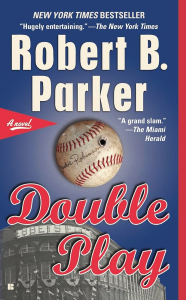
Burke has returned home from World War 2 with a body full of scars and a mind even more disturbed. He arrived home not to hugs and kisses, but to a letter from his wife telling him that she’d run off with another man. Considering how torrid and fast his own courtship is with her, that wasn’t much of a surprise. Once fully healed — physically, anyway — Burke finds work for himself as a tough guy of sorts, working as a bodyguard. He’s hired by Branch Rickey, general manager of the Brooklyn Dodgers, with a special client: Jackie Robinson. The former Monarch is being brought into the Major Leagues, breaking the ‘color line’ that has kept baseball segregated. Ricky anticipates trouble: that’s why he chose Robinson, a man who was not only talented but who can keep his head, and it’s why he wants someone watching Robinson. Robinson needs protection from those who might try to assault him, yes, but he also needs someone to hold him back if provocations make him lose his cool.
This is the set up of Double Play, a novel that is more baseball adjacent than about baseball. Burke doesn’t care whether he lives or dies, and in the course of his work he angers or shoots dead several mooks who are in the pay of New York’s criminal elements. Burke’s lack of fear, tolerance of pain, and skills with his Colt 1911 come in handy a few times, and his relationship with Robinson is interesting. Because this is 1947 and segregation is as much a thing de jure if not de facto in New York, the pair find themselves struggling together: cabbies of either color ignore them out of fear, and when Burke accompanies Robinson in black restaurants and the like he’s glared at with contempt and hatred. There are at least two sets of baddies to deal with, and one possible femme fatale. This was a fast, punchy novel: while there’s not as much content on baseball or Jackie as one might expect, the game is never far away. There were some odd chapters following a young man named “Bobby” who grew up watching Jackie, and readers all appear to believe that these are the author (Robert/Bobby) being autobiographical and sharing the story of how he was inspired as as a kid. Some scenes were ‘racier’ than I’d like, no pun intended: Parker didn’t fade to black as quickly in the bedroom scenes as I’d personally prefer. The setup was fascinating, though, and the writing drew me in immediately. I’ve already gotten two more Parker & baseball novels checked out.

 Reading Freely