
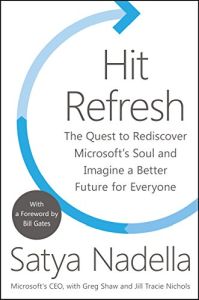
When I first began using computers in the late 1990s, Microsoft was establishing itself as The Establishment — a successor to IBM, becoming the uncool behemoth. It wasn’t quite there yet, but it would be there soon. A few years ago, though, I noticed a change: Microsoft was becoming interesting again, and it seemed to owe to its most recent (and still current) CEO, Satya Nadella. Fortunately for my curiosity, Nadella had written a book on Microsoft’s embrace of the next phase of computing and delivers it in Hit Refresh, which has some biographical elements (in the bootloader, if you will) but which is largely about the change in Microsoft’s culture as it began pivoting away from self-contained products and embracing the twinned promises of Cloud and AI — twinned because Cloud could provide the data AI worked with to make predictions which would then benefit Cloud services. This embrace was crucial, Nadella writes, because Microsoft had missed several busses: Windows 95 was a computer released without any serious consideration of the World Wide Web which would explode as a presence around the same time, and the rocketing appeal of smartphones had been a similarly not-anticipated opportunity. By the time Microsoft got its act together and began producing artful devices like the Lumia, the market for smartphone users was being sewn up.
Some of the business-oriented stuff struck me as rather generic — having a solid vision for what you want to achieve, focus on inclusion, be open to collaboration, etc — but I enjoyed learning about the Microsoft-specific examples. The aggressive and open mindset appears to be working, given that Microsoft has double Google’s marketshare in cloud (though both are well behind Amazon) , and more significantly that it stole a march on Google with its AI acquisition. Bard is still less functional than Copilot, though I prefer Google’s interface. (For some reason Copilot won’t respond if you don’t keep its tab open, and it provides information line-by-line like the user is standing in front of some teletype.) The bits on AI will interest current readers most, given that Nadella alludes to uses of it that we’re now seeing happen, like AI integration with Microsoft 365. I enjoyed Nadella as an author, and learning that he has two children with developmental difficulties greatly increased my respect for him and his wife Anu, who must make an incredible team. Given how quickly the tech industry moves, Nadella’s changes have passed into history — with predictions made manifest, and some new projects now shelved — but this was an enjoyable look into Microsoft getting its groove back, and I was struck by how earnest and emphatic Nadella was.
Related:
Gates: How Microsoft’s Mogul Reinvented an Industry, Stephen Manes
Coming up: Beating Hitler with Spitfires and math: a love story. (Maybe. There’s no romance yet, but the Spitfire pilot and the mathematician went to school together, and he constantly thinks of her and she of him, so it’ll probably happen.)

 Reading Freely