
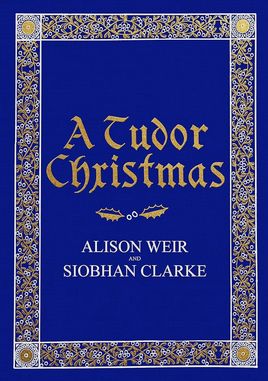
Alison Weir’s A Tudor Christmas is a short social history of how Christmas was celebrated in the days of Henry VIII and his daughters. (And, ever so briefly, his son.) After some background information on the different cultural traditions that a medieval English Christmas would constitute — a bit of Christ here, a little pagan Rome there, some Scandinavian traditions there– Weir then takes us through the Twelve Days of Christmas, which begin on Christmas Day itself and continue until the Feast of the Epiphany on January 6th. Contra today’s prolonged period gorging and splurging that begins sometime in October and ends shortly after the New Year when bills come due and medical scales sag under the weight of too many pies and plates of stuffing, Christmas was traditionally prefaced by a period of fasting that began in mid-November. The Orthodox still practice the Nativity Fast, but even those who observe Advent these days aren’t aware that it’s deliciously counterculture in the modern context. After this background, we go through each of the Twelve Days of Christmas, which had specific bits of lore and tradition attached to them. My favorite, I think, is the Feast of the Holy Innocents, in which the day would begin with children being playfully whipped and then allowed to run amok the rest of the day. Weir incorporates a lot of medieval verse into the text, and she points out allusions to Christmas traditions present in Shakespeare that all who are not scholars almost assuredly miss. I enjoyed this thoroughly, and excerpted twelve fun facts from it to share with friends — find them below! I read this mostly while listening to “Christmas in a Medieval Tavern“, which is utterly anachronistic but set the mood.
The traditional Anglo-American Christmas has its origins with King Alfred the Great, the father of England who commanded there should be a holiday on Christmas Day and the twelve that followed. The first use of the word “Christ’s Mass” was in 1038.
The Midnight Christmas Mass dates to at least 423, when Sixtus III celebrated one in the Christmas Chapel (containing a reliquary that is said to hold the remains of the Manger). It was originally known as the Angels’ Mass.
Christmas creches became popular after 1223, when St Frances created a life-sized manager scene on the hill above the village of Greccio, and preached the Gospel story.
The modern season of Christmas parties would horrify Christians of centuries gone by, who regarded the season of Advent as one of fasting — the feasting began only on Christmas Day. The eastern Orthodox still preface Christmas with a Nativity fast that begins in mid-November. Specifications vary by tradition, but rich foods like meat, oil, butter, and wine are usually abstained from.
Have you ever wondered why Charles Dickens had one ghost story set at Christmas, let alone an entire volume of them? Medieval Europeans believed that the veil between the natural world and the spiritual world was at its thinnest as the Winter Solstice approached, and that ghosts could freely wander the wintry landscapes in late December. Telling ghost stories on Christmas Eve became an English tradition.
An English Christmas favorite (among those who could afford meat) was ‘brawn’, or fatty cuts of pork cooked in wine and served garnished with rosemary, bay leaves, fruits, and a sprig of yew whitened with egg or flower to give the appearance of a dusting of snow.
Christmas pies in medieval England were cut with spoons, as it was believed unlucky to cut them with knives. The first piece went to the youngest member at the table, who made a wish as they ate it.
On Twelthnight, trees were treated to a tipple from the wassail bowl, ale being poured over their roots to ensure a bountiful harvest. The practice still endures in the West Country.
The Fourth Day of Christmas was known as the Feast of the Holy Innocents, and for adults was a day of fasting as the Herod’s massacre of infant boys was remembered. Children were allowed greater licenses on this day after being awakened with a playful whipping.
The Spirit of Christmas or the season was an ancient one: the Saxons referred to a King Winter, and the Norse believed that the god Woden visited mortals during the season and feasted, leaving gifts and accepting offerings (like cookies and milk?). St. Nicholas of Myra, the patron saint of children, would eventually prevail as the embodiment of Christmas in the west, despite his feast day being held during Advent, December 6. St. Nicholas Day celebrations do NOT (alas!) involve punching heretics in the face, as St Nicholas was famous for doing.
At court, the Christmas season (after Christmas Day itself) was also one of plays, hunting, sports, and outside tournaments, followed by feasting and drinking. Children’s games like hide and seek, blind man’s bluff, and “fox in the hole” — which was a bit like tag mixed with hide and seek, with a ‘fox’ chasing and looking for the other players and catching them one by one, the last to be caught becoming the fox next round — were popular for all ages. One potentially dangerous game involved attempting to snatch candied fruits, almonds, etc from a bowl of warm brandy that was set on fire — without the players getting their fingers burned.
Nativity plays were part of the feast of Christmas as part of a larger tradition of ‘mystery’ plays, put on with heavy contributions from grade and crafts guilds. These were all based on Biblical stories, and Nativity plays would typically envelop everything from the angel’s first visit to Mary, to the Massacre of the Innocents. This tradition faded after the reformation, the plays often banned for being too Catholic. Another theatrical tradition involved catching “mummers plays”, in which bands of traveling actors would regale communities with traditional folk plays that involved a lot of easy entertainment — stage fights, bawdy humor, and fantastical creatures like the Dragon that England’s patron saint, St. George, killed. Resurrection was a common theme in these plays.

 Reading Freely